


Stocks slip on strong US growth data
Wall Street’s main stock indices briefly slid lower on Tuesday as much stronger-than-expected US growth figures befuddled hopes for further interest rate cuts, while gold and silver struck fresh records.US economic growth in the third quarter came in at 4.3 percent on an annualised basis, easily topping expectations, as consumer and government spending rose.Equities had been buoyed in recent weeks by expectations the Federal Reserve would lower borrowing costs further in 2026, with data showing US unemployment rising and inflation easing. The strong figures could persuade the US Federal Reserve to hold off on further interest rate cuts in 2026.”The key takeaway from the report is that the US economy was certainly running on the warm side” in the third quarter, said Briefing.com analyst Patrick O’Hare.”That will stir some concerns about the Fed’s recent decision to cut rates in December and the risk of stoking increased inflation in pursuit of keeping the economy on a growth trajectory,” he added.Wall Street’s main indices moved lower at the start of trading in New York, but both the S&P 500 and Nasdaq quickly pushed into positive territory.Before the US GDP data was released precious metals pushed higher on the back of expectations for more US rate cuts, which makes them more attractive to investors.Gold jumped to a high above $4,497 per ounce, while silver was just short of $70 an ounce, with the US blockade against Venezuela and the Ukraine conflict adding support.Copper, which is used in electric vehicle batteries and solar panels, hit a record price of $12,159.50 per tonne.”Silver and above all copper are benefitting from structural support from the energy transition, electrification the colossal needs for digital infrastructure and artificial intelligence,” said John Plassard, an analyst at Cite Gestion Private Bank.Europe’s main stock markets were mixed in afternoon trading.”European stock markets appear to have entered a period of consolidation as we head into the final trading days of 2025,” said Joshua Mahony, chief market analyst at Scope Markets.”With the Santa rally period traditionally taking place over the final five days of the year, investors will be hoping that the bulls are gathering momentum for a final push tomorrow onwards,” he added.Asian markets enjoyed a bright start, although some stuttered as the day wore on.Shanghai was higher, while Hong Kong dipped and Tokyo closed flat.On currency markets, the yen extended gains after Japan’s Finance Minister Satsuki Katayama flagged authorities’ powers to step in to support the unit, citing speculative moves in markets.The yen suffered heavy selling after Bank of Japan boss Kazuo Ueda held off signalling another rate hike anytime soon following last week’s increase.In company news, shares in Danish pharmaceutical giant Novo Nordisk jumped more than eight percent after the US approved its popular GLP-1 anti-obesity drug Wegovy to be administered in pill form for weight loss.- Key figures at around 1430 GMT – New York – Dow: DOWN 0.2 percent at 48,286.54New York – S&P 500: DOWN less than 0.1 percent at 6,873.79New York – Nasdaq Composite: DOWN less than 0.1 percent at 23,407.70London – FTSE 100: FLAT at 9,868.85Paris – CAC 40: DOWN 0.2 percent at 8,109.06Frankfurt – DAX: UP 0.3 percent at 24,330.51Tokyo – Nikkei 225: FLAT at 50,412.87 (close)Hong Kong – Hang Seng Index: DOWN 0.1 percent at 25,774.14 (close)Shanghai – Composite: UP 0.1 percent at 3,919.98 (close)Dollar/yen: DOWN at 156.45 yen from 156.99 yen on MondayEuro/dollar: UP at $1.1773 from $1.1756Pound/dollar: UP at $1.3494 from $1.3458Euro/pound: DOWN at 87.25 pence from 87.35 penceWest Texas Intermediate: UP less than 0.1 percent at $58.05 per barrelBrent North Sea Crude: FLAT at $62.05 per barrelburs-rl/rmb

CAN-2025: la RD Congo bat difficilement le Bénin (1-0)
En attendant d’affronter le Sénégal, un des favoris de la CAN-2025, la RD Congo a assuré le minimum pour son entrée en lice en venant à bout du Bénin (1-0), mardi à Rabat.Dominateurs dans le jeu en début de match, les Léopards n’ont pas tardé à ouvrir le score grâce à Theo Bongonda (16e). Sur un long ballon d’Arthur Masuaku, l’attaquant du Spartak Moscou a profité d’une erreur défensive pour conclure d’un pointu du gauche.Sous la menace de Béninois qui ont failli égaliser en toute fin de match, les Congolais ont eu plusieurs opportunités de se mettre à l’abri. En début de seconde période, Cédric Bakambu a même cru avoir doublé la mise mais son but a été annulé par la VAR pour une position de hors-jeu de Nathanaël Mbuku (51e). Le même Bakambu a ensuite buté sur le gardien des Guépards Saturnin Allagbe à la 70e.Ce succès étriqué permet à la RDC du sélectionneur français Sébastien Desabre de prendre provisoirement la tête du groupe D en attendant la rencontre entre le Sénégal et le Botswana à Tanger (coup d’envoi à 16h00).
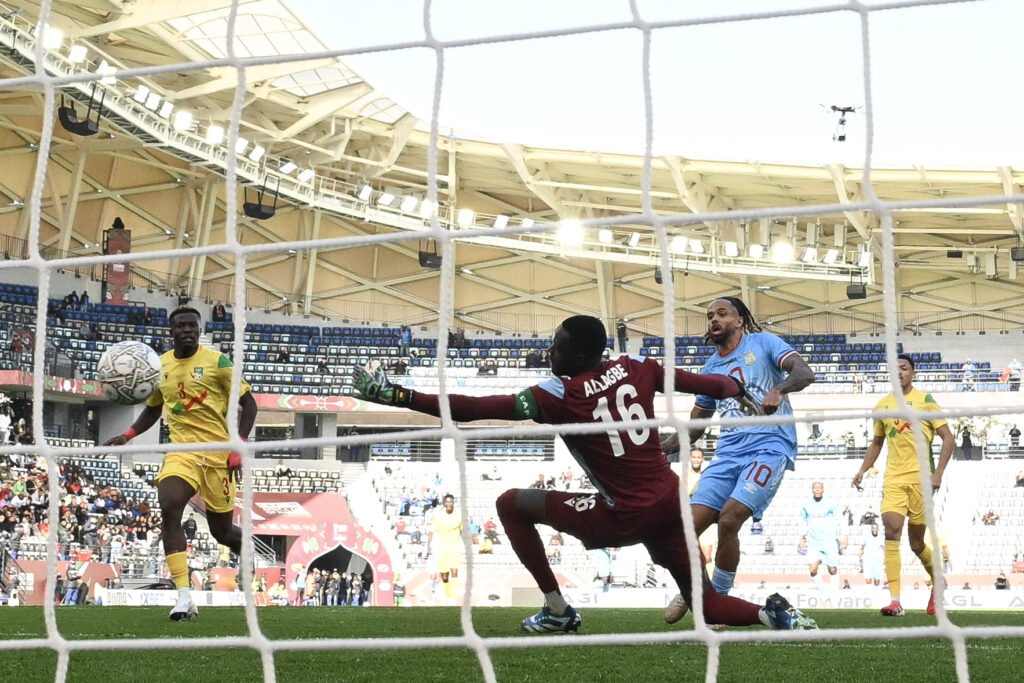
DR Congo beat Benin to kick off Cup of Nations bidTue, 23 Dec 2025 14:32:48 GMT
The Democratic Republic of Congo edged out Benin 1-0 in their opening game at the Africa Cup of Nations on Tuesday, with Theo Bongonda scoring the only goal of the Group D clash.Bongonda, of Spartak Moscow, pounced to score on 16 minutes at the Al Medina Stadium in Rabat after the Benin defence left a …
DR Congo beat Benin to kick off Cup of Nations bidTue, 23 Dec 2025 14:32:48 GMT Read More »

Une infirmière de l’AP-HP conteste son licenciement pour avoir refusé d’ôter son calot
Une infirmière de La Pitié-Salpétrière (AP-HP) a contesté mardi en référé, devant la justice administrative, son licenciement et sa révocation de la fonction publique pour avoir refusé de manière répétée d’ôter son calot chirurgical, un couvre-chef fréquemment utilisé à l’hôpital.Infirmière depuis 2018 dans cet hôpital de l’Assistance publique-hôpitaux de Paris, Majdouline B. a été licenciée le 10 novembre 2025. Depuis un an, la direction lui reprochait de porter quotidiennement et en toutes circonstances un calot, équipement de protection en tissu, porté habituellement au bloc opératoire ou en réanimation. Au cours de l’année, elle a fait l’objet de six convocations et d’un blâme, jusqu’à un conseil disciplinaire en octobre. Dans un premier temps, “l’AP-HP lui a reproché de porter ce couvre-chef pour des raisons qui relèvent de ses supposées convictions religieuses”, estimant ainsi “qu’il portait atteinte au principe de neutralité des services publics” et contrevenait au guide de la laïcité diffusé aux équipes, a indiqué devant le tribunal l’avocat de Majdouline B., Me Lionel Crusoé.Mais Majdouline B. n’a jamais revendiqué d’appartenance religieuse, indiquant simplement que le port de cet équipement relevait de “sa vie privée”. L’argument de la laïcité “a finalement été écarté”, a-t-il ajouté. L’AP-HP l’a sanctionnée car elle “refusait d’obéir à une règle” justifiée par des questions “d’hygiène”, qui “interdit de porter le calot de manière continue, dans des zones où il n’est pas prescrit”, en particulier un calot “qui n’est pas fourni par l’établissement”, “entre et ressort” des locaux, a indiqué l’avocate de l’AP-HP, Me Violaine Lacroix.L’AP-HP se fonde notamment sur des recommandations de 2014 du comité de lutte contre les infections nosocomiales.Mais, selon Me Crusoé, “aucune loi, aucun règlement” et “aucune donnée objective” n’interdisent le port du calot dans le service de médecine interne où elle travaillait. – Une “discrimination” -Majdouline B. “justifie de la reconnaissance et de l’admiration de ses collègues” et “a été en première ligne pendant la crise sanitaire”, a plaidé Me Crusoé. Il a assuré qu’à l’AP-HP, d’autres femmes portent le calot, notamment en cas d’alopécie ou après un cancer.Majdouline B. voit pour sa part dans ce licenciement “une discrimination”.”On me révoque pour mon apparence et non pour mes compétences professionnelles”, a-t-elle dit à l’AFP, assurant qu’elle portait ce calot depuis son embauche et que “pendant le Covid, tout le monde portait calot, masques, surblouse”. Le jugement est attendu dans une à deux semaines.Une cinquantaine de personnes – collègues, syndicalistes ou militants politiques – se sont rassemblées devant le tribunal, en soutien à Majdouline B. et aux “nombreuses autres soignantes” victimes selon eux, “d’une chasse aux bouts de tissu” généralisée.”On a recensé 20 collègues concernées” à La Pitié-Salpétrière dont neuf “sont finalement parties”, des cas “dans 16 hôpitaux en région parisienne” et d’autres “à Lyon, Marseille, Rennes…”, a dénoncé Blandine Chauvel, assistante sociale et représentante Sud.Ces femmes sont “convoquées, questionnées sur leur vie privée” parfois contraintes “de fournir un certificat médical” pour justifier d’une éventuelle alopécie, et pendant ce temps “dans les services, on manque de bras”, a-t-elle ajouté.Sur les réseaux sociaux, plusieurs soignantes se sont filmées ces derniers jours avec un calot en soutien aux professionnelles sanctionnées par leurs directions.”Le calot n’est ni un signe religieux, ni encore moins un signe prosélyte. (…) En plus d’une islamophobie crasse”, ce type d’affaires est “extrêmement grave puisque cela met en danger les services de santé”, a dénoncé lors d’un point de presse à l’Assemblée nationale la députée LFI Mathilde Panot.

Russian paramilitaries in CAR say take election threat ‘extremely seriously’Tue, 23 Dec 2025 13:27:50 GMT
Russian private military contractors in the Central African Republic told AFP they took any threats to the upcoming elections in the volatile country “extremely seriously” and were ready to “repel any provocations”.The resource-rich former French colony is the last bastion of paramilitary group Wagner, which has established itself as one of the CAR government’s main …
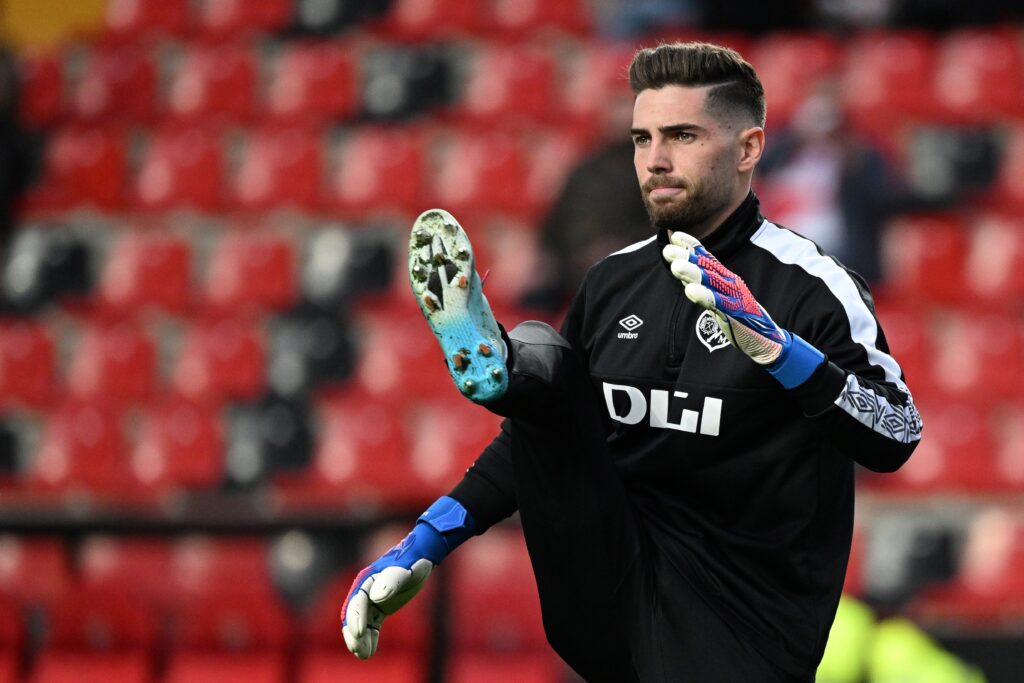
CAN-2025: Luca Zidane, l’Algérien
Le gardien Luca Zidane, fils cadet de Zinedine, icône des Bleus et pressenti pour en être le futur sélectionneur, pourrait être titulaire mercredi avec l’Algérie, qui lance sa CAN à Rabat face au Soudan (16h00), deux mois à peine après avoir rejoint les Fennecs.”Je ne sais pas”, a botté en touche Vladimir Petković, le sélectionneur bosnien lorsque les journalistes algériens -qui annoncent Luca Zidane titulaire- lui ont demandé qui serait le portier algérien face au Soudan.”Parce que nous avons encore un jour et un entraînement à faire. Le communiquer à vous avant de le communiquer aux joueurs, ce n’est pas correct”, a-t-il ajouté dans l’hilarité générale. Les planètes semblent aligner pour Luca Zidane, 27 ans, qui n’a rejoint la sélection algérienne que depuis début octobre, à l’occasion des deux derniers matches de qualification pour le Mondial-2026 face à la Somalie et à l’Ouganda.En balance avec Alexis Guendouz, le titulaire du poste depuis 2023, la cote de Luca Zidane est montée en flèche avec le forfait, il y a quelques jours, du gardien du Mouloudia d’Alger.Zidane est désormais en balance avec Anthony Mandréa, le portier de Caen, un club de D3 française, et l’expérimenté Oussama Benbot, 31 ans, gardien de l’USM Alger, qui compte deux sélections avec les Fennecs.L’encadrement algérien tente en tout cas de préserver le gardien de Grenade, en deuxième division espagnole, de l’agitation autour de son statut, et surtout de son patronyme.- “Lourd à porter” -“Luca, il est comme tout le monde, comme tous les joueurs. Il s’est bien intégré, on l’a bien intégré. C’est un nouveau, il ne se prend pas la tête, il essaie de se donner à fond pour l’équipe. Et je ne pense pas qu’il fasse très attention” au bruit médiatique, a assuré le capitaine Riyad Mahrez, 34 ans et la star de la sélection, avant de concéder: “Bon, c’est vrai que son nom, il est lourd à porter”.Ce que le gardien de but s’était évertué à dire lors d’une rare prise de parole au moment de son premier rassemblement avec les Fennecs en octobre: “je suis très content d’être ici. C’est une fierté pour moi et je donnerai tout à 100% pour que le peuple algérien soit fier”.Championne d’Afrique en 2019, l’Algérie cherche un successeur à Raïs M’Bolhi, inamovible gardien depuis 2010, et souhaitait de l’émulation à ce poste clé où Guendouz a pris la relève en 2023.Étant donné que Luca Zidane n’avait jamais rejoint l’équipe de France A, il était resté éligible pour jouer avec l’Algérie, le pays de ses grands-parents paternels, resté en embuscade pour le sélectionner. Ce qu’elle ne s’est pas privée de faire immédiatement après le 19 septembre dernier, lorsque la Fifa a acté son changement de nationalité sportive.”Toute ma famille (est) fière de moi et derrière moi dans tous mes choix (…) Mon grand-père est content que je sois en Algérie”, a déclaré Luca Zidane, devenu gardien parce qu’enfant, son père et son frère ainé Enzo le plaçaient à ce poste lors des parties de foot en famille.Fils du plus grand milieu de terrain de l’histoire des Bleus, Français élevé en Espagne, Luca Zidane a désormais l’occasion de conquérir l’Afrique.