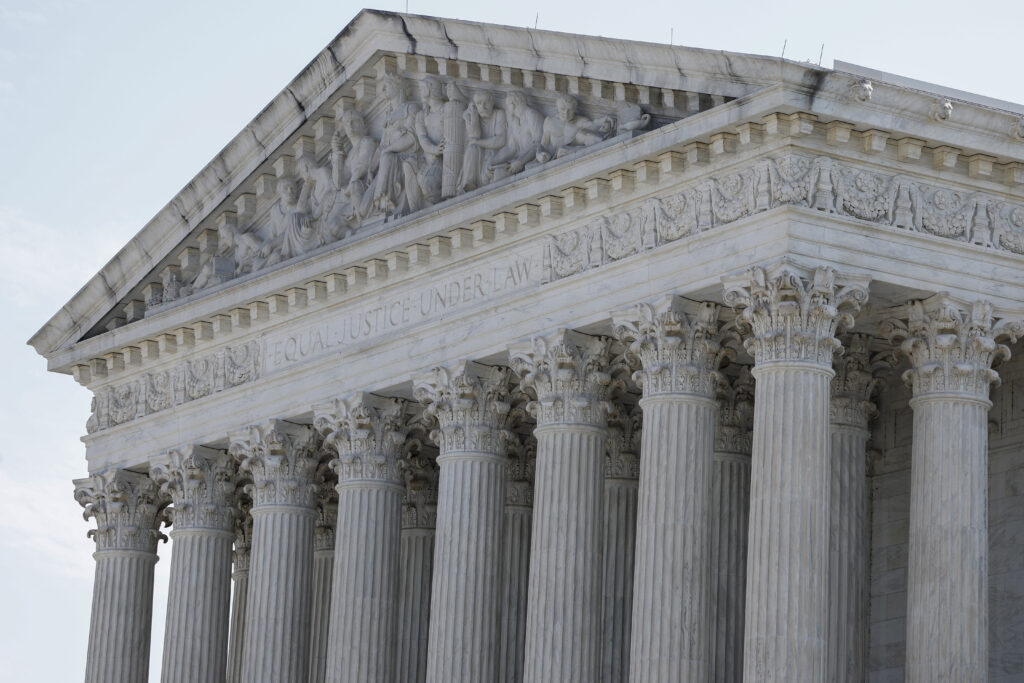
Trump blasts Supreme Court over block on deportations

US President Donald Trump lashed out Friday at the Supreme Court after it blocked his bid to resume deportations of alleged Venezuelan gang members, saying the justices are “not allowing me to do what I was elected to do.”Trump’s berating of the high court, in a post on Truth Social, came after it dealt another setback to his attempt to swiftly expel alleged Tren de Aragua (TdA) gang members using an obscure wartime law, the 1798 Alien Enemies Act (AEA).Trump has been at loggerheads with the judiciary ever since he returned to the White House, venting his fury at numerous court rulings at various levels that have frozen his executive orders on multiple issues.In a 7-2 decision, the conservative-majority Supreme Court, which includes three justices nominated by Trump, blocked his bid to use the AEA to carry out further deportations of TdA members, saying they were not being given enough time to legally contest their removal.Trump, who campaigned for the White House on a pledge to deport millions of undocumented migrants, said the Supreme Court decision means the government will have to go through a “long, protracted, and expensive Legal Process” to expel “murderers, drug dealers (and) gang members.””The Supreme Court of the United States is not allowing me to do what I was elected to do,” he said. “This is a bad and dangerous day for America!”Trump invoked the AEA, which was last used to round up Japanese-Americans during World War II, in March to deport a first group of alleged TdA members to a notorious prison in El Salvador without due process.Attorneys for several of the deported Venezuelans have said their clients were not gang members, had committed no crimes and were targeted largely on the basis of their tattoos.The Supreme Court intervened on April 19 to temporarily block further deportations of undocumented Venezuelan migrants, saying they must be afforded due process.In Friday’s unsigned order, the court paused plans to deport another group of detainees held in Texas, saying they were not being given enough time to mount a meaningful legal challenge to their expulsion.”Notice roughly 24 hours before removal, devoid of information about how to exercise due process rights to contest that removal, surely does not pass muster,” the justices said.Conservative justices Clarence Thomas and Samuel Alito dissented. Trump thanked them in his Truth Social post for “attempting to protect our Country.”- ‘More notice’ -The justices also noted that a Salvadoran man had been deported to El Salvador “in error” along with the alleged TdA members in March and the Trump administration has claimed “it is unable to provide for (his) return.”The justices stressed they were not deciding whether Trump could legally use the AEA to deport undocumented migrants, and they ordered a lower court to “expeditiously” examine the question.”To be clear, we decide today only that the detainees are entitled to more notice than was given,” they said.”We did not on April 19 — and do not now — address the underlying merits of the parties’ claims regarding the legality of removals under the AEA.”We recognize the significance of the Government’s national security interests as well as the necessity that such interests be pursued in a manner consistent with the Constitution,” they said.Three federal district court judges have ruled that Trump’s use of the Alien Enemies Act to carry out deportations was unconstitutional while one, a Trump appointee, said it was permissible.In invoking the AEA, Trump said TdA was engaged in “hostile actions” and “threatening an invasion or predatory incursion against the territory of the United States.”Since taking office, Trump has sent troops to the Mexican border, imposed tariffs on Mexico and Canada for allegedly not doing enough to stop illegal crossings, and designated gangs like TdA and MS-13 as terrorist groups.
US loses last triple-A credit rating as Moody’s cuts on growing govt debt

The United States lost its last triple-A credit rating from a major agency on Friday as Moody’s announced a downgrade, citing rising levels of government debt and dealing a blow to Donald Trump’s narrative of economic strength and prosperity.The downgrade to Aa1 from Aaa adds to the bad news for the US president, coming on the same day his flagship spending bill failed to pass a key vote in Congress due to opposition from several Republican fiscal hawks.Explaining its decision, the ratings agency noted “the increase over more than a decade in government debt and interest payment ratios to levels that are significantly higher than similarly rated sovereigns.” In its decision, Moody’s warned that it expects federal deficits to widen to almost nine percent of economic output by 2035, up from 6.4 percent last year, “driven mainly by increased interest payments on debt, rising entitlement spending, and relatively low revenue generation.”As a result, it expects the federal debt burden to increase to “about” 134 percent of Gross Domestic Product (GDP) by 2035, compared to 98 percent last year.Moody’s decision to downgrade the United States from its top credit rating mirrors similar decisions from the two other major US ratings agencies, S&P and Fitch.S&P was the first to cut its rating for the United States back in 2011, during Barack Obama’s first term in office, citing its concerns that a debt management plan “would be necessary to stabilize the government’s medium-term debt dynamics.”Twelve years later, Fitch followed suit, warning of “a steady deterioration in standards of governance over the last 20 years, including on fiscal and debt matters.”Moody’s echoed its peers in its decision Friday, noting in a statement that “successive US administrations and Congress have failed to agree on measures to reverse the trend of large annual fiscal deficits and growing interest costs.””We do not believe that material multi-year reductions in mandatory spending and deficits will result from current fiscal proposals under consideration,” it added, flagging that it expected larger deficits to continue over the next decade. “The US’ fiscal performance is likely to deteriorate relative to its own past and compared to other highly-rated sovereigns,” Moody’s said. The Moody’s decision comes amid a tough fight in Congress to pass Trump’s much-touted “big, beautiful” spending bill, which aims to revamp and renew a roughly $5 trillion extension of his 2017 tax relief, paid for at least partially through deep cuts to the Medicaid health insurance program that covers more than 70 million low-income people.On Friday, the agency also changed its outlook from “negative” to “stable,” noting that despite the United States’ poor record tackling rising government debt levels, the country “retains exceptional credit strengths such as the size, resilience and dynamism of its economy and the role of the US dollar as global reserve currency.”

Les avocats de migrants vénézuéliens incarcérés au Salvador dénoncent des “tortures”

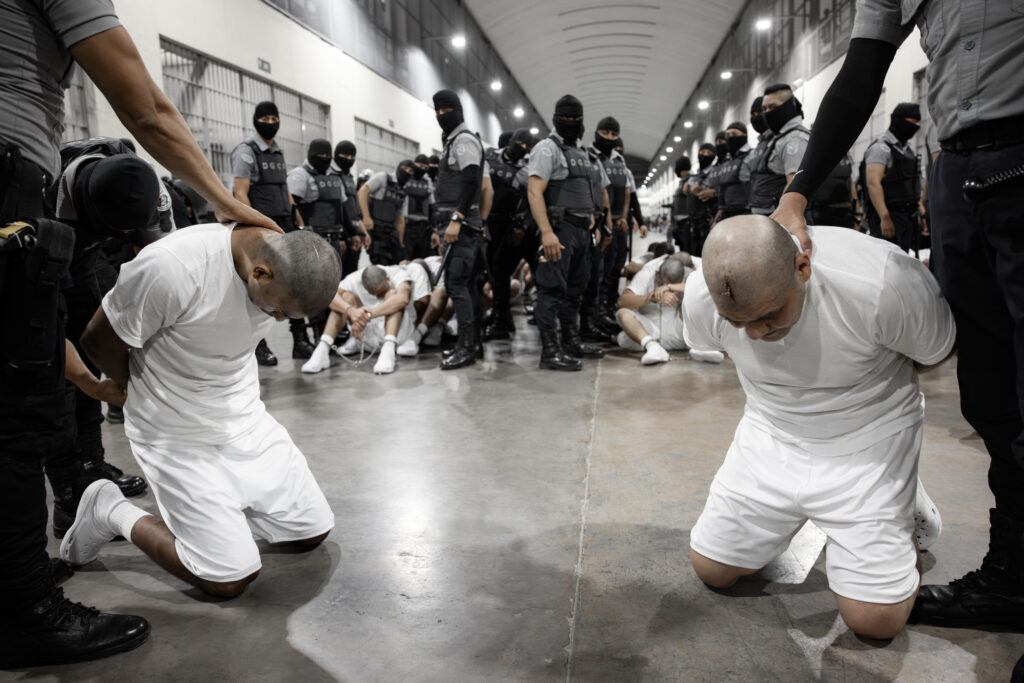
Les avocats des 252 migrants vénézuéliens expulsés par le gouvernement américain de Donald Trump et détenus depuis deux mois dans une prison de haute sécurité au Salvador ont dénoncé vendredi les “tortures” subies par leurs clients.Le cabinet Grupo Ortega, engagé par le gouvernement vénézuélien pour défendre ces migrants, n’a pas pu rendre visite aux prisonniers incarcérés dans le Centre de confinement du terrorisme (Cecot), ni obtenir de “preuve de vie”, se heurtant au silence du gouvernement et de la justice du Salvador. Le cabinet a déposé le 24 mars un recours devant la Cour suprême salvadorienne pour mettre fin à ce qu’il qualifie de “détention illégale” des Vénézuéliens expulsés par les Etats-Unis et arrivés dans le pays le 16 mars.  “On les traite comme de vulgaires délinquants”, dénonce l’avocat Salvador Rios, alors que les migrants ont été pris en photo vêtus d’uniformes de prisonniers, le crâne rasé.”Ce sont des tortures, des tortures physiques et psychologiques”, a-t-il affirmé lors d’un entretien avec l’AFP. Les avocats ont également remis début mai une lettre au président salvadorien Nayib Bukele, allié clef de Trump dans sa politique contre la migration illégale, sollicité le médiateur des droits de l’Homme et contacté la direction des centres pénitentiaires du pays. Aucune de ces démarches n’a abouti. Sollicitée par l’AFP, la présidence salvadorienne n’a pas souhaité répondre.- “Séquelles” -Pour expulser ces migrants, l’administration Trump a invoqué en mars une législation de temps de guerre rarement utilisée et les a envoyés vers le Salvador sans autre forme de procès, alléguant qu’ils étaient membres du gang vénézuélien Tren de Aragua, multinationale du crime déclarée organisation “terroriste” par Washington. Des accusations fermement rejetées par leurs proches.Vendredi, la Cour suprême des Etats-Unis a de nouveau rejeté une demande de l’administration Trump de l’autoriser à expulser des immigrés vénézuéliens en vertu de cette loi d’exception.Plusieurs tribunaux et cours d’appel fédéraux — ainsi que la Cour suprême elle-même le 19 avril — ont déjà bloqué provisoirement le recours à la loi de 1798 sur “les ennemis étrangers” au motif que les personnes expulsées devaient pouvoir faire valoir leurs droits.Les 252 Vénézuéliens, ainsi que 36 migrants salvadoriens expulsés par les Etats-Unis, restent coupés du monde extérieur au Cecot, immense prison voulue par le président Bukele dans le cadre de sa lutte contre les gangs.Des images publiées par M. Bukele montrant des Vénézuéliens entravés entrant au Cecot reflètent la “gravité” de la situation dans laquelle ils se trouvent, selon Me Rios.Une longue période d’isolement sans fondement légal “est de la torture, les dommages ne sont pas seulement physiques, mais aussi moraux (…) Ce type de torture laisse des séquelles”, affirme-t-il. Au Cecot, où sont enfermés des milliers de membres de gangs, ont été également incarcérés 36 migrants salvadoriens envoyés par Washington. Parmi eux Kilmar Abrego Garcia, expulsé par “erreur” comme l’a reconnu Washington, a été transféré en avril dans une autre prison. Dans son cas comme dans celui similaire d’un migrant vénézuélien appelé “Cristian”, des juges américains ont demandé en vain à l’administration Trump de faciliter leur retour aux États-Unis.- “Impuissance” -Le Haut-Commissaire de l’ONU aux droits de l’Homme s’est alarmé récemment du grand nombre d’étrangers expulsés des Etats-Unis et en particulier du sort des Vénézuéliens et des Salvadoriens envoyés au Cecot.”Cette situation soulève de graves préoccupations concernant un large éventail de droits qui sont fondamentaux à la fois pour le droit américain et le droit international”, a déclaré Volker Türk.”Les familles avec lesquelles nous avons parlé ont exprimé un sentiment d’impuissance totale face à ce qui s’est passé et leur douleur de voir leurs proches étiquetés et traités comme des criminels violents, voire des terroristes, sans qu’aucun tribunal n’ait statué sur la validité de ce qui leur est reproché”, a-t-il indiqué. Pour l’avocat Isael Guerrero, de Grupo Ortega, il s’agit d’une “détention totalement illégale”: les détenus vénézuéliens “ne font l’objet d’aucune procédure judiciaire dans aucun tribunal” du Salvador. “Le Salvador n’a aucune convention ni traité international permettant” leur incarcération, relève également Jaime Ortega, à la tête du cabinet, “pas un seul d’entre eux ne fait l’objet de poursuites” aux États-Unis en tant que présumé membre du Tren de Aragua.M. Ortega affirme que le sort des Vénézuéliens dépend exclusivement de Nayib Bukele, l’expulsion rendant “nulle et non avenue la juridiction nord-américaine”.En avril, Nayib Bukele a proposé à Nicolas Maduro d’échanger les 252 migrants contre le même nombre de “prisonniers politiques” vénézuéliens, une proposition immédiatement rejetée par le président vénézuélien qui a accusé son homologue de viol “en série des droits humains”.

Combs’s ex Cassie wraps grim week of testimony

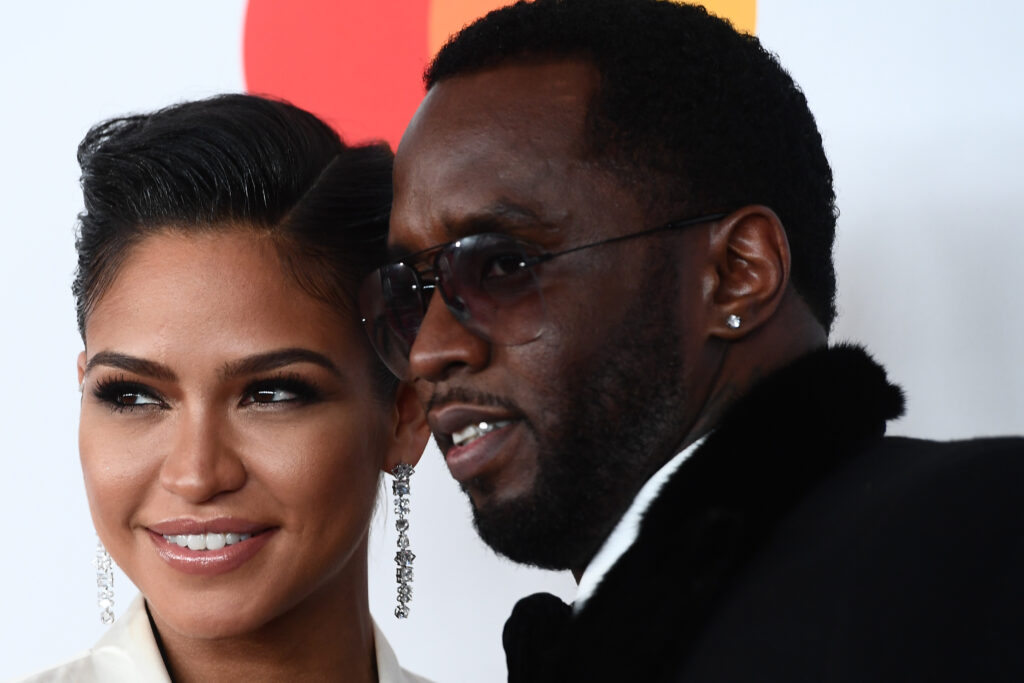
Casandra Ventura, the ex-girlfriend of music mogul Sean Combs, on Friday finished four grueling days on the witness stand in his sex trafficking trial, testifying in graphic, deeply personal terms about years of abuse including rape.Combs is facing federal charges of sex trafficking and leading an illegal sex ring that enforced its power with crimes including arson, kidnapping and bribery — and Ventura’s testimony is core to the prosecution’s case.Ventura — the singer known as Cassie, who is heavily pregnant with her third child — told jurors that Combs raped, beat and forced her into degrading, drug-fueled sex parties dubbed “freak-offs” throughout their decade-plus relationship.In the final stretch of her testimony in a Manhattan courtroom, Ventura faced a blitz of questions over a $20 million settlement she received from Combs in a separate civil case prior to the start of criminal proceedings. She said she was also set to receive $10 million in another settlement with the Intercontinental Hotel, where Combs assaulted her in a 2016 incident caught on camera that was aired in open court.Ventura remained largely composed throughout the week but broke down near the end of her testimony.”I’d give that money back if I never had to do freak-offs,” she said through tears in an emotional crescendo, referring to the marathon sex parties with male escorts she says Combs systematically subjected her to.”I would have had agency and autonomy. I wouldn’t have had to work so hard to get it back,” she said.She said Combs’s treatment of her made her feel “worthless.”The defense sought to tarnish her credibility with painstaking readings of years-old text messages between the couple, emphasizing that she stayed with Combs despite the alleged abuse, and pointing to times when she had acted violently.”I will kill you,” Ventura was heard saying in an audio recording to a man she believed had a video of a freak-off.Defense lawyer Anna Estevao highlighted tender text exchanges, and implied drug addiction had played a key role in Combs’s rage.Ventura insisted there was subtext to many of the suggestive or keen messages she sent to Combs over the years, and that she often felt pressured into freak-offs with the music industry heavyweight, especially as she was signed to his label.”I worried for my safety. I worried for my career. But I also was in love with him, so I worried that he wouldn’t want to be with me” if she didn’t comply with his demands, she said.- ‘Extremely challenging’ -Ventura’s lawyer Douglas Wigdor read a statement on her behalf, after she wearily left the courtroom holding her belly.”This week has been extremely challenging, but also remarkably empowering and healing,” she said.She said she hoped her testimony would help other abuse survivors and asked for privacy as she prepares to give birth.”I am glad to put this chapter of my life to rest,” she said.In a separate statement, also read by Wigdor, Ventura’s husband Alex Fine praised her “strength and bravery” while adding he felt “profound anger” as he sat in court “in front of a person who tried to break her.”Combs initially introduced Fine and Ventura, who already have two children together, it was stated in court.- Many weeks to come -Combs, 55, made hundreds of millions in the music, fashion, media and liquor industries and is often credited with helping to bring hip-hop into the mainstream.But the rap producer and global superstar once famous for his lavish parties now appears visibly aged after months in prison.He has pleaded not guilty to all charges but faces life in prison if convicted.The defense contends that while Ventura’s relationship with Combs was complicated and included domestic abuse, it did not amount to sex trafficking.Late in the day, prosecutors began questioning Dawn Richard — a singer who found fame on MTV’s reality show “Making the Band,” which Combs produced. Richard previously filed a separate civil suit against Combs alleging sexual assault and battery.She told jurors Friday she witnessed Combs attempt to hit Ventura over the head with a skillet.Proceedings are expected to continue into the summer.

Trump reshapes US Mideast policy. Can deals work instead?

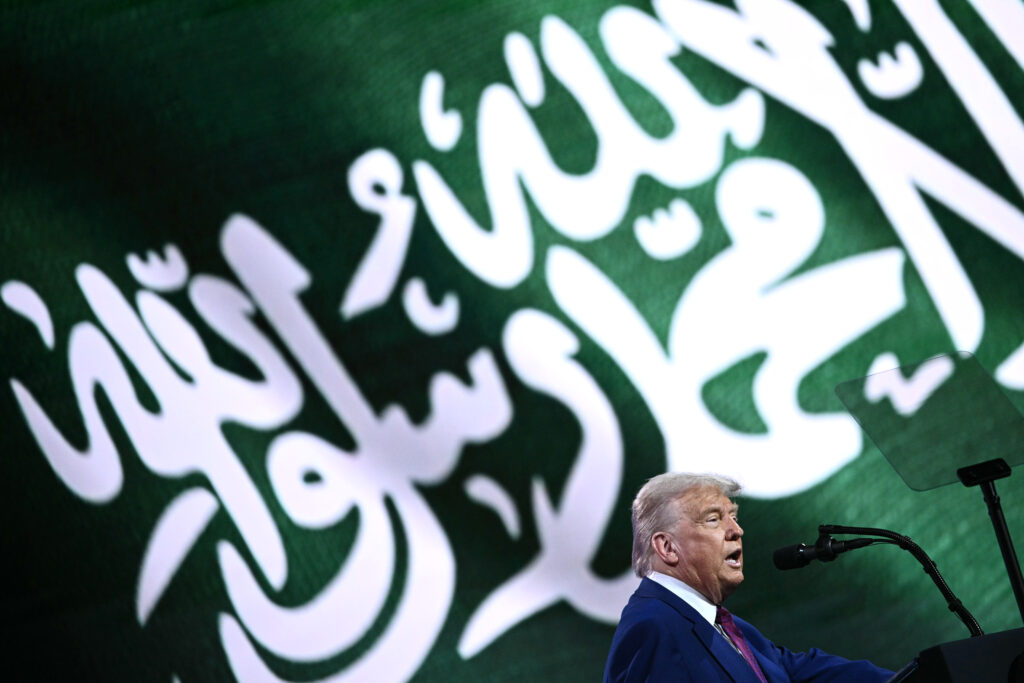
President Donald Trump proclaimed a decisive break with decades of US interventionism during his Middle East tour, promising a new American foreign policy based instead on his beloved art of the deal.Trump vowed during his swing through Saudi Arabia, Qatar and the United Arab Emirates that there would be no more “lectures on how to live”, saying the region had achieved a “modern miracle the Arabian way.”In an extraordinary rupture with his predecessors, Trump then lambasted what he called the “neo-cons” that oversaw bloody US military interventions in the region and beyond.”In the end, the so-called nation builders wrecked far more nations than they built,” Trump told an investment forum in Riyadh, the first stop on his tour of the Gulf.”Far too many American presidents have been afflicted with the notion that it’s our job to look into the souls of foreign leaders and use US policy to dispense justice for their sins.”Trump did not name them but the targets were clear. His Democratic predecessor Joe Biden tried to tie US support to the promotion of human rights and the maintenance of the international order. And Republican George W. Bush in the early 2000s launched wars in Afghanistan and Iraq.- ‘Consequential shift’ -“Trump’s Riyadh speech marked a clear and consequential shift in US policy toward the Middle East,” said Sina Toossi, from the Center for International Policy. “By rejecting the legacy of military intervention and nation-building, he signaled a move toward realism and restraint. This shift resonates deeply in a region exhausted by war and foreign meddling.”But for Trump, that also means ignoring democracy and human rights issues and embracing the leaders of oil-rich monarchies with often autocratic tendencies.His Saudi host, Crown Prince Mohammed bin Salman, was for example found by US intelligence to have ordered the gruesome murder in 2018 of dissident writer Jamal Khashoggi. But there was no mention of that in Riyadh.Instead, Trump preached the same brand of gold-plated, transactional politics that he does at home.Saudi Arabia, Qatar and the United Arab Emirates showed him the money, signing a host of huge business and investment deals with the United States during his trip.In return they got the glitz of Trump’s first major foreign trip and praise as being examples of what the region could become.Conversely, Trump’s visit also shook one of the longest-standing pillars of US policy in the Middle East — its support for Israel.The US president not only bypassed Israel on the trip but appeared to sideline Prime Minister Benjamin Netanyahu on key issues including Iran’s nuclear program, Israel’s war in Gaza, and Yemen’s Huthi rebels.This showed mounting tensions behind the scenes, particularly on Iran, with Israel far keener than Trump on a military option.- ‘American power’ -But Trump’s deal-making approach to foreign policy could soon have its limits tested.He has shown willingness to seek a deal with Iran over its nuclear program — saying that Tehran’s case “I have never believed in having permanent enemies.”But at the same time Trump has threatened military action against Iran if it does not reach an accord.Trump also left the Middle East with no progress towards a deal to end the war in Gaza despite his pledges to end the conflict — although he made a rare reference to the fact that people were now “starving” in the besieged enclave.Further afield, Trump tried to coax Russia’s Vladimir Putin to talks in Istanbul during his trip to discuss an end to Moscow’s invasion of Ukraine, but his efforts came to nothing.Trump’s “peace through strength” doctrine also has its contradictions. On a visit to a huge US air base in Qatar he said that “my priority is to end conflicts, not start them.” But then he immediately added: “I will never hesitate to wield American power if it’s necessary to defend the United States of America or our partners.”

Trump reshapes US Mideast policy. Can deals work instead?

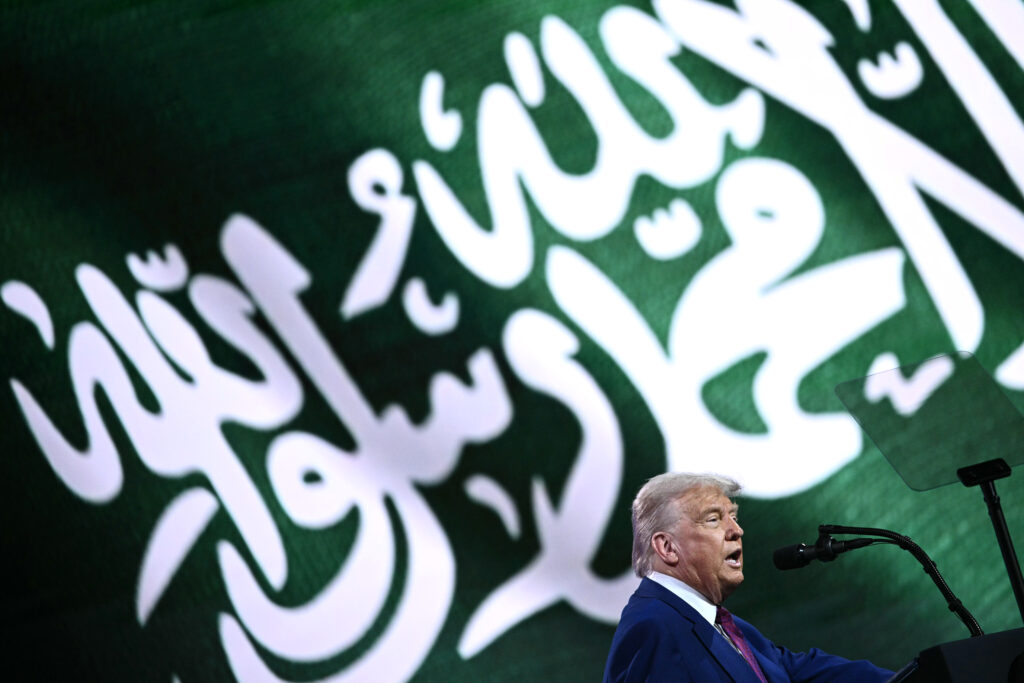
President Donald Trump proclaimed a decisive break with decades of US interventionism during his Middle East tour, promising a new American foreign policy based instead on his beloved art of the deal.Trump vowed during his swing through Saudi Arabia, Qatar and the United Arab Emirates that there would be no more “lectures on how to live”, saying the region had achieved a “modern miracle the Arabian way.”In an extraordinary rupture with his predecessors, Trump then lambasted what he called the “neo-cons” that oversaw bloody US military interventions in the region and beyond.”In the end, the so-called nation builders wrecked far more nations than they built,” Trump told an investment forum in Riyadh, the first stop on his tour of the Gulf.”Far too many American presidents have been afflicted with the notion that it’s our job to look into the souls of foreign leaders and use US policy to dispense justice for their sins.”Trump did not name them but the targets were clear. His Democratic predecessor Joe Biden tried to tie US support to the promotion of human rights and the maintenance of the international order. And Republican George W. Bush in the early 2000s launched wars in Afghanistan and Iraq.- ‘Consequential shift’ -“Trump’s Riyadh speech marked a clear and consequential shift in US policy toward the Middle East,” said Sina Toossi, from the Center for International Policy. “By rejecting the legacy of military intervention and nation-building, he signaled a move toward realism and restraint. This shift resonates deeply in a region exhausted by war and foreign meddling.”But for Trump, that also means ignoring democracy and human rights issues and embracing the leaders of oil-rich monarchies with often autocratic tendencies.His Saudi host, Crown Prince Mohammed bin Salman, was for example found by US intelligence to have ordered the gruesome murder in 2018 of dissident writer Jamal Khashoggi. But there was no mention of that in Riyadh.Instead, Trump preached the same brand of gold-plated, transactional politics that he does at home.Saudi Arabia, Qatar and the United Arab Emirates showed him the money, signing a host of huge business and investment deals with the United States during his trip.In return they got the glitz of Trump’s first major foreign trip and praise as being examples of what the region could become.Conversely, Trump’s visit also shook one of the longest-standing pillars of US policy in the Middle East — its support for Israel.The US president not only bypassed Israel on the trip but appeared to sideline Prime Minister Benjamin Netanyahu on key issues including Iran’s nuclear program, Israel’s war in Gaza, and Yemen’s Huthi rebels.This showed mounting tensions behind the scenes, particularly on Iran, with Israel far keener than Trump on a military option.- ‘American power’ -But Trump’s deal-making approach to foreign policy could soon have its limits tested.He has shown willingness to seek a deal with Iran over its nuclear program — saying that Tehran’s case “I have never believed in having permanent enemies.”But at the same time Trump has threatened military action against Iran if it does not reach an accord.Trump also left the Middle East with no progress towards a deal to end the war in Gaza despite his pledges to end the conflict — although he made a rare reference to the fact that people were now “starving” in the besieged enclave.Further afield, Trump tried to coax Russia’s Vladimir Putin to talks in Istanbul during his trip to discuss an end to Moscow’s invasion of Ukraine, but his efforts came to nothing.Trump’s “peace through strength” doctrine also has its contradictions. On a visit to a huge US air base in Qatar he said that “my priority is to end conflicts, not start them.” But then he immediately added: “I will never hesitate to wield American power if it’s necessary to defend the United States of America or our partners.”

Le jeu “Fortnite” retiré de l’App Store, son éditeur accuse Apple d’entrave concurentielle

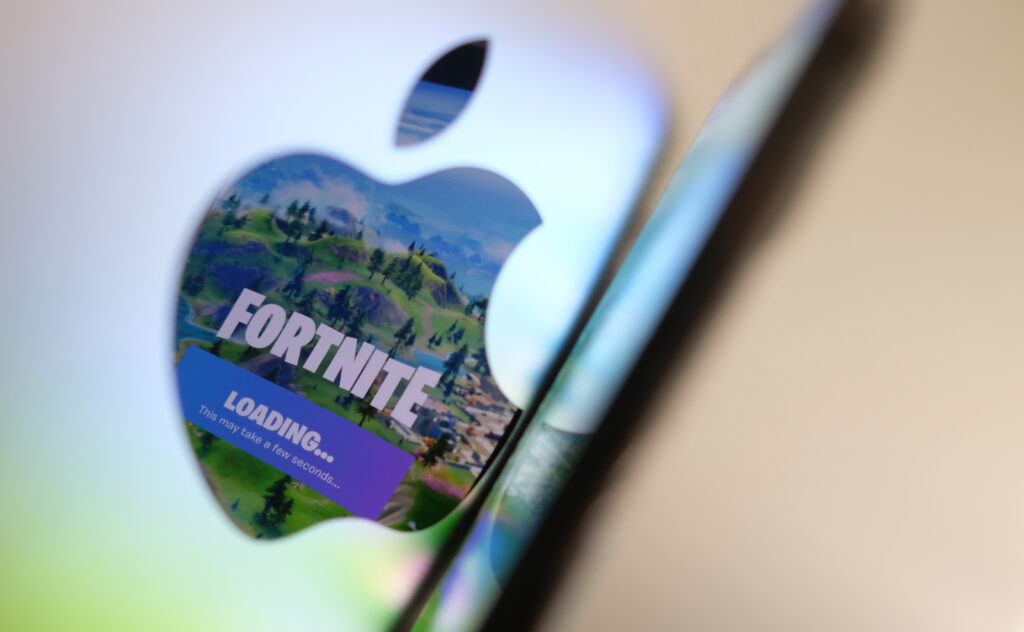
Le bras de fer se poursuit entre l’éditeur de “Fortnite” et Apple: Epic Games a annoncé vendredi le retrait de son jeu vidéo pour l’ensemble des utilisateurs de l’App Store, les deux acteurs s’en rejetant la responsabilité.Jusqu’ici, seuls les propriétaires américains d’un appareil de la marque à la pomme étaient privés de ce titre très populaire mais la situation est désormais mondiale, pour un jeu en ligne qui rassemble quotidiennement plusieurs millions de joueurs.”Aujourd’hui, malheureusement, +Fornite+ sur iOS (le système d’exploitation d’Apple, NDLR) sera hors ligne dans le monde entier”, a indiqué sur son site Epic Games.Selon cet éditeur, la situation s’explique par le fait que le géant de la tech n’a pas validé son jeu pour son App Store aux Etats-Unis. Il a estimé que la situation resterait ainsi “jusqu’à ce qu’Apple (…) (la) débloque”.Epic Games a également annoncé que son jeu devenait inaccessible en Europe sur iOS, alors qu’il y était proposé jusqu’à présent sur son propre magasin d’applications.Contacté, l’éditeur n’a pas répondu aux questions de l’AFP concernant la situation sur le Vieux-Continent. De son côté, Apple a expliqué à l’AFP ne pas être à l’origine du retrait du jeu sur les magasins d’applications alternatifs au sien et invité Epic Games à proposer à nouveau une validation de son titre en dehors des Etats-Unis.Pour se défaire d’Apple et de Google, Epic Games avait annoncé à l’été 2024 le lancement de son magasin d’applications mobiles sur les appareils Androïd dans le monde et sur les iPhone et iPad en Europe.L’entreprise avait néanmoins regretté ne pas être en mesure d’ouvrir ces boutiques sur iOS aux Etats-Unis. “Le combat n’est pas terminé tant que +Fortnite+ n’est pas de retour sur iOS partout”, avait indiqué son directeur général, Tim Sweeney. Ce rebondissement est un nouvel épisode dans la relation conflictuelle qu’entretiennent les deux entreprises américaines.Epic Games, comme d’autres éditeurs d’applications, accuse depuis plusieurs années Apple d’abuser de sa position dominante en prélevant des commissions trop élevées.- “Anticoncurrentiel” -Cette critique vise aussi la place centrale de l’App Store pour que les consommateurs puissent télécharger des applications ou payer des abonnements numériques par exemple.Cette bataille connaît un front judiciaire, qui s’est matérialisé par un premier procès en 2021, quelques mois après une première suspension de “Fortnite” sur l’App Store car Apple l’accusait de contourner le service de paiement d’iOS.Une décision de justice avait alors qualifié Apple d'”anticoncurrentiel”, en raison de l’empêchement imposé aux développeurs de rediriger les consommateurs vers leurs propres sites web et moyens de paiement.Mais ni cette décision lui demandant de s’ouvrir à la concurrence, ni l’obligation imposée par l’Union européenne d’autoriser les magasins d’applications alternatifs à celui d’iOS n’ont mis fin au conflit. – Accusation d'”entrave” -Pour les joueurs américains, un nouvel espoir — encore mince — était né début mai, lorsque l’éditeur avait indiqué avoir soumis à Apple une demande pour que son titre revienne sur l’App Store.Le directeur d’Epic Games se montrait toutefois prudent sur le réseau social X, en laissant entrevoir un processus compliqué.Jeudi, il avait confirmé n’avoir aucune “nouvelle” concernant cette demande. “Apple ne l’a ni acceptée, ni rejetée”, avait-il précisé.Il a ensuite accusé vendredi l’entreprise d’utiliser ses processus de vérifications comme “un outil pour retarder ou entraver la concurrence”.Début mai, une juge fédérale américaine avait accusé Apple de ne pas se plier à sa décision rendue il y a plus de trois ans. 

Première ligue féminine: vainqueur du PSG, Lyon sacré pour la 18e fois

Trois buts de Melchie Dumornay, Kadidiatou Diani et Wendie Renard, ont permis à Lyon de remporter son 18e titre de champion de France féminin de football, son quatrième consécutif, en s’imposant en finale aux dépens de Paris SG (3-0), vendredi à domicile.La première période a été assez terne entre deux équipes assurées de disputer la Ligue des champions la saison prochaine mais craignant probablement de perdre cette finale et de terminer la saison actuelle sans trophée. L’Olympique lyonnais surtout, qui a conclu les 22 journées de championnat régulier en leader invaincu avec vingt victoires pour deux résultats nul avec avec dix points d’avance sur le PSG, que les Rhodaniennes ont battu à deux reprises (1-0, 2-0).Mais les Lyonnaises, éliminées dès les 16es de finale de la Coupe de France, par Reims aux tirs au but et en demi-finale de la Ligue des champions, éliminé par Arsenal (1-2, 4-1) ont assuré le minimum en remportant ce titre de championnes.- Dumornay libère Lyon -Les joueuses de Joe Montemurro, qui va quitter Lyon pour probablement rejoindre l’équipe d’Australie, n’avaient pas caché avant la finale qu’elles regrettaient cette formule de play-offs,  injuste selon elles après avoir dominé largement la saison régulière.L’internationale haïtienne Melchie Dumornay (21 ans) a libéré l’OL d’un poids dans le temps additionnel de la première période en ouvrant la marque d’un tir du droit, à la conclusion d’une belle action collective développée sur l’aile gauche et une passe de l’Américaine, Lindsey Heaps (45+2).Auparavant, seule Kadidiatou Diani avait été dangereuse pour la gardienne Mary Earps (5) puis juste avant la mi-temps quand elle a manqué de creuser l’écart sur un tir un peu trop croisé (45+4).Diani a d’ailleurs porté le score à 2-0 au terme d’une action individuelle conclue d’un tir croisé du droit détourné par Paulina Dudek (80e), un but récompensant la large domination des Lyonnaises en seconde période alors qu’elles n’avaient pas franchement le contrôle du jeu avant la pause.Dans le temps additionnel, la capitaine Wendie Renard a marqué d’une panenka un penalty accordé avec l’aide de la VAR pour une faute de main d’Océane Hurtré (90+4).De son côté, le PSG, dominé le 3 mai aux tirs au but en finale de la Coupe de France par le Paris FC, sans Marie-Antoinette Katoto, remplaçante au coup d’envoi, annoncée à l’OL la saison prochaine et qui n’est entrée en jeu qu’à la 84e minute, s’est montré inoffensif.- Der de Le Sommer à l’OL -Les Parisiennes, qui n’ont donc plus battu Lyon lors dees onze dernières confrontations, n’ont même pas su profiter des hésitations et des approximations de la défense lyonnaise en première période.Le PSG, éliminé dès le tour préliminaire de la Ligue des champions, termine une saison morose marquée par des conflits.Arrivé l’été dernier, l’entraîneur Fabrice Abriel, critiqué pour son management, a notamment été mis à pied juste après la finale de la Coupe de France, remplacé en tant qu’intérimaire par le Brésilien Paulo Cesar, coach des U19 féminines du club.Pour tenir un rôle en Ligue des champions, le PSG devra quand même se renforcer alors qu’à l’OL une vague de départs s’annonce avec notamment celui d’Eugénie Le Sommer qui a joué son dernier match vendredi. D’autres vont suivre avec l’objectif de renouveler l’effectif sous la direction d’un nouvel entraîneur.