Fighter pilot takes next giant step for India’s space plans

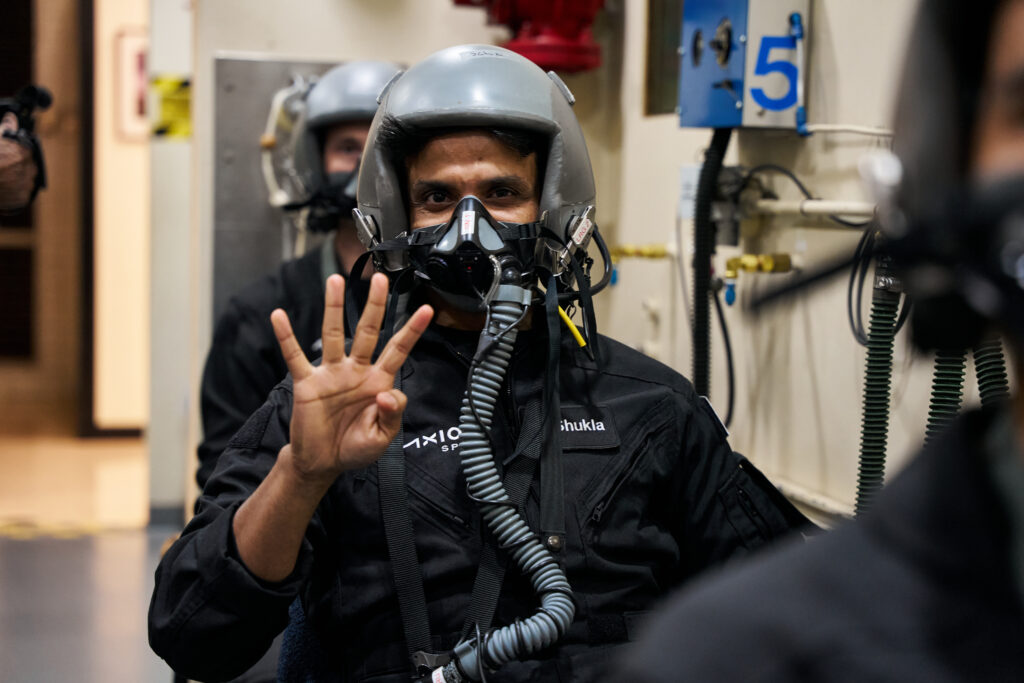
Astronaut Shubhanshu Shukla blasts off into space next week as the first Indian to join the International Space Station (ISS), bearing with him New Delhi’s dreams of its own manned space flight.An airforce fighter pilot, 39-year-old Shukla is joining a four-crew mission launching from the United States with private company Axiom Space, aboard a SpaceX Crew Dragon capsule.He will become the first Indian to join the ISS, and only the second ever in orbit — an achievement that the world’s most populous nation hopes will be a stepping stone for its own human flight.”I truly believe that even though, as an individual, I am travelling to space, this is the journey of 1.4 billion people,” Shukla was quoted as saying by The Hindu newspaper this year.Shukla said he hopes to “ignite the curiosity of an entire generation in my country”, and “drive the innovation that will make many such projects possible for us in the future”.The airforce group captain — equivalent to an army colonel or navy captain — will pilot the commercial mission slated to launch June 10 from the Kennedy Space Center in Florida, a joint team between NASA and ISRO, the Indian Space Research Organisation.- ‘New era’ -India’s Department of Space calls it a “defining chapter” in its ambitions, naming Shukla as “among the top contenders” for its maiden human spaceflight mission, Gaganyaan, “sky craft” in Hindi, scheduled for launch in 2027.”His journey is more than just a flight — it’s a signal that India is stepping boldly into a new era of space exploration,” the Department of Space said ahead of the launch.New Delhi has paid more than $60 million for the mission, according to Indian media reports.Prime Minister Narendra Modi has announced plans to send a man to the Moon by 2040.India’s ISRO said in May that it planned to launch an uncrewed orbital mission later this year, before its first human spaceflight in early 2027.Shukla’s voyage comes four decades after Indian astronaut Rakesh Sharma joined a Russian Soyuz spacecraft in 1984.”What sets Shukla’s mission apart is its strategic importance,” the department added.”Unlike the symbolic undertones of India’s first human spaceflight, this time the focus is on operational readiness and global integration.”Shukla also trained in Russia, in 2020 along with three other astronaut hopefuls, at the Yuri Gagarin Cosmonaut Training Center — before further training at ISRO’s centre in the southern city of Bengaluru.He has said the journey aboard the Axiom Mission 4 — and then the expected 14 days on the ISS — will provide “invaluable” lessons to bring back home.- Space yoga -Shukla will be led by mission commander Peggy Whitson, a former NASA astronaut, and joined by European Space Agency project astronaut Slawosz Uznanski-Wisniewski of Poland, and Tibor Kapu of Hungary.The son of a government ministry official, from Lucknow in the northern state of Uttar Pradesh, Shukla is a veteran fighter pilot experienced in flying Russian Sukhoi and MiG jets.He has promised to perform yoga poses in the ISS.If he is unable to fly on Tuesday, fellow airforce pilot Group Captain Prasanth Balakrishnan Nair, 48, is expected to take his place.India has flexed its ambitions in the last decade with its space programme growing considerably in size and momentum, matching the achievements of established powers at a much cheaper price tag.In August 2023, it became just the fourth nation to land an unmanned craft on the Moon after Russia, the United States and China.Waiting at home will be Shukla’s family, including his wife and son.”I’ve been having goosebumps by just thinking that soon my brother will be in space,” his older sister Suchi, a school teacher, told the Times of India newspaper.

Muslim pilgrims pray at Mount Arafat in hajj apex

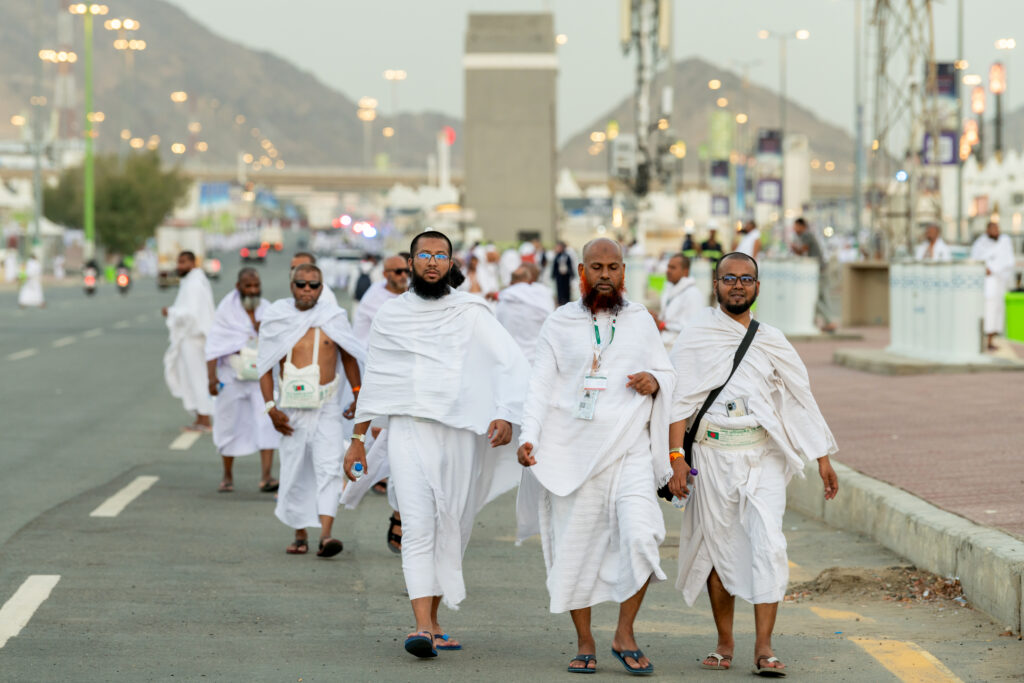
Muslim pilgrims prayed atop Mount Arafat on Thursday during the high point of the annual hajj pilgrimage, as Saudi officials called on participants to refrain from being outside during the hottest hours of the day.Thousands of pilgrims began to gather before dawn around the hill and the surrounding plain where the Prophet Mohammed is believed to have given his last sermon.While some arrived early to take advantage of the relatively cool morning, carrying colourful umbrellas, many pilgrims will remain for hours of prayers and Koran recitals until the evening in the most arduous portion of the hajj.After sunset they will head to Muzdalifah, halfway between Arafat and the sprawling tent city of Mina, where they will gather pebbles so they can perform the symbolic “stoning of the devil”.”This is something that I used to see every year on the TV screen during hajj and I always thought: ‘I wish I could be here’,” said 33-year-old Ali from Pakistan, one of 1.5 million pilgrims who had arrived in Saudi Arabia for the pilgrimage.”I’ve been trying to get here… for the past 3 years,” he added as he gazed at the mount. “I feel very blessed.”Hundreds of pilgrims dressed in white dotted the mount itself, with many more at its foot praying or taking pictures.Earlier this week, Saudi authorities called on pilgrims to stay inside their tents between 10:00 am and 4:00 pm on Thursday, when the desert sun is at its harshest.Fans spraying mist and providing cool air were dispersed at the foot of the mount.Temperatures this year have already exceeded 40 degrees Celsius (104 Fahrenheit) as one of the world’s largest annual religious gatherings, bringing together devotees from around the globe, kicked off earlier this weekOfficials have beefed up heat mitigation efforts aiming to avoid a repeat of last year’s hajj, which saw 1,301 pilgrims die as temperatures reached 51.8C.”I came here early to (avoid) the sun and later I will pray inside my tent,” said 54-year-old Adel Ismail, from Syria.To make this year’s pilgrimage safer, authorities have expanded infrastructure, deployed thousands of extra personnel and relied on an arsenal of high-tech tools to help better manage crowds.Authorities have mobilised more than 40 government agencies and 250,000 officials, doubling their efforts against heat-related illness following the lethal heatwave of 2024.Shaded areas have been expanded by 50,000 square metres (12 acres), thousands more medics will be on standby, and more than 400 cooling units will be deployed, the hajj minister has told AFP.Through tears of joy, Iman Abdel Khaleq said she had wanted to perform the hajj for 10 years and was overwhelmed with emotion as she arrived at Arafat.”It’s a big dream for me that I had almost given hope up of realising,” the woman in her fifties told AFP from the foot of the mount.Authorities said a majority of the deaths in 2024 were among unregistered pilgrims who lacked access to amenities like air-conditioned tents and buses.This year, they have also cracked down on unregistered pilgrims looking to sneak into Mecca, relying on frequent raids, drone surveillance and a barrage of text alerts.Hajj permits are allocated to countries on a quota basis and distributed to individuals by a lottery.But even for those who can obtain them, the steep costs prompt many to attempt the hajj without a permit, even though they risk arrest and deportation if caught.Saudi Arabia earns billions of dollars a year from the hajj, and the lesser pilgrimage known as umrah, undertaken at other times of the year.

NATO looks to thrash out spending deal under US pressure

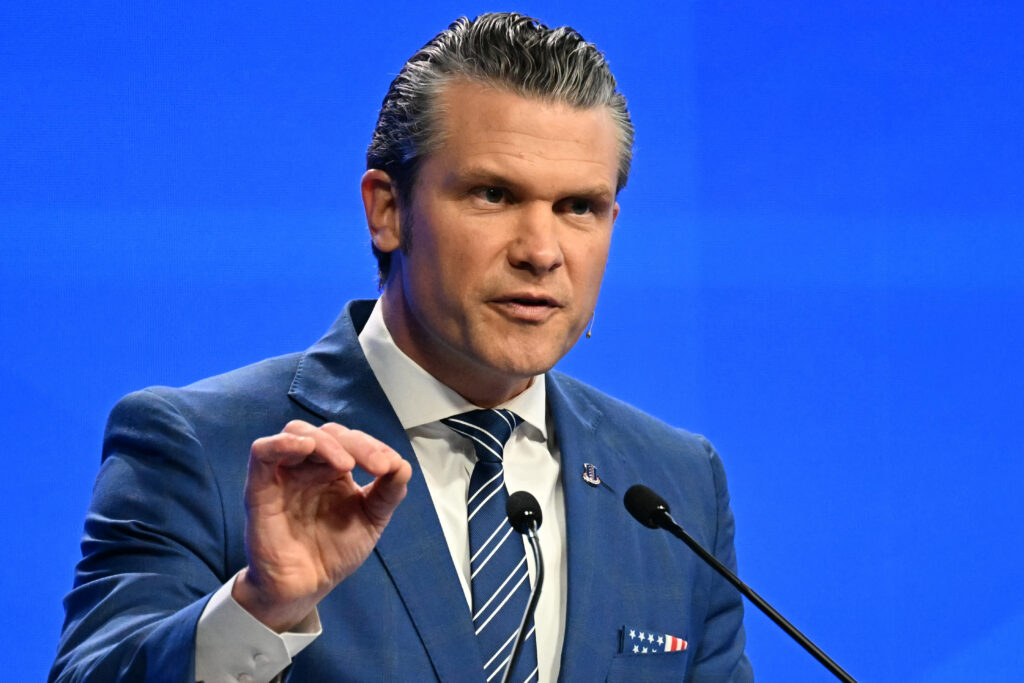
US defence chief Pete Hegseth will seek on Thursday to drive home a deal on ramping up NATO defence spending that can satisfy President Donald Trump at a summit later this month.The volatile US leader has demanded that alliance members agree to boost defence spending to five percent of their GDP at the June 24-25 meeting in The Netherlands.NATO chief Mark Rutte has put forward a compromise agreement for 3.5 percent of GDP on core military spending by 2032, and 1.5 percent on broader security-related areas such as infrastructure.Multiple diplomats say that Rutte looks on track to secure the deal for the summit in The Hague — but that some allies are still hesitant about committing to such spending.”I’m really, absolutely, positively convinced that at the summit with the 32, we will come to an agreement when it comes to this really big increase in defence spending,” the NATO chief said on Wednesday. Most vocal in its reluctance is Spain, which is only set to reach NATO’s current target of two percent of GDP by the end of this year.Diplomats say that other countries are also haggling over making the timeline longer and dropping a demand for core defence spending to increase by 0.2 percentage points each year. But the deal appears an acceptable compromise to most that will allow Trump to claim that he has achieved his headline demand, while in reality setting the bar lower for struggling European allies.Hegseth looks set to use a meeting with his NATO counterparts in Brussels to pressure them into signing up to the agreement. The United States has backed Rutte’s plan — but its ambassador to NATO insisted on Wednesday that Washington wants to see “plans, budgets, timelines, deliverables” to meet the target.In a connected move, NATO ministers will sign off at their meeting in Brussels on new capability targets for the weaponry needed to face the threat from Russia.NATO officials have estimated that, on average, meeting the new targets would cost countries between 3.5 and 3.7 percent of GDP.Hegseth, a former TV presenter, rocked NATO on his last visit in February with a fiery warning that Washington could look to scale back its forces in Europe to focus on China.Since then there has been no concrete announcement from the United States on troop withdrawals but NATO allies remain on tenterhooks. – Ukraine question -With NATO appearing headed for the defence spending deal, another thorny issue now threatens to overshadow the summit in three weeks time: what to do about Ukraine?Trump’s return to the White House ripped up Washington’s support for Ukraine and upended the West’s approach to Russia’s three-year-long war.Hegseth underlined US disengagement with Kyiv by skipping a meeting of Ukraine’s backers in Brussels on Wednesday.Kyiv’s European allies are pressing strongly to overcome US reluctance and invite Ukraine’s President Volodymyr Zelensky to The Hague as a sign of support. So far, NATO has only said that Ukraine will be represented at the gathering — but has not confirmed that Zelensky will be in attendance. 

China lead mine plan weighs heavily on Myanmar tribe

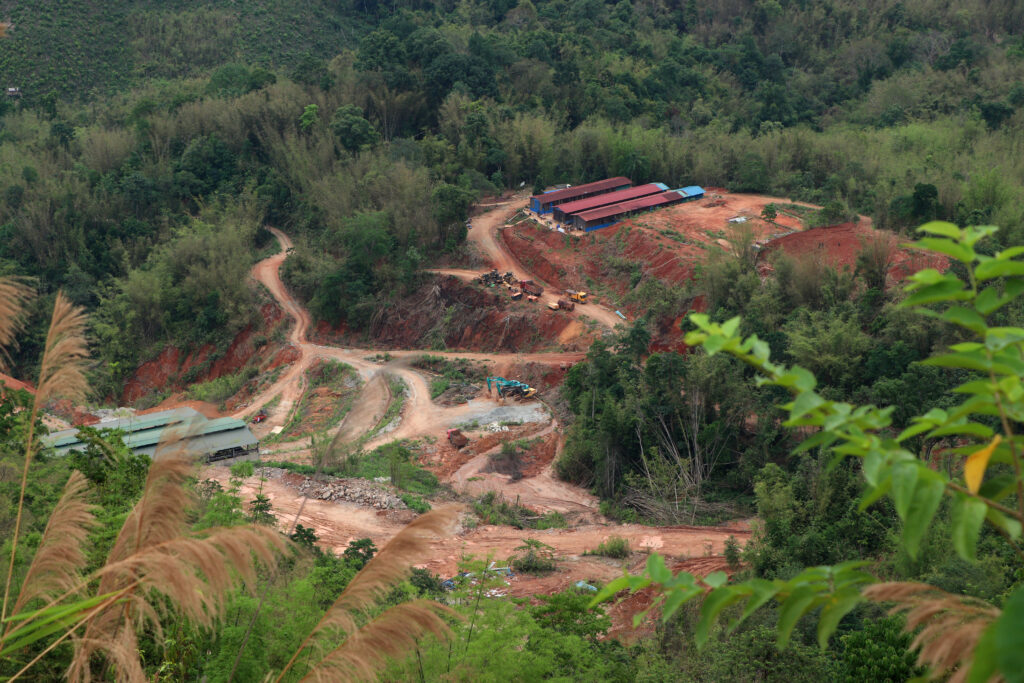
Hundreds of protesting Myanmar tribespeople march up a hillside to a cavernous facility where a Chinese joint venture’s giant milling machines stand ready to grind up the rocks of their ancestral homeland for lead ore.Demand for the heavy metal is forecast to rise, driven by its use in the batteries needed for the global energy transition.But its extraction can pollute the environment and the Pradawng tribespeople carry banners reading: “No transparency, no responsibility”.”We don’t have any plan to exchange this inheritance from our ancestors for money or riches,” said 24-year-old protest leader Khun Khine Min Naing.”This land is the dignity of our tribe.”Since a 2021 coup, Myanmar has been riven by civil war and shattered into a patchwork of loosely governed territories ripe for exploitation by unregulated miners.And neighbouring China is keen to scoop up the minerals and metals Myanmar can supply.The Pradawng — a little-known subtribe of the Kayan ethnic group — claim around 3,000 members and a 381-year lineage in Shan state, in Myanmar’s east.They say Myanmar firm Four Star Company and a Chinese partner have planned a mega-project mining lead upriver from their village, Thi Kyeik, in Pekon township.Heavy machinery began to be installed in February, but the tribe say they were not consulted on the scheme and fear it will taint the area with hazardous chemicals.Locals have blockaded roads to turn back vehicles, and threatened to seize mining equipment, defying possible violent backlash in a country where the right to assemble often depends on the whims of armed guards.”We are only asking for Indigenous rights that we should own,” Khun Khine Min Naing told AFP, demanding mine plans are rolled back until the war is over and they can be scrutinised by a civilian government.- Natural resources -Lead is a toxic metal, most commonly mined for use in lead-acid batteries.Extracting it can pollute local soil and water supplies, with children particularly vulnerable to exposure, according to the World Health Organization (WHO).”We don’t want to leave this land environmentally damaged for the next generation,” said Khun Khine Min Naing. “We don’t want to be regarded as historical criminals.”The Pradawng say Four Star Company has been active locally for two decades and is linked to the local ruling Kayan New Land Party, whose armed wing maintains a ceasefire with Myanmar’s military.The firm could not be reached for comment.Their Chinese partner company is harder to identify, and locals say its involvement was only revealed when its representatives attended a joint event with Four Star Company intended to address community backlash.China shares a 2,100-kilometre (1,300-mile) border with Myanmar and has long been a lucrative market for the country’s natural resources, including jade, gemstones, teak logs and metal ores.It accounts for nearly 98 percent of Myanmar’s lead ore and concentrate exports, according to 2023 World Bank data.The figures say 49,000 tonnes worth $20 million were exported to China that year, but that is likely far short of the true amount.The lack of a central authority means tracking the real scale of mining operations across Myanmar is difficult.But satellite imagery analysis of one hotspot on the Myanmar-China border by the Britain-based Centre for Information Resilience showed the expanse of mining operations there nearly doubled in size between 2018 and 2024.- ‘Only stones for our children’ -Rechargeable lead-acid batteries are widely used in vehicles, including EVs where they provide auxiliary power, as well as for storing power generated by renewable technologies such as wind and solar.The metal — identified by the WHO as “one of 10 chemicals of major public health concern” — sells for around $2,000 per refined tonne on the global market.But the Pradawng people suspect they will see none of the profits.Along with health risks, locals fear environmental damage, with villagers saying increased mining in recent years has led to more flooding and mudslides that carried off entire homes.Mu Ju July, 19, ekes out a living picking through mine slag heaps for scraps of lead to sell.A flurry of prospecting could be a windfall for her, but she worries it will squander the livelihoods and homes of future generations.”If we allow them, we will be okay for only one or two years,” she said. “It will leave only stones when the time comes for our children.”

Trump orders inquiry into ‘conspiracy’ to hide Biden’s health decline

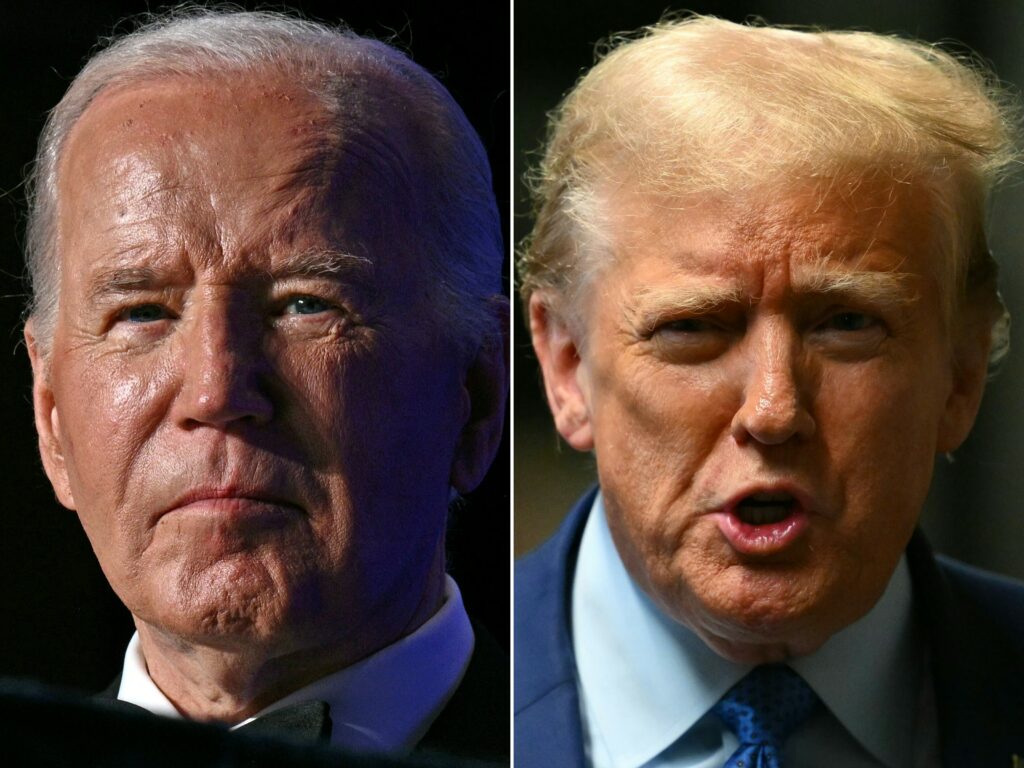
US President Donald Trump on Wednesday ordered an investigation into what Republicans claim was a “conspiracy” to cover up Joe Biden’s declining cognitive health during his time in the White House.The move, which was slammed by Biden, is the latest in a long-running campaign by Trump — with the backing of Republican Party politicians and their cheerleaders in the conservative media — to discredit his predecessor.But it also comes as a growing chorus of Democrats begin to acknowledge the former president appeared to have been slipping in recent years.Those concerns were thrown into stark relief by a disastrous debate performance against Trump during last year’s presidential campaign, in which the then-81-year-old stumbled over his words and repeatedly lost his train of thought.”In recent months, it has become increasingly apparent that former President Biden’s aides abused the power of Presidential signatures through the use of an autopen to conceal Biden’s cognitive decline,” a presidential memorandum issued Wednesday reads.”This conspiracy marks one of the most dangerous and concerning scandals in American history.”The American public was purposefully shielded from discovering who wielded the executive power, all while Biden’s signature was deployed across thousands of documents to effect radical policy shifts.” – ‘Ridiculous and false’ -Biden vehemently denied the allegations.”Let me be clear: I made the decisions during my presidency. I made the decisions about the pardons, executive orders, legislation, and proclamations,” he said in a statement shared with AFP.”Any suggestion that I didn’t is ridiculous and false,” he said, slamming the ordered probe as “nothing more than a distraction by Donald Trump and Congressional Republicans who are working to push disastrous legislation.” Republicans have long claimed that Biden was suffering from intellectual decline even as the White House pressed ahead with major legislation and presidential decrees during his term.They cite his infrequent public appearances, as well as his apparent unwillingness to sit for interviews as evidence of what they say was a man incapable of doing the demanding job of Commander-in-Chief of the United States.They insist that those around him covered up his physical and cognitive decline, taking decisions on his behalf and using a device that could reproduce his signature to allow them to continue to run the country in his name.- ‘Autopen’ -“The Counsel to the President, in consultation with the Attorney General and the head of any other relevant executive department or agency… shall investigate… whether certain individuals conspired to deceive the public about Biden’s mental state and unconstitutionally exercise the authorities and responsibilities of the President,” the document says.The probe will also look at “the circumstances surrounding Biden’s supposed execution of numerous executive actions during his final years in office (including) the policy documents for which the autopen was used (and) who directed that the President’s signature be affixed.”  Biden’s calamitous debate performance ultimately sank his bid for reelection, with key Democratic Party figures soon calling for him to drop out of the race.But it was only several weeks later, after unsuccessful attempts to quieten his critics, that he withdrew, anointing his vice-president Kamala Harris, who eventually lost to Trump.The Democratic Party is increasingly riven by squabbles about whether Biden could have been forced to step down earlier to give the party chance to find a more popular presidential candidate.Biden’s former White House press secretary Karine Jean-Pierre on Wednesday criticized the in-fighting by the Democrats, calling it a “betrayal” of Biden and announcing her departure from the party as a result.The fight has been given oxygen with the publication of a book by journalists Jake Tapper and Alex Thompson that claims the former president’s inner circle connived to keep him from public view because of his decline, which included forgetting familiar faces like Hollywood star and party stalwart George Clooney.Trump’s claims of a cover-up were also boosted by news that Biden is suffering from an “aggressive” prostate cancer, with some voices on the right insisting — without evidence — the diagnosis must have been known some time ago to those close to the former president.

Most Asian markets rise as US data feeds rate-cut hopes

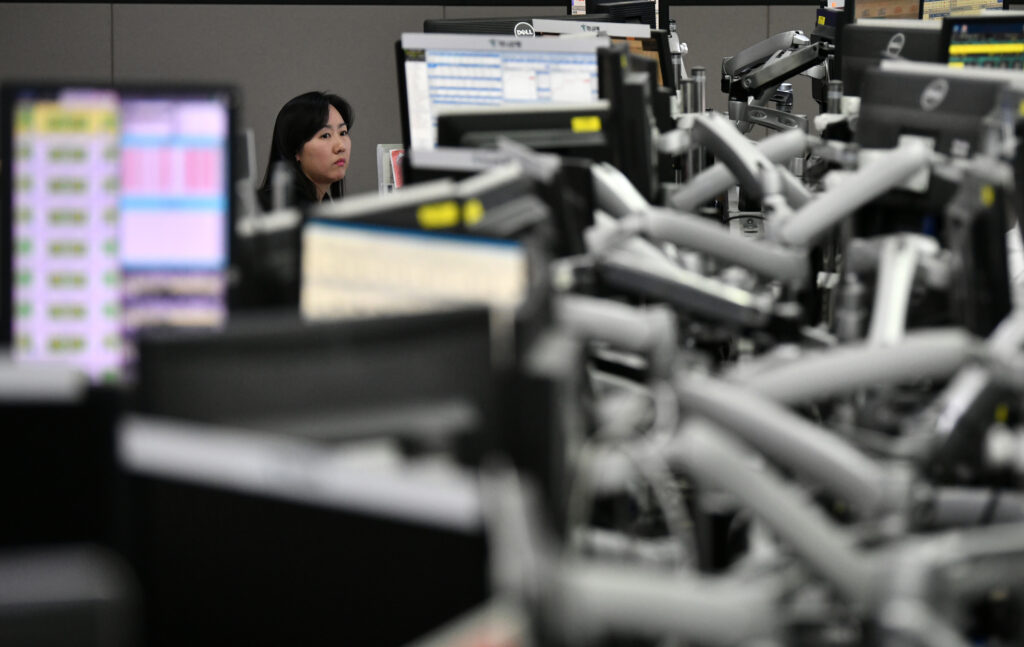
Asian shares mostly rose Thursday after soft US economic data boosted expectations the Federal Reserve will soon cut interest rates and put the focus on key jobs figures coming at the end of the week.Investors were also keeping track of developments in Donald Trump’s trade war and signs of movement on possible talks between the US president and his Chinese counterpart Xi Jinping.Wall Street provided an uninspiring lead as a report by payroll firm ADP showed private-sector jobs rose by 37,000 last month, a sharp slowdown from April’s 60,000 and less than a third of what was forecast in a Bloomberg survey.Another survey showed activity in the services sector contracted in May for the first time since June last year.The readings stoked concerns that the world’s number one economy was stuttering, with the Fed’s closely watched “Beige Book” study noting that “economic activity has declined slightly”.It flagged household and business caution caused by slower hiring and heightened uncertainty surrounding Trump’s policies.However, the readings ramped up bets on a Fed cut, with markets pricing in two by the end of the year, with the first in September. Eyes are now on the non-farm payrolls release on Friday, which the central bank uses to help shape monetary policy.Still, there is some concern that the US president’s tariff blitz will ramp up inflation, which could put pressure on the Fed to keep borrowing costs elevated.Most of Asia rose in early trade, with Hong Kong, Sydney, Singapore, Taipei and Wellington up. Shanghai was flat and Tokyo fell ahead of a closely watched Japanese government bond auction.Seoul rallied more than two percent on continued excitement after the election of a new president ended a six-month power vacuum. The won rose around 0.4 percent, building on a recent run-up.Jakarta edged higher as Indonesia’s government began rolling out a $1.5 billion stimulus package after Southeast Asia’s biggest economy saw its slowest growth in more than three years in the first quarter.The possibility of US rate cuts hit the dollar Wednesday and it struggled to recover in Asia, making small inroads against the yen, pound and euro.Investors are awaiting news of talks between Trump and Xi, with the White House saying they could take place this week.But while tariffs remain a millstone around investors’ necks, IG’s chief market analyst Chris Beauchamp said traders seemed less concerned than they were after the US president’s April 2 “Liberation Day” fireworks.”With markets still rising, the overall view appears to still be that the US is no longer serious about imposing tariffs at the levels seen in April,” he wrote in a commentary.”President Trump appears fixated on a call with China’s president that might help to move the situation forward, but Beijing remains wary of committing itself to any deal.”This does leave markets open to another sudden shock, which might replicate some of the volatility seen in April. But that manic period appears to have dissuaded the administration from further major tariff announcements.”- Key figures at around 0230 GMT -Tokyo – Nikkei 225: DOWN 0.2 percent at 37,658.46 (break)Hong Kong – Hang Seng Index: UP 0.9 percent at 23,871.21Shanghai – Composite: FLAT at 3,374.87Euro/dollar: DOWN at $1.1415 from $1.1417 on WednesdayPound/dollar: DOWN at $1.3546 from $1.3548Dollar/yen: UP at 142.94 yen from 142.86 yenEuro/pound: UP at 84.27 pence from 84.26 penceWest Texas Intermediate: DOWN 0.1 percent at $62.77 per barrelBrent North Sea Crude: FLAT at $64.88 per barrelNew York – Dow: DOWN 0.2 percent at 42,427.74 (close)London – FTSE 100: UP 0.2 percent at 8,801.29 (close)

L’Assemblée vote sur les retraites… deux ans après la promulgation de la réforme

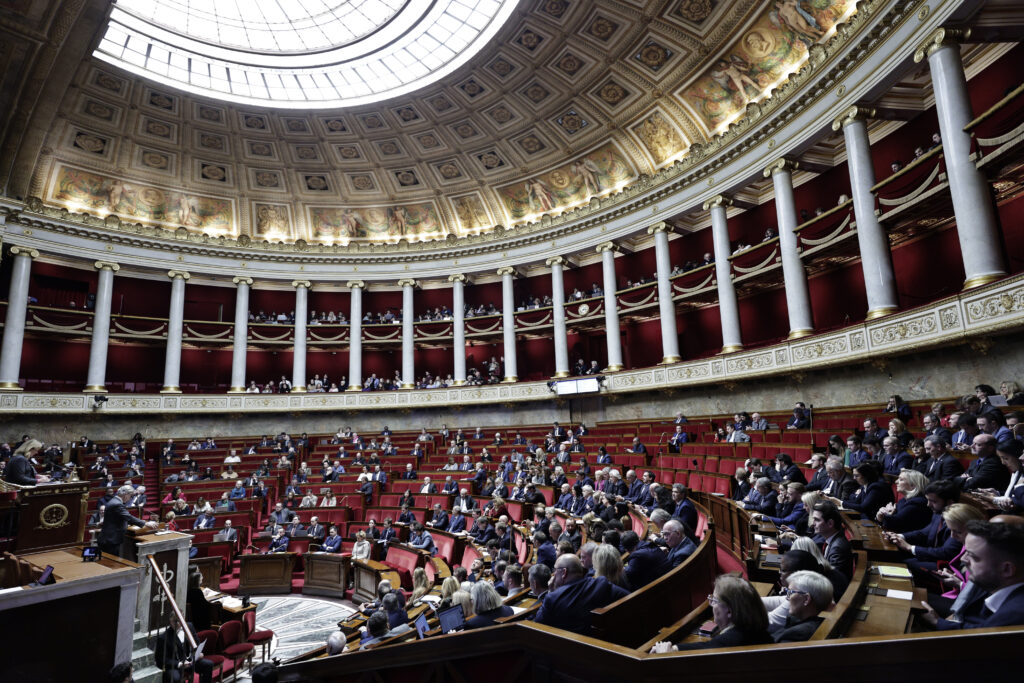
Plus de deux ans après la promulgation de la réforme des retraites, et à quelques jours de la fin des travaux du “conclave” de partenaires sociaux censés y réfléchir de nouveau, les députés votent jeudi sur le sujet, à la faveur d’une résolution déposée par le groupe GDR (communistes et ultra-marins).Cette résolution, qui a de fortes chances d’être adoptée, grâce au soutien de l’ensemble de la gauche et du RN, n’aura aucune valeur normative. Mais les communistes espèrent en faire un levier politique pour ranimer la contestation, alors qu’une journée de manifestation et de grèves est justement organisée jeudi, à l’appel de la CGT.Quelque 165 points de rassemblement sont prévus en France. A Paris, le cortège s’élancera à 14H00 depuis l’Ecole militaire et doit passer à proximité du lieu où la concertation sur les retraites se poursuit.La proposition de résolution sera examinée dès 09H00, à l’entame de la “niche” parlementaire de GDR, la journée annuelle consacrée à ses initiatives.Elle “affirme l’impérieuse nécessité d’aboutir à l’abrogation des mesures les plus régressives” de la loi du 14 avril 2023, à savoir “le recul de l’âge légal de départ à la retraite de 62 à 64 ans et l’augmentation de la durée de cotisation portée à 43 annuités dès 2027″.”Enfin l’Assemblée nationale pour la première fois s’exprimera sur le sujet”, s’enthousiasmait fin avril le président du groupe, le député de Seine-Saint-Denis Stéphane Peu.Aucun vote n’a jusqu’à présent pu avoir lieu au Palais Bourbon sur la réforme, adoptée via l’article 49 alinéa 3 de la Constitution. La première ministre d’alors Elisabeth Borne avait engagé sa responsabilité sur le texte sans être renversée.Par la suite, plusieurs tentatives menées par différents groupes ont échoué, la dernière en date étant celle de LFI, dans sa niche parlementaire fin novembre. La proposition de loi des Insoumis n’avait pu aboutir, victime de l’obstruction du camp gouvernemental.Une tactique que le PCF entend déjouer avec sa proposition de résolution, qui ne donne pas lieu à l’examen d’amendements.- Effets “puissants” -Si le texte n’aura pas force de loi, Stéphane Peu en attend des “effets (…) très puissants”.”Et éventuellement d’ailleurs un peu de carburant pour une remobilisation sociale sur le sujet, et peut-être aussi un raffermissement ou une relance de l’intersyndicale très large qu’on avait connue en 2023″, a-t-il espéré devant l’Association des journalistes parlementaires (AJP) mercredi.Le sujet a retrouvé une actualité en janvier, à la faveur du compromis noué entre le Premier ministre François Bayrou et le groupe PS à l’Assemblée.Ces derniers ont accepté de ne pas censurer son gouvernement, contre un ensemble de promesses, dont la remise en chantier de la réforme des retraites.Mais après l’enthousiasme a rapidement point la déception. Après avoir appelé à des discussions “sans totem ni tabou”, le Premier ministre a successivement imposé l’objectif d’un équilibre financier en 2030, puis fermé la porte à un retour aux 62 ans. Les syndicats FO et CGT ont claqué la porte dès le début des discussions.Les organisations restant autour de la table prévoient de clore leurs travaux le 17 juin. Pour l’instant, le Medef n’a exprimé aucune ouverture quant aux demandes des syndicats de salariés, qui veulent notamment obtenir des possibilités de partir plus tôt pour les femmes qui ont eu des enfants, ou pour les personnes ayant travaillé dans des conditions pénibles ou usantes.Quant aux députés socialistes, ils agitent de nouveau la menace d’une censure du gouvernement Bayrou, si ce dernier ne soumet pas au Parlement un éventuel accord entre les partenaires sociaux.Du côté de la coalition gouvernementale, la proposition de résolution GDR est accueillie avec une certaine indifférence. “Avant, toutes les niches de la gauche avaient un texte pour abolir la réforme des retraites, maintenant on chemine vers +peut-être qu’il faudrait qu’on se pose la question d’avoir un vote+. Je crois qu’ils n’y croient pas vraiment non plus”, a ironisé mardi le porte-parole du groupe MoDem, Erwan Balanant.

Crises internationales et Mercosur au menu de la visite d’Etat de Lula en France

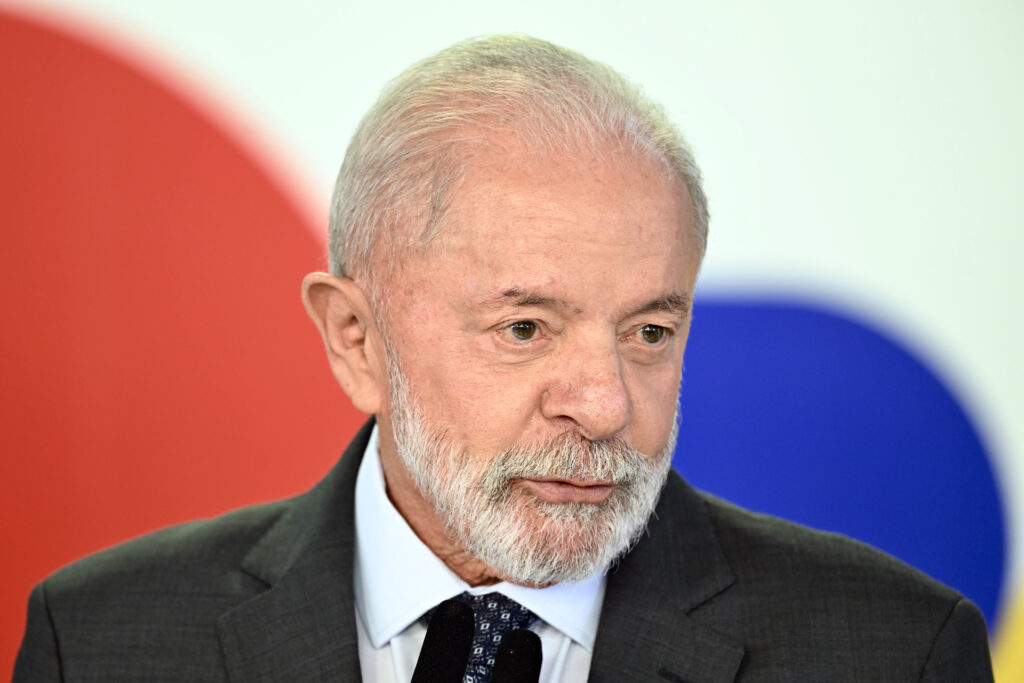
Le président brésilien Luiz Inácio Lula da Silva, puissante voix des pays du “Sud global”, entame jeudi une visite d’Etat en France au cours de laquelle seront abordés les crises internationales ainsi que l’accord de libre-échange entre l’UE et le Mercosur, auquel Paris est fermement opposé.Il s’agit de la première visite d’Etat en France d’un président brésilien depuis 2012, et elle intervient à quelques mois de la COP organisée par le Brésil en novembre prochain.Lula sera accueilli avec une cérémonie aux Invalides, avant un déjeuner de travail à l’Elysée avec le président français Emmanuel Macron, suivi d’un dîner d’Etat dans la soirée.Les deux hommes entretiennent des relations chaleureuses, malgré les différends.La visite de M. Lula, qui avait lui-même accueilli son homologue français en mars 2024, vise selon le président brésilien à “renforcer” les liens stratégiques entre les deux pays. Une douzaine d’accords de coopération dans les domaines de l’environnement, de la technologie, de la défense, de l’énergie et de la santé devraient être signés.- Crises internationales -Dans le contexte mondial mouvementé, marqué notamment par les surtaxes douanières imposées par le président américain Donald Trump à ses partenaires, et par les guerres en Ukraine et au Proche-Orient, “il est d’autant plus important de retrouver des convergences avec le Brésil, un grand Etat émergent” qui assure cette année la présidence tournante du bloc des Brics, a souligné l’Elysée.La France compte notamment sur la mobilisation du Brésil, qui a reconnu l’Etat palestinien en 2010, pour peser sur l’issue de la conférence organisée par la France et l’Arabie saoudite à l’ONU mi-juin, visant à redonner un élan à une solution politique au conflit israélo-palestinien.”Il n’y aura pas de paix tant que qu’on n’aura pas conscience que le peuple palestinien a droit à son Etat”, a déclaré Lula mardi, quelques heures avant son départ pour Paris.”C’est justement en raison des souffrances du peuple juif dans son histoire que le gouvernement d’Israël devrait traiter le peuple palestinien avec humanisme et bon sens”, a ajouté le président brésilien, qualifiant l’offensive israélienne à Gaza de “génocide”, comme il l’avait déjà fait à plusieurs reprises par le passé.Concernant l’Ukraine, la France “compte présenter au président Lula l’état du dossier”, avec “une partie agressée qui est prête à la paix, et une autre partie, l’agresseur, qui refuse toute proposition de paix ou de dialogue”.Le Brésil, qui préside actuellement le groupe des pays émergents des BRICS, continue d’entretenir de bonnes relations avec la Russie et Lula était à Moscou le 9 mai pour les commémorations de la victoire contre l’Allemagne nazie, où il a été reçu par le président russe Vladimir Poutine.- Mercosur – L’accord de libre échange entre l’UE et des pays d’Amérique latine sera en toile de fond de la visite de Lula en France.Cet accord avec l’Argentine, le Brésil, l’Uruguay et le Paraguay doit permettre à l’UE d’exporter notamment plus de voitures, de machines et de spiritueux, en échange de l’entrée de viandes, sucre, riz, miel ou soja sud-américains.Paris s’oppose à cet accord “dans sa forme actuelle”, contrairement à d’autres pays européens comme l’Allemagne ou l’Espagne.A la veille du début de la visite du président brésilien, des députés français ont réuni mercredi plusieurs filières agricoles à l’Assemblée pour réaffirmer leur opposition à l’accord.Jean-François Guihard, président de l’interprofession du bétail et des viandes (Interbev), a notamment appelé Emmanuel Macron à être “extrêmement ferme” face au président brésilien “pour dire que cet accord n’est pas possible”.Mais en pleine guerre commerciale avec les Etats-Unis, “il y a un nouveau contexte international” qui devrait pousser en faveur de l’accord, selon la diplomatie brésilienne.Après sa visite à Paris, le président brésilien participera le 8 juin à un sommet économique à Monaco, puis sera à Nice le 9 avec le président Macron pour l’ouverture de la conférence de l’ONU sur les océans.