



Stocks rally as Iran-Israel ceasefire holds, oil claws back some losses
Most equities extended a global rally Wednesday after Iran and Israel agreed to a ceasefire that ended more than a week of hostilities, while the dollar held losses following a sharp drop stoked by bets on a US interest rate cut.However, wariness over the agreement involving the Middle East foes helped oil prices climb, though they are still well down from their highs on Monday.Investors around the world breathed a sigh of relief after Donald Trump announced the ceasefire days after US forces bombed Iran’s nuclear sites, which he said were “completely destroyed”.The Israeli government said it had agreed to the US deal after achieving all of its objectives in the war with Iran, with Prime Minister Benjamin Netanyahu hailing a “historic victory” after 12 days of bombing.Stocks surged on the news, and the optimism rolled into Wednesday, with Hong Kong, Shanghai, Tokyo, Sydney and Singapore leading the gains across Asia. There were small losses in Wellington, Bangkok and Jakarta.London, Paris and Frankfurt were also on the front foot.Oil prices, which tanked on news of the ceasefire, rose with both main contracts up nearly two percent.However, they are still down around 15 percent from the highs hit Monday in the first reaction to the US bombing of Iran and before the ceasefire announcement.The mood was also helped by Fed boss Jerome Powell choosing not to pour cold water on the prospects of a rate cut.In closely watched testimony to Congress, he said that “if it turns out that inflation pressures do remain contained, then we will get to a place where we cut rates sooner rather than later”.While he said “I don’t think we need to be in any rush because the economy is still strong”, the comments indicated a flexible tone. They also came after Fed governors Christopher Waller and Michelle Bowman suggested officials could reduce borrowing costs next month.The dollar tumbled against its peers and remained under pressure against the yen, pound and euro in Asian trade.”The market staged a full-throttle risk-on revival, launching global equities into the stratosphere as oil prices cratered and rate-cut bets gained momentum,” said SPI Asset Management’s Stephen Innes.”With the Middle East truce — however duct-taped and temperamental — holding long enough to calm headlines, traders pulled the ripcord on the fear trade and dove headfirst into equities.”Trump’s… scolding of Israel and Iran added ice water to the fire — or at least enough jawbone to muzzle the Middle East combatants for now.”- Key figures at around 0810 GMT -Tokyo – Nikkei 225: UP 0.4 percent at 38,942.07 (close)Hong Kong – Hang Seng Index: UP 1.2 percent at 24,474.67 (close)Shanghai – Composite: UP 1.0 percent at 3,455.97 (close)London – FTSE 100: UP 0.3 percent at 8,786.74West Texas Intermediate: UP 1.9 percent at $65.58 per barrelBrent North Sea Crude: UP 1.9 percent at $68.43 per barrelEuro/dollar: DOWN at $1.1600 from $1.1625 on TuesdayPound/dollar: DOWN at $1.3610 from $1.3616Dollar/yen: UP at 145.30 yen from 144.89 yenEuro/pound: DOWN at 85.21 pence from 85.24 penceNew York – Dow: UP 1.2 percent at 43,089.02 (close)

Turkey breathes easier as Iran-Israel truce eases fallout risk
As the fragile Iran-Israel truce took hold, there was no letup in Turkey’s diplomatic efforts Wednesday to prevent any return to a conflict fraught with risk for Ankara’s domestic and regional policies. Hours after US President Donald Trump announced the ceasefire, Turkey’s President Recep Tayyip Erdogan met him for talks on the sidelines of a NATO summit for their third conversation in 10 days. Erdogan’s “intensive diplomatic efforts” to curb the conflict also involved calls with Russia’s Vladimir Putin, Iran’s Masoud Pezeshkian and top Middle Eastern leaders.”Turkey has been trying very hard to de-escalate the situation, but it’s not seen as a credible mediator, neither by Iran nor by Israel,” Gonul Tol of the Washington-based Middle East Institute told AFP.Turkey’s ties with Israel have been shattered by the Gaza war and Iranians see Ankara as complicit “because it hosts this strategic radar”, she said of a NATO early-warning system at Kurecik base in eastern Turkey that can detect Iranian missile launches. Turkey has categorically denied radar data was used to help Israel but its presence has rattled Iran — with several Iranian military officials warning it could be “the first target” in case of a wider war, she said. Even so, Erdogan reportedly sought to set up US-Iran talks in Istanbul last week, which only failed because Iran’s Ayatollah Ali Khamenei — in hiding due to assassination threats — couldn’t be reached to approve it, the Axios news site said. Unsettled by the long arm of Israel’s reach, Erdogan upped Turkey’s deterrence, ordering the defence industry to increase production of medium and long-range missiles. warning Ankara was “making preparations for every kind of scenario”. “Concerns about a possible Turkish-Israeli confrontation in the short term seem exaggerated… (but) both would be wise to reduce tensions,” said Gallia Lindenstrauss, senior research fellow at the Institute for National Security Studies (INSS).- Fears of Iran in chaos -For Turkey, the big fear would be seeing neighbouring Iran plunged into chaos as happened in Iraq and Syria, said Soner Cagaptay of the Washington Institute of Near East Policy. “Ankara absolutely does not want to see Iran descending into chaos, decentralisation or civil war which could create cross-border threats or fresh refugee flows,” he told AFP.In Iraq and Syria, destabilisation had created a power vacuum that was used by the Islamic State (IS) group and Kurdish PKK militants “to launch attacks into Turkey”, fuelling Ankara’s efforts to support both nations’ recentralisation, he said. But “the biggest risk” would be another flow of refugees: “If Iran collapses, there’s only one country the Iranians will flee to in large numbers: Turkey,” he said.On Friday, Erdogan warned Germany’s Friedrich Merz the conflict “could harm the region and Europe in terms of migration” although there was no sign of any influx at the Turkish border last week. – Risk to Turkey’s PKK move? -Turmoil in Iran could also harm Ankara’s efforts to draw a line under its decades-long conflict with the PKK, which last month said it would disarm, Tol said. Although most PKK-linked groups embraced the call to disarm, its Iranian affiliate, the Kurdistan Free Life Party (PJAK), did not, with Ankara concerned any unrest could embolden recalcitrant Kurdish separatists. “The worry is that this chaos may strengthen the PJAK. There are PKK fractions who are not happy with (founder Abdullah) Ocalan’s call who could think: why disarm now when there’s so much chaos we can capitalise on,” she told AFP. A more immediate concern for Turkey was the economic implications of the conflict, she said, with its crisis-hit economy already “struggling” with rising energy prices while fighting hard to bring down inflation. “But if Iran closed down (the Strait of) Hormuz, that would mean a bigger jump in energy prices and that’s something Turkey is deeply worried about,” she said.Oil prices spiked during the 11-day conflict as concerns grew that Iran might disrupt supplies passing through Hormuz, peaking on Monday after US warplanes hit Iran. With the ceasefire taking hold, Turkey was breathing easier Wednesday — although the Iran-Israel crisis remained high on the agenda at the NATO summit.
Orages: 50 départements en vigilance orange mercredi
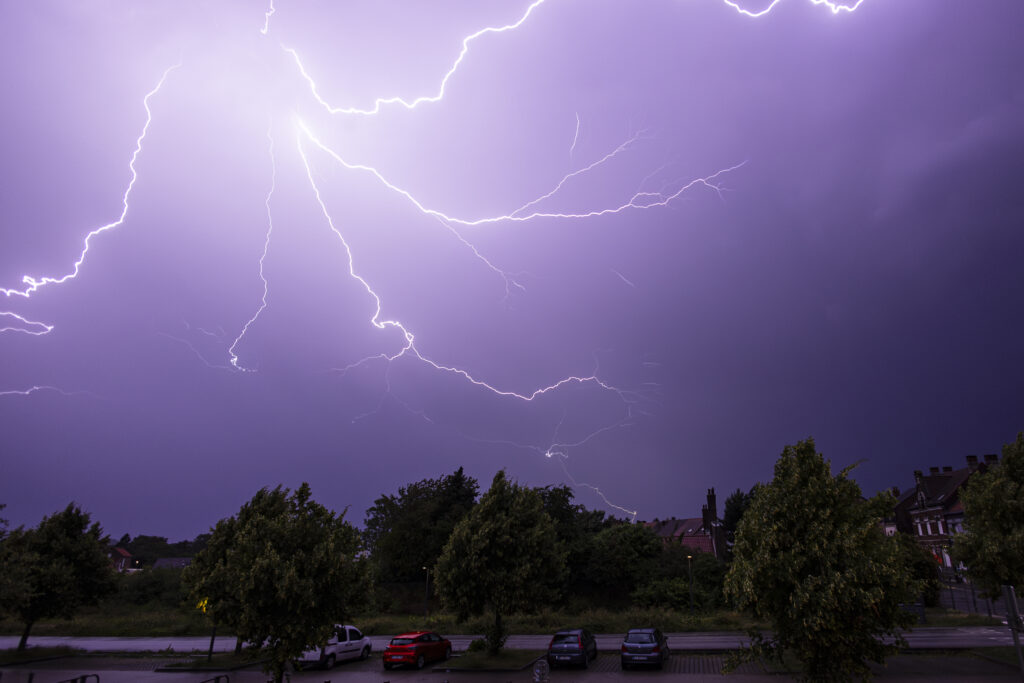
Cinquante départements seront mercredi en vigilance orange dès 16H00 pour les orages, a annoncé mercredi Météo-France qui prévoit des “orages violents sur un très large axe central du pays”.En plus du Rhône et de l’Isère en vigilance orange pour canicule mercredi et jeudi, 50 départements seront placés en vigilance orange à partir de la fin d’après-midi pour des orages: la Champagne (52-10-51), la Picardie (60-02-80), la Normandie, Mayenne, Sarthe, l’Ile-de-France, le Centre-Val-de-Loire, la Bourgogne (89-21-58-71), Allier, Puy-de-Dôme, Cantal, Loire, le Limousin (87-23-19), Midi-Pyrénées sauf Ariège et Hautes-Pyrénées (soit les 46-12-81-82-32-31), le Lot-et-Garonne, la Dordogne, la Charente, la Vienne, les Pyrénées-Atlantiques, les Landes et la Gironde.Dans les départements limitrophes de ceux placés en vigilance orange, une “aggravation du niveau de vigilance est possible” lors des prochaines actualisations, prévient Météo-France dans son bulletin diffusé mercredi de 10H.Les orages se déclencheront en deuxième partie d’après-midi, et plutôt en soirée en allant vers l’Ile-de-France, la Champagne et la Picardie.Météo-France prévoit ainsi de fortes pluies (30 à 50 mm en une à deux heures), localement des chutes de grêle de taille moyenne à grosse (jusqu’à deux à cinq cm), et des rafales pouvant atteindre 100 km/h.D’autres orages se développeront en fin d’après-midi et soirée sur la Normandie et le nord des Pays de la Loire, parfois associés à de fortes rafales, à de la grêle et de fortes pluies.Pour la première fois de l’année en France métropolitaine, “les 40°C ont été atteints dans le Languedoc au pied des Cévennes à Moulès-et-Baucels (Hérault, NDLR) où on a relevé 40,2 °C”, a annoncé Météo-France mardi en fin de journée.Cette barre symbolique avait été franchie pour la première fois mi-juillet l’année précédente.Mercredi, des pointes à 36/38°C sont attendues notamment sur le sud du Rhône et le nord de l’Isère, selon le dernier bulletin de Météo-France. Les minimales jeudi matin resteront tropicales, autour de 20 à 22°C dans les agglomérations de Lyon et Grenoble.Un rafraîchissement s’opèrera par l’ouest avec l’arrivée des orages avant une baisse notable généralisée jeudi sauf sur le pourtour méditerranéen.La France est traversée depuis le 21 juin par sa 50e vague de chaleur nationale depuis 1947, dont la moitié ont été subies au 21e siècle, conséquence du réchauffement climatique qui augemente l’intensité et la fréquence des canicules.
Orages: 50 départements en vigilance orange mercredi
Cinquante départements seront mercredi en vigilance orange dès 16H00 pour les orages, a annoncé mercredi Météo-France qui prévoit des “orages violents sur un très large axe central du pays”.En plus du Rhône et de l’Isère en vigilance orange pour canicule mercredi et jeudi, 50 départements seront placés en vigilance orange à partir de la fin d’après-midi pour des orages: la Champagne (52-10-51), la Picardie (60-02-80), la Normandie, Mayenne, Sarthe, l’Ile-de-France, le Centre-Val-de-Loire, la Bourgogne (89-21-58-71), Allier, Puy-de-Dôme, Cantal, Loire, le Limousin (87-23-19), Midi-Pyrénées sauf Ariège et Hautes-Pyrénées (soit les 46-12-81-82-32-31), le Lot-et-Garonne, la Dordogne, la Charente, la Vienne, les Pyrénées-Atlantiques, les Landes et la Gironde.Dans les départements limitrophes de ceux placés en vigilance orange, une “aggravation du niveau de vigilance est possible” lors des prochaines actualisations, prévient Météo-France dans son bulletin diffusé mercredi de 10H.Les orages se déclencheront en deuxième partie d’après-midi, et plutôt en soirée en allant vers l’Ile-de-France, la Champagne et la Picardie.Météo-France prévoit ainsi de fortes pluies (30 à 50 mm en une à deux heures), localement des chutes de grêle de taille moyenne à grosse (jusqu’à deux à cinq cm), et des rafales pouvant atteindre 100 km/h.D’autres orages se développeront en fin d’après-midi et soirée sur la Normandie et le nord des Pays de la Loire, parfois associés à de fortes rafales, à de la grêle et de fortes pluies.Pour la première fois de l’année en France métropolitaine, “les 40°C ont été atteints dans le Languedoc au pied des Cévennes à Moulès-et-Baucels (Hérault, NDLR) où on a relevé 40,2 °C”, a annoncé Météo-France mardi en fin de journée.Cette barre symbolique avait été franchie pour la première fois mi-juillet l’année précédente.Mercredi, des pointes à 36/38°C sont attendues notamment sur le sud du Rhône et le nord de l’Isère, selon le dernier bulletin de Météo-France. Les minimales jeudi matin resteront tropicales, autour de 20 à 22°C dans les agglomérations de Lyon et Grenoble.Un rafraîchissement s’opèrera par l’ouest avec l’arrivée des orages avant une baisse notable généralisée jeudi sauf sur le pourtour méditerranéen.La France est traversée depuis le 21 juin par sa 50e vague de chaleur nationale depuis 1947, dont la moitié ont été subies au 21e siècle, conséquence du réchauffement climatique qui augemente l’intensité et la fréquence des canicules.
La Bourse de Paris avance prudemment avec la trêve Iran-Israël
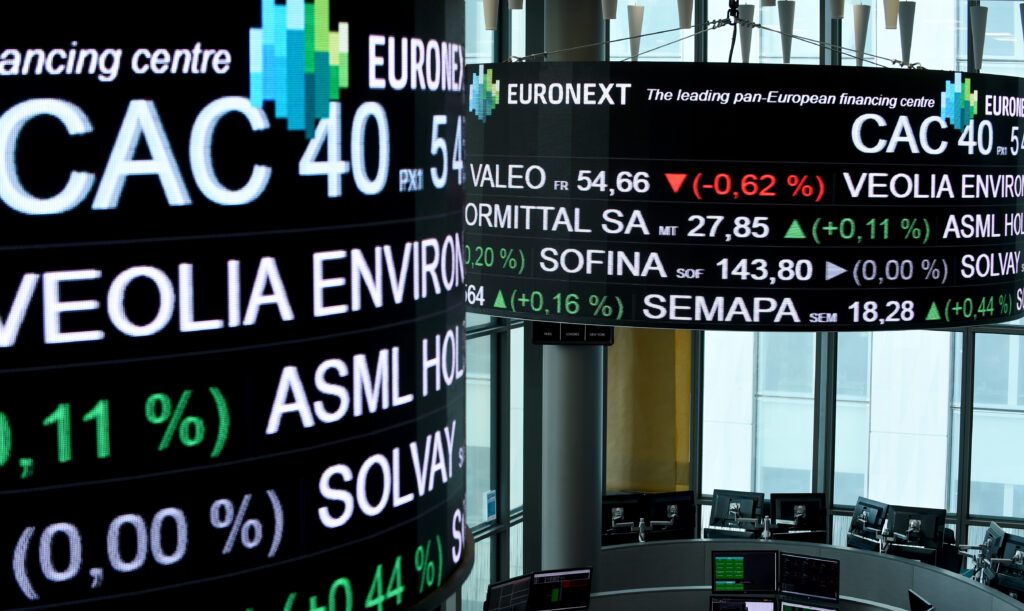
La Bourse de Paris avance doucement mercredi, optimiste avec l’entrée en vigueur d’une trêve entre l’Iran et Israël, mais prudente face à sa fragilité.L’indice vedette de la place de Paris, le CAC 40, prenait 0,30%, soit un gain de 23,12 points, pour s’établir à 7.639,11 points vers 10H00 heure de la capitale. La veille, il avait terminé en hausse de 1,04%, s’établissant à 7.615,99 points.Mardi, les actions avaient fortement rebondi “alors que le cessez-le-feu entre Israël et l’Iran sembl(ait) tenir”, “mais les gains ce matin sont bien plus modérés, les investisseurs marquant une pause pour observer la suite des événements”, note Neil Wilson, analyste de Saxo Markets.Un fragile cessez-le-feu entre l’Iran et Israël, annoncé par le président américain Donald Trump, est en vigueur mercredi après une guerre de 12 jours lancée par les autorités israéliennes pour, selon elles, empêcher Téhéran de se doter de l’arme atomique.Les ennemis ont tous deux crié “victoire”, Israël jurant que l’Iran n’aurait jamais l’arme atomique et Téhéran affirmant qu’il ne cherchait pas à l’acquérir.”Israël et l’Iran semblent respecter l’accord de cessez-le-feu négocié par les États-Unis, après une réponse ferme de Trump face à des rapports faisant état de violations initiales par les deux camps”, note Neil Wilson.Selon lui, “l’optimisme ne s’était jamais totalement évaporé pendant les 12 jours de conflit, si bien que le rebond actuel reste modéré”.L’attention des marchés se porte également vers le sommet de l’Otan à La Haye mercredi, où les pays membres devraient s’engager sur une hausse substantielle de leurs dépenses militaires, jusqu’à 5% de leur Produit intérieur brut (PIB) d’ici 2035.Le secteur de la défense profitait de la dynamique, Dassault Aviation s’octroyant 1,44% à 296,20 euros et Thales 1,26% à 240,80 euros vers 10H00.Worldline dégringoleLe spécialiste français des paiements électroniques Worldline est accusé d’avoir opéré des milliards d’euros de paiements “frauduleux” ou “contraires à l’éthique” pour le compte “d’arnaqueurs en ligne, casinos illégaux, groupes pornos controversés, sites de prostitution”, d’après une enquête publiée mercredi, menée par 21 médias internationaux dont Mediapart, coordonnés par le collectif de journalistes et le réseau de médias European Investigative Collaborations (EIC).Worldline a réagi dans un communiqué mercredi, rappelant que le groupe “évolue dans un environnement réglementaire exigeant et en constante évolution, en particulier dans les secteurs HBR (High Business Risk), tels que les casinos en ligne, les plateformes de courtage en ligne ou les services de rencontres pour adultes”. Le groupe indique avoir renforcé depuis 2023 “son cadre de gestion des risques” et résilié les relations commerciales non conformes à ce cadre, en particulier dans son portefeuille HBR.L’action Worldline chutait de 24,95% à 3,47 euros à la Bourse de Paris vers 10H00.
US Supreme Court ending term with birthright, porn, voting rights
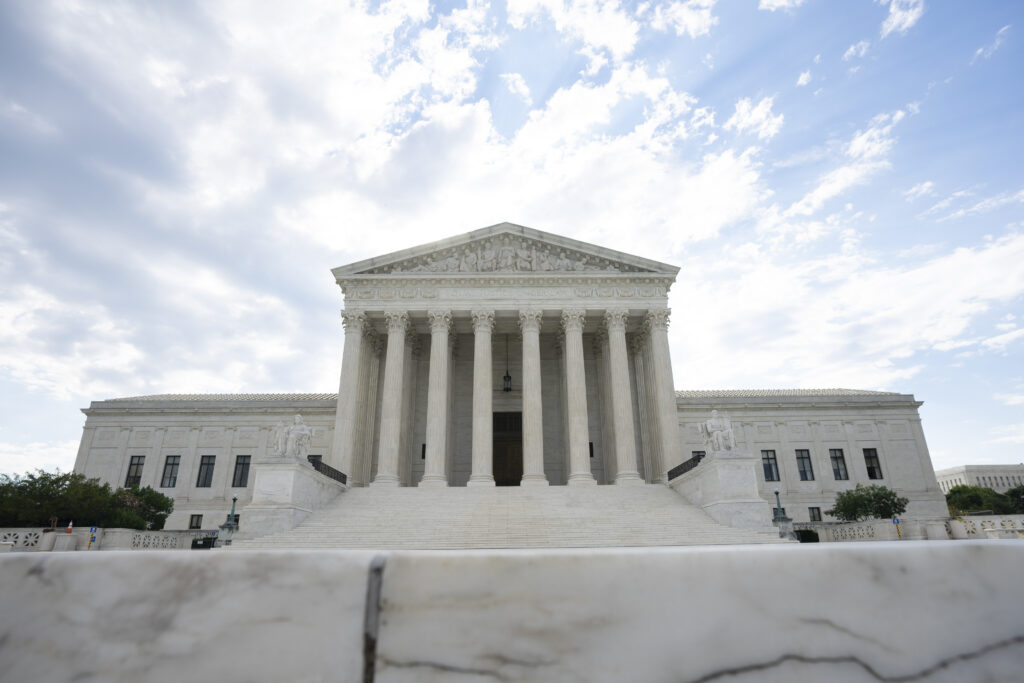
As the US Supreme Court winds down its term ahead of the summer break, there are a number of cases still to be decided.The court is scheduled to issue opinions on Thursday and these are the major outstanding cases:- Birthright citizenship -The case is ostensibly about Donald Trump’s bid to scrap birthright citizenship but it actually turns on whether federal judges have the right to issue nationwide blocks to presidential decrees.It is perhaps the most significant of the remaining cases since it could have far-reaching ramifications for the ability of the judiciary to rein in Trump or future US presidents.Trump’s executive order ending automatic citizenship for children born on American soil has been paused by district courts in Maryland, Massachusetts and Washington that deemed it unconstitutional.But the question before the Supreme Court is whether a single district court can freeze an executive branch move with a universal injunction.The Trump administration is asking the Supreme Court to restrict the application of a district court’s injunction solely to the parties who brought the case and the district where the judge presides.Whatever the nine justices decide, the actual question of whether Trump can legally end birthright citizenship is expected to be back in front of the top court before long.- Porn site age verification -The case — Free Speech Coalition vs Paxton — involves a Texas law requiring pornographic websites to verify visitors’ ages, part of a growing effort to limit access by minors to online sexual content.Texas is one of nearly 20 states to institute such a requirement, which critics argue violates First Amendment free speech rights.A district court sided with a challenge by an adult entertainment industry trade group, the Free Speech Coalition, saying the law restricted access by adults to constitutionally protected content.But a conservative-dominated appeals court upheld the age verification requirement, prompting the trade group to take its case to the Supreme Court, where conservatives have a 6-3 supermajority.- Students and LGBTQ-themed content -This religious rights case examines whether parents have the right to pull their children from public school classes when books containing LGBTQ-related content are read or discussed.The schools, in a Maryland county, had offered parents the chance to opt out of classes featuring books aimed at combating prejudice and discussing gender identity and homosexuality, but later retracted the option.Parents are suing because the opt-outs were canceled. They say the schools’ inclusive curriculum choices infringe on their Christian and Muslim faiths and First Amendment rights. Court precedent has generally established that exposing students to ideas contrary to religion does not constitute coercion.- Planned Parenthood funding -South Carolina’s Republican governor, Henry McMaster, issued an executive order in 2018 cutting off reimbursements to the two Planned Parenthood clinics in the state for services the reproductive health organization provided to low-income Americans under the government Medicaid program.The Medicaid reimbursements were not for abortion-related services, but McMaster said providing any funding to Planned Parenthood amounts to a taxpayer “subsidy of abortion,” which is banned in South Carolina for women who are more than six weeks pregnant.Planned Parenthood, which provides a range of health services, filed suit against the state arguing that Medicaid patients have the right to receive care from any qualified provider.An appeals court ruled that Planned Parenthood cannot be excluded from the state’s Medicaid program and South Carolina appealed to the Supreme Court.- Voting rights -This case is a challenge by a group of white voters to a congressional map adopted last year by the state legislature of Louisiana creating a second Black majority district.Black people make up one-third of the population of Louisiana, which has six congressional districts, and generally vote Democratic.Opponents of the redrawn map argue that using race to design congressional maps is racial gerrymandering prohibited by the Constitution.The eventual Supreme Court ruling could have an impact on whether Democrats or Republicans control the House of Representatives in the 2026 midterm elections.