


Europe leaders call Trump after Ukraine security guarantees summit
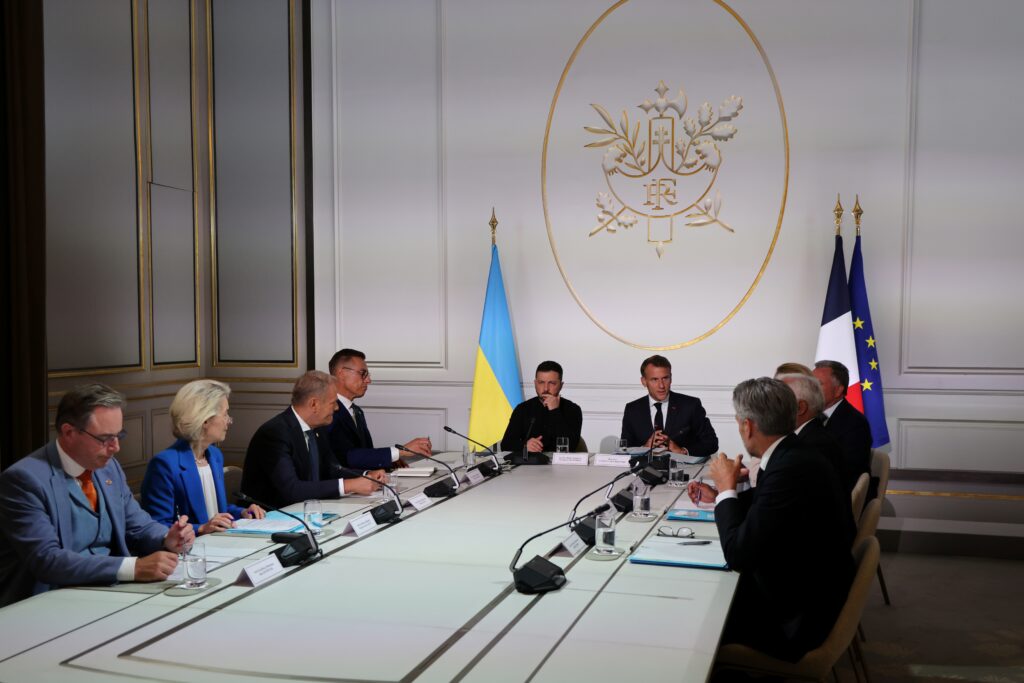
European leaders on Thursday spoke to US President Donald Trump after holding a summit with President Volodymyr Zelensky on security guarantees for Kyiv in the event of a peace accord to end Russia’s three-and-a-half war against Ukraine.The guarantees by the so-called coalition of the willing, which remain under wraps but are expected to include ramped-up training for the Ukrainian army and deployment of troops by some European states, have angered Russia.They form part of a push led by French President Emmanuel Macron to show that Europe can act independently of Washington after Trump upended US foreign policy and launched direct talks with Russian leader Vladimir Putin after returning to the White House.The summit, co-chaired by Macron and British Prime Minister Keir Starmer, aimed to firm up plans on security guarantees for Ukraine if or when there is a ceasefire, and get a clearer picture of US involvement. The United States was represented at the talks by Trump’s special envoy Steve Witkoff, who also met with Zelensky separately.Some of the leaders, such as Zelensky, attended in person while others, including Starmer, remotely. The call with Trump took place by videoconference.During the summit Starmer said it was necessary “to go even further to apply pressure on Putin to secure a cessation of hostilities”, a Downing Street spokeswoman said.”The prime minister said Putin could not be trusted as he continued to delay peace talks and simultaneously carry out egregious attacks on Ukraine,” she added.Russia has heaped scorn on European security guarantee plans, with Putin saying Moscow is willing to “resolve all our tasks militarily” in the absence of a peace deal acceptable to the Kremlin. He has indicated he does not want to see European troops in post-war Ukraine.The coalition of the willing includes around 30 nations backing Ukraine, mainly European but also Canada, Australia and Japan.- ‘Not up to them’ – “Europe is ready, for the first time with this level of commitment and intensity,” Macron said Wednesday as he welcomed Zelensky, adding that preparatory work on the guarantees was complete.But there appears to be no agreement on a course of action, with the nature of the guarantees sketchy and some countries reluctant to commit to sending troops.German Chancellor Friedrich Merz has said it is premature to discuss the possible deployment of German peacekeeping troops to Ukraine, while not entirely ruling out the prospect.Germany wants to help strengthen Ukraine’s air defences, offer other weaponry and military training, a government source told AFP.Frustration has been building in the West over what leaders say is Putin’s unwillingness to strike a deal to end the conflict.Zelensky says he has not seen “any signs from Russia that they want to end the war”. Before the Paris talks, Russian foreign ministry spokeswoman Maria Zakharova said Moscow would not consider the deployment of foreign troops in Ukraine “in any format”.”It’s not for them to decide,” NATO chief Mark Rutte shot back Thursday.”I think we really have to stop making Putin too powerful.”- ‘War criminal’ – The gathering took place after Putin’s high-profile trips to China and the United States.Speaking Wednesday in Beijing, where he attended a massive military parade alongside Chinese President Xi Jinping, Putin hailed his forces’ progress in Ukraine, adding that Russian troops were advancing on “all fronts”.In unprecedented scenes, Putin was pictured shaking hands and chatting with Xi and North Korean leader Kim Jong Un as they walked down a red carpet by Tiananmen Square.Last month Trump rolled out a red carpet for Putin in Alaska but those talks yielded no breakthrough.Trump has indicated the United States could back up any European peacekeeping plan, but would not deploy US soldiers to Ukraine. European leaders have been growing exasperated with Putin, sharpening their criticism and warning that the Ukraine war could last for many more months. “Putin is a war criminal,” Merz said on X on Tuesday. “He is perhaps the most severe war criminal of our time that we see on a large scale.”Macron last month called Putin “an ogre at our gates”, while his Defence Minister Sebastien Lecornu said Russia might continue to wage its war against Ukraine “for as long as it can”.
Limoges: cambriolage à plusieurs millions d’euros dans un musée de porcelaine
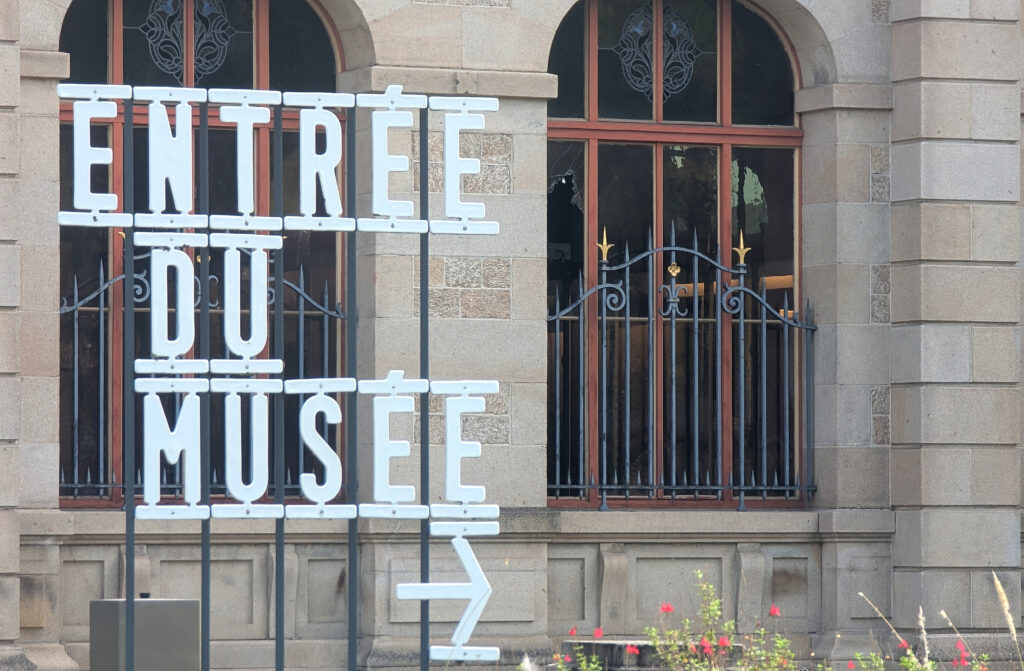
Deux plateaux chinois et un vase classés “trésors nationaux” dérobés en pleine nuit: le musée national Adrien Dubouché de Limoges, qui possède une riche collection de porcelaine, a subi un préjudice de plusieurs millions d’euros dans la nuit de mercredi à jeudi.Les cambrioleurs sont entrés par effraction vers 03h15 en cassant une fenêtre sur le devant du bâtiment, a indiqué à l’AFP une source proche du dossier.Ils ont ensuite rejoint sa galerie historique pour y dérober “trois objets classés Trésors nationaux”, a ajouté le musée dans un communiqué, précisant qu'”aucun des agents de surveillance présents n’a été blessé”.Les pièces volées sont “deux plats particulièrement importants, en porcelaine de Chine de la manufacture de Jingdezhen, à décor bleu et blanc datant du XIVe et du XVe siècle (…) ainsi qu’un vase, également en porcelaine de Chine, décrit comme datant du XVIIIe pour une valeur totale d’assurance supérieure à 6,5 millions d’euros”, indique le musée.”Ce sont des pièces très symboliques de la production de cette manufacture chinoise située au centre de la Chine”, qui est la “première grande manufacture de porcelaine au monde”, a précisé à l’AFP Hervé Lemoine, président des Manufactures nationales.Elles “avaient fait l’objet d’un repérage, de toute évidence. Quand le service de sécurité est intervenu, il n’y avait déjà plus personne”, a ajouté le dirigeant de cet établissement public qui regroupe huit sites dont le musée Adrien Dubouché ou encore la cité de la céramique – Sèvres et Limoges.”L’alerte a très rapidement été donnée par les gardiens du musée” mais “malgré la célérité de l’intervention des services de police, les auteurs des faits avaient déjà pris la fuite”, a confirmé la procureure de la République à Limoges, Émilie Abrantes, dans un communiqué.- Auteurs en fuite -Selon le maire de Limoges, Émile Roger Lombertie, il n’y a pas eu “de défaillance”. “Le système de sécurité a fonctionné mais il faudra peut-être le revoir”, a-t-il déclaré à la presse.”La criminalité progresse, nous devons toujours avoir un coup d’avance. Tous les grands musées du monde se voient dérober des pièces à un moment où un autre. Ce sont vraisemblablement des collectionneurs qui donnent des ordres pour dérober ces pièces et ils s’adressent à la très haute criminalité”, a-t-il ajouté.En 2015, au château de Fontainebleau (Seine-et-Marne), une quinzaine d’oeuvres asiatiques avaient été volées de manière très organisée, dont la couronne en or du roi de Siam et des pièces du XVIIIe siècle, considérées comme invendables sur le marché de l’art et jamais retrouvées à ce jour, rappelle un spécialiste qui a requis l’anonymat.Le parquet a ouvert une enquête de flagrance “du chef de vol aggravé de biens culturels exposés dans un musée de France, commis en réunion et avec dégradations”. Elle a été confiée aux services de la division de la criminalité organisée et spécialisée du SIPJ de Limoges, en co-saisine avec l’office central de lutte contre le trafic des biens culturels.- Collection réputée -Le Musée national Adrien Dubouché, inauguré en 1900 et rénové en 2012, revendique sur son site internet “la collection publique la plus riche au monde de porcelaine de Limoges”, l’une des plus réputées.Il met aussi en avant “des œuvres représentatives des grandes étapes de l’histoire de la céramique, de l’Antiquité jusqu’à nos jours, soit un ensemble de 18.000 œuvres, dont 5.000 sont aujourd’hui exposées”.Deux vols d’oeuvres estimées à plusieurs d’euros avaient eu lieu en novembre dernier, en plein jour, dans des musées français: cinq boîtes et tabatières de collection avaient été dérobées au musée Cognacq-Jay à Paris, en présence de visiteurs, par quatre personnes qui avaient brisé la vitrine qui les renfermait à coups de hache et de battes de baseball.Le lendemain, un trésor de joaillerie avait été la cible d’un vol à main armée dans un musée d’art sacré en Saône-et-Loire.La plupart des autres vols survenus ces dernières décennies concernaient des toiles de maître.sm-frl-jah-ls/gf/ppy/dro
Ukraine: les Européens discutent avec Trump des moyens d’augmenter la pression sur la Russie
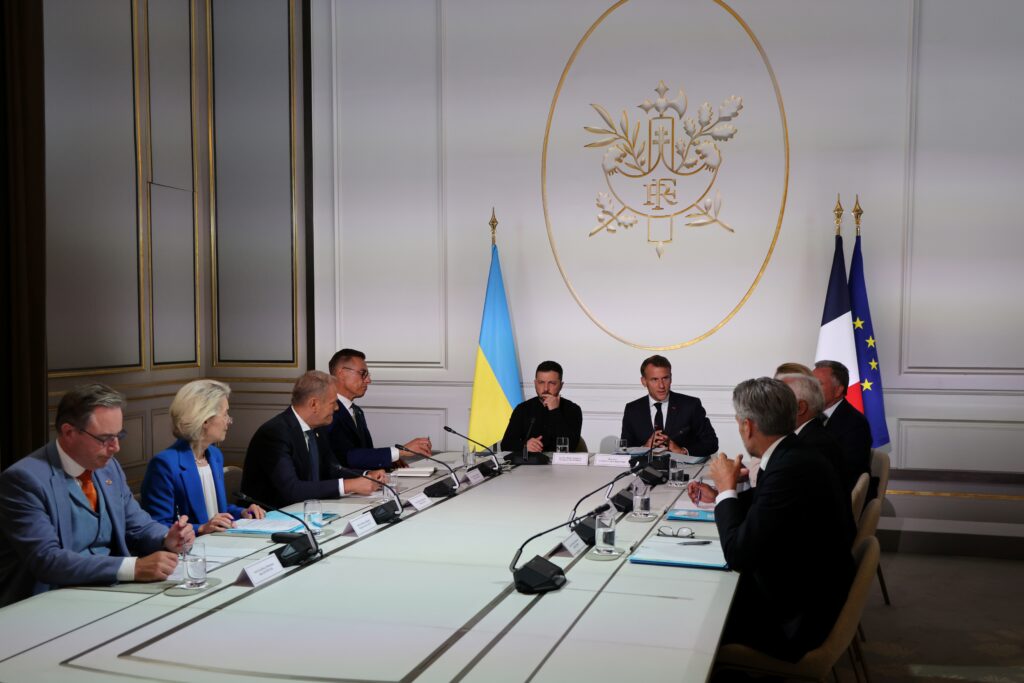
Les soutiens européens de l’Ukraine s’entretiennent jeudi avec Donald Trump sur les garanties de sécurité à apporter à Kiev et les moyens d’augmenter la pression sur la Russie afin de la pousser à la table des négociations de paix.L’entretien en visioconférence entre le président américain et les principaux dirigeants européens ainsi que l’Ukrainien Volodymyr Zelensky, a débuté peu après 14H00 (12H00 GMT), a indiqué l’Elysée.Les dirigeants de la “Coalition des Volontaires” – une trentaine de pays, essentiellement européens, qui soutiennent militairement l’Ukraine – ont acté au préalable dans la matinée l’effort supplémentaire de défense qu’ils sont prêts à fournir, une fois que les armes se seront tues.La réunion, qui se tenait à Paris au palais de l’Elysée et en visioconférence, devait permettre de “finaliser des garanties de sécurité robustes pour l’Ukraine”, a déclaré le président français Emmanuel Macron à l’ouverture des travaux.Le Premier ministre britannique Keir Starmer, qui copréside la Coalition avec Emmanuel Macron, a souligné qu’il était “nécessaire d’augmenter la pression” sur le président russe Vladimir Poutine alors que ce dernier “continue à repousser des négociations de paix et à mener des attaques scandaleuses sur l’Ukraine”, selon un porte-parole à Londres. Les Européens espèrent entendre de Donald Trump quels gestes concrets les Américains sont prêts à faire pour appuyer leurs propres efforts.Ils lui demandent aussi d’accroître les sanctions américaines sur la Russie qui ne montre aucun “signe”, selon le président ukrainien, de vouloir arrêter les combats.Le président américain, se disant “très déçu” par son homologue russe, a averti mercredi qu’il “se passerait quelque chose” si Moscou ne répondait pas à ses attentes de paix, en laissant le suspense entier.Emmanuel Macron et Volodymyr Zelensky, qui s’est entretenu avec l’émissaire spécial du président américain Steve Witkoff en marge de la réunion à l’Elysée, tiendront une conférence de presse à 15H00 (13H00 GMT).La “Coalition des volontaires” rassemble les soutiens militaires de l’Ukraine, pour l’essentiel européens, mais aussi le Canada, l’Australie ou le Japon. Elle est disposée à contribuer au renforcement de l’armée ukrainienne, voire pour certains pays – dont la France, le Royaume-Uni et la Belgique – à déployer des soldats en Ukraine, une fois un cessez-le-feu conclu, pour dissuader la Russie de toute nouvelle agression.- Réserves -Mais certains alliés se sont montrés hésitants dans l’attente de la contribution américaine, que plusieurs pays européens jugent indispensable avant tout engagement de leur part.Jusqu’à un cessez-le-feu, “il n’y aura certainement pas de déploiement de troupes en Ukraine et même après”, a rappelé le chancelier allemand Friedrich Merz.L’Allemagne entend plutôt contribuer au renforcement de la défense antiaérienne de l’Ukraine et à l’équipement de ses forces terrestres, ont indiqué des sources gouvernementales à l’AFP.La Russie martèle qu’elle n’acceptera aucune “intervention étrangère quelle qu’en soit la forme”, la porte-parole de sa diplomatie Maria Zakharova qualifiant les protections demandées par Kiev de “garanties de danger pour le continent européen”.”Ce n’est pas à eux de décider”, a rétorqué jeudi Mark Rutte au nom de l’Otan, en déplacement à Prague.Donald Trump a promis lors d’une réunion avec six dirigeants européens le 18 août à Washington que les Etats-Unis apporteraient des garanties de sécurité, sans préciser lesquelles.Ce “filet de sécurité” américain, ou “backstop” en anglais, pourrait prendre différentes formes – renseignement, soutien logistique, communications -, le président américain ayant exclu l’envoi de troupes américaines au sol.En attendant, Vladimir Poutine, qui affiche un retour en force sur la scène internationale avec une présence très remarquée mercredi aux côtés du président chinois Xi Jinping et du dirigeant nord-coréen Kim Jong Un à Pékin, après le sommet d’Anchorage le 15 août avec Donald Trump, multiplie les déclarations offensives.Moscou atteindra ses objectifs en Ukraine par la voie militaire si les négociations avec Kiev échouent, a-t-il averti depuis la Chine, assurant que ses troupes demeuraient “à l’offensive” sur l’ensemble du front.
Ukraine: les Européens discutent avec Trump des moyens d’augmenter la pression sur la Russie
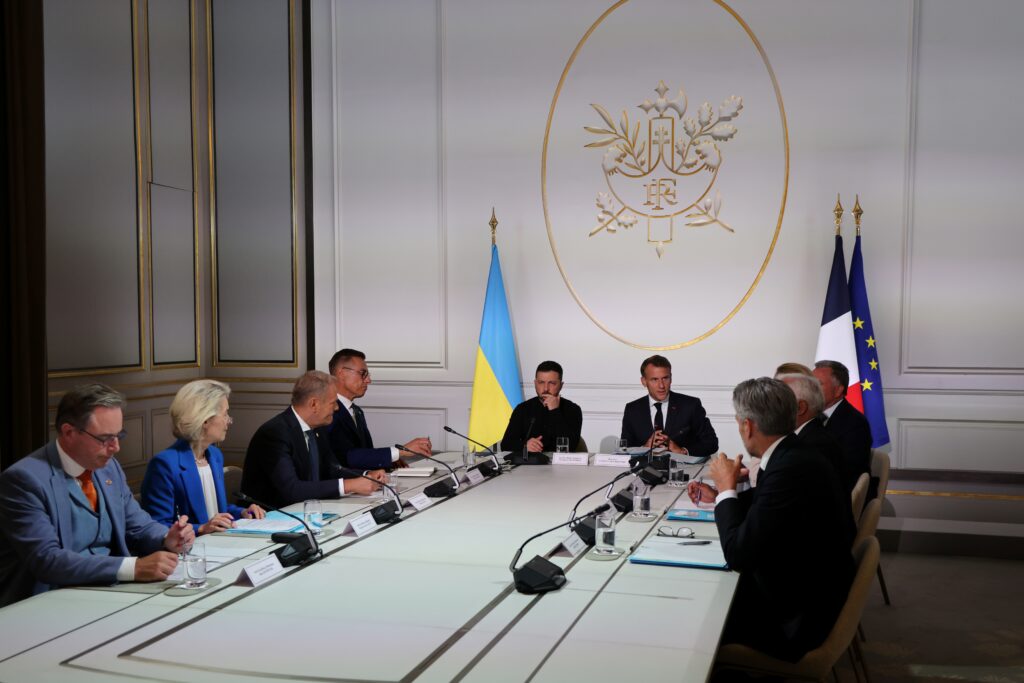
Les soutiens européens de l’Ukraine s’entretiennent jeudi avec Donald Trump sur les garanties de sécurité à apporter à Kiev et les moyens d’augmenter la pression sur la Russie afin de la pousser à la table des négociations de paix.L’entretien en visioconférence entre le président américain et les principaux dirigeants européens ainsi que l’Ukrainien Volodymyr Zelensky, a débuté peu après 14H00 (12H00 GMT), a indiqué l’Elysée.Les dirigeants de la “Coalition des Volontaires” – une trentaine de pays, essentiellement européens, qui soutiennent militairement l’Ukraine – ont acté au préalable dans la matinée l’effort supplémentaire de défense qu’ils sont prêts à fournir, une fois que les armes se seront tues.La réunion, qui se tenait à Paris au palais de l’Elysée et en visioconférence, devait permettre de “finaliser des garanties de sécurité robustes pour l’Ukraine”, a déclaré le président français Emmanuel Macron à l’ouverture des travaux.Le Premier ministre britannique Keir Starmer, qui copréside la Coalition avec Emmanuel Macron, a souligné qu’il était “nécessaire d’augmenter la pression” sur le président russe Vladimir Poutine alors que ce dernier “continue à repousser des négociations de paix et à mener des attaques scandaleuses sur l’Ukraine”, selon un porte-parole à Londres. Les Européens espèrent entendre de Donald Trump quels gestes concrets les Américains sont prêts à faire pour appuyer leurs propres efforts.Ils lui demandent aussi d’accroître les sanctions américaines sur la Russie qui ne montre aucun “signe”, selon le président ukrainien, de vouloir arrêter les combats.Le président américain, se disant “très déçu” par son homologue russe, a averti mercredi qu’il “se passerait quelque chose” si Moscou ne répondait pas à ses attentes de paix, en laissant le suspense entier.Emmanuel Macron et Volodymyr Zelensky, qui s’est entretenu avec l’émissaire spécial du président américain Steve Witkoff en marge de la réunion à l’Elysée, tiendront une conférence de presse à 15H00 (13H00 GMT).La “Coalition des volontaires” rassemble les soutiens militaires de l’Ukraine, pour l’essentiel européens, mais aussi le Canada, l’Australie ou le Japon. Elle est disposée à contribuer au renforcement de l’armée ukrainienne, voire pour certains pays – dont la France, le Royaume-Uni et la Belgique – à déployer des soldats en Ukraine, une fois un cessez-le-feu conclu, pour dissuader la Russie de toute nouvelle agression.- Réserves -Mais certains alliés se sont montrés hésitants dans l’attente de la contribution américaine, que plusieurs pays européens jugent indispensable avant tout engagement de leur part.Jusqu’à un cessez-le-feu, “il n’y aura certainement pas de déploiement de troupes en Ukraine et même après”, a rappelé le chancelier allemand Friedrich Merz.L’Allemagne entend plutôt contribuer au renforcement de la défense antiaérienne de l’Ukraine et à l’équipement de ses forces terrestres, ont indiqué des sources gouvernementales à l’AFP.La Russie martèle qu’elle n’acceptera aucune “intervention étrangère quelle qu’en soit la forme”, la porte-parole de sa diplomatie Maria Zakharova qualifiant les protections demandées par Kiev de “garanties de danger pour le continent européen”.”Ce n’est pas à eux de décider”, a rétorqué jeudi Mark Rutte au nom de l’Otan, en déplacement à Prague.Donald Trump a promis lors d’une réunion avec six dirigeants européens le 18 août à Washington que les Etats-Unis apporteraient des garanties de sécurité, sans préciser lesquelles.Ce “filet de sécurité” américain, ou “backstop” en anglais, pourrait prendre différentes formes – renseignement, soutien logistique, communications -, le président américain ayant exclu l’envoi de troupes américaines au sol.En attendant, Vladimir Poutine, qui affiche un retour en force sur la scène internationale avec une présence très remarquée mercredi aux côtés du président chinois Xi Jinping et du dirigeant nord-coréen Kim Jong Un à Pékin, après le sommet d’Anchorage le 15 août avec Donald Trump, multiplie les déclarations offensives.Moscou atteindra ses objectifs en Ukraine par la voie militaire si les négociations avec Kiev échouent, a-t-il averti depuis la Chine, assurant que ses troupes demeuraient “à l’offensive” sur l’ensemble du front.
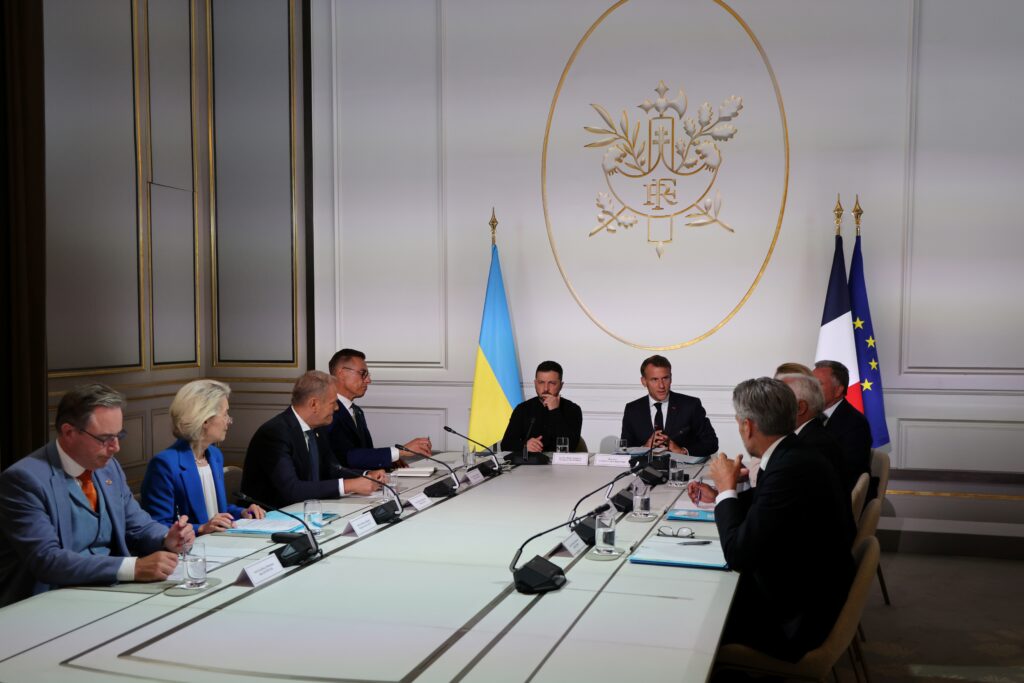
Ukraine: les Européens discutent avec Trump des moyens d’augmenter la pression sur la Russie
Les soutiens européens de l’Ukraine s’entretiennent jeudi avec Donald Trump sur les garanties de sécurité à apporter à Kiev et les moyens d’augmenter la pression sur la Russie afin de la pousser à la table des négociations de paix.L’entretien en visioconférence entre le président américain et les principaux dirigeants européens ainsi que l’Ukrainien Volodymyr Zelensky, a débuté peu après 14H00 (12H00 GMT), a indiqué l’Elysée.Les dirigeants de la “Coalition des Volontaires” – une trentaine de pays, essentiellement européens, qui soutiennent militairement l’Ukraine – ont acté au préalable dans la matinée l’effort supplémentaire de défense qu’ils sont prêts à fournir, une fois que les armes se seront tues.La réunion, qui se tenait à Paris au palais de l’Elysée et en visioconférence, devait permettre de “finaliser des garanties de sécurité robustes pour l’Ukraine”, a déclaré le président français Emmanuel Macron à l’ouverture des travaux.Le Premier ministre britannique Keir Starmer, qui copréside la Coalition avec Emmanuel Macron, a souligné qu’il était “nécessaire d’augmenter la pression” sur le président russe Vladimir Poutine alors que ce dernier “continue à repousser des négociations de paix et à mener des attaques scandaleuses sur l’Ukraine”, selon un porte-parole à Londres. Les Européens espèrent entendre de Donald Trump quels gestes concrets les Américains sont prêts à faire pour appuyer leurs propres efforts.Ils lui demandent aussi d’accroître les sanctions américaines sur la Russie qui ne montre aucun “signe”, selon le président ukrainien, de vouloir arrêter les combats.Le président américain, se disant “très déçu” par son homologue russe, a averti mercredi qu’il “se passerait quelque chose” si Moscou ne répondait pas à ses attentes de paix, en laissant le suspense entier.Emmanuel Macron et Volodymyr Zelensky, qui s’est entretenu avec l’émissaire spécial du président américain Steve Witkoff en marge de la réunion à l’Elysée, tiendront une conférence de presse à 15H00 (13H00 GMT).La “Coalition des volontaires” rassemble les soutiens militaires de l’Ukraine, pour l’essentiel européens, mais aussi le Canada, l’Australie ou le Japon. Elle est disposée à contribuer au renforcement de l’armée ukrainienne, voire pour certains pays – dont la France, le Royaume-Uni et la Belgique – à déployer des soldats en Ukraine, une fois un cessez-le-feu conclu, pour dissuader la Russie de toute nouvelle agression.- Réserves -Mais certains alliés se sont montrés hésitants dans l’attente de la contribution américaine, que plusieurs pays européens jugent indispensable avant tout engagement de leur part.Jusqu’à un cessez-le-feu, “il n’y aura certainement pas de déploiement de troupes en Ukraine et même après”, a rappelé le chancelier allemand Friedrich Merz.L’Allemagne entend plutôt contribuer au renforcement de la défense antiaérienne de l’Ukraine et à l’équipement de ses forces terrestres, ont indiqué des sources gouvernementales à l’AFP.La Russie martèle qu’elle n’acceptera aucune “intervention étrangère quelle qu’en soit la forme”, la porte-parole de sa diplomatie Maria Zakharova qualifiant les protections demandées par Kiev de “garanties de danger pour le continent européen”.”Ce n’est pas à eux de décider”, a rétorqué jeudi Mark Rutte au nom de l’Otan, en déplacement à Prague.Donald Trump a promis lors d’une réunion avec six dirigeants européens le 18 août à Washington que les Etats-Unis apporteraient des garanties de sécurité, sans préciser lesquelles.Ce “filet de sécurité” américain, ou “backstop” en anglais, pourrait prendre différentes formes – renseignement, soutien logistique, communications -, le président américain ayant exclu l’envoi de troupes américaines au sol.En attendant, Vladimir Poutine, qui affiche un retour en force sur la scène internationale avec une présence très remarquée mercredi aux côtés du président chinois Xi Jinping et du dirigeant nord-coréen Kim Jong Un à Pékin, après le sommet d’Anchorage le 15 août avec Donald Trump, multiplie les déclarations offensives.Moscou atteindra ses objectifs en Ukraine par la voie militaire si les négociations avec Kiev échouent, a-t-il averti depuis la Chine, assurant que ses troupes demeuraient “à l’offensive” sur l’ensemble du front.

En Iran, les pannes d’électricité étouffent des commerces de proximité
Dans le nord huppé de Téhéran, Saïd se lamente dans le noir de l’absence de clients dans sa pizzeria: les coupures de courant récurrentes imposées par le gouvernement sont pour son commerce un casse-tête, qui s’ajoute à la flambée des prix de l’alimentaire.”Parfois, les coupures surviennent en plein service du déjeuner. Et c’est nous, restaurateurs, qui en souffrons le plus”, déplore auprès de l’AFP ce chef d’entreprise de 48 ans, qui préfère taire son nom. La plupart des personnes rencontrées n’ont pas souhaité s’identifier.A ces difficultés s’ajoute un possible retour des sanctions internationales contre l’Iran, après que les pays européens ont menacé de les rétablir sur fond de crise autour du programme nucléaire. La monnaie iranienne, le rial, est en chute libre face au dollar, aggravant une hyperinflation chronique.Pour tenir, Saïd tente de réduire ses coûts, quitte à rogner sur le personnel ou à couper l’éclairage de son établissement.L’Iran est régulièrement confronté à des épisodes de sécheresse et les étés y sont souvent chauds, augmentant mécaniquement la consommation de courant pour alimenter les climatisations.Vendredi, la consommation électrique a atteint 73.500 mégawatts, selon la télévision d’Etat, proche du record absolu de 79.000 mégawatts en 2024.Problème: les centrales manquent de carburant pour tourner et les autorités sont contraintes de rationaliser l’électricité. Pour éviter la saturation du réseau souvent vétuste, le courant est coupé pour au moins deux heures par jour plusieurs fois dans la semaine et en alternance dans le pays.Et sans électricité pas d’internet, ce qui prive également Saïd d’une partie de sa clientèle en ligne. – Production à l’arrêt -“Les commandes chutent brutalement. Il arrive même qu’un client passe commande sans que nous le voyons, faute de connexion”, regrette désarmé le commerçant.Les petites entreprises totalement dépendantes de l’électricité —- bouchers, boulangers, pâtissiers, glaciers ou épiceries qui ne peuvent se payer un générateur — subissent de lourdes pertes en raison de la détérioration de leurs produits en pleine canicule.Dans un quartier animé du centre de Téhéran, un pâtissier montre à l’AFP une rangée de réfrigérateurs vides ou à moitié remplis. Une coupure de courant a brutalement interrompu sa production.”On peut conserver les pâtisseries sèches au réfrigérateur pendant deux heures”, explique-t-il à l’AFP à condition de préserver son anonymat.”Mais celles moelleuses, en particulier au chocolat, ramollissent passé ce délai, et finissent par rester invendues”, déplore le commerçant aux cheveux grisonnants qui dénonce par ailleurs l’irrégularité des coupures de courant. “Parfois, on nous annonce une coupure à 11 heures mais elle survient deux heures plus tôt au moment où nous sommes en pleine confection de confiseries”. La pâte s’abîme et les ouvriers se retrouvent en chômage technique pendant deux heures.Le propriétaire d’un petit restaurant, assis dehors, attend lui désespérément des clients.L’intérieur de son établissement est étouffant, faute de climatisation paralysée par une coupure.- Pénuries d’eau -“Quand l’électricité est coupée en pleine canicule, nous perdons la majorité de nos clients”, confie-t-il.Des images de commerçants contraints de jeter leurs gâteaux ou leur pâte à pain avariés à cause des coupures d’électricité ont été largement partagées sur les réseaux sociaux.Hossein Hajabassi, un boucher, dit à l’AFP devoir faire de même avec ses produits périssables.”Les blancs (de poulet) et les filets mais aussi le foie (d’agneau), très cher, s’abîment rapidement” s’ils ne sont pas au frais, souligne cet homme âgé d’une soixantaine d’années. “Parfois, je rapporte la viande à la maison pour ne pas la gâcher”, ajoute-t-il. D’autant que les prix du boeuf et de l’agneau ont augmenté en une semaine, selon lui, de 2.000.000 de rials (plus de deux euros au taux informel, un montant important en Iran).Faute de courant, de nombreuses zones industrielles autour de Téhéran sont contraintes au chômage technique deux jours par semaine, selon les médias locaux.Cette année, la capitale traverse l’un des étés les plus chauds de son histoire, avec des températures avoisinant régulièrement 40°C. Dans le sud du pays, elles dépassent localement 50°C.Le gouvernement ordonne régulièrement la fermeture des banques et des administrations pour économiser l’énergie mais également l’eau, au moment où les réservoirs sont mis à rude épreuve avec des niveaux anormalement bas.
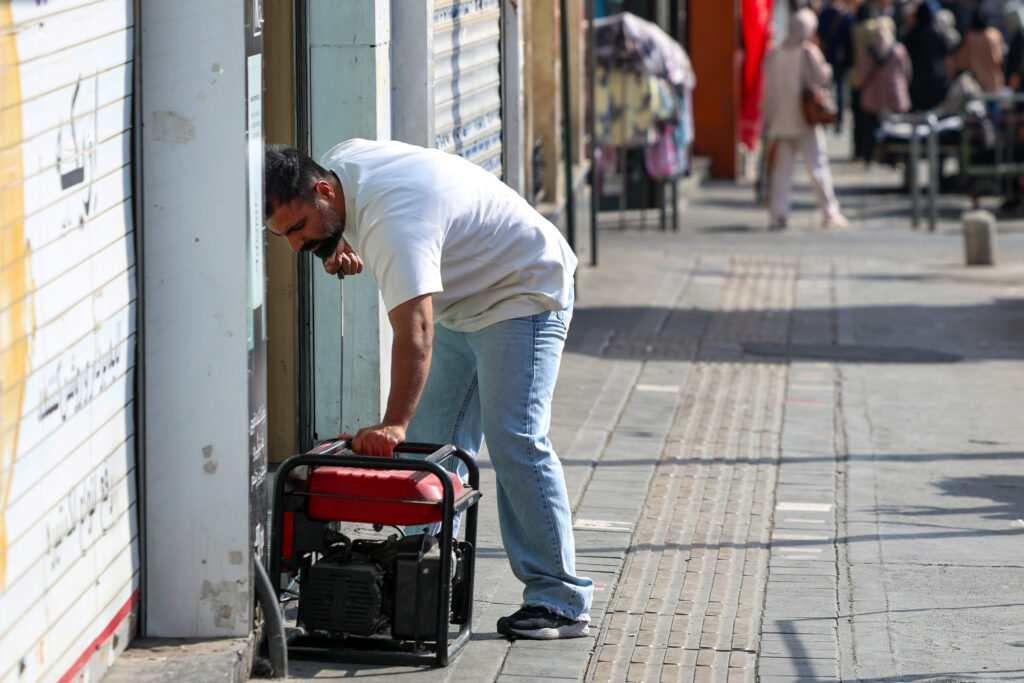
En Iran, les pannes d’électricité étouffent des commerces de proximité
Dans le nord huppé de Téhéran, Saïd se lamente dans le noir de l’absence de clients dans sa pizzeria: les coupures de courant récurrentes imposées par le gouvernement sont pour son commerce un casse-tête, qui s’ajoute à la flambée des prix de l’alimentaire.”Parfois, les coupures surviennent en plein service du déjeuner. Et c’est nous, restaurateurs, qui en souffrons le plus”, déplore auprès de l’AFP ce chef d’entreprise de 48 ans, qui préfère taire son nom. La plupart des personnes rencontrées n’ont pas souhaité s’identifier.A ces difficultés s’ajoute un possible retour des sanctions internationales contre l’Iran, après que les pays européens ont menacé de les rétablir sur fond de crise autour du programme nucléaire. La monnaie iranienne, le rial, est en chute libre face au dollar, aggravant une hyperinflation chronique.Pour tenir, Saïd tente de réduire ses coûts, quitte à rogner sur le personnel ou à couper l’éclairage de son établissement.L’Iran est régulièrement confronté à des épisodes de sécheresse et les étés y sont souvent chauds, augmentant mécaniquement la consommation de courant pour alimenter les climatisations.Vendredi, la consommation électrique a atteint 73.500 mégawatts, selon la télévision d’Etat, proche du record absolu de 79.000 mégawatts en 2024.Problème: les centrales manquent de carburant pour tourner et les autorités sont contraintes de rationaliser l’électricité. Pour éviter la saturation du réseau souvent vétuste, le courant est coupé pour au moins deux heures par jour plusieurs fois dans la semaine et en alternance dans le pays.Et sans électricité pas d’internet, ce qui prive également Saïd d’une partie de sa clientèle en ligne. – Production à l’arrêt -“Les commandes chutent brutalement. Il arrive même qu’un client passe commande sans que nous le voyons, faute de connexion”, regrette désarmé le commerçant.Les petites entreprises totalement dépendantes de l’électricité —- bouchers, boulangers, pâtissiers, glaciers ou épiceries qui ne peuvent se payer un générateur — subissent de lourdes pertes en raison de la détérioration de leurs produits en pleine canicule.Dans un quartier animé du centre de Téhéran, un pâtissier montre à l’AFP une rangée de réfrigérateurs vides ou à moitié remplis. Une coupure de courant a brutalement interrompu sa production.”On peut conserver les pâtisseries sèches au réfrigérateur pendant deux heures”, explique-t-il à l’AFP à condition de préserver son anonymat.”Mais celles moelleuses, en particulier au chocolat, ramollissent passé ce délai, et finissent par rester invendues”, déplore le commerçant aux cheveux grisonnants qui dénonce par ailleurs l’irrégularité des coupures de courant. “Parfois, on nous annonce une coupure à 11 heures mais elle survient deux heures plus tôt au moment où nous sommes en pleine confection de confiseries”. La pâte s’abîme et les ouvriers se retrouvent en chômage technique pendant deux heures.Le propriétaire d’un petit restaurant, assis dehors, attend lui désespérément des clients.L’intérieur de son établissement est étouffant, faute de climatisation paralysée par une coupure.- Pénuries d’eau -“Quand l’électricité est coupée en pleine canicule, nous perdons la majorité de nos clients”, confie-t-il.Des images de commerçants contraints de jeter leurs gâteaux ou leur pâte à pain avariés à cause des coupures d’électricité ont été largement partagées sur les réseaux sociaux.Hossein Hajabassi, un boucher, dit à l’AFP devoir faire de même avec ses produits périssables.”Les blancs (de poulet) et les filets mais aussi le foie (d’agneau), très cher, s’abîment rapidement” s’ils ne sont pas au frais, souligne cet homme âgé d’une soixantaine d’années. “Parfois, je rapporte la viande à la maison pour ne pas la gâcher”, ajoute-t-il. D’autant que les prix du boeuf et de l’agneau ont augmenté en une semaine, selon lui, de 2.000.000 de rials (plus de deux euros au taux informel, un montant important en Iran).Faute de courant, de nombreuses zones industrielles autour de Téhéran sont contraintes au chômage technique deux jours par semaine, selon les médias locaux.Cette année, la capitale traverse l’un des étés les plus chauds de son histoire, avec des températures avoisinant régulièrement 40°C. Dans le sud du pays, elles dépassent localement 50°C.Le gouvernement ordonne régulièrement la fermeture des banques et des administrations pour économiser l’énergie mais également l’eau, au moment où les réservoirs sont mis à rude épreuve avec des niveaux anormalement bas.