Un an après, hommage dans la tension pour les victimes des inondations en Espagne

“Assassin!” “Lâche!” La cérémonie d’hommage aux plus de 230 personnes disparues il y a un an dans des inondations en Espagne a été marquée par des insultes au président de la région de Valence Carlos Mazón, un homme que les familles des victimes ne voulaient pas voir et dont elles réclament la démission.Ces funérailles d’Etat, …

Un an après, hommage dans la tension pour les victimes des inondations en Espagne Read More »

Les Etats-Unis réduisent leur présence militaire en Europe, mais sans “retrait”

Les Etats-Unis ont annoncé mercredi une réduction de leur présence militaire sur le front oriental de l’Europe, tout en s’efforçant de rassurer leurs alliés sur la nature de cet “ajustement”, qui ne signifie en rien un “retrait” du continent européen.Ce reploiement d’une brigade de l’armée américaine concerne en tout premier lieu la Roumanie, bien que …

Les Etats-Unis réduisent leur présence militaire en Europe, mais sans “retrait” Read More »

Divided US Fed backs second quarter-point rate cut of 2025

The US Federal Reserve on Wednesday announced its second quarter-point rate cut in a row to bolster the flagging labor market, in a move that highlighted the growing division in its ranks.Policymakers voted 10-2 in favor of lowering the bank’s key lending rate to between 3.75 percent and 4.00 percent, the Fed said in a statement. Opposed to the action were Fed governor Stephen Miran, who backed a bigger half-point cut, and Kansas City Fed president Jeff Schmid, who “preferred no change to the target range for the federal funds rate at this meeting,” the Fed said. “We continue to face two-sided risks,” Powell told reporters at a press conference in Washington. He added that during the Fed’s discussions this week, “there were strongly differing views about how to proceed in December.””A further reduction in the policy rate at the December meeting is not a foregone conclusion, far from it,” he said. Wall Street stocks fell after Powell threw cold water on the prospects of a December rate cut, ending the day mixed. – Shutdown weighing on economy -The decision to cut rates boosts the US economy at a time when businesses are still digesting the effects of President Donald Trump’s sweeping tariffs, and buys policymakers some more time as they wait for the end of the government shutdown.Republicans and Democrats remain politically gridlocked almost a month after the start of the shutdown, which has resulted in a suspension of publication of almost all official data.”The shutdown of the federal government will weigh on economic activity while it persists, but these effects should reverse after the shutdown ends,” Powell said on Wednesday. “We’re going to collect every scrap of data we can find, evaluate it, and think carefully about it,” he added. “If you’re driving in the fog, you slow down.”Fed officials have in recent months flagged concerns that the labor market is cooling, causing them to shift their attention to bolstering hiring, even though inflation remains above the Fed’s target.”We have 4.3 percent unemployment. We have an economy that’s growing close to two percent, so overall it’s a good picture,” Powell said on Wednesday. “But in terms of our policy, we have upside risks to inflation, downside risks to employment,” he said. “And this is a very difficult thing for a central bank.””The Fed’s rate cut is a tactical error,” Moody’s Analytics banking industry practice lead Chris Stanley wrote in a note shared with AFP. “The data does not support cutting rates,” he continued, adding that the Fed could find itself walking the cut back in the near future due to high inflation. “We expect the Fed to slow the pace of cuts from here,” Oxford Economics deputy chief US economist Michael Pearce wrote in a note to clients.- Fed to end QT -The Fed also announced Wednesday that it would soon end its policy of shrinking the size of its balance sheet, in a move that was widely expected. “The Committee decided to conclude the reduction of its aggregate securities holdings on December 1,” the Fed said in a statement confirming its decision.The Fed’s balance sheet ballooned in the early days of the Covid-19 pandemic to almost $9 trillion. The bank has been gradually reducing its size in recent years, although it remains well above its pre-pandemic levels at around $6.6 trillion. “I think they’re very cautious about stresses in the financial markets,” former Cleveland Fed President Loretta Mester told AFP ahead of the rate announcement.

Dollar rises after Fed chair says December rate cut not a given

The dollar strengthened Wednesday while Wall Street stocks were mixed after the Federal Reserve indicated its latest interest rate cut might not be repeated in December.After the US central bank announced a quarter percentage-point interest rate cut that had been expected, Fed Chair Jerome Powell told reporters that another decrease in December “is not a foregone conclusion, far from it.”The statement jolted US markets, lifting the dollar and pushing all three US equity briefly into the red.The Nasdaq later recovered, finishing at a fourth straight record behind another gain by artificial intelligence giant Nvidia, which became the first company to reach a $5 trillion market value.The Dow finished modestly lower while the S&P 500 ended flat.Oxford Economics characterized Powell as “hawkish,” predicting that the central bank would “move to the sidelines” and not cut again until March. Powell also indicated in his press conference that the dearth of economic data due to the US government shutdown could also prompt more cautious policy making.The Dow had earlier topped 48,000 points following fresh peaks set in London and some Asian markets as US President Donald Trump voiced optimism on the eve of crunch trade talks with China’s President Xi Jinping.Trump predicted a “great meeting,” while China’s foreign ministry was more cautious, saying that Xi and Trump would have “in-depth” talks on “major issues.”Key matters concern thorny trade matters such as Chinese exports of rare earths and US efforts to bolster US exports of American soybeans to China.Analysts have also seen Nvidia’s latest surge as partly based on hopes Trump may negotiate a resumption of the company’s exports to China.The two leaders are set to meet Thursday in Busan, a southern port city not far from the APEC summit attended by Trump.The European Central Bank and the Bank of Japan are expected to hold interest rates steady this week. Benchmark stocks indices in Tokyo and Seoul each reached record highs Wednesday, while European markets were mixed.After Seoul closed, the United States and South Korea reached an agreement to maintain reciprocal tariffs at 15 percent and to reduce levies on automobiles and auto parts.In company news, shares in UK drugmaker GSK rose more than two percent in London after it raised its full-year guidance on strong sales growth. Shares in Mercedes-Benz rose more than four percent after the company reassured investors it faced no immediate production shutdowns due to microchip shortages, even though third-quarter net profits plunged more than 30 percent due to Trump’s tariff blitz as well as slumping sales in China.US industrial giant Caterpillar surged 11.6 percent after reporting better than expected profits, partly due to strong demand in its energy & transportation business partly related to heavy AI infrastructure investment.- Key figures at around 2020 GMT -New York – Dow: DOWN 0.2 percent at 47,632.00 (close)New York – S&P 500: FLAT at 6,890.59 (close)New York – Nasdaq Composite: UP 0.6 percent at 23,958.47 (close)London – FTSE 100: UP 0.6 percent at 9,756.14 (close)Paris – CAC 40: DOWN 0.2 percent at 8,200.88 (close)Frankfurt – DAX: DOWN 0.6 at 24,124.21 (close)Tokyo – Nikkei 225: UP 2.2 percent at 51,307.65 (close)Hong Kong – Hang Seng Index: Closed for a holidayShanghai – Composite: UP 0.7 percent at 4,016.33 (close)Euro/dollar: DOWN at $1.1595 from $1.1656 on TuesdayPound/dollar: DOWN at $1.3187 from $1.3276Dollar/yen: UP at 152.82 yen from 152.06 yenEuro/pound: UP at 87.94 from 87.80 penceBrent North Sea Crude: UP 0.8 percent at $64.92 per barrelWest Texas Intermediate: UP 0.6 percent at $60.48 per barrelburs-jmb/des

Dollar rises after Fed chair says December rate cut not a given

The dollar strengthened Wednesday while Wall Street stocks were mixed after the Federal Reserve indicated its latest interest rate cut might not be repeated in December.After the US central bank announced a quarter percentage-point interest rate cut that had been expected, Fed Chair Jerome Powell told reporters that another decrease in December “is not a foregone conclusion, far from it.”The statement jolted US markets, lifting the dollar and pushing all three US equity briefly into the red.The Nasdaq later recovered, finishing at a fourth straight record behind another gain by artificial intelligence giant Nvidia, which became the first company to reach a $5 trillion market value.The Dow finished modestly lower while the S&P 500 ended flat.Oxford Economics characterized Powell as “hawkish,” predicting that the central bank would “move to the sidelines” and not cut again until March. Powell also indicated in his press conference that the dearth of economic data due to the US government shutdown could also prompt more cautious policy making.The Dow had earlier topped 48,000 points following fresh peaks set in London and some Asian markets as US President Donald Trump voiced optimism on the eve of crunch trade talks with China’s President Xi Jinping.Trump predicted a “great meeting,” while China’s foreign ministry was more cautious, saying that Xi and Trump would have “in-depth” talks on “major issues.”Key matters concern thorny trade matters such as Chinese exports of rare earths and US efforts to bolster US exports of American soybeans to China.Analysts have also seen Nvidia’s latest surge as partly based on hopes Trump may negotiate a resumption of the company’s exports to China.The two leaders are set to meet Thursday in Busan, a southern port city not far from the APEC summit attended by Trump.The European Central Bank and the Bank of Japan are expected to hold interest rates steady this week. Benchmark stocks indices in Tokyo and Seoul each reached record highs Wednesday, while European markets were mixed.After Seoul closed, the United States and South Korea reached an agreement to maintain reciprocal tariffs at 15 percent and to reduce levies on automobiles and auto parts.In company news, shares in UK drugmaker GSK rose more than two percent in London after it raised its full-year guidance on strong sales growth. Shares in Mercedes-Benz rose more than four percent after the company reassured investors it faced no immediate production shutdowns due to microchip shortages, even though third-quarter net profits plunged more than 30 percent due to Trump’s tariff blitz as well as slumping sales in China.US industrial giant Caterpillar surged 11.6 percent after reporting better than expected profits, partly due to strong demand in its energy & transportation business partly related to heavy AI infrastructure investment.- Key figures at around 2020 GMT -New York – Dow: DOWN 0.2 percent at 47,632.00 (close)New York – S&P 500: FLAT at 6,890.59 (close)New York – Nasdaq Composite: UP 0.6 percent at 23,958.47 (close)London – FTSE 100: UP 0.6 percent at 9,756.14 (close)Paris – CAC 40: DOWN 0.2 percent at 8,200.88 (close)Frankfurt – DAX: DOWN 0.6 at 24,124.21 (close)Tokyo – Nikkei 225: UP 2.2 percent at 51,307.65 (close)Hong Kong – Hang Seng Index: Closed for a holidayShanghai – Composite: UP 0.7 percent at 4,016.33 (close)Euro/dollar: DOWN at $1.1595 from $1.1656 on TuesdayPound/dollar: DOWN at $1.3187 from $1.3276Dollar/yen: UP at 152.82 yen from 152.06 yenEuro/pound: UP at 87.94 from 87.80 penceBrent North Sea Crude: UP 0.8 percent at $64.92 per barrelWest Texas Intermediate: UP 0.6 percent at $60.48 per barrelburs-jmb/des

Ligue 1: Lens battu à Metz, qui enclenche la première

Metz a obtenu sa première victoire de la saison à domicile en battant Lens (2-0), qui tombe de haut après sa belle série, mercredi à l’occasion de la dixième journée de Ligue 1.Les Sang et Or, qui restaient sur trois victoires et cinq matches sans défaite, dont un dernier succès marquant face à Marseille il y a quatre jours au stade Bollaert, sont sous la menace de plusieurs équipes du haut de tableau, qui pourraient les faire descendre du deuxième rang (19 points) dans la soirée.Bien plus bas dans le classement, les Messins restent en dernière position (5 points) mais cette première victoire de la saison leur permet de croire à un élan nouveau qui doit les maintenir dans l’élite en fin de saison.Les joueurs de Stéphane Le Mignan, qui éloigne un peu la menace d’un limogeage qui pesait sur lui ces derniers jours, ont globalement dominé, l’emportant grâce à un doublé de Gauthier Hein en fin de rencontre.Trois jours après avoir exprimé sa “honte” dans la foulée de la déroute lorraine à Lille (6-1), le capitaine messin a joint la parole aux actes en menant les siens vers la victoire en ouvrant le score d’un penalty (85e) avant de mettre un terme au suspense au bout d’une contre-attaque (90e+1). Il a toutefois terni sa prestation en étant exclu après un deuxième carton jaune pour avoir retiré son maillot en célébrant son dernier but.En face, les joueurs de l’Artois ont joué une partition bien décevante au Stade Saint-Symphorien, loin de leur visage affiché ces dernières semaines.Le match a été très haché, interrompu trois fois par l’arbitre: une première pour des jets de fumigènes lensois en direction des supporters messins, une deuxième en raison de restes de gaz lacrymogène déployés par les forces de l’ordre, qui faisait pleurer les joueurs, et une troisième pour des chants insultants.Après ce coup d’arrêt, Lens aura l’occasion de repartir de l’avant dimanche au Stade Bollaert contre Lorient.

Google parent Alphabet posts first $100 bn quarter as AI drives growth

Google parent Alphabet reported its first-ever $100 billion quarterly revenue on Wednesday, powered by strong growth across its core search business and rapidly expanding cloud division that was buoyed by artificial intelligence.The tech giant’s revenues jumped 16 percent year-on-year to $102.3 billion in the third quarter, beating analyst expectations and marking a milestone for the company founded by Larry Page and Sergey Brin in 1998.”Alphabet had a terrific quarter, with double-digit growth across every major part of our business. We delivered our first-ever $100 billion quarter,” said CEO Sundar Pichai in a statement.Net income surged 33 percent to $35 billion, with the company pointing to its ability to capitalize on the artificial intelligence boom that is reshaping the tech landscape.Google’s core search and advertising business remained the primary revenue driver, generating $56.6 billion, up from $49.4 billion a year earlier.YouTube advertising revenues also grew strongly to $10.3 billion from $8.9 billion.But it was Google Cloud that stole the spotlight, with revenues soaring 34 percent to $15.2 billion. The cloud division, which competes with Amazon Web Services and Microsoft Azure, has become a key growth engine for Alphabet.The company’s ambitious approach to offering AI “is delivering strong momentum and we’re shipping at speed,” Pichai said, highlighting the global rollout of AI features in Google Search and the company’s Gemini AI models.The company said its Gemini App now boasts over 650 million monthly active users.However, the results were partially overshadowed by a $3.5 billion fine imposed by the European Commission in September for competition law violations in its ad tech business.Excluding this penalty, operating income would have increased 22 percent instead of the reported 9 percent, the company said.The strong performance comes as Alphabet ramps up capital spending to meet surging demand for AI infrastructure.The company now expects 2025 capital expenditures of between $91-$93 billion, reflecting massive investments in data centers and computing power to fulfill its AI ambitions.The company also reported having over 300 million paid subscriptions across services like Google One and YouTube Premium.Despite the robust growth, Alphabet’s experimental “Other Bets” division, which includes autonomous vehicle unit Waymo, posted a loss of $1.4 billion on revenues of just $344 million.Google’s shares have surged by nearly 40 percent in the thrid quarter, with investors also buoyed by the company’s success in persuading a federal judge to deny a US government request that it sell off its Chrome browser as a solution in an antitrust trial.The judge was swayed by arguments that Google’s world-dominating search engine — the heart of Google’s business — faces stiff competition from ChatGPT and other AI chatbots.

Les économies sur les allocations familiales financeront le nouveau congé de naissance

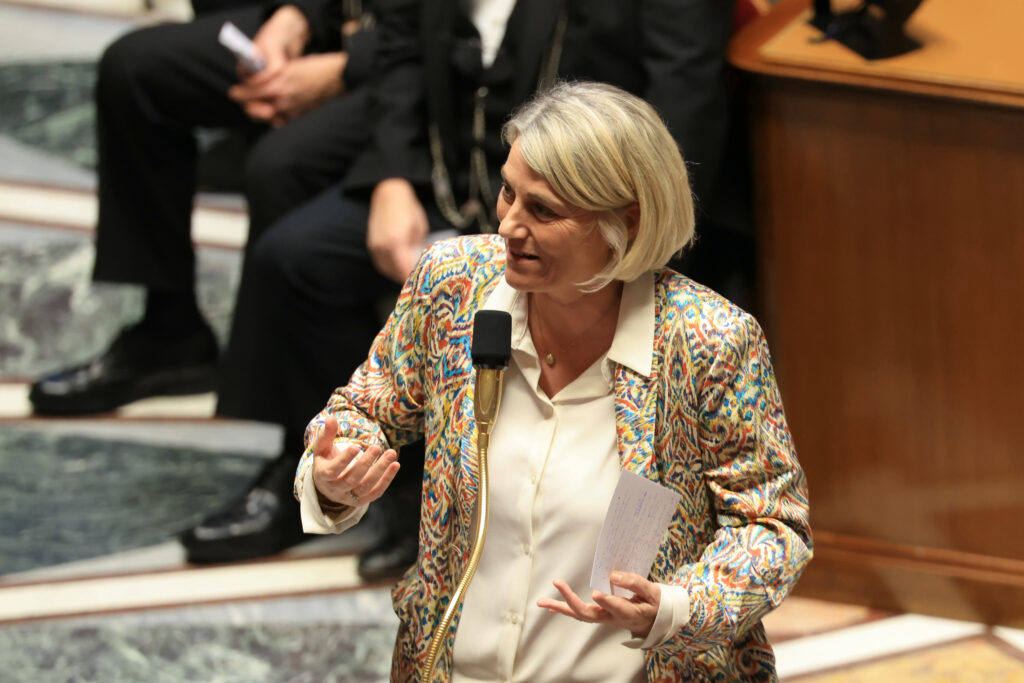
Le rabot prévu sur les allocations familiales – soit le décalage de 14 à 18 ans de la majoration des allocations – permettra de financer le nouveau “congé de naissance” inscrit dans le projet de budget de la Sécu, a indiqué mercredi la ministre de la Santé.Ce “congé de naissance supplémentaire” de deux mois par parent, rémunéré à 70% du salaire net le premier mois et 60% le deuxième mois, est une mesure “autofinancée, dans le cadre du sérieux budgétaire qui a été proposé” dans le projet de loi de financement de la sécurité sociale (PLFSS) pour 2026, a indiqué la ministre de la Santé Stéphanie Rist, interrogée par la commission des Affaires sociales du Sénat dans le cadre de l’examen des textes budgétaires.Cette mesure n’induit pas de déficit supplémentaire pour la Sécu, car elle sera financée par le décalage de la majoration des allocations familiales des 14 ans aux 18 ans de l’enfant (toujours versées à partir du 2e enfant, ndlr), a-t-elle dit.Selon le journal Le Parisien, ce décalage de la majoration permet à la branche famille d’économiser 200 millions d’euros.Ce décalage intervient “en raison d’études, notamment de la Drees (Direction statistique des ministères sociaux), mais pas que, qui montrent que le coût d’un enfant est vraiment sensiblement plus important quand il arrive à 18 ans plutôt qu’à 14 ans. Ce qui n’était pas vrai il y a des années” a encore justifié Stéphanie Rist, estimant que l’aide arrivera ainsi au moment où elle est “la plus efficace”.S’agissant de la nouvelle taxe exceptionnelle sur les complémentaires santé, initialement prévue à 2,05% et pourrait grimper à 2,25% – soit 1,1 milliard d’euros – pour financer la suspension de la réforme des retraites, la ministre a invoqué la nécessité d’un “effort partagé” entre tous les acteurs de la Sécurité sociale.Elle annoncé le lancement d’une mission “avec deux personnalités qualifiées dans les jours qui viennent” pour travailler sur les liens entre Assurance maladie et complémentaire santé “pour faire évoluer notre modèle de financement”.Mme Rist a également défendu fermement le doublement des franchises médicales payées par les patients, qu’elle préfère appeler “forfaits de responsabilité”.”Ce n’est pas de la culpabilisation, ce n’est pas de la stigmatisation”, a-t-elle indiqué, mais il y a “15.000, 16.000 personnes qui voient 25 médecins généralistes dans l’année”, a-t-elle indiqué.Par ailleurs, “18 millions de nos concitoyens (ndlr les mineurs, les femmes enceintes, les bénéficiaires de la complémentaire solidaire) ne paient pas ces franchises” et ne seront pas donc pas concernés, a-t-elle indiqué. Mme Rist a enfin précisé que les “efforts collectifs” faits dans le budget de la Sécu allaient notamment permettre de financer les maisons France Santé annoncées par Sébastien Lecornu à son arrivée à Matignon, et dont les missions sont encore très floues. “Dans les prochains jours, le Premier ministre va avoir l’occasion de préciser sa vision” sur ces maisons “qui seront un vrai levier d’accès aux soins”, a-t-elle dit.   

Les économies sur les allocations familiales financeront le nouveau congé de naissance

Le rabot prévu sur les allocations familiales – soit le décalage de 14 à 18 ans de la majoration des allocations – permettra de financer le nouveau “congé de naissance” inscrit dans le projet de budget de la Sécu, a indiqué mercredi la ministre de la Santé.Ce “congé de naissance supplémentaire” de deux mois par parent, rémunéré à 70% du salaire net le premier mois et 60% le deuxième mois, est une mesure “autofinancée, dans le cadre du sérieux budgétaire qui a été proposé” dans le projet de loi de financement de la sécurité sociale (PLFSS) pour 2026, a indiqué la ministre de la Santé Stéphanie Rist, interrogée par la commission des Affaires sociales du Sénat dans le cadre de l’examen des textes budgétaires.Cette mesure n’induit pas de déficit supplémentaire pour la Sécu, car elle sera financée par le décalage de la majoration des allocations familiales des 14 ans aux 18 ans de l’enfant (toujours versées à partir du 2e enfant, ndlr), a-t-elle dit.Selon le journal Le Parisien, ce décalage de la majoration permet à la branche famille d’économiser 200 millions d’euros.Ce décalage intervient “en raison d’études, notamment de la Drees (Direction statistique des ministères sociaux), mais pas que, qui montrent que le coût d’un enfant est vraiment sensiblement plus important quand il arrive à 18 ans plutôt qu’à 14 ans. Ce qui n’était pas vrai il y a des années” a encore justifié Stéphanie Rist, estimant que l’aide arrivera ainsi au moment où elle est “la plus efficace”.S’agissant de la nouvelle taxe exceptionnelle sur les complémentaires santé, initialement prévue à 2,05% et pourrait grimper à 2,25% – soit 1,1 milliard d’euros – pour financer la suspension de la réforme des retraites, la ministre a invoqué la nécessité d’un “effort partagé” entre tous les acteurs de la Sécurité sociale.Elle annoncé le lancement d’une mission “avec deux personnalités qualifiées dans les jours qui viennent” pour travailler sur les liens entre Assurance maladie et complémentaire santé “pour faire évoluer notre modèle de financement”.Mme Rist a également défendu fermement le doublement des franchises médicales payées par les patients, qu’elle préfère appeler “forfaits de responsabilité”.”Ce n’est pas de la culpabilisation, ce n’est pas de la stigmatisation”, a-t-elle indiqué, mais il y a “15.000, 16.000 personnes qui voient 25 médecins généralistes dans l’année”, a-t-elle indiqué.Par ailleurs, “18 millions de nos concitoyens (ndlr les mineurs, les femmes enceintes, les bénéficiaires de la complémentaire solidaire) ne paient pas ces franchises” et ne seront pas donc pas concernés, a-t-elle indiqué. Mme Rist a enfin précisé que les “efforts collectifs” faits dans le budget de la Sécu allaient notamment permettre de financer les maisons France Santé annoncées par Sébastien Lecornu à son arrivée à Matignon, et dont les missions sont encore très floues. “Dans les prochains jours, le Premier ministre va avoir l’occasion de préciser sa vision” sur ces maisons “qui seront un vrai levier d’accès aux soins”, a-t-elle dit.