Assassinat de l’avocat corse Sollacaro en 2012: trois membres présumés du Petit Bar jugés

Trois membres présumés de la bande criminelle corse du Petit Bar sont jugés jusqu’à mi-décembre pour leur rôle supposé dans l’assassinat en 2012 de l’avocat Antoine Sollacaro à Ajaccio, un crime qui avait provoqué une onde de choc.Treize ans après les faits, ce procès s’ouvre à 14H00 devant la cour d’assises des Bouches-du-Rhône, avec l’hypothèque d’une absence pour raisons de santé du principal accusé.Le 16 octobre 2012, Antoine Sollacaro, avocat notamment d’Yvan Colonna et de l’ex-dirigeant nationaliste Alain Orsoni, était assassiné. Et la chasse à la mafia en Corse ouverte pour retrouver les auteurs de ce crime retentissant.Ce jour-là, l’ancien bâtonnier de 63 ans achète comme chaque matin son journal dans une station-service du bord de mer d’Ajaccio. Assis au volant de sa Porsche Carrera, il est exécuté de neuf balles, dont cinq dans la tête, par le passager d’une moto.Cet assassinat, le 15e en Corse en 2012 et le premier depuis 20 ans en France d’un avocat, bouleverse. “C’est la justice toute entière qui est touchée”, réagit la garde des Sceaux de l’époque, Christiane Taubira, parlant d'”onde de choc”.Le Conseil national des barreaux et la Conférence des bâtonniers sont d’ailleurs partie civile. Et chaque 16 octobre depuis, des robes noires (avocats, magistrats, greffiers) se rassemblent sur les marches du tribunal d’Ajaccio en hommage.Cette année, à l’approche du procès, sa veuve y a pour la première fois pris la parole. “J’aimerais que la justice passe, vraiment”, a lancé Jeannine Farioli-Sollacaro. “Je ne voudrais pas que ce (procès) soit une mascarade.”D’autant que “ce sera pour lui sa dernière cour d’assises”, a ajouté sa fille, Anna-Maria Sollacaro, avocate comme son père.Si la famille exprime ses craintes, c’est que Jacques Santoni, tétraplégique décrit par la justice comme “le commanditaire” et le “cerveau” de l’assassinat d’Antoine Sollacaro, pourrait ne pas être jugé du fait de son état de santé.Poursuivi pour complicité d’assassinat et association de malfaiteurs, ainsi que, dans un dossier joint, pour complicité de tentative d’homicide volontaire en bande organisée la même année sur Charles Cervoni, réputé proche de l’ex-leader nationaliste Alain Orsoni, ce chef présumé du Petit Bar n’est pas en état de comparaître, a conclu une expertise rendue à quelques jours de l’ouverture du procès.- “C’est nous qui avons tapé” -L’accusation estime cependant que des aménagements sont possibles afin qu’il soit jugé en personne. Un débat qui devrait dominer les premières heures d’audience, avec à la clé une possible disjonction de son cas, voire un renvoi.Paul Sollacaro, fils du bâtonnier et également avocat, à quant à lui indiqué à l’AFP mettre “au défi Jacques Santoni de venir s’expliquer devant la cour d’assises”.L’une des quatre avocats de Jacques Santoni, Me Pauline Baudu-Armand, a précisé à l’AFP qu’elle et son client ne faisaient aucun commentaire avant l’audience.Autre membre présumé du Petit Bar, André Bacchiolelli sera jugé pour l’assassinat d’Antoine Sollacaro et la tentative sur Charles Cervoni.Contactée par l’AFP, son avocate Sondra Tabarki n’a pas souhaité communiquer.Enfin, Mickaël Ettori, présenté par l’accusation comme un “proche lieutenant de Jacques Santoni” et en fuite depuis 2020, sera jugé en son absence, notamment pour association de malfaiteurs en vue de la préparation de crimes. Tous nient les faits.Si l’arme du crime n’a pas été retrouvée et qu’aucun ADN n’a permis de confondre les auteurs, la juge d’instruction indique dans son ordonnance s’être notamment appuyée sur les déclarations de Patrick Giovannoni, une “petite main” de cette bande selon les enquêteurs, qui a obtenu en 2015 le statut de repenti et sera le 4e accusé au procès.Gestionnaire du stock d’armes du Petit Bar, il avait affirmé avoir reçu les confidences de Jacques Santoni, qui aurait déclaré après la mort de l’avocat: “C’est nous qui avons tapé”.Patrick Giovannoni est, lui-même, renvoyé pour association de malfaiteurs en vue de la préparation de la tentative d’assassinat de Charles Cervoni.Contacté par l’AFP, son avocat, Me Laurent-Franck Liénard, a indiqué qu’il allait “demander le huis-clos”.

Assassinat de l’avocat corse Sollacaro en 2012: trois membres présumés du Petit Bar jugés

Trois membres présumés de la bande criminelle corse du Petit Bar sont jugés jusqu’à mi-décembre pour leur rôle supposé dans l’assassinat en 2012 de l’avocat Antoine Sollacaro à Ajaccio, un crime qui avait provoqué une onde de choc.Treize ans après les faits, ce procès s’ouvre à 14H00 devant la cour d’assises des Bouches-du-Rhône, avec l’hypothèque d’une absence pour raisons de santé du principal accusé.Le 16 octobre 2012, Antoine Sollacaro, avocat notamment d’Yvan Colonna et de l’ex-dirigeant nationaliste Alain Orsoni, était assassiné. Et la chasse à la mafia en Corse ouverte pour retrouver les auteurs de ce crime retentissant.Ce jour-là, l’ancien bâtonnier de 63 ans achète comme chaque matin son journal dans une station-service du bord de mer d’Ajaccio. Assis au volant de sa Porsche Carrera, il est exécuté de neuf balles, dont cinq dans la tête, par le passager d’une moto.Cet assassinat, le 15e en Corse en 2012 et le premier depuis 20 ans en France d’un avocat, bouleverse. “C’est la justice toute entière qui est touchée”, réagit la garde des Sceaux de l’époque, Christiane Taubira, parlant d'”onde de choc”.Le Conseil national des barreaux et la Conférence des bâtonniers sont d’ailleurs partie civile. Et chaque 16 octobre depuis, des robes noires (avocats, magistrats, greffiers) se rassemblent sur les marches du tribunal d’Ajaccio en hommage.Cette année, à l’approche du procès, sa veuve y a pour la première fois pris la parole. “J’aimerais que la justice passe, vraiment”, a lancé Jeannine Farioli-Sollacaro. “Je ne voudrais pas que ce (procès) soit une mascarade.”D’autant que “ce sera pour lui sa dernière cour d’assises”, a ajouté sa fille, Anna-Maria Sollacaro, avocate comme son père.Si la famille exprime ses craintes, c’est que Jacques Santoni, tétraplégique décrit par la justice comme “le commanditaire” et le “cerveau” de l’assassinat d’Antoine Sollacaro, pourrait ne pas être jugé du fait de son état de santé.Poursuivi pour complicité d’assassinat et association de malfaiteurs, ainsi que, dans un dossier joint, pour complicité de tentative d’homicide volontaire en bande organisée la même année sur Charles Cervoni, réputé proche de l’ex-leader nationaliste Alain Orsoni, ce chef présumé du Petit Bar n’est pas en état de comparaître, a conclu une expertise rendue à quelques jours de l’ouverture du procès.- “C’est nous qui avons tapé” -L’accusation estime cependant que des aménagements sont possibles afin qu’il soit jugé en personne. Un débat qui devrait dominer les premières heures d’audience, avec à la clé une possible disjonction de son cas, voire un renvoi.Paul Sollacaro, fils du bâtonnier et également avocat, à quant à lui indiqué à l’AFP mettre “au défi Jacques Santoni de venir s’expliquer devant la cour d’assises”.L’une des quatre avocats de Jacques Santoni, Me Pauline Baudu-Armand, a précisé à l’AFP qu’elle et son client ne faisaient aucun commentaire avant l’audience.Autre membre présumé du Petit Bar, André Bacchiolelli sera jugé pour l’assassinat d’Antoine Sollacaro et la tentative sur Charles Cervoni.Contactée par l’AFP, son avocate Sondra Tabarki n’a pas souhaité communiquer.Enfin, Mickaël Ettori, présenté par l’accusation comme un “proche lieutenant de Jacques Santoni” et en fuite depuis 2020, sera jugé en son absence, notamment pour association de malfaiteurs en vue de la préparation de crimes. Tous nient les faits.Si l’arme du crime n’a pas été retrouvée et qu’aucun ADN n’a permis de confondre les auteurs, la juge d’instruction indique dans son ordonnance s’être notamment appuyée sur les déclarations de Patrick Giovannoni, une “petite main” de cette bande selon les enquêteurs, qui a obtenu en 2015 le statut de repenti et sera le 4e accusé au procès.Gestionnaire du stock d’armes du Petit Bar, il avait affirmé avoir reçu les confidences de Jacques Santoni, qui aurait déclaré après la mort de l’avocat: “C’est nous qui avons tapé”.Patrick Giovannoni est, lui-même, renvoyé pour association de malfaiteurs en vue de la préparation de la tentative d’assassinat de Charles Cervoni.Contacté par l’AFP, son avocat, Me Laurent-Franck Liénard, a indiqué qu’il allait “demander le huis-clos”.

Incendie de pylônes: 14 gilets jaunes fixés lundi sur leur sort

Certains d’entre eux risquent l’emprisonnement: 14 gilets jaunes, accusés d’avoir incendié neuf pylônes téléphoniques dans le Haut-Rhin en 2019 et 2020, connaîtront lundi leur peine.Le tribunal correctionnel de Mulhouse doit rendre sa décision contre ces 12 hommes et deux femmes, qui ont comparu le 25 septembre dernier.  Jugés pour “destruction du bien d’autrui par moyen dangereux” et “participation à une association de malfaiteurs”, les suspects, âgés d’une vingtaine à une soixantaine d’années, ont tous reconnu leur participation de manière plus ou moins active aux destructions mais ont contesté une “organisation”. Ils s’en étaient pris à des infrastructures de téléphonie mobile afin de “créer une résonance au plus haut niveau de l’Etat”, a raconté à la barre l’un des prévenus. Au total, neuf pylônes ont été détruits entre janvier 2019 et janvier 2020.Outre de grosses perturbations téléphoniques, ces incendies ont coûté cher aux opérateurs, avec des dégâts estimés entre cinq et neuf millions d’euros. SFR, Bouygues Telecom et Orange se sont portés parties civiles.Priver la population d’accès au réseau téléphonique aurait pu avoir des conséquences dramatiques, avait fait valoir le représentant du parquet, Jean-François Assal, lors de l’audience. “Il y a six ans, j’aurais requis des peines de 10 ans et demandé des mandats de dépôt. Mais six ans après, vous avez évolué, reconnu et avancé dans la vie. Les gilets jaunes sont derrière nous”, avait toutefois tempéré le magistrat.Il a requis des amendes et des peines allant jusqu’à six ans d’emprisonnement dont cinq avec sursis probatoire.Une peine de quatre ans de prison, dont trois avec sursis, a été requise contre le propriétaire de la grange où se retrouvait le groupe.L’enquête avait débuté après l’incendie, le 5 janvier 2019, d’un pylône sur la commune d’Altkirch, à proximité d’un rond-point où se rassemblaient des gilets jaunes.Le mode opératoire était similaire à chaque nouvelle dégradation: “Des pneus imbibés d’essence déposés au pied du coffret électrique (…) à proximité du pylône, puis enflammés”, avait expliqué lors d’une conférence de presse en 2020 Edwige Roux-Morizot, alors procureure de la République.Les enquêteurs avaient rapidement fait le rapprochement avec le mouvement des gilets jaunes, très actif à l’époque. En juillet 2020, une première personne avait été mise en examen et en septembre 2020, une vaste opération menée par plus de 70 gendarmes avait abouti à l’arrestation et à la mise en examen de 13 autres personnes. 

Trump’s global tariffs to face challenge before Supreme Court

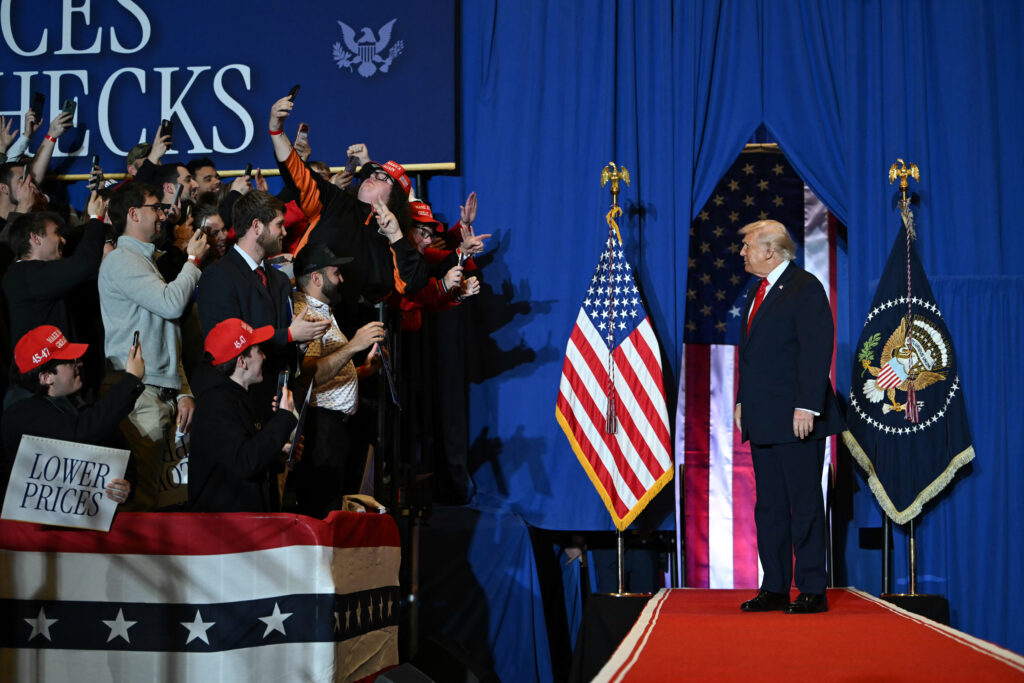
The US Supreme Court is set to hear arguments Wednesday on the legality of Donald Trump’s unprecedented use of powers for sweeping global tariffs in a case striking at the heart of the president’s economic agenda.Since returning to the White House, Trump has invoked emergency economic powers to impose “reciprocal” tariffs over trade practices Washington deemed unfair, alongside separate duties targeting his country’s biggest trading partners: Mexico, Canada and China.But these tariffs, a key prong of his “America First” trade policy aimed at protecting and boosting US industries, swiftly faced legal challenges.A lower court ruled in May that Trump exceeded his authority in imposing the duties, although the administration’s appeal allowed them to temporarily stay in place.The US Court of Appeals for the Federal Circuit ruled 7-4 in August that the levies were illegal — affirming the lower court’s finding — prompting Trump to take the fight to the Supreme Court.The top court’s decision will have major ramifications, but this could take months.The conservative-majority Supreme Court could find the tariffs illegal, blocking duties imposed on goods from countries worldwide. Or judges could affirm Trump’s actions, opening the door to further levies.Also at stake are billions of dollars in customs revenue already collected and Trump’s efforts to leverage tariffs for favorable trade deals — or other political priorities.The Supreme Court’s ruling, however, would not directly affect sector-specific tariffs Trump imposed, including on steel, aluminum and automobiles.But even as Trump’s tariffs have not sparked widespread inflation, US companies — especially small businesses — say they are bearing the brunt of additional costs.- Existential threat -“These tariffs threaten the very existence of small businesses like mine, making it difficult to survive, let alone grow,” said Victor Schwartz, a lead plaintiff in this week’s hearing.”I was shocked that those with much more power and money did not step up,” added Schwartz, the founder of a family-run New York wine company called VOS Selections.Pointing to Trump’s fast-changing tariff policies, Schwartz told reporters ahead of the hearing that small firms were “gambling with our livelihoods, trying to predict the unpredictable” as they set retail prices and stocked up on inventory.Another New York-based business owner, Mike Gracie, who imports hand-painted wallpaper from China, said Trump’s steep tariffs meant “hundreds of thousands of dollars” in new costs.As Washington and Beijing engaged in a tit-for-tat tariff fight in April, US duties rocketed to 145 percent, an added bill that Gracie had to absorb.”We didn’t want to risk our business by raising prices,” he told AFP. “But we can’t continue indefinitely to absorb them.”Kent Smetters of the University of Pennsylvania noted that 40 percent of US imports are intermediate goods, meaning they are not for retail consumers. He warned that maintaining tariffs means US businesses “become less competitive.”- Possible outcomes -Ryan Majerus, a former US trade official, told AFP that besides supporting or blocking Trump’s global tariffs, the court could also allow their imposition with certain limitations.The ruling could differentiate between “reciprocal” tariffs seeking to narrow trade gaps and others imposed to crack down on fentanyl entering the United States, added Majerus, a partner at law firm King & Spalding.Even if the top court found Trump’s global tariffs illegal, the administration could tap other laws to impose 15-percent tariffs for 150 days.In the meantime, they could pursue investigations for more “durable tariffs” like those under Section 301 of the Trade Act, Majerus said, which also allows Washington to respond to conduct deemed unfair.Because of these options, Majerus expects partners that have negotiated tariff deals with Trump might prefer to keep those terms rather than reopen talks.Beyond deals, Smetters said the case has bearing on wider authorities.”If the court really allows this to happen, then the question is, what else can the administration do without congressional approval?” he asked.”That might spook capital markets a bit more.”

Trump’s global tariffs to face challenge before Supreme Court

The US Supreme Court is set to hear arguments Wednesday on the legality of Donald Trump’s unprecedented use of powers for sweeping global tariffs in a case striking at the heart of the president’s economic agenda.Since returning to the White House, Trump has invoked emergency economic powers to impose “reciprocal” tariffs over trade practices Washington deemed unfair, alongside separate duties targeting his country’s biggest trading partners: Mexico, Canada and China.But these tariffs, a key prong of his “America First” trade policy aimed at protecting and boosting US industries, swiftly faced legal challenges.A lower court ruled in May that Trump exceeded his authority in imposing the duties, although the administration’s appeal allowed them to temporarily stay in place.The US Court of Appeals for the Federal Circuit ruled 7-4 in August that the levies were illegal — affirming the lower court’s finding — prompting Trump to take the fight to the Supreme Court.The top court’s decision will have major ramifications, but this could take months.The conservative-majority Supreme Court could find the tariffs illegal, blocking duties imposed on goods from countries worldwide. Or judges could affirm Trump’s actions, opening the door to further levies.Also at stake are billions of dollars in customs revenue already collected and Trump’s efforts to leverage tariffs for favorable trade deals — or other political priorities.The Supreme Court’s ruling, however, would not directly affect sector-specific tariffs Trump imposed, including on steel, aluminum and automobiles.But even as Trump’s tariffs have not sparked widespread inflation, US companies — especially small businesses — say they are bearing the brunt of additional costs.- Existential threat -“These tariffs threaten the very existence of small businesses like mine, making it difficult to survive, let alone grow,” said Victor Schwartz, a lead plaintiff in this week’s hearing.”I was shocked that those with much more power and money did not step up,” added Schwartz, the founder of a family-run New York wine company called VOS Selections.Pointing to Trump’s fast-changing tariff policies, Schwartz told reporters ahead of the hearing that small firms were “gambling with our livelihoods, trying to predict the unpredictable” as they set retail prices and stocked up on inventory.Another New York-based business owner, Mike Gracie, who imports hand-painted wallpaper from China, said Trump’s steep tariffs meant “hundreds of thousands of dollars” in new costs.As Washington and Beijing engaged in a tit-for-tat tariff fight in April, US duties rocketed to 145 percent, an added bill that Gracie had to absorb.”We didn’t want to risk our business by raising prices,” he told AFP. “But we can’t continue indefinitely to absorb them.”Kent Smetters of the University of Pennsylvania noted that 40 percent of US imports are intermediate goods, meaning they are not for retail consumers. He warned that maintaining tariffs means US businesses “become less competitive.”- Possible outcomes -Ryan Majerus, a former US trade official, told AFP that besides supporting or blocking Trump’s global tariffs, the court could also allow their imposition with certain limitations.The ruling could differentiate between “reciprocal” tariffs seeking to narrow trade gaps and others imposed to crack down on fentanyl entering the United States, added Majerus, a partner at law firm King & Spalding.Even if the top court found Trump’s global tariffs illegal, the administration could tap other laws to impose 15-percent tariffs for 150 days.In the meantime, they could pursue investigations for more “durable tariffs” like those under Section 301 of the Trade Act, Majerus said, which also allows Washington to respond to conduct deemed unfair.Because of these options, Majerus expects partners that have negotiated tariff deals with Trump might prefer to keep those terms rather than reopen talks.Beyond deals, Smetters said the case has bearing on wider authorities.”If the court really allows this to happen, then the question is, what else can the administration do without congressional approval?” he asked.”That might spook capital markets a bit more.”

Tehran toy museum brings old childhood memories to life

Inside a restored house in central Tehran, toys from every era, from ancient Persia to Soviet Russia and the United States, share the same space, stirring childhood memories from long ago.”I always thought that the target audience would be children and teenagers,” said 46-year-old Azadeh Bayat, founder of the museum, which opened last year after six years of renovations.”But now even adults visit the museum frequently,” she told AFP.Bayat, a researcher in children’s education, has gathered more than 2,000 toys from around the world.”By discovering the toys of their parents and grandparents, children learn to better understand and connect their own world with that of older generations,” she said. In the museum, a clay animal figurine from ancient Persia stood alone in a glass case.Nearby, a group of wooden “matryoshka” dolls, in traditional Russian dress with rosy cheeks, stood on one shelf, gleaming across from brightly painted Soviet tin cars.An Atari console, one of the early versions of video games from the 1980s, sits among the displays.American Barbie dolls, which were once heavily restricted in Iran as a symbol of Western influence, were also on display. Their popularity pushed Iranian authorities to create the modestly dressed “Sara and Dara” dolls as local equivalent in the early 2000s.For Maedeh Mirzaei, a 27-year-old employee in the gold sector, the experience at the museum was nostalgic. “There was so much publicity around the two Iranian dolls, their faces appeared on books and notebooks everywhere,” she said.Across the room, a museum worker demonstrated to a group of visiting schoolchildren the mechanics of a wooden acrobat puppet, known as “Ali Varjeh”, or “Ali the Jumper”, whose movements come to life with the pull of a string.The museum recently held an event themed around the Belgian character Tintin, as well as other shadow puppetry shows. “I remember playing with friends in the street or at home with these toys,” said 31-year-old Mehdi Fathi, a fitness instructor who was visiting the museum.”Some children nowadays may think that our dolls were silly and primitive,” he said.”But those toys helped us grow.”

Daughter of ‘underground’ pastor urges China for his release

When Grace Jin Drexel lost contact with her father in China weeks ago, her worries swiftly turned into fear — he, alongside more than 20 others, had been detained in a national crackdown on his underground church.She recalls being consumed by franticness: “I was texting literally everyone in my contacts, like, ‘what do I do?'”Her father is Jin Mingri, who founded the unregistered Zion Church in 2007 in Beijing. It grew to 1,500 members before shuttering in 2018 under pressure from Chinese authorities.But the church maintained an online presence that flourished during the Covid-19 pandemic, amassing a following across 40 Chinese cities.On October 10, Jin — who also goes by Ezra — was detained on “suspicion of the illegal use of information networks.” Around this time, authorities also rounded up several pastors and church members in cities like Beijing.”None of the family members have been able to meet those detained,” Jin Drexel told AFP in Washington, where she works.She and her brothers are American citizens, and she now devotes much of her time advocating for the detainees’ release.But the 37-day window in which authorities may detain someone before making formal arrests is narrowing.”We call on the Chinese government to also look into this case and realize that potentially, this was a mistake,” she said.Most of the pastors have secured legal representation, and her father has met his lawyers at least twice.Still, Jin Drexel frets: “We want to see him. We’re really concerned about his medication and his health.””He has pretty severe Type 2 diabetes, and the detention center initially didn’t even give him any medication,” she added.She teared up recounting her father’s condition, describing how he remained “an optimist” in a recent letter.”He was just telling his family members to not worry about him and that he is feeling comforted to be able to suffer with Christ.”- Basic dignity -“My father started Zion Church to be an independent church away from being controlled by the Chinese Communist Party (CCP),” Jin Drexel said.”It’s not that we were against the government. We just wanted to have our own decision-making power for simple things like, how many people can attend?”She moved to the United States for studies shortly after, and regularly visited her family in China.But things changed in 2018, a few years after President Xi Jinping assumed top office.Officials tightened oversight on religious and other groupings, calling for the “Sinicization” of religious practice.China’s officially atheist government has been wary of organized movements outside its control, and the country’s Christians had been split among those attending unofficial “house” or “underground” churches and those visiting government-sanctioned places of worship.Around September 2018, authorities shuttered Zion Church and froze its assets, Jin Drexel said, months after its leadership resisted installing facial recognition cameras.Her family relocated abroad but her father returned to China to be with the church — and has since faced a travel ban.He has not seen most of his family, including two young sons, for seven years, she said.She last saw Jin in 2020, after a visit that extended to 11 months as authorities, too, restricted her movements.US Secretary of State Marco Rubio has criticized the crackdown, and members of the Senate Foreign Relations Committee introduced a resolution condemning the CCP for the detentions.Growing up Christian in China, Jin Drexel has wondered how she would act if she is detained one day.But when it happened to her father, the weight of facing the power of China’s government hit her: “I have no idea what I’m supposed to do.””This is a religious freedom issue,” she said. “It is about basic human dignity, and that the Chinese government wants to control everything about everyone, including what is so intimate — like your own beliefs.”

Iran banking on Iraq vote to retain regional influence

Iraq will hold parliamentary elections on November 11, with analysts saying Iran will be watching closely as it hopes to retain influence over its neighbour after losing regional leverage during the Gaza war.The past two years have seen Iran-backed groups including Palestinian militants Hamas, Hezbollah in Lebanon and the Huthis in Yemen suffer heavy losses at Israel’s hands.Iran itself was on the receiving end of an unprecedented Israeli bombing campaign in June, which the United States briefly joined, and also lost a major ally with last year’s overthrow of Bashar al-Assad in Syria.Weakened on the regional stage, Iran intends to consolidate its gains in Iraq, which since the US invasion of 2003 has become one of the anchors of its regional influence.Tehran exerts power in Baghdad through Shiite parties that play a key role in appointing prime ministers, including current premier Mohammed Shia al-Sudani, and allied armed factions.”Tehran retains its influence as long as its allies hold decision-making power,” political analyst Ihsan al-Shammari told AFP.Iraq, for its part, has for years navigated a delicate balancing act between Tehran and Washington and has long been a fertile ground for proxy battles.Pro-Iranian groups claimed responsibility for firing on US positions in Iraq early in the Gaza war, attacks that triggered retaliatory strikes from the United States.Those groups then stayed out of the 12-day Iran-Israel war, even after Washington joined the bombing.Analyst Munqith Dagher said that “Iran is no longer in a position to impose its conditions”.”But that does not mean it will not try to exert influence,” the director of the IIACSS think tank added.- ‘Performative act’ -In the 2021 general election, influential Iraqi Shiite cleric Moqtada Sadr’s faction won the most seats before withdrawing from parliament.The legislature is now controlled by the Coordination Framework, the Iran-aligned coalition that brought Sudani to power.This time, Sadr has refused to participate in what he described as a “flawed election dominated by sectarian, ethnic and partisan interests”, and called on his supporters to boycott the vote.The upcoming elections will be the sixth since the 2003 US-led invasion of Iraq that toppled Saddam Hussein.Nevertheless, enthusiasm for voting appears to be on the wane.Chatham House, a think tank, has predicted that “participation may fall to the lowest level since 2003″.”Iraqis increasingly view elections not as a way to influence policy, but as a performative act with little impact on governance,” it added.More than 21 million voters are eligible to elect 329 lawmakers in the ballot, which will pave the way for the appointment of a new president — a largely ceremonial role — and a prime minister chosen after lengthy negotiations.In Iraq, the role of prime minister traditionally goes to a Shiite and the presidency to a Kurd, while the speaker of parliament is usually Sunni.- US influence -Observers also spoke of the influence of the United States. “There is a real desire on the part of the US to change the domestic political landscape” in order to reduce Iranian influence, former Sudani adviser Ibrahim al-Sumaidaie said.Washington has sanctioned Iraqis accused of helping Tehran evade US sanctions, and also strengthened its economic presence through contracts in oil, technology and healthcare.”Washington expects the next prime minister to deliver tangible steps that limit Iranian influence, regardless of the electoral outcome,” said Tamer Badawi, an analyst with the UK defence think tank RUSI.”The United States does not want to see… Iran-aligned groups retaining operational autonomy,” he told AFP.”Nor does Washington want Iran to use Iraq as a channel to resell oil products or secure access to hard currency,” he added.Washington also maintains about 2,500 troops in Iraq, alongside 900 more in Syria, as part of the international coalition against the Islamic State jihadist group.Mark Savaya, the new US special envoy to Iraq, insisted on the importance of “a fully sovereign Iraq, free from malign external interference, including from Iran and its proxies”.”There is no place for armed groups operating outside the authority of the state,” he said on X last month.The upcoming election will include the autonomous region of Kurdistan, where the historic rivalry between the Kurdistan Democratic Party and the Patriotic Union of Kurdistan remains fierce.At least 25 percent of parliamentary seats must go to women, according to the quota system that also reserves nine seats for minorities.More than 7,700 candidates, nearly a third of whom are women, are running for election in the country of around 46 million people.