



Toyota arm Hino makes deal to settle emission fraud case
US officials late Wednesday announced a $1.6 billion deal with Toyota subsidiary Hino Motors to settle charges it deceived regulators about the amount of emissions spewed by its diesel engines.Hino used altered emissions test data to get approval to import and sell more than 110,000 diesel engines to the US, most of which were installed in heavy-duty trucks made by Hino, according to the US Environmental Protection Agency (EPA).As part of the deal, Hino will plead guilty to engaging in a criminal conspiracy to mislead regulators and consumers, violating environmental protection laws and endangering public health, US attorney general Merrick Garland said in a release.US regulators and the state of California, which has strict vehicle emission standards, worked out criminal and civil remedies with Hino valued at more than $1.6 billion.”Hino’s actions directly undermined EPA’s program to protect the public from air pollution,” acting EPA administrator Jane Nishida said in a release.The proposed settlement is contingent on approval from a US district court judge in the state of Michigan.”Corporate crimes such as these endanger the health and well-being of innocent Americans, as well as the environment in which we all live,” said US attorney for the Eastern District of Michigan Dawn Ison.The deal includes a five-year term of probation during which Hino will be barred from importing diesel engines it has manufactured into the United States and implement a comprehensive compliance and ethics program, according to the EPA.Hino will also have to recall some trucks with engines violating emissions standards and spend some $155 million to replace marine and locomotive engines through the US to offset excess air emissions, according to the EPA.
Fire-wrecked Los Angeles gets a break as winds drop
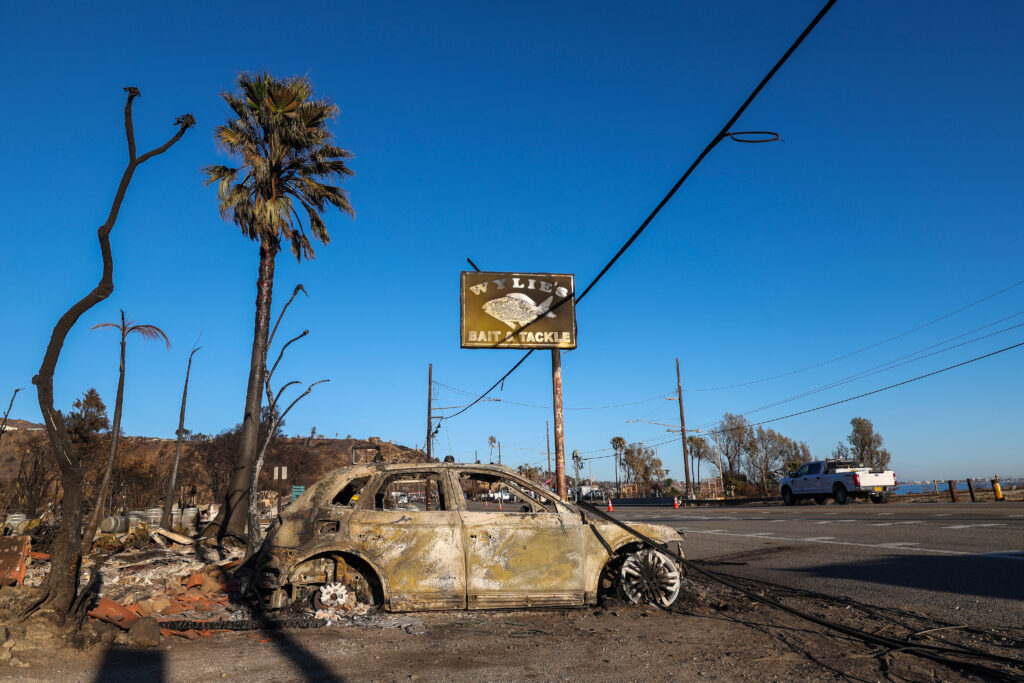
Fire-wrecked Los Angeles got a break Wednesday as dangerous winds dropped, giving hope to weary firefighters still battling to snuff out deadly blazes.More than a week after fires fanned by hurricane-force gusts began a destructive march that has left two dozen people dead and large areas of the city in ruins, forecasters said the end was in sight — at least for now.Onshore breezes were set to bring much-needed moisture over the coming days, forecasters at the National Weather Service told AFP.There will be “a big improvement for tonight and tomorrow, though there’ll still be some lingering areas of concern,” Ryan Kittell of the National Weather Service told AFP, though he warned there was another possibly perilous drying system in the offing early next week.The Eaton Fire and the Palisades fire, which together have scorched more than 40,000 acres (16,000 hectares) were still smoldering Wednesday.Battalions of firefighters from across the United States, as well as from Mexico, were working to tamp down hotspots that could still flare, Los Angeles City fire chief Kristin Crowley told reporters.”Infrared flights last night indicated there are still numerous hot spots burning within the fire footprint, and very close attention was paid to address any flare ups swiftly as to prevent any fire spread outside of the perimeter,” she said.- Back to school -With tens of thousands of people still displaced by the fires, life was far from normal in America’s second biggest city.But children whose schools were damaged or are still affected by evacuation orders were welcomed into other institutions.Stay-at-home mom Caroline Nick took Emery, 11, and Andrew, 7, to Nora Sterry Elementary on Wednesday after their own school was lost to the blaze.Nick, whose home was destroyed in the Palisades fire, said the children needed whatever semblance of normality they could get.”They don’t need to be listening to the adult conversations that my husband and I are having to have. It’s not good for them,” she told AFP.”They need to be here doing this: drawing and coloring, playing and running and laughing.”The confirmed death toll from the fires stood at 24, with Los Angeles County Coroner investigating another possible body.But the number of fatalities could still rise, as cadaver dogs continue a painstaking search of hundreds of buildings.More than 12,000 structures have been razed, including multi-million dollar homes in the Pacific Palisades neighborhood.Estimates of the eventual cost of the tragedy have now risen to as high as $275 billion, a figure that would make it one of the most expensive in US history.The relief operation around the city was in full force, with local, state and federal bodies offering help with everything from replacing lost driving licences to footing hotel bills.A huge private effort was also taking shape, with thousands of volunteers staffing giveaways of food, clothing and baby supplies for those in need.Hollywood megastar Leonardo DiCaprio was among those stepping up with donations.”The Los Angeles wildfires are devastating our city,” the “Titanic” star wrote on Instagram.”I am committing $1 million in partnership with @rewild’s Rapid Response Program to support both urgent needs and post-fire recovery efforts.”DiCaprio’s cash comes on the heels of $1 million donations from fellow actors Jamie Lee Curtis and Eva Longoria.Federal authorities have launched a probe into the causes of the fires, as theories swirl over who was responsible.”We know everyone wants answers, and the community deserves answers,” said Jose Medina of the federal Bureau of Alcohol, Tobacco, Firearms and Explosives (ATF), which is taking the lead.”ATF will give you those answers, but it will be once we complete a thorough investigation.”
Behind the Gaza deal: a US odd couple and last-minute snags
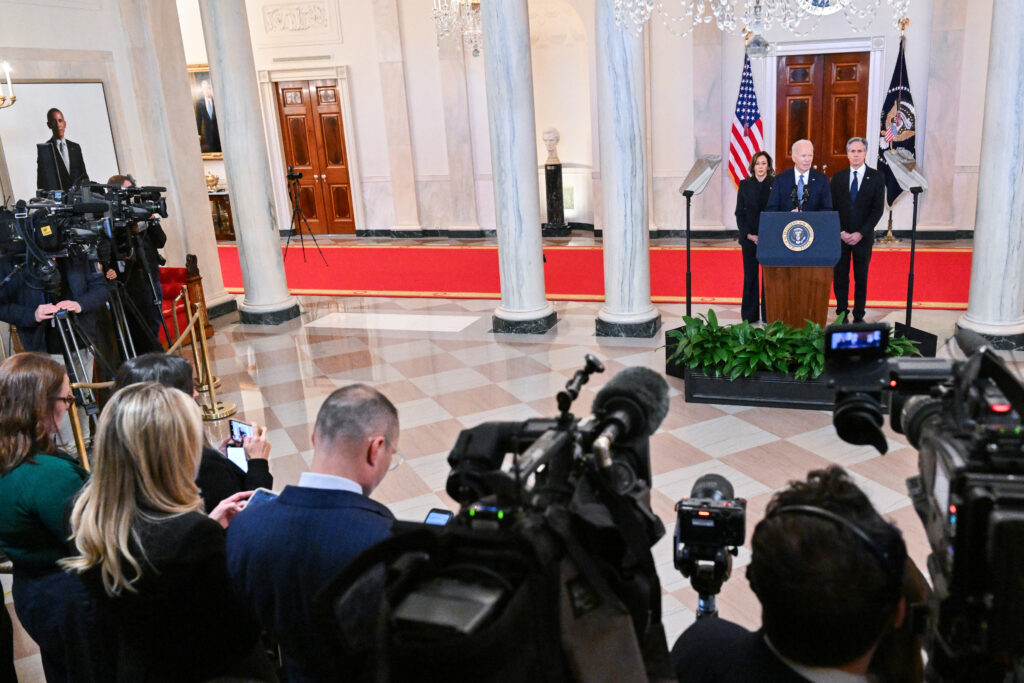
The Israel-Hamas deal was made possible by 18-hour days and a “remarkable” partnership between Joe Biden and Donald Trump’s Mideast envoys — but even then it seemed it might come apart at the last minute.In the final four days of talks, Biden’s pointman Brett McGurk was joined in the region by Trump’s envoy, Steve Witkoff, to get the deal over the line, US officials said.As they did so, Israeli and Hamas negotiators were huddling on separate floors of a building in the Qatari capital Doha, while moderators from Qatar and Egypt shuttled between them with their proposals.McGurk and Witkoff were talking “multiple times a day, and Mr Witkoff actually helped clinch down some of the details. There was great coordination,” National Security Council spokesman John Kirby told CNN.A senior Biden administration official said that the unlikely pairing — there is little love lost between the outgoing and incoming presidents — had been a decisive factor in reaching a deal.”Four days ago, Steve Witkoff came out to join Brett in his final push, which I think is, historically, almost unprecedented. And it was a highly constructive, very fruitful partnership,” the official said on condition of anonymity.”It was really quite, quite remarkable, and I think speaks to what can be done in the country.”Veteran diplomat McGurk has served in a number of US administrations, including in Trump’s first term. Witkoff is a businessman and real estate expert but has jumped into the negotiations — even insisting that Netanyahu break the sabbath on Saturday for a meeting in his office as he pushed to seal the ceasefire.The cooperation between the two US administrations didn’t stop them battling over who should claim credit for a deal that had seemed out of reach for so many months.Trump said the “epic” win would never have happened without his election putting pressure for a deal, while Biden said “is that a joke?” when a reporter asked which of them should get credit.- ‘Breakthrough’ -But the fact that they worked together at all underscores how crucial a deal was viewed by both presidents.The seed was planted when Biden invited Trump to the Oval Office for a meeting eight days after the Republican’s election win in November, and their national security teams agreed to meet, the US official said.The knowledge that a new US administration would be starting on January 20 then galvanized the Israeli and Hamas sides alike.”In any breakthrough diplomacy, sometimes you need a deadline,” the official said. But another key factor was the dramatic strategic shift in the region in the last half of 2024 that isolated Hamas from its Iranian backers.Biden introduced the outline of the peace plan in May, but Washington had concluded that there would “never be a ceasefire” while Hamas’s leader Yahya Sinwar was still alive, and while Hamas’s Lebanese ally Hezbollah still opposed a deal, the Biden administration official said.Then, Israel killed Hezbollah leader Hassan Nasrallah in September, and Sinwar in October, while also taking out Iran’s air defenses. The fall of Syrian leader Bashar al-Assad in December was a further blow to Hamas.Negotiations intensified after McGurk returned to the region on January 5 — “18 hours a day, sometimes longer” — but sticking points between Israel and Hamas remained.The final 96 hours were the most intense of all. One of the biggest hang-ups were the “incredibly complicated” lists for the exchanges of hostages held by Hamas with Palestinian prisoners held by Israel. “All of that was not fully nailed down until the recent hours,” the senior Biden administration official said.Even then, nothing was agreed until everything was agreed.”I have to say, it wasn’t until this afternoon that we had full confidence that it’s going to come together.”Biden himself expressed relief that the deal was finally done.”At long last,” he said as he announced the deal at the White House.
Behind the Gaza deal: a US odd couple and last-minute snags
The Israel-Hamas deal was made possible by 18-hour days and a “remarkable” partnership between Joe Biden and Donald Trump’s Mideast envoys — but even then it seemed it might come apart at the last minute.In the final four days of talks, Biden’s pointman Brett McGurk was joined in the region by Trump’s envoy, Steve Witkoff, to get the deal over the line, US officials said.As they did so, Israeli and Hamas negotiators were huddling on separate floors of a building in the Qatari capital Doha, while moderators from Qatar and Egypt shuttled between them with their proposals.McGurk and Witkoff were talking “multiple times a day, and Mr Witkoff actually helped clinch down some of the details. There was great coordination,” National Security Council spokesman John Kirby told CNN.A senior Biden administration official said that the unlikely pairing — there is little love lost between the outgoing and incoming presidents — had been a decisive factor in reaching a deal.”Four days ago, Steve Witkoff came out to join Brett in his final push, which I think is, historically, almost unprecedented. And it was a highly constructive, very fruitful partnership,” the official said on condition of anonymity.”It was really quite, quite remarkable, and I think speaks to what can be done in the country.”Veteran diplomat McGurk has served in a number of US administrations, including in Trump’s first term. Witkoff is a businessman and real estate expert but has jumped into the negotiations — even insisting that Netanyahu break the sabbath on Saturday for a meeting in his office as he pushed to seal the ceasefire.The cooperation between the two US administrations didn’t stop them battling over who should claim credit for a deal that had seemed out of reach for so many months.Trump said the “epic” win would never have happened without his election putting pressure for a deal, while Biden said “is that a joke?” when a reporter asked which of them should get credit.- ‘Breakthrough’ -But the fact that they worked together at all underscores how crucial a deal was viewed by both presidents.The seed was planted when Biden invited Trump to the Oval Office for a meeting eight days after the Republican’s election win in November, and their national security teams agreed to meet, the US official said.The knowledge that a new US administration would be starting on January 20 then galvanized the Israeli and Hamas sides alike.”In any breakthrough diplomacy, sometimes you need a deadline,” the official said. But another key factor was the dramatic strategic shift in the region in the last half of 2024 that isolated Hamas from its Iranian backers.Biden introduced the outline of the peace plan in May, but Washington had concluded that there would “never be a ceasefire” while Hamas’s leader Yahya Sinwar was still alive, and while Hamas’s Lebanese ally Hezbollah still opposed a deal, the Biden administration official said.Then, Israel killed Hezbollah leader Hassan Nasrallah in September, and Sinwar in October, while also taking out Iran’s air defenses. The fall of Syrian leader Bashar al-Assad in December was a further blow to Hamas.Negotiations intensified after McGurk returned to the region on January 5 — “18 hours a day, sometimes longer” — but sticking points between Israel and Hamas remained.The final 96 hours were the most intense of all. One of the biggest hang-ups were the “incredibly complicated” lists for the exchanges of hostages held by Hamas with Palestinian prisoners held by Israel. “All of that was not fully nailed down until the recent hours,” the senior Biden administration official said.Even then, nothing was agreed until everything was agreed.”I have to say, it wasn’t until this afternoon that we had full confidence that it’s going to come together.”Biden himself expressed relief that the deal was finally done.”At long last,” he said as he announced the deal at the White House.
Washington ramps up security for Trump inauguration
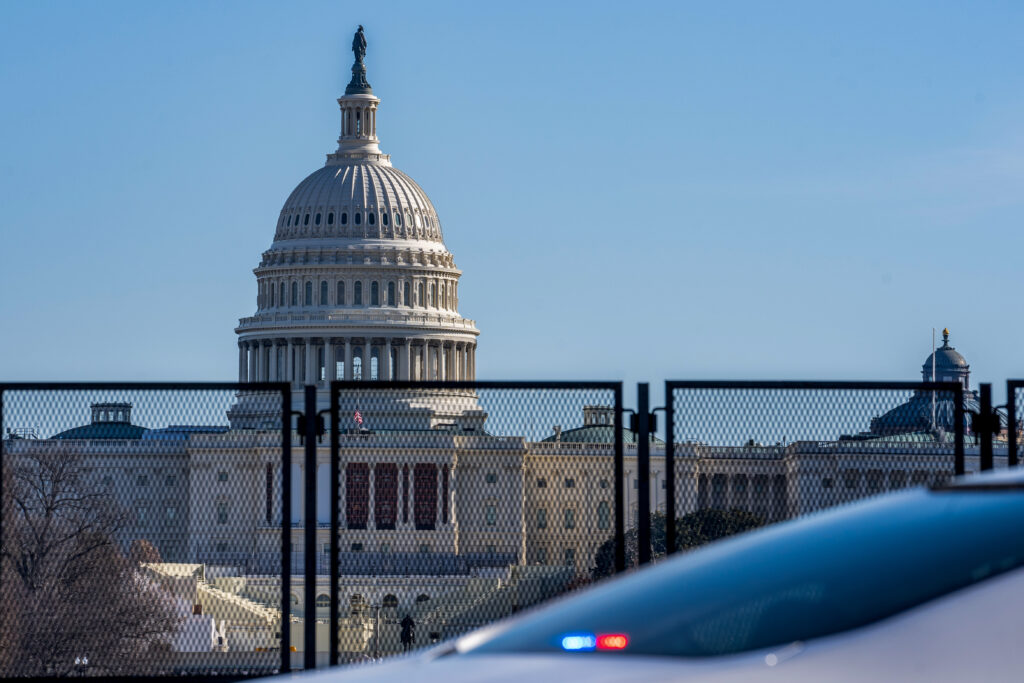
With endless perimeter fencing, all-seeing drones and some 25,000 security personnel, the US capital is preparing for Donald Trump’s presidential inauguration in an unprecedented protective posture after an election cycle marked by violence.Washington is used to high-profile, high-risk happenings, but rarely so many in such quick succession.Monday’s presidential inauguration will be the third top-level “national special security event” in just two weeks, following the election certification on January 6 and former president Jimmy Carter’s funeral.The city is prepping for fewer visitors on January 20 than Trump’s first inaugural eight years ago — when authorities anticipated up to a million guests.Nevertheless, a record 30 miles (48 kilometers) of anti-scale fencing is being erected around the security perimeter.The White House, Capitol, and parts of the Pennsylvania Avenue parade route are already ringed by the eight-foot (2.4-meter) metal barriers.Around 25,000 law enforcement and military personnel are converging on Washington, according to US Secret Service special agent Matt McCool.”We have a slightly more robust security plan” than previous years, he told a briefing Monday, saying attendees would experience extensive security checks and see snipers on rooftops, tactical teams on the ground, and drones patrolling the skies.”What’s different is, we are in a higher threat environment,” he said.Violence marred last year’s presidential race, with Trump narrowly surviving a July assassination attempt during a Pennsylvania rally. One person in the audience was killed.Two months later an apparent gunman was discovered at a golf club in Florida while Trump was on the course. The incidents were seen as major operational failures by the Secret Service.On January 1 two more deadly episodes — a truck ramming in New Orleans and a Cybertruck explosion in Las Vegas — set Americans on edge.McCool said “a full slate of visible and invisible security measures” were blanketing Washington for Trump’s big day.According to US Capitol Police chief J. Thomas Manger, about 250,000 ticketed guests will gather for the inauguration.Authorities said there were currently no known credible threats to the ceremony.”The biggest threat I think for all of us remains the lone actor,” Manger said.- ‘Peaceful transition’ -Trump has had a contentious relationship with Washington’s Democratic mayor, Muriel Bowser, but this week she pledged no effort was being spared.”Every four years our city supports the peaceful transition of power. We are proud of that responsibility,” she told reporters.Thousands of demonstrators however will be on hand, including during a Saturday “People’s March” to the Lincoln Memorial. Eight years ago hundreds of thousands marched in a similar demonstration, but Trump’s latest win appears to have deflated the #Resistance movement, and authorities said up to 25,000 people are expected Saturday.Sunday will see thousands of MAGA faithful pack a downtown arena for a rally featuring Trump himself.Then on Inauguration Day, multiple smaller protests are scheduled.Police will ensure people can “peacefully protest and assemble,” Bowser said, but “violence, destruction and unlawful behavior will not be tolerated.”For those venturing outside to watch Trump take the oath, it will be a frigid affair: the forecast is for temperatures well below freezing throughout Inauguration Day.Trump supporters are filling the city’s hotel rooms — although not to the level of his or Barack Obama’s first inauguration.As of last week, downtown Washington occupancy rates for Inauguration eve were at 70 percent, lower for the moment than the 92-percent occupancy for Trump’s 2017 inauguration, data firm STR says.Several hotels have unveiled elite inauguration packages, including the famous Watergate, whose “Head of State” package starts at $73,500.It includes helicopter service, a chauffeured armored Maybach, accommodation in the Watergate’s Presidential Suite, and a tour of the “Scandal Suite” where the infamous 1972 break-in occurred.
Yellen warns against extending Trump’s first-term US tax cuts
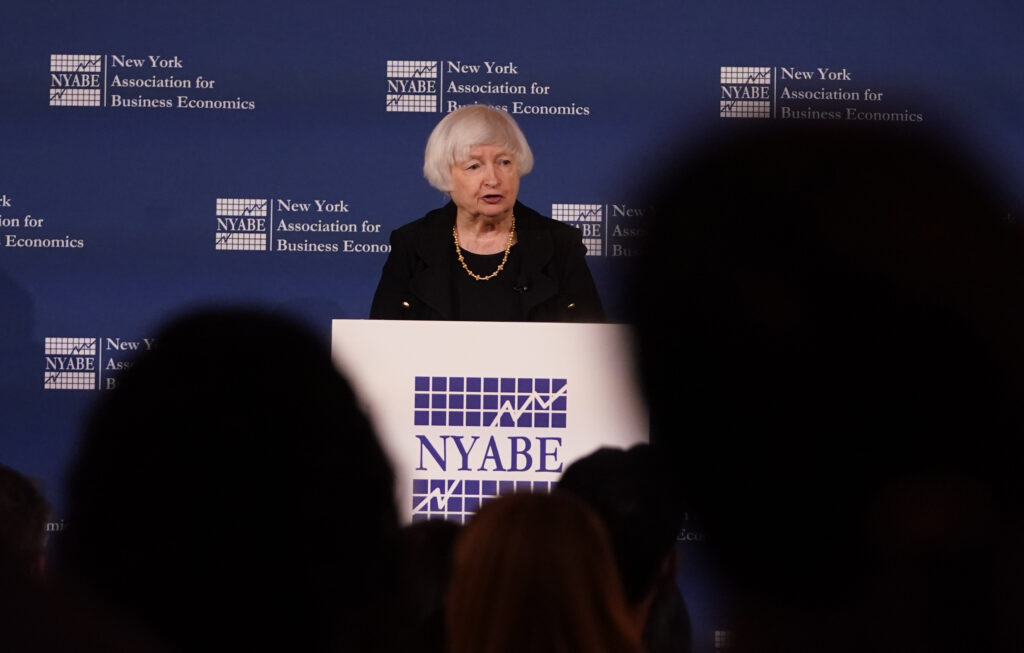
US Treasury Secretary Janet Yellen warned Wednesday that plans to extend President-elect Donald Trump’s 2017 tax cuts — which remained in place under Joe Biden but are set to expire — will add to unsustainable deficits.”The projected fiscal path under current budgetary policies is simply not sustainable,” she said, in what is likely to be her final major speech in office.”The consequences of inaction, or action that exacerbates projected deficits, could be dire,” she added in remarks at the New York Association for Business Economics, just days before Trump returns to the White House.On the campaign trail, Trump pledged tax reductions with benefits across income levels.The 2017 cuts, enacted by Trump in his first term, lowered rates for businesses and individuals. But some provisions are set to expire at the end of the year.Yellen pointed to estimates that extending provisions of the Tax Cuts and Jobs Act could add around $4 trillion to deficits through 2034.While the act lowered income taxes for many in the United States, they have been criticized for being more beneficial to the wealthy.Yellen cautioned that policies like extending the cuts “could undermine our country’s strength, from the resilience of the Treasury market to the value of the dollar, even provoking a debt crisis in the future.””Misguided economic policymaking,” she added, would weigh on the next generation.Looking ahead, she urged for the US government to “give more weight to fiscal sustainability concerns when determining both tax and spending priorities.” In her speech, Yellen also said that it was critical for the United States to sustain investments in cutting-edge industries and research and development.She defended policy decisions of the Biden administration in the period of the Covid-19 pandemic as well, saying its “fiscal policy choices saved millions of jobs.”Although she acknowledged that “the prices of many everyday goods soared,” she argued that government support helped avert significant hardship, allowing Americans to return to work quickly.She also stressed that inflation in the world’s biggest economy fell earlier than in its major peers.”All policy choices entailed trade-offs, but the Biden administration made sound decisions that set the economy on a strong course,” she said.Cost of living concerns were a major voter concern during November’s presidential election, which propelled Trump to victory.

IA: l’AFP conclut un accord avec Mistral pour l’utilisation de ses dépêches
Acteur majeur de l’information mondiale, l’AFP (Agence France-Presse) et l’entreprise d’intelligence artificielle française Mistral, qui ambitionne de devenir le principal acteur européen de l’IA, ont signé un accord qui permet au robot conversationnel de la start-up d’utiliser les dépêches d’actualité de l’agence pour répondre aux requêtes de ses utilisateurs.Ni le montant ni la durée de ce contrat “pluriannuel” n’ont été dévoilés. C’est le premier accord de ce type pour l’agence mondiale, ainsi que pour Mistral AI, concurrent européen des géants américains comme OpenAI (concepteur de l’outil ChatGPT).Dans le monde, ce type d’accord reste relativement rare, même si les choses se sont accélérées en 2024. La plupart concerne pour l’heure OpenAI. La société californienne a notamment signé avec le journal économique britannique Financial Times, le quotidien français Le Monde ou encore le groupe allemand Springer (Bild).”C’est le premier accord entre deux acteurs aux ambitions mondiales, voire à l’empreinte mondiale concernant l’AFP, mais aux racines européennes affirmées”, a déclaré le PDG de l’agence, Fabrice Fries, dans une interview avec des journalistes de l’AFP.Cet accord fournira à l’AFP “un nouveau courant de revenus”, a-t-il souligné.Pour Mistral, “l’AFP apporte une source vérifiée, journalistique, dont on pense qu’elle est très importante”, a renchéri le patron de la start-up, Arthur Mensch.- Actu ou vie quotidienne ? -Dès jeudi, les dépêches de l’AFP en 6 langues (français, anglais, espagnol, arabe, allemand, portugais) peuvent être utilisées par le robot conversationnel de Mistral, Le Chat. Il fonctionne comme ChatGPT, qui a popularisé ces outils dans le grand public: l’utilisateur lui pose une question à laquelle il répond en quelques secondes.Quand la question a trait à l’actualité, Le Chat va formuler ses réponses en se servant des dépêches de l’AFP, c’est-à-dire les informations envoyées sous forme de textes par l’agence à ses clients abonnés (médias, institutions, entreprises…).Une phase de test a lieu dans un premier temps, auprès d’une partie seulement des utilisateurs.Le Chat peut puiser dans toutes les archives texte de l’agence depuis 1983, mais pas dans ses photos, vidéos ou infographies.Au total, cela représente 38 millions de dépêches, produites au rythme de 2.300 par jour, selon M. Fries.Cet usage vise selon lui “des professions libérales, des cadres de grandes entreprises”, par exemple pour “préparer des mémos” ou tout document lié à l’actualité.Dans le grand public, beaucoup de gens ont une utilisation différente de ces outils d’IA générative. Ils s’en servent pour des questions de vie quotidienne, auxquelles ces programmes répondent en piochant des éléments sur internet.Les deux usages “sont complémentaires”, a estimé M. Mensch. Pour des questions “qui nécessitent de l’information vérifiée, c’est l’AFP qui fournira” le matériau de base des réponses et, quand les requêtes porteront “sur le shopping ou la météo par exemple, c’est plutôt le web”, a-t-il expliqué.- “Diversification” -La signature intervient peu après l’annonce par le groupe Meta (Facebook, Instagram) de l’arrêt aux Etats-Unis de son programme de fact-checking. A l’échelle mondiale, l’AFP est en première ligne de ce programme.”Nos discussions avec Mistral ont démarré il y a une petite année, ce n’est donc pas corrélé à la décision de Meta”, a affirmé M. Fries, en revendiquant sa “stratégie de diversification” auprès des plateformes numériques alors que les médias traditionnels sont frappés par une grave crise.En 2023, l’AFP a réalisé un bénéfice pour la cinquième année consécutive, avec un résultat net de 1,1 million d’euros, selon les chiffres publiés en avril 2024.Outre ses revenus commerciaux, l’AFP reçoit par l’Etat français une compensation des coûts liés à ses missions d’intérêt général (113,3 millions d’euros en 2023).Contrairement à d’autres accords de ce type, les contenus AFP ne serviront pas à entraîner et faire progresser les modèles informatiques de Mistral, ont assuré les deux parties. Ces contenus sont “un module qui vient se brancher à notre système et peut être débranché” à expiration du contrat, a déclaré M. Mensch.”Ça n’est pas un paiement pour solde de tout compte, comme c’est souvent le cas dans les accords d’entraînement de modèles, mais du développement de revenus récurrents”, a fait valoir M. Fries.