Trump frustré par l’Iran mais n’a pas pris de décision sur des frappes

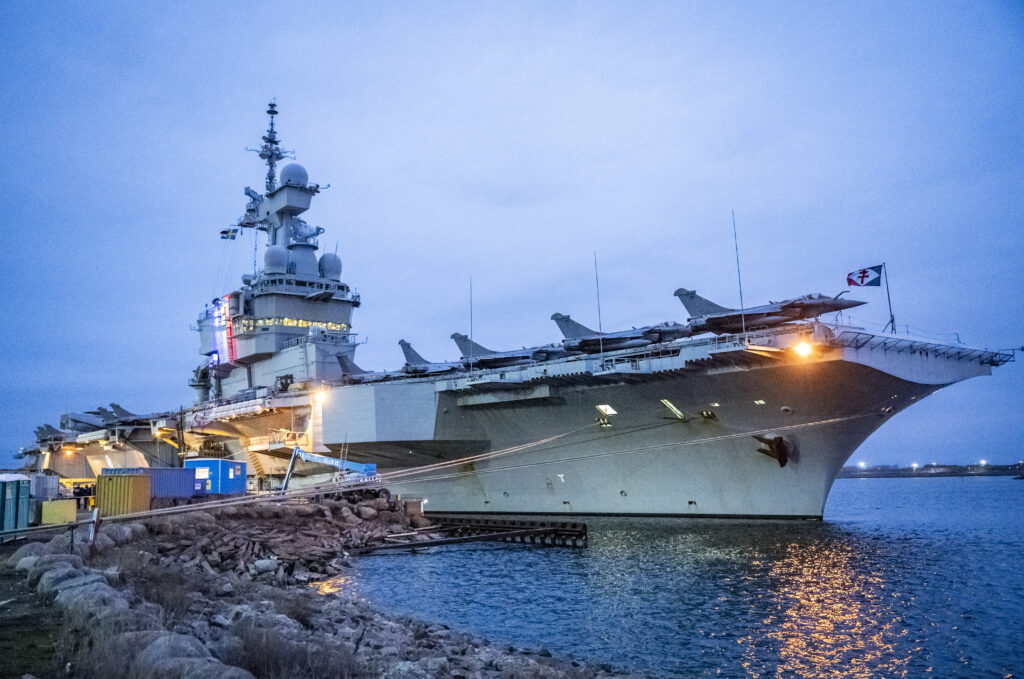
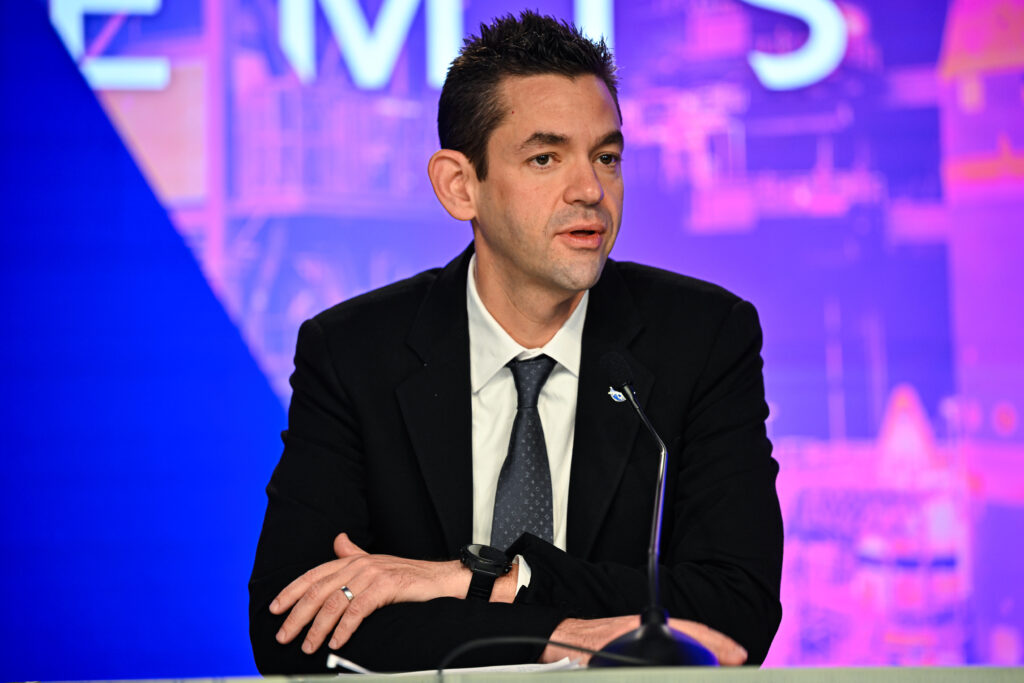
Donald Trump tient le monde en haleine: il a affiché vendredi son mécontentement envers l’Iran, mais dit n’avoir pas pris de “décision finale” sur d’éventuelles frappes, alors que le médiateur omanais s’est targué d’une percée dans les négociations pour éviter la guerre.Le président américain a déclaré à des journalistes “ne pas être très content de la manière des Iraniens de négocier”, au lendemain d’une troisième session de pourparlers à Genève sous médiation omanaise.Mais “nous n’avons pas pris une décision finale” sur de possibles frappes, a-t-il déclaré, sur fond de déploiement militaire américain massif au Moyen-Orient, le plus important depuis des décennies, et de craintes d’un embrasement régional en cas d’attaque américaine.Le chef de la diplomatie omanaise, médiateur des négociations, a cependant assuré vendredi qu’une percée avait eu lieu dans celles-ci, affirmant que l’Iran avait accepté de ne pas stocker d’uranium enrichi.”C’est quelque chose de complètement nouveau, qui rend vraiment l’argument de l’enrichissement moins pertinent, parce que désormais nous parlons de l’absence de stockage”, a expliqué Badr Albusaidi sur la chaîne américaine CBS.Plus tôt dans la journée, Donald Trump avait exigé que l’Iran n’effectue “aucun enrichissement” d’uranium.”Vous n’avez pas besoin d’enrichir quand vous avez autant de pétrole”, a-t-il déclaré à la presse lors d’un déplacement au Texas.- Porte-avions déployés -Dans ce contexte de tensions, les Etats-Unis ont recommandé vendredi au personnel non essentiel de leur ambassade à Jérusalem de quitter Israël – leur allié et ennemi juré de l’Iran – en raison “de risques pour leur sécurité”.Le secrétaire d’Etat américain, Marco Rubio, se rendra lui lundi en Israël – que l’Iran avait frappé en juin en riposte à une attaque israélienne sur son territoire -, a aussi annoncé le département d’Etat.Les Etats-Unis ont dépêché dans la région deux porte-avions dont le Gerald Ford, le plus grand au monde, attendu au large d’Israël après avoir quitté jeudi la Crète.Washington a également inscrit vendredi l’Iran sur sa liste noire de pays pratiquant “des détentions injustifiées”, et appelé les ressortissants américains s’y trouvant à “partir immédiatement”.Dans le centre de Téhéran, tout en disant préférer éviter la guerre et souhaiter la levée des sanctions internationales qui asphyxient l’économie iranienne, Hamid Beiranvand, un employé de 42 ans, affirme qu'”il ne faut faire aucune concession” aux Américains. Accusant Téhéran – qui dément – de vouloir se doter de la bombe atomique, les Etats-Unis insistent pour une interdiction totale d’enrichissement d’uranium, tandis que l’Iran défend son droit au nucléaire civil.Washington veut aussi limiter le programme balistique iranien, une question que Téhéran refuse d’aborder. Le chef de la diplomatie iranienne Abbas Araghchi a appelé vendredi les Etats-Unis à éviter “toute exigence excessive”, tempérant l’optimisme qu’il avait affiché la veille à l’issue des pourparlers.- Risque d’aggravation “rapide” -Le Haut-Commissaire aux droits de l’Homme de l’ONU, Volker Türk, s’est dit “extrêmement inquiet du risque d’escalade militaire régionale”.La Chine a conseillé à ses ressortissants actuellement en Iran d’évacuer “dès que possible”. Londres a annoncé des mesures pour protéger son personnel diplomatique, face au risque d’une aggravation “rapide” de la situation. Berlin a déconseillé de son côté “de toute urgence” à ses ressortissants de se rendre en Israël. Et la compagnie turque Turkish Airlines a annulé ses vols vendredi soir vers Téhéran au départ d’Istanbul.Le ministre iranien Abbas Araghchi s’était prévalu jeudi de “très bons progrès” dans les discussions avec les Etats-Unis.Une prochaine session doit se tenir “très bientôt”, après des discussions “entre équipes techniques” lundi à Vienne en Autriche, assistées “d’experts” de l’Agence internationale de l’énergie atomique (AIEA), avait-il ajouté.”La paix est à portée de main”, a même assuré vendredi sur X l’Omanais Badr Busaidi, disant s’être entretenu à Washington avec le vice-président JD Vance.Donald Trump avait lancé le 19 février un ultimatum de “10 à 15 jours” pour décider si un accord était possible ou s’il allait recourir à la force. Les deux pays avaient repris des pourparlers l’année dernière, interrompus par la guerre israélo-iranienne de 12 jours en juin à laquelle Washington s’était brièvement joint.Les nouvelles tensions sont apparues après la répression dans le sang, en janvier, d’un vaste mouvement de contestation d’Iraniens, auxquels Donald Trump avait promis de venir “en aide”.bur-vl-lb-rle/ph
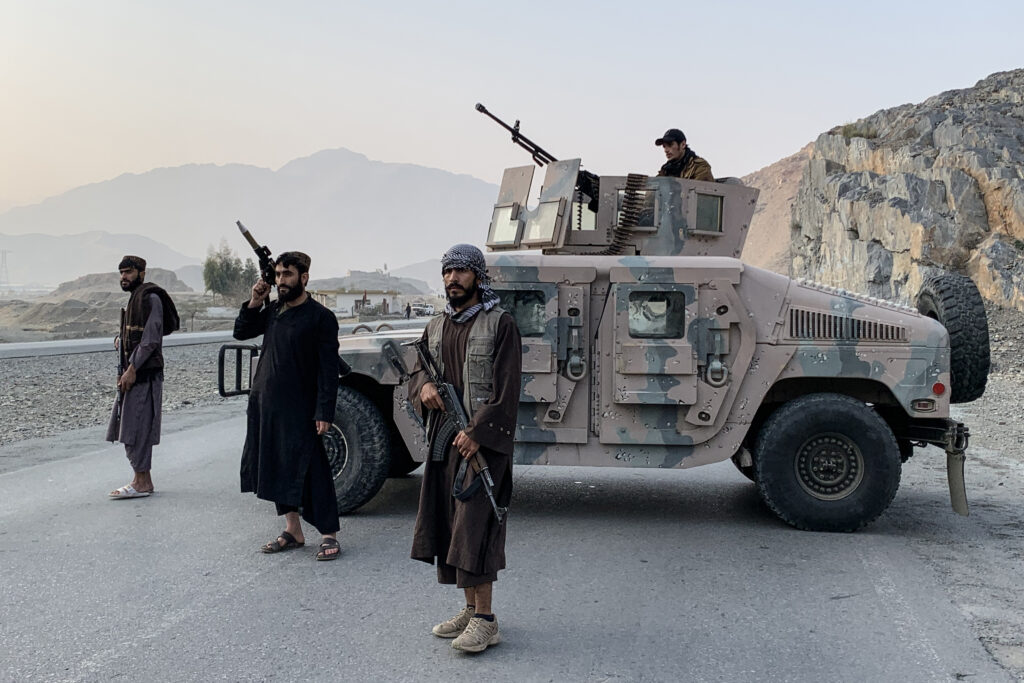
Le Pakistan bombarde Kaboul et déclare “une guerre ouverte”

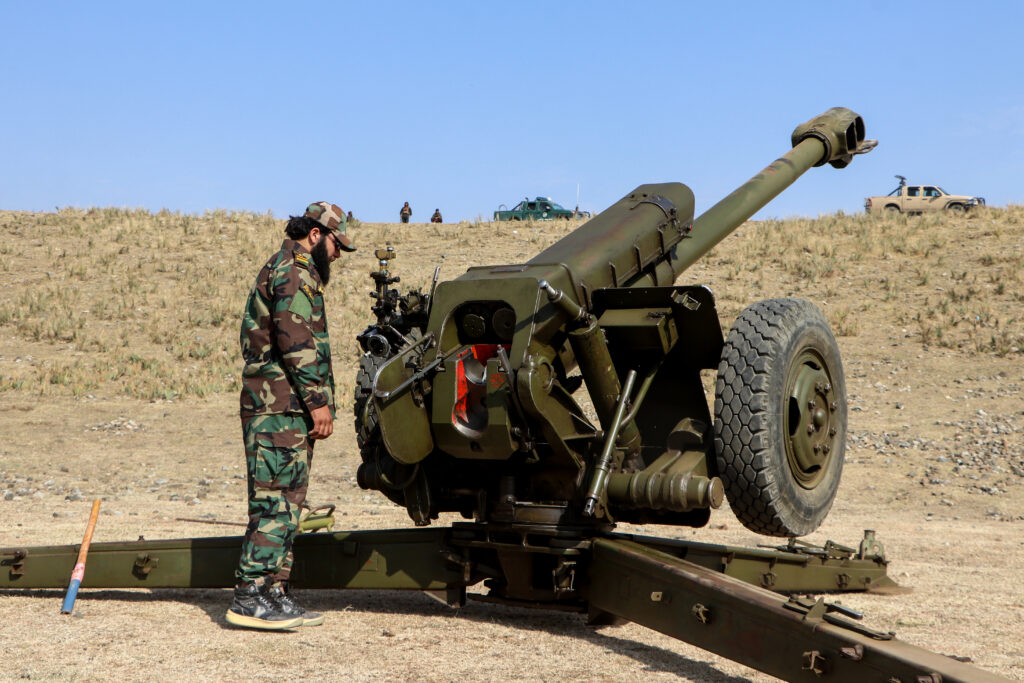
Le Pakistan a bombardé vendredi plusieurs grandes villes afghanes, dont la capitale Kaboul, le gouvernement pakistanais ayant déclaré une “guerre ouverte” aux autorités talibanes à la suite d’une offensive afghane lancée la veille à sa frontière.Longtemps proches, le Pakistan, puissance nucléaire, et l’Afghanistan s’affrontent sporadiquement depuis que les dirigeants talibans ont repris le contrôle de Kaboul en août 2021.Les Etats-Unis ont dit vendredi soutenir le droit du Pakistan “à se défendre” contre les autorités talibanes après cette offensive afghane.”Nous continuons à suivre de près la situation et avons exprimé notre soutien au droit du Pakistan à se défendre contre les attaques des talibans”, a écrit sur X la numéro trois du département d’Etat, Allison Hooker, disant s’être entretenue avec le ministre pakistanais des Affaires étrangères.Le Pakistan accuse les autorités afghanes d’abriter des activistes armés qui lancent des attaques sur le territoire pakistanais, ce que l’Afghanistan dément. La plupart de ces hostilités ont été revendiquées par les talibans pakistanais (TTP), groupe armé qui se réclame de la même idéologie que les talibans afghans.Des coups de feu et des tirs d’artillerie ont été entendus vendredi par des journalistes de l’AFP en territoire afghan, près du poste-frontière stratégique de Torkham, l’un des rares restés ouverts entre Afghanistan et Pakistan. “J’ai vu du sang, (des tirs) ont blessé deux ou trois enfants et deux ou trois femmes”, a déclaré vendredi à l’AFP Gander Khan, rapatrié afghan de 65 ans. Les heurts se sont intensifiés dernièrement. Depuis les combats d’octobre, qui ont fait 70 morts de part et d’autre, la frontière commune reste largement fermée.-“Guerre ouverte”-Le Pakistan a frappé dans la nuit Kaboul, Kandahar et la province frontalière de Paktia (est). Une “réponse appropriée” à l’attaque afghane de la veille, selon le ministre pakistanais de l’Intérieur Mohsin Naqvi.”Notre patience a atteint ses limites. C’est désormais la guerre ouverte entre nous et vous”, a déclaré le ministre de la Défense pakistanais, Khawaja Asif, sur X.A Kandahar (sud), Zabihullah Mujahid, porte-parole des autorités talibanes, a répondu que son gouvernement souhaitait résoudre le conflit par le “dialogue”. Le secrétaire général de l’ONU Antonio Guterres a appelé vendredi à une “cessation immédiate des hostilités” entre l’Afghanistan et le Pakistan, se disant “très inquiet” sur “l’impact de cette violence sur la population civile”, selon son porte-parole Stéphane Dujarric.Le ministère iranien des Affaires étrangères a exhorté vendredi dans un communiqué l’Afghanistan et le Pakistan à “s’abstenir” de toute action aggravant leur conflit.La présidente du Comité international de la Croix-Rouge (CICR), Mirjana Spoljaric, a appelé le même jour à la “désescalade”.En réponse aux bombardements nocturnes, les autorités talibanes ont annoncé vendredi de nouvelles frappes à “grande échelle contre des positions” pakistanaises. – Poste-frontière -Jeudi, l’armée afghane avait lancé des “attaques massives” à la frontière, en riposte à des bombardements pakistanais le week-end dernier.Islamabad avait assuré vouloir viser des camps “terroristes” en réponse à des attentats-suicides au Pakistan. Selon une source sécuritaire pakistanaise, “plus de 80” membres de groupes armés ont été tués dans ces bombardements.Le ministère afghan de la Défense a indiqué que huit de ses soldats avaient été tués lors de l’offensive terrestre de jeudi.Un porte-parole du Premier ministre pakistanais a déclaré vendredi soir que 297 talibans et militants afghans avaient été tués et que 29 sites en Afghanistan avaient été ciblés par des frappes aériennes. Le porte-parole, Mosharraf Zaidi, n’a pas précisé le nombre de soldats pakistanais tués, Islamabad ayant précédemment annoncé 12 morts.Il est difficile de vérifier de manière indépendante les bilans des pertes annoncés par chacune des parties.Le ministère pakistanais de l’Information a accusé l’Afghanistan d’avoir “ouvert le feu unilatéralement”.- Offres de médiation -Selon la mission de l’ONU en Afghanistan, les bombardements du week-end dernier ont tué au moins 13 civils. Pour sa part, le gouvernement taliban a affirmé qu’au moins 18 personnes avaient péri.Avec ces raids nocturnes, “le Pakistan semble avoir étendu ses frappes, qui ne visent plus seulement le TTP (talibans pakistanais) mais désormais aussi le régime taliban”, a observé sur X Michael Kugelman, spécialiste de l’Asie du Sud, notant une “escalade significative et dangereuse”.L’Arabie saoudite et le Qatar multiplient les contacts diplomatiques pour mettre fin aux combats meurtriers entre le Pakistan et l’Afghanistan, a indiqué vendredi à l’AFP une source proche des négociations. Une brève trêve entérinée le 19 octobre avait été jugée caduque neuf jours plus tard par Islamabad qui avait accusé l’Afghanistan d’orchestrer des attentats menés par les TTP.burs/phs/lgo/ega/lth/emp/thm/ial/dth

Pakistan bombs Kabul in ‘open war’ on Afghanistan’s Taliban government

Pakistan bombed major cities in Afghanistan and declared a state of “war” with its neighbor on Friday, drawing diplomatic support from Washington but a chorus of concern from others in the international community.Pakistan, which launched the strikes to retaliate for a cross-border Afghan offensive on Thursday night, said that 29 locations across Afghanistan had been “subjected to aerial targeting.” “Pakistan’s immediate and effective response to aggression continues,” Mosharraf Zaidi, a spokesman for Pakistan’s prime minister, posted on X.In response to the sharp surge in hostilities, Britain, the United Nations and the International Committee of the Red Cross called for immediate de-escalation while diplomats in China, Saudi Arabia and Qatar began efforts to calm the tensions.  The United States for its part “expressed support for Pakistan’s right to defend itself against Taliban attacks,” Allison Hooker, the under secretary of state for political affairs, wrote on X after talks with a Pakistani counterpart.The operation was Pakistan’s most widespread bombardment of Afghanistan since the Taliban returned to power in 2021 and included strikes on their southern power base, Kandahar, as well as the Afghan capital. It was launched after Afghan forces attacked Pakistani border troops on Thursday night in retaliation for earlier air strikes by Islamabad. Both sides claimed they inflicted significant casualties.– Casualties –Taliban government spokesman Zabihullah Mujahid said Afghan forces killed 55 Pakistani soldiers and captured several others, while putting the death toll among Afghan troops at 13.Zaidi, the Pakistan government spokesman, said 297 Afghan Taliban and militants had been killed. Islamabad earlier said 12 of its soldiers had been killed. Afghanistan government spokesman Hamdullayh Fitrat said at least 19 civilians had been killed in Khost and Paktika provinces. Casualty claims from both sides are difficult to verify independently.Near the key Torkham border crossing, an AFP journalist heard shelling on Friday morning, and a camp accommodating Afghans who had returned from Pakistan was hit by the fighting overnight.”Children, women, and old people were running,” Gander Khan, a 65-year-old man, told AFP in front of rows of tents at the Omari camp.- Relations plunge -Relations between the neighbours have plunged in recent months, with land border crossings largely shut since deadly fighting in October that killed more than 70 people on both sides.Islamabad accuses Afghanistan of failing to act against militant groups that carry out attacks in Pakistan, which the Taliban government denies.Most of the attacks have been claimed by the Tehreek-e-Taliban Pakistan (TTP), a militant group that has stepped up assaults in Pakistan since the Afghan Taliban returned to power.Pakistan’s Defence Minister Khawaja Asif declared an “all-out confrontation” with the Taliban government, posting on X: “Now it is open war between us and you.”Taliban government spokesman Mujahid said Afghanistan wanted “dialogue” to resolve the conflict.”We have repeatedly emphasised a peaceful solution, and still want the problem to be resolved through dialogue,” Mujahid told a news conference, adding: “Right now, Pakistani planes, reconnaissance aircraft, are flying over Afghanistan’s airspace.”- Delicate ceasefire broken -The strikes mark a “significant and dangerous escalation from earlier clashes”, South Asia expert Michael Kugelman said on X.”Pakistan appears to have expanded its targeting beyond TTP to the Taliban regime itself,” he said.Several rounds of negotiations between Islamabad and Kabul followed an initial ceasefire brokered by Qatar and Turkey, but the efforts have failed to produce a lasting agreement.The military operation follows recent Pakistan strikes on Nangarhar and Paktika provinces, which the UN mission in Afghanistan said killed at least 13 civilians. Besides military operations, there have been a series of deadly suicide blasts in Pakistan and Afghanistan in recent months. They included an attack on a Shiite mosque in Islamabad that killed at least 40 people and was claimed by the Islamic State group.The militant group’s regional chapter, Islamic State-Khorasan, also claimed a deadly suicide bombing at a restaurant in Kabul last month.burs-je/ksb/msp

Ligue 1: maladroit, Lens perd encore des points à Strasbourg

Plombé par une erreur défensive grossière et une maladresse terrible en attaque, Lens a de nouveau perdu des points à Strasbourg (1-1), manquant l’occasion de reprendre la tête de la Ligue 1, vendredi en ouverture de la 24e journée.Dominateurs une bonne partie de la rencontre, les Sang et Or ont joué la partition qu’il fallait pour rebondir après leur désillusion de samedi dernier contre Monaco (3-2).Mais deux couacs ont terni cette mélodie: une passe en retrait complètement manquée par Ismaëlo Ganiou, d’ordinaire si solide, qui a permis à Joaquin Panichelli d’ouvrir le score en lobant idéalement Robin Risser (18e), et un manque de précision de l’autre côté.Obligés de partager les points, les joueurs de l’Artois en perdent deux de plus, après les trois qui leurs semblaient promis lorsqu’ils menaient 2 à 0 au stade Bollaert contre Monaco, avant de se faire remonter.Certes, Lens (deuxième, 53 points) n’a plus qu’un point de retard derrière le Paris Saint-Germain, mais pourrait en compter quatre en cas de succès du champion d’Europe au Havre samedi soir (21h05).Derrière, Strasbourg n’est pas parvenu à enchaîner après sa magnifique prestation sur cette même pelouse du stade de la Meinau face à Lyon (3-1) dimanche dernier, et reste septième (35 pts).Les joueurs de Gary O’Neil n’ont pas su tirer profit de ce cadeau initial offert par Ganiou, qui a permis à Joaquin Panichelli de rejoindre Mason Greenwood en tête du classement des buteurs avec sa quatorzième réalisation.La perspective de revivre une rencontre frustrante est sans doute née dans l’esprit des Lensois. Mais ce n’était pas l’histoire de ce match, ni de la saison des joueurs de Pierre Sage, qui ont systématiquement su rebondir après un revers.- Édouard gauche, Thauvin insuffisant -Ils ont alors franchement dominé les débats, frappant à 11 reprises en première période, et même 25 au total. Mais dans le premier acte, ils n’ont pas réussi à cadrer la moindre frappe, contrairement à Strasbourg (trois en six occasions).Les Artésiens auraient pu bénéficier d’un penalty, quand Saud Abdulhamid a été fauché par Guéla Doué (33e), mais l’arbitre n’a pas bronché et l’action n’a pas été rejugée par la VAR.Dans ce festival d’occasions manquées, Odsonne Édouard aurait sans doute pu recevoir le César du plus maladroit (38e, 41e, 43e, 44e), tandis que Florian Thauvin n’aurait même pas pu être nominé pour un prix.L’international français a connu une première période très compliquée, manquant de précision, de gnaque pour gagner des duels, pénalisant même son équipe par son manque d’engagement en défense. L’ailier a perdu vingt ballons en une seule période…Mais il a eu davantage d’influence dans le jeu lors du second acte, franchement dominé par les Lensois, enfin récompensés lorsque Mamadou Sangaré a égalisé d’un jolie reprise de volée à l’entrée de la surface alsacienne (62e). Il s’agissait alors de la 21e frappe lensoise.De retour de blessure, le milieu de terrain malien a été omniprésent dans l’entrejeu, que ce soit dans la récupération ou l’orientation du jeu.Les Alsaciens se sont bien rebiffés après ce but encaissé, croyant même obtenir un penalty quand Joaquin Panichelli s’est écroulé dans la surface lensoise, avant que la VAR ne déjuge Clément Turpin (66e).Mais Robin Risser, de retour au stade de la Meinau face à son club formateur, n’a jamais été inquiété, malgré deux tentatives d’Adboul Ouattara (71e, 82e), qui avait remplacé Ben Chilwell au coup d’envoi.Risser a très bien rebondi après sa bévue face à l’ASM, tout comme ses coéquipiers. Mais cela n’a pas suffi et la locomotive lensoise ralentit.

Drone russe près d’un porte-avions français : “provocation ridicule” selon Paris

Un drone, russe selon Stockholm, a été neutralisé par l’armée suédoise non loin du porte-avions français Charles de Gaulle, en escale à Malmö, une “provocation ridicule” a estimé le ministre français des Affaires étrangères.”Si effectivement, comme le suggère le ministre (suédois) de la Défense, cet incident avait une origine russe, la seule conclusion que je …

Drone russe près d’un porte-avions français : “provocation ridicule” selon Paris Read More »

NASA announces overhaul of Artemis lunar program amid technical delays

NASA on Friday abruptly said it was shaking up its Artemis lunar program that has suffered multiple delays in recent years, a bid to ensure Americans can return to the Moon’s surface by 2028.That goal remains unchanged, but the US space agency is shifting its flight lineup to include a test mission before an eventual lunar landing to improve launch “muscle memory,” NASA administrator Jared Isaacman said.That strategic revision comes amid repeated delays to the Artemis 2 mission, which was originally due to take off as early as February, but now will not launch before April. It is meant to see the first flyby of the Moon in more than half a century.Earlier this week that mission faced another setback when NASA rolled back its towering SLS rocket and Orion spacecraft off the launchpad to investigate problems and make necessary repairs.The announced changes mean that Artemis 3, which was meant to send astronauts to the Moon’s surface, will now have the different test goal of “rendezvous in low-Earth orbit” of at least one lunar lander.The next phase, Artemis 4, will aim for a lunar landing in early 2028. Isaacman said he hoped that mission could be followed relatively quickly by a second landing within the year.”We’re not necessarily committing to launching two missions in 2028,” he told a briefing, “but we want to have the opportunity to be able to do that.”- ‘Back to basics’ -The announcement comes two days after NASA’s independent Aerospace Safety Advisory Panel said in its annual report that the Artemis 3 Moon landing plan carried “significant risk” including for the number of “firsts” it was attempting.The NASA chief said Friday speeding up the cadence of Artemis launches would allow for building more institutional knowledge in the model of the Apollo program, which originally put Americans on the Moon.”Mercury, Gemini, Apollo, through the shuttle program — I don’t think it would surprise many of the folks in the room that our average launch cadence was closer to three months throughout all those programs, not three years,” he said. “We need to start getting back to basics and moving in this direction.””Launching every three years, your skills atrophy, you lose muscle memory.” Scott Pace, director of the Space Policy Insistute, told AFP at first glance it seemed Isaacman was “making some realistic and necessary decisions.”But Clayton Swope of the Center for Strategic and International Studies told AFP it left him with “a lot of question marks,” namely in terms of both the SLS rocket or the SpaceX landing system being ready according to NASA’s timeline.Still, with the revised architecture, “you will potentially be buying down some risk that we would have carried all the way to the Moon had we gone straight to the Moon with the original plan,” he said.- ‘Space race’? -During his first term President Donald Trump announced he wanted Americans to once again set foot on the lunar surface.NASA hopes to put humans back on the Moon as China forges ahead with its own effort, which is targeting 2030 at the latest for a first crewed mission.China’s uncrewed Chang’e 7 mission is expected to be launched in 2026 for an exploration of the Moon’s south pole, and testing of its crewed spacecraft Mengzhou is also set to go ahead this year.Queried on the so-called “space race,” Isaacman said Friday that “I think competition is good.” “We’re here talking to you about what is a common-sense approach to achieve the objective, whether we had a great rival in the running or not.”But delays to space travel are not uncommon — and could also stem from the progress of NASA’s private partners.SpaceX and Blue Origin, the respective space companies of dueling billionaires Elon Musk and Jeff Bezos, are contracted to develop lunar landers used in the Artemis program.Both companies posted praise of NASA’s plans on social media Friday.”We’re all in!” wrote Blue Origin on X, while SpaceX said it “shares the same goal as NASA of returning to the Moon with a permanent presence as expeditiously and safely as possible.””Frequent human exploration flights help establish a sustainable presence for humans in space,” SpaceX said.

Court orders Greenpeace to pay $345 mn to US oil pipeline company

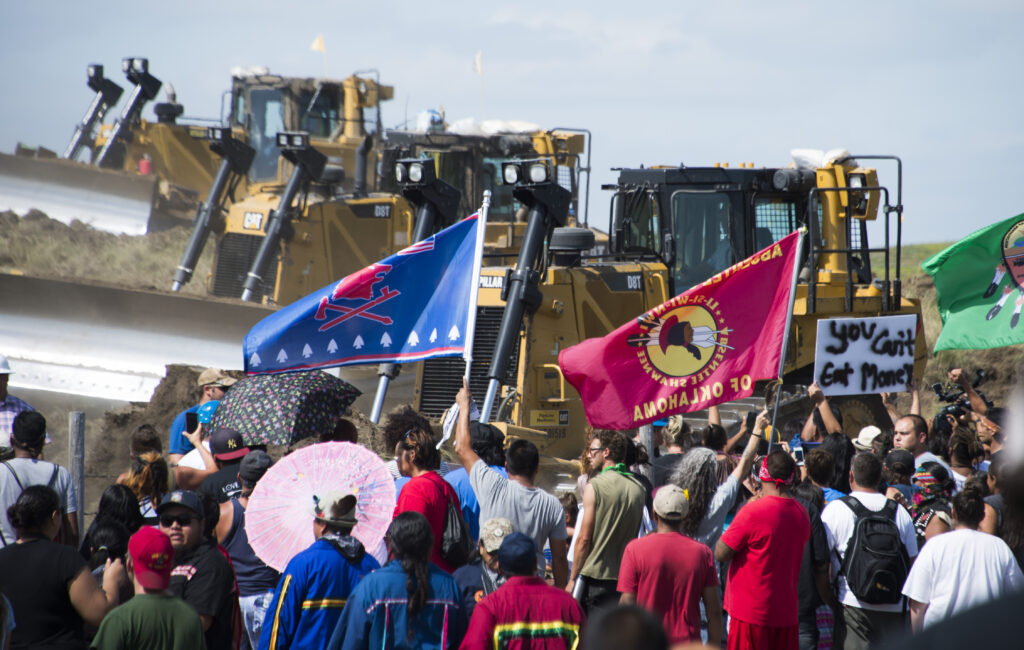
Greenpeace must pay $345 million in damages to the operator of the US oil pipeline it protested, a North Dakota court ordered Friday.The decision finalizes this phase of the explosive, yearslong case that has pitted the environmental organization against the company Energy Transfer, opening the door to an appeals process in the closely watched legal saga.The Dallas-based energy conglomerate accused Greenpeace of orchestrating violence and defamation during the controversial construction of the Dakota Access Pipeline nearly a decade ago.A jury last year took their side, awarding more than $660 million in damages across three Greenpeace entities, citing charges including trespass, nuisance, conspiracy and deprivation of property access.Judge James Gion of North Dakota cut those damages in half, determining some damages had been counted twice.But the sum remains staggering.Greenpeace categorically rejects the accusations, denouncing the proceedings as abusive and a means to silence dissent.Legal experts and advocacy groups alike have closely followed the case, given its potentially far-reaching implications for protest mobilization and advocacy movements.Greenpeace has indicated its intention to appeal and has repeatedly stated it cannot pay hundreds of millions of dollars.”This legal fight is far from over,” Kristin Casper, Greenpeace International general counsel, said in a statement to AFP.Marco Simons, another Greenpeace legal official, said “speaking out against corporations that cause environmental harm should never be deemed unlawful.””This is a setback, but the movement to defend people and the planet has always faced setbacks and resistance, and Energy Transfer will fail in its goal of silencing its critics.”Energy Transfer, meanwhile, has objected to the halving of its award.Michael Gerrard, director of Columbia Law School’s climate change law center, told AFP the judgment was “devastating.””It is very bad not only for Greenpeace, but for the global environmental movement,” he said.- Global impact -The case could have ripple effects worldwide.When the initial verdict dropped last year, environmental defenders rallied around Greenpeace, denouncing the verdict as a chilling attack on climate action around the globe.”Fossil fuel companies invest billions in new oil and gas while they spread misinformation, lobby against climate policies, and attempt to silence dissent against their destructive business model,” Allie Rosenbluth, the US campaign manager of Oil Change International, said in a statement to AFP.”They must not be allowed to act with impunity.”At the heart of the North Dakota court battle was the Dakota Access Pipeline, where from 2016 to 2017 the Standing Rock Sioux Tribe led one of the largest anti-fossil-fuel protests in US history.The demonstrations saw hundreds arrested and injured, drawing the attention of the United Nations, which raised concerns over potential violations of Indigenous sovereignty.Despite the protests, the pipeline — designed to transport fracked crude oil to refineries and on to global markets — became operational in 2017.Energy Transfer, however, continued its legal pursuit of Greenpeace.After its federal lawsuit was dismissed, it shifted its legal strategy to the state courts in North Dakota, one of the minority of US states without protections against so-called “Strategic Lawsuits Against Public Participation” or SLAPPs.Throughout the yearslong legal fight, Energy Transfer’s billionaire CEO Kelcy Warren, a major donor to President Donald Trump, was open about his motivations.His “primary objective” in suing Greenpeace, he said in interviews, was not just financial compensation but to “send a message.” Warren went so far as to say that activists “should be removed from the gene pool.”Energy Transfer did not immediately respond to AFP’s request for comment.Greenpeace maintains that it played only a small and peaceful role in the movement, which was led by Native Americans.Greenpeace International in 2025 announced plans to counter-sue Energy Transfer in the Netherlands, where the NGO’s international headquarters are, accusing the company of using nuisance lawsuits to suppress dissent.It is seeking compensation for the costs incurred in these legal battles.