Iran president urges officials to address protestors’ complaints

Iran’s president urged his government to listen to the “legitimate demands” of protesters, state media reported on Tuesday, a day after demonstrations by shopkeepers in Tehran over economic hardship.Monday’s protest took place mainly in central Tehran’s shopping districts. On Tuesday morning, most shops and cafés were open as usual, AFP saw, along the vast Vali-asr Avenue which runs 18 kilometres (11 miles) from north to south through Tehran.Riot police were, nonetheless, monitoring the main squares in the city centre.When the protests erupted on Sunday, the US dollar was trading at around 1.42 million rials  — compared to 820,000 rials a year ago — and the rial strengthened only slightly by Tuesday.On Wednesday, schools, banks and businesses will be closed in Tehran and several other regions in the north and centre of the country to save energy amid severe winter cold, state media reported.It was into this atmosphere that President Masoud Pezeshkian — who has less authority under Iran’s system of government than supreme leader Ayatollah Ali Khamenei — made his statement.   “I have asked the interior minister to listen to the legitimate demands of the protesters by engaging in dialogue with their representatives so that the government can do everything in its power to resolve the problems and act responsibly,” he said, in a social media post.According to state television, parliamentary speaker Mohammad Bagher Ghalibaf, also called for “necessary measures focused on increasing people’s purchasing power”. “People’s concerns and protests regarding livelihood problems must be responded to with full responsibility, and dialogue,” he said.Price fluctuations are paralysing the sales of some imported goods, with both sellers and buyers preferring to postpone transactions until the outlook becomes clearer, AFP correspondents reported.According to the Etemad newspaper, one trader who did not give his name, complained that officials had offered no support to storekeepers battling soaring import costs.”They didn’t even follow up on how the dollar price affected our lives,” he complained. “We had to decide to show our protest. With this dollar price, we can’t even sell a phone case, and the officials don’t care at all that our lives are run by selling mobile phones and accessories.”- Battered economy -Iranian Chief Justice Gholamhossein Mohseni Ejei called for “the swift punishment of those responsible for currency fluctuations”, the justice ministry’s Mizan agency reported Monday.The government has also announced the replacement of the central bank governor.”By decision of the president, Abdolnasser Hemmati will be appointed governor of the Central Bank,” presidency communications official Mehdi Tabatabaei posted on X.Hemmati is a former economy and finance minister who was dismissed by parliament in March because of the sharp depreciation of the rial.In December, inflation stood at 52 percent year-on-year, according to official statistics. But this figure still falls far short of many price increases, especially for basic necessities.The country’s economy, already battered by decades of Western sanctions, was further strained after the United Nations in late September reinstated international sanctions linked to the country’s nuclear programme that were lifted 10 years ago.Western powers and Israel accuse Iran of seeking to acquire nuclear weapons, a charge Tehran denies.

Taïwan condamne les manœuvres militaires chinoises près de ses côtes

Taïwan a “fermement” condamné les manœuvres militaires chinoises simulant son blocus maritime, dont la deuxième journée, mardi, a été marquée par des tirs de missiles et le déploiement de dizaines d’avions de combat et de navires.”La Chine fait fi des attentes de la communauté internationale en matière de paix et sape délibérément la stabilité régionale avec son intimidation militaire. C’est une provocation flagrante contre la sécurité régionale et l’ordre international et j’exprime ma plus ferme condamnation”, a commenté le président taïwanais, Lai Ching-te, sur Facebook.Il a néanmoins promis que Taïwan n’allait pas “aggraver les tensions”.Des journalistes de l’AFP présents à Pingtan, l’île chinoise la plus proche de l’île principale de Taïwan, ont vu une salve de roquettes exploser dans les airs vers 09H00 (01H00 GMT), laissant derrière elles des traînées de fumée blanche.Au moins dix de ces engins ont été tirés en succession rapide, produisant un bruit assourdissant qui a attiré les touristes vers le front de mer pour prendre des photos et des vidéos avec leurs téléphones.”A 09H30 (01H30 GMT), le 30 décembre, les forces terrestres du Commandement des zones orientales de l’APL ont effectué des exercices de tirs réels de longue portée dans les eaux au nord de l’île de Taïwan et ont obtenu les effets escomptés”, a de son côté écrit l’armée chinoise dans un communiqué.Tandis que le ministère taïwanais de la Défense a déclaré mardi à 06H00 (22H00 GMT lundi) avoir détecté 130 avions militaires et 22 navires chinois autour de Taïwan en 24 heures. Il s’agit du nombre le plus élevé d’avions chinois signalés en une seule journée depuis le 15 octobre 2024.- “Réponse punitive” -La Chine a annoncé dans la matinée avoir déployé des destroyers, des frégates, des chasseurs et des bombardiers “pour procéder à des exercices d’identification et de vérification, d’alerte et d’expulsion, des simulations de frappes, d’attaques de cibles maritimes, ainsi que d’opérations antiaériennes et anti-sous-marines”.Dans un communiqué, le commandement du théâtre d’opérations Est de l’Armée populaire de libération a souligné que ces manœuvres dans les eaux au nord et au sud de Taïwan avaient permis de “tester les capacités de coordination air-mer et de blocus et de contrôle intégrés”.Il a en outre diffusé une carte montrant les cinq espaces au large des côtes taïwanaises où étaient prévus des “tirs à munitions réelles” jusqu’à 18H00 mardi (10H00 GMT).La chaîne de télévision d’Etat CCTV a expliqué que l’un des principaux objectifs des exercices baptisés “Mission Justice 2025” était de simuler le “blocus” de ports taïwanais stratégiques, notamment ceux de Keelung dans le nord et de Kaohsiung dans le sud.”Nous devons bien entendu résolument nous opposer et contrer avec force les provocations incessantes des forces indépendantistes à Taïwan et les importantes ventes d’armes américaines à Taïwan”, a quant à lui martelé à Pékin le ministre chinois des Affaires étrangères Wang Yi.Il a en outre averti que toute tentative visant à empêcher l’unification de la Chine et de Taïwan se solderait “inévitablement par un échec”.Le porte-parole de son ministère, Lin Jian, a parallèlement qualifié les manœuvres de “réponse punitive aux forces séparatistes indépendantistes taïwanaises et d’action nécessaire pour défendre la souveraineté nationale et l’intégrité territoriale”.”Unification de la mère patrie!”, a à cet égard crié à l’unisson à Pingtan un groupe de femmes âgées qui posaient pour une photo, ont constaté les journalistes de l’AFP.- Trafic aérien perturbé –   Taïwan a pour sa part déploré que certaines des zones désignées par la Chine pour ces manœuvres se trouvaient à moins de 12 milles nautiques (une vingtaine de kilomètres) de son territoire.L’Administration de l’aviation civile taïwanaise a noté que Pékin avait décrété une “zone de danger temporaire” pour une durée de dix heures mardi, “ce qui devrait perturber le trafic aérien dans la région”. Conséquence, selon elle, plus de 857 vols intérieurs, internationaux et de transit, seront affectés dans la journée.Les gardes-côtes taïwanais ont fait savoir mardi qu’ils avaient dépêché 14 bâtiments pour surveiller l’activité navale chinoise, avec “une approche de suivi individuel afin de dissuader fermement les navires” chinois. La population taïwanaise affichait toutefois son calme.”Il y a eu tellement d’exercices comme celui-ci au fil des ans qu’on y est habitués”, a ainsi tempéré Chiang Sheng-ming, un marchand de poisson de 24 ans. “La guerre ? Impossible. Ce ne sont que des gestes d’intimidation. S’ils attaquaient vraiment Taïwan, ils en paieraient le prix”, a renchéri Tseng Chang-chih, un vendeur de fruits de 80 ans, sur le même marché de la capitale Taipei. La veille, le président américain Donald Trump avait également dit ne pas être préoccupé par ces manœuvres, affirmant “ne pas croire” que son homologue chinois Xi Jinping puisse ordonner une invasion. La Chine considère Taïwan comme faisant partie de son territoire et menace de recourir à la force militaire pour s’en emparer.Les tensions dans le détroit ont été ravivées par une vente d’armes massive de Washington à Taipei mi-décembre, la deuxième depuis le retour au pouvoir de Donald Trump, pour 11,1 milliards de dollars au total, soit le montant le plus important depuis 2001. burx-je/abs/vgu/bds/pz

Guinea junta chief leads in presidential race: partial resultsTue, 30 Dec 2025 10:26:55 GMT

Guinea’s junta chief Mamady Doumbouya, who had pledged not to run for office after seizing power four years ago, has a large lead in presidential elections held at the weekend, according to initial results published late Monday.Doumbouya, 41, faced eight rivals for the presidency but the main opposition leaders were barred from running and had …

Guinea junta chief leads in presidential race: partial resultsTue, 30 Dec 2025 10:26:55 GMT Read More »

Saudi says UAE-backed advance in Yemen threatens its security

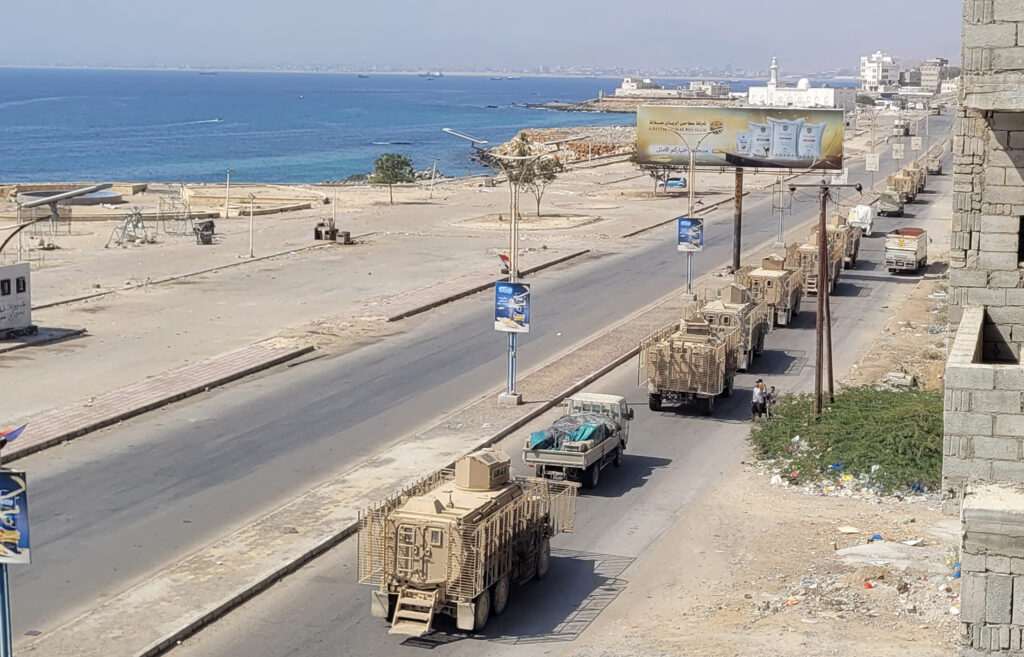
Saudi Arabia declared a UAE-backed separatist advance in Yemen as a threat to Riyadh’s national security on Tuesday and called Abu Dhabi’s actions “highly dangerous”, as the conflict boiled over into an open dispute between the Gulf powers.The strongly worded foreign ministry statement came after the Saudi-led coalition fighting in Yemen said it had struck a United Arab Emirates weapons shipment destined for separatist forces.In recent weeks, separatists backed by Abu Dhabi and seeking to revive the formerly independent state of South Yemen have made sweeping territorial gains after launching a lightning offensive in recent weeks.Experts say their successes have embarrassed Saudi Arabia, a regional heavyweight and the main backer of the internationally recognised Yemeni government.The leader of Yemen’s presidential council, which sits atop that government, declared a state of emergency and cancelled a security pact with Abu Dhabi after the forces of the UAE-backed Southern Transitional Council (STC) seized swathes of territory.The STC is also part of the government, a fractious patchwork of groups held together by its opposition to the Iran-backed Houthi rebels who control swathes of northern and western Yemen including the capital Sanaa.Saudi Arabia and the UAE, traditionally close allies who joined forces in Yemen against the Houthis, have increasingly been at odds over the conflict on their doorstep, as well as the war in Sudan.”The Kingdom (Saudi Arabia) expresses its disappointment by the actions taken by the brotherly United Arab Emirates, pressuring the Southern Transitional Council’s forces to conduct military operations on the southern border of the Kingdom,” the Saudi statement said.It called them “a threat to the Kingdom’s national security, as well as to security and stability in the Republic of Yemen and the region,” it said.”The steps taken by the UAE are considered highly dangerous,” it said, adding “the Kingdom stresses that any threat to its national security is a red line, and the Kingdom will not hesitate to take all necessary steps and measures to confront and neutralise any such threat”.- ‘Fire is still burning’ -Riyadh also backed a demand from Yemen’s presidential council for Emirati forces to withdraw from the country within 24 hours, and urged Abu Dhabi to cut off military and financial support for Yemeni groups.Rashad al-Alimi, head of the Presidential Leadership Council, issued decrees on Tuesday announcing a 90-day state of emergency and annulling a security pact with the UAE over the separatists’ advance.Earlier, the Saudi-led coalition said it targeted a large quantity of weapons and combat vehicles sent by the UAE for the secessionist forces.The coalition struck two ships carrying “a large quantity of weapons and combat vehicles to support the Southern Transitional Council forces”, the Saudi state news agency SPA reported.”Given the danger and escalation posed by these weapons… the Coalition air forces carried out a limited military operation this morning targeting weapons and combat vehicles that had been unloaded from the two ships at the port of al-Mukalla,” it said.The ships had arrived from the UAE port of Fujairah, SPA said, adding that the operation was conducted in accordance with international humanitarian law and without collateral damage.An official at the port said a warning to evacuate was received at 4:00 am (0100 GMT) local time.”The evacuation completed, and the strike occurred a quarter of an hour later in a dirt area within the port. The fire is still burning,” the official said on condition of anonymity, as he was not authorised to speak to media.- ‘Unacceptable to God’ -Abdullah Bazuhair, whose home overlooks the port, showed AFP the damage to his property, with windows blasted clear out of the walls and glass strewn across the floor. The strikes were “unacceptable to God” he said, adding “the children were terrified and the women frightened”.AFP footage of the port showed dozens of parked military vehicles and pick-ups, several of which were burnt out and smouldering as workers hosed them down.The Saudi-led coalition had warned that it would back Yemen’s government in any military confrontation with separatist forces and urged them to withdraw “peacefully” from recently seized territories in Hadramawt and Mahra governorates.Tuesday’s strike came days after reported Saudi air raids on separatist positions in resource-rich Hadramawt — and after Washington called for restraint in the conflict.In recent days, hundreds of Yemeni tribesmen have gathered in Aden to ask the STC’s leaders to announce the independence of South Yemen, according to the separatist-affiliated Aden Independent Channel.A Yemeni military official said on Friday that around 15,000 Saudi-backed fighters were massed near the Saudi border but had not been given orders to advance on separatist-held territory.burs/th/dcp

Nepal political alliance challenges traditional party dominance

An emerging political bloc in Nepal has gained another heavyweight, with a third key figure joining the new alliance ahead of next year’s election, a party member said on Tuesday.Two of Nepal’s most popular political leaders, television host Rabi Lamichhane of the Rastriya Swatantra Party (RSP) and Kathmandu mayor Balendra Shah, agreed on Sunday to unite their parties for the March 5, 2026, polls.They pledged to address the demands of younger “Gen Z” protesters following deadly anti-corruption demonstrations in September that ousted the government.Kulman Ghising of the Ujyalo Nepal Party, who is the energy minister in the interim government, also agreed to join the new alliance late on Monday.”This agreement… has brought an alternative force into the political mainstream,” said Sanjiv Ballav Bhattarai, a former Ujyalo Nepal committee member, who has now joined Lamichhane’s RSP. Ghising, 55, won significant public support when he led the Nepal Electricity Authority in tackling the Himalayan country’s load-shedding crisis.At least 77 people were killed during the youth-led September 8-9 uprising.Protests began under the loose umbrella title of Gen Z, triggered by a brief government ban on social media.The demonstrations tapped into wider public anger at economic stagnation and political corruption in the country of 30 million people.The agreement said the new alliance embraces “the spirit of the Gen Z movement against corruption and bad governance”.Prominent Gen Z protest figures, including Sudan Gurung, played a role in bringing the leaders together for talks.Nepal became a federal republic in 2008 after a decade-long civil war and a peace deal that saw former Maoist insurgents brought into government and the abolishment of the monarchy.A revolving door of ageing prime ministers and a culture of horse-trading between three dominant parties fuelled public perceptions that the government was out of touch.Lamichhane’s RSP emerged as a political surprise in the 2022 general election, when it became the fourth-largest party in parliament.However, Lamichhane has since been embroiled in cases of cooperative fraud and organised crime and was recently released on bail.