Startups go public in litmus test for Chinese AI

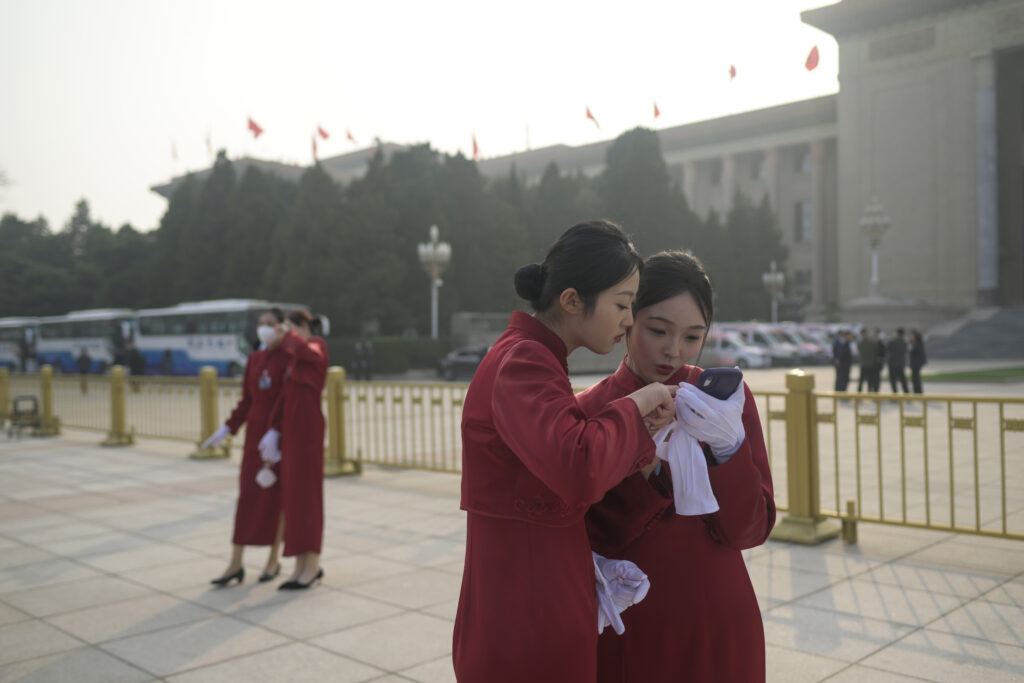
Leading Chinese artificial intelligence startup Zhipu AI soared as it went public in Hong Kong on Thursday, a day before rival MiniMax also makes its market debut in a litmus test for the country’s rapidly developing sector.Shares in Zhipu AI, which runs the Z.ai tool, rose more than 12 percent on Thursday after its oversubscribed initial public offering raised HK$4.35 billion (US$558 million).This week’s flotations come before any IPO announcements from top US startups OpenAI, the maker of ChatGPT, and Anthropic, known for its Claude chatbot.But analysts said profits were unlikely any time soon from either company — the first two IPOs among China’s so-called “six tigers”, generative AI providers competing with tech giants such as Alibaba and ByteDance.”Zhipu is honoured to stand at this historic juncture as a representative of China’s large model sector,” company chairman Liu Debing said at Thursday’s listing ceremony.Zhipu AI was founded in 2019 and is a major provider of large language model (LLM) services to businesses and government clients in the world’s second-largest economy.Proceeds from the IPO will go towards developing general-purpose large AI models, including key algorithms and system infrastructure, the firm said.MiniMax, established in 2022, targets the consumer market, particularly outside China, with its generative AI tools for speech, music and video, as well as text.”Once the market matures through full competition, more people will understand the capabilities, performance and pricing of these models reaching a state of equilibrium,” Liu told Bloomberg Television Thursday.He added that Zhipu AI has seen a trend of computing costs for AI development “gradually decreasing”.China tech analyst Poe Zhao, founder of the Hello China Tech newsletter, told AFP that the two IPOs “demonstrate both the revenue potential and the fundamental challenges facing this new generation of LLM companies”.”The high demand definitely reflects broader optimism about Chinese AI,” he said.An AI boom has helped push tech stocks to record highs in recent months, but they are also volatile as global investors watch intently for any signs of a bubble.”Do I think there’s a bubble? Yes. But I want to distinguish between ‘bubble’ and ‘bubble risk’. These companies need capital intensity,” Zhao said.- Disney lawsuit -The LLM market in China is estimated to grow to 101.1 billion yuan (US$14.5 billion) by 2030, according to consultancy Frost and Sullivan.In January 2025, Chinese startup DeepSeek shook the tech world with a low-cost, high-performance reasoning model that upended assumptions of US dominance in the sensitive sector.A year ago, Washington put Zhipu, backed by conglomerate Tencent, on its export control blacklist over national security concerns.And Disney along with other US entertainment outfits including Universal is suing MiniMax for copyright infringement.Zhao said he did not expect Zhipu or MiniMax to be profitable “any time soon”.”That depends on two industry-wide shifts: significantly lower computing costs and much larger AI demand to spread those costs across,” he explained.Beijing has reportedly been encouraging tech firms to use homegrown microchips owing to Washington’s on-and-off restrictions on top-end Nvidia chips, used to train and run AI systems.Investor faith in the potential of China’s chip industry to challenge US powerhouse Nvidia last month sent shares in semiconductor companies Moore Threads and MetaX skyrocketing on their market debuts.Earlier this month, Baidu, the operator of China’s top search engine, said its AI chip unit Kunlunxin has filed a listing application in Hong Kong.For chatbot providers, the picture is nuanced, said Shengyun Lu, founder of LSY Consulting.”To run a foundational model company, it costs a lot and takes a lot of time,” he cautioned.”IPOs allow the companies to raise money for financing their future research activities, but on the other hand, the initial investors are seeking an exit.”

Japan’s Fast Retailing raises profit forecast after China growth

Japanese retail giant Fast Retailing lifted its 2025-26 annual net profit forecast on Thursday, buoyed by a strong performance in mainland China.The parent company of Uniqlo “reported significant increases in both revenue and profit in the first quarter” of its fiscal year which runs from September, according to its financial statement.In particular, Uniqlo International saw “a rise in revenue and double-digit year-on-year profit growth” in mainland China due in part to cold October weather.As a result, Fast Retailing now expects a full-year net profit of 450 billion yen ($2.9 billion) for the fiscal year ending in August, compared with the previous estimate of 435 billion yen.

USA: Google et Character.AI mettent fin à des poursuites liées à des suicides

Google et la startup Character.AI ont conclu des accords hors tribunaux pour mettre fin à des poursuites lancées par des familles accusant des robots conversationnels de nuire aux mineurs, y compris d’avoir contribué au suicide d’un adolescent, selon des documents juridiques rendus publics mercredi.Parmi ces plaintes figure celle de Megan Garcia dont le fils de …

USA: Google et Character.AI mettent fin à des poursuites liées à des suicides Read More »

Lidl, un des principaux annonceurs, va arrêter la publicité à la télévision traditionnelle en France

Lidl, l’un des premiers annonceurs, va arrêter la publicité à la télévision traditionnelle en France, a annoncé le discounter allemand jeudi, invoquant une réglementation trop contraignante, six mois après une lourde condamnation pour “pratiques commerciales trompeuses”.”Nous n’investirons plus dans la TV linéaire (télévision classique par rapport notamment aux plateformes en ligne, NDLR) tant que les …

Lidl, un des principaux annonceurs, va arrêter la publicité à la télévision traditionnelle en France Read More »

New clashes in Iran as opposition urges more protests

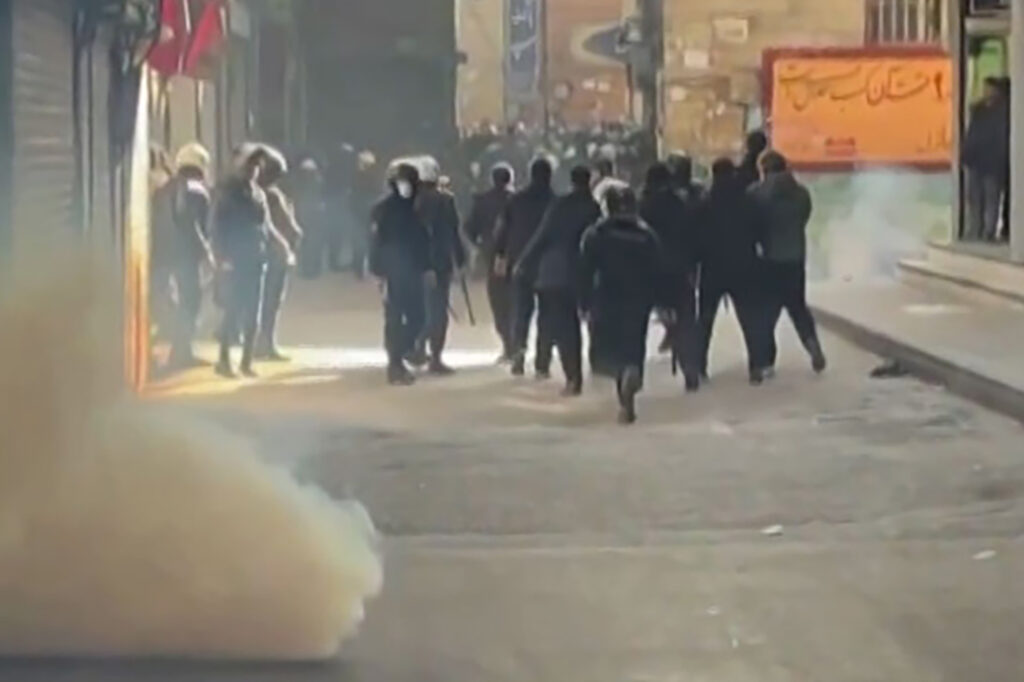
Security forces used tear gas to disperse protesters in Iran as people angered by the economic situation in the Islamic republic kept up their challenge to the authorities and the exiled opposition Thursday urged them to step up their actions.The 12 days of protests have shaken the clerical authorities under Ayatollah Ali Khamenei already battling economic crisis after years of sanctions and recovering after the June war against Israel.The movement, which originated with a shutdown on the Tehran bazaar on December 28 after the rial plunged to record lows, has spread nationwide and is now being marked by larger scale demonstrations.Authorities have blamed unrest on “rioters” and the judiciary chief has vowed there would be “no leniency” in bringing them to justice. On Wednesday, an Iranian police officer was stabbed to death near Tehran “during efforts to control unrest”, the Iranian Fars news agency said.Reza Pahlavi, the son of the shah ousted by the 1979 Islamic revolution and a key exiled opposition figure, said that the turnout during Wednesday’s protests had been “unprecedented” and called for major new protests Thursday evening.He said in a message on social media he had received reports the “regime is deeply frightened and is attempting, once again, to cut off the internet” to thwart the protests.The HRANA monitor published a video of protesters in Kuhchenar in the southern Fars province cheering overnight as they pulled down a statue of the former foreign operations commander of the Revolutionary Guards Qassem Soleimani who was killed in a US strike in January 2020 and is hailed as a national hero by the Islamic republic.HRANA said according to its count protests had taken place in 348 locations over the last 11 days in all of Iran’s 31 provinces.It also published a video of people massing late at night in the Tehran satellite city of Karaj and lighting fires in the streets and also images of security forces using tear gas to disperse a protest in the Caspian Sea town of Tonekabon.The Norway-based Iran Human Rights group said security forces on Wednesday “opened fire on protesters, used tear gas and violently assaulted civilians” during a protest in the key southeastern hub of Kerman.The protests are being characterised by larger-scale demonstrations, with hundreds marching through a main avenue in the northeastern city of Bojnord on Wednesday in a video verified by AFP.Demonstrators are repeating slogans against the clerical leadership including “this is the final battle, Pahlavi will return” and “Seyyed Ali will be toppled”, in reference to Khamenei.IHR said on Tuesday at least 27 protesters including five teenagers under the age of 18, have been confirmed to have been killed in a crackdown on the protests, warning the death toll will climb as more killings are verified.

Diosdado Cabello: Venezuela’s feared enforcer at heart of new government

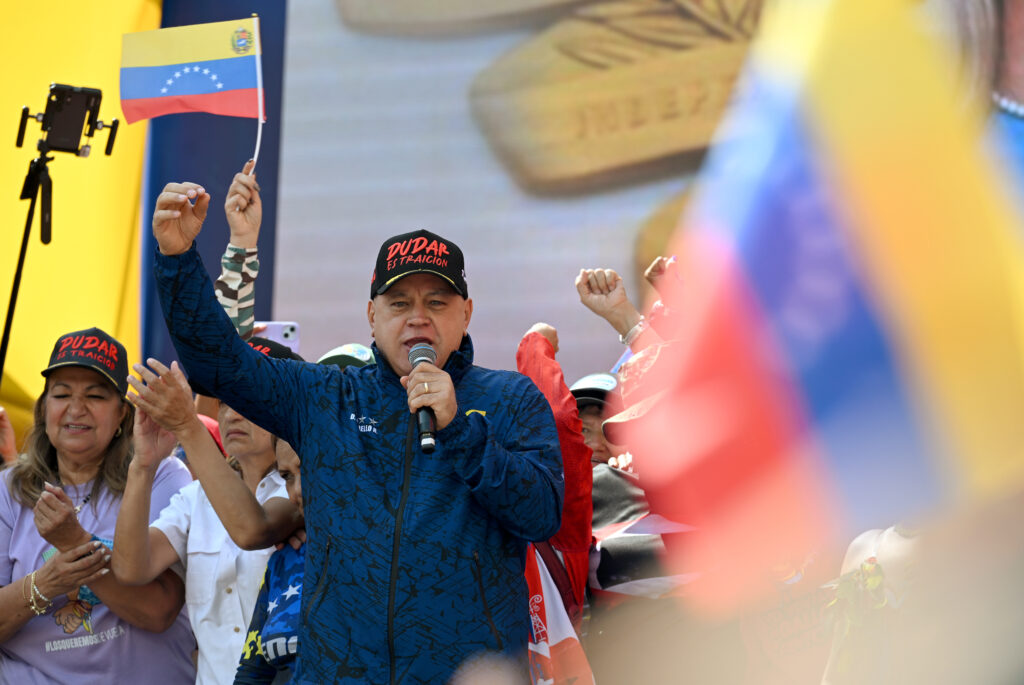
Few names in Venezuela conjure as much fear and reverence as Diosdado Cabello — the man that Washington is offering $25 million to capture.Loathed by opponents and cheered by pro-government “Chavistas,” fast-talking with a wicked sense of humor, the former army captain has loomed over public life in the Caribbean nation for more than 20 years.Now that US forces have removed his old boss Nicolas Maduro as president and put him on trial, Venezuelans are watching Cabello, the man widely considered Venezuela’s second-most powerful figure.After Maduro was deposed, he voiced defiance on behalf of the leftist government in the face of US pressure.”The unity of the revolutionary force is more than guaranteed,” he said.- Street militia boss -Several times a minister and secretary-general of the ruling United Socialist Party, Cabello is perhaps best known for setting up the feared “colectivos,” a rifle-wielding, motorbike-riding militia that intimidates opponents.”The government has not much control over them,” said Brian Naranjo, a former US diplomat who met Cabello in the late 1990s.He branded the colectivos “ideologically committed thugs and goons that can be deployed on the street to maintain order” — though their supporters say they prevent crime.Cabello’s face is well known from his television show, “Hitting With A Mallet.”Cabello fills the show with edgy jokes about opposition figures, such as its one-time figurehead Juan Guaido — “that rat” — and current opposition leader Maria Corina Machado, whom he compared with a mythical Venezuelan bogeywoman, La Sayona.”When the bogeywoman sees her, the bogeywoman starts crying,” he cracked.- Coup comrade -Cabello was born on April 15, 1963, in El Furrial, then a mostly rural community in eastern Monagas state. He is married with three children.After graduating from Venezuela’s military academy, he joined the army, where he met Hugo Chavez, the future leader of the socialist “Bolivarian revolution.”He joined Chavez in a 1992 coup attempt to overthrow President Carlos Andres Perez.He was imprisoned for that until being pardoned in 1994, along with Chavez and other officers involved in the uprising.Once free, Cabello helped Chavez in the campaign that led to his presidential victory in 1998 and entered his administration the following year.His critics accuse him of having amassed a vast fortune through corruption and front companies.- Chavez appointee -Cabello served briefly as acting president following a 2002 coup that briefly deposed Chavez, Maduro’s predecessor.”Commander Chavez appointed me interior and justice minister amidst all the mayhem,” Cabello said in 2024.”At that time, with the people beside us, we prevailed.”Cabello was reappointed interior minister in August 2024, giving him control of the security apparatus and intelligence services.”He was brought back in by Maduro, after internal exile from the inner circle,” said Naranjo.Under Cabello, more than 2,000 people were detained during protests at Maduro’s declaration of victory in that year’s election, which was branded a fix by the United States and several of its allies.- Tensions in new government -With Maduro, “Cabello has been in and out of favour” over the years, said Naranjo.In a murky political world, Cabello is rumored to be at odds with Maduro’s successor Delcy Rodriguez and her powerful brother Jorge, leader of parliament.Observers warn that tensions between the Rodriguez pair, Cabello and Defense Minister Vladimir Padrino Lopez threaten the stability of the current interim leadership.”Diosdado Cabello has a lot of informal control, Vladimir Padrino has the formal control,” said David Smilde, a US academic specializing in Venezuela at Tulane University.”At any time they could turn on her… on the other hand, she is in a position that she could remove one of them.”- Internal exile -Chavez passed over Cabello in naming Maduro as his successor for president.”Before Chavez died, there was a battle between Nicolas Maduro and Diosdado Cabello,” but the two eventually forged a unified front for stability, said Smilde.Cabello clung onto his position of influence through the recent years of economic sanctions and international pressure, not least from US President Donald Trump.The United States has posted a $25-million reward for his capture — accusing him of drug trafficking and terrorism alongside Maduro.

Trump étudie “activement” un achat du Groenland, affirme la Maison Blanche

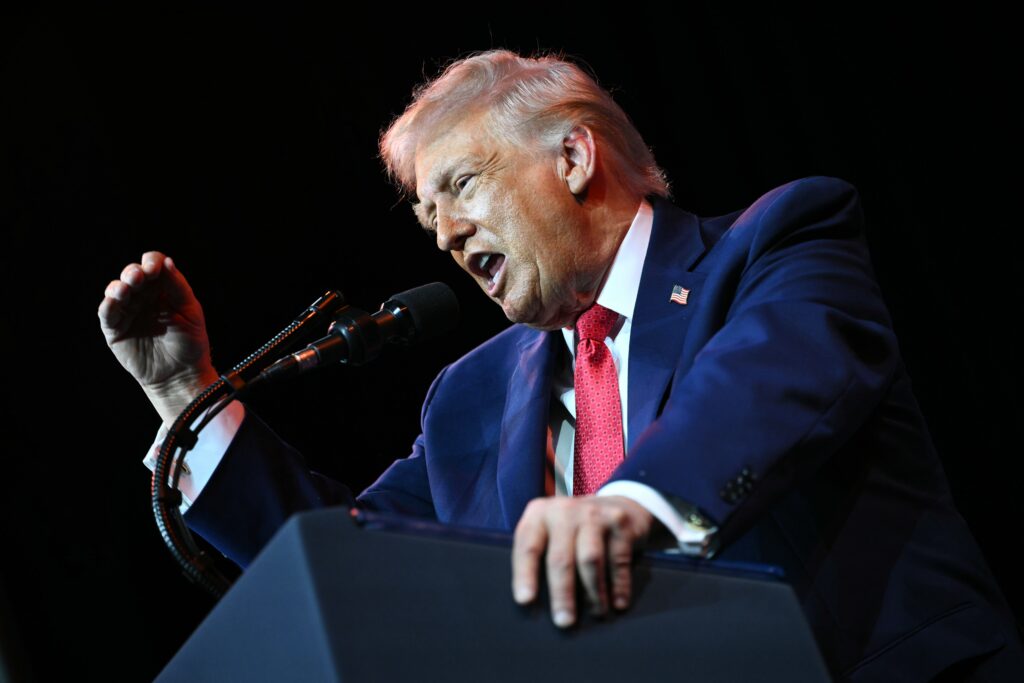
Donald Trump étudie “activement” un achat du Groenland, a déclaré mercredi la porte-parole de la Maison Blanche, tout en refusant une nouvelle fois d’exclure l’option militaire pour acquérir ce territoire semi-autonome du Danemark, qui a toujours dit ne pas être à vendre.Les intentions américaines suscitent l’inquiétude des alliés européens, qui se préparent à “riposter” à toute forme d’intimidation, selon le ministre français des Affaires étrangères mercredi.”Le président et son équipe de sécurité nationale (en) discutent activement”, a déclaré Karoline Leavitt lors d’une conférence de presse, en réponse à une question sur une possible acquisition, affirmant que cette idée n’était pas “nouvelle” pour les Etats-Unis.A la question de savoir ce que Washington aurait à gagner d’une telle acquisition alors que les traités existants permettent déjà aux Etats-Unis d’avoir une présence militaire au Groenland, Karoline Leavitt a affirmé que “davantage de contrôle sur la région de l’Arctique” était recherché, de même que “s’assurer que la Chine et la Russie, et nos adversaires ne puissent pas continuer leur agression dans cette région très importante et stratégique”.Le chef de la diplomatie américaine, Marco Rubio, avait annoncé plus tôt dans la matinée qu’il rencontrerait la semaine prochaine des responsables du Danemark pour évoquer la question du territoire semi-autonome, mais sans préciser le lieu ni le format.- Normalisation -La cheffe de la diplomatie du Groenland a indiqué que son gouvernement participerait à cette rencontre.”Rien sur le Groenland sans le Groenland. Bien sûr que nous allons y participer. C’est nous qui avons demandé une réunion”, a dit à la télévision publique danoise DR Vivian Motzfeldt.Plusieurs fois, le Groenland, soutenu par sa puissance de tutelle, a dit ne pas être à vendre et vouloir décider seul de son avenir.Pour Vivian Motzfeldt, les discussions de la semaine prochaine doivent être l’occasion de normaliser les relations avec Washington.”Le Groenland a besoin des Etats-Unis et les Etats-Unis ont besoin du Groenland en matière de sécurité dans l’Arctique”, a-t-elle dit au quotidien groenlandais Sermitsiaq.Alors que Karoline Leavitt avait affirmé la veille que Donald Trump envisageait d'”utiliser l’armée” pour mener à bien une acquisition du Groenland, la porte-parole a réitéré mercredi ses propos, qui ont provoqué l’indignation en Europe.”Toutes les options sont toujours sur la table pour le président Trump”, a-t-elle répondu à un journaliste qui demandait pourquoi la Maison Blanche n’écartait pas une option militaire.”Mais je dirais simplement, le premier choix du président a toujours été la diplomatie”, a-t-elle précisé.Marco Rubio avait également affirmé devant la presse au Capitole: “Si le président identifie une menace envers la sécurité nationale des Etats-Unis, chaque président conserve l’option d’y faire face à travers des moyens militaires”.- “Malentendus” -Face aux déclarations de la Maison Blanche, les Européens ont exhorté au dialogue.Nuuk et Copenhague contestent notamment l’argument de Donald Trump, qui répète avoir besoin de ce territoire situé entre l’Atlantique Nord et l’océan Arctique pour assurer sa sécurité face à la Chine et à la Russie.”Nous ne partageons pas cette idée selon laquelle le Groenland serait couvert d’investissements chinois”, a dit le ministre danois des Affaires étrangères, Lars Løkke Rasmussen.Le Danemark a fortement investi dans la sécurité arctique ces 12 derniers mois, allouant pour cela quelque 90 milliards de couronnes (1,2 milliard d’euros).La Première ministre danoise, Mette Frederiksen, a averti que le Danemark –Groenland compris — étant membre de l’Otan, une attaque américaine contre l’un des membres de l’Alliance signifierait “la fin de tout”, notamment de l’ordre de sécurité international établi à la fin de la Seconde Guerre mondiale.La France, l’Allemagne, l’Italie, la Pologne, l’Espagne et le Royaume-Uni ont également apporté leur soutien à Copenhague.Le vice-chancelier autrichien, Andreas Babler, a exhorté mercredi l’Union européenne à élaborer un “catalogue” de mesures pour dissuader toute tentative américaine d’annexer le Groenland, dont la menace de sanctions “sévères” contre des géants technologiques américains et des droits de douane “punitifs” sur certains produits agricoles.