

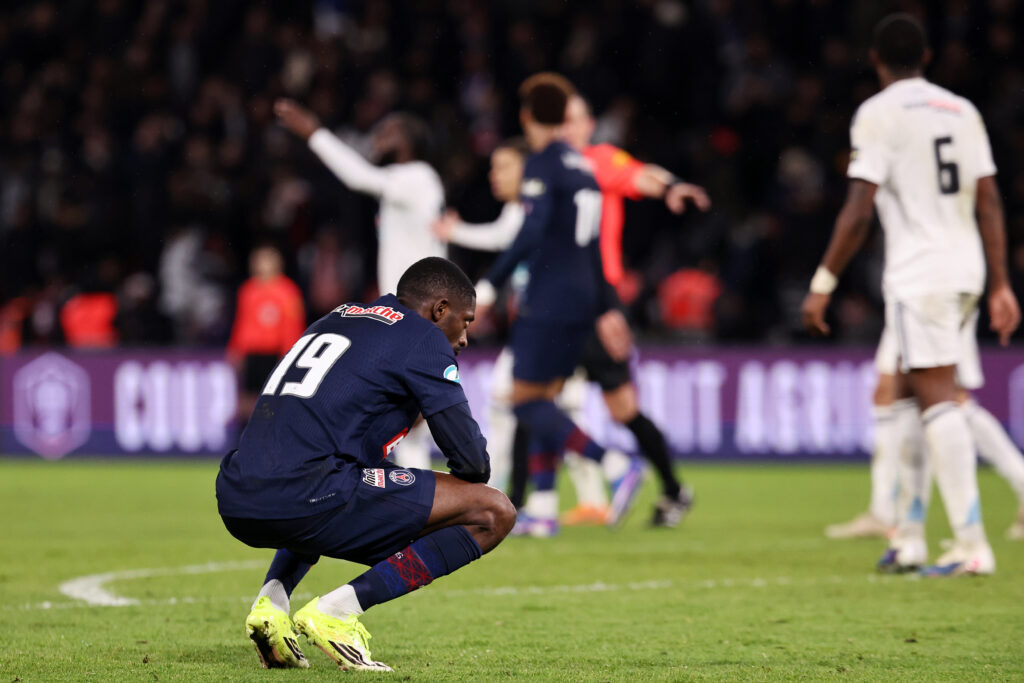
Coupe de France: exploit du PFC qui élimine le PSG en 16e de finale
Le Paris FC a signé lundi l’exploit d’éliminer en 16e de finale de la Coupe de France (1-0) le double tenant, le Paris SG, qui abandonne son premier titre de la saison, payant cher ses nombreuses occasions manquées.L’année 2026 avait bien commencé par un premier trophée, le Trophée des champions, gagné aux dépens de Marseille, mais elle s’est vite assombrie avec cet échec aussi inattendu que précoce.Cette défaite constitue le premier accroc majeur dans la saison du PSG, qui a bouclé une année 2025 historiquement faste avec six titres (L1, Coupe de France, Trophée des champions, Ligue des champions, Supercoupe d’Europe, Coupe intercontinentale) sur sept (finale perdue au Mondial des clubs).Il faut remonter à la saison 2013-2014 pour voir le PSG sortir dès les 16es de finale de Coupe de France, ce qui illustre encore davantage la performances des joueurs de Stéphane Gilli, voisins du PSG. Les coéquipiers de Maxime Lopez ont réussi à faire sortir les champions d’Europe de leur match, même s’ils ont poussé jusqu’au bout, à l’image de cette tête manquée de Désiré Doué (90+6) et de la frappe de Vitinha (90+7) stoppée par Obed Nkambadio, très bon lundi soir. Il aura fallu ce second derby en une semaine, après celui gagné par le PSG en Ligue 1 (2-1), pour voir le PFC réaliser cet exploit, malgré une nette domination de la part des joueurs de Luis Enrique, qui ont monopolisé le ballon.Avec une équipe remaniée malgré la présence de plusieurs cadres (Vitinha, Fabian Ruiz, “Kvara”, Barcola, Pacho, Chevalier), les doubles tenants du titre ont été laborieux une grande partie du match devant le but d’Obed Nkambadio, qui a sauvé à plusieurs reprises les siens.- le PFC ultra efficace -Et les champions d’Europe se sont fait punir assez facilement à la suite d’une perte de balle de Nuno Mendes au milieu du terrain. Sur l’une des seule occasion du PFC, Jonathan Ikoné, formé au PSG, a surpris Lucas Chevalier (1-0, 74e) d’une frappe croisée. Avant cela, le PSG a une une floppée d’occasions qu’il n’a jamais conclu: Bradley Barcola a d’abord échoué (22e, 25e, 65e), Gonçalo Ramos (23e, 56e) mais aussi Senny Mayulu qui a mal géré plusieurs situations (23e, 36e), “Kvara” (45+1).Ce match, décalé à lundi en raison du Trophée des champions remporté jeudi au Koweit contre l’OM (2-2, tab 4-1), était donc piège et les Parisiens ont payé l’enchainement des matches et le manque de concentration malgré le discours tenu dimanche par Luis Enrique.”En termes de rythme, je pense qu’il est préférable de jouer tous les 4 jours plutôt que tous les 10 jours. On aime la Coupe de France, c’est une compétition différente. On est concentré sur ce match. C’est comme une finale puisque c’est un match à élimination directe”, expliquait Luis Enrique dimanche devant la presse, reconnaissant que les voyages sont les plus fatiguants.Privés de Ndjantou, Safonov, Lee (blessés), Hernandez (malade), Hakimi et Mbaye (CAN), les joueurs de l’Espagnol ont perdu leur calme qu’ils arrivent normalement à garder, surmontant très souvent des situations compliquées. Mais Gonçalo Ramos, sauveur sur le fil au Koweit, ne peut pas renverser à chaque fois les matches.La rivalité entre le PFC et le PSG, qui peinait à exister, est donc lancée, animant les prochaines rencontres entre les deux clubs voisins. L’ambitieux promu de la famille Arnault, 15e de Ligue 1, a signé donc le premier grand exploit de leur saison, renvoyant le PSG à la réalité. La troisième manche est prévue en mai, pour la dernière journée de Ligue 1.
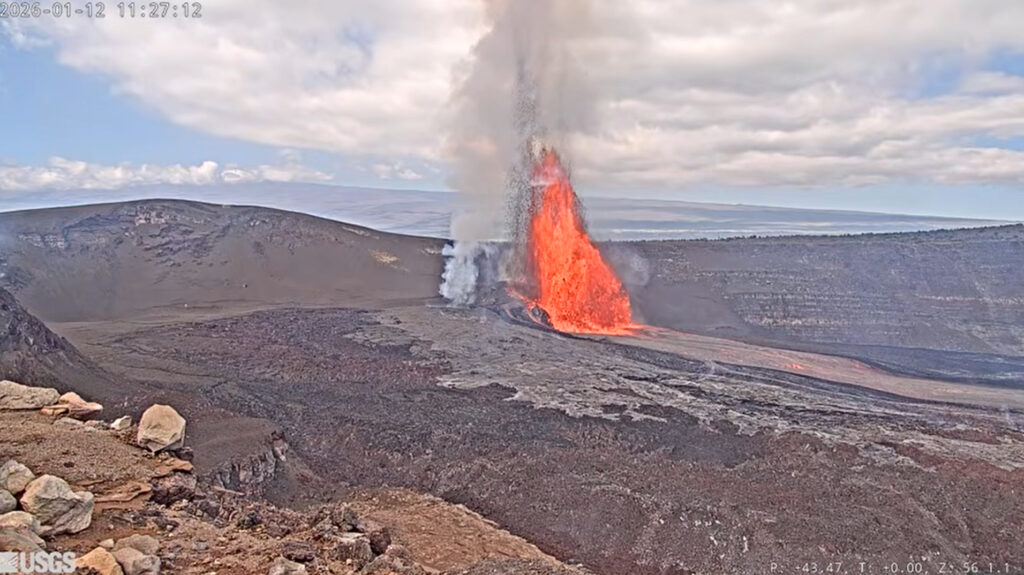
Hawaii’s Kilauea volcano puts on spectacular lava display
Hawaii’s Kilauea was spraying a spectacular fountain of lava on Monday, keeping up its reputation as one of the world’s most active volcanoes.For over a year now, Kilauea has been regularly throwing out thousands of tonnes of molten rock and gases since it burst to life in December 2024.Volcanologists with the US Geological Survey said the incandescent lava was being hurled more than 1,500 feet (460 meters) into the air, with plumes of smoke and gases rising as high as 20,000 feet (six kilometers).Eruptions such as this one tend to last around one day, the USGS said, but can still vent up to 100,000 tonnes of sulfur dioxide.This gas reacts in the atmosphere to create a visible haze known as vog — volcanic smog — which can cause respiratory and other problems.Tiny slivers of volcanic glass, known as “Pele’s hair,” are also being thrown into the air.Named after Pele, the Hawaiian goddess of volcanoes, the strands can be very sharp and can cause irritation to the skin and eyes.The eruption poses no immediate danger to any human settlement, with the caldera having been closed to the public for almost two decades.Kilauea has been very active since 1983 and erupts relatively regularly.It is one of six active volcanoes located in the Hawaiian Islands, which also include Mauna Loa, the largest volcano in the world.Kilauea is much smaller than neighboring Mauna Loa, but it is far more active and regularly wows helicopter-riding tourists who come to see its red-hot shows.
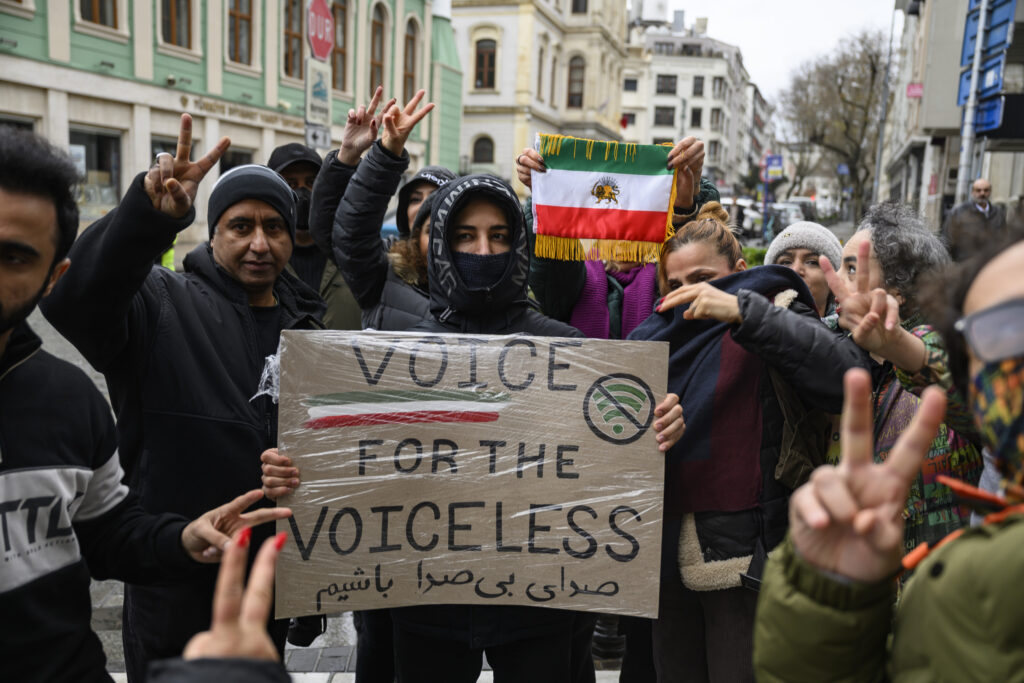
Iran protest toll mounts as government stages mass rallies
A violent crackdown on a wave of protests in Iran has killed at least 648 people, a rights group said on Monday, as Iranian authorities sought to regain control of the streets with mass nationwide rallies. The government’s call for rallies in support of the Islamic republic drew thousands on Monday, a turnout supreme leader Ayatollah Ali Khamenei hailed as proof that the protests — which the authorities attribute to foreign interference — had been defeated. Rights groups have warned an internet blackout that monitor Netblocks says has lasted four days was aimed at masking a deadly crackdown on the protests.The Norway-based NGO Iran Human Rights (IHR) said it had confirmed 648 people killed during the protests, including nine minors, and thousands more injuries, but warned the death toll was likely much higher — “according to some estimates more than 6,000”.IHR added that the internet shutdown made it “extremely difficult to independently verify these reports”, saying an estimated 10,000 people had been arrested. “The international community has a duty to protect civilian protesters against mass killing by the Islamic republic,” said IHR director Mahmood Amiry-Moghaddam. US President Donald Trump has repeatedly threatened to intervene militarily if Tehran killed protesters, with Press Secretary Karoline Leavitt saying on Monday that military options including air strikes were still “on the table”, but “diplomacy is always the first option for the president”. More than two weeks of demonstrations initially sparked by economic grievances have turned into one of the biggest challenges yet to the theocratic system that has ruled Iran since the 1979 Islamic revolution ousted the shah.Khamenei, in power since 1989 and now 86, said in a statement that Monday’s pro-government rallies were a “warning” to the United States. “These massive rallies, full of determination, have thwarted the plan of foreign enemies that were supposed to be carried out by domestic mercenaries,” he said, according to state TV. – ‘Four-front war’ -In the capital Tehran, state TV showed people brandishing the national flag and prayers read for victims of what the government has termed “riots”. At Enghelab (Revolution) Square, parliament speaker Mohammad Bagher Ghalibaf told the crowd that Iran was fighting a “four-front war”, listing economic war, psychological war, “military war” with the United States and Israel, and “today a war against terrorists” — a reference to the protests. Flanked by the slogans “Death to Israel, Death to America” in Persian, he vowed the Iranian military would teach Trump “an unforgettable lesson” if Iran were attacked. But Trump said Sunday that Iran’s leadership had called him seeking “to negotiate”, and Leavitt noted public messages from Iranian authorities were “quite different from the messages the administration is receiving privately”.Foreign Minister Abbas Araghchi told a conference of foreign ambassadors in Tehran that Iran was “not seeking war but is fully prepared for war”, while calling for “fair” negotiations.Foreign ministry spokesman Esmaeil Baghaei said a channel of communication was open between Araghchi and Trump’s special envoy for the Middle East Steve Witkoff despite the lack of diplomatic relations. Reza Pahlavi, the US-based son of Iran’s ousted shah who has been vocal in calling for protests, told CBS news the government was “trying to trick the world into thinking that (it) is ready to negotiate once again”. He said Trump was “a man that means what he says and says what he means” and who “knows what’s at stake”.”The red line that was drawn has been definitely surpassed by this regime.” – ‘Respect for their rights’ -State outlets were at pains to present a picture of calm returning in Tehran, broadcasting images of smooth-flowing traffic. Tehran Governor Mohammad-Sadegh Motamedian insisted in televised comments that “the number of protests is decreasing”. Iranian state media has said dozens of members of the security forces have been killed, with their funerals turning into large pro-government rallies. The government has declared three days of national mourning for those killed.The European Union has voiced support for the protesters and on Monday said it was “looking into” imposing additional sanctions on Iran over the repression of demonstrations. The European Parliament also announced it had banned all Iranian diplomats and representatives from the assembly’s premises. The Iranian foreign ministry said it had summoned diplomats in Tehran representing France, Germany, Italy and the UK, demanding they “withdraw official statements supporting the protesters”. French President Emmanuel Macron, however, issued a statement later Monday condemning “the state violence that indiscriminately targets Iranian women and men who courageously demand respect for their rights”. Non-essential French embassy staff left Iran on Sunday and Monday, two sources with knowledge of the matter told AFP.Tehran ally Russia, for its part, slammed what it called attempts by “foreign powers” to interfere in Iran, state media reported, in Moscow’s first reaction to the protests.
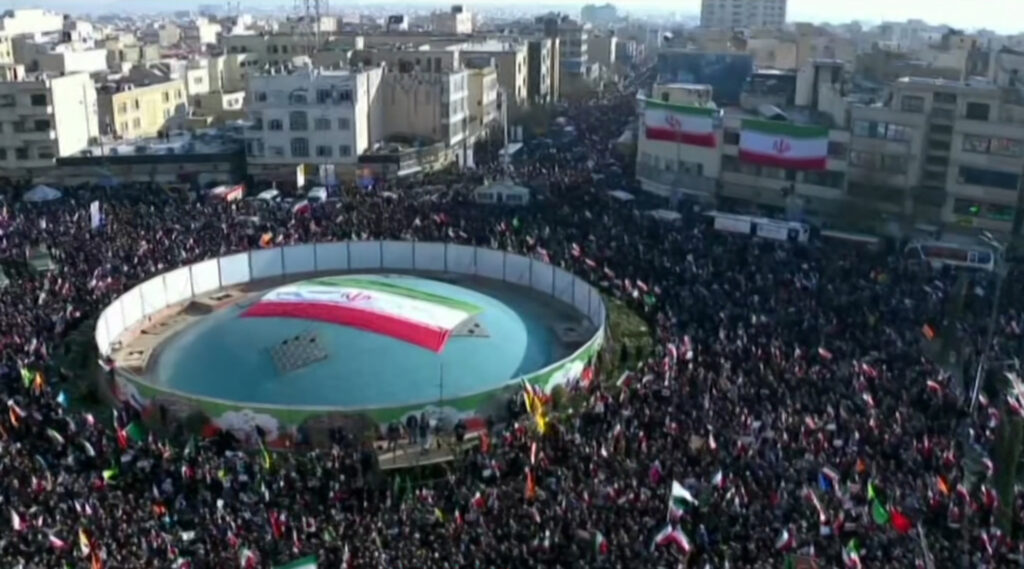
Iran: la répression s’accentue, des milliers de manifestants en soutien au pouvoir
La répression des manifestations en Iran a fait plus de 600 morts depuis le début de la contestation selon une ONG, les autorités tentant lundi de leur côté de reprendre le contrôle de la rue avec des rassemblements massifs dans le pays.A l’appel du président Massoud Pezeshkian, des milliers d’Iraniens ont envahi selon les images de la télévision d’Etat la place de la Révolution, au coeur de Téhéran, en soutien au pouvoir confronté à l’un de ses plus grands défis depuis la proclamation de la République islamique en 1979.Leur mobilisation est un “avertissement” aux Etats-Unis, a réagi le guide suprême, l’ayatollah Ali Khamenei, alors que Donald Trump a menacé plusieurs fois d’intervenir militairement.Dans la capitale, au milieu de drapeaux de la République islamique et de slogans “Mort à l’Amérique”, la foule a récité des prières pour les membres des forces de sécurité tués dans ce que le gouvernement qualifie “d’émeutes”. Des dizaines sont morts au total, selon la presse iranienne.L’Iran mène une guerre contre des “terroristes”, a lancé sur place le président du Parlement, Mohammad Bagher Ghalibaf, menaçant d’infliger à Donald Trump une leçon “inoubliable” en cas d’attaque américaine.D’autres rassemblements similaires ont eu lieu dans plusieurs villes, d’après les médias officiels, tandis que le gouvernement a décrété trois jours de deuil national.- Prêts pour “la guerre” -Dans le même temps, dénonce l’ONG Iran Human Rights (IHR), la répression du mouvement débuté le 28 décembre contre le marasme économique et défiant désormais ouvertement le pouvoir, s’intensifie. L’organisation dit avoir confirmation de la mort de 648 manifestants au total – et d’environ 10.000 arrestations. Son bilan précédent faisait état de 192 tués.Mais la réalité pourrait être bien plus noire, craint IRH, évoquant des rapports pour l’heure non confirmés allant jusqu’à 6.000 morts. Les autorités ont imposé une coupure totale des communications internet depuis le 8 janvier, compliquant la collecte d’informations. Sur une vidéo authentifiée dimanche par l’AFP, on voit des dizaines de corps enveloppés dans des sacs noirs devant une morgue de la capitale, et ce qui semble être des Iraniens à la recherche de leurs proches disparus.Le Centre pour les droits de l’homme en Iran (CHRI), dont le siège est à New York, a affirmé dimanche que les hôpitaux étaient “débordés” par l’afflux de manifestants blessés et que les réserves de sang diminuaient.A Paris, le président français Emmanuel Macron a condamné “la violence d’Etat qui “frappe aveuglément” les manifestants, et Londres a fustigé “l’horrible” répression, appelant à “cesser immédiatement les violences”. L’Union européenne a dit envisager “de nouvelles sanctions, plus sévères” contre l’Iran.En écho à Téhéran, Moscou a de son côté dénoncé les “tentatives d’ingérence extérieures”.Les autorités iraniennes ont convoqué lundi des ambassadeurs ou chargés d’affaires d’Allemagne, de France, d’Italie, de Grande-Bretagne, en poste à Téhéran, pour protester contre le soutien affiché aux manifestants.Le personnel diplomatique non essentiel de l’ambassade de France a par ailleurs quitté le pays, selon deux sources informées du dossier.Après les menaces répétées de Donald Trump, le chef de la diplomatie iranienne Abbas Araghchi a affirmé que son pays “ne cherchait pas la guerre”, mais y était “tout à fait préparé”, tout en laissant la porte ouverte à des négociations.- “Ligne rouge franchie” -Selon la Maison Blanche, des frappes aériennes pour mettre fin à la répression du mouvement sont toujours sur la table. Toutefois, “la diplomatie est toujours la première option pour le président”, a déclaré lundi la porte-parole Karoline Leavitt, le pouvoir iranien adoptant un “ton très différent” lors de discussions privées avec l’émissaire américain, Steve Witkoff.Les Etats-Unis avaient mené en juin des frappes contre les installations nucléaires iraniennes, aux côtés de son allié Israël.La vague de contestation survient dans un pays affaibli par cette guerre de 12 jours et les coups portés à plusieurs de ses alliés régionaux, ainsi que par les sanctions liées à son programme nucléaire, rétablies en septembre par l’ONU.Le fils de l’ancien chah d’Iran, chassé du pouvoir en 1979, et figure de l’opposition iranienne en exil aux Etats-Unis, Reza Pahlavi, a exhorté sur les réseaux sociaux les forces armées et de sécurité à “se tenir aux côtés du peuple”.Dans une interview sur CBS News, il a mis en garde contre un pouvoir iranien qui “tente de duper le monde en faisant croire une nouvelle fois qu’il est prêt à négocier”.Donald Trump “sait ce qui est en jeu”, ajoute l’ancien prince héritier, estimant que “la ligne rouge qui avait été tracée a été clairement franchie par ce régime”.Ce mouvement est d’une ampleur sans précédent depuis celui qui avait ébranlé l’Iran après la mort en septembre 2022 de la jeune Kurde Mahsa Amini, arrêtée par la police des moeurs pour avoir prétendûment enfreint le code vestimentaire imposé aux femmes.
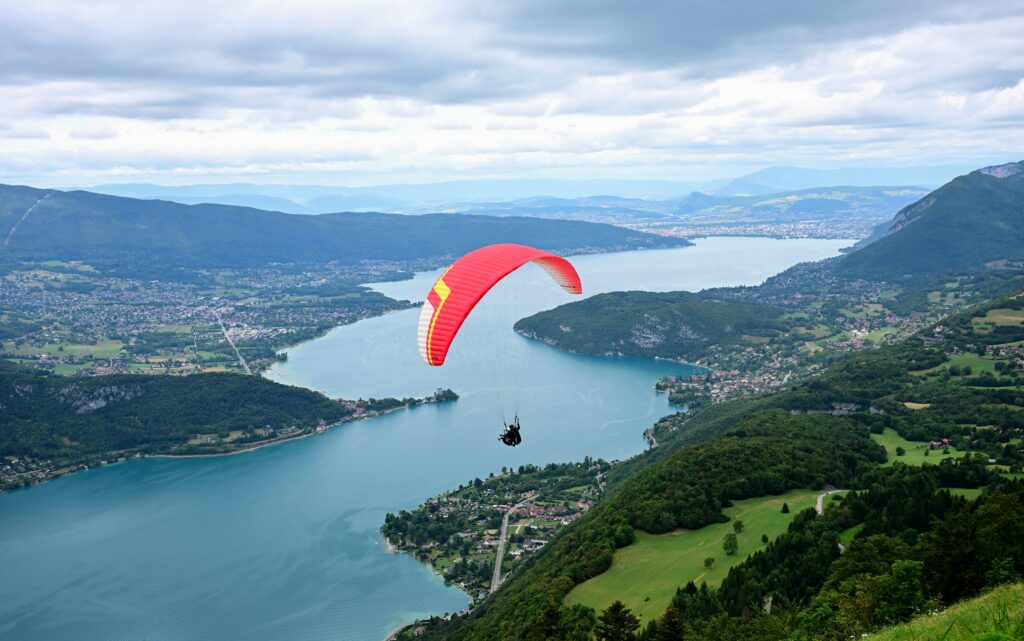
Des substances toxiques d’usure de pneus en grande quantité dans le lac d’Annecy, selon une association
Des prélèvements réalisés dans le lac d’Annecy (Haute-Savoie) ont révélé une importante pollution aux microplastiques de pneus de voiture, avec des risques sévères pour la santé, a dénoncé lundi l’association France Nature Environnement en conférence de presse.Entre mars et avril 2025, une équipe de journalistes d’investigation scientifique de France 5 a prélevé des échantillons dans l’eau du lac en différents endroits, dans les sédiments, l’eau potable au robinet, l’air, et effectué des analyses d’urine de volontaires.”On retrouve la pollution des pneus partout dans le lac d’Annecy, partout dans l’air, dans les corps humains d’un tiers des personnes qui ont été testées. Et on en trouve un petit peu dans l’eau potable aussi”, a déclaré Anne Lassman-Trappier, présidente de France Nature Environnement (FNE) Haute-Savoie.Les particules présentes dans l’air étaient similaires à celles relevées à Paris ou d’autres grandes villes françaises, et des additifs présents dans les pneus ont été trouvés dans l’eau potable d’un local de pêche au bord du lac, selon les résultats révélés lundi en conférence de presse.Sur la rive ouest du lac, des niveaux de 6PPD et 6PPDQ, des substances toxiques pour les poissons et l’humain, ont été retrouvés à des niveaux similaires à ce que l’on peut trouver dans les rivières de Canton, au sud de la Chine, selon la même étude.”C’est vraiment une étude exploratoire”, a indiqué l’avocate en droit de l’environnement associée à l’équipe de France 5, Louise Tschanz, “mais c’est comparable au scandale des PFAS: c’est une pollution qui est très répandue, qui est omniprésente” et les connaissances scientifiques et sanitaires sont émergentes.Le maire écologiste d’Annecy François Astorg, qui a “salué le travail d’investigation”, a demandé “des études complémentaires”, portant sur “un échantillon de la population qui vit autour du lac”, selon un communiqué publié par la ville.Il a également demandé la constitution d’un comité de suivi sur cette pollution “sur le modèle de celui qui a été mis en place en Haute-Savoie au sujet des PFAS et des polluants éternels”, duquel la Ville d’Annecy fera partie.L’approvisionnement en eau potable de l’agglomération provient à 73% du lac, souligne le maire.Au pied des Alpes, le lac d’Annecy est réputé comme l’un des plus purs d’Europe, mais il est entouré par environ 40 kilomètres d’autoroute, où circulent près de 25.000 véhicules par jour.”Aujourd’hui, il n’y a pas de système pour filtrer les eaux pluviales, et donc les abrasions de pneus qui sont stockées sur les routes, à chaque fois qu’il y a un lessivage par des orages ou par la pluie, tout va dans le lac”, a expliqué Me Tschanz.Lorsque les véhicules roulent, l’abrasion des pneus émet 1.954 molécules différentes, dont 785 sont associées par l’Agence européenne des produits chimiques (ECHA) à des “risques sévères pour la santé humaine et ou l’environnement”, relève l’association.Parmi celles-ci, 14 sont mortelles par ingestion, 10 mortelles par contact cutané et 19 mortelles par inhalation, a souligné FNE durant la conférence de presse.Les échantillons ont été analysés par l’Institut norvégien pour la recherche sur l’eau (NIVA) et le laboratoire central de l’environnement de l’Ecole polytechnique fédérale de Lausanne (EPFL). Cette dernière estime que la poussière de pneus représente la principale source de contamination par les microplastiques (28%) dans l’océan, rapporte la FNE.
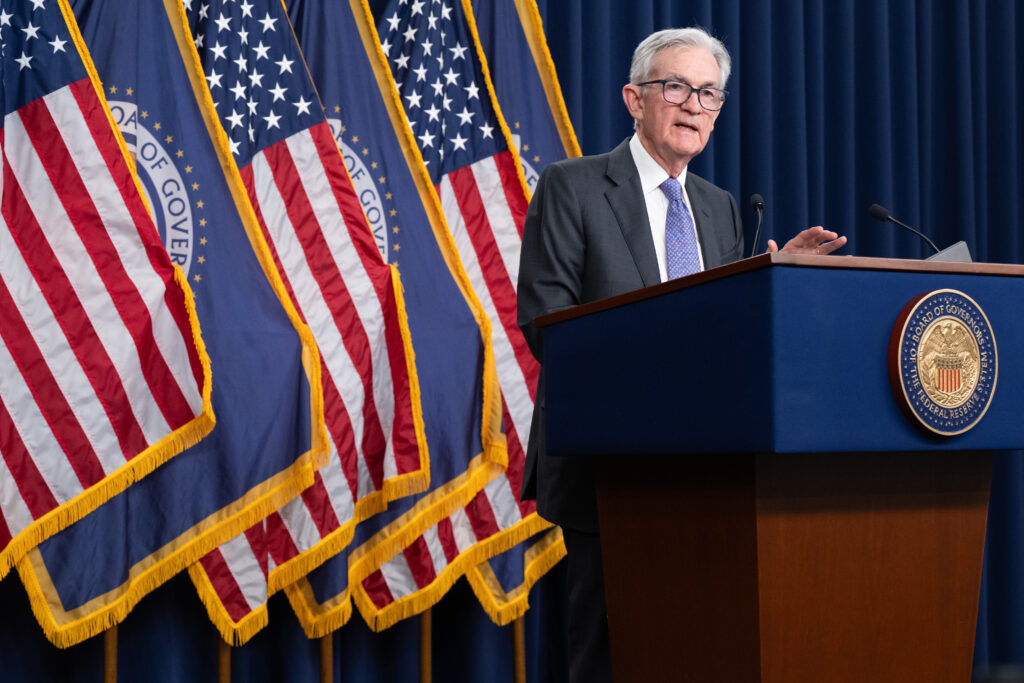
Jerome Powell: The careful Fed chair standing firm against Trump
US Federal Reserve Chair Jerome Powell has generally avoided escalation in the face of Donald Trump’s relentless criticism — but in recent months, the central banker has become a rare figure to publicly resist his attacks.The change of tack was especially pronounced on Sunday night, when Powell accused the Trump administration of threatening him with prosecution to push the Fed into cutting interest rates. He warned that a new Department of Justice investigation targeting him was a threat to the central bank’s independence.”What made the statement so powerful is how rare it is,” Jason Furman, a top economic adviser to former US president Barack Obama, told AFP.”A year ago, Powell got a question about Donald Trump and the Fed, and gave a one-word answer,” added Furman, now a professor at Harvard University. “He has not wanted to be baited into a fight.”The fact that Powell felt the need to respond forcefully now “conveys just how serious the issue is,” Furman said.Powell, a 72-year-old former investment banker, took the helm at the Fed in 2018 after he was tapped by Trump to replace Janet Yellen. It was Trump’s first presidency.Powell then withstood months of withering attacks from Trump for raising interest rates.When Covid-19 took hold in 2020, the Fed rapidly slashed its benchmark rate to zero and rolled out new support measures, moves that helped to prevent a more severe downturn.His tenure won him praise and criticism from all sides as he maintained the central bank’s independence.Over that tumultuous period, Powell, who is also called “Jay,” managed to forge consensus among the diverse members of the Fed’s rate-setting committee.In 2021, the wealthy Republican with no formal economics training was nominated by Democratic President Joe Biden to lead the Fed for a second term.He proceeded to oversee a series of sharp rate hikes in 2022 to curb surging inflation after the pandemic, before beginning to cautiously lower rates again in 2024 and 2025 as he eyed the price effects from Trump’s sweeping new tariffs.- ‘The guy who stood up’ -Less than a year before his time as Fed chair expires in May 2026, however, Powell has again come under fire as Trump lashes out at him for not lowering interest rates more aggressively.Trump, now in his second presidency, has called Powell a “numbskull” and “moron,” and in July went so far as to suggest he could be dismissed for “fraud” over the handling of a $2.5 billion renovation project at the Fed’s headquarters.Since Trump returned to the White House, Powell has proven willing to compromise in certain areas, such as by pulling back on the Fed’s work on climate change.But “Trump pushed him too far this time, and he came out with all guns blazing,” Brookings senior fellow David Wessel said of the Fed chief’s sharp rebuke of the Justice Department probe.Wessel expects the forceful response will cement Powell’s legacy as “a Fed chair with a spine.””He will be seen as the guy who stood up for the independence of the Fed, and the rule of law,” Wessel told AFP.Already, Powell made headlines when he appeared with Trump in July as the president toured the under-renovation Fed buildings while criticizing cost overruns.In a brief exchange in front of reporters, Powell corrected Trump in real-time as the president claimed the price tag for the revamp had ballooned to $3.1 billion. The usually stoic Fed chair was seen shaking his head on camera while Trump spoke, and responding: “I haven’t heard that from anybody.”Prior to his appointment to the central bank in 2012 by then-president Obama, Powell was a scholar at the Bipartisan Policy Center think tank. The native of Washington served in the Treasury Department, in charge of financial institutions, for a brief period under Republican President George H.W. Bush.
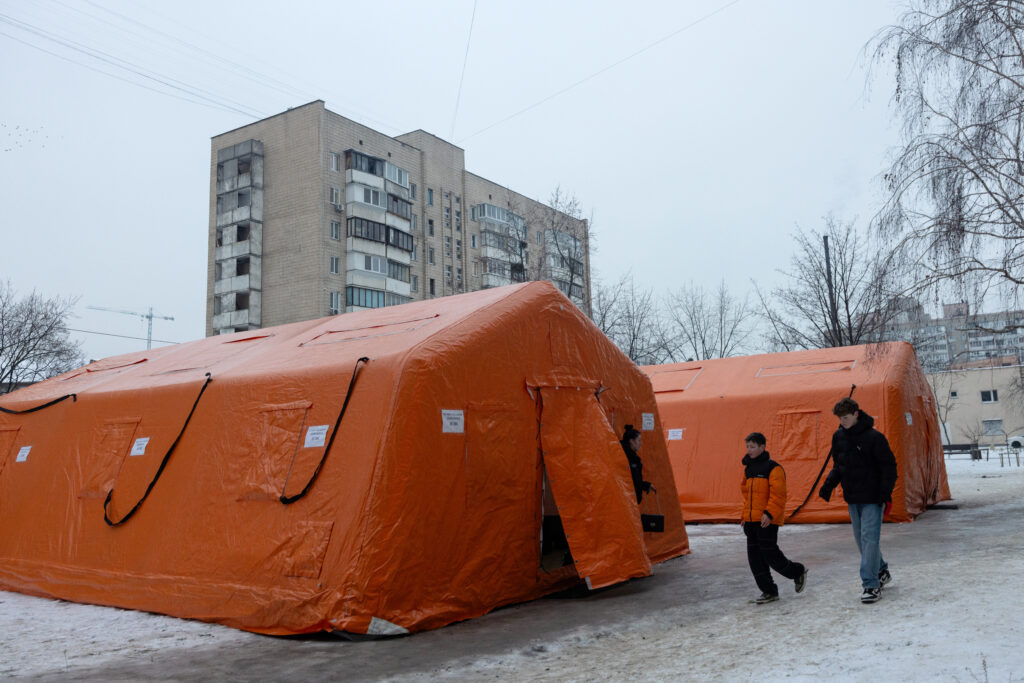
Ukraine: plus de 800 immeubles toujours sans chauffage à Kiev après les frappes russes
Plus de 800 immeubles résidentiels sont toujours sans chauffage à Kiev, a annoncé lundi le maire Vitaly Klitschko, plus de trois jours après les frappes russes massives qui ont affecté la moitié de la capitale ukrainienne.Un journaliste de l’AFP a vu à Kiev lundi des dizaines de personnes manger à la lumière de leurs téléphones …
Ukraine: plus de 800 immeubles toujours sans chauffage à Kiev après les frappes russes Read More »