Somaliland: Horn of Africa territory at heart of geopolitical scramble

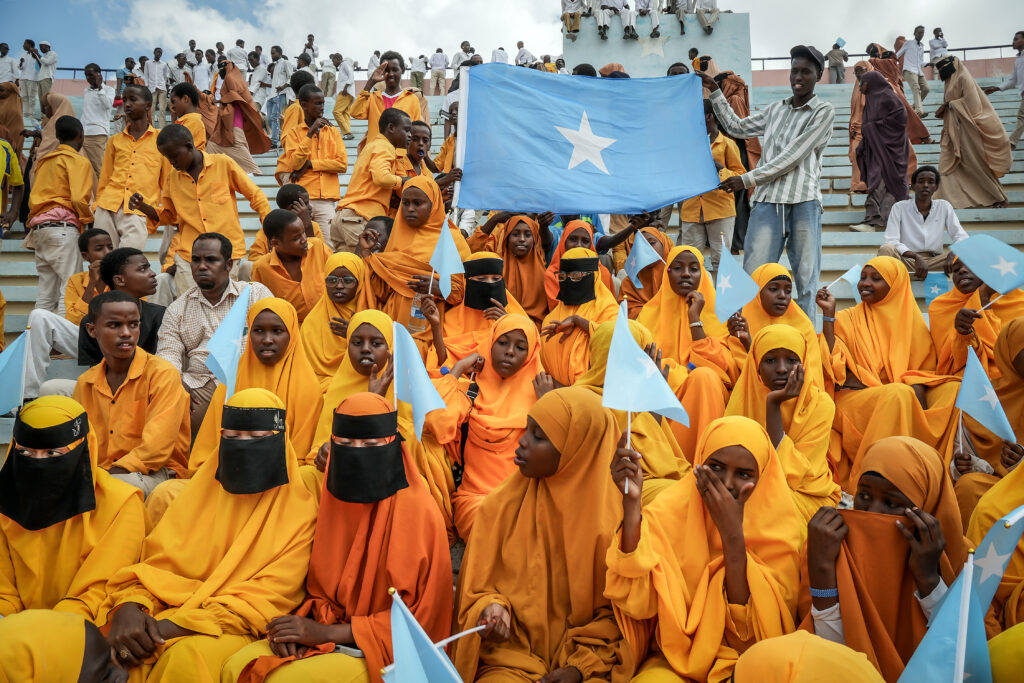
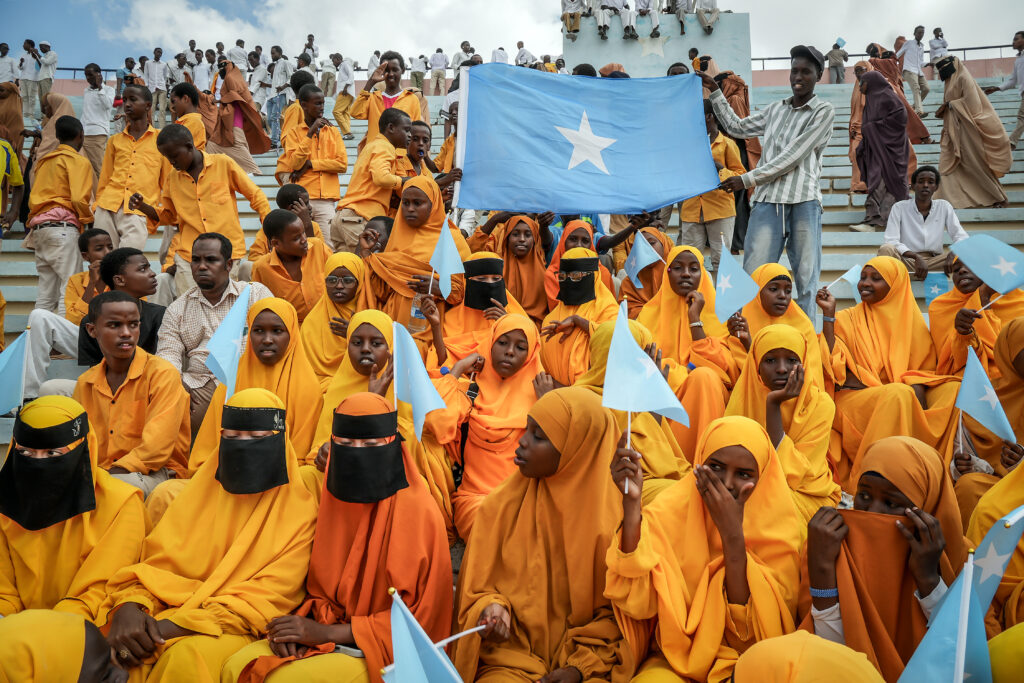
Since Israel recognised Somaliland last month, the self-declared republic on the Gulf of Aden has become central to a struggle over military access, ports and regional influence across the Red Sea corridor.Somaliland sits astride one of the world’s most strategic maritime choke points, flanked by multiple conflicts in the Horn of Africa and the Middle East.It declared independence from Somalia in 1991 but had never been recognised internationally until Israel’s move.Israel’s recognition was fiercely opposed by the Somali government as an attack on its territorial unity — a position backed by most African and Arab leaders. But Somaliland’s assets — most crucially the port and airfield at Berbera, which have been developed by the United Arab Emirates since 2016 to be capable of hosting large naval and air assets — outweighed any potential concern about the diplomatic fall-out.A Somaliland official, speaking anonymously to AFP, said new buildings and an airbase facility were recently completed at Berbera by the UAE, which has a 25-year concession to build a military base. “What is at stake right now is military access,” said Roland Marchal, an expert on the region with France’s National Centre for Scientific Research. “This is a shift from the recent past” when the focus was on commercial shipping, he added. – Israel and the UAE – For the Israelis, Somaliland offers a prime spot from which to attack Yemen’s Houthi rebels, who have targeted Israel to show solidarity with Palestinians in the Gaza Strip. Berbera offers another hub for the quiet military cooperation between the UAE and Israel that has expanded since the Emiratis formally recognised Israel under the US-sponsored Abraham Accords in 2020. The UAE did not criticise Israel for recognising Somaliland. The Somali government said on Monday it was cancelling all agreements with the UAE for “undermining national sovereignty”.Analysts say the Emiratis are nonetheless unlikely to formally recognise Somaliland as that would worsen its already terrible relations with regional rival Saudi Arabia. The Saudis “would view (recognition) as another affront and another example of the UAE undermining Saudi Arabia’s authority and the ‘Arab consensus'”, said Anna Jacobs, a Gulf analyst.- Turkey and China – Turkey has sided with Somalia, its key strategic partner in the region — host of its largest international military base, a planned space-port and imminent oil-drilling projects. The fragmentation of Somalia “could jeopardise Turkey’s progress and interests in the country”, said Scott Romaniuk, a researcher at Budapest’s Corvinus University.Not to mention Turkey’s long-standing opposition to Israel’s war in Gaza and fear of encouraging its own separatists, the Kurds.  Turkey has nonetheless maintained a foothold in Somaliland, said Federico Donelli of the University of Trieste, and is closely allied with the UAE in other areas — highlighting the complexity of regional dynamics.Meanwhile, Somaliland is the only African territory, besides the tiny state of Eswatini, to recognise Taiwan — enough to attract the ire of China, which also has significant investments in Somalia. – United States -Washington defended what it said was its Israeli ally’s right to recognise Somaliland, although President Donald Trump said he was unlikely to follow suit, despite pressure from some within his Republican party.”The United States is not at all in a position to recognise Somaliland,” Marchal said. “The United States needs local allies. They can’t alienate Egypt, the Turks and Saudi Arabia (all supporters of Somalia) at the same time.”The United States can count on plenty of other military assets in the region, including ships in the Red Sea and the Gulf, and the Baledogle airfield in Somalia.- Somaliland -Lost in the geopolitical scramble is any assessment of Somaliland’s own case for independence. It has run its own affairs since 1991 and been far more stable and democratic than the rest of Somalia, but those are secondary considerations for its partners.”It’s sad because the merits of Somaliland aren’t discussed,” Marchal said. “What Somaliland has achieved, what it has failed at, is completely ignored.”
Somaliland: Horn of Africa territory at heart of geopolitical scrambleTue, 13 Jan 2026 09:49:05 GMT

Since Israel recognised Somaliland last month, the self-declared republic on the Gulf of Aden has become central to a struggle over military access, ports and regional influence across the Red Sea corridor.Somaliland sits astride one of the world’s most strategic maritime choke points, flanked by multiple conflicts in the Horn of Africa and the Middle …

Somaliland: Horn of Africa territory at heart of geopolitical scrambleTue, 13 Jan 2026 09:49:05 GMT Read More »

Is China a threat to Greenland as Trump argues?

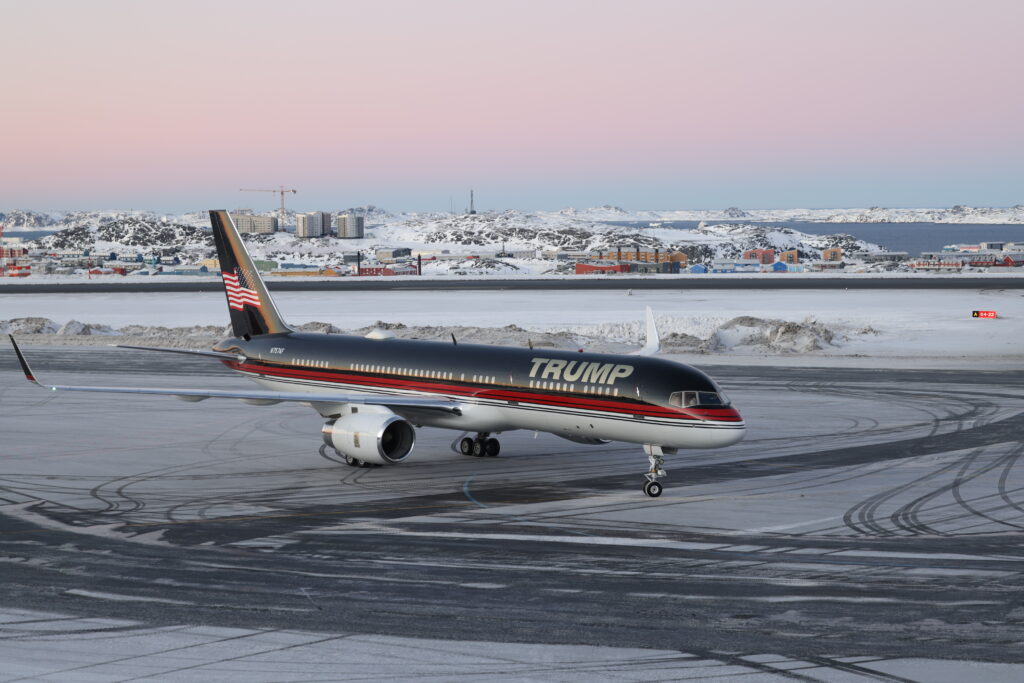
US President Donald Trump has repeatedly threatened to take Greenland by force from NATO ally Denmark in order to keep the Arctic island from Beijing’s hands.But analysts suggested China is a small player in the Arctic region, and thus far from the threat Trump has argued.Here is what we know about Beijing’s presence in the region:- Covered with Chinese ships? -Despite Trump’s claim that, without US intervention, Greenland would have “Chinese destroyers and submarines all over the place”, Beijing’s Arctic military presence is underwhelming.”Greenland is not swarming with Chinese and Russian vessels. This is nonsense,” said to Paal Sigurd Hilde at the Norwegian Institute for Defence Studies.In other parts of the Arctic, China’s modest military presence has grown in collaboration with Russia since the 2022 invasion of Ukraine.”China’s only pathway to gaining significant influence in the Arctic goes through Russia,” Hilde said.The two countries have increased joint Arctic and coast guard operations, including a 2024 bomber patrol near Alaska.China also operates a handful of icebreakers equipped with deep-sea mini-submarines, which could map the seabed — potentially useful for military deployment — and satellites for Arctic observation.Beijing says they are for scientific research.- Is China’s influence growing? -These activities are “potential security concerns if China’s military or military-linked assets establish a regular presence in the region”, said Helena Legarda at the Mercator Institute for China Studies in Berlin.”China has clear ambitions to expand its footprint and influence in the region, which it considers… an emerging arena for geopolitical competition,” she said.Beijing launched the Polar Silk Road project in 2018 — the Arctic arm of its transnational Belt and Road infrastructure initiative — and aims to become a “polar great power” by 2030.It has established scientific research stations in Iceland and Norway, while Chinese firms have invested in projects like Russian liquefied natural gas and a Swedish railway line.Competition with China for resources and access to trade routes in the Arctic could threaten European interests, Legarda said.Recently, however, China has faced pushback. Proposals to buy an abandoned naval station in Greenland and an airport in Finland have failed.The US reportedly pressured nations to reject Chinese companies. In 2019, Greenland opted against using China’s Huawei for its 5G networks.Russia remains the exception, with China investing heavily in resources and ports along Russia’s northern coast.- What is China seeking? -Greenland has the world’s eighth-largest rare earth reserves, elements vital for technologies including electric vehicles and military equipment, according the US Geological Survey.While China dominates global production of these critical materials, its attempts to tap Greenland’s resources have seen limited success.A Chinese-linked project at a massive deposit in Kvanefjeld was halted by the Greenland government in 2021 over environmental concerns, while another deposit in southern Greenland was sold to a New York-based firm in 2024 after US lobbying.”There was a fear in Denmark and the US that mining investments several times the GDP of Greenland could have led to Chinese influence a decade ago, but the investments never materialised,” said Jesper Willaing Zeuthen, associate professor at Aalborg University.More recently, “Beijing discourages engagement, because the diplomatic costs have been too high”.- Transforming shipping routes -The Polar Silk Road aims to link China to Europe via Arctic routes increasingly accessible as warming temperatures melt Arctic sea ice.China and Russia agreed in October to develop the Northern Sea Route (NSR) along Russia’s northern border.Last year, a Chinese ship reached Britain in 20 days via the Arctic, half the time of the regular Suez Canal route.The passage could transform global shipping and reduce Chinese reliance on the Straits of Malacca for its trade.But ships have to be modified to travel through ice, fog makes navigation difficult, and the weather is extreme.Chinese ships made just 14 NSR voyages last year, mostly carrying Russian gas.Another possible route — the Northwest Passage — follows the Canadian archipelago, potentially mitigating the risks of a Russian and Chinese-dominated northern passage.The NSR does not pass by Greenland, so it is not the source for Trump’s claim of Chinese ships prowling the island’s coastline.Zeuthen maintains there is no sign of Chinese military activity in or around the Arctic part of Greenland.”Actual security issues are very hard to identify,” he said.

Corée du Sud: l’heure des réquisitions pour l’ex-président Yoon après son coup de force de 2024

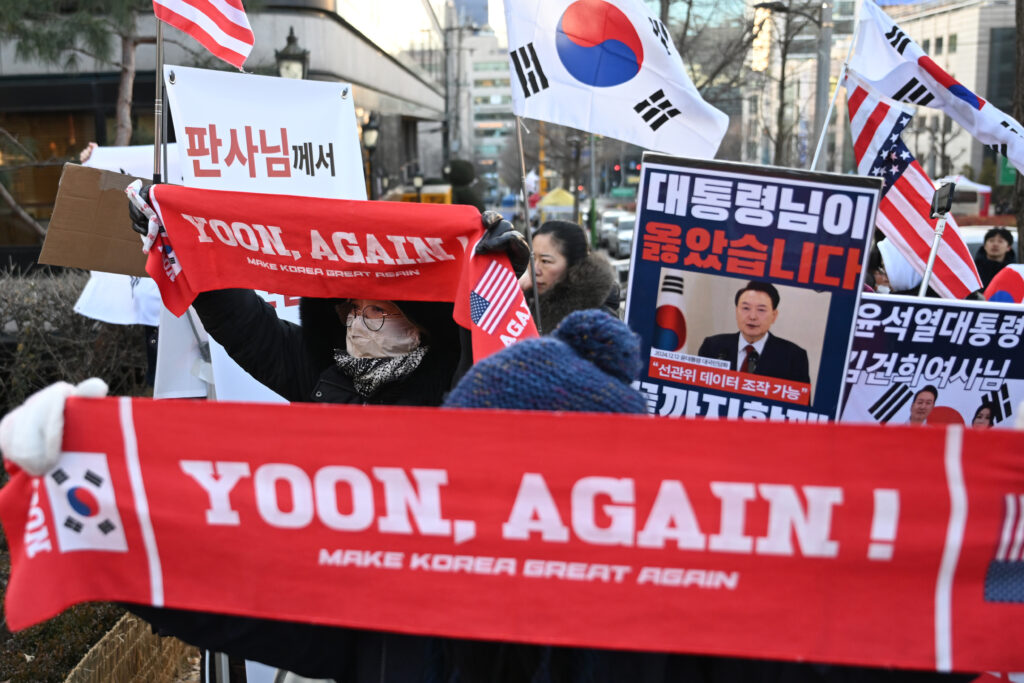
Le parquet sud-coréen doit livrer mardi ses réquisistions à l’encontre de l’ex-président Yoon Suk Yeol, qui encourt la peine de mort pour avoir tenté d’instaurer la loi martiale en décembre 2024.L’audience finale dans le procès principal de Yoon Suk Yeol, qui a débuté dans la matinée, doit permettre à l’ancien dirigeant de 65 ans de faire sa dernière déclaration avant la mise en délibéré.Le crime d’insurrection, le plus grave pour lequel il est poursuivi, est passible de la peine de mort, encore en vigueur en Corée du Sud même si aucune exécution n’a eu lieu depuis 1997.Selon la loi sud-coréenne, les procureurs devraient requérir la prison à vie ou la peine de mort pour l’ancien président conservateur accusé d’insurrection.Dans la soirée du 3 décembre 2024, Yoon Suk Yeol avait sidéré le pays en annonçant par surprise à la télévision l’imposition de la loi martiale, envoyant des troupes au Parlement pour le museler.Il avait fait marche arrière quelques heures plus tard, un nombre suffisant de députés ayant réussi à se faufiler dans l’hémicycle cerné par les soldats et à voter la suspension de son décret.Procureur de carrière, Yoon Suk Yeol est jugé depuis février 2025 à Séoul en même temps que sept autres personnes, dont son ex-ministre de la Défense et l’ancien chef de la police. Le verdict est attendu le mois prochain.L’équipe de défense de M. Yoon a formulé des arguments dans l’espoir de lui venir en aide ainsi qu’à ses complices.Mardi, ils ont comparé l’ancien dirigeant en disgrace à de grandes figures historiques comme les savants italiens Galileo Galilei et Giordano Bruno, injustement condamnés. “La majorité ne révèle pas toujours la vérité”, ont-ils soutenu.- Plusieurs procès -M. Yoon était devenu en janvier 2025 le premier président sud-coréen en exercice à être arrêté et placé derrière les barreaux. Il s’était retranché pendant des semaines dans sa résidence de Séoul sous la protection de sa garde rapprochée, faisant même échouer un premier raid des autorités sur son domicile.Il a été officiellement destitué en avril 2025 par la Cour constitutionnelle, après des mois de manifestations massives et de chaos politique.Yoon Suk Yeol avait justifié la loi martiale, une mesure sans précédent en Corée du Sud depuis les dictatures militaires des années 1980, par le fait que le Parlement contrôlé par l’opposition bloquait le budget.Dans son allocution télévisée, il avait affirmé agir pour protéger le pays des “forces communistes nord-coréennes” et “éliminer les éléments hostiles à l’Etat”.Remis en liberté en mars en raison d’un vice de procédure, M. Yoon a de nouveau été incarcéré en juillet, de crainte qu’il ne détruise des preuves.S’il est reconnu coupable, il sera le troisième ex-président sud-coréen à être condamné pour le crime d’insurrection, après les généraux Chun Doo-hwan et Roh Tae-woo pour un coup d’Etat en 1979.Yoon fait l’objet de plusieurs autres procès pour des délits de gravité moindre liés à son coup de force manqué.Dans l’un, le parquet a requis dix ans de prison pour entrave à la justice, notamment pour avoir résisté à son arrestation. Le verdict dans cette affaire est attendu vendredi.Dans une autre procédure, l’ex-président est accusé par le parquet d’avoir provoqué la Corée du Nord en ordonnant l’envoi de drones au-dessus de Pyongyang dans l’espoir de déclencher une réaction du pays voisin qui aurait justifié l’imposition de la loi martiale.

Naissances, décès: l’Insee dévoile mardi les chiffres 2025 sur la population française

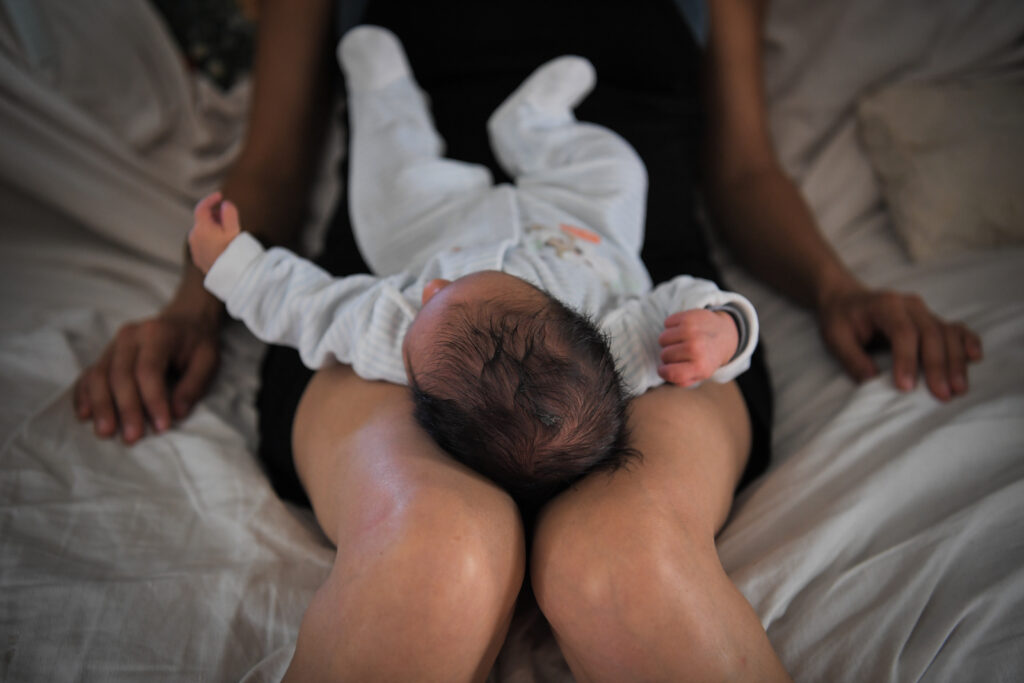
Y a-t-il eu plus de décès que de naissances en France en 2025 ? L’Insee va dévoiler mardi à la mi-journée des statistiques très attendues sur la démographie française, alors que le pays est proche d’un tournant.Naissances, décès, taille de la population, mais aussi espérance de vie et mariages: l’Institut nationale de la statistique va présenter une série de données démographiques concernant la France en 2025.Parmi les plus attendues, le solde naturel de population, soit la différence entre le nombre de naissances et de décès, qui pourrait être négatif pour la première fois depuis la fin de la Seconde guerre mondiale.Sur onze mois, il parvient tout juste à rester positif: +2.864 personnes. Deux tendances, qui seront détaillées par l’Insee, expliquent la situation.D’un côté, les naissances reculent du fait d’une baisse de la fécondité, c’est-à-dire du nombre d’enfant par femmes. Celle-ci est liée à de multiples facteurs (difficultés à accéder à un emploi stable, changement d’aspirations, inquiétude au sujet de l’avenir de la planète, problèmes d’infertilité…).De l’autre, le nombre de décès augmente en raison de l’arrivée à des âges de forte mortalité des générations nombreuses du baby-boom.Ainsi, en 2025, entre janvier et novembre, le nombre quotidien moyen de nouveaux-nés s’est replié de 2,4%, par rapport à la même période l’année précédente. Le nombre de décès quotidien moyen a lui augmenté de 1,2%.Si le solde naturel de population devient négatif, cela signifie que la France ne peut compter que sur le solde migratoire pour voir sa population croître (la différence entre le nombre de personnes entrées et sorties du territoire).Le solde migratoire a été le principal moteur de croissance de la population ces dernières années.Le solde naturel s’est lui drastiquement réduit. Au cours de la dernière décennie, il est passé de +200.000 personnes en 2015 à seulement +17.000 personnes en 2024.

Takaichi says urged S. Korea’s Lee to help ‘ensure regional stability’

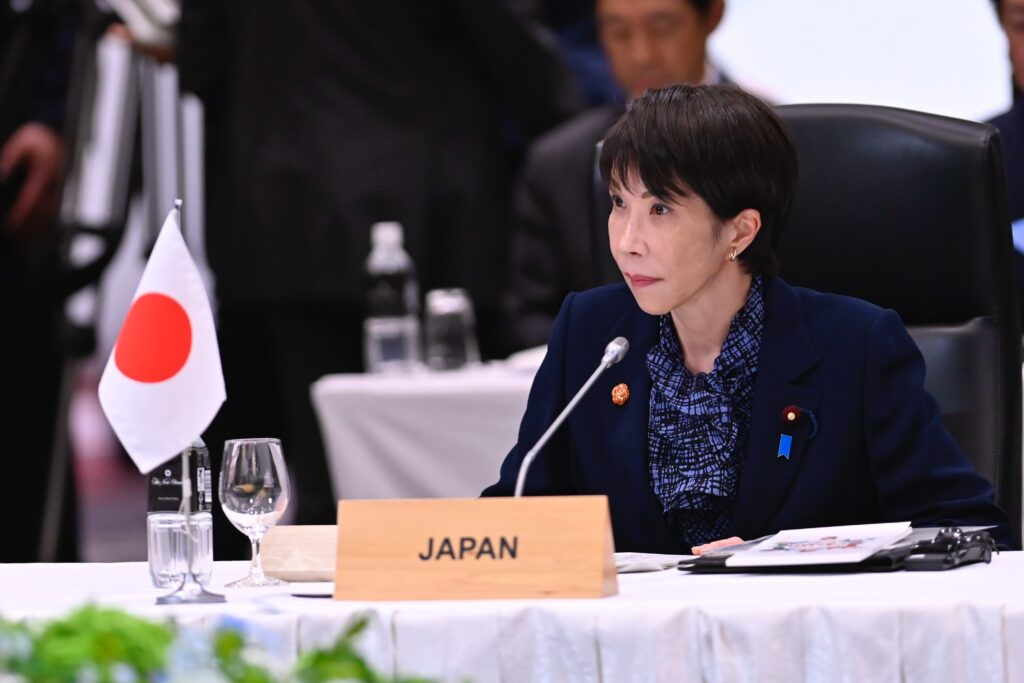
Japanese Prime Minister Sanae Takaichi called on South Korean President Lee Jae Myung Tuesday to help “ensure regional stability”, as Beijing pressures Tokyo over its stance on Taiwan.The two leaders met in Takaichi’s picturesque home region of Nara in western Japan, days after Lee visited Chinese leader Xi Jinping in Beijing.They agreed to strengthen cooperation on economic security, regional and global issues, as well as artificial intelligence, according to South Korea’s presidential office.Looming in the background of the meeting was Japan’s heated diplomatic spat with China, triggered by Takaichi’s suggestion in November that Japan could intervene militarily if China attacks Taiwan.China, which regards Taiwan as its own territory, reacted angrily, blocking exports to Japan of “dual-use” items with potential military applications, fuelling worries in Japan that Beijing could choke supplies of much-needed rare earths.Takaichi said she told Lee that “while advancing Japan-South Korea relations, both countries should cooperate to ensure regional stability and fulfill their respective roles”.”As the environment surrounding both of our countries becomes ever more severe, our bilateral relations, as well as the cooperation among Japan, South Korea and the United States, are assuming greater importance,” she later told a news conference.At the beginning of his meeting with Takaichi, Lee said that cooperation between the two US allies “is more important than ever”.”In this increasingly complex situation and within this rapidly changing international order, we must continue to make progress toward a better future,” Lee added.They agreed to continue their “shuttle diplomacy” of regular meetings, according to Takaichi, as well as work towards the complete denuclearisation of North Korea.Lee and Takaichi, who both took office in 2025, last met in October on the sidelines of the APEC regional summit in Gyeongju, South Korea.It is Lee’s second visit to Japan since August, when he met Takaichi’s predecessor Shigeru Ishiba.- Bitter memories -Lee and Takaichi will have dinner Tuesday, before visiting one of Japan’s oldest temples in Nara on Wednesday.”Behind closed doors, the leaders will certainly discuss the current Japan-China crisis, as Beijing’s retaliatory measures, including export controls, will have an impact on Korea as well,” Benoit Hardy-Chartrand, an East Asian geopolitics expert at Temple University’s Tokyo campus told AFP, with the supply chains of the three nations deeply intertwined.Lee said in an interview with Japanese public broadcaster NHK aired on Monday that it was not his place to “intervene or get involved” in the Japan-China row.”From the standpoint of peace and stability in Northeast Asia, confrontation between China and Japan is undesirable,” he said. “We can only wait for China and Japan to resolve matters amicably through dialogue.”Hardy-Chartrand said he believed “the South Korean government felt that it was necessary for President Lee to visit Japan not too long after going to China, in order to demonstrate that Seoul is not favouring one side over the other”.Lee and Takaichi were also expected to discuss their relations with the United States because the unpredictable Trump “has put in doubt old certainties and highlighted the importance of strengthening their ties”, he said.On the bilateral front, bitter memories of Japan’s brutal occupation of the Korean peninsula from 1910 to 1945 have cast a long shadow over Tokyo-Seoul ties.Lee’s conservative predecessor Yoon Suk Yeol, who declared martial law in December 2024 and was removed from office, had sought to improve relations with Japan.Lee is also relatively more dovish towards North Korea than was Yoon, and has said that South Korea and Japan are like “neighbours sharing a front yard”.

Images dénudées de Grok: la Haute commissaire à l’Enfance française a saisi la commissaire européenne

La Haute commissaire à l’Enfance française, Sarah El Haïry, a saisi la commissaire européenne à la souveraineté numérique sur la fonctionnalité de Grok permettant de générer de fausses images de personnes dénudées, qui tombe sous le coup de réglementations européennes, a-t-elle indiqué au Parisien.”J’ai saisi la justice française, ainsi que l’Arcom (le régulateur de l’audiovisuel) …

Images dénudées de Grok: la Haute commissaire à l’Enfance française a saisi la commissaire européenne Read More »

Asian markets rise, Iran worries push up oil

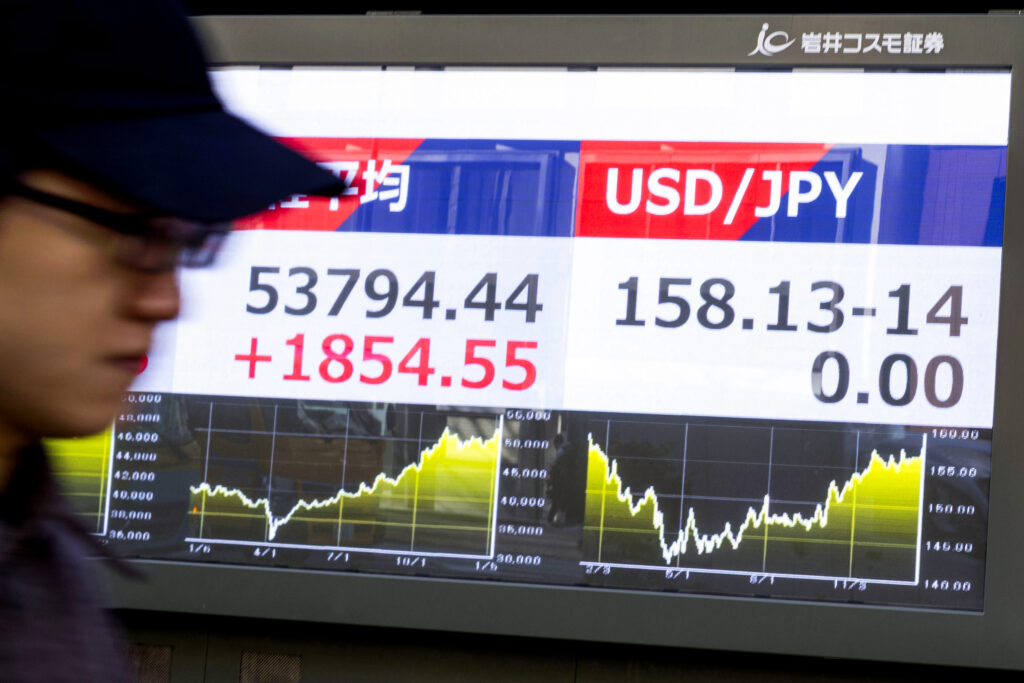
Asian markets mostly rose on Tuesday with Tokyo closing at a record high on speculation over a snap election, while concerns about Iran pushed oil prices higher.The rallies followed another record finish on Wall Street overnight, where investors shrugged off worries about a US criminal probe of the Federal Reserve central bank.Tokyo’s Nikkei closed 3.1 percent up, driven by anticipation that Prime Minister Sanae Takaichi will capitalise on strong poll numbers by calling an election.Takaichi became Japan’s first woman prime minister in October and her cabinet has an approval rating of around 70 percent.But her ruling bloc only has a slim majority in parliament’s powerful lower house, hindering her ambitious policy agenda.Tokyo’s gains were mirrored by increases in Hong Kong, Sydney, Singapore and Malaysia. Shanghai was down at the close, with Wellington, Mumbai, Bangkok and Manila also in the red.London and Frankfurt were flat at the open, with Paris in the red.Seoul climbed 1.5 percent after South Korean chip giant SK hynix said it would spend 19 trillion won ($12.9 billion) building an advanced chip packaging plant, as the firm rides the global AI boom.It came after New York’s Dow and S&P 500 ended at records for a second straight day.The tech-rich Nasdaq index also bounced back from early losses after Sunday night’s disclosure of the US Department of Justice probe into the Federal Reserve.Broad optimism over the global economy and technological advances such as artificial intelligence have buoyed market sentiment in recent months.Oil prices rose after US President Donald Trump announced a 25 percent tariff on any country trading with Iran, ramping up pressure on Tehran over its violent crackdown on a wave of protests.Michael Wan at MUFG noted that Iran makes up three percent of global oil production, with Venezuela supplying around one percent “as a rough rule of thumb”.”China stands out as the top trading partner for Iran, both across exports and imports, and also in terms of its position as the top importer of Iranian crude oil,” he said.Trump said in a social media post on Monday that the new levies would “immediately” hit the Islamic republic’s trading partners who also do business with the United States.Taipei was up 0.5 percent after the democratic island said it had reached a “general consensus” with Washington on a trade deal, following months of talks.Taiwan and the United States began negotiations in April to hash out a trade deal after Trump slapped a 32 percent tariff on Taiwanese exports, which was later lowered to 20 percent, as part of his sweep of measures against dozens of trade partners.- Key figures at around 0815 GMT -Hong Kong – Hang Seng Index: UP 0.9 percent at 26,848.47 (close)Shanghai – Composite: DOWN 0.6 percent at 4,138.76 (close)Tokyo – Nikkei 225: UP 3.1 percent at 53,549.16 (close)West Texas Intermediate: UP 0.5 percent at $59.81 per barrelBrent North Sea Crude: UP 0.5 percent at $64.18 per barrelEuro/dollar: DOWN at $1.1658 from $1.1666 on MondayPound/dollar: UP at $1.3468 from $1.3466Dollar/yen: UP at 158.86 yen from 158.17 yenEuro/pound: DOWN at 86.56 pence from 86.63 penceLondon – FTSE 100: FLAT at 10,140.70New York – Dow: UP 0.2 percent at 49,590.20 (close)