

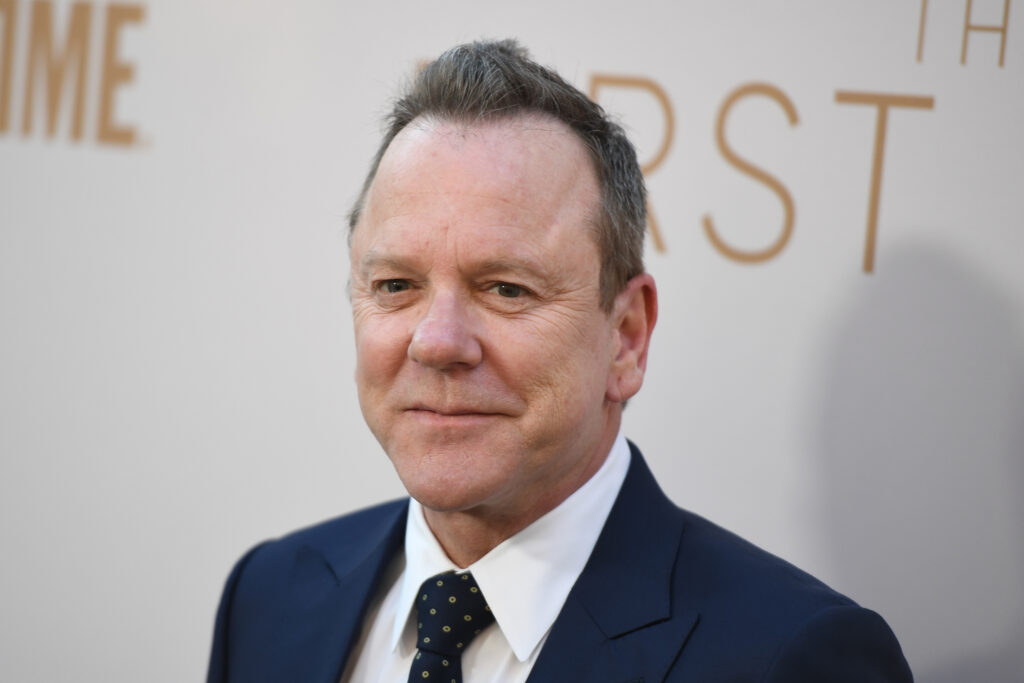
Actor Kiefer Sutherland arrested for assaulting ride-share driver
Actor Kiefer Sutherland, who starred in the television series “24” and vampire flick “The Lost Boys,” was arrested Monday on suspicion of assaulting a ride-share driver, according to Los Angeles police. The Canadian-British actor was taken into custody after officers responded a call in Hollywood shortly after midnight. “The investigation determined that the suspect, later identified as Kiefer Sutherland, entered a ride-share vehicle, physically assaulted the driver (the victim), and made criminal threats toward the victim,” police said in a statement.The 59-year-old actor was released a few hours later after posting $50,000 bail, law enforcement said.Sutherland’s representatives did not immediately respond to requests for comment from AFP.Police said the driver did not sustain injuries requiring medical attention.Sutherland is known for playing counterterrorism agent Jack Bauer in the television series “24,” a hit between 2001 and 2010. On the silver screen, he had memorable turns in “The Lost Boys” (1987), “Stand By Me” (1986), and “The Three Musketeers” (1993).Kiefer is the son of actor Donald Sutherland, who passed away in 2024.
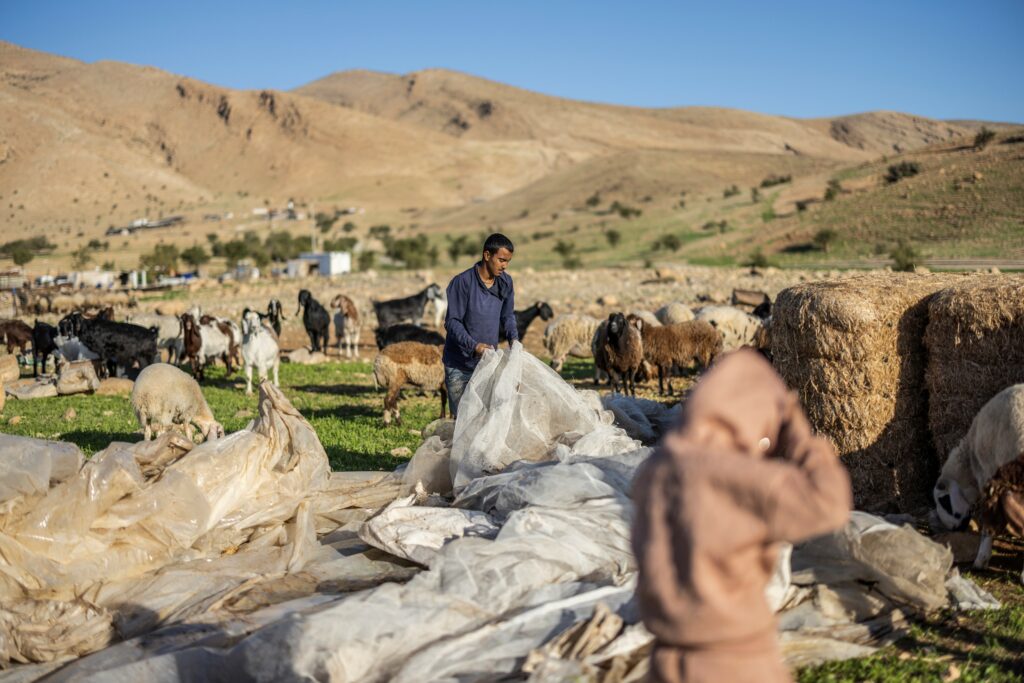
West Bank Bedouin community driven out by Israeli settler violence
With heavy hearts, Bedouins in a West Bank village dismantle their sheep pens and load belongings onto trucks, forced from their homes in the Israeli-occupied territory by rising settler violence.While attacks by Israeli settlers affect communities across the West Bank, the semi-nomadic Bedouins are among the territory’s most vulnerable, saying they suffer from forced displacement due in large part to a lack of law enforcement.”What is happening today is the complete collapse of the community as a result of the settlers’ continuous and repeated attacks, day and night, for the past two years,” Farhan Jahaleen, a Bedouin in the village of Ras Ein al-Auja, told AFP.Since Israel took control of the West Bank in 1967, Israeli outposts have steadily expanded, with more than 500,000 settlers now living in the territory, which is also home to three million Palestinians. A minority of settlers engage in violence towards the locals aimed at coercing them to leave, with the UN recording an unprecedented 260 attacks in October last year.The threat of displacement has long hung over Jahaleen’s community, but the pressure has multiplied in recent months as about half of the hamlet’s 130 families decided to flee.Among them, 20 families from the local Ka’abneh clan left last week, he said, while around another 50 families have been dismantling their homes.- ‘We can’t do anything’ -The trailers of settlers dot the landscape around the village but are gradually being replaced by houses with permanent foundations, some built just 100 metres (300 feet) from Bedouin homes.In May last year, settlers diverted water from the village’s most precious resource — the spring after which it is named.Nestled between rocky hills to the west and the flat Jordan Valley that climbs up the Jordanian plateau to the east, the spring had allowed the community to remain self-sufficient.But Bedouin families have been driven away by the constant need to stand guard to avoid settlers cutting the power supply and irrigation pipes, or bringing their herds to graze near Bedouin houses.”If you defend your home, the (Israeli) police or army will come and arrest you. We can’t do anything,” lamented Naif Zayed, another local.”There is no specific place for people to go; people are acting on their own, to each their own.”Most Palestinian Bedouins are herders, which leaves them particularly exposed to violence when Israeli settlers bring their own herds that compete for grazing land in isolated rural areas.It is a strategy that settlement watchdog organisations have called “pastoral colonialism”.Israel’s military chief Lieutenant General Eyal Zamir said in November that he wanted to put a stop to the violence. This month the army announced new monitoring technology to enforce movement restrictions on both Israelis and Palestinians, with Israeli media reporting the move was largely aimed at reining in settler attacks.Asked for comment, the Israeli military said: “Incidents in the Ras al-Ain are well known. (Israeli military) forces enter the area in accordance with calls and operational needs, aiming to prevent friction between populations and to maintain order and security in the area.”It said it had increased its presence in the area “due to the many recent friction incidents”.- ‘Bedouin way of life’ -Naaman Ehrizat, another herder from Ras Ein al-Auja, told AFP he had already moved his sheep to the southern West Bank city of Hebron ahead of his relocation.But Jahaleen said moving to other rural parts of the territory risks exposing the herders to yet more displacement in the future.He pointed to other families pushed out of the nearby village of Jiftlik, who were again displaced after moving to a village in the Jordan Valley.Slogans spray-painted in Arabic have appeared along major roads in the West Bank in recent months that read: “No future in Palestine”.For Jahaleen, whose family has lived in Ras Ein al-Auja since 1991, the message sums up his feelings.”The settlers completely destroyed the Bedouin way of life, obliterated the culture and identity, and used every method to change the Bedouin way of life in general, with the complete destruction of life,” he said.
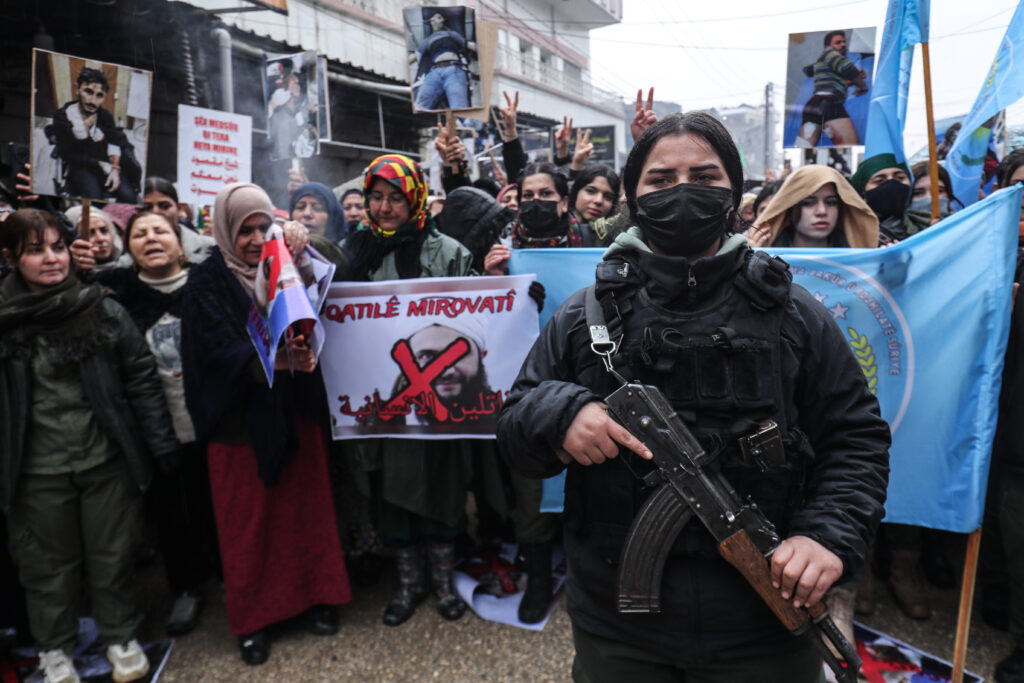
Syrian army tells Kurdish forces to withdraw from area east of Aleppo
Syria’s army told Kurdish forces on Tuesday to withdraw from an area east of Aleppo after deadly clashes in the city last week and as both sides reported fresh armed skirmishes breaking out overnight. Syria’s Islamist-led government is seeking to extend its authority across the country, but progress has stalled on integrating the Kurds’ de facto autonomous administration and forces into the central government under a deal reached in March.In Qamishli, the main Kurdish city in the country’s northeast, thousands of people demonstrated against the Aleppo violence, with some burning pictures of Syrian President Ahmed al-Sharaa, an AFP correspondent said.Syrian state television published an army statement with a map declaring a large area east of Aleppo city a “closed military zone” and said “all armed groups in this area must withdraw to east of the Euphrates” River.The area, controlled by Kurdish forces, extends from near Deir Hafer, around 50 kilometres (30 miles) from Aleppo, to the Euphrates about 30 kilometres further east, as well as towards the south.The Syrian army and Kurdish forces reported fresh armed clashes overnight east of Aleppo.An unnamed military source told the official SANA news agency that the Kurdish-led Syrian Democratic Forces (SDF): “is targeting army positions and civilian homes in the vicinity of the Humaymah village east of Aleppo, with heavy machine guns and drones, and the army is responding to the fire source”.The SDF said in statements on Telegram that it had repelled an “infiltration attempt” near the village of Zubayda, a little further south, and also reported drone strikes, one of which had injured several of its fighters. On Monday, Syria accused the US-backed SDF of sending reinforcements to Deir Hafer and said it sent its own personnel there in response.The SDF is the de facto army of the Kurds’ semi-autonomous administration and controls swathes of the country’s oil-rich north and northeast, much of which it captured during Syria’s civil war and the fight against the Islamic State group. An AFP correspondent saw government forces transporting reinforcements including air defence batteries and artillery towards Deir Hafer on Tuesday.Kurdish forces denied any build-up of their personnel around Deir Hafer and accused the government of attacking the town, while state television said SDF sniper fire there killed one person.- ‘Bloodshed’ -Elham Ahmad, a senior official in the Kurdish administration, said government forces were “preparing themselves for another attack”.”The real intention is a full-scale attack” against Kurdish-held areas, she told an online press conference, accusing the government of having made a “declaration of war” and breaking the March agreement on integrating Kurdish forces.Syria’s government took full control of Aleppo city over the weekend after capturing its Kurdish-majority Sheikh Maqsud and Ashrafiyeh neighbourhoods and evacuating fighters there to Kurdish-controlled areas in the northeast.Both sides traded blame over who started the violence last Tuesday that ultimately killed dozens of people and displaced tens of thousands.In Qamishli, shops were shut in a general strike and thousands protested to voice their anger at the Aleppo fighting, some carrying Kurdish flags and banners in support of the SDF and its chief Mazloum Abdi.”Leave, Jolani!” they shouted, referring to President Sharaa by his former nom de guerre, Abu Mohammed al-Jolani.”This government has not honoured its commitments towards any Syrians,” said cafe owner Joudi Ali.- PKK, Turkey -Other protesters burned portraits of Turkish Foreign Minister Hakan Fidan, whose country has lauded the Syrian government’s Aleppo operation “against terrorist organisations”.Turkey has long been hostile to the SDF, seeing it as an extension of the Kurdistan Workers’ Party (PKK) and a major threat along its southern border. Last year, the PKK announced an end to its long-running armed struggle against the Turkish state and began destroying its weapons, but Ankara has insisted that the move include armed Kurdish groups in Syria.On Tuesday, the PKK called the “attack on the Kurdish neighbourhoods in Aleppo” an attempt to sabotage peace efforts between it and Ankara.A day earlier, Ankara’s ruling party levelled the same accusation against Kurdish fighters.The Britain-based Syrian Observatory for Human Rights reported 45 civilians and 60 soldiers and fighters from both sides killed in the Aleppo violence.Aleppo civil defence official Faysal Mohammad told AFP on Tuesday that emergency workers had pulled 50 bodies from the two Kurdish-majority neighbourhoods since the end of fighting, without saying whether they were combatants or civilians.mam-strs-lg/ceg/jm
Asian markets mixed, Tokyo up on election speculation
Asian markets were mixed Wednesday, with Japan election speculation pushing Tokyo shares to a record high, while oil steadied after a surge fuelled by instability in Iran.It came after Wall Street stocks retreated from records as markets weighed muted US inflation data, mixed bank earnings and the jump in oil prices.Tokyo was up 1.6 percent, adding to Tuesday’s gains driven by expectations that Prime Minister Sanae Takaichi will soon call a snap election, while the yen slumped to its lowest value since July 2024.Approval ratings for Takaichi’s cabinet are around 70 percent, but her ruling bloc only has a slim majority in parliament’s lower house, hindering its ability to push through her ambitious policy agenda.Taipei, Wellington and Jakarta each posted gains of less than one percent, but Sydney, Seoul, Mumbai, Singapore and Malaysia were down.Shanghai rose one percent and Hong Kong was up 0.7 percent after China said that trade last year reached a “new historical high”.The price of oil stabilised after an overnight surge as US President Donald Trump announced steep tariffs on anyone trading with Iran, sparking expectations that the threat will restrict supplies of crude.Iran makes up three percent of global oil production, analyst Michael Wan of financial group MUFG noted earlier.Gold rose after Trump warned of unspecified “very strong action” if Iranian authorities go ahead with threatened hangings of some protesters.International outrage has built over the crackdown that a rights group said has likely killed thousands during protests posing one of the biggest challenges yet to Iran’s clerical leadership.- Fed cuts -In the United States, the consumer price index rose 2.7 percent last month, the same rate as in November and in line with expectations.While the inflation report keeps alive the prospect of interest rate cuts by the Federal Reserve in 2026, US equities tripped into negative territory as Tuesday’s session progressed.”Overall, we still think that the Fed will cut rates more and faster than what is priced by markets right now, and on top of contained inflation pressures a softer labour market through 2026 will also be key for our view,” said MUFG’s Wan.”Continued attacks on Fed independence and Trump’s proclivity to push for lower rates is another key reason behind our view and we forecast US Fed funds rates to fall below three percent” by the third quarter of 2026, he wrote.Traders will also be keeping an eye on a possible US Supreme Court ruling on Wednesday on the legality of Trump’s sweeping tariffs.A ruling against the government would prove a temporary setback to its economic and fiscal plans, although officials have noted that tariffs can be reimposed by other means.- Key figures at around 0230 GMT -Tokyo – Nikkei 225: UP 1.6 percent at 54,388.37Hong Kong – Hang Seng Index: UP 0.4 percent at 26,945.27Shanghai – Composite: UP 0.9 at 4,174.29Euro/dollar: DOWN at $1.1639 from $1.1643 on TuesdayPound/dollar: UP at $1.3430 from $1.3426Dollar/yen: UP at 159.28 yen from 159.15 yenEuro/pound: DOWN at 86.66 pence from 86.71 penceWest Texas Intermediate: DOWN 0.2 percent at $61.02 per barrelBrent North Sea Crude: DOWN 0.2 percent at $65.37 per barrelNew York – Dow: DOWN 0.8 percent at 49,191.99 (close)London – FTSE 100: FLAT at 10,137.35 (close)
US official says Venezuela freeing Americans in ‘important step’
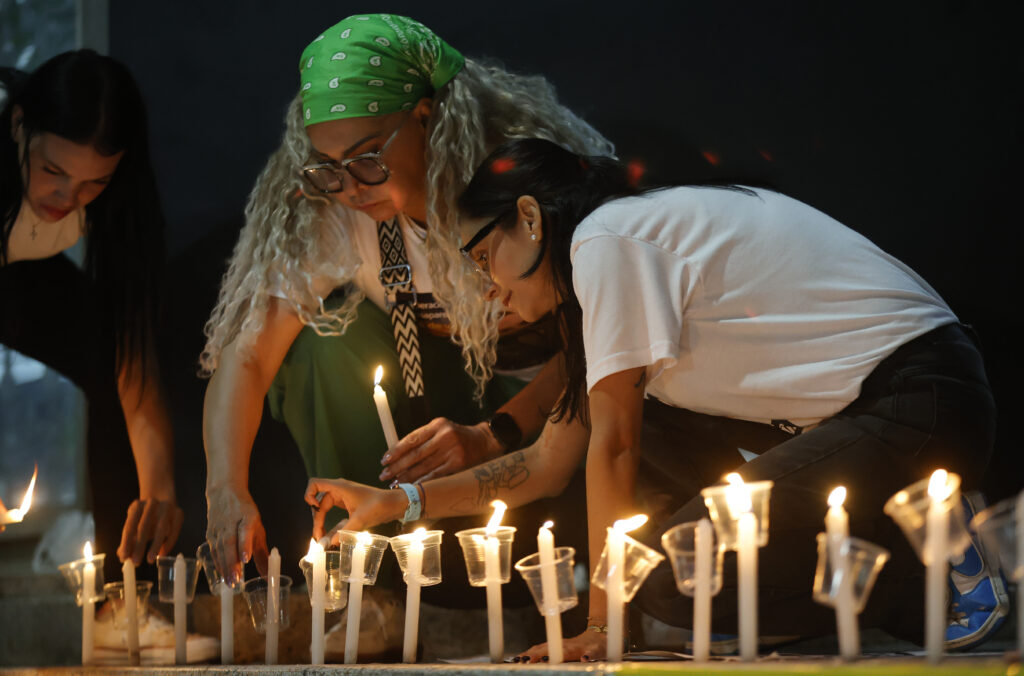
Venezuela on Tuesday started freeing jailed Americans, said a US official, who hailed the move by the country’s interim leadership following Washington’s ouster of ex-president Nicolas Maduro.The official did not immediately provide details on the release of prisoners or say how many were being freed, other than that there was more than one.”We welcome the release of detained Americans in Venezuela. This is an important step in the right direction by the interim authorities,” a State Department official said on condition of anonymity.Delcy Rodriguez, Maduro’s vice president who has become acting president, ordered the release of prisoners in the wake of the US attack.US President Donald Trump hailed the gesture, saying that his response was to call off a second wave of strikes on Venezuela.Many were jailed for taking part in protests over 2024 elections, in which Maduro was declared the victor despite widespread allegations of vote-rigging.Venezuela earlier freed Spanish and Italian citizens from its jails.The United States has long made freeing its nationals overseas a major priority, and secured freedom for some in a deal with Maduro last year.- X access restored -Domestically, Venezuelans regained one freedom on Tuesday — the ability to post on social media platform X.The social network was once again accessible, more than a year after users were blocked by deposed president Maduro.Rodriguez updated her profile’s bio — she served as vice president under Maduro — and wrote: “Let us stay united, moving toward economic stability, social justice, and the welfare state we deserve to aspire to.”Access remained spotty to the social media network owned by billionaire Elon Musk, who engaged in heated online exchanges with the ousted Venezuelan leader, until Maduro lashed out in retaliation for criticism of his contested 2024 election and shut X down.After the July 2024 election, Maduro was declared the winner amid allegations of fraud and suspended the platform in August.Prior to that, X had been a prominent social media network for Venezuelans, but the blockade meant ministers, lawmakers and government institutions stopped updating their pages.Rodriguez assumed power after Maduro was captured by US military forces on January 3 along with his wife, during attacks that left more than 100 dead, according to official figures. The couple faces US charges of alleged drug trafficking.Maduro’s X account was also updated with a photo of the deposed leader and his wife, Cilia Flores. “We want you back,” the post reads.
2025 was third hottest year on record: EU, US experts
The planet logged its third hottest year on record in 2025, extending a run of unprecedented heat, with no relief expected in 2026, US researchers and EU climate monitors said Wednesday.The last 11 years have now been the warmest ever recorded, with 2024 topping the podium and 2023 in second place, according to the EU’s Copernicus Climate Change Service and Berkeley Earth, a California-based non-profit research organisation.For the first time, global temperatures exceeded 1.5C relative to pre-industrial times on average over the last three years, Copernicus said in its annual report.”The warming spike observed from 2023-2025 has been extreme, and suggests an acceleration in the rate of the Earth’s warming,” Berkeley Earth said in a separate report.The landmark 2015 Paris Agreement commits the world to limiting warming to well below 2C and pursuing efforts to hold it at 1.5C — a long-term target scientists say would help avoid the worst consequences of climate change.UN chief Antonio Guterres warned in October that breaching 1.5C was “inevitable” but the world could limit this period of overshoot by cutting greenhouse gas emissions as quickly as possible.Copernicus said the 1.5C limit “could be reached by the end of this decade -– over a decade earlier than predicted”.But efforts to contain global warming were dealt another setback last week as President Donald Trump said he would pull the United States — the world’s second-biggest polluter after China — out of the bedrock UN climate treaty.Temperatures were 1.47C above pre-industrial times in 2025 — just a fraction cooler than in 2023 — following 1.6C in 2024, according to the EU climate monitor.Some 770 million people experienced record-warm annual conditions where they live, while no record-cold annual average was logged anywhere, according to Berkeley Earth.The Antarctic experienced its warmest year on record while it was the second hottest in the Arctic, Copernicus said.An AFP analysis of Copernicus data last month found that Central Asia, the Sahel region and northern Europe experienced their hottest year on record in 2025.- 2026: Fourth-warmest? -Berkeley and Copernicus both warned that 2026 would not break the trend.If the warming El Nino weather phenomenon appears this year, “this could make 2026 another record-breaking year”, Carlo Buontempo, director of the Copernicus Climate Change Service, told AFP.”Temperatures are going up. So we are bound to see new records. Whether it will be 2026, 2027, 2028 doesn’t matter too much. The direction of travel is very, very clear,” Buontempo said.Berkeley Earth said it expected this year to be similar to 2025, “with the most likely outcome being approximately the fourth-warmest year since 1850″.- Emissions fight -The reports come as efforts to cut greenhouse gas emissions — the main driver of climate change — are stalling in developed countries.Emissions rose in the United States last year, snapping a two-year streak of declines, as bitter winters and the AI boom fuelled demand for energy, the Rhodium Group think tank said Tuesday.The pace of reductions of greenhouse gas emissions slowed in Germany and France.”While greenhouse gas emissions remain the dominant driver of global warming, the magnitude of this recent spike suggests additional factors have amplified recent warming beyond what we would expect from greenhouse gases and natural variability alone,” said Berkeley Earth chief scientist Robert Rohde.The organisation said international rules cutting sulfur in ship fuel since 2020 may have actually added to warming by reducing sulfur dioxide emissions, which form aerosols that reflect sunlight away from Earth.
2025 was third hottest year on record: EU, US experts
The planet logged its third hottest year on record in 2025, extending a run of unprecedented heat, with no relief expected in 2026, US researchers and EU climate monitors said Wednesday.The last 11 years have now been the warmest ever recorded, with 2024 topping the podium and 2023 in second place, according to the EU’s Copernicus Climate Change Service and Berkeley Earth, a California-based non-profit research organisation.For the first time, global temperatures exceeded 1.5C relative to pre-industrial times on average over the last three years, Copernicus said in its annual report.”The warming spike observed from 2023-2025 has been extreme, and suggests an acceleration in the rate of the Earth’s warming,” Berkeley Earth said in a separate report.The landmark 2015 Paris Agreement commits the world to limiting warming to well below 2C and pursuing efforts to hold it at 1.5C — a long-term target scientists say would help avoid the worst consequences of climate change.UN chief Antonio Guterres warned in October that breaching 1.5C was “inevitable” but the world could limit this period of overshoot by cutting greenhouse gas emissions as quickly as possible.Copernicus said the 1.5C limit “could be reached by the end of this decade -– over a decade earlier than predicted”.But efforts to contain global warming were dealt another setback last week as President Donald Trump said he would pull the United States — the world’s second-biggest polluter after China — out of the bedrock UN climate treaty.Temperatures were 1.47C above pre-industrial times in 2025 — just a fraction cooler than in 2023 — following 1.6C in 2024, according to the EU climate monitor.Some 770 million people experienced record-warm annual conditions where they live, while no record-cold annual average was logged anywhere, according to Berkeley Earth.The Antarctic experienced its warmest year on record while it was the second hottest in the Arctic, Copernicus said.An AFP analysis of Copernicus data last month found that Central Asia, the Sahel region and northern Europe experienced their hottest year on record in 2025.- 2026: Fourth-warmest? -Berkeley and Copernicus both warned that 2026 would not break the trend.If the warming El Nino weather phenomenon appears this year, “this could make 2026 another record-breaking year”, Carlo Buontempo, director of the Copernicus Climate Change Service, told AFP.”Temperatures are going up. So we are bound to see new records. Whether it will be 2026, 2027, 2028 doesn’t matter too much. The direction of travel is very, very clear,” Buontempo said.Berkeley Earth said it expected this year to be similar to 2025, “with the most likely outcome being approximately the fourth-warmest year since 1850″.- Emissions fight -The reports come as efforts to cut greenhouse gas emissions — the main driver of climate change — are stalling in developed countries.Emissions rose in the United States last year, snapping a two-year streak of declines, as bitter winters and the AI boom fuelled demand for energy, the Rhodium Group think tank said Tuesday.The pace of reductions of greenhouse gas emissions slowed in Germany and France.”While greenhouse gas emissions remain the dominant driver of global warming, the magnitude of this recent spike suggests additional factors have amplified recent warming beyond what we would expect from greenhouse gases and natural variability alone,” said Berkeley Earth chief scientist Robert Rohde.The organisation said international rules cutting sulfur in ship fuel since 2020 may have actually added to warming by reducing sulfur dioxide emissions, which form aerosols that reflect sunlight away from Earth.

“Continuez à manifester”, “l’aide est en route”, lance Donald Trump aux Iraniens
Donald Trump a encouragé mardi les manifestants en Iran à renverser les institutions et a promis que “l’aide” arrivait, Téhéran dénonçant de son côté des “troubles orchestrés” pour servir de prétexte à une intervention militaire américaine.”CONTINUEZ A MANIFESTER – PRENEZ LE CONTROLE DE VOS INSTITUTIONS!!!”, a écrit le président américain sur son réseau Truth social, …
“Continuez à manifester”, “l’aide est en route”, lance Donald Trump aux Iraniens Read More »