


Trump trade war pushes firms to consider stockpiling
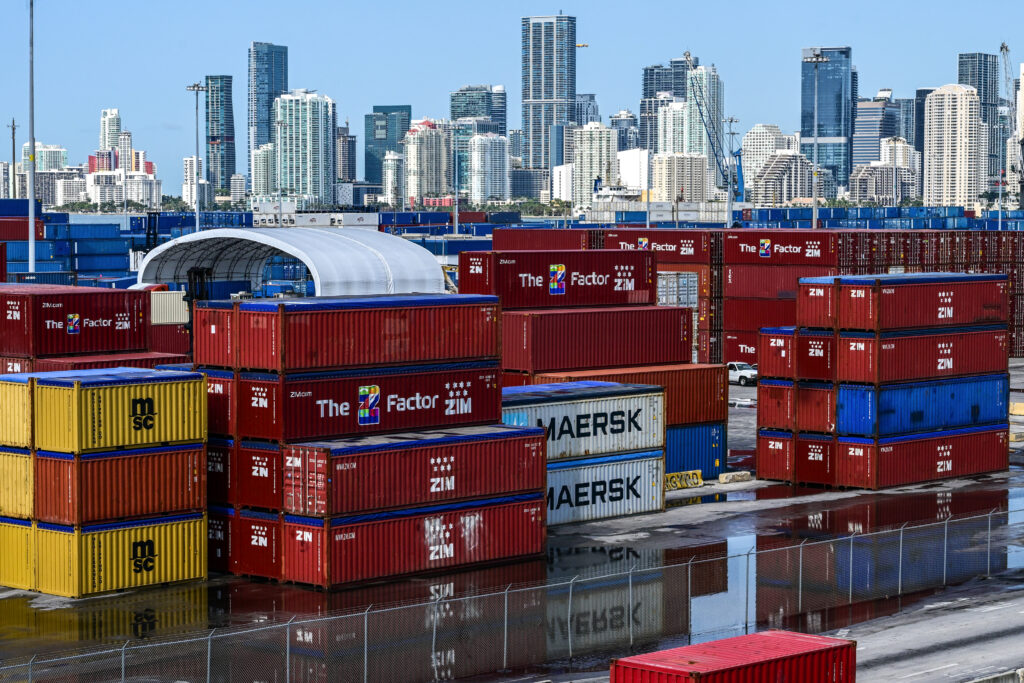
Stockpiling is the reflex response by firms to the imposition of tariffs, but with the rapidly-changing position of the Trump administration, companies are finding that it isn’t so straightforward this time around.Whether it’s the luxury, electronics or pharmaceutical sectors, US President Donald Trump’s unpredictability complicates the calculations of firms.Some companies didn’t wait for Trump’s April 2 announcement of massive “reciprocal” trade tariffs: they had already begun shipping more of their goods to the United States.In the end, Trump backed down quickly on the “reciprocal” tariffs, pausing them for 90 days except for China.That still left the global 10 percent tariff in place, as well as the 25 percent tariffs on European steel, aluminium and cars.French cosmetics firm Clarins didn’t hesitate and stepped up shipments to the United States at the beginning of the year.”We’ve built up three months of stocks, which represents $2 million in goods,” said Lionel Uzan, the head of Clarins’s US operations.With all of its products made in France, Clarins had few other options to mitigate the tariffs.- Discreet stockpiling -Even if they don’t all acknowledge it so openly, firms in many different sectors are stockpiling their products in the United States.In March, exports of Swiss watches to the United States jumped nearly 14 percent compared to the same month last year.More striking is Ireland, which plays host to a number of international pharmaceutical firms.Its exports to the United States jumped 210 percent in February to nearly 13 billion euros ($14.8 billion), with 90 percent of those being pharmaceutical products and chemical ingredients.Fermob, a French manufacturer of metal garden furniture that sells around 10 percent of its products in the United States, said it began planning for US tariffs once the result of the presidential election became known in November.It stepped up production in January and February.”We’ve sent around 30 percent of our extra stock to the United States,” said the company’s chief executive, Baptiste Reybier.That extra production has benefitted transportation firms.Lufthansa Cargo said it has seen in recent weeks “an increase in demand for shipments to the United States”.The trade war “has incited companies to accelerate certain stages in their supply chains”, it told AFP.”A similar trend was seen for the delivery of cars from the EU to the United States,” it said.The phenomenon also concerns US-made goods.The Japanese newspaper Nikkei reported recently that Chinese tech firms were snapping up billions of dollars of artificial intelligence chips made by US firm Nvidia in anticipation of Washington imposing export restrictions.- ‘Short-term approach’ -Stockpiling is not a solution, however, said analysts.Matt Jochim, a partner at consulting firm McKinsey who helps companies with supply chain issues, called stockpiling “a very short-term opportunistic” move.He said the practice has limits as tariffs are constantly changing and it isn’t always practicable.”In a lot of the electronics space, it’s also hard to do, because the technology changes so quickly, you don’t want to get stuck with inventory of chipsets or devices that are the prior version,” he said. Fermob said it was taking a measured approach to stockpiling.”Otherwise you’re replacing one risk with another,” the manufacturer’s Reybier said.”You have to finance stocks and there is also the risk of not having sent the right product.”Having a local subsidiary with warehouses also helped, Reybier added.”It’s too early to say whether we should have sent more or not.”
Trump trade war pushes firms to consider stockpiling
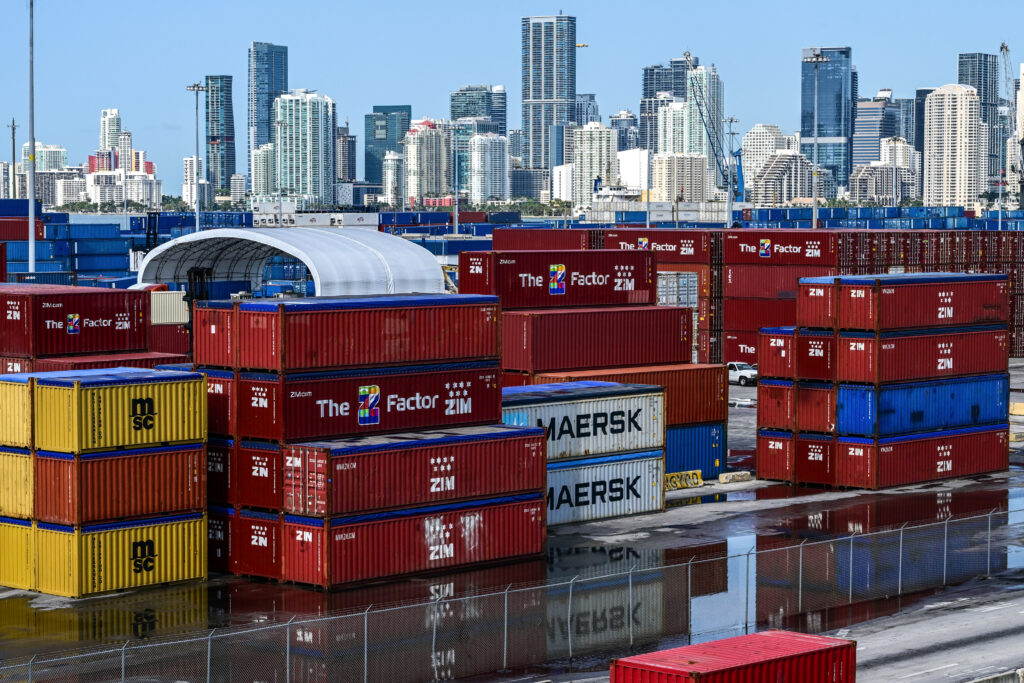
Stockpiling is the reflex response by firms to the imposition of tariffs, but with the rapidly-changing position of the Trump administration, companies are finding that it isn’t so straightforward this time around.Whether it’s the luxury, electronics or pharmaceutical sectors, US President Donald Trump’s unpredictability complicates the calculations of firms.Some companies didn’t wait for Trump’s April 2 announcement of massive “reciprocal” trade tariffs: they had already begun shipping more of their goods to the United States.In the end, Trump backed down quickly on the “reciprocal” tariffs, pausing them for 90 days except for China.That still left the global 10 percent tariff in place, as well as the 25 percent tariffs on European steel, aluminium and cars.French cosmetics firm Clarins didn’t hesitate and stepped up shipments to the United States at the beginning of the year.”We’ve built up three months of stocks, which represents $2 million in goods,” said Lionel Uzan, the head of Clarins’s US operations.With all of its products made in France, Clarins had few other options to mitigate the tariffs.- Discreet stockpiling -Even if they don’t all acknowledge it so openly, firms in many different sectors are stockpiling their products in the United States.In March, exports of Swiss watches to the United States jumped nearly 14 percent compared to the same month last year.More striking is Ireland, which plays host to a number of international pharmaceutical firms.Its exports to the United States jumped 210 percent in February to nearly 13 billion euros ($14.8 billion), with 90 percent of those being pharmaceutical products and chemical ingredients.Fermob, a French manufacturer of metal garden furniture that sells around 10 percent of its products in the United States, said it began planning for US tariffs once the result of the presidential election became known in November.It stepped up production in January and February.”We’ve sent around 30 percent of our extra stock to the United States,” said the company’s chief executive, Baptiste Reybier.That extra production has benefitted transportation firms.Lufthansa Cargo said it has seen in recent weeks “an increase in demand for shipments to the United States”.The trade war “has incited companies to accelerate certain stages in their supply chains”, it told AFP.”A similar trend was seen for the delivery of cars from the EU to the United States,” it said.The phenomenon also concerns US-made goods.The Japanese newspaper Nikkei reported recently that Chinese tech firms were snapping up billions of dollars of artificial intelligence chips made by US firm Nvidia in anticipation of Washington imposing export restrictions.- ‘Short-term approach’ -Stockpiling is not a solution, however, said analysts.Matt Jochim, a partner at consulting firm McKinsey who helps companies with supply chain issues, called stockpiling “a very short-term opportunistic” move.He said the practice has limits as tariffs are constantly changing and it isn’t always practicable.”In a lot of the electronics space, it’s also hard to do, because the technology changes so quickly, you don’t want to get stuck with inventory of chipsets or devices that are the prior version,” he said. Fermob said it was taking a measured approach to stockpiling.”Otherwise you’re replacing one risk with another,” the manufacturer’s Reybier said.”You have to finance stocks and there is also the risk of not having sent the right product.”Having a local subsidiary with warehouses also helped, Reybier added.”It’s too early to say whether we should have sent more or not.”
Continuity or rupture: what direction for the next pope?Sun, 27 Apr 2025 03:13:19 GMT
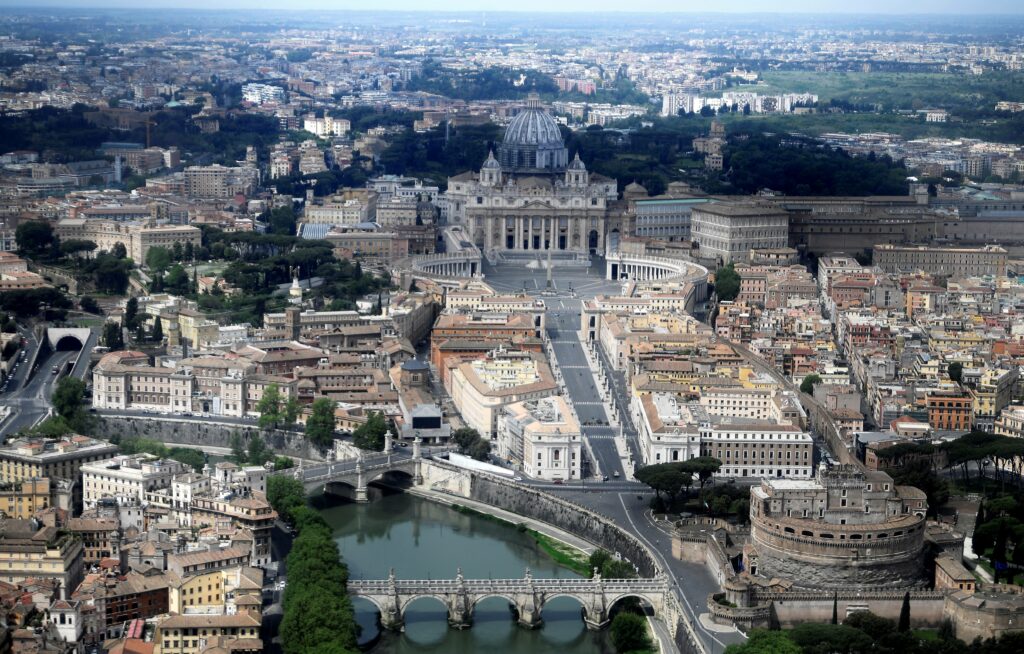
For years, traditionalists raged at Pope Francis’s liberal approach. The question now is whether his successor will walk the same path, or take the Catholic Church in a new direction.Cardinals will meet within days for a conclave to elect a new pontiff, sparking fevered speculation about how the next pope will guide the world’s 1.4 …
Continuity or rupture: what direction for the next pope?Sun, 27 Apr 2025 03:13:19 GMT Read More »
Chinese tea hub branches into coffee as tastes change
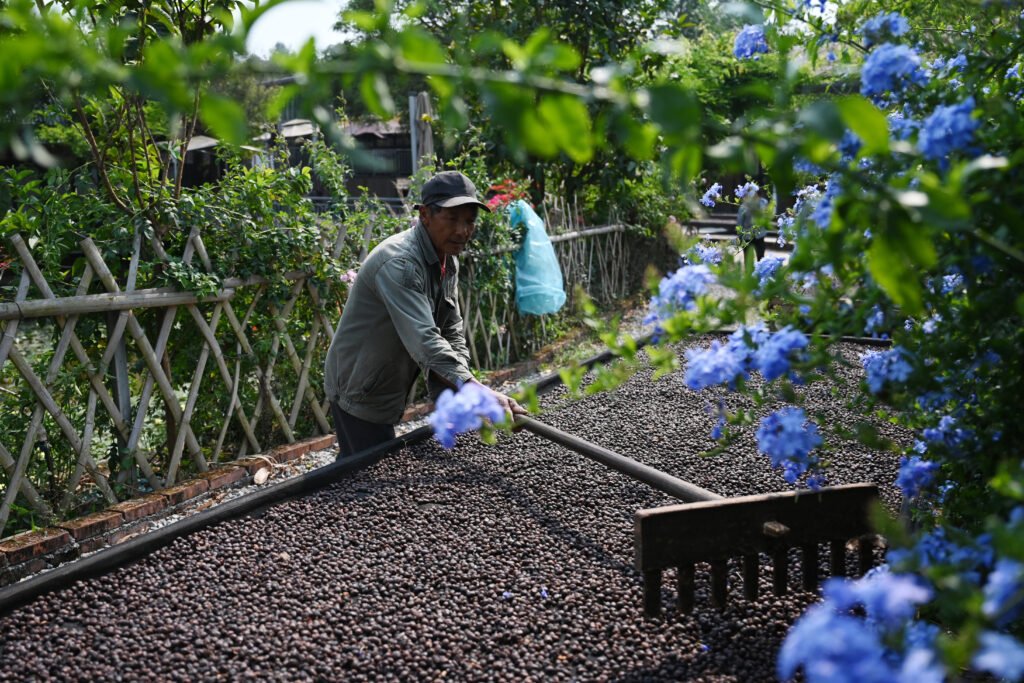
At a mountainside cafe in southwestern China, Liao Shihao brews handfuls of locally grown beans into steaming cups of coffee, a modern twist on the region’s traditional drink.For centuries, Pu’er in Yunnan province has given its name to a type of richly fermented tea — sometimes styled “pu-erh” — famous across East Asia and beyond.But as younger Chinese cultivate a taste for punchy espressos, frothy lattes and flat whites, growers are increasingly branching out into tea’s historic rival.”People are coming to try our hand-drip coffee… and more fully experience the flavours it brings,” Liao, 25, told AFP.”In the past, they mostly went for commercialised coffee, and wouldn’t dabble in the artisanal varieties,” he said.Liao’s family has run the Xiaowazi, or Little Hollow, coffee plantation for three generations.Nestled in a shady valley, spindly coffee trees line its steep hillsides, their cherry-like fruit drying on wooden pallets outside.When AFP visited this month, clusters of tourists sipped boutique brews in the airy cafe overlooking its verdant slopes.”It’s very good,” said Cai Shuwen, 21, as he perched on a bar stool lifting sample after sample to his lips.”Even though some beans are more astringent than I imagined, others have exceeded my expectations.”- Brewing success -Every year, Pu’er’s plantations sell tens of thousands of tons of coffee to major Chinese cities, according to government data.In metropolises such as Beijing and Shanghai, a thriving cafe scene has emerged in recent years, driven by people aged between 20 and 40.To Liao, a trained roaster and barista, coffee from his home region possesses “a creamy flavour with a silky, viscous mouthfeel”.Modern commercial plantations only sprang up in Pu’er in the 1980s, and the area is still better known for its centuries-old tea trade.Liao’s grandfather, Liao Xiugui, said “nobody knew anything about coffee” when he arrived in Pu’er a few decades ago.At the time, the older man was one of very few people in China who had studied coffee cultivation.But the region’s relatively high altitude and temperate climate were well-suited to the unfamiliar crop, the now 83-year-old told AFP.”The quality of the coffee we plant here is strong but not too bitter, floral but not too heady, and slightly fruity,” he added.Free from artificial pesticides and interspersed with other species for biodiversity, Little Hollow yields about 500 tons of raw coffee fruit per year.Liao Xiugui himself drinks two or three cups a day, and credits the caffeinated beverage for keeping him spry in his advanced years.”Drinking coffee can make you younger and healthier… and prevent ageing,” he smiled.”Also, everyone is tired at work these days… and they want to give their brains a boost.”- Richer pickings -China’s coffee output has risen dramatically in recent years, though it still lags far behind traditional powerhouses such as Brazil, Vietnam and Colombia.Yunnan, near three borders with Southeast Asian nations, accounts for virtually all of China’s coffee production, much of it concentrated in Pu’er.On a visit to Yunnan last month, President Xi Jinping said the province’s coffee “represents China”, according to state media.Keen to further expand the sector, officials have rolled out policies to improve production, attract investment and boost exports, according to government statements.They have also merged coffee production with tourism, dovetailing with a central government push to increase domestic consumption.Longtime farmer Yu Dun, 51, said she had opened new income streams with plantation tours, homestays and a restaurant fusing coffee with the cuisine of her native Dai ethnicity.Her prospects were bright, she said, adding that she also earned “10 times” more revenue from her beans since learning to process and roast them herself.”We used to say only rich people could drink coffee, but that’s all changed now,” she said.

Diplomacy likely to trump geography in choice of new popeSun, 27 Apr 2025 02:37:26 GMT
Pope Francis smashed the stereotypical profile for a pontiff, becoming the Catholic Church’s first leader from the Americas and the first non-European since the eighth century.Some hope his successor, to be chosen in a conclave of cardinals in the coming days or weeks, could come from Africa or Asia.The late Argentine pontiff championed far-flung regions …
Diplomacy likely to trump geography in choice of new popeSun, 27 Apr 2025 02:37:26 GMT Read More »

Diplomacy likely to trump geography in choice of new pope
Pope Francis smashed the stereotypical profile for a pontiff, becoming the Catholic Church’s first leader from the Americas and the first non-European since the eighth century.Some hope his successor, to be chosen in a conclave of cardinals in the coming days or weeks, could come from Africa or Asia.The late Argentine pontiff championed far-flung regions long overlooked by the Church, whether in his cardinal appointments or in his travels that strayed off the beaten path, from Mongolia to Papua New Guinea.A non-European pope would make sense, given that Catholicism is growing in Africa and Asia, while church attendance is dropping and growth near-stagnant in Europe.But in today’s increasingly complex world, analysts say an inclusive outlook and diplomatic skills will be key factors in the choice of the next pope, rather than a particular passport.The Church’s first pope, Saint Peter, came from Galilee, in today’s Israel, yet the long line of pontiffs in his wake have been chiefly Italian.Directly after being made pope on March 13, 2013, Francis joked that fellow cardinals had come “almost to the ends of the Earth” to find him.During his papacy, the former archbishop of Buenos Aires pushed the Church to be more inclusive of those from the so-called “peripheries”, whether geographical areas far from Rome, or long-ignored populations.Through his trips abroad and outspoken advocacy of excluded groups like migrants and the poor, Francis sought to bring new voices into the over 2,000-year-old institution.He actively sought out those “overlooked or under-represented in the universal Church”, R. Scott Appleby, a US historian of global religion, told AFP.But he warned “that doesn’t guarantee, of course, that the next pope will be from the margins, from a country that’s not as well-known, or is not Europe”.Appleby called it a “fool’s game” to try to predict the next pope’s nationality.- Political ‘counterpoint’ -Those betting on a non-European pope point to the fact that Francis has named the majority of the cardinals who will choose his successor, with many from under-represented regions.But Europe still has the largest voting bloc, with 53 cardinals, compared to 27 cardinal-electors from Asia and Oceania, 21 from South and Central America, 16 from North America and 18 from Africa, according to the Vatican.Some of those touted to succeed Francis also hail from outside the Church’s traditional bastions of power — notably Manila’s Luis Antonio Tagle or Ghana’s cardinal, Peter Turkson.Cardinals from Myanmar and the Democratic Republic of Congo are also cited as contenders, in an admittedly wide field.A pope from a poorer country brings a different perspective that would stand out in a world of strong and vocal Western leaders.Such a pontiff would have “a first-hand experience of the poor… a country in a region that is not ‘in the game'”, Appleby said.”And that lends a counterpoint to what have been the power centres on the political front. It’s important for the Church to not simply replicate the power centres of the world.”The conclave will be looking “for a cardinal capable of being a point of reference for many, according to different sensitivities”, added Roberto Regoli, an Italian historian at the Pontifical Gregorian University.- ‘World on fire’ -But experts agree that a papal contender’s ability to unite the Church in an increasingly fractious geopolitical context may be the central deciding point.”The new pope will have to redesign the Church in a world on fire,” Alberto Melloni, an Italian professor of the history of Christianity, told the Corriere di Bologna newspaper this week.Francois Mabille, director of France’s Geopolitical Observatory of Religion (IRIS), said if cardinals decide geopolitics is the “criterion of choice”, the Vatican’s current chief diplomat, Cardinal Pietro Parolin, “may fit the bill perfectly, even if European and Italian”.Appleby concurred: “It’s hard to imagine that the next pope can ignore the tumult and the challenges in the world.”They’ll be thinking: ‘Boy, the world’s in crisis… Who among us can emerge as someone of the proper charisma and talent to lead the Church at this point?'”
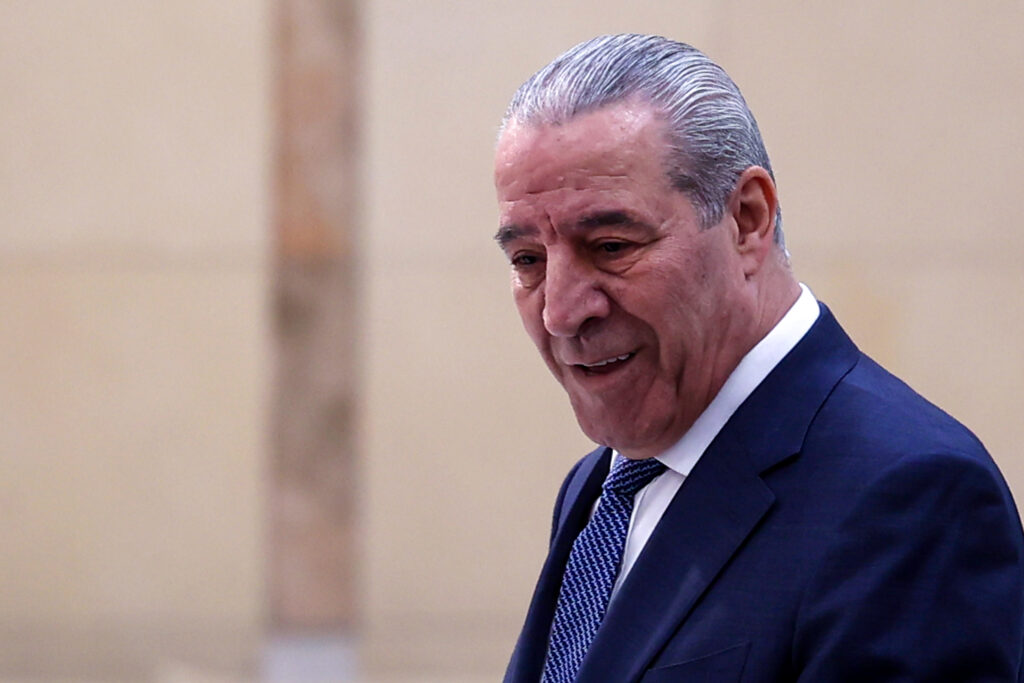
Le président palestinien Mahmoud Abbas se donne un possible successeur
Le président palestinien Mahmoud Abbas, 89 ans, a désigné samedi un proche conseiller, Hussein al-Cheikh, au poste nouvellement créé de vice-président de l’Organisation de libération de la Palestine (OLP), faisant de lui son possible successeur.Ce poste a été formellement établi jeudi, à l’initiative du même Mahmoud Abbas, lors d’une convention à Ramallah, en Cisjordanie occupée, alors que la communauté internationale appelle de longue date l’OLP à se réformer.M. Abbas préside également l’Autorité palestinienne que plusieurs pays arabes et occidentaux voudraient voir jouer un rôle dans la gouvernance de la bande de Gaza après la guerre qui y fait rage depuis octobre 2023.”Le président palestinien Mahmoud Abbas a nommé Hussein al-Cheikh au poste de numéro deux au sein de la direction de l’Organisation de libération de la Palestine”, a déclaré à l’AFP Wasel Abou Youssef, membre du Comité exécutif de l’OLP.Fondée en 1964, l’OLP est habilitée à négocier et conclure des traités internationaux au nom du peuple palestinien et rassemble la majorité des mouvements politiques palestiniens mais pas le mouvement islamiste Hamas, qui s’est emparé du pouvoir à Gaza en 2007, ni son allié, le Jihad islamique.Le Hamas a vivement critiqué l’initiative de M. Abbas. “Le peuple palestinien n’est pas un troupeau à qui on peut imposer des dirigeants”, a-t-il déclaré dans un communiqué, soulignant que “la légitimité appartient au seul peuple palestinien”. Selon Aref Jaffal, directeur du centre Al-Marsad pour le suivi électoral, la création du poste de vice-président vise à “préparer la succession d’Abbas”.”Le système politique palestinien est déjà dans un état lamentable, donc je pense que toutes ces dispositions sont un prélude à la désignation d’un successeur à Abbas”, a-t-il dit à l’AFP cette semaine.Agé de 64 ans, Hussein al-Cheikh est un vétéran du mouvement Fatah de Mahmoud Abbas et considéré comme un proche de ce dernier. Il a passé plus de dix ans dans les prisons israéliennes à la fin des années 1970 et au début des années 1980, période durant laquelle il a appris l’hébreu. En 2022, il a été nommé secrétaire général du Comité exécutif de l’OLP. Il est aussi le chef de son département des négociations, portefeuille sensible illustrant sa proximité avec M. Abbas.Ce dernier l’a également récemment nommé à la tête d’un comité supervisant les missions diplomatiques palestiniennes à l’étranger.- “Pression extérieure” -M. Abbas avait annoncé son intention de créer un poste de vice-président en mars lors d’un sommet au Caire sur l’avenir de la bande de Gaza après la guerre en cours entre Israël et le Hamas.Cette innovation “n’est pas une mesure de réforme, mais plutôt une réponse à une pression extérieure”, a commenté Hani al-Masri, chercheur au Centre palestinien de recherche politique et d’études stratégiques.Selon lui, “ce qui est nécessaire”, c’est un poste de vice-président au sein l’Autorité palestinienne elle-même, “à qui les pouvoirs pourraient être transférés”.Les bailleurs de fonds de l’Autorité palestinienne –qui exerce un contrôle relatif sur une partie des Territoires palestiniens– réclament de longue date des réformes au sein de celle-ci et de l’OLP.Le ministère saoudien des Affaires étrangères a salué samedi “ces mesures de réforme (qui) contribueront à renforcer les efforts politiques palestiniens” vers un Etat indépendant “avec les frontières de 1967 et Jérusalem-Est pour capitale”.M. Abbas préside l’OLP depuis 2004 et a été élu président de l’Autorité palestinienne début 2005, quelques mois après la mort du dirigeant historique des Palestiniens Yasser Arafat. Il n’a jamais quitté le poste, aucune nouvelle élection présidentielle n’ayant été organisée depuis.A sa mort, le vice-président de l’OLP sera probablement appelé à devenir le chef par intérim de l’organisation ainsi que de l’Etat de Palestine, reconnu par près de 150 pays.Plusieurs factions palestiniennes opposées à la création du poste de vice-président s’étaient retirées de la convention cette semaine, y voyant un signe d’ingérence étrangère.Depuis l’attaque sanglante perpétrée par le Hamas, son rival, contre Israël le 7 octobre 2023, plusieurs bailleurs conditionnent plus fermement leur aide à l’Autorité palestinienne, aujourd’hui au bord de la faillite, à des réformes politiques et institutionnelles.Mercredi, M. Abbas a expliqué que la création du poste permettrait de renforcer les institutions palestiniennes et aiderait à une plus large reconnaissance de l’Etat palestinien. Certains observateurs y voient un stratagème visant à donner l’illusion d’une moindre concentration des pouvoirs à la tête de l’OLP, une autre demande de la communauté internationale.