Dreams on hold for Rohingya children in Bangladesh camps

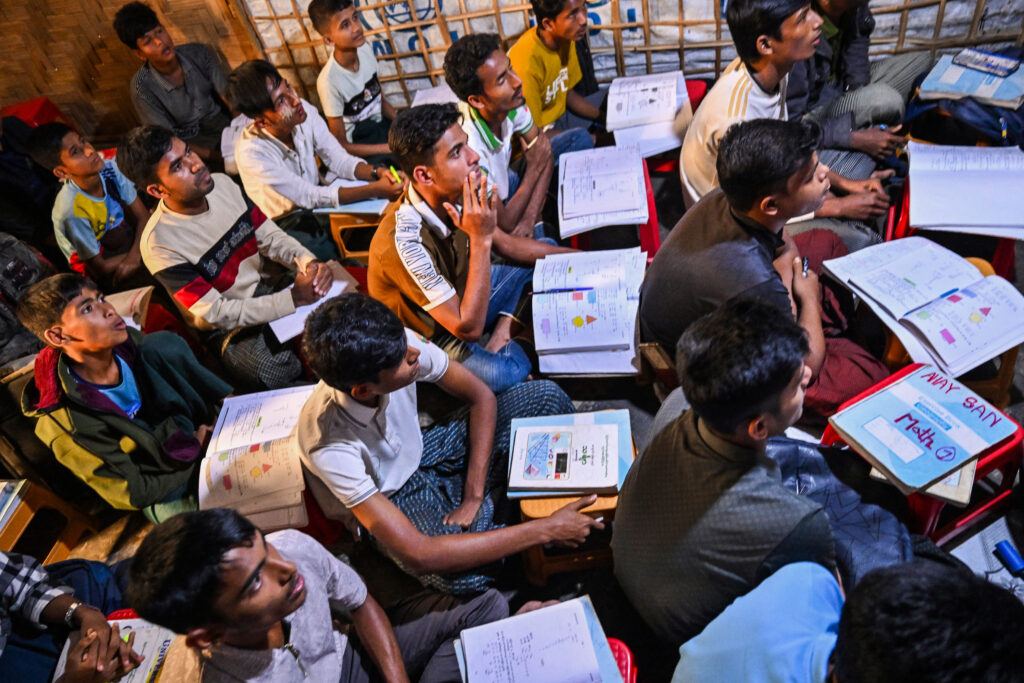
Books tucked under their arms, children file into a small classroom in Bangladesh’s vast refugee camps, home to more than a million Rohingya who have fled neighbouring Myanmar.”They still dream of becoming pilots, doctors or engineers,” said their teacher Mohammad Amin, standing in front of a crowded schoolroom in Cox’s Bazar.”But we don’t know if they will ever reach their goals with the limited opportunities available.”Around half a million children live in the camps housing the waves of Rohingya who have escaped Myanmar in recent years, many during a brutal military crackdown in 2017.The campaign, which saw Rohingya villages burned and civilians killed, is the subject of a genocide case at the United Nations’ top court in The Hague, where hearings opened on Monday- ‘Severe shortage’ -In the aftermath of the 2017 exodus, international aid groups and UNICEF, the UN’s children’s agency, rushed to open schools.Determined to avoid permanently settling refugees it said it lacked the resources to absorb, the Bangladeshi government consistently opposed enrolling Rohingya children in national schools and barred them from studying in Bangla, the national language.By 2024, UNICEF and its partners were running more than 6,500 learning centres across the Cox’s Bazar camps, educating up to 300,000 children.But the system is severely overstretched — a situation worsened by cuts to US aid under President Donald Trump, which slashed funding and forced sweeping closures or scale-backs.”The current system provides three hours of instruction per day for children,” said Faria Selim of UNICEF. “The daily contact hours are not enough.”Khin Maung, a member of the United Council of Rohingya which represents refugees in the camps, said the education on offer leaves students ill-prepared to re-enter Myanmar’s school system should they return.”There is a severe shortage of teachers in the camps,” he said.Hashim Ullah, 30, is the only teacher at a primary school run by an aid agency.”I teach Burmese language, mathematics, science and life skills to 65 students in two shifts. I am not an expert in all subjects,” he told AFP.Such shortcomings are not lost on parents.For them, education represents their children’s only escape from the risks that stalk camp life — malnutrition, early marriage, child labour, trafficking, abduction or forced recruitment into one of the armed groups in Myanmar’s civil war.As a result, some families supplement the aid-run schools with extra classes organised by members of their own community.”At dawn and dusk, older children go to community-based high schools,” said father-of-seven Jamil Ahmad.”They have good teachers,” and the only requirement is a modest tuition fee, which Jamil said he covered by selling part of his monthly food rations.”Bangladesh is a small country with limited opportunities,” he said. “I’m glad that they have been hosting us.”- ‘Justice and peace’ -Fifteen-year-old Hamima Begum has followed the same path, attending both an aid-run school and a community high school.”I want to go to college,” she said. “I am aiming to study human rights, justice, and peace — and someday I will help my community in their repatriation.”But such schoolsare far too few to meet demand, especially for older children.A 2024 assessment by a consortium of aid agencies and UN bodies concluded that school attendance falls from about 70 percent among children aged five to 14, to less than 20 percent among those aged 15 to 18.Girls are particularly badly affected, according to the study.Even for those who stay enrolled, academic standards remain low.”We organised a mid-year exam this year, and 75 percent of high school students failed,” Khin Maung said.Jaitun Ara, 19, is therefore an exception.Having arrived in Cox’s Bazar at the age of 12, she has now secured a place at the Asian University for Women in Chittagong on a support programme to prepare for degree studies.But she doubts many others will be able to follow her path.”Families can barely manage food,” she said. “How would they spend money on their children’s education?”

Canada’s Carney in Beijing for trade talks with Chinese leaders

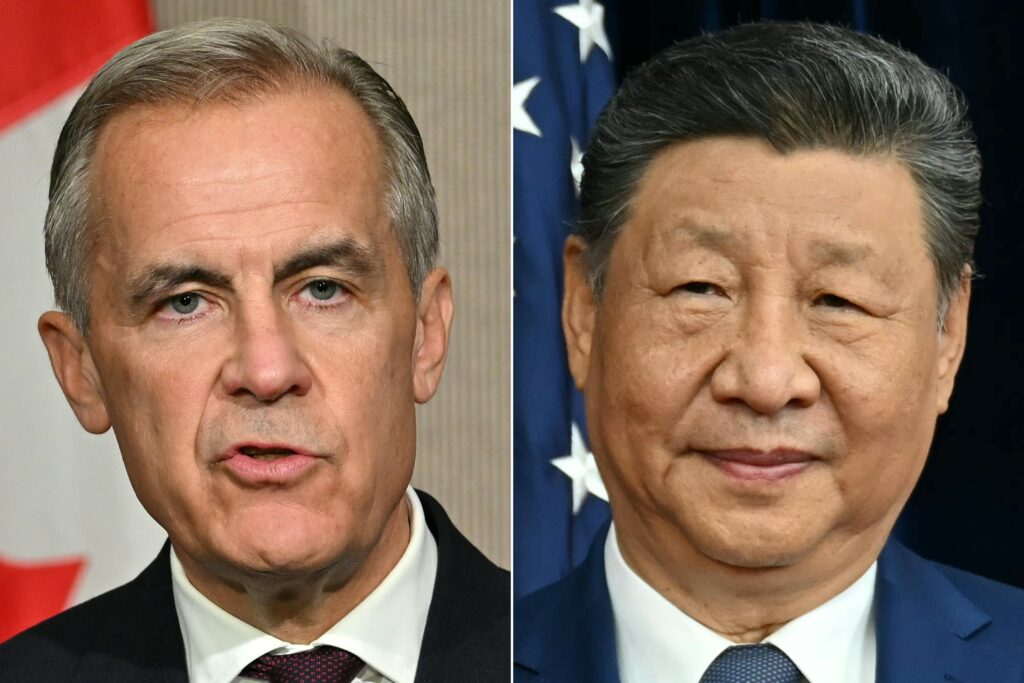
Canadian Prime Minister Mark Carney is meeting with top Chinese leaders in Beijing on Thursday, hoping to repair a long acrimonious relationship as he pulls away from traditional ally the United States.Carney is the first Canadian leader to visit China in eight years and has said the two countries are at a “turning point” in their strained relations.Following President Donald Trump’s aggressive tariffs on Canadian products, Carney has sought to reduce his country’s economic reliance on its main market, the United States.Video from Chinese state media showed Carney arriving in Beijing for his four-day state visit late Wednesday evening to a red carpet welcome.He is scheduled to meet with Chinese President Xi Jinping and Premier Li Qiang, among other government and business leaders for trade talks.Ties between the two nations withered in 2018, when Canada arrested the daughter of Huawei’s founder on a US warrant, and China’s retaliatory detention of two Canadians on espionage charges.- ‘Right track’ -The two countries imposed tit-for-tat tariffs on each other’s exports in the years that ensued, with China also being accused of interfering in Canada’s elections.Caught in the tariffs crossfire were Chinese electric vehicles along with Canadian canola oil and other agricultural goods.The last time Chinese and Canadian leaders formally met was when then prime minister Justin Trudeau visited Beijing in 2017.But there have been signs of warming ties under Carney, who met Xi on the sidelines of an APEC summit in October.China has shown a willingness to rekindle the relationship, with Xi telling Carney after their meeting that it has “shown a recovery” towards “the right track”.Officials from the two countries have been in talks to lower tariffs, but an agreement has yet to be reached.Beijing, meanwhile, said this week it “attaches high importance” to Carney’s visit.- Pivot from US -Ottawa has traditionally been hawkish towards Beijing, positioning itself in alliance with the United States.But Canada has been hit especially hard by Trump’s steep tariffs on steel, aluminium, vehicles and lumber, prompting a change of heart.In October, Carney said Canada should double its non-US exports by 2035 to reduce reliance on the United States.But the United States remains far and away its largest market, buying around 75 percent Canadian exports in 2024, according to Canadian government statistics.While Ottawa has stressed that China is Canada’s second-largest market, it lags far behind, buying less than four percent of Canadian exports in 2024.Carney will be looking to raise that figure, with his office saying the visit aims to “elevate engagement on trade, energy, agriculture, and international security”.

Hosts Morocco set up Senegal AFCON final showdownThu, 15 Jan 2026 01:25:49 GMT

Hosts Morocco will play Sadio Mane’s Senegal in this weekend’s Africa Cup of Nations final after both emerged victorious in tense last-four ties on Wednesday as Mohamed Salah’s dreams of winning the title were again dashed.Morocco beat Nigeria 4-2 on penalties after their semi-final showdown of few chances in capital Rabat finished 0-0 at the …

Hosts Morocco set up Senegal AFCON final showdownThu, 15 Jan 2026 01:25:49 GMT Read More »

Trump embraces AI deepfakes in political messaging

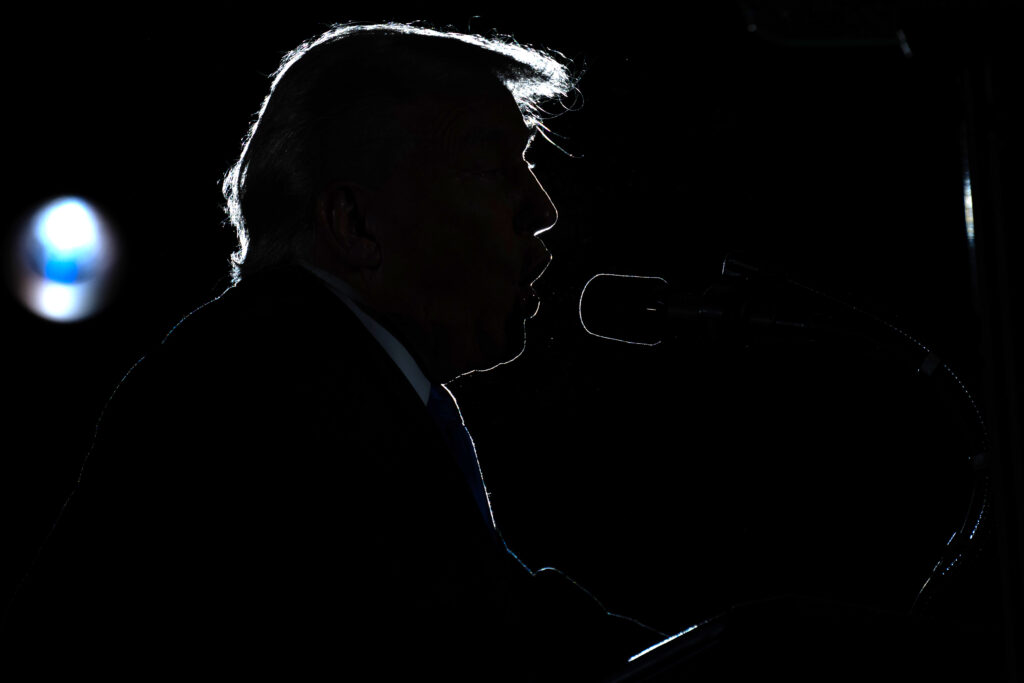
From playing football in the Oval Office to sipping cocktails on a sun lounger in Gaza and attacking critics from a fighter jet, Donald Trump has become the first US president to deploy AI-generated imagery as a key tool of political communications.In the first year of his second term in the White House, Trump ramped up his use of hyper-realistic but fabricated visuals on Truth Social and other platforms, often glorifying himself while lampooning his critics.Underscoring the strategy’s potential appeal to younger voters, similar AI-driven messaging has also been adopted by other arms of the Trump administration as well as by some of the president’s rivals.One of Trump’s posts depicts him playing football on the Oval Office’s carpeted floor with Cristiano Ronaldo, whom he describes as a “GREAT GUY” who is “really smart and cool.”Another AI post features Trump and Israeli Prime Minister Benjamin Netanyahu sunbathing at a lavish resort, with “Trump Gaza” emblazoned on a sign in the background.The clip followed Trump’s proposal last year to turn Gaza into the “Riviera of the Middle East,” a suggestion that sparked widespread outrage. Trump or the White House have similarly shared AI-made images showing the president dressed as the pope, roaring alongside a lion, and conducting an orchestra at the Kennedy Center, a prestigious arts complex.”Welcome to the United States’ first White House administration to embrace and use imagery generated by artificial intelligence in everyday communication,” said a report by the nonprofit media institute Poynter.”With AI, Trump quickly deploys stereotypes and false narratives in entertaining posts that memorably distill complicated issues into their basest political talking points, regardless of factual basis.”- ‘Capture attention’ -Trump has reserved the most provocative AI posts for his rivals and critics, using them to rally his conservative base.Last year, he posted an AI video of former president Barack Obama being arrested in the Oval Office and appearing behind bars in an orange jumpsuit.Later, he posted an AI clip of House minority leader Hakeem Jeffries — who is Black — wearing a fake mustache and a sombrero. Jeffries slammed the image as racist.”For someone like Trump, unregulated generative AI is the perfect tool to capture attention and distort reality,” Nora Benavidez, senior counsel at the advocacy group Free Press, told AFP.”Obama was never arrested in the Oval Office. But calling Trump out for telling this lie won’t phase him or his followers. A leader who lies without any truth testing means that facts are contingent on Trump’s approval.”- ‘Nonstop political campaign’ -Analysts say the AI messaging amounts to a strategy of campaigning through trolling, a tactic that could resonate with voters ahead of this year’s midterm elections.”While it would in many ways be desirable for the president to stay above the fray and away from sharing AI-generated images, Trump has repeatedly demonstrated that he sees his time in office as a nonstop political campaign,” Joshua Tucker, co-director of the New York University Center for Social Media and Politics, told AFP.”We should simply see his use of AI-generated political images as just one of many tools — his text- based social media posts often being another — he uses to continue this campaign.”In a study published last month by the scientific journal Nature, academics including Cornell University’s David Rand reported that human-AI dialogues may have a substantive effect on voters’ electoral decisions.Back-and-forth exchanges with AI tools advocating for political candidates shifted opposition voters’ preferences substantially in the United States, Canada and Poland, the study said.In a sign of its potency, Trump’s AI strategy has been mimicked by other departments of his administration and his critics.Trump’s health chief Robert F. Kennedy Jr — under fire over medical misinformation — recently promoted a “Make Santa Healthy Again” Christmas campaign using an AI video while the US  Immigration and Customs Enforcement (ICE) deployed AI imagery in its immigration crackdown.Last month, California Governor Gavin Newsom, a Democrat, trolled the president by posting an AI video on X depicting Trump and two senior administration officials in handcuffs.”It’s cuffing season,” the video declared.

A year of Trump: US health policy reshaped in RFK Jr’s image

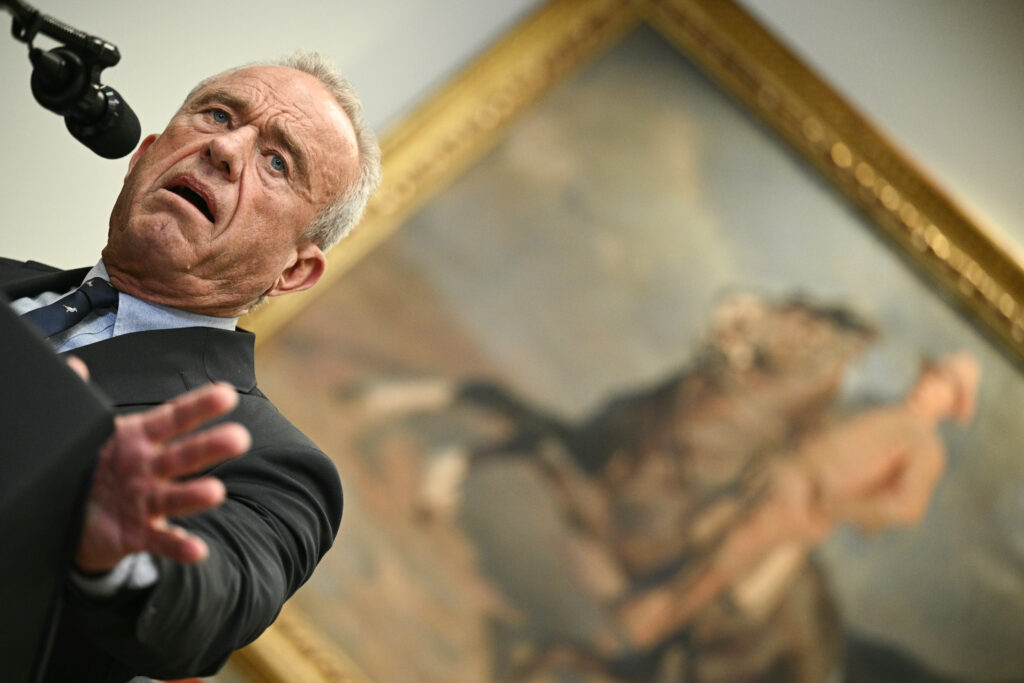
Robert F. Kennedy Jr has long been known for vaccine skepticism and fringe views that bled into conspiracy — ideology he is now baking into the US public health system.In only a year since Donald Trump returned to the White House, experts say his health secretary’s reforms have stoked confusion over longstanding medical advice and diminished the global standing of US institutions, with potential ripple effects for decades.”The impact is real. The impact is certainly being seen across the board. And I think the scariest part is, we’re only in the first year,” epidemiologist Syra Madad told AFP.Former Democrat Kennedy — who allied with Trump after his own 2024 presidential campaign sputtered — has mostly won praise from his “Make America Healthy Again” (MAHA) movement.But he has sparked outrage among medical groups, and some Republicans, with moves that have sown doubt about long-proven vaccine safety, slashed research funding, and weakened disease prevention programs, even as the US experiences its worst measles outbreak in years.Kennedy stacked a key immunization advisory panel with figures whose anti-vaccine sentiment mirrors his own, and overhauled the pediatric schedule of shots to recommend fewer.”I’ve never seen anything like this,” said Lawrence Gostin, a Georgetown professor who has worked in public health law and policy for decades.Kennedy governs “through hunch, instinct and social media, not through science,” Gostin told AFP.At a recent event celebrating the rollout of new federal dietary guidelines, Kennedy told a crowd of supporters that “trusting the experts is not a feature of science” but rather “a feature of tyranny.””People in authority lie,” the government official continued, adding that people must act as “the CEOs of our own health.”The sentiment is part of a broad effort to not only sow distrust but to prioritize “individual choice” over “population protection,” said Madad, who is the biopreparedness officer for New York’s municipal health and hospitals network.- ‘Dysfunctional’ -MAHA adherents have broadly praised Kennedy’s initial efforts.And some public health advocates have found cautious optimism in a limited number of federal health priorities, even if they criticized the methods. Trump and Kennedy have sought to strike deals with pharma companies, urging them to voluntarily lower common drug prices along with appetite-suppressing medications.And in a rare alignment with mainstream scientific consensus, the administration vowed to remove synthetic dyes from food — primarily through voluntary compliance from industry.But Scott Faber of the Environmental Working Group said he doesn’t see such strategies panning out.”There’s a graveyard of voluntary industry initiatives that shows that handshake agreements and industry commitments are no better than the paper they’re written on,” Faber told AFP.In the case of food coloring, Faber said those agreements were made possible because the Republican-leaning West Virginia in 2025 enacted a broad ban on synthetic dyes, setting a new standard.Many nutritionists also met with enthusiasm new dietary guidelines that strongly discouraged added sugars and highly processed foods — though an endorsement of red meat and full-fat dairy along with vague advice on limiting alcohol triggered worry.Nutritionist Marion Nestle told AFP that within the wider political context, such advice carries less weight.”Eating real food is not going to make America healthy again in the face of a public health system that is completely dysfunctional,” she told AFP.- ‘Generational trauma’ -Americans, especially parents, have been left with conflicting information and confusion.Pew Research Center polling showed 63 percent of Americans still have high confidence that childhood vaccines are effective at preventing severe illness. But it found uncertainty over safety testing, especially among Republicans.Rebuilding confidence in medical institutions could be difficult, Madad said.”This is going to be generational trauma.”Gostin said the United States has gone from a global leader in scientific innovation to a “laughingstock.””It’s impossible to overstate how much our reputation is dropped.”Researchers, he said, are leaving the government, the country or even the field — potentially creating major gaps in the development pipeline for treatments of deadly diseases.”There’s every reason to have deep concerns about the future,” Gostin said.