


Polls open in Australian vote swayed by inflation, Trump
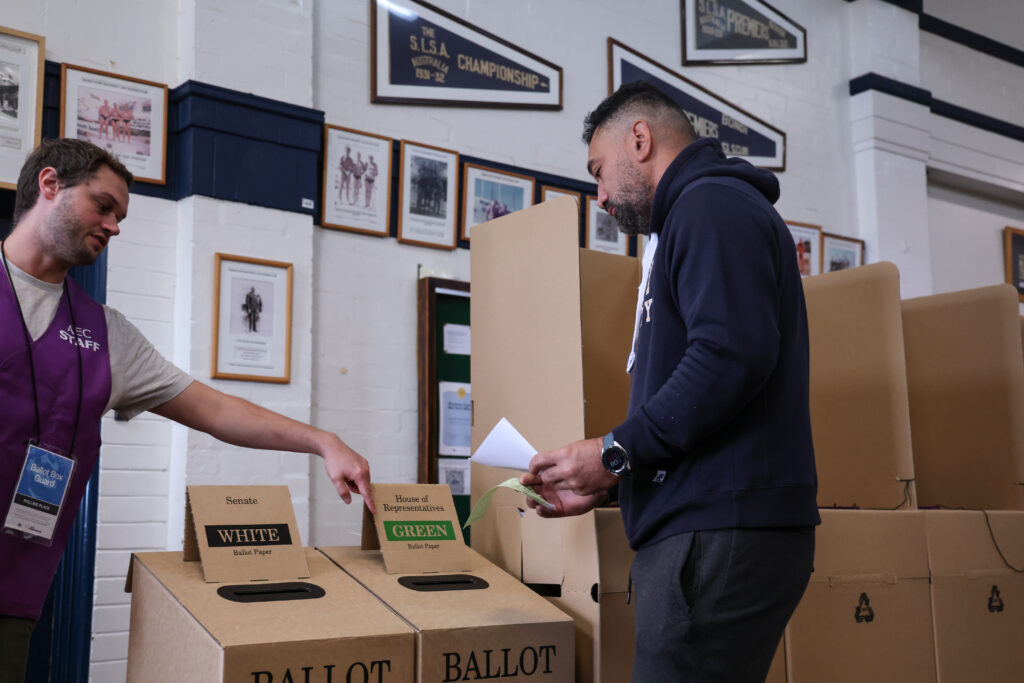
Australians began voting Saturday in a bitterly contested general election, deciding a contest shaped by living costs, climate anxiety and US President Donald Trump’s tariffs.From dusty desert towns to sun-splashed harbour cities, millions of Australians will choose between left-leaning incumbent Prime Minister Anthony Albanese and conservative challenger Peter Dutton.The almost universal consensus across a slew of opinion polls leading up to election day was that Albanese’s governing Labor Party would win a second term. “I’ll leave nothing on the field over the next three years if I’m re-elected as Australia’s prime minister,” Albanese told Channel Seven on Saturday morning. “I’m hopeful that we receive a majority government today so that we can build on the foundations that we’ve laid. Australia has turned the corner.”The first polls opened at 8:00 am (2200 GMT) on Australia’s east coast, to be followed later by the country’s western cities and far-flung island territories.A total of 18.1 million voters have enrolled for the election. More than a third of them have cast an early ballot, the election authority said.Voting is compulsory, enforced with fines of Aus$20 (US$13), leading to turnouts that top 90 percent.A result could come as soon as Saturday night, unless the vote is very tight.Albanese, 62, has promised to embrace renewable energy, tackle a worsening housing crisis, and pour money into a creaking healthcare system. – Trump slump -Liberal Party leader and former police officer Dutton, 54, wants to slash immigration, crack down on crime and ditch a longstanding ban on nuclear power. Some polls showed Dutton leaking support because of US President Trump, who he praised this year as a “big thinker” with “gravitas” on the global stage. “I mean, Donald Trump is as mad as a cut snake, and we all know that,” said voter Alan Whitman, 59, before casting his ballot on Saturday. “And we’ve got to tiptoe around that.”As Australians soured on Trump, both Dutton and Albanese took on a more pugnacious tone. “If I needed to have a fight with Donald Trump or any other world leader, to advance our nation’s interest, I’d do it in a heartbeat,” Dutton said in April. Albanese condemned Trump’s tariffs as an act of “economic self-harm” and “not the act of a friend”.Economic concerns have dominated the contest for the many Australian households struggling to pay inflated prices for milk, bread, power and petrol. “The cost of living — it’s extremely high at the moment. So, taxes as well, is also another really big thing. Petrol prices, all the basic stuff,” human resources manager Robyn Knox told AFP in Brisbane.Small business owner Jared Bell had similar concerns.”Our grocery shops are definitely way more expensive than they were a couple years ago,” he said.- Campaign stumbles -Both Albanese and Dutton tried to tout themselves as men of the people but were stumped when asked the price of eggs in a nationally televised debate. Coal-mining superpower Australia will choose between two leaders with sharply contrasting ideas on climate change and emissions reduction. Albanese’s government has embraced the global push towards decarbonisation, warning of a future in which iron ore and polluting coal exports no longer prop up the economy.Dutton’s signature policy is a US$200 billion scheme to construct seven industrial-scale nuclear reactors, doing away with the need to ramp up renewables.The 36-day campaign was a largely staid affair but there were a few moments of unscripted levity.Albanese tumbled backwards off the stage at a heaving campaign rally, while Dutton drew blood when he hit an unsuspecting cameraman in the head with a stray football.It remains to be seen whether Albanese or Dutton will command an outright majority, or whether they are forced to cobble together a coalition with the support of minor parties.Growing disenchantment among voters has emboldened independents pushing for greater transparency and climate progress.Polls have suggested 10 or more unaligned crossbenchers could hold the balance of power — making a rare minority government a distinct possibility.
Israel launches new Syria strikes amidst Druze tensions
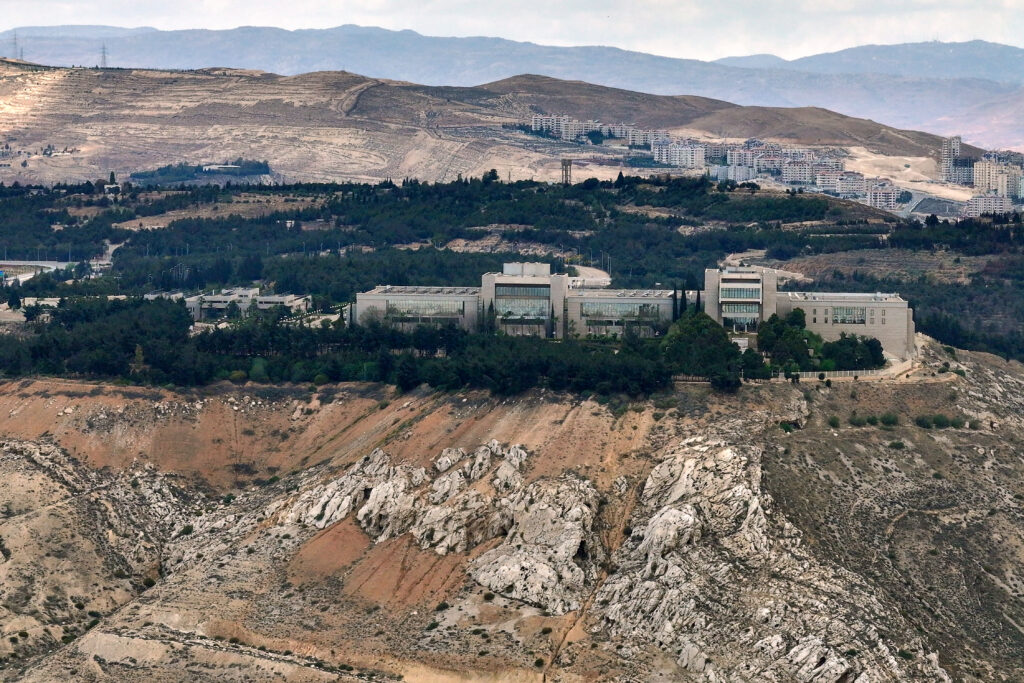
Syria’s Islamist rulers on Friday denounced an air strike near the presidential palace as a “dangerous escalation”, as Israel reportedly launched its heaviest barrage this year on the country.Israel said the Damascus strike was a “clear message” to the government not to harm the Druze minority, following recent sectarian clashes.Hours later, Israel staged more than 20 strikes on military targets across Syria, according to the war monitor, the Syrian Observatory for Human Rights.The strikes came after Druze clerics and armed factions reaffirmed their loyalty to Damascus. They urged the new authorities to appoint local officials to government posts in Sweida province, heartland of the Druze religious group.Their statement followed fighting between Druze fighters and Syrian forces, including government-affiliated groups that killed more than 100 people in Jaramana and Sahnaya near Damascus and in Sweida, the Observatory said.An apparent drone strike killed four Druze fighters at a farm in Sweida, the Observatory said. It was unclear who staged the strike, but Syria’s official SANA news agency said it was an Israeli attack.SANA later reported Israel airstrikes near Damascus and in the west, at Latakia and Hama — where four people were injured — and in Deraa in the south.The observatory reported more than 20 night time Israeli strikes overall on the regions, calling them the heaviest since the start of the year.- Israel sends ‘message’ -The early morning blast in the presidential palace area of Damascus was heard across the city.Israeli military spokesman Avichay Adraee said “warplanes attacked… the area near Ahmed Hussein al-Sharaa’s palace in Damascus”, referring to the interim president.In a joint statement, Israeli Prime Minister Benjamin Netanyahu and Defence Minister Israel Katz called it a “clear message” to Syria’s new rulers.”We will not allow forces to be sent south of Damascus or any threat to the Druze community,” they said.Syria’s presidency called the strike “a dangerous escalation against state institutions”, and accused Israel of destabilising the country.UN Secretary-General Antonio Guterres condemned the Israeli strike as a violation of Syria’s sovereignty, his spokesman said.The UN-mandated Independent Commission of Inquiry on Syria expressed concern at the “deadly clashes with sectarian dimensions”, and said Israeli air strikes increased the risk to civilians.After this week’s clashes a deal to de-escalate was agreed between Druze representatives and the government, prompting troop deployments in Sahnaya and tighter security around Jaramana.Syrian officials said the agreement also included the immediate surrender of heavy weapons.An AFP photographer saw troops taking over checkpoints from Druze gunmen in Jaramana, although no handover of weapons was witnessed.- ‘Outlaw groups’ -Qatar, a backer of Syria’s new rulers, and Saudi Arabia condemned Israel’s “aggression”. A German foreign ministry statement said: “Syria must not become the venue for regional tensions to be played out.”Israel has attacked hundreds of military sites since Islamist-led forces deposed longtime president Bashar al-Assad in December.It has also sent troops into the demilitarised buffer zone that used to separate Israeli and Syrian forces on the Golan Heights.Israel launched strikes near Damascus on Wednesday and threatened more if violence against the Druze continued.The unrest was sparked by the circulation of an audio recording attributed to a Druze citizen and deemed blasphemous. AFP was unable to confirm its authenticity.Syria’s government said “outlaw groups” were behind the violence, but the Observatory and Druze residents said forces affiliated with the new authorities attacked Jaramana and Sahnaya and clashed with Druze gunmen.- ‘Genocidal campaign’ -Mohamad Halawa, a security official in Damascus province, said there was a security cordon around Jaramana where residents would be “under the umbrella of the state and the judiciary”.In Sweida, religious authorities and military factions said after a meeting that they are “an inseparable part of the united Syrian homeland”, and rejected “division, separation or secession”.SANA said security forces were being sent to Sweida to “maintain security”.That move came after Sheikh Hikmat al-Hijri, a Druze spiritual leader, on Thursday condemned what he called a “genocidal campaign” against his people.Syria’s new authorities have roots in the Al-Qaeda jihadist network. They have vowed inclusive rule in the multi-confessional, multi-ethnic country, but must also contend with internal pressures from radical Islamists.On Friday, Sharaa met Lebanese Druze leader Walid Jumblatt, who has urged the minority community in Syria to reject “Israeli interference”.The latest violence follows massacres of Alawites in March, when the Observatory said the security forces and their allies killed more than 1,700 civilians.It was the worst bloodshed since the overthrow of Assad, who is from that minority community.The government accused Assad loyalists of sparking the violence, and launched an inquiry.
US hiring better than expected despite Trump uncertainty
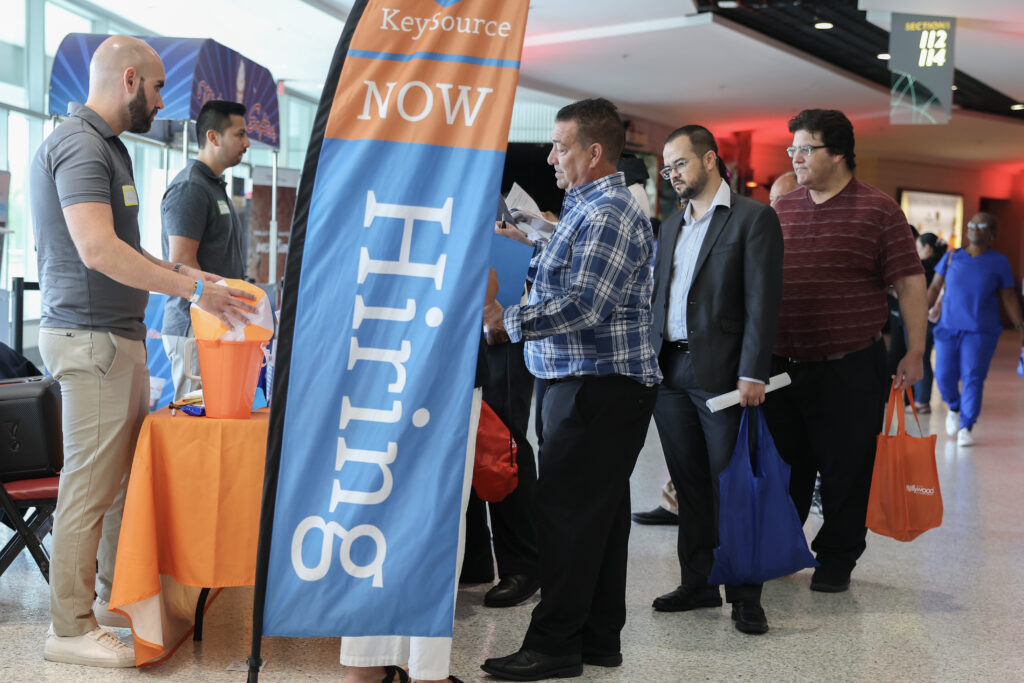
US hiring slowed less than expected in April while the jobless rate remained unchanged, according to government data published Friday, buoying investors navigating the early turbulent months of Donald Trump’s second presidency.Since returning to office in January, Trump has looked to slash the number of federal employees and embarked on a trade war that many economists warn is likely to cool growth and push up inflation. With Trump’s tariff plans still in their early stages, their effect has not yet filtered through into hiring: The world’s largest economy added 177,000 jobs last month, down slightly from a revised 185,000 in March, the Department of Labor said in a statement.However, job creation was still well above the market consensus of 130,000, according to Briefing.com, and remained slightly above the average monthly gain over the past 12 months.The unemployment rate stayed at 4.2 percent, in line with expectations. US financial markets closed sharply higher on the news, with all three major Wall Street indices ending the day firmly in the green.”Markets breathed a sigh of relief this morning,” Northlight Asset Management chief investment officer Chris Zaccarelli wrote in a note to clients. “While recession fears are still simmering on the back burner, the buy-the-dip dynamic can continue — at least until the tariff pause runs out,” he said, referring to Trump’s recent decision to pause higher levies on dozens of trading partners until July to allow for trade talks. – ‘Just getting started’ -Trump took to his Truth Social account after the data was published to talk up the “strong” employment figures.”Just like I said, and we’re only in a TRANSITION STAGE, just getting started!!!” the US president wrote. “NO INFLATION, THE FED SHOULD LOWER ITS RATE!!!” added Trump, who has been outspoken in his calls for the Federal Reserve to lower interest rates. The independent central bank has kept its key lending rate at between 4.25 and 4.50 percent for months, as it looks to bring inflation from its current elevated levels to its long-term target of two percent while keeping one eye firmly fixed on the unemployment rate.Financial markets overwhelmingly expect the Fed to extend its rate cut pause next week, according to data from CME Group. – ‘Nothing to complain about’ -Sectors that saw job gains last month included health care, transportation and warehousing, financial activities, and social assistance, the Labor Department said.But federal government employment declined by 9,000 in April, bringing the total decline in the number of government employees since January to 26,000.The Trump administration is facing legal action after attempting to lay off tens of thousands of federal workers as part of an aggressive cost-cutting drive.Average hourly earnings grew 0.2 percent to $36.06 in April, the Labor Department said Friday. “There is nothing to complain about here,” High Frequency Economics chief economist Carl Weinberg wrote in a note to clients. “You cannot find any evidence of a nascent recession in these figures.”While traders may breathe easier today, many analysts have stressed that it is still early days for the new administration, and warned they still expect tariffs to cool job creation in the future. “It will be extraordinary if employment is unscathed this year by the jump in tariffs on imports, the drop in asset prices and the extreme economic policy uncertainty,” economists at Pantheon Macroeconomics wrote in an investor note published on Monday. These factors are likely “causing many businesses to defer non-essential spending,” they added, noting that they had not yet seen any significant changes in the payroll data they track.
US to stage military parade on June 14, Trump’s birthday
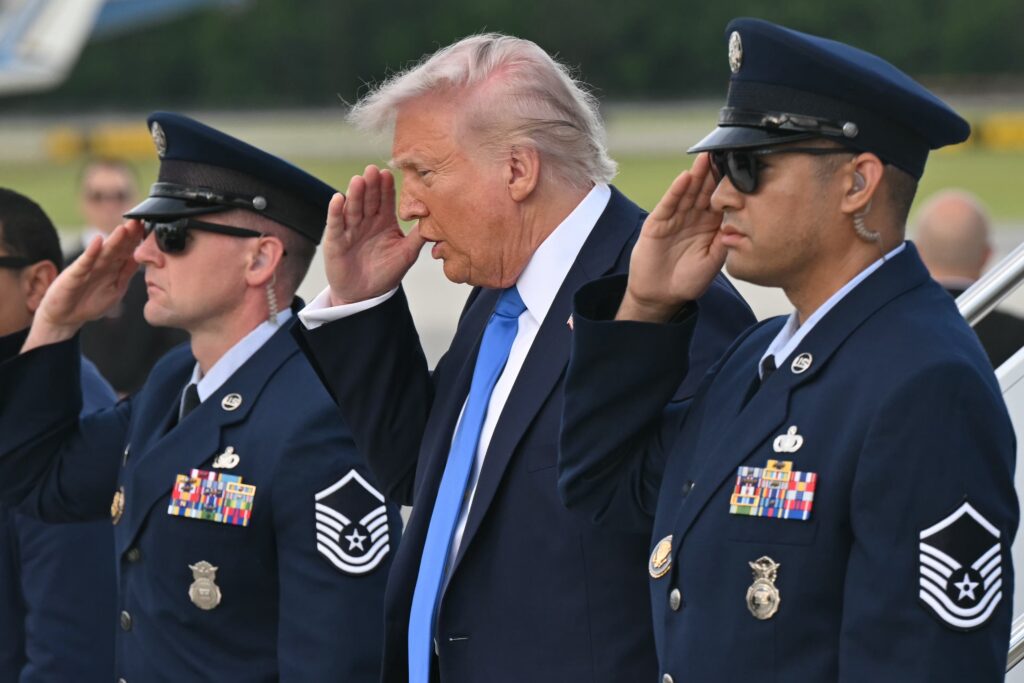
The United States will stage a military parade on June 14 to mark the 250th anniversary of the founding of the US Army, the White House said Friday, with the event also falling on President Donald Trump’s 79th birthday.Trump “will honor American Veterans, active-duty servicemembers, and military history with a military parade!” White House spokeswoman Anna Kelly wrote on X.In addition to the parade, the celebration of the service’s birthday will feature fireworks and a festival on the National Mall, US Army spokeswoman Heather Hagan said.”Given the significant milestone of 250 years, the Army is exploring options to make the celebration even bigger, with more capability demonstrations, additional displays of equipment, and more engagement with the community,” Hagan said.”Parade planning is actively underway, and we anticipate approximately 150 vehicles, 50 aircraft, and 6,600 soldiers,” she added.Trump had floated the idea of holding a military parade in Washington during his first term after attending a Bastille Day parade in France.It never materialized, however, after the Pentagon said it could cost $92 million and concerns were raised that tanks and other heavy military vehicles would damage the city’s streets.Washington Mayor Muriel Bowser raised similar concerns last month when asked by reporters about plans for a parade.”Military tanks on our streets would not be good,” Bowser said. “If military tanks were used they should be accompanied with many millions of dollars to repair the roads.”- ‘We never celebrate anything’ -The last major US military parade in Washington was held in 1991 to celebrate the end of the Gulf War.The new parade announcement came a day after Trump said he was declaring May 8 to be Victory Day for World War II and changing Veterans Day — observed on November 11 — to Victory Day for World War I.In a post on his Truth Social platform, the US president downplayed the role of European countries — many of which suffered far more casualties and devastation than the United States — in the two global conflicts.”We won both Wars, nobody was close to us in terms of strength, bravery, or military brilliance, but we never celebrate anything — That’s because we don’t have leaders anymore, that know how to do so! We are going to start celebrating our victories again!” Trump wrote.Trump has had a contradictory relationship with US military forces, lauding their power but also claiming they were depleted and in need of rebuilding.He at times clashed with military brass during his 2016-2020 term in office and reportedly referred to fallen troops as “losers” and “suckers” — something he denied.During his second term, Trump has overseen a purge of top officers, including chairman of the Joint Chiefs of Staff general Charles “CQ” Brown, whom he fired without explanation in February.Other senior officers dismissed this year include the heads of the Navy and Coast Guard, the general who headed the National Security Agency, the vice chief of staff of the Air Force, a Navy admiral assigned to NATO, and three top military lawyers.US Defense Secretary Pete Hegseth has insisted the president is simply choosing the leaders he wants, but Democratic lawmakers have raised concerns about the potential politicization of the traditionally neutral US military.