


Les trois quarts des Français inquiets de la désinformation étrangère, selon le baromètre La Croix
Les trois quarts des Français se disent inquiets de la désinformation étrangère, selon le baromètre annuel du journal La Croix sur la confiance dans les médias dévoilé jeudi. Dans le détail, 45% sont “plutôt” inquiets et 31% sont “tout à fait” inquiets de ces tentatives par certains Etats d’influencer l’opinion publique en France, tandis que 19% ne le sont pas, et 5% sont sans opinion, selon ce sondage présenté lors du festival Médias en Seine à Paris.Réalisé depuis 1987, il a été rebaptisé “Baromètre La Croix – Verian – La Poste sur la confiance des Français dans les médias”.Interrogés plus particulièrement sur des risques de désinformation étrangère dans le cadre des élections municipales de mars, les sondés sont cependant moins nombreux à être inquiets, à hauteur de 60%.Sur les réseaux sociaux, une personne interrogée sur deux (51%) pense être confrontée plusieurs fois par semaine à des informations déformant la réalité ou à de fausses informations, venant ou non de l’étranger.C’est moins le cas à la télévision (40%), sur les sites ou applications de la presse nationale (37%) ou à la radio (30%).Interrogés sur l’idée de labelliser les médias sur internet de façon indépendante, 62% jugent que ce serait une bonne chose, 16% une mauvaise et 22% ne se prononcent pas.La piste, avancée par Emmanuel Macron en novembre, a fait polémique, les médias du milliardaire conservateur Vincent Bolloré et des dirigeants de la droite et de l’extrême droite soupçonnant le chef de l’Etat de vouloir “contrôler l’information”.Par ailleurs, les Français sont 71% à suivre l’actualité avec un grand intérêt, une proportion en baisse de 5 points sur un an. Quelque 28% la suivent avec un faible intérêt.Près d’un sur deux (47%) ressent souvent de la fatigue ou du rejet par rapport à l’actualité, une proportion cependant en baisse de quatre points.Enfin, les médias traditionnels reculent: 85% des Français suivent les journaux télévisés (-5 points), 76% les chaînes d’info en continu (-3) et encore 72% la presse régionale, papier ou en ligne (-3).En revanche, les influenceurs et créateurs de contenu sur les réseaux sociaux ont le vent en poupe: 42% des personnes interrogées les utilisent pour être informés sur l’actualité (+5 points). Cette étude a été réalisée sur internet du 24 au 30 novembre auprès d’un échantillon de 1.500 personnes, représentatif de l’ensemble de la population âgée de 18 ans et plus (méthode des quotas).
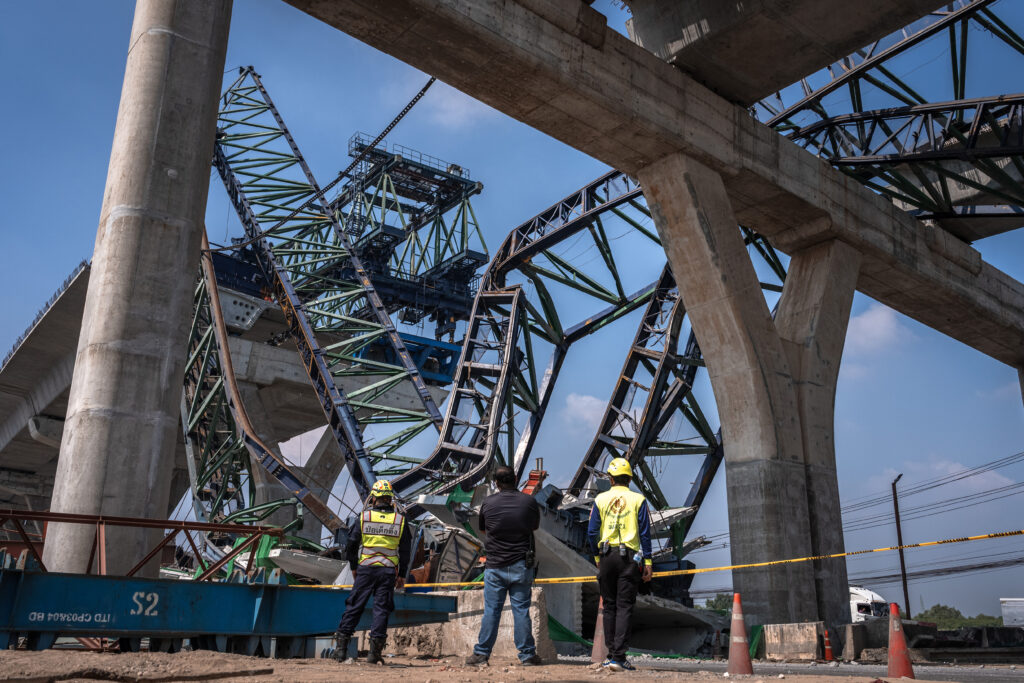
Thaïlande: deux accidents meurtriers en deux jours liés à la même entreprise
Les effondrements meurtriers de deux grues mercredi et jeudi sur des chantiers en Thaïlande sont liés à la même entreprise de BTP, a indiqué le gouvernement, qui exige des explications.La chute d’une première grue mercredi matin sur un train de passagers dans le nord-est du pays a fait 32 morts et des dizaines de blessés.Des proches endeuillés se recueillaient en silence sur le site poussiéreux au soleil levant lorsqu’un accident similaire s’est produit jeudi à plus de 200 kilomètres de là, dans la banlieue de Bangkok.Une autre grue est tombée sur le chantier d’une autoroute en construction, tuant deux nouvelles personnes, selon la police locale.Ces deux drames en l’espace de 24 heures ont pour dénominateur commun l’entreprise thaïlandaise Italian-Thai Development, a confirmé à un média local le ministre thaïlandais des Transports Phiphat Ratchakitprakarn.”Je ne comprends toujours pas ce qu’il s’est passé”, a-t-il déclaré. “Nous devrons établir les faits, s’il s’agissait d’un accident ou de quelque chose d’autre”.Italian-Thai – l’une des plus grosses entreprises de BTP du royaume – a été impliquée dans plusieurs accidents mortels ces dernières années.Elle a été inculpée en août, avec son directeur, dans une affaire liée à l’effondrement d’un immeuble en construction à Bangkok lors d’un tremblement de terre. Environ 90 personnes avaient trouvé la mort, principalement des ouvriers.L’entreprise a annoncé mercredi après la tragédie ferroviaire qu’elle assumerait “la responsabilité d’indemniser les familles des victimes et de couvrir les frais médicaux des blessés”.Mais elle pourrait avoir rapidement d’autres comptes à rendre.Le Premier ministre, Anutin Charnvirakul, a affirmé sur les lieux du drame qu’il s’agissait “clairement de la faute de l’entreprise”.”Il est temps de modifier la loi afin de mettre sur une liste noire les sociétés de BTP responsables d’accidents à répétition”, a-t-il par ailleurs suggéré à l’approche d’élections générales le 8 février.- “Failli mourir” -Sur le site du deuxième accident, jeudi, dans la banlieue de Bangkok, Booncherd La-orium, un conducteur de moto-taxi, dit avoir “la chair de poule”.”Je ne m’étais toujours pas remis de l’accident d’hier (mercredi) et j’apprends ce matin qu’un autre a lieu juste à côté de chez moi”, raconte à l’AFP l’homme de 69 ans. “C’est encore la même entreprise, Italian-Thai…””Ma femme ne veut plus que je roule ici, peu importe combien les clients paient”, ajoute-t-il. “Ca fait vraiment peur”.Des images d’une caméra embarquée dans un véhicule montrent le moment où l’énorme grue s’est effondrée, déchirant la chaussée en béton surélevée dans un nuage de poussière.”J’ai failli mourir”, souffle une personne à bord. “C’est bon maintenant, ça ne tombe plus. C’est encore un effondrement de grue”, répond une deuxième.L’autoroute en construction doit permettre de fluidifier le trafic sur la route Rama II, qui relie Bangkok au sud du pays. Mais l’important chantier accumule les retards et les accidents mortels.L’effondrement d’une poutre en béton, conçue pour soutenir le futur pont autoroutier, avait déjà tué au moins six personnes en mars dernier près de la capitale, et trois ouvriers sont morts en novembre 2024 après la chute d’une grue, déjà.Celle qui a provoqué le déraillement du train mercredi dans le nord-est de la Thaïlande était utilisée sur le chantier d’une future ligne de train à grande vitesse.Un projet colossal soutenu par la Chine dans le cadre de sa politique des “nouvelles routes de la soie”, destinée à améliorer ses échanges commerciaux et son influence en Asie du Sud-Est.
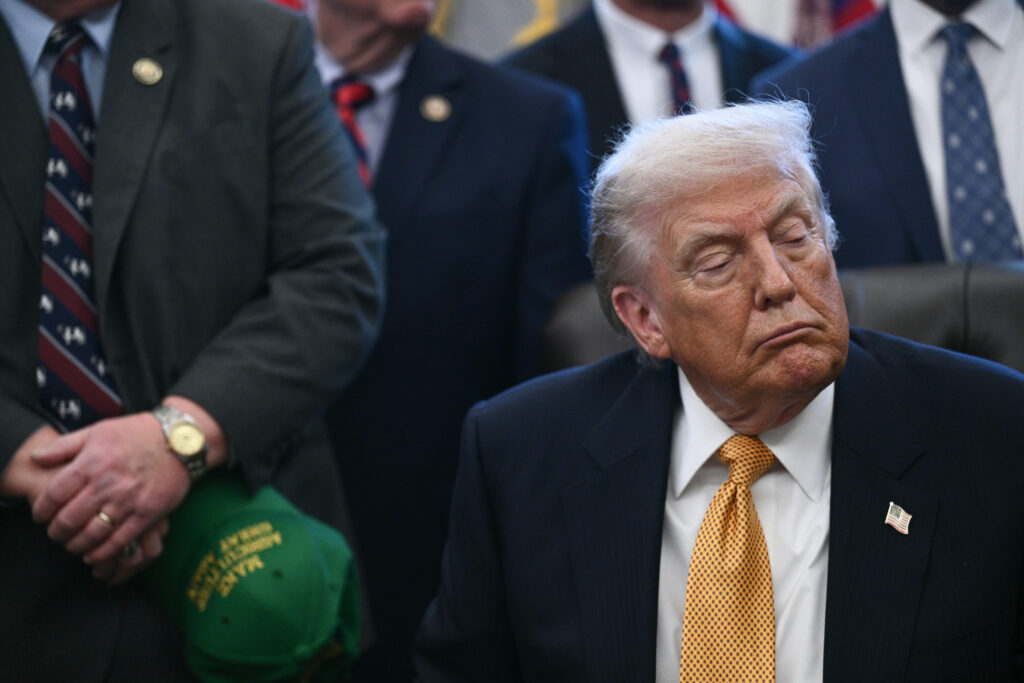
Trump assure que les “tueries en Iran ont pris fin” mais laisse planer la menace d’une intervention
Donald Trump a affirmé mercredi que “les tueries” en Iran avaient “pris fin” après la répression de manifestations par les autorités, mais a entretenu le flou sur une éventuelle intervention militaire américaine, indiquant que Washington suivrait de près la situation.”Nous avons été informés par des sources très importantes de l’autre côté, et elles ont dit …
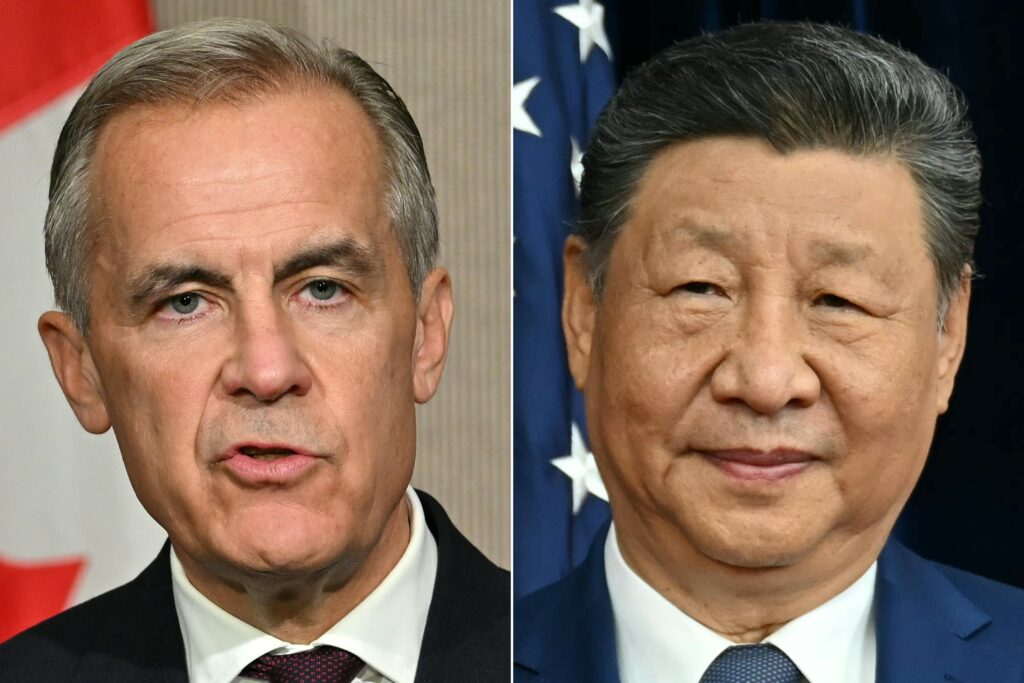
China’s top diplomat calls Carney visit ‘turning point’ in ties
China’s top diplomat said Thursday that a visit by Canadian Prime Minister Mark Carney to Beijing marked a “turning point” in the two countries’ long acrimonious relationship.The first visit by a Canadian leader to Beijing in eight years was a “turning point and symbol for the relationship between two countries”, Chinese Foreign Minister Wang Yi said in a statement, according to a readout.”The leaders of the two countries will hold meetings and talks, which I believe will open up new prospects for bilateral relations,” he added.Carney, who has also said ties between the two sides are shifting, is meeting with top Chinese leaders in Beijing on Thursday, as he pulls away from traditional ally the United States.Following President Donald Trump’s aggressive tariffs on Canadian products, Carney has sought to reduce his country’s economic reliance on its main market, the United States.Video from Chinese state media showed Carney arriving in Beijing for his four-day state visit late Wednesday evening to a red carpet welcome.He is scheduled to meet with Chinese President Xi Jinping and Premier Li Qiang, among other government and business leaders for trade talks.Ties between the two nations withered in 2018, when Canada arrested the daughter of Huawei’s founder on a US warrant, and China’s retaliatory detention of two Canadians on espionage charges.- ‘Right track’ -The two countries imposed tit-for-tat tariffs on each other’s exports in the years that ensued, with China also being accused of interfering in Canada’s elections.Caught in the tariffs crossfire were Chinese electric vehicles along with Canadian canola oil and other agricultural goods.The last time Chinese and Canadian leaders formally met was when then prime minister Justin Trudeau visited Beijing in 2017.But there have been signs of warming ties under Carney, who met Xi on the sidelines of an APEC summit in October.China has shown a willingness to rekindle the relationship, with Xi telling Carney after their meeting that it has “shown a recovery” towards “the right track”.Officials from the two countries have been in talks to lower tariffs, but an agreement has yet to be reached.Beijing, meanwhile, said this week it “attaches high importance” to Carney’s visit.- Pivot from US -Ottawa has traditionally been hawkish towards Beijing, positioning itself in alliance with the United States.But Canada has been hit especially hard by Trump’s steep tariffs on steel, aluminium, vehicles and lumber, prompting a change of heart.In October, Carney said Canada should double its non-US exports by 2035 to reduce reliance on the United States.But the United States remains far and away its largest market, buying around 75 percent of Canadian exports in 2024, according to Canadian government statistics.While Ottawa has stressed that China is Canada’s second-largest market, it lags far behind, buying less than four percent of Canadian exports in 2024.Carney will be looking to raise that figure, with his office saying the visit aims to “elevate engagement on trade, energy, agriculture, and international security”.
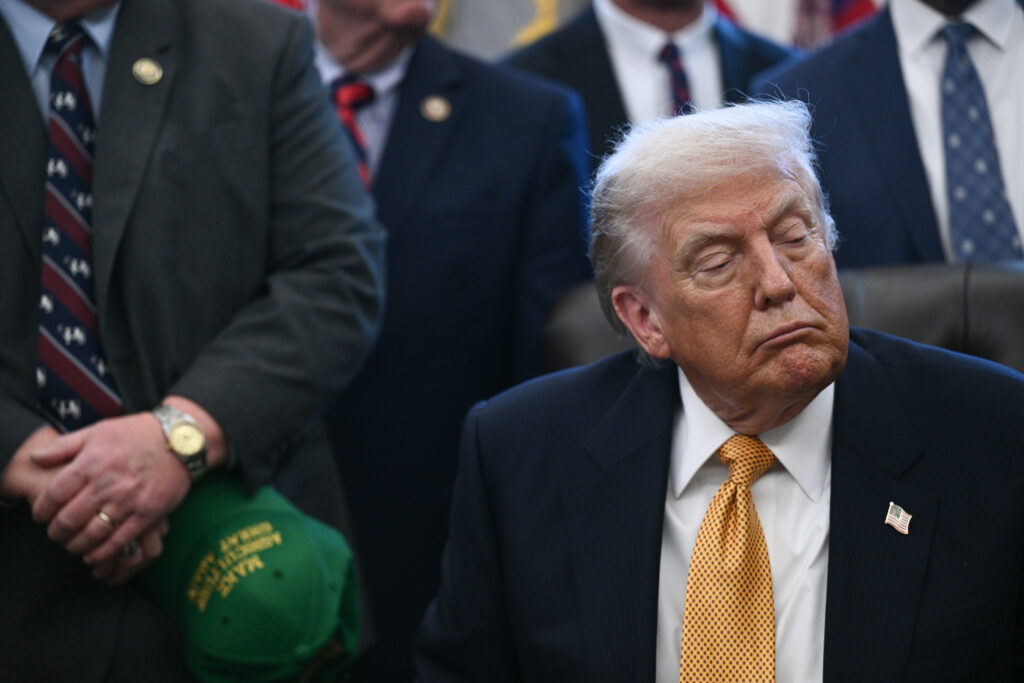
Trump says Iran killings stopped, Tehran says ‘no plan for hanging’
US President Donald Trump said Wednesday he had been told the killings of protesters in Iran had been halted, but added that he would “watch it and see” about threatened military action.Trump had repeatedly talked in recent days about coming to the aid of the Iranian people over the crackdown on protests that rights groups say has left at least 3,428 people dead.But in a surprise announcement at the White House, Trump said he had now received assurances from “very important sources on the other side” that Tehran had now stopped, and that executions would not go ahead.”They’ve said the killing has stopped and the executions won’t take place — there were supposed to be a lot of executions today and that the executions won’t take place — and we’re going to find out,” Trump said.He offered no details and noted that the United States had yet to verify the claims.Asked by an AFP reporter in the Oval Office if US military action was now off the table, Trump replied: “We’re going to watch it and see what the process is.”Iranian Foreign Minister Abbas Araghchi later said there would be “no hanging today or tomorrow,” in an interview with US network Fox News, while accusing Israel of orchestrating violence, without providing evidence.Araghchi contends the peaceful protests about economic hardship that began December 28 devolved into widespread violence between January 7 and 10 because the protests were infiltrated by external “elements who had a plan to create a big number of killings in order to provoke President Trump to enter into this conflict and start a new war against Iran.”Iran’s Minister of Justice Amin Hossein Rahimi echoed that allegation, telling state news agencies that after January 7, “those weren’t protests any longer” and anyone who was arrested on the streets then “was definitely a criminal.”A rights group said separately that the execution of an Iranian man arrested during the wave of protests, 26-year-old Erfan Soltani, would not take place as scheduled on Wednesday, citing relatives.Late Wednesday, UN leadership announced a meeting of the Security Council Thursday for “a briefing on the situation in Iran,” as requested by the United States.Trump’s comments sent oil prices plunging on Thursday morning, as concerns eased of a looming supply shock in energy markets. Iran makes up around three percent of global oil production. – ‘Full control’ -Araghchi said the Iranian government was “in full control” and reported an atmosphere of “calm” after what he called three days of “terrorist operation.”Iran also struck a defiant tone about responding to any US attack, as Washington appeared to draw down staff at a base in Qatar that Tehran targeted in a strike last year.Iran targeted the Al Udeid base in June in retaliation for US strikes on its nuclear facilities. Ali Shamkhani, a senior advisor to Supreme Leader Ayatollah Ali Khamenei, warned Trump the strike showed “Iran’s will and capability to respond to any attack.”Fears of possible US military action continued to rile the region.The British government said its embassy in Tehran had been “temporarily closed,” while the US embassy in Saudi Arabia urged staff to exercise caution and avoid military installations and India’s government urged its citizens to leave the country.Germany’s Lufthansa on Wednesday said its flights would avoid Iranian and Iraqi airspace “until further notice” after the US threats against Iran.Trump has threatened to intervene militarily in Iran several times since the protest movement that has shaken the country began in late December. The protests are the largest since the Islamic Republic was proclaimed in 1979.Rights monitors say that under cover of a five-day internet blackout, Iranian authorities are carrying out their harshest repression in years against demonstrations openly challenging the theocratic system.Iran’s judiciary chief vowed fast-track trials for those arrested, stoking fears authorities will use capital punishment as a tool of repression.In Tehran, authorities held a funeral for more than 100 security personnel and other “martyrs” killed in the unrest, which officials have branded “acts of terror.”- ‘Unprecedented level of brutality’ -G7 nations said Wednesday they were “deeply alarmed at the high level of reported deaths and injuries” and warned of further sanctions if the crackdown continued.Monitor NetBlocks said Iran’s internet blackout had lasted 144 hours. Despite the shutdown, new videos, with locations verified by AFP, showed bodies lined up in the Kahrizak morgue south of Tehran, wrapped in black bags as distraught relatives searched for loved ones.The US-based Institute for the Study of War said authorities were using “an unprecedented level of brutality to suppress protests,” noting reports of protest activity had sharply declined.A senior Iranian official told journalists there had been no new “riots” since Monday, distinguishing them from earlier cost-of-living protests. “Every society can expect protests, but we will not tolerate violence,” he said.Prosecutors have said some detainees will face capital charges of “waging war against God.” State media reported hundreds of arrests and the detention of a foreign national for espionage, without giving details.Iran Human Rights, based in Norway, said security forces had killed at least 3,428 protesters and arrested more than 10,000.burs-dk/aha/sla/jgc/ceg/hmn
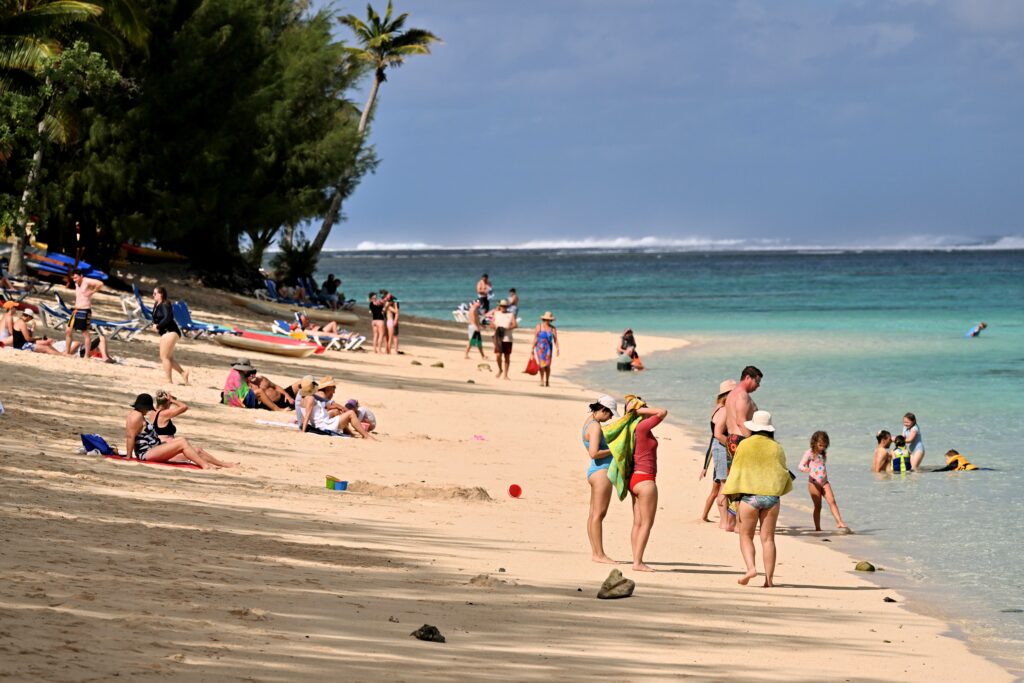
New Zealand warned Pacific neighbour over oil smuggling ‘shadow fleet’
A “shadow fleet” of 19 tankers suspected of smuggling oil for Russia and Iran was flagged by New Zealand with Cook Islands authorities in 2024, according to a confidential list obtained by AFP.The small Pacific island is home to a flourishing international shipping registry, allowing foreign vessels to sail under its flag for a modest fee of a few thousand dollars.There is mounting evidence the archipelago has become a haven for foreign smugglers, who sail under the Cook Islands flag to escape scrutiny as they flout Western sanctions.New Zealand officials in 2024 compiled a list of 19 tankers — or “vessels of concern” — that had been registered to the Cook Islands in recent years.The list included the Arabesca, a crude oil tanker that frequently calls at Russian ports in the Baltic Sea.The Arabesca was in 2025 blacklisted by the UK, Canada, Switzerland and the European Union for smuggling Russian oil.Also named in New Zealand’s list was a ship called the Maruti, a chemical tanker often seen sailing through the Persian Gulf.The Maruti transported “hundreds of thousands of barrels” of Iranian naptha fuel while sailing under the Cook Islands’ flag in 2025, according to a US sanctions notice published in December.Both the Arabesca and the Maruti have since been deleted from the Cook Islands’ shipping registry.The Cook Islands has apparently brushed off New Zealand’s concerns about some other vessels.Of the 19 ships singled out by New Zealand in 2024, seven remained registered to the Cook Islands as of mid-January this year.This included tankers the Bonetta and the Ocean Wave, which are suspected by the United States of hauling crude oil from Iran.AFP could not reach the owners of the Arabesca, Maruti, Bonetta and Ocean Wave for comment.New Zealand’s list, released to AFP under freedom of information laws, was raised with Cook Islands through diplomatic channels in 2024. – Shadow fleet -Western sanctions aim to curb Iran and Russia cashing in on oil sales, limiting funding for Tehran’s nuclear programme or Moscow’s war machine.New Zealand alleges the Cook Islands has been exploited by transnational maritime smuggling networks known as the “shadow fleet”.By registering in places such as the Cook Islands — where they are subject to less stringent checks — shadow fleet ships can disguise themselves as legitimate vessels.Often the shipping registries are unaware of the ship’s true purpose.Cook Islands’ links to sanctions evasion are a source of potential embarrasment to New Zealand, which once governed the Pacific nation of some 15,000 people.New Zealand remains the Cook Islands’ closest diplomatic partner and still has a constitutional responsibility to help with foreign affairs and defence.”New Zealand has raised serious concerns directly with the Cook Islands government about the management of its shipping registry, including the flagging of shadow fleet vessels,” New Zealand’s foreign affairs department said.Former Royal New Zealand Navy officer Mark Douglas said some 150 foreign tankers were registered in the Cook Islands at its busiest point in 2024.”It certainly seemed at its peak that it was ‘pay to play’,” said Douglas, now an analyst for Starboard Maritime Intelligence.”If you turned up with some good paperwork and the cheque cleared, you were able to get the Cook Islands’ flag.”Cook Islands had since de-registered many of the most dubious vessels, Douglas said, but there were “some left that have question marks over them”.The UN-backed International Maritime Organisation currently lists 40 tankers registered to the Cook Islands.The Cook Islands offers what is known as a “flag of convenience”.This means foreign ship owners can pay to sail under the flag without ever setting foot on the archipelago, halfway between New Zealand and Hawaii.”Many shadow fleet vessels use flags of convenience from countries that are either less inclined or unable to enforce Western sanctions,” notes a European Parliament briefing from 2024.The Cook Islands was one of the “top countries whose flags are used by shadow tankers transporting Russian crude oil”, according to the report.- Growing fast -Shipping journal Lloyd’s List in 2024 crowned Maritime Cook Islands the “fastest growing registry” in the world.While Cook Islands’ fees are opaque, the revenue generated by shipping licenses is modest.Cook Islands budget documents estimate shipping registrations will bring in around US$50,000 this year.Maritime Cook Islands did not reply to a request for comment.The shipping registry has previously denied that it failed to conduct appropriate checks.”The Cook Islands register has never harboured sanctioned vessels,” Maritime Cook Islands told AFP in November last year.”Any sanctioned vessels are deleted.”
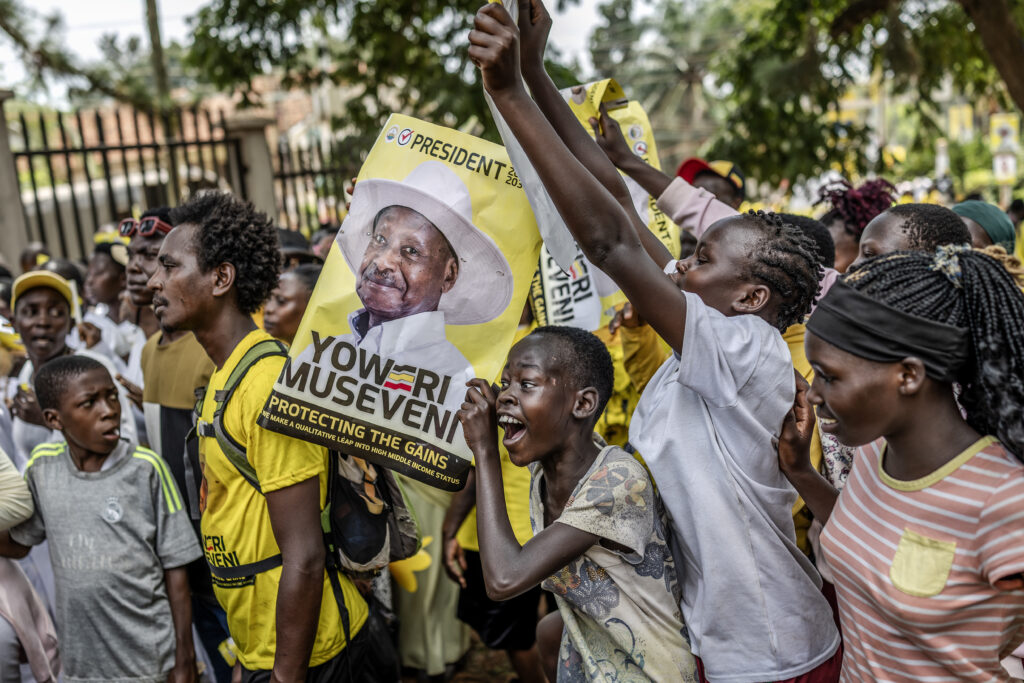
Les Ougandais votent, entre répression policière et blocage d’internet
Les Ougandais se rendent aux urnes jeudi pour des élections législatives et présidentielle, le président Yoweri Museveni cherchant à prolonger ses 40 années au pouvoir dans un contexte de répression et de blocage d’internet.Dans la capitale Kampala, au moins un bureau de vote était ouvert comme prévu à 07H00 (04H00 GMT) ce matin mais le scrutin n’avait pas encore commencé dans d’autres localités, ont constaté des journalistes de l’AFP présents sur place.Le quotidien ougandais Daily Monitor a publié une pleine page sur la manière de “protéger votre domicile en vue des élections”, conseillant aux citoyens de renforcer leurs portes et fenêtres et de s’aménager une pièce sécurisée. Cette tension est familière dans le pays d’Afrique de l’Est après les quatre décennies de règne et six mandats présidentiels de M. Museveni, 81 ans, ex-guérillero accuséd’abus généralisés des forces de sécurité contre ses opposants.Son principal adversaire est l’ancien chanteur de raggamuffin devenu politicien Bobi Wine, 43 ans, qui se présente comme le “président du ghetto”, en référence à son quartier natal situé dans un des bidonvilles de la capitale, Kampala.Nombre d’observateurs voient dans le scrutin de jeudi une formalité pour le président sortant, qui se déroule dans un climat condamné par l’ONU comme “marqué par une répression et une intimidation généralisées” et de contrôle total de M. Museveni sur l’appareil d’Etat. Des centaines de partisans de Bobi Wine ont été arrêtés durant sa campagne, lors de laquelle il a pris l’habitude de porter un gilet pare-balles, qualifiant la période pré-électorale de “guerre” et le président de “dictateur militaire”.Nombre d’entre eux gardent toutefois espoir: les rassemblements du candidat ont attiré des foules plus nombreuses que prévu.L’autre grand chef de l’opposition, Kizza Besigye, qui s’est présenté à quatre reprises contre M. Museveni, a été enlevé en 2024 au Kenya et est réapparu devant une cour martiale en Ouganda. Il reste détenu pour des accusations de trahison.Une importante présence policière et militaire était observée dans les rues de Kampala à la veille du scrutin. Beaucoup d’habitants étaient nerveux.”Nous ne parlerons pas des élections. Vous pouvez poser n’importe quelle question, mais pas celle-là”, a déclaré un comptable d’une trentaine d’années qui n’a pas voulu donner son nom. “Allez voter”, a déclaré le président dans un discours cette semaine. “Quiconque veut porter atteinte à votre liberté, je l’écraserai,” a-t-il averti.- L’ONU inquiète -Malgré des promesses répétées qu’il ne le ferait pas, le gouvernement a coupé l’accès à internet mardi pour une durée indéterminée, présentant la mesure comme un moyen d’empêcher la propagation de la “désinformation” et de l'”incitation à la violence”.Cette coupure et la suspension récente de 10 ONG dans le pays ont été jugées “profondément inquiétantes” par l’ONU, qui a appelé à des élections “libres et authentiques”.La police a averti que le vote n’était “pas une justification pour des actes criminels” et a déployé des “agents spéciaux auxiliaires” nouvellement recrutés pour maintenir l’ordre. “Nous sommes parfaitement conscients qu’ils prévoient de truquer l’élection, de brutaliser la population, de tuer des gens, et ils ne veulent pas que le reste du monde le voie”, a déclaré Bobi Wine à l’AFP. L’opposant, qui a été arrêté à plusieurs reprises et torturé en détention militaire avant la présidentielle de 2021 – sa première candidature – a promis des manifestations en cas de fraude électorale.En Tanzanie voisine, internet avait été bloqué plusieurs jours à partir du 29 octobre dernier, jour d’élections jugées frauduleuses par des observateurs étrangers. Des manifestations antipouvoir avaient alors été réprimées dans le sang, avec plus de 2.000 personnes tuées selon l’opposition, dans l’opacité la plus totale. En Ouganda, des journalistes ont été harcelés et empêchés d’assister au dernier meeting du président à Kampala. Malgré plusieurs scandales de corruption, Yoweri Museveni reste pour beaucoup le “père de la nation”, qui a tiré le pays du chaos politique et économique à l’issue d’une guerre de brousse contre ses rivaux dans les années 1980.Plus de 70% de la population de l’Ouganda a moins de 30 ans et n’a connu que le “Mzee” – “Le Vieux” en swahili, un surnom teinté de bienveillance.