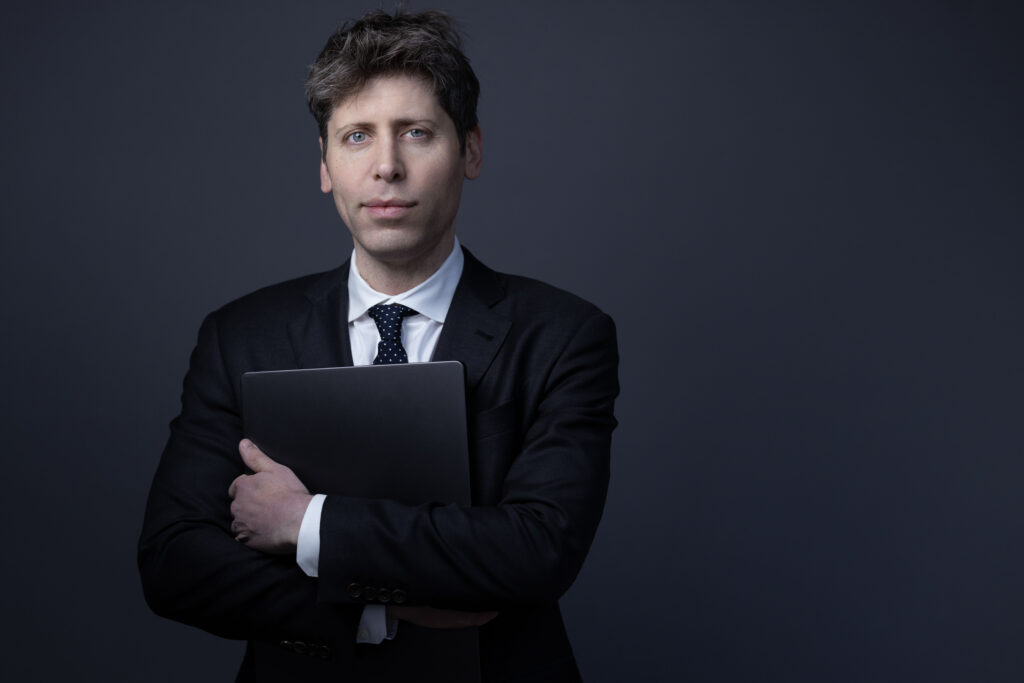
OpenAI abandonne son projet de devenir une société à but lucratif

Le directeur général d’OpenAI Sam Altman a fait savoir lundi que l’entreprise à l’origine de ChatGPT abandonnait son projet de devenir une société à but lucratif, qui était vivement contesté par des observateurs du secteur de l’intelligence artificielle mais également par Elon Musk.”OpenAI n’est pas une entreprise normale et ne le sera jamais”, a écrit Sam Altman dans un courriel adressé au personnel et publié lundi sur le site internet de l’entreprise.”Nous avons pris la décision de rester une société à but non lucratif après avoir écouté des leaders de la société civile et échangé avec les bureaux des procureurs généraux (des Etats américains) de Californie et du Delaware”, a-t-il annoncé.Le fleuron de l’IA est devenu une des start-ups les plus prospères de l’histoire de la Silicon Valley, propulsée en 2022 par son outil d’IA générative ChatGPT.Après une crise au sein de l’entreprise en 2023, des investisseurs majeurs d’OpenAI avaient souhaité pouvoir faire fructifier leurs placements dans une structure vouée à être rentable, eu égard notamment aux coûts considérables liés à la conception, à l’entraînement et au déploiement des modèles d’IA comme ChatGPT.L’an dernier, OpenAI, dont les ambitions dans le secteur de l’IA nécessitent des dizaines de milliards de dollars d’investissement, avait dévoilé un plan de passage au statut d’entreprise à but lucratif dans les deux ans.Mais des critiques avaient jugé ce projet dangereux au vu de la puissance des outils d’intelligence artificielle et parce que ce changement de structure aurait selon eux fait passer les intérêts des actionnaires avant ceux de la société civile.- “Pas à vendre” -L’homme le plus riche de la planète, Elon Musk, avait également critiqué ce plan, qui nécessitait par ailleurs l’approbation des Etats de Californie et du Delaware où OpenAI est respectivement basée et enregistrée.Musk et Altman faisaient partie de l’équipe de 11 personnes qui a fondé OpenAI en 2015, le premier apportant un financement initial de 45 millions de dollars.Mais leurs relations sont exécrables depuis qu’Elon Musk a quitté en 2018 l’entreprise, contre laquelle il avait entrepris une action en justice et qu’il a aussi proposé de racheter.Sam Altman lui avait alors sèchement répliqué qu’OpenAI n’était “pas à vendre”.Dans le nouveau plan d’OpenAI, le bras armé de l’entreprise pourra faire des profits mais, point capital, restera sous la supervision d’un conseil d’administrateurs comme une organisation à but non lucratif.Rester une société à but non lucratif “nous permettra de continuer de réaliser des progrès rapides et sûrs et de donner à tous l’accès à une IA performante”, a estimé lundi Sam Altman.Reste à attendre la réaction des investisseurs à ce renoncement d’OpenAI, comme celle de la société d’investissement japonaise SoftBank qui avait fait du passage au statut à but lucratif une condition de sa récente annonce d’un apport massif de 30 milliards de dollars.Cette somme pourrait désormais descendre à 20 milliards, selon une clause prévue par un document officiel.La participation de SoftBank fait partie d’une levée de fonds de 40 milliards de dollars annoncée fin mars, la plus importante jamais vue pour une société non cotée dans le secteur technologique.Ce nouveau tour de table valorise la société californienne 300 milliards de dollars.

French Resistance members reunited 80 years after end of WWII

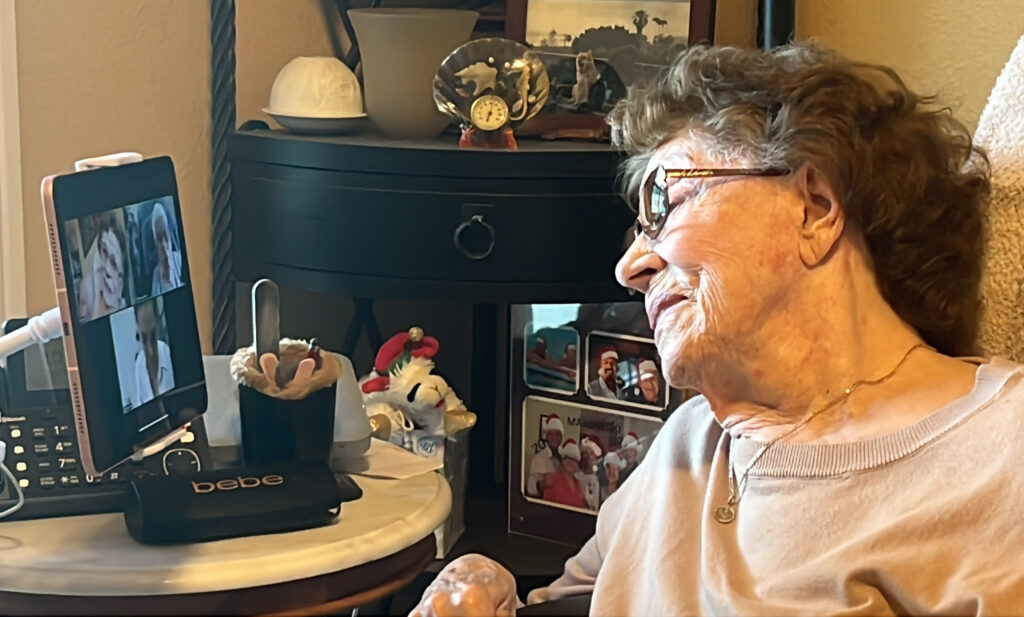
Renee Guette, 98, laughed as she looked at her computer screen in Texas. On the other end of the video call was 97-year-old Andree Dupont, living in France.The women, who supported the French resistance against Nazi occupation, had a moving reunion in April — it was the first time they had seen each other since being freed from a German concentration camp 80 years ago.”Dedee, it’s funny to see you after all these years. We’ve become old girls!” Guette said, using Dupont’s nickname.”Seeing you again fills me with emotion,” said Dupont, her voice trembling. “I give you a big kiss, my darling,” she added, blowing a kiss to the screen during the call, which was witnessed by AFP.”Are the memories coming back for you too?” Dupont asked. “Oh yes!” Guette said. “But they are not coming out of my head. There are too many things we can’t explain.”As the 80th anniversary of Victory in Europe Day, marking the end of World War II on the continent, approaches, the women shared their emotional story of wartime sacrifice and suffering.Dupont and Guette were both born in 1927 and grew up in French villages around 350 kilometers (220 miles) apart.After World War II broke out and Nazi Germany invaded France, both women — aged just 16 — joined the resistance networks in their villages in 1943.Dupont became a “liaison officer” transmitting messages — and sometimes weapons — across the western Sarthe region using only her bicycle. One day, she recalled, “I had a towel with a dismantled revolved inside, and I smiled as I passed the Germans.”Guette was a postal worker who smuggled ration coupons and messages to resistance fighters. – Deported -In April 1944, disaster struck as Dupont was arrested along with other members of her village’s resistance network — 16 people in all, including her father and aunt. “I was folding the laundry at around 10 at night. I heard knocking on the doors and knew what was happening right away,” she said.Guette was caught four days later by a French agent of the Gestapo, the secret police of Nazi Germany.  “He told me, ‘So, a young girl from a good family who took a turn for the worst,'” Guette remembered. “And I told him that he hadn’t turned out any better. And he slapped me!”The two teenagers met at a prison in Romainville close to Paris. They learned about D-Day — the Allied invasion of France in June 1944 — but the glimmer of hope the news offered was soon crushed. “We thought we were saved! But the Germans needed us to work in the war factories,” explained Guette.On June 25, 1944, Guette — prisoner 43,133 — was transferred to the HASAG Leipzig sub-camp linked to Buchenwald. It held 5,000 women forced to manufacture weapons. Dupont was prisoner 41,129. The pair recalled working at night with newspaper shoved under their clothes to protect against the cold, their hair being infested with lice, and beatings from German guards.They also described the naked bodies of those who did not survive, piled up and waiting to be moved to the crematorium. “They did a lot of nasty things to us,” said Guette.- Freedom -By mid-April 1945, weeks before the Allies accepted Germany’s surrender, the Nazis evacuated the Leipzig camp, and inmates began the so-called “death marches,” designed to keep large number of concentration camp prisoners out of Allied hands.Guette told of walking all day and night with bloody feet, surviving only off rapeseed and potatoes.She recalled washing for the first time in months in the Elbe, one of central Europe’s largest rivers, and also a bullet whizzing past her left ear during fighting between the “Boche” — a derogatory term for Germans — and American soldiers.Victory in Europe was formally declared on May 8, 1945, and the pair found themselves back in France. In Paris, Dupont found her mother, and her father did return from the camps. But her aunt was killed in the gas chambers. Guette headed home on the train. “You know what, Dedee. When I got there, I was not even sure I was home. Did that happen to you?” Guette asked.Dupont replied: “I knew I was home when I saw the village clock tower.”Guette, who has lived in the United States since the 1970s, no longer travels to her home country but said she would like to see Dupont again, even if it means getting there “on all fours.””Lots of love, Dedee, perhaps we’ll find each other again up there,” Guette said before the women ended their call.

Ford sees $1.5 bn tariff hit this year, suspends 2025 forecast

Ford reported a 65 percent drop in first-quarter profits Monday, citing a near-term drag on auto sales from new vehicle launches, as it withdrew its forecast amid tariff uncertainty.The carmaker estimated a full-year net hit of about $1.5 billion in adjusted operating earnings following President Donald Trump’s myriad tariff actions since returning to the White House in January.The company has implemented some supply chain changes to mitigate any blowback from Trump’s tariffs, shaving $1 billion from the overall tariff drag, which Ford estimated at $2.5 billion after levies on imported finished vehicles, steel and aluminum and imported parts.”Our teams have done a lot to minimize the impact of tariffs on our business,” Chief Financial Officer Sherry House said on a conference call with reporters.Profits came in at $471 million, beating analyst expectations but just over a third of the level in the 2024 period, with revenues falling five percent to $40.7 billion.In the first quarter, Ford wholesale units fell seven percent from the year-ago level, a drop the automaker had previously telegraphed due to slowed output at plants in Kentucky and Michigan where new vehicles are being launched.In March, Ford began shipping the new Ford Expedition and Lincoln Navigator to customers.Profits fell in Ford’s “Pro” division, which is geared toward fleet and sales to businesses, and in its “Blue” division, which consists of conventional internal combustion engine cars. But losses declined in Ford’s electric vehicle division.Ford described its underlying business as “strong,” saying it had been on track with the prior projection of between $7 and $8.5 billion in adjusted operating earnings, excluding tariff-related impacts.Ford’s measures to limit tariffs thus far include adjusting vehicle shipments from Mexico to Canada to avoid triggering US tariffs, said House. The company was also avoiding levies on parts that “merely pass through the US.”Last week, Trump announced steps to mitigate tariffs on auto parts, permitting companies to offset a fraction of imported part costs for two years to allow automakers time to relocate supply chains.While the White House has not done anything to lessen the drag of 25 percent tariffs on finished autos, House said Ford expects an offset from US-made parts assembled in foreign plants.- Supply chain uncertainty -Chief Executive Officer Jim Farley said Ford intended to stay “very aggressive” in chasing customers. The company last week announced it was extending a promotion that offers employee pricing on many retail models, lifting car sales significantly in April.But Ford executives expect pricing to rise later in 2025 as the tariffs reverberate through, likely denting sales in the second half of the year.House expects “some potential compression” in sales in the second half of 2025 when prices could tick higher amid tariffs, resulting in a net for all of 2025 of flat or up about one percent.Ford is “suspending” its guidance due to myriad uncertainties. Besides tariffs and potential retaliatory tariffs, Ford cited other “material near-term” risks as including potential supply chain disruption and uncertainty over emissions policy changes in Washington.The company is monitoring the impact of China’s restrictions on rare earth elements, which play an important part in manufacturing and could potentially cause disruptions in auto supply chain, said Ford Chief Operating Officer Kumar Galhotra.That could result in lower production of vehicles at Ford or at a competitor, further altering the competitive pricing dynamics, Galhotra said.Ford fell 2.3 percent in after-hours trading.

New Zealand PM proposes banning under-16s from social media

New Zealand’s prime minister on Tuesday proposed banning children under 16 from social media, stressing the need to protect them from the perils of big tech platforms.Regulators the world over are wrestling with how to keep children safe online, as social media is increasingly flooded with violent and disturbing content.Prime Minister Christopher Luxon unveiled draft laws that would force social media companies to verify users were at least 16 years old, or face fines of up to NZ$2 million (US$1.2 million). The proposed ban was modelled on that of Australia, which sits at the forefront of global efforts to regulate social media. “This is about protecting our children. It’s about making sure social media companies are playing their role in keeping our kids safe,” Luxon said.It was not clear when the legislation would be introduced to parliament, but Luxon said he was hopeful of garnering support across the chamber.The laws were drafted by Luxon’s centre-right National Party, the biggest member in New Zealand’s three-way governing coalition. To be passed they would need the support of Luxon’s two other coalition partners. “Parents are constantly telling us that they are really worried about the impact that social media is having on their children,” Luxon said. “And they say they are really struggling to manage access to social media.”Australia passed landmark laws in November banning under-16s from social media — one of the world’s toughest crackdowns on popular sites such as Facebook, Instagram and X.The move sparked a fierce backlash from big tech companies who variously described the laws as “rushed”, “vague”, and “problematic”. 

Trump official says Harvard banned from federal grants

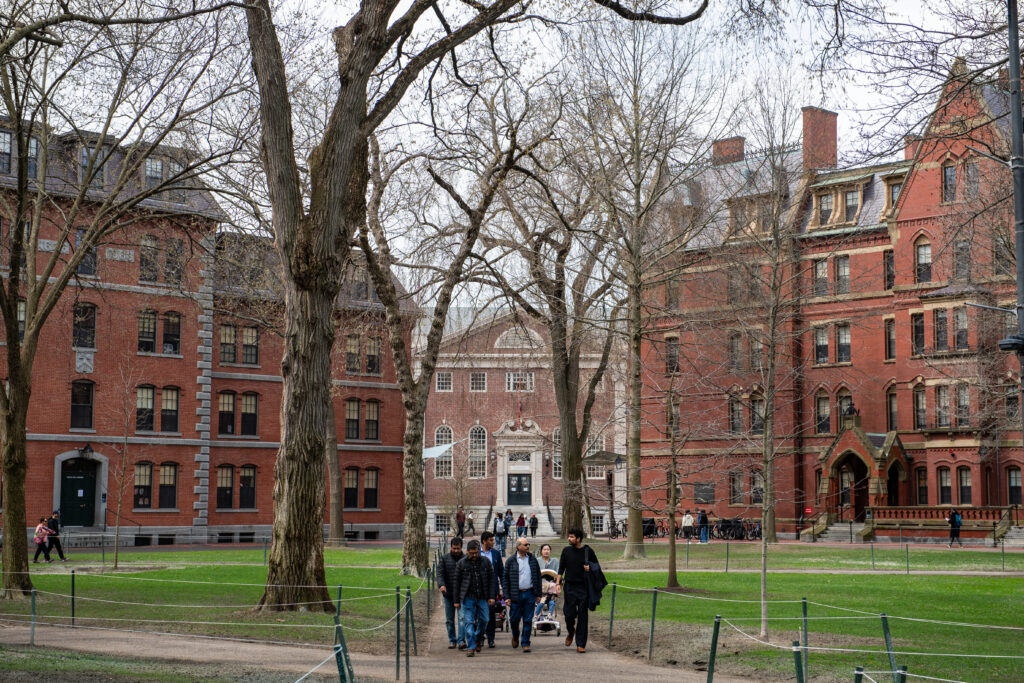
President Donald Trump’s education secretary said Monday that Harvard will no longer receive federal grants, escalating an ongoing battle with the prestigious university as it challenges the funding cuts in court.The Trump administration has for weeks locked horns with Harvard and other higher education institutions over claims they tolerate anti-Semitism on their campuses — threatening their budgets, tax-exempt status and enrollment of foreign students.Education Secretary Linda McMahon, in a letter sent to Harvard’s president and posted online, said that the university “should no longer seek GRANTS from the federal government, since none will be provided.”She alleged that Harvard has “failed to abide by its legal obligations, its ethical and fiduciary duties, its transparency responsibilities, and any semblance of academic rigor.”Harvard — routinely ranked among the world’s top universities — has drawn Trump’s ire by refusing to comply with his demands that it accept government oversight of its admissions, hiring practices and political slant.That prompted the Trump administration to in mid-April freeze $2.2 billion in federal funding, with a total of $9 billion under review. McMahon, a former wrestling executive, said that her letter “marks the end of new grants for the University.”Harvard is the wealthiest US university with an endowment valued at $53.2 billion in 2024.The latest move comes as Trump and his White House crack down on US universities on several fronts, justified as a reaction to what they say is uncontrolled anti-Semitism and a need to reverse diversity programs aimed at addressing historical oppression of minorities.The administration has threatened funding freezes and other punishments, prompting concerns over declining academic freedom.It has also moved to revoke visas and deport foreign students involved in the protests, accusing them of supporting Palestinian militant group Hamas, whose October 7, 2023 attack on Israel provoked the war.Trump’s claims about diversity tap into long-standing conservative complaints that US university campuses are too liberal, shutting out right-wing voices and favoring minorities.

Bolivie: arrestation de la juge qui avait annulé le mandat d’arrêt contre Evo Morales

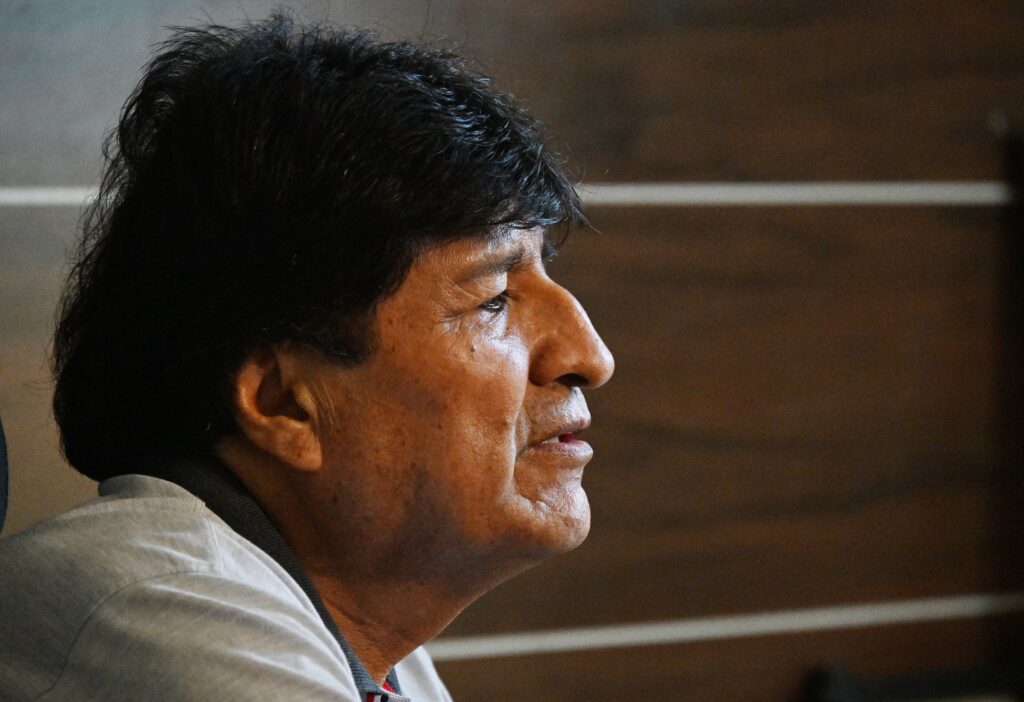
La juge à l’origine de la brève annulation du mandat d’arrêt et des charges contre l’ancien président bolivien Evo Morales, poursuivi pour traite de mineure, a été interpellée lundi, a annoncé le ministère public.Le parquet avait ordonné en octobre l’arrestation du dirigeant indigène de 65 ans qui entend briguer un quatrième mandat à la tête du pays à l’occasion de l’élection présidentielle du 17 août.Quelques jours après la décision de la juge, un tribunal a rétabli vendredi de manière provisoire le mandat d’arrêt et les charges contre l’ancien dirigeant (2006-2019).”La police a exécuté” un mandat d’arrêt contre la juge Lilian Moreno, a déclaré lundi le procureur général Roger Mariaca lors d’une conférence de presse. Le ministère de la Justice avait indiqué dimanche avoir dénoncé la magistrate pour les délits présumés de désobéissance aux résolutions constitutionnelles et de prévarication, c’est-à-dire de manquement à ses devoirs.Ce n’est pas la première fois que la magistrate rendait une décision concernant Evo Morales. En octobre 2024, elle avait déjà annulé dans cette même affaire un premier mandat d’arrêt émis par le parquet.Sa décision avait ensuite été annulée par une instance supérieure.Selon les médias locaux, la magistrate a été arrêtée à Santa Cruz, dans l’est du pays, et emmenée sur un vol commercial à La Paz, la capitale administrative.”Dans les prochaines heures, cette personne, qui est aujourd’hui en garde à vue, fera sa déposition devant un procureur”, a précisé M. Mariaca.L’avocat de la juge Moreno, Vladimir Honor, a estimé auprès des médias locaux que l’arrestation était “illégale et arbitraire”.- “Infraction administrative” -La juge Moreno avait annulé mercredi la procédure entamée dans le département de Tarija, dans le sud de la Bolivie, ordonnant sa réouverture à Cochabamba, le fief politique d’Evo Morales.Vendredi, un juge de La Paz a suspendu les effets de sa décision. Manuel Baptista, président du Conseil de la magistrature, a déclaré lundi lors d’une conférence de presse qu’il n’appartenait pas à la juge Moreno de décider quelle autorité devait être saisie de l’affaire.Il existe des indices “permettant de considérer qu’il y a eu une infraction administrative très grave”, passible de “révocation”, a-t-il ajouté.Il a également précisé que le juge de La Paz qui a annulé la décision de Mme Moreno faisait lui aussi l’objet d’une procédure disciplinaire, n’étant pas habilité à réexaminer cette décision.Depuis octobre et l’émission du mandat d’arrêt à son encontre, Evo Morales a trouvé refuge dans son fief du Chapare, dans le département de Cochabamba, où la police n’est jamais intervenue pour l’interpeller.Selon le parquet, il aurait entretenu en 2015, alors qu’il était à la tête du pays, une relation avec une adolescente avec le consentement des parents en échange d’avantages.Evo Morales a toujours rejeté ces accusations, se disant victime d’une “persécution judiciaire” du gouvernement du président Luis Arce, son ancien ministre de l’Economie.Le premier chef d’Etat bolivien d’origine indigène souhaite revenir au pouvoir malgré un arrêt de la Cour constitutionnelle ayant confirmé fin 2024 l’interdiction pour un président d’exercer plus de deux mandats.

Trump orders curb on virus research he blames for Covid pandemic

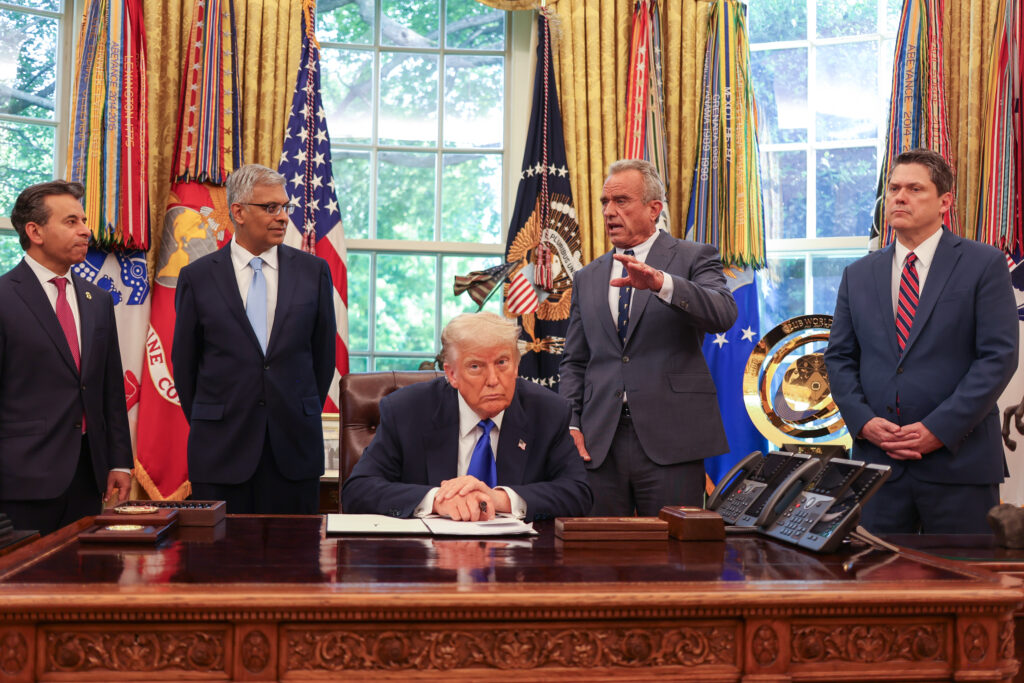
US President Donald Trump on Monday ordered new limitations on a form of biological research his administration says caused the Covid-19 pandemic through a lab leak in China.The United States will halt funding in certain countries for so-called “gain-of-function” experiments — aimed at enhancing the properties of pathogens —- according to an executive order Trump signed Monday at the White House.”There’s no laboratory that’s immune from leaks — and this is going to prevent inadvertent leaks from happening in the future and endangering humanity,” Health Secretary Robert F. Kennedy Jr. wrote on X.”Any nation that engages in this research endangers their own population, as well as the world, as we saw during the COVID pandemic,” added Jay Bhattacharya, director of the National Institutes of Health.Trump has long championed the theory that SARS-CoV-2 leaked from the Wuhan Institute of Virology as a result of gain-of-function research — an alternative to the theory that the virus spilled over naturally from wild animals to humans at a seafood market in the same city.The US government website Covid.gov, which previously focused on promoting vaccine and testing information, is now devoted to highlighting arguments that favor the lab leak.Several US agencies, including the Federal Bureau of Investigation, the Department of Energy, and, most recently, the Central Intelligence Agency  — which shifted its stance under Trump’s second term — now lean toward a lab origin. Several other intelligence agencies favor natural spillover.During the 2010s, the National Institutes of Health funded bat coronavirus research at the Wuhan Institute via the US-based nonprofit EcoHealth Alliance — a grant axed by Trump in 2020 during his first term, but later partially restored under president Joe Biden.Complicating matters, former top infectious disease official Anthony Fauci has maintained that the work in Wuhan did not meet the federal definition of gain-of-function, though some virologists and US officials have disputed that claim.Trump’s order names China as an example of a “country of concern” where such research should not be supported.The order also seeks to end funding for other types of life sciences research in countries deemed to lack sufficient oversight, significantly broadening the types of foreign research that could be targeted.It further calls for the development of a strategy to “govern, limit, and track dangerous gain-of-function research across the United States that occurs without federal funding” — though the extent of the government’s control over non-federal research is unclear, and the order also calls for new legislation to fill any gaps.Trump’s executive order comes amid broader efforts by his administration to reshape American science and health policy, including mass firings to government scientists and steep slashes to research budgets.

Trump plan to reopen Alcatraz mocked as inspired by the movies

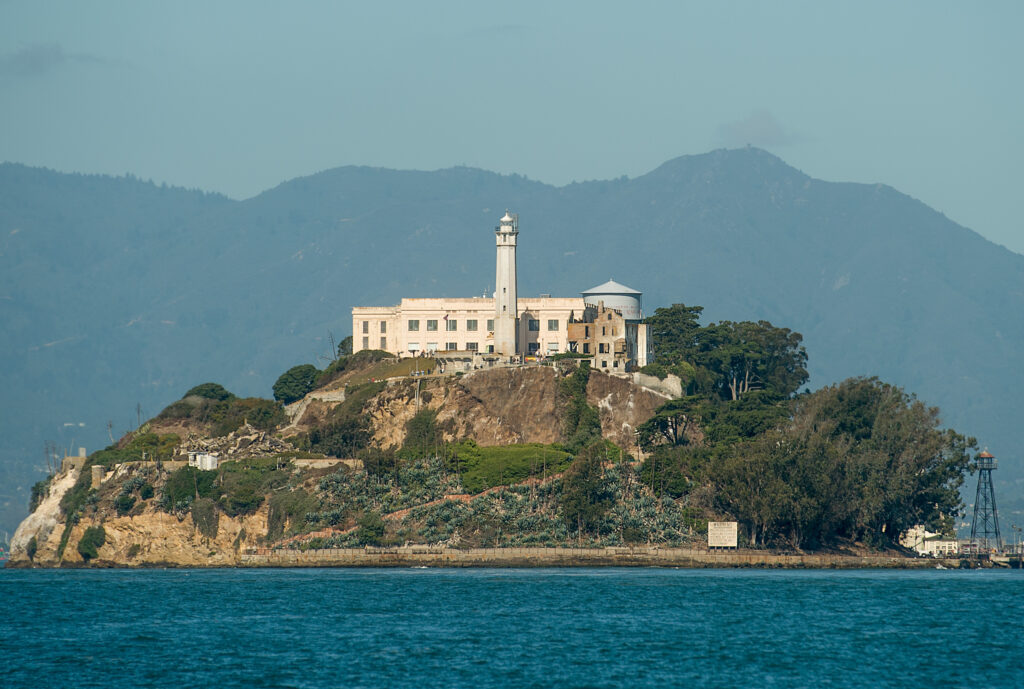
Donald Trump’s plan to reopen Alcatraz was mocked online Monday by people who suggested the US president got the idea from watching TV.The order to resurrect the once-notorious island prison in San Francisco Bay came out of the blue over the weekend with a post on Trump’s social media platform.”Today, I am directing the Bureau of Prisons, together with the Department of Justice, FBI, and Homeland Security, to reopen a substantially enlarged and rebuilt ALCATRAZ, to house America’s most ruthless and violent Offenders,” he said.The island fortress entered American cultural lore after a 1962 escape by three inmates, which became an inspiration for the film “Escape from Alcatraz” starring Clint Eastwood.Social media users were quick to spot that the film had been shown on television in south Florida on Saturday night including in West Palm Beach, where Trump spent the evening at his Mar-a-Lago resort.”Is it possible Trump watched the movie and got caught up in it? Which led to the so-called brilliant idea of rebuilding Alcatraz?” wrote @HansonRitta on X.”Are we getting American policy from TV shows?””This is really funny,” wrote @MatthewSpira.”We’re going to spend a half billion dollars fixing up Alcatraz to never serve as a supermax in the San Francisco Bay all because an old man was bored and flipping through channels on a Saturday night.”- No sharks -Asked Monday how he had come up with the idea, Trump appeared to acknowledge the cinematic influence.”I guess I was supposed to be a movie maker,” he told reporters in the Oval Office.”It represents something very strong, very powerful, in terms of law and order,” he said.”Nobody ever escaped. One person almost got there, but they… found his clothing rather badly ripped up, and it was a lot of shark bites.” he said.The Bureau of Prisons (BOP) notes on its website that 36 people tried to escape from Alcatraz and while most were caught or died in their attempts, the fate of five is unknown and they are listed as “missing and presumed drowned.”But they definitely didn’t get eaten by sharks — a popular myth that has surrounded Alcatraz.”There are no ‘man-eating’ sharks in San Francisco Bay, only small bottom-feeding sharks,” the BOP says.However the president got the idea, his new prisons director William Marshall told US media he was working on the plan.”The Bureau of Prisons will vigorously pursue all avenues to support and implement the President’s agenda,” he said.”I have ordered an immediate assessment to determine our needs and the next steps. “We will be actively working with our law enforcement and other federal partners to reinstate this very important mission.”- High costs -Alcatraz — originally a military garrison — closed in 1963 due to high operating costs after being used as a prison for just 29 years.Because of the physical isolation of the island, operation costs were three times those of other institutions in the US, with food, supplies, fuel and even drinking water having to be brought to the island every week.Maintenance and restoration work required at the time of its closure would have cost up to $5 million, and officials decided it was cheaper to build new prisons elsewhere instead.The island was occupied for 19 months from November 1969 by Native American protestors, who said they were reclaiming abandoned federal land.In 1973 it became a tourist site, and now attracts more than one million visitors each year.Visitors can take a tour of the dilapidated cell blocks, where broken toilets remain in the spartan cells.On an audio tour narrated by former inmates and prison guards, they are taken around the refectory, where guides explain how discipline was maintained — and how it occasionally broke down.The tour showcases the brutal, pitch-dark isolation cells in which prisoners were kept if they ran afoul of the feared warden.Exhibitions detail the size of the prison population in the United States, and highlight how the system contains a disproportionate number of Black people and those from disadvantaged backgrounds.A gift shop sells everything from t-shirts and posters to fridge magnets with institutional rules.