Hamas says no point in further Gaza truce talks

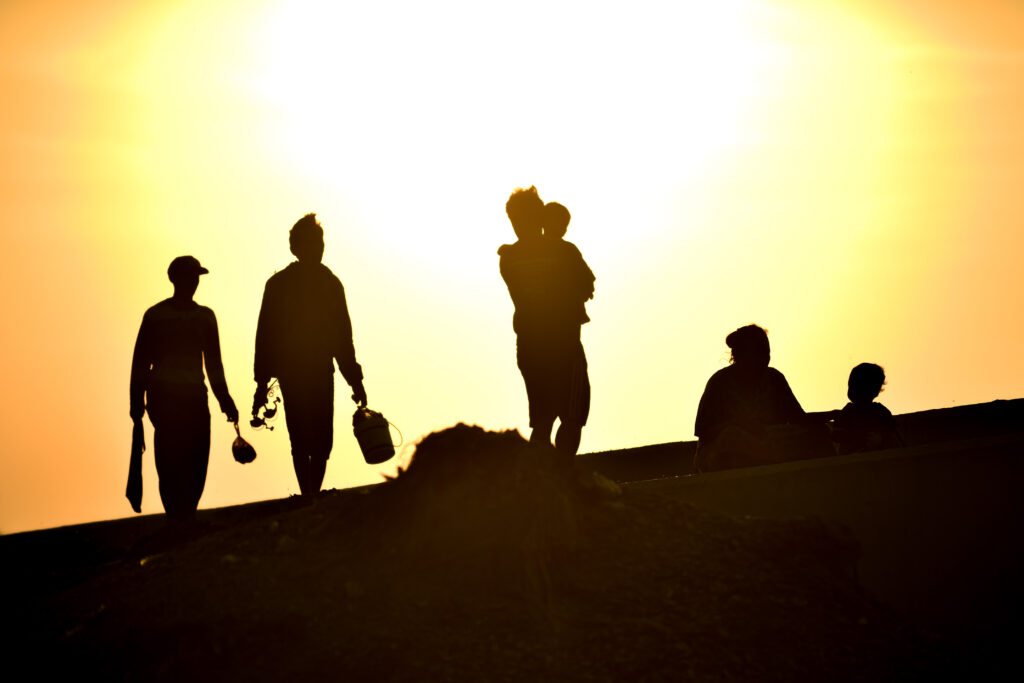
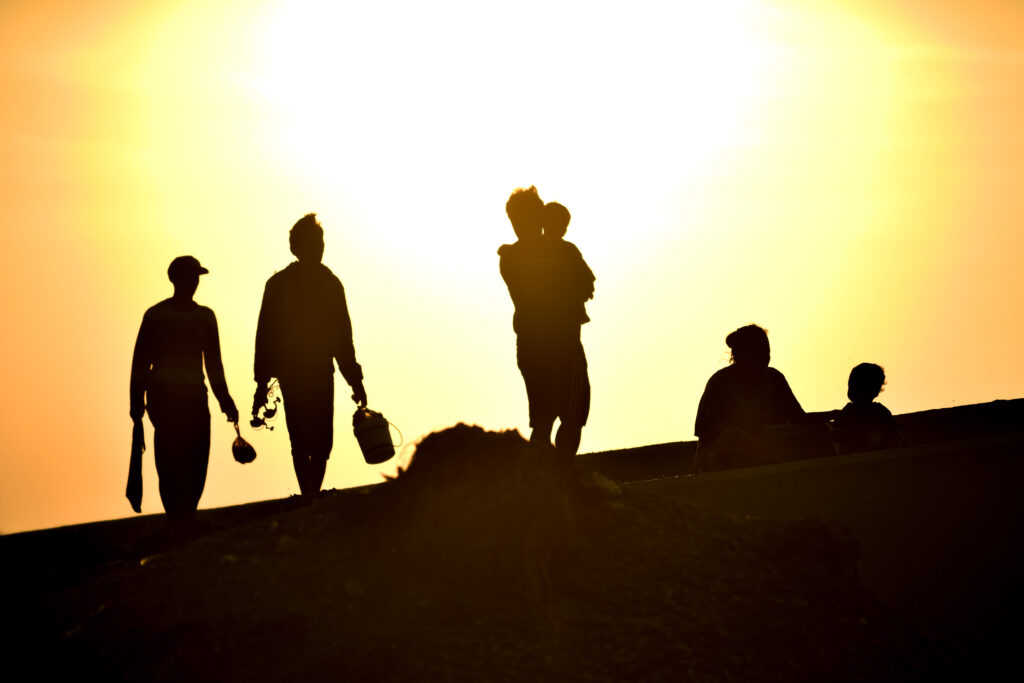
A senior Hamas official said Tuesday the group was no longer interested in truce talks with Israel and urged the international community to halt Israel’s “hunger war” against Gaza.”There is no sense in engaging in talks or considering new ceasefire proposals as long as the hunger war and extermination war continue in the Gaza Strip,” Basem Naim told AFP.He said the world must pressure the government of Israeli Prime Minister Benjamin Netanyahu to end the “crimes of hunger, thirst, and killings” in Gaza.The comments by Naim, a Hamas political bureau member and former Gaza health minister, came a day after Israel’s military said expanded operations in Gaza would include displacing “most” of its population.They come a day after Israel said its security cabinet approved the military’s plan for expanded operations, which an Israeli official said would entail “the conquest of the Gaza Strip and the holding of the territories”.Nearly all of the territory’s inhabitants have been displaced, often multiple times, since the start of the war sparked by Hamas’s October 7, 2023 attack on Israel.Gaza has been under total Israeli blockade since March 2 and faces a severe humanitarian crisis.Israel’s military resumed its offensive on the Gaza Strip on March 18, ending a two-month truce.The spokesperson for Gaza’s civil defence agency, Mahmud Bassal, said Tuesday that three Palestinians including a little girl were killed in Israeli dawn attacks on different areas of Gaza.A UN spokesman said Monday Secretary-General Antonio Guterres was “alarmed” by the Israeli plan that “will inevitably lead to countless more civilians killed and the further destruction of Gaza”.- ‘Large-scale evacuation’ -“Gaza is, and must remain, an integral part of a future Palestinian state,” Farhan Haq said.The Israeli decision comes as the UN and aid organisations have repeatedly warned of the humanitarian catastrophe on the ground, with famine again looming.On Monday, a senior Israeli security official said that “a central component of the plan is a large-scale evacuation of the entire Gazan population from the fighting zones… to areas in southern Gaza”.Military spokesman Effie Defrin said the planned offensive will include “moving most of the population of the Gaza Strip… to protect them”.French Foreign Minister Jean-Noel Barrot in a radio interview on Tuesday called Israel’s plan for a Gaza offensive “unacceptable”, and said its government was “in violation of humanitarian law”.For Palestinians, any forced displacement evokes memories of the “Nakba”, or catastrophe — the mass displacement in the war that led to Israel’s creation in 1948.On Monday, the health ministry in Hamas-run Gaza said at least 2,459 people had been killed since Israel resumed its campaign on March 18, bringing the overall death toll from the war to 52,567.Hamas’s October 7 attack on Israel resulted in the deaths of 1,218 people on the Israeli side, mostly civilians, according to an AFP tally based on official figures.Out of the 251 people abducted by militants that day, 58 are still held in Gaza including 34 the Israeli military says are dead.

‘Aussiewood’ courts Hollywood as Trump film tariffs loom

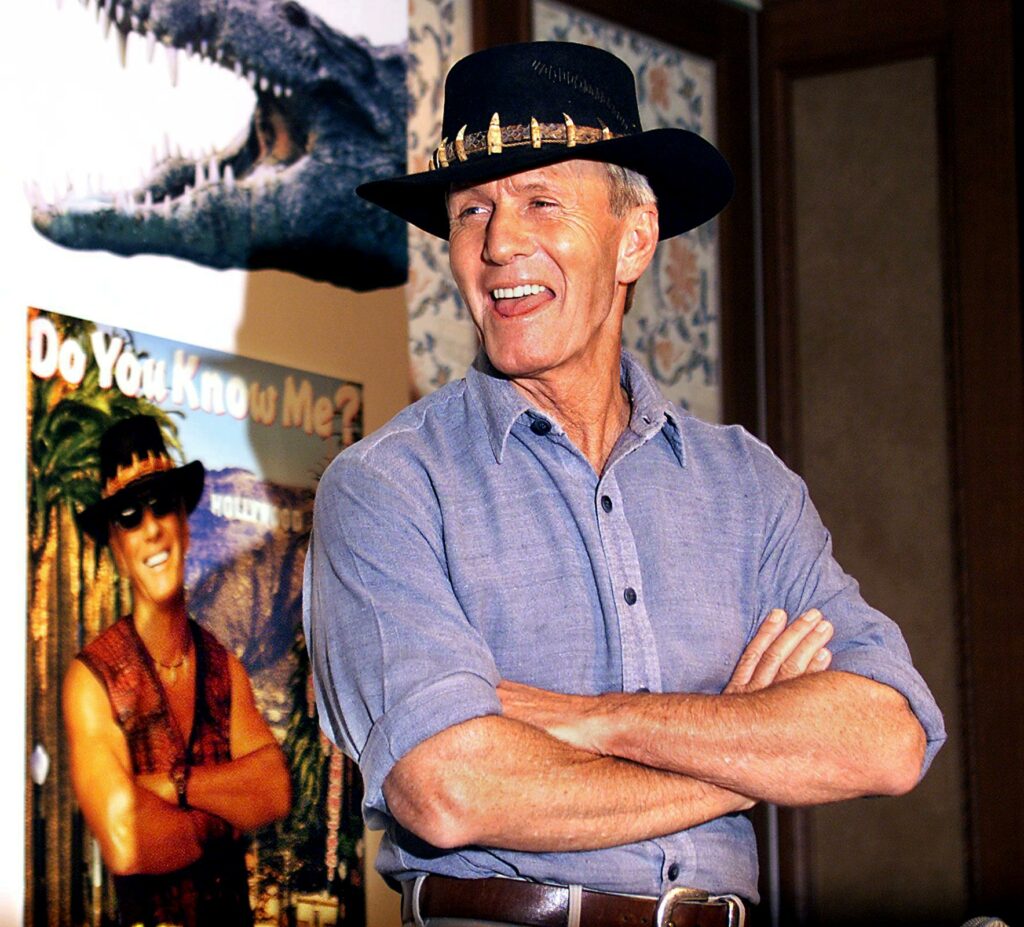
Australia still wants to make “great films” with the United States, Foreign Minister Penny Wong said Tuesday, as new tariffs threaten the home of Hollywood hits like The Matrix, Elvis and Crocodile Dundee.US President Donald Trump on Sunday announced 100 percent tariffs for all films produced in “foreign lands”, saying struggling Tinsel Town would be better served by “movies made in America”. So-called “Aussiewood” has for years used generous tax breaks and other cash incentives to lure foreign filmmakers Down Under, producing a string of hits for major Hollywood studios. Although little is known about how the tariffs might work, Australia’s top diplomat Wong said they risk ultimately proving a flop with filmgoers. “Our message is we make great films together,” she told national broadcaster ABC. “We have films, American films, which are filmed here in Australia. The collaboration is a good thing. So, let’s not get in the way of that.” “Crocodile Dundee”, a 1986 comedy about an Australian bushman transplanted to New York City, helped put Australia’s fledgling film industry on the map in America. Since then, some of Hollywood’s hottest directors have used Australia to film Marvel blockbusters, Mission Impossible instalments, and box office winners like Elvis. The tariffs could also trouble neighbouring New Zealand, which famously lent its spectacular scenery to the beloved Lord of the Rings trilogy. New Zealand Film Commission boss Annie Murray said they were still trying to untangle how the tariffs might work.”We’re mindful, however, this is an evolving situation and it’s too early to speculate on what this could mean,” she told AFP. The tariffs appear to target a business model favoured by American studios who obtain tax breaks to film in countries such as Britain, Canada, Ireland and Australia. A recent survey of studio executives found that their top five favoured production locations were all outside the United States. At the start of this year, Trump appointed veteran stars Sylvester Stallone, Mel Gibson and Jon Voight to bring Hollywood back “bigger, better and stronger than ever before”.

How a privately owned city in Kenya took on corrupt officialsTue, 06 May 2025 06:45:57 GMT

To many, Tatu City on the outskirts of Nairobi looks like a success.The first city entirely built by a private company to be operational in east Africa, with some 25,000 people living and working there, it accounts for around two-thirdsof all foreign investment in Kenya.Its low-tax status has attracted more than 100 businesses including Heineken, …

How a privately owned city in Kenya took on corrupt officialsTue, 06 May 2025 06:45:57 GMT Read More »

US President Trump and Canada’s Carney set for high-stakes meeting

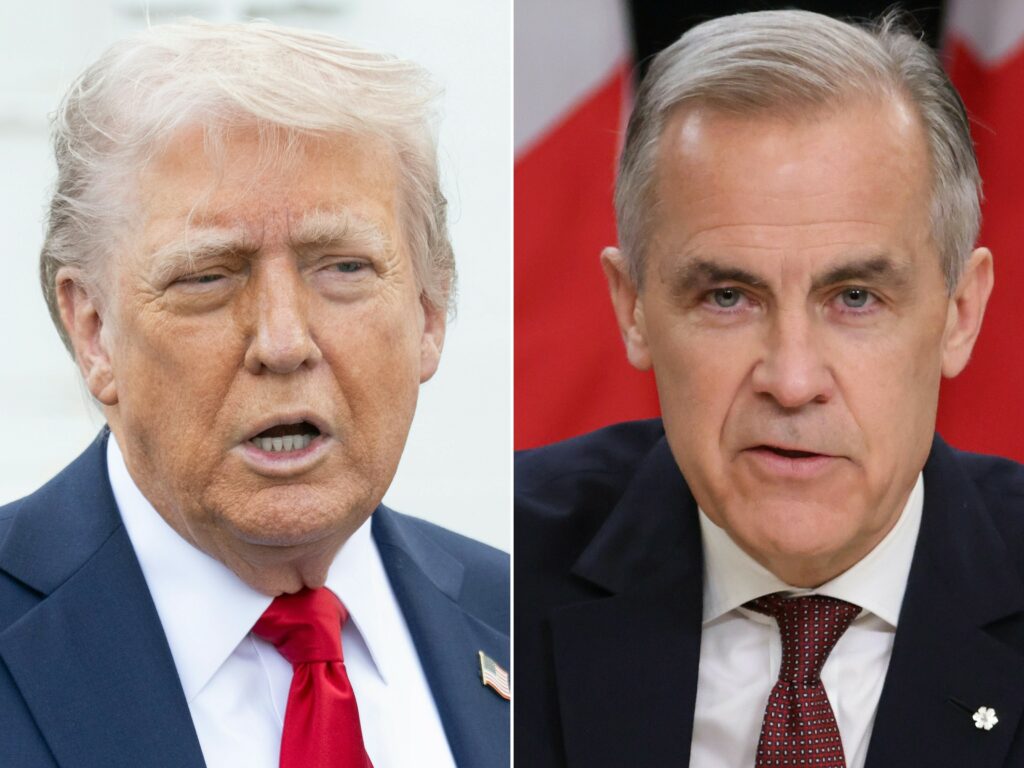
Canadian Prime Minister Mark Carney meets Donald Trump on Tuesday for the first time since he won reelection on a pledge to stand up to the US president’s tariffs and threats to annex the United States’ northern neighbor.The 60-year-old Liberal Party leader has said that things cannot be the same with the United States under Trump, and warned not to expect any immediate agreements from the meeting at the White House.Trump has sparked a major trade war with Canada, which counts the United States as its main ally and trading partner, while repeatedly making extraordinary calls for Canada to become the 51st US state.Republican Trump called Carney a “very nice gentleman” after they spoke last week but said on Monday that he was “not sure” what Carney wanted to talk about.”He’s coming to see me. I’m not sure what he wants to see me about, but I guess he wants to make a deal. Everybody does,” Trump told reporters in the Oval Office.Trump is set to welcome Carney at 11:30 am (1530 GMT), followed by lunch and then a meeting in the Oval Office.Trump slapped general tariffs of 25 percent on Canada and Mexico and sector-specific levies on autos, some of which have been suspended pending negotiations. He has also imposed similar duties on steel and aluminum.Carney has vowed to remake Canada’s ties with the United States in perhaps its biggest political and economic shift since World War II.”Our old relationship based on steadily increasing integration is over. The questions now are how our nations will cooperate in the future,” Carney said on Friday.The Canadian leader said he would also “fight to get the best deal” on the tariffs.But Trump’s ultra-loyal Commerce Secretary Howard Lutnick said it would be “really complex” to reach a deal.”They have their socialist regime and it’s basically feeding off of America,” he told Fox Business on Monday. “I just don’t see how it works out perfectly.”- ‘Important moment’ -The US president inserted himself into Canada’s election early on with a social media post saying Canada would face “ZERO TARIFFS” if it “becomes the cherished 51st state.”Pierre Poilievre’s Conservative Party had been on track to win the vote but Trump’s attacks, combined with the departure of unpopular former premier Justin Trudeau, transformed the race.Carney, who replaced Trudeau as prime minister in March, convinced voters that his experience managing economic crises made him the ideal candidate to defy Trump.The political newcomer previously served as governor of the Bank of Canada and the Bank of England, and in the latter post he played a key role reassuring markets after the 2016 Brexit vote.Carney is known for weighing his words carefully but he will face a challenge dealing with the confrontational Trump on the US president’s home turf.”This is a very important moment for him, since he insisted during the campaign that he could take on Mr Trump,” Genevieve Tellier, a political scientist at the University of Ottawa, told AFP.The Canadian premier would also have to avoid the fate of Ukrainian President Volodymyr Zelensky, who walked into a brutal tongue-lashing from Trump and Vice President JD Vance in February.”Everyone obviously remembers the altercation with Zelensky,” said Tellier.One point in Carney’s favor is that he is not Trudeau, the slick former prime minister whom Trump famously loathed and belittled as “governor” of Canada, she added.The world will also be watching, with Carney’s victory one of two by left-leaning leaders in the past week in elections that Trump’s stance may have swayed.Carney’s victory came just days before Australian Prime Minister Anthony Albanese also won reelection in a vote that was overshadowed by Trump’s tariff threats.On arrival in the US capital, the Canadian PM struck a confident tone.”Canada and the United States are strongest when we work together — and that work starts now,” he said on social media.

Gabon’s new president faces tough economic challengesTue, 06 May 2025 06:29:09 GMT

Big challenges await Gabon’s new president Brice Clotaire Oligui Nguema as he takes the reins of a country rich in oil but struggling with debt.The general was sworn in on Saturday after winning 94.85 percent in the April 12 vote in which international observers signalled no major irregularities.His victory followed a 19-month transition after he …

Gabon’s new president faces tough economic challengesTue, 06 May 2025 06:29:09 GMT Read More »

Niveau de vie, santé: le rebond post-Covid s’essouffle déjà, s’inquiète l’ONU

Après le rebond post-Covid, l’humanité a enregistré en 2024 un ralentissement “inattendu” et “troublant” de son développement, et ce avant même les coupes drastiques dans l’aide internationale, s’inquiète l’ONU dans un rapport publié mardi.Avant l'”anomalie” de la pandémie qui a entrainé en 2020 et 2021 un recul sans précédent de l’Indice de développement humain (HDI) prenant en compte niveau de vie, santé et éducation, le monde était sur une trajectoire ascendante qui aurait permis d’atteindre un haut niveau de développement humain en 2030.Mais le rebond qui avait permis de retrouver en 2023 le niveau pré-covid “semble perdre de la vitesse”, et le fossé entre pays riches et pauvres s’est encore creusé, selon le rapport annuel du Programme des Nations unies pour le développement (PNUD).Alors “si la lenteur des progrès enregistrés en 2024 devient +la nouvelle norme+”, atteindre ce niveau de développement élevé espéré “pourrait prendre plusieurs décennies supplémentaires, ce qui rendrait notre monde moins sûr, plus divisé et plus vulnérable aux chocs économiques et écologiques”, met en garde le patron du PNUD, Achim Steiner.D’autant plus que ce ralentissement a commencé avant même les récentes coupes sombres dans l’aide internationale annoncées par plusieurs pays, en particulier les Etats-Unis.Si les pays riches “cessent de financer le développement”, “cela aura un impact sur les économies, les sociétés, et oui, ça se répercutera peut-être dans un an ou deux sur l’Indice de développement humain: espérance de vie raccourcie, revenus en déclin, plus de conflits”, s’inquiète Achim Steiner lors d’un entretien avec l’AFP.Si les experts du PNUD ne sont pas encore certains des causes profondes du ralentissement observé en 2024, ils ont identifié comme l’un des moteurs une relâche des progrès de l’espérance de vie, peut-être liée à des effets secondaires du Covid, ou aux guerres qui se multiplient dans le monde. – “Relancer” grâce à l’IA -Dans ce contexte, le PNUD espère que l’intelligence artificielle pourra “relancer le développement”.Le rapport fait une place importante aux défis et risques des outils de l’IA, dévoilant un sondage réalisé auprès de 21.000 personnes dans 21 pays entre novembre 2024 et janvier 2025.Les résultats montrent qu’environ une personne sur cinq utilise déjà l’IA, et que deux tiers des personnes interrogées pensent l’utiliser dans l’année qui vient pour l’éducation, la santé et le travail.L’IA “va changer pratiquement tous les aspects de notre vie”, note Achim Steiner, estimant que l’opportunité qu’elle représente pour le développement humain est désormais “une question de choix”.”L’avenir est entre nos mains. La technologie concerne les gens, pas seulement des choses. En dessous du côté tape-à-l’oeil des inventions se cachent des choix importants, par des individus ou des groupes, dont les conséquences se répercuteront à travers les générations”, souligne le rapport.Choisir notamment entre construire une économie “collaborative” avec l’IA ou en compétition avec elle.Si environ la moitié des personnes interrogées s’attendent à ce qu’au moins une partie de leur travail soit remplacée par l’IA, ils semblent aussi prêts à saisir cette opportunité: 60% des sondés espèrent ainsi l’apparition d’emplois qui n’existent pas.Le PNUD pointe d’autre part du doigt les risques liés à l’AI, notamment les inégalités d’accès entre pays riches et pauvres, et les “préjugés culturels” liés à des données partielles et aux pays où les outils sont développés et les chatbots entrainés.Une récente étude de chercheurs de l’université d’Harvard citée par le rapport montre ainsi que les réponses de ChatGPT sont plus proches de celle d’un humain vivant dans un pays riche anglophone que d’une personne vivant dans un pays pauvre.Mais “nous pouvons concevoir des solutions pour réduire ce risque”, assure Achim Steiner, plaidant pour ne pas utiliser ce prétexte pour rejeter l’opportunité de l’IA, par exemple pour la recherche médicale.

Niveau de vie, santé: le rebond post-Covid s’essouffle déjà, s’inquiète l’ONU

Après le rebond post-Covid, l’humanité a enregistré en 2024 un ralentissement “inattendu” et “troublant” de son développement, et ce avant même les coupes drastiques dans l’aide internationale, s’inquiète l’ONU dans un rapport publié mardi.Avant l'”anomalie” de la pandémie qui a entrainé en 2020 et 2021 un recul sans précédent de l’Indice de développement humain (HDI) prenant en compte niveau de vie, santé et éducation, le monde était sur une trajectoire ascendante qui aurait permis d’atteindre un haut niveau de développement humain en 2030.Mais le rebond qui avait permis de retrouver en 2023 le niveau pré-covid “semble perdre de la vitesse”, et le fossé entre pays riches et pauvres s’est encore creusé, selon le rapport annuel du Programme des Nations unies pour le développement (PNUD).Alors “si la lenteur des progrès enregistrés en 2024 devient +la nouvelle norme+”, atteindre ce niveau de développement élevé espéré “pourrait prendre plusieurs décennies supplémentaires, ce qui rendrait notre monde moins sûr, plus divisé et plus vulnérable aux chocs économiques et écologiques”, met en garde le patron du PNUD, Achim Steiner.D’autant plus que ce ralentissement a commencé avant même les récentes coupes sombres dans l’aide internationale annoncées par plusieurs pays, en particulier les Etats-Unis.Si les pays riches “cessent de financer le développement”, “cela aura un impact sur les économies, les sociétés, et oui, ça se répercutera peut-être dans un an ou deux sur l’Indice de développement humain: espérance de vie raccourcie, revenus en déclin, plus de conflits”, s’inquiète Achim Steiner lors d’un entretien avec l’AFP.Si les experts du PNUD ne sont pas encore certains des causes profondes du ralentissement observé en 2024, ils ont identifié comme l’un des moteurs une relâche des progrès de l’espérance de vie, peut-être liée à des effets secondaires du Covid, ou aux guerres qui se multiplient dans le monde. – “Relancer” grâce à l’IA -Dans ce contexte, le PNUD espère que l’intelligence artificielle pourra “relancer le développement”.Le rapport fait une place importante aux défis et risques des outils de l’IA, dévoilant un sondage réalisé auprès de 21.000 personnes dans 21 pays entre novembre 2024 et janvier 2025.Les résultats montrent qu’environ une personne sur cinq utilise déjà l’IA, et que deux tiers des personnes interrogées pensent l’utiliser dans l’année qui vient pour l’éducation, la santé et le travail.L’IA “va changer pratiquement tous les aspects de notre vie”, note Achim Steiner, estimant que l’opportunité qu’elle représente pour le développement humain est désormais “une question de choix”.”L’avenir est entre nos mains. La technologie concerne les gens, pas seulement des choses. En dessous du côté tape-à-l’oeil des inventions se cachent des choix importants, par des individus ou des groupes, dont les conséquences se répercuteront à travers les générations”, souligne le rapport.Choisir notamment entre construire une économie “collaborative” avec l’IA ou en compétition avec elle.Si environ la moitié des personnes interrogées s’attendent à ce qu’au moins une partie de leur travail soit remplacée par l’IA, ils semblent aussi prêts à saisir cette opportunité: 60% des sondés espèrent ainsi l’apparition d’emplois qui n’existent pas.Le PNUD pointe d’autre part du doigt les risques liés à l’AI, notamment les inégalités d’accès entre pays riches et pauvres, et les “préjugés culturels” liés à des données partielles et aux pays où les outils sont développés et les chatbots entrainés.Une récente étude de chercheurs de l’université d’Harvard citée par le rapport montre ainsi que les réponses de ChatGPT sont plus proches de celle d’un humain vivant dans un pays riche anglophone que d’une personne vivant dans un pays pauvre.Mais “nous pouvons concevoir des solutions pour réduire ce risque”, assure Achim Steiner, plaidant pour ne pas utiliser ce prétexte pour rejeter l’opportunité de l’IA, par exemple pour la recherche médicale.

‘I have to pray’: fear, danger for paramedics in S. Africa’s crime hotspotsTue, 06 May 2025 06:22:11 GMT

The call came in just after 7:00 pm as the paramedics began the night shift: a man had been stabbed in the head with a glass bottle and was bleeding heavily.The medical crew and their ambulance from Cape Town’s Emergency Medical Services (EMS) were only minutes away. But they could not respond until they had …

‘I have to pray’: fear, danger for paramedics in S. Africa’s crime hotspotsTue, 06 May 2025 06:22:11 GMT Read More »