Kenya is ‘in total disarray’: opposition candidate Martha KaruaFri, 09 May 2025 06:01:42 GMT

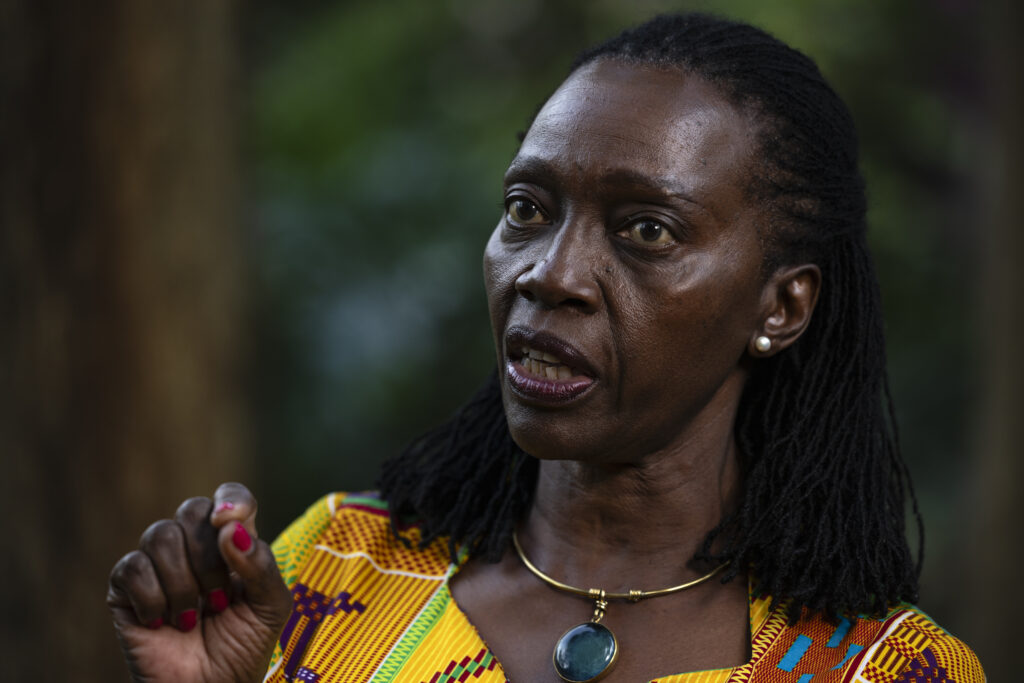
Martha Karua, among the first to declare a run for the Kenyan presidency in 2027, told AFP the country is in “total disarray” due to corruption, police killings and economic decline.Karua served in government in the 2000s and, as a lawyer, has lately represented jailed opposition figures in neighbouring Tanzania and Uganda.She hopes to harness …

Kenya is ‘in total disarray’: opposition candidate Martha KaruaFri, 09 May 2025 06:01:42 GMT Read More »

En Chine, l’industrie du textile anxieuse avant les négociations avec les Etats-Unis

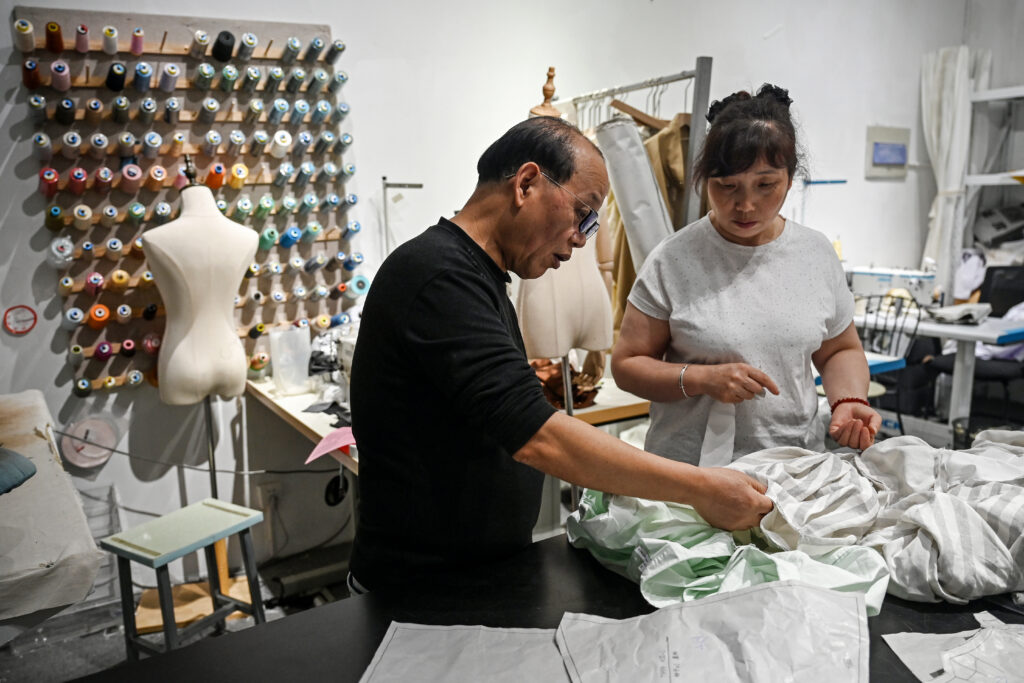
Au milieu d’échantillons de soie et de tweed, dans l’un des plus grands marchés aux tissus de Chine à Shaoxing (est), une exportatrice de textiles nommée Cherry ne cache pas son impatience quant au résultat des négociations commerciales entre son pays et les Etats-Unis ce week-end.La clientèle de son entreprise est quasiment pour moitié composée d’Américains et certaines commandes ont déjà été annulées.Elle explique à l’AFP compter désespérément sur une réduction des droits de douane réciproques, qui rendent les échanges commerciaux presque impossibles, à l’issue des négociations qui s’ouvrent samedi à Genève en Suisse.Le président américain Donald Trump impose à la Chine un taux prohibitif de 145% – pouvant aller jusqu’à 245% pour l’automobile -, auquel Pékin a riposté avec une taxe de 125%.Les discussions des 10 et 11 mai constitueront le premier contact public officiel entre les deux plus grandes économies du monde en vue de résoudre leur guerre commerciale.Cherry redoute une situation qui sera “très mauvaise si cela continue”, et reste sceptique quant aux affirmations selon lesquelles son industrie serait en mesure de résister à des surtaxes prolongées.”Il y a quelques mois, j’ai entendu des gens dire que de nombreux conteneurs (de marchandises) avaient été bloqués (…) Certaines usines ont déjà dû arrêter leur production”, renchérit-elle.- “Bien sûr que j’ai peur” -Quelque 18% du total des exportations chinoises de textiles et de vêtements en 2024 étaient à destination des Etats-Unis, selon Moody’s.Une part importante de cette production provient de la province de Zhejiang, moteur de l’industrie manufacturière de l’est du pays.Dans la ville de Shaoxing se trouve le district de Keqiao, avec ses 26.000 magasins vendant de tout, du velours à la viscose en passant par la fausse fourrure.La zone est considérée comme l’un des centres les plus actifs au monde en ce qui concerne le textile.Mais les clients semblaient peu nombreux lorsque l’AFP s’est rendu sur place cette semaine.”Bien sûr que j’ai peur”, lâche une femme prénommée Li. “C’est mon travail, je compte sur lui pour subvenir aux besoins de ma famille (…) J’espère que les négociations aboutiront à un résultat positif”, poursuit-elle.- “Scénario perdant-perdant” -Une autre vendeuse de Keqiao, qui n’a pas souhaité donner son nom, a décrit la situation comme un “scénario perdant-perdant”.Certains de ses clients américains ont accepté de verser un acompte non remboursable de 30% pour lancer la production.Mais la commande peut être annulée, si le niveau des droits de douane après les négociations reste encore trop élevé. “Nous n’osons plus prendre de commandes américaines. Le prix de revient ne peut même pas être couvert, surtout si l’on ajoute des droits de douane aussi élevés”, confie de son côté un sexagénaire prénommé Zhou, devant des pans de kaki de différentes teintes.Pour les entreprises comme celle de sa fille, qui traitent principalement avec des clients américains, “l’impact est énorme”.”La meilleure solution serait que tout le monde s’assoie et discute. Ce serait bon pour tout le monde, n’est-ce pas ?”Xiao Huilan, 31 ans, qui exerce dans un atelier de fabrication de combinaisons de ski situé à quelques kilomètres de Keqiao, raconte que beaucoup d’entreprises locales ont renoncé à produire à la suite de commandes qui ont été réduites ou suspendues par la suite.”A court terme, nous pouvons nous débrouiller, mais à long terme, les entreprises ne peuvent pas le supporter”, explique-t-elle.”Dans une guerre commerciale, personne ne gagne vraiment. Ce que nous espérons, c’est une réconciliation, où tout le monde peut coexister et prospérer ensemble.”

India says repulsed fresh Pakistan attacks as de-escalation efforts grow

India said Friday it had repulsed a wave of Pakistani drone and artillery attacks overnight, and Islamabad insisted it had not struck targets across the border, as the latest conflict between the nuclear-armed neighbours showed no signs of relenting.Nearly 50 people have been killed on both sides, mainly in Pakistan, since India launched air strikes on Wednesday targeting “terrorist camps” and sparking the worst clashes in decades.New Delhi blames Islamabad for backing an April 22 attack near Pahalgam, a tourist town on the Indian-run side of disputed Kashmir which killed 26 people, almost all of them travellers and Hindu men.Pakistan denies the claim.The countries have fought two of their three full-scale wars over Kashmir, a disputed territory that both claim in full but have administered separate portions of since 1947 when the sub-continent was divided into two nations after British colonial rule ended.”Pakistan Armed Forces launched multiple attacks using drones and other munitions along entire Western border on the intervening night of 08 and 09 May,” the Indian army said in a statement on Friday.”The drone attacks were effectively repulsed and befitting reply was given,” it said.Islamabad denied launching drone attacks after India on Thursday said Pakistani forces targeted three military stations — two in Kashmir and one in the neighbouring state of Punjab.”Pakistan has not targeted any locations in Indian Illegally Occupied Jammu & Kashmir, or across international border, so far,” Pakistan’s Information Minister Ataullah Tarar said late Thursday.In Indian-administered Kashmir, a police official said one woman died after heavy overnight shelling in Uri, some 100 kilometres (60 miles) from the state capital Srinagar, and two men were wounded.- Airports, schools closed’ -Schools were closed on Friday in parts of Kashmir, six border districts in the neighbouring state of Punjab and in the provincial capital Chandigarh, and Rajasthan which also borders Pakistan. India has also closed 24 airports, but according to local media the suspension on civilian flights may be lifted on Saturday morning. The majority of the casualties have been in Pakistan, where at least 32 people have been killed, including 12 children.Islamabad said Thursday its forces had neutralised 29 Israeli-made Harop drones that attacked Pakistan.The cities targeted included Rawalpindi, headquarters of the military and also the cricket stadium hosting the ongoing Pakistan Super League. The remaining matches of the league have been moved to the United Arab Emirates.Indian cricket bosses will decide Friday what happens to the rest of their IPL season, a senior official said, in the face of the deadly confrontations.A match in Dharamsala — less than 200 kilometres (125 miles) from Jammu, where explosions were reported hours earlier — was abandoned late Thursday because of apparent floodlight failure. India meanwhile ordered X to block more than 8,000 accounts, the platform said, adding that it was reluctantly complying with what it described as government-imposed “censorship”.The move appears to be part of India’s sweeping crackdown targeting social media accounts of Pakistani politicians, celebrities and media organisationsNew Delhi has blamed the Pakistan-based Lashkar-e-Taiba — a UN-designated terrorist organisation for the April 22 shooting near Pahalgam.Pakistan has denied involvement and called for an independent investigation.- ‘Immediate de-escalation’ -Diplomats and world leaders have pressured both countries for restraint.US Secretary of State Marco Rubio spoke with leaders in both countries Thursday and urged “immediate de-escalation”, his spokeswoman said.US Vice President JD Vance echoed that call but added that Washington was “not going to get involved in the middle of a war that’s fundamentally none of our business”.Several countries have offered to mediate, and Iranian Foreign Minister Abbas Araghchi met his Indian counterpart Subrahmanyam Jaishankar in New Delhi on Thursday, days after visiting Pakistan.Amnesty said the warring sides “must take all necessary measures to protect civilians and minimise any suffering and casualties”.Pakistani authorities insist they have the right to retaliate to India’s initial strikes. In a late Wednesday TV address to the nation, Pakistan Prime Minister Shehbaz Sharif warned they would “avenge” those killed by Indian air strikes.burs-ach/fox

China sales to US slump even as exports beat forecasts

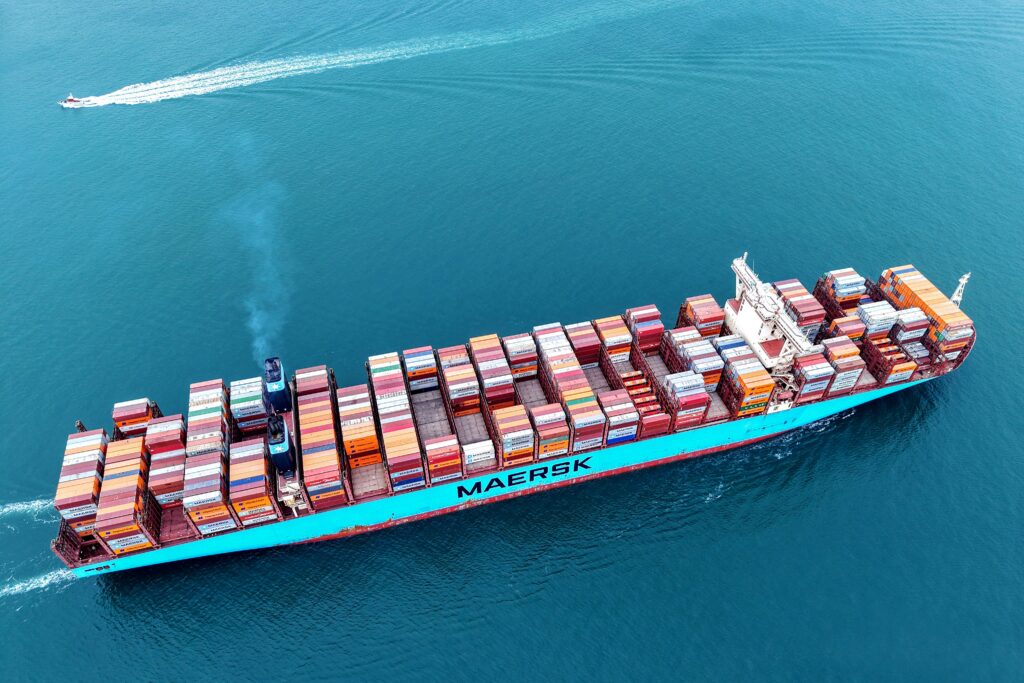
China said Friday sales to the United States slumped last month while its total exports topped forecasts, as Beijing fought a gruelling trade war with its superpower rival.Trade between the world’s two largest economies has nearly skidded to a halt since US President Donald Trump imposed various rounds of levies on China that began as retaliation for Beijing’s alleged role in a devastating fentanyl crisis.Tariffs on many Chinese products now reach as high as 145 percent — with cumulative duties on some goods soaring to a staggering 245 percent.Beijing has responded with 125 percent tariffs on imports of US goods, along with other measures targeting American firms.Against that backdrop, analysts polled by Bloomberg had expected exports to rise just 2.0 percent year-on-year last month.But they beat expectations, coming in at 8.1 percent.However, exports to the United States — one of China’s top trading partners — fell 17.6 percent month-on-month, data showed.”The damage of the US tariffs has not shown up in the trade data in April,” Zhiwei Zhang, president and chief economist at Pinpoint Asset Management, said in a note.”This may be partly due to transshipment through other countries, and partly because of trade contracts that were signed before the tariffs were announced,” he added.”I expect trade data will weaken in the next few months gradually.”US Treasury Secretary Scott Bessent and Trade Representative Jamieson Greer are set to meet Chinese Vice Premier He Lifeng in Switzerland on Saturday and Sunday, marking the first talks between the superpowers since Trump unveiled his tariffs.April imports also beat expectations, dropping 0.2 percent, compared with the 6.0 percent slide analysts had estimated.Purchases from overseas were also being closely watched as a key gauge of consumer demand in China, which has remained sluggish.Policymakers this week eased key monetary policy tools in a bid to ramp up domestic activity.Those included cuts to a key interest rate and moves to lower the amount banks must hold in reserve in a bid to boost lending.A persistent crisis in the property sector — once a key driver of growth — also remains a drag on the economy.In an effort to help the sector, Pan also said the bank would cut the rate for first-time home purchases with loan terms over five years to 2.6 percent, from 2.85 percent.The moves represent some of China’s most sweeping steps to boost the economy since September.But analysts pointed to a continued lack of actual stimulus funds needed to get the economy back on track.

Trump unveils UK trade deal, first since tariff blitz

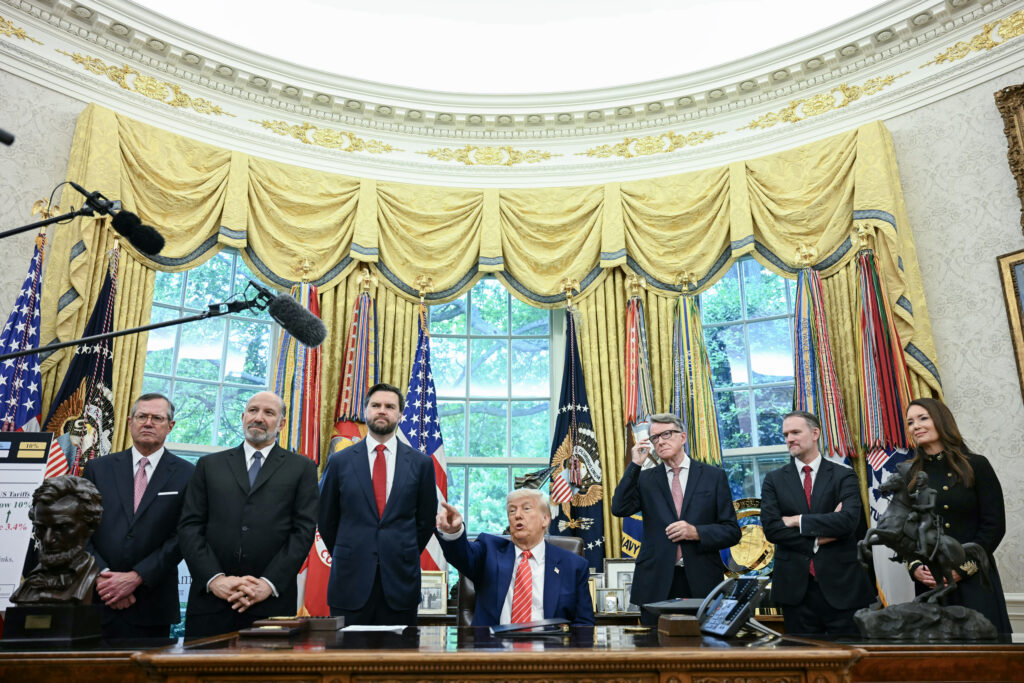
US President Donald Trump and British Prime Minister Keir Starmer unveiled a “historic” trade agreement Thursday, Trump’s first deal with any country since he unleashed a blitz of sweeping global tariffs.The deal will see Washington lower tariffs on British luxury cars and lifts them entirely on steel and aluminum, although a 10 percent baseline levy on British goods stays in place.As Trump announced the deal while making a phone call to Starmer in the Oval Office, he said Britain would in return will open up markets to US beef and other farm products.But the deal remained thin on details, despite Trump hailing it as a template for deals with other countries such as China after his “Liberation Day” tariffs in April.”I’m thrilled to announce that we have reached a breakthrough trade deal with the United Kingdom,” Trump said. “The deal includes billions of dollars of increased market access for American exports.”The deal came through at the last minute, with Starmer saying he learnt that Trump had given it his approval when he called him on Wednesday night as he watched a football match.”This is a really fantastic, historic day,” Starmer said during the call with Trump.He noted that it coincided with the 80th anniversary of “Victory Day” for allied forces — including Britain and the United States — over Nazi Germany in World War II.- ‘James Bond’ -Britain had made a major push to avoid Trump’s tariffs, which the Republican insists are necessary to stop the United States from being “ripped off” by other countries.Starmer launched a charm offensive as early as February when he came to the White House armed with an invitation from King Charles III for a historic second state visit for Trump.The reward came on Thursday, with a trade deal slashes export tariffs for British cars from 27.5 percent to 10 percent, Britain said. The move will apply to 100,000 vehicles from luxury makers like Rolls Royce and Jaguar, billionaire Trump added.”That is a huge and important reduction,” PM Starmer said during a visit to a Jaguar Land Rover factory in the central Midlands area of England.US automakers however said the deal “hurts” companies that have partnered with Canada and Mexico.The British government insisted that the deal to allow in more US agricultural products would not dilute British food standards, amid concerns over chlorinated US chicken and hormones in US beef.It also entirely lifts recently-imposed 25 percent tariffs on British steel and aluminium. World stock markets mostly rose on news of the deal but uncertainty remained over key issues.Trump said that “James Bond has nothing to worry about” from his threatened 100 percent tariffs on foreign movies, but did not spell out how Britain could get a carve out.The deal also failed to mention digital services, with the White House keen to tackle a recent digital services tax imposed by Britain on US tech giants.- ‘Maxed-out’ -Both sides said there would be further negotiations on a fuller deal, but Trump denied overselling the agreement.”This is a maxed-out deal — not like you said it really incorrectly,” he added, answering a reporter’s question on whether he was overstating the breadth of the deal.The deal is a fresh win for Labour leader Starmer after Britain this week struck a free-trade agreement with India, its biggest such deal since it voted to leave the European Union in 2016.Torturous negotiations between London and Washington in the years since the Brexit vote failed to produce a deal until now.But Trump has also been in need of a win after weeks of insisting that countries were lining up to make deals with the United States.Trump told reporters at the White House he was “working on three of them” and that the British deal could act as a template.US Commerce Secretary Howard Lutnick said most countries would still be hit with higher tariffs than the 10 percent baseline “Liberation Day” tariffs, and only the “best” would escape.Top US and Chinese officials are due to meet in Switzerland over the weekend to kickstart trade officials, the first official meeting since Trump’s tariffs plunged the world’s two largest economies into a trade war.

Chicken wings, trucks: the surprising Saudi obsession with America

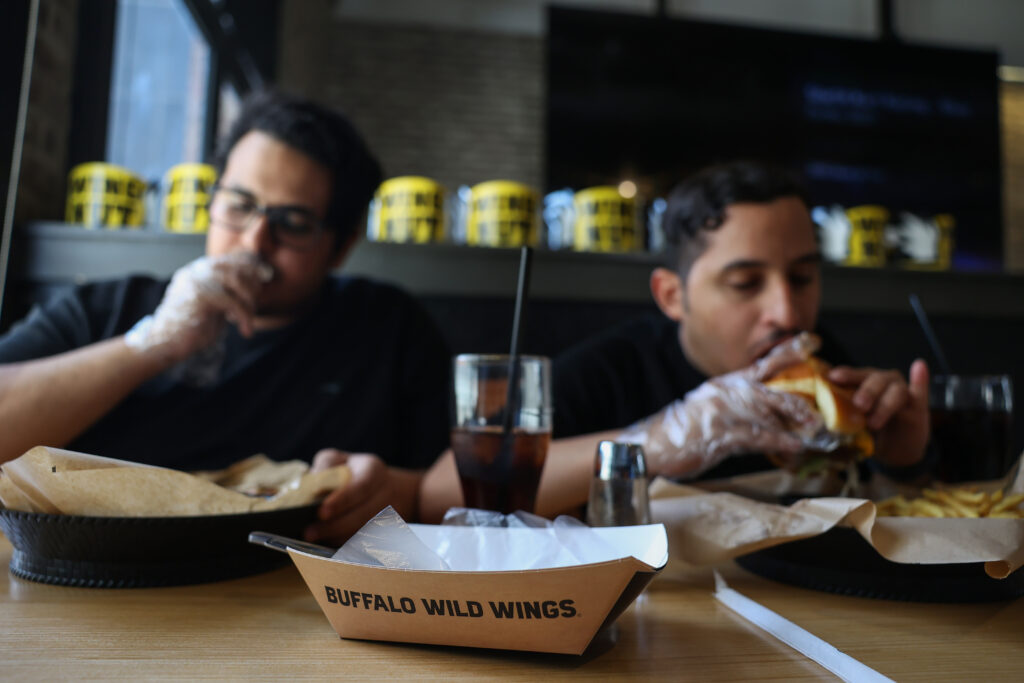
During his nine years living in Tennessee, Fahd, a Saudi national, found comfort and consistency at Dunkin Donuts, where he placed the same order every day.Now back in Riyadh, Fahd is doing something similar, highlighting the Saudi Arabian love affair with all things American that many find surprising.”When I came here, thank God, the same cafe and same order were here too,” said the 31-year-old mechanical engineer, who did not want to give his family name.”I started living the same lifestyle here as I did in America.”Saudi Arabia, often known for its religious austerity, is home to Islam’s holiest sites, and welcomes millions of Muslim pilgrims ever year.It also has — as just one example — more than 600 branches of Dunkin Donuts, serving roughly 250,000 of its 35-million population each day, according to the franchise.Despite its image as a cloistered and traditional society, life in Saudi is awash in Western corporate influence, especially from American companies.Buffalo Wild Wings, Chuck-e-Cheese and Starbucks populate Riyadh’s sprawl of office parks and shopping centres, while the capital’s traffic-clogged streets heave with hulking American SUVs and pickup trucks.- ‘Every neighbourhood’ -The nations have shared a tight bond since King Abdulaziz bin Saud, the founder of modern Saudi Arabia, and US president Franklin Roosevelt shook hands on board a US cruiser in the Suez Canal during the final months of World War II.In the ensuing decades, the United States has been at the forefront of providing military protection in return for privileged access to Saudi’s colossal oil reserves.The Saudi riyal is pegged to the greenback and US leaders have been regular guests, including Donald Trump who arrives in Saudi Arabia on Tuesday on the first major overseas trip of his second term.The relationship has faced rough patches — including the oil embargo in the 1970s, the September 11, 2001 attacks carried out by mostly Saudi hijackers and the gruesome murder of US-based dissident journalist Jamal Khashoggi by Saudi agents in Istanbul in 2018. But for Saudis, the ties that bind, including a love of American food, cars and movies, remain strong — even after a grassroots campaign to boycott US products that has swept the region during the Israel-Hamas war.”The one thing we never disagree on is going to an American restaurant — especially Buffalo Wild Wings,” Dalal Abdulaziz, 28, told AFP, saying that chicken wings were one of her favourite foods.”You’ll find American restaurants in every neighbourhood here. We eat it weekly, almost like Saudi food.”Khaled Salman Al-Dosari agrees, saying it is hard to find a single street in Saudi Arabia without an American brand on offer.”American companies’ products have become an inseparable part of our day,” added the 21-year-old student in Riyadh. – Just like home -While many American companies have been in Saudi Arabia for decades, its Vision 2030 agenda — the oil-dependent country’s giant economic diversification plan — has opened it up and paved the way for further investment.Live music and cinemas were all forbidden until recent years, but MMA fights and US professional wrestling are now among the entertainment offers available to Saudi consumers.”I think many Americans would be surprised at the extent to which American brands are all over Saudi Arabia,” said Andrew Leber from the department of political science at Tulane University. Some see further correlations in terms of climate, architecture — dry, dusty Riyadh, with its wide concrete boulevards, evokes an Arab Dallas — and even mindset.”Texas is close to Riyadh in terms of climate,” said Fahd, the mechanical engineer.”And its people are conservative like us.”Meanwhile, the Saudi taste for US products has benefits for the tens of thousands of Americans working in the kingdom, many of them in the oil industry.”It always… reminds me of home and keeps that connection with the places that I’ve seen since I’ve been growing up,” said Joshua Dunning, a 36-year-old American business developer working at a Saudi tech firm.”It’s always a nice reminder and seeing those places and products here in Saudi.”

China can play hardball at looming trade talks with US: analysts

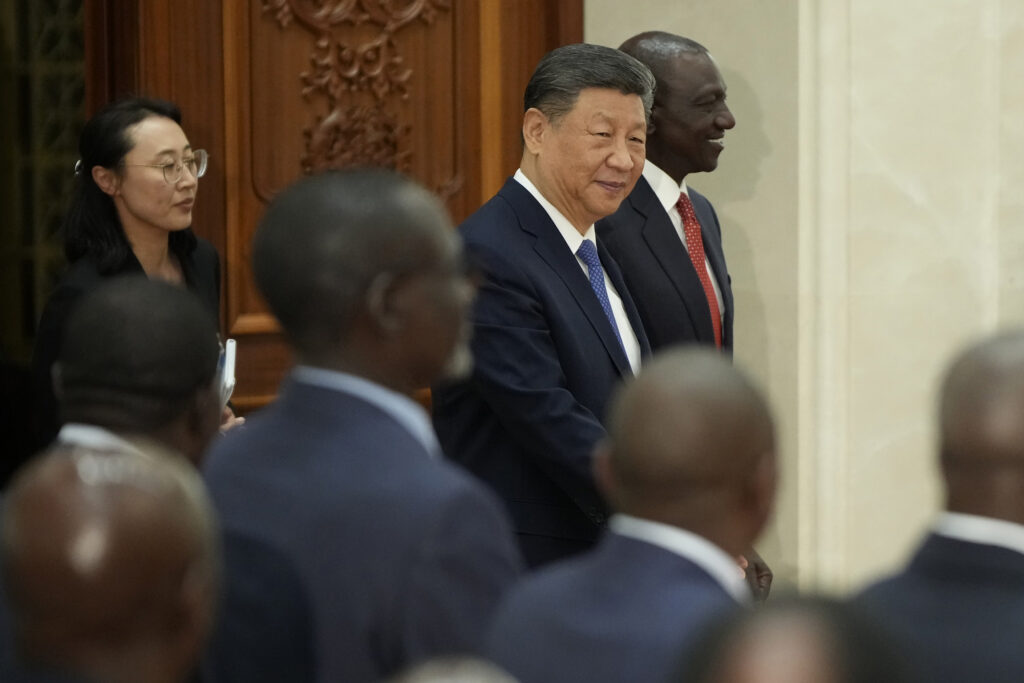
A formidable set of cards that includes granting access to its vast market and an ability to withstand economic pain will allow Beijing to play hardball in upcoming trade talks with the United States in Geneva, analysts say.Trade between the world’s two largest economies has nearly skidded to a halt since US President Donald Trump slapped China with various rounds of levies that began as retaliation for Beijing’s alleged role in a devastating fentanyl crisis.With additional measures justified by Trump as efforts to rebalance the trade relationship and prevent the United States from being “ripped off”, tariffs on many Chinese products now reach as high as 145 percent — with cumulative duties on some goods soaring to a staggering 245 percent.Beijing has responded with 125 percent tariffs on US imports, along with other measures targeting American firms.But after weeks of tit-for-tat escalation that sent global markets into a tailspin, the two powers will meet this weekend for a chance to break the ice.Washington has said it’s not expecting a “big trade deal” that could address Trump’s longstanding complaint about the major goods imbalance with the export powerhouse — but it is hoping the two sides can at least begin to de-escalate tensions.Beijing has vowed to stick to its guns and insisted its demand that all US tariffs be lifted remains “unchanged”.Analysts say, however, China is in no major rush to make a deal.”Beijing can impose some pain on the United States,” Chong Ja Ian, associate professor of political science at National University of Singapore, told AFP.China’s core strengths going into the talks are its huge domestic market, as well as “key technologies and control of a significant proportion of processed rare earth minerals”, Chong said.- ‘No wild bluster’ – Compared to its approach during Trump’s first term, Beijing’s response to his tariffs this time has been “more mature”, said Dylan Loh, an assistant professor at Singapore’s Nanyang Technological University.”There’s no wild bluster,” he explained.”I think they have learnt from their earlier responses and they know that they cannot be led by the nose,” he said.Analysts say China has been able to take more of a hardline posture to Trump’s tariffs this time, despite its struggling economy.”It still has meaningful retaliatory tools and — just as important — staying power,” said Lizzi Lee from the Asia Society Policy Institute’s Center for China Analysis.China’s autocratic system, she said, allowed it “to absorb economic pain in ways democracies often cannot”.Beijing has also concurrently launched a charm offensive aimed at tightening trade ties in Southeast Asia and Europe — positioning itself as a more stable and reliable partner in contrast to the mercurial Trump administration.That move allowed Beijing to “build buffers” against trade war vicissitudes, Lee said.”It won’t replace the US market overnight, but every incremental diversification reduces exposure and increases negotiating room,” she added.That’s not to say China isn’t hurting.Sales of Chinese goods to the US last year totalled more than $500 billion — 16.4 percent of the country’s exports, according to Beijing’s customs data.But as the effects of the trade war sunk in, China’s factory activity shrank in April, with Beijing blaming a “sharp shift” in the global economy.While not as colossal as China’s export levels, US shipments to the country last year were a considerable $143.5 billion, according to the US Trade Representative website.”Even in the case that one of the two countries would clearly have ‘the upper hand’, it is still worse off economically than before the trade war started,” said Teeuwe Mevissen, senior China economist at Rabobank.Beijing and Washington have “found out that it is not so easy to fully decouple”.- Talks about talks -Policymakers this week unveiled measures to boost domestic consumption — a sign that leaders are “not panicking but feeling some pressure”, said Shehzad Qazi, managing director of China Beige Book.Beijing will need to strap in for potentially long and drawn-out negotiations with Washington that could bring “much more volatility along the way”, said Qazi. Analysts broadly agree that upcoming talks are a first step towards a de-escalation of tensions that could, a long way down the line, lead to a lifting of tariffs.”A best-case scenario would be agreement around a process to enter future negotiations,” Ryan Hass, senior fellow at Brookings Institution, told AFP.Beijing could insist on receiving the same 90-day waiver on tariffs that other countries had received, he suggested.And China’s insistence that the Switzerland talks came at the request of Washington suggests it is the United States that is desperate for a deal, said Dan Wang, China Director at the Eurasia Group.”The fact that it is happening is showing some concessions already on the US side.”