India, Pakistan launch multiple attacks as US warns against ‘miscalculation’

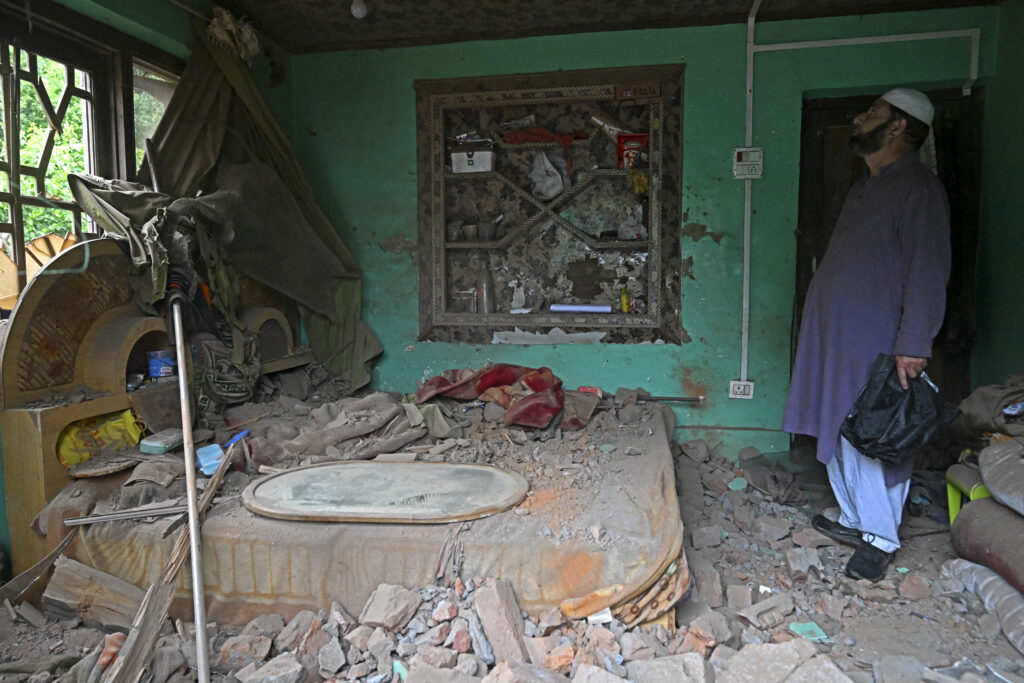
Pakistan launched counterattacks against India Saturday after three of its air bases were struck overnight, and as the conflict between the nuclear-armed neighbours spiralled towards a full-blown war that sparked calls against “miscalculation”.Indian Wing Commander Vyomika Singh told a briefing Saturday there were “several high-speed missile attacks” on air bases, but “limited damage” to equipment.Pakistan earlier accused India of targeting three of its bases with missiles — including one in Rawalpindi, some 10 kilometres (six miles) from the capital, Islamabad.Authorities in Pakistan-administered Kashmir said 11 civilians were killed by Indian shelling overnight.In a live broadcast aired by state television in the middle of the night, Pakistan’s military spokesman Ahmed Sharif warned: “Now you just wait for our response.”Later Saturday, Prime Minister Shehbaz Sharif told senior officials “we have given India a befitting response and avenged the blood of our innocent citizens”, his office said in a statement.The clashes, involving fighter jets, missiles, drones and artillery, are the worst in decades and have killed more than 60 civilians.The fighting was touched off by an attack last month in the Indian-administered side of disputed Kashmir that killed 26 tourists, mostly Hindu men, which Delhi blamed on Islamabad.India accused the Pakistan-based Lashkar-e-Taiba — a UN-designated terrorist organisation — of carrying out the attack, but Islamabad has denied any involvement and called for an independent probe.The countries have fought several wars over the Muslim-majority Kashmir, which both claim in full but administer separate portions of since gaining independence from British rule in 1947.- ‘Avoid miscalculation’ -In a series of calls to senior officials in both countries, US Secretary of State Marco Rubio urged them to restore direct communication to “avoid miscalculation”.Rubio “emphasized that both sides need to identify methods to de-escalate and re-establish direct communication to avoid miscalculation”, State Department spokeswoman Tammy Bruce said.For the first known time since the conflict erupted, Rubio also spoke with Pakistan’s army chief, considered the country’s key powerbroker.China also made a similar appeal as did the G7 group of industrialised nations.The overnight Indian attack on the Rawalpindi air base could be heard from Islamabad.The air base is used to receive foreign dignitaries, and Saudi minister of state for foreign affairs Adel Al-Jubeir had departed just hours earlier. Separately, AFP journalists reported loud explosions in Srinagar, the capital of India-administered Kashmir.A police officer speaking on condition of anonymity said the Awantipora military airbase outside the city had been struck.”Pakistan’s blatant escalation with drone strikes and other munitions continues along our western border,” the army said on X. The army said “multiple enemy drones were spotted flying over” a military cantonment in Amritsar in Punjab, a state adjoining Kashmir, and were “instantly engaged and destroyed by our air defence units.”- Rush to leave -In Jammu, Indian-run Kashmir’s second biggest city, people scrambled to board a special train dispatched to ferry people out.”There are loud explosions the entire night,” said Karan Varma, a 41-year-old mason.”There is no choice but to leave”.The overwhelming majority were poor labourers from other parts of India seeking to return to their homes.On Friday, the Indian army said it had “repulsed” waves of Pakistani attacks using drones and other munitions overnight, and gave a “befitting reply”.Pakistan’s military spokesman denied that Islamabad was carrying out such attacks, and vowed revenge for India’s initial strikes, on Wednesday.Pakistani military sources said its forces had shot down 77 drones, with debris of many incursions seen by AFP in cities across the country.Pakistan’s military early Saturday claimed New Delhi’s forces had bombed their own territory in Amritsar, without providing evidence.Armed groups have stepped up operations in Kashmir since 2019, when Indian Prime Minister Narendra Modi’s Hindu nationalist government revoked its limited autonomy and took the state under direct rule by New Delhi.The countries have fought several wars over the Muslim-majority Kashmir, which both claim in full but administer separate portions of since gaining independence from British rule in 1947. The conflict has caused major disruptions to international aviation, with airlines having to cancel flights or use longer routes that do not overfly the India-Pakistan frontier.India has closed 32 airports, while schools in areas close to the border on both sides were shuttered, affecting millions of children.Pakistan’ aviation authority said its airspace would be closed until noon Sunday (0700 GMT). burs-ach-fox

Trump faces Mideast tensions on return to his ‘happy place’

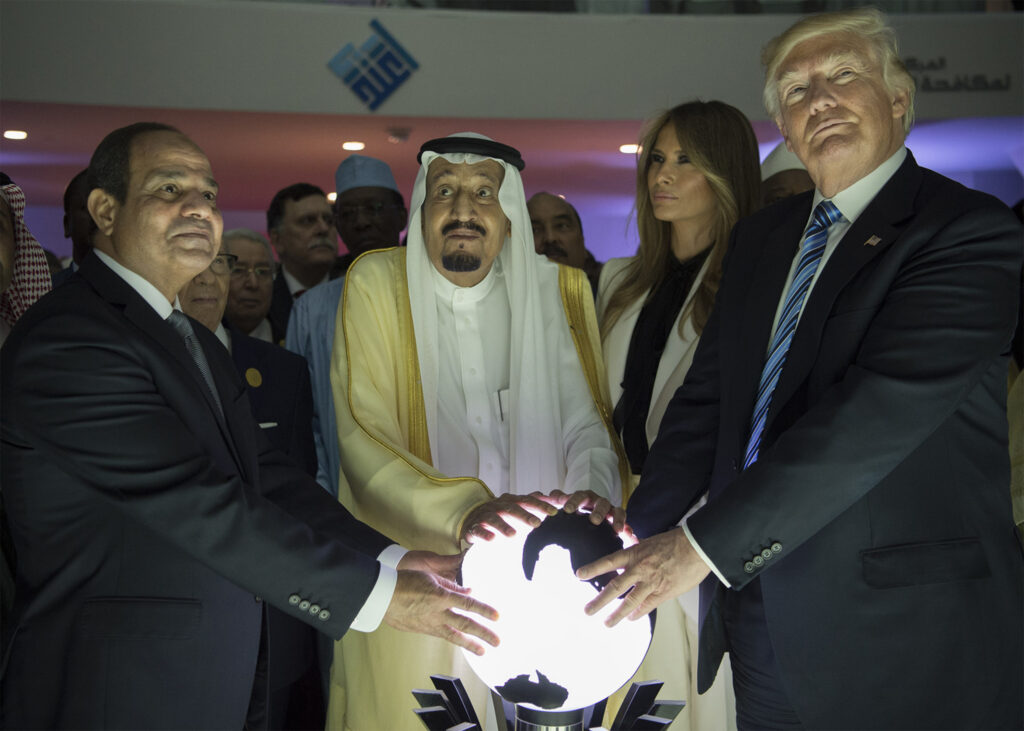
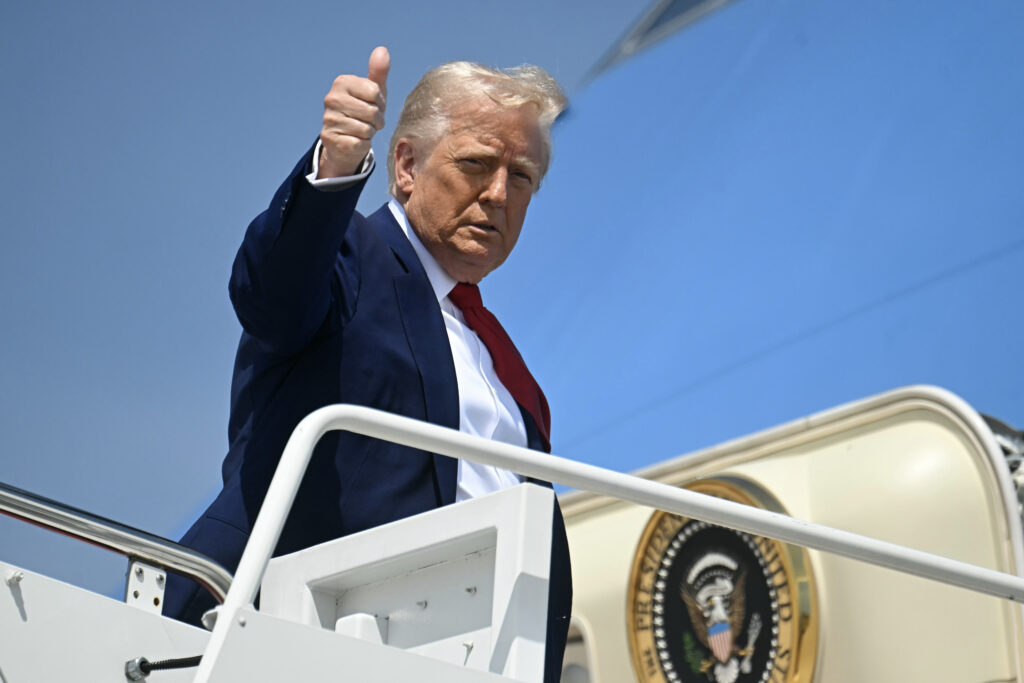
US President Donald Trump heads for Saudi Arabia, Qatar and the United Arab Emirates on Monday, eyeing big business deals even as accords on the Middle East’s hotspots will be harder to seal.While Israel’s war in Gaza and Iran’s nuclear program will loom large over Trump’s first major foreign trip of his second term, the White House said he looked forward to a “historic return” to the region.Eight years ago Trump also chose Riyadh for his first overseas trip as president — when he memorably posed over a glowing orb with the leaders of Egypt and Saudi Arabia.His decision to once more bypass traditional Western allies to visit the oil-rich Gulf states underscores their increasingly pivotal geopolitical role — as well as his own business ties there.”It’s hard for me to escape the idea that President Trump is going to the Gulf because this is his happy place,” said Jon Alterman, director of the Middle East program at the Center for Strategic and International Studies.”His hosts will be generous and hospitable. They’ll be keen to make deals. They’ll flatter him and not criticize him, and they’ll treat his family members as past and future business partners.”- ‘Historic return’ -Riyadh, Doha and Abu Dhabi are expected to pull out all the stops for Trump, who’s making his first major overseas trip after briefly attending the funeral of Pope Francis in Rome.The wealthy Arab states will mix pomp and ceremony for the 78-year-old billionaire with deals that could span defense, aviation, energy and artificial intelligence.”The president looks forward to embarking on his historic return to the Middle East” to promote a vision where “extremism is defeated in place of commerce and cultural exchanges,” spokeswoman Karoline Leavitt said Friday.But he will not be able to avoid the long list of regional crises, including the war in Gaza, the Huthi rebels in Yemen and Syria’s post-Assad turmoil.The Gulf states have played a key diplomatic role under Trump 2.0. Qatar has been a major broker between Hamas and Israel while Saudi Arabia has facilitated talks on the war in Ukraine.”Trump is coming to the Gulf first because this region has become a geopolitical and financial center of gravity,” Anna Jacobs, non-resident fellow at the Arab Gulf States Institute in Washington, told AFP.In Riyadh, Trump will meet the leaders of the six Gulf Cooperation Council states: Saudi Arabia, the UAE, Bahrain, Qatar, Kuwait and Oman.But one place that is not on the itinerary is Israel, the United States’ closest ally in the region. That has sparked speculation about tensions between Trump and Israeli Prime Minister Benjamin Netanyahu.Israel has set Trump’s trip as the deadline for a ceasefire deal with Hamas before launching its plan for the “conquest” of Gaza and the displacement of most Palestinians there.Trump has however taken an increasingly hands-off approach, although the United States says it is working with Israel on a US-led plan to get aid into the blockaded enclave.Efforts to get Saudi Arabia to recognize Israel, which Trump also sought during his first term, are likely to stay on the backburner as Riyadh says it first needs to see progress towards a Palestinian state.- ‘Monetizing MAGA’ -Iran will meanwhile also be high on the agenda. Washington and Tehran will hold the latest round of indirect talks on Iran’s nuclear program in Oman on Sunday.Iran has also reacted furiously after Trump said he was deciding whether to announce during the trip that he would change how the United States refers to the Gulf, from the Persian Gulf to the Gulf of Arabia.One thing that the White House says won’t be on the agenda is Trump’s own businesses.Last month, the Trump Organization struck its first luxury real estate deal in Qatar, and released details of a billion-dollar skyscraper in Dubai whose apartments can be bought in cryptocurrency.Trump’s son Eric was promoting a crypto firm in Dubai while Don Jr prepared to talk about “Monetizing MAGA” in Doha.But the White House denied Trump was cashing in. “It’s frankly ridiculous that anyone… would even suggest that President Trump is doing anything for his own benefit,” Leavitt said.burs-dk/jgc/sco

Trump faces Mideast tensions on return to his ‘happy place’

US President Donald Trump heads for Saudi Arabia, Qatar and the United Arab Emirates on Monday, eyeing big business deals even as accords on the Middle East’s hotspots will be harder to seal.While Israel’s war in Gaza and Iran’s nuclear program will loom large over Trump’s first major foreign trip of his second term, the White House said he looked forward to a “historic return” to the region.Eight years ago Trump also chose Riyadh for his first overseas trip as president — when he memorably posed over a glowing orb with the leaders of Egypt and Saudi Arabia.His decision to once more bypass traditional Western allies to visit the oil-rich Gulf states underscores their increasingly pivotal geopolitical role — as well as his own business ties there.”It’s hard for me to escape the idea that President Trump is going to the Gulf because this is his happy place,” said Jon Alterman, director of the Middle East program at the Center for Strategic and International Studies.”His hosts will be generous and hospitable. They’ll be keen to make deals. They’ll flatter him and not criticize him, and they’ll treat his family members as past and future business partners.”- ‘Historic return’ -Riyadh, Doha and Abu Dhabi are expected to pull out all the stops for Trump, who’s making his first major overseas trip after briefly attending the funeral of Pope Francis in Rome.The wealthy Arab states will mix pomp and ceremony for the 78-year-old billionaire with deals that could span defense, aviation, energy and artificial intelligence.”The president looks forward to embarking on his historic return to the Middle East” to promote a vision where “extremism is defeated in place of commerce and cultural exchanges,” spokeswoman Karoline Leavitt said Friday.But he will not be able to avoid the long list of regional crises, including the war in Gaza, the Huthi rebels in Yemen and Syria’s post-Assad turmoil.The Gulf states have played a key diplomatic role under Trump 2.0. Qatar has been a major broker between Hamas and Israel while Saudi Arabia has facilitated talks on the war in Ukraine.”Trump is coming to the Gulf first because this region has become a geopolitical and financial center of gravity,” Anna Jacobs, non-resident fellow at the Arab Gulf States Institute in Washington, told AFP.In Riyadh, Trump will meet the leaders of the six Gulf Cooperation Council states: Saudi Arabia, the UAE, Bahrain, Qatar, Kuwait and Oman.But one place that is not on the itinerary is Israel, the United States’ closest ally in the region. That has sparked speculation about tensions between Trump and Israeli Prime Minister Benjamin Netanyahu.Israel has set Trump’s trip as the deadline for a ceasefire deal with Hamas before launching its plan for the “conquest” of Gaza and the displacement of most Palestinians there.Trump has however taken an increasingly hands-off approach, although the United States says it is working with Israel on a US-led plan to get aid into the blockaded enclave.Efforts to get Saudi Arabia to recognize Israel, which Trump also sought during his first term, are likely to stay on the backburner as Riyadh says it first needs to see progress towards a Palestinian state.- ‘Monetizing MAGA’ -Iran will meanwhile also be high on the agenda. Washington and Tehran will hold the latest round of indirect talks on Iran’s nuclear program in Oman on Sunday.Iran has also reacted furiously after Trump said he was deciding whether to announce during the trip that he would change how the United States refers to the Gulf, from the Persian Gulf to the Gulf of Arabia.One thing that the White House says won’t be on the agenda is Trump’s own businesses.Last month, the Trump Organization struck its first luxury real estate deal in Qatar, and released details of a billion-dollar skyscraper in Dubai whose apartments can be bought in cryptocurrency.Trump’s son Eric was promoting a crypto firm in Dubai while Don Jr prepared to talk about “Monetizing MAGA” in Doha.But the White House denied Trump was cashing in. “It’s frankly ridiculous that anyone… would even suggest that President Trump is doing anything for his own benefit,” Leavitt said.burs-dk/jgc/sco

Swords, orbs and fist-bumps: US presidents in Saudi

In the first foreign tour of his second term, US President Donald Trump will arrive in Saudi Arabia on Tuesday before visiting Qatar and the United Arab Emirates.Trump is just the latest US president to visit oil-rich Saudi Arabia. Here are some of the most memorable meetings between US leaders and their Saudi allies.- The Suez handshake -The foundation for the US and Saudi Arabia’s enduring relationship was sealed with a handshake on a boat on Valentine’s Day, 1945.Months before the end of World War II, Saudi king Abdulaziz bin Saud and president Franklin Roosevelt met on board the cruiser USS Quincy in the Suez Canal.There, a deal was struck resulting in a decades-long partnership that would see the then-nascent kingdom receive military protection in exchange for the US’s privileged access to its vast oil reserves.- Nixon’s visit -Richard Nixon was the first US president to visit Saudi soil when he touched down in Jeddah on the Red Sea coast in June 1974.It followed a landmark US-Saudi agreement under which Saudi Arabia would sell oil exclusively in greenbacks in return for American military protection and economic and technical support.The deal helped lead to the US dollar’s supremacy in global trade for decades to come.– First Gulf War -President George H.W. Bush first visited Saudi Arabia as president ahead of Operation Desert Storm in late 1990, following Iraq’s invasion of neighbouring Kuwait.During the visit, he met King Fahd and Kuwaiti Emir Jaber Al-Sabah, and also addressed American troops based in eastern Saudi Arabia.Saudi Arabia was a key basing area for the US-led operation that pushed Saddam Hussein’s troops out of Kuwait in a lightning offensive.- The Obama snub -President Barack Obama was a frequent visitor, making four trips during his two terms, including a brief stop in 2015 to offer condolences on the death of King Abdullah.But Obama’s most memorable visit, his last, was one he may prefer to forget.Months after signing a nuclear deal with Iran, then Saudi Arabia’s fierce regional rival, Obama received a somewhat frosty welcome when he arrived in April 2016.Instead of King Salman, Obama was greeted at the airport by the governor of Riyadh, and the event was not broadcast live on Saudi TV.- Orbs and swords -By contrast, Donald Trump arrived with full fanfare when he made Saudi Arabia the first destination of his first term in 2017.A military fly-past and cannon salute greeted the recently inaugurated Trump, who was also bestowed with a gold medal and took part in a traditional sword dance.One image from the visit — Trump, Egypt’s president and King Salman standing with their hands on a glowing orb — quickly set social media alight.During the trip, the US signed a raft of agreements worth a total of $460 billion, including arms deals amounting to approximately $110 billion.The honeymoon period later cooled, with Riyadh faulting Trump for failing to respond more aggressively to a 2019 attack on Saudi Arabia by Iran-backed Huthi rebels that temporarily halved its crude output.- Biden’s fist-bump -Things did not begin well between Saudi Arabia and the Biden administration.At a debate in 2019, then candidate Joe Biden vowed to make Saudi Arabia a “pariah” because of its human rights record, including the murder of journalist Jamal Khashoggi by Saudi agents at the kingdom’s consulate in Istanbul.In 2021, Biden declassified an intelligence report that suggested Crown Prince Mohammed bin Salman had approved the operation against Khashoggi — an allegation the Saudi authorities deny.But when Russia’s invasion of Ukraine in February 2022 sent energy prices soaring, Biden sought Saudi help to bring them down and ease pressure on US voters.In July that year Biden flew to Jeddah where he met the Crown Prince and de facto ruler with a fist-bump — another defining image that went viral.

US and China set for talks in bid to ‘de-escalate’ trade war

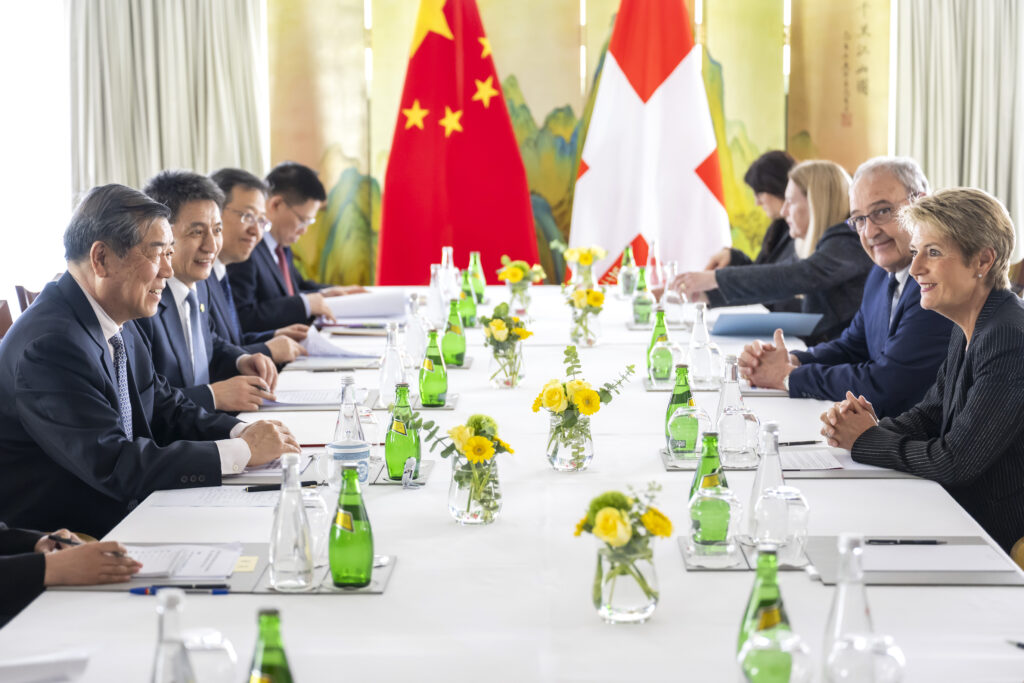
Senior US and Chinese officials will meet in Geneva on Saturday, seeking to de-escalate a trade war sparked by President Donald Trump’s sweeping tariff rollout and fuelled by Beijing’s strong retaliatory measures. US Treasury Secretary Scott Bessent and US Trade Representative Jamieson Greer are set to confer with Chinese Vice Premier He Lifeng in the Swiss city in the first such talks between the world’s two largest economies since Trump slapped steep new levies on China last month.  The exact venue for the weekend-long talks remained shrouded in secrecy.Tariffs imposed on the Asian manufacturing giant since the start of the year currently total 145 percent, with cumulative duties on some goods reaching a staggering 245 percent.In retaliation, China slapped 125 percent levies on US goods, cementing what is effectively a trade embargo between the world’s two largest economies.Trump signalled on Friday that he could lower the sky-high tariffs on Chinese imports, taking to social media to suggest that an “80% Tariff on China seems right!”.”The president would like to work it out with China… He would like to de-escalate the situation,” US Commerce Secretary Howard Lutnick told Fox News on Friday evening.Trump’s press secretary, Karoline Leavitt, clarified that the US would not lower tariffs unilaterally, adding that China would need to make concessions as well.In any case, it would be a symbolic gesture, since the tariffs would remain prohibitively steep.- ‘A good sign’ -“The relationship is not good,” said Bill Reinsch, a senior advisor at the Center for Strategic and International Studies (CSIS), referring to current ties between Washington and Beijing. “We have trade-prohibitive tariffs going in both directions. Relations are deteriorating,” said Reinsch, a longtime former member of the American government’s US-China Economic and Security Review Commission. “But the meeting is a good sign.””I think this is basically to show that both sides are talking — and that itself is very important,” Xu Bin, professor of economics and finance at the China Europe International Business School, told AFP. “Because China is the only country that has tit-for-tat tariffs against Trump’s tariffs.” Beijing has insisted the United States must lift tariffs first and vowed to defend its interests.Bessent has said the meetings in Switzerland would focus on “de-escalation” and not a “big trade deal”.The head of the Geneva-based World Trade Organization (WTO), Ngozi Okonjo-Iweala, said on Friday she welcomed the talks, calling them a “positive and constructive step toward de-escalation”.Swiss President Karin Keller-Sutter also sounded an upbeat note.”Yesterday the Holy Spirit was in Rome,” she said on Friday, referring to the election of Pope Leo XIV. “We must hope that he will now go down to Geneva for the weekend.” – 10-percent ‘baseline’ – Bessent and He will meet two days after Trump unveiled a trade agreement with Britain, the first deal with any country since he unleashed a blitz of sweeping global tariffs last month.The five-page, non-legally binding document confirmed to nervous investors that the United States is willing to negotiate sector-specific relief from recent duties — in this case on British cars, steel and aluminium. In return, Britain agreed to open up its markets to US beef and other farm products.But a 10-percent baseline levy on most British goods remained intact and Trump remains “committed” to keeping it in place for other countries in talks with the United States, Leavitt told reporters on Friday. A few hours later, Trump appeared to contradict her, suggesting there could be some flexibility to the baseline — but only if the right deals could be reached. “There could be an exception at some point. We’ll see,” he said during an Oval Office event. “If somebody did something exceptional for us, that’s always possible.”burs-da-nl/gil

Chine et Etats-Unis : des négociations commerciales pour calmer le jeu

Secrétaire américain au Trésor, vice-Premier ministre chinois : Washington et Pékin ont dépêché des poids lourds à Genève ce week-end pour tenter de calmer le jeu dans une guerre commerciale lancée par Donald Trump dont les effets délétères se font sentir sur les deux premières économies mondiales.Les discussions – au plus haut niveau depuis le début de l’affrontement à coup de droits de douane au retour de Donald Trump à la Maison Blanche – sont prévues samedi et dimanche dans la ville suisse du bord du lac Léman et vont réunir le secrétaire américain au Trésor Scott Bessent, le représentant au Commerce Jamieson Greer et le vice-Premier ministre chinois He Lifeng. Le lieu de réunion est entouré du plus grand secret.Vendredi, Donald Trump a fait un geste en suggérant de baisser à 80% les droits de douane punitifs qu’il a lui-même imposés sur les produits chinois. “Le président aimerait régler le problème avec la Chine. Comme il l’a dit, il aimerait apaiser la situation”, a lancé vendredi soir le secrétaire au Commerce Howard Lutnick, sur Fox News.Le geste reste symbolique, car à ce niveau les droits de douane ne seraient toujours pas supportables pour la plupart des exportations chinoises vers les Etats-Unis.Depuis son retour à la Maison Blanche en janvier, Donald Trump a fait des droits de douane un outil politique. Il a imposé une surtaxe de 145% sur les marchandises venant de Chine, en plus des droits de douane préexistants. Pékin, qui a promis de combattre “jusqu’au bout” les surtaxes de Donald Trump, a riposté avec 125% de droits de douane sur les produits américains.Résultat: les échanges bilatéraux sont pratiquement à l’arrêt et les marchés ont connu de violents soubresauts.Les discussions prévues à Genève sont donc “un pas positif et constructif vers la désescalade”, a estimé la directrice générale de l’Organisation mondiale du commerce (OMC) Ngozi Okonjo-Iweala à la veille des discussions.Pour le ministre de l’Economie du pays hôte, Guy Parmelin, c’est déjà “un succès” que “les deux parties se parlent”.- Désescalade -Le vice-Premier ministre chinois semble arriver à la table des discussions avec un atout. Pékin a annoncé vendredi un bond de 8,1% de ses exportations en avril, un chiffre quatre fois supérieur aux prévisions des analystes, mais les exportations vers les Etats-Unis ont chuté de près de 18%. Si l’on en croit les Chinois, ce sont aussi les Américains qui ont demandé à avoir ces discussions. Donald Trump “ne va pas unilatéralement baisser les droits de douane sur la Chine. On doit aussi voir des concessions de leur part”, a averti sa porte-parole, Karoline Leavitt.”Je pense que c’est le résultat qu’espère le président, un monde de désescalade où nous recommencerons à commercer les uns avec les autres, et où nous travaillerons ensemble sur un grand accord”, a expliqué jeudi le ministre du Commerce Howard Lutnick à la chaîne de télévision CNBC.- Quel résultat ? -“Un résultat possible des discussions en Suisse serait un accord pour suspendre la plupart, voire la totalité, des droits de douane imposés cette année, et cela pendant la durée des négociations” bilatérales, déclare à l’AFP Bonnie Glaser, qui dirige le programme Indo-Pacifique du German Marshall Fund, un cercle de réflexion à Washington.Spécialiste de l’économie chinoise à l’Asia Society Policy Institute, organisation basée aux Etats-Unis, Lizzi Lee s’attend à un potentiel “geste symbolique et provisoire”, qui pourrait “apaiser les tensions, mais pas régler les désaccords fondamentaux”.Sur le plan “pratique”, cela coince aussi, selon Bill Reinsch, expert du Center for Strategic and International Studies.Donald Trump veut rencontrer son homologue Xi Jinping, “trouver un accord avec lui, et qu’ensuite leurs subordonnés règlent les détails”, décrit-il à l’AFP, alors que les Chinois “veulent que tous les sujets soient réglés avant une réunion” des deux présidents.Xu Bin, professeur à l’école de commerce international Chine Europe (CEIBS) de Shanghaï ne s’attend pas à ce que les droits de douane reviennent à un “niveau raisonnable”: “Même si cela descend, ce sera probablement de moitié, et, là encore, ce sera trop haut pour avoir des échanges commerciaux normaux.”burs-vog/pt

Chine et Etats-Unis : des négociations commerciales pour calmer le jeu

Secrétaire américain au Trésor, vice-Premier ministre chinois : Washington et Pékin ont dépêché des poids lourds à Genève ce week-end pour tenter de calmer le jeu dans une guerre commerciale lancée par Donald Trump dont les effets délétères se font sentir sur les deux premières économies mondiales.Les discussions – au plus haut niveau depuis le début de l’affrontement à coup de droits de douane au retour de Donald Trump à la Maison Blanche – sont prévues samedi et dimanche dans la ville suisse du bord du lac Léman et vont réunir le secrétaire américain au Trésor Scott Bessent, le représentant au Commerce Jamieson Greer et le vice-Premier ministre chinois He Lifeng. Le lieu de réunion est entouré du plus grand secret.Vendredi, Donald Trump a fait un geste en suggérant de baisser à 80% les droits de douane punitifs qu’il a lui-même imposés sur les produits chinois. “Le président aimerait régler le problème avec la Chine. Comme il l’a dit, il aimerait apaiser la situation”, a lancé vendredi soir le secrétaire au Commerce Howard Lutnick, sur Fox News.Le geste reste symbolique, car à ce niveau les droits de douane ne seraient toujours pas supportables pour la plupart des exportations chinoises vers les Etats-Unis.Depuis son retour à la Maison Blanche en janvier, Donald Trump a fait des droits de douane un outil politique. Il a imposé une surtaxe de 145% sur les marchandises venant de Chine, en plus des droits de douane préexistants. Pékin, qui a promis de combattre “jusqu’au bout” les surtaxes de Donald Trump, a riposté avec 125% de droits de douane sur les produits américains.Résultat: les échanges bilatéraux sont pratiquement à l’arrêt et les marchés ont connu de violents soubresauts.Les discussions prévues à Genève sont donc “un pas positif et constructif vers la désescalade”, a estimé la directrice générale de l’Organisation mondiale du commerce (OMC) Ngozi Okonjo-Iweala à la veille des discussions.Pour le ministre de l’Economie du pays hôte, Guy Parmelin, c’est déjà “un succès” que “les deux parties se parlent”.- Désescalade -Le vice-Premier ministre chinois semble arriver à la table des discussions avec un atout. Pékin a annoncé vendredi un bond de 8,1% de ses exportations en avril, un chiffre quatre fois supérieur aux prévisions des analystes, mais les exportations vers les Etats-Unis ont chuté de près de 18%. Si l’on en croit les Chinois, ce sont aussi les Américains qui ont demandé à avoir ces discussions. Donald Trump “ne va pas unilatéralement baisser les droits de douane sur la Chine. On doit aussi voir des concessions de leur part”, a averti sa porte-parole, Karoline Leavitt.”Je pense que c’est le résultat qu’espère le président, un monde de désescalade où nous recommencerons à commercer les uns avec les autres, et où nous travaillerons ensemble sur un grand accord”, a expliqué jeudi le ministre du Commerce Howard Lutnick à la chaîne de télévision CNBC.- Quel résultat ? -“Un résultat possible des discussions en Suisse serait un accord pour suspendre la plupart, voire la totalité, des droits de douane imposés cette année, et cela pendant la durée des négociations” bilatérales, déclare à l’AFP Bonnie Glaser, qui dirige le programme Indo-Pacifique du German Marshall Fund, un cercle de réflexion à Washington.Spécialiste de l’économie chinoise à l’Asia Society Policy Institute, organisation basée aux Etats-Unis, Lizzi Lee s’attend à un potentiel “geste symbolique et provisoire”, qui pourrait “apaiser les tensions, mais pas régler les désaccords fondamentaux”.Sur le plan “pratique”, cela coince aussi, selon Bill Reinsch, expert du Center for Strategic and International Studies.Donald Trump veut rencontrer son homologue Xi Jinping, “trouver un accord avec lui, et qu’ensuite leurs subordonnés règlent les détails”, décrit-il à l’AFP, alors que les Chinois “veulent que tous les sujets soient réglés avant une réunion” des deux présidents.Xu Bin, professeur à l’école de commerce international Chine Europe (CEIBS) de Shanghaï ne s’attend pas à ce que les droits de douane reviennent à un “niveau raisonnable”: “Même si cela descend, ce sera probablement de moitié, et, là encore, ce sera trop haut pour avoir des échanges commerciaux normaux.”burs-vog/pt

Chine et Etats-Unis : des négociations commerciales pour calmer le jeu

Secrétaire américain au Trésor, vice-Premier ministre chinois : Washington et Pékin ont dépêché des poids lourds à Genève ce week-end pour tenter de calmer le jeu dans une guerre commerciale lancée par Donald Trump dont les effets délétères se font sentir sur les deux premières économies mondiales.Les discussions – au plus haut niveau depuis le début de l’affrontement à coup de droits de douane au retour de Donald Trump à la Maison Blanche – sont prévues samedi et dimanche dans la ville suisse du bord du lac Léman et vont réunir le secrétaire américain au Trésor Scott Bessent, le représentant au Commerce Jamieson Greer et le vice-Premier ministre chinois He Lifeng. Le lieu de réunion est entouré du plus grand secret.Vendredi, Donald Trump a fait un geste en suggérant de baisser à 80% les droits de douane punitifs qu’il a lui-même imposés sur les produits chinois. “Le président aimerait régler le problème avec la Chine. Comme il l’a dit, il aimerait apaiser la situation”, a lancé vendredi soir le secrétaire au Commerce Howard Lutnick, sur Fox News.Le geste reste symbolique, car à ce niveau les droits de douane ne seraient toujours pas supportables pour la plupart des exportations chinoises vers les Etats-Unis.Depuis son retour à la Maison Blanche en janvier, Donald Trump a fait des droits de douane un outil politique. Il a imposé une surtaxe de 145% sur les marchandises venant de Chine, en plus des droits de douane préexistants. Pékin, qui a promis de combattre “jusqu’au bout” les surtaxes de Donald Trump, a riposté avec 125% de droits de douane sur les produits américains.Résultat: les échanges bilatéraux sont pratiquement à l’arrêt et les marchés ont connu de violents soubresauts.Les discussions prévues à Genève sont donc “un pas positif et constructif vers la désescalade”, a estimé la directrice générale de l’Organisation mondiale du commerce (OMC) Ngozi Okonjo-Iweala à la veille des discussions.Pour le ministre de l’Economie du pays hôte, Guy Parmelin, c’est déjà “un succès” que “les deux parties se parlent”.- Désescalade -Le vice-Premier ministre chinois semble arriver à la table des discussions avec un atout. Pékin a annoncé vendredi un bond de 8,1% de ses exportations en avril, un chiffre quatre fois supérieur aux prévisions des analystes, mais les exportations vers les Etats-Unis ont chuté de près de 18%. Si l’on en croit les Chinois, ce sont aussi les Américains qui ont demandé à avoir ces discussions. Donald Trump “ne va pas unilatéralement baisser les droits de douane sur la Chine. On doit aussi voir des concessions de leur part”, a averti sa porte-parole, Karoline Leavitt.”Je pense que c’est le résultat qu’espère le président, un monde de désescalade où nous recommencerons à commercer les uns avec les autres, et où nous travaillerons ensemble sur un grand accord”, a expliqué jeudi le ministre du Commerce Howard Lutnick à la chaîne de télévision CNBC.- Quel résultat ? -“Un résultat possible des discussions en Suisse serait un accord pour suspendre la plupart, voire la totalité, des droits de douane imposés cette année, et cela pendant la durée des négociations” bilatérales, déclare à l’AFP Bonnie Glaser, qui dirige le programme Indo-Pacifique du German Marshall Fund, un cercle de réflexion à Washington.Spécialiste de l’économie chinoise à l’Asia Society Policy Institute, organisation basée aux Etats-Unis, Lizzi Lee s’attend à un potentiel “geste symbolique et provisoire”, qui pourrait “apaiser les tensions, mais pas régler les désaccords fondamentaux”.Sur le plan “pratique”, cela coince aussi, selon Bill Reinsch, expert du Center for Strategic and International Studies.Donald Trump veut rencontrer son homologue Xi Jinping, “trouver un accord avec lui, et qu’ensuite leurs subordonnés règlent les détails”, décrit-il à l’AFP, alors que les Chinois “veulent que tous les sujets soient réglés avant une réunion” des deux présidents.Xu Bin, professeur à l’école de commerce international Chine Europe (CEIBS) de Shanghaï ne s’attend pas à ce que les droits de douane reviennent à un “niveau raisonnable”: “Même si cela descend, ce sera probablement de moitié, et, là encore, ce sera trop haut pour avoir des échanges commerciaux normaux.”burs-vog/pt

China’s consumption slide deepens as tariff war bites

China said Saturday that consumer prices slumped in April for the third straight month, reflecting persistent challenges as leaders attempt to revive an economy stymied by sluggish spending and a fierce trade war with Washington.The world’s second-largest economy has grappled with persistent deflationary pressure in recent years, as longstanding woes in the property sector and export headwinds impede growth.The latest figures come ahead of Saturday’s start to a meeting of key economic officials from China and the United States in Switzerland, offering a potential off-ramp for the high-stakes trade war launched by President Donald Trump.US tariffs on imports from manufacturing powerhouse China now stand at a staggering 145 percent for many products — and reach as high as 245 percent cumulatively on others.Trump suggested Friday that the tariffs could be cut to 80 percent, though Beijing has demanded a complete cancellation of the levies that are compounding other challenges facing the Chinese economy.The consumer price index (CPI) — a key measure of inflation — was down 0.1 percent last month year-on-year, according to data released Saturday by the National Bureau of Statistics (NBS), following previous drops in February and March.The reading was in line with a Bloomberg forecast of a 0.1 percent year-on-year decline based on a survey of economists, and consistent with the slight drop recorded in March.NBS statistician Dong Lijuan said Saturday in a statement about the data that “international imported factors have a certain downward impact on prices in some industries”.”China still faces persistent deflationary pressure,” said Zhiwei Zhang, President and Chief Economist at Pinpoint Asset Management, in a note.The intensity of contributing factors “may rise in coming months as exports will likely weaken”, said Zhang, adding that “more proactive fiscal policy is necessary to boost domestic demand”.- ‘Downward pressure’ -The NBS also announced Saturday that April’s producer price index (PPI) — another indicator of inflation — declined 2.7 percent year-on-year, accelerating from the 2.5 percent drop recorded in March.China’s PPI has remained mired in negative territory for more than two years and the drop recorded Saturday was in line with expectations.”Changes in the international trade environment and a rapid decline in some international bulk commodities have affected the decline in prices in related domestic industries,” Dong said of the PPI data.The deflationary run is due in part to a recent slump in oil prices, wrote Zichun Huang and Julian Evans-Pritchard of Capital Economics in a note on Friday.But, they added, “we suspect that overcapacity in Chinese industry continued to put downward pressure on factory-gate prices too”.China’s exports rose last month despite the trade war, official data showed Friday, an unexpected development attributed by experts to a re-routing of trade to Southeast Asia to mitigate US tariffs.The trade figures from the Chinese customs bureau showed that while exports to the United States dropped sharply in April, those to Thailand, Indonesia and Vietnam surged by double digits.Chinese policymakers this week eased key monetary policy tools in a bid to ramp up domestic activity.Those included cuts to a key interest rate and moves to lower the amount banks must hold in reserve in a bid to boost lending — adding to Beijing’s sweeping push since September to revitalise the economy.