


US and China meet in ‘important step’ towards de-escalating trade war
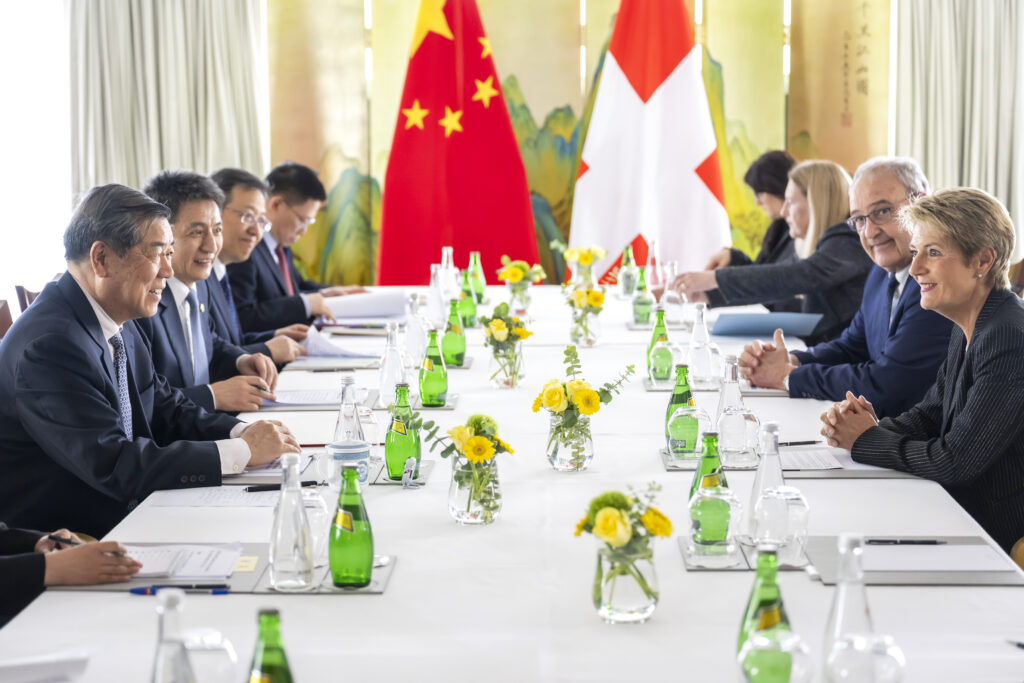
Senior US and Chinese officials were meeting in Geneva Saturday in what Chinese state media described as an “important step” towards resolving the trade war sparked by President Donald Trump’s sweeping tariffs. US Treasury Secretary Scott Bessent and US Trade Representative Jamieson Greer were holding talks with Chinese Vice Premier He Lifeng, in the first such negotiations between the world’s two largest economies since Trump slapped steep new levies on China last month and Beijing’s robust retaliation. “The contact in Switzerland is an important step in promoting the resolution of the issue,” a commentary published by China’s state news agency Xinhua said.It provided no further details on the progress of closed-door discussions, which began mid-morning Saturday and were due to continue on Sunday.The talks were being held at the residence of the Swiss ambassador to the United Nations in Geneva, a discrete villa with sky blue shutters near a large parc on the left bank of Lake Geneva.Tariffs imposed by Trump on the Asian manufacturing giant since the start of the year currently total 145 percent, with cumulative US duties on some Chinese goods reaching a staggering 245 percent.In retaliation, China slapped 125 percent levies on US goods, cementing what appears to be a near trade embargo between the world’s two largest economies.Trump signalled on Friday that he might lower the sky-high tariffs on Chinese imports, taking to social media to suggest that an “80% Tariff on China seems right!”.”The president would like to work it out with China…. He would like to de-escalate the situation,” US Commerce Secretary Howard Lutnick told Fox News on Friday.Trump’s press secretary, Karoline Leavitt, clarified that the US would not lower tariffs unilaterally, adding that China would need to make concessions as well.In any case, a move to that level would be a symbolic gesture, since the tariffs would remain prohibitively steep.- ‘Not good’ relationship -“The relationship is not good” between Washington and Beijing, said Bill Reinsch, a senior advisor at the Center for Strategic and International Studies. “We have trade-prohibitive tariffs going in both directions. Relations are deteriorating,” said Reinsch, a longtime former member of the American government’s US-China Economic and Security Review Commission. “But the meeting is a good sign.””I think this is basically to show that both sides are talking — and that itself is very important,” said Xu Bin, professor of economics and finance at the China Europe International Business School. “Because China is the only country that has tit-for-tat tariffs against Trump’s tariffs,” he told AFP. Beijing has insisted the United States must lift tariffs first and vowed to defend its interests.Bessent has said the meetings in Switzerland would focus on “de-escalation” and not a “big trade deal”.The head of the Geneva-based World Trade Organization said on Friday she welcomed the talks, calling them a “positive and constructive step toward de-escalation”.”Sustained dialogue between the world’s two largest economies is critical to easing trade tensions, preventing fragmentation along geopolitical lines and safeguarding global growth,” WTO Director-General Ngozi Okonjo-Iweala said, according to a spokesperson.- 10-percent ‘baseline’ – China’s vice president went into the discussions buoyed by news on Friday that China’s exports rose last month despite the trade war.The unexpected development was attributed by experts to a re-routing of trade to Southeast Asia to mitigate US tariffs.Bessent and He were meeting two days after Trump unveiled a trade agreement with Britain, the first deal with any country since he unleashed his blitz of sweeping global tariffs.The five-page, non-legally binding document with London confirmed to nervous investors that the United States is willing to negotiate sector-specific relief from recent duties — in this case on British cars, steel and aluminium. In return, Britain agreed to open up its markets to US beef and other farm products.But a 10-percent baseline levy on most British goods remained intact and Trump remains “committed” to keeping it in place for other countries in talks with the United States, Leavitt told reporters on Friday. A few hours later, Trump appeared to contradict her, suggesting there could be some flexibility to the baseline — but only if the right deals could be reached. “There could be an exception at some point. We’ll see,” he said. “If somebody did something exceptional for us, that’s always possible.”burs-da-nl/vog/yad
US and China meet in ‘important step’ towards de-escalating trade war
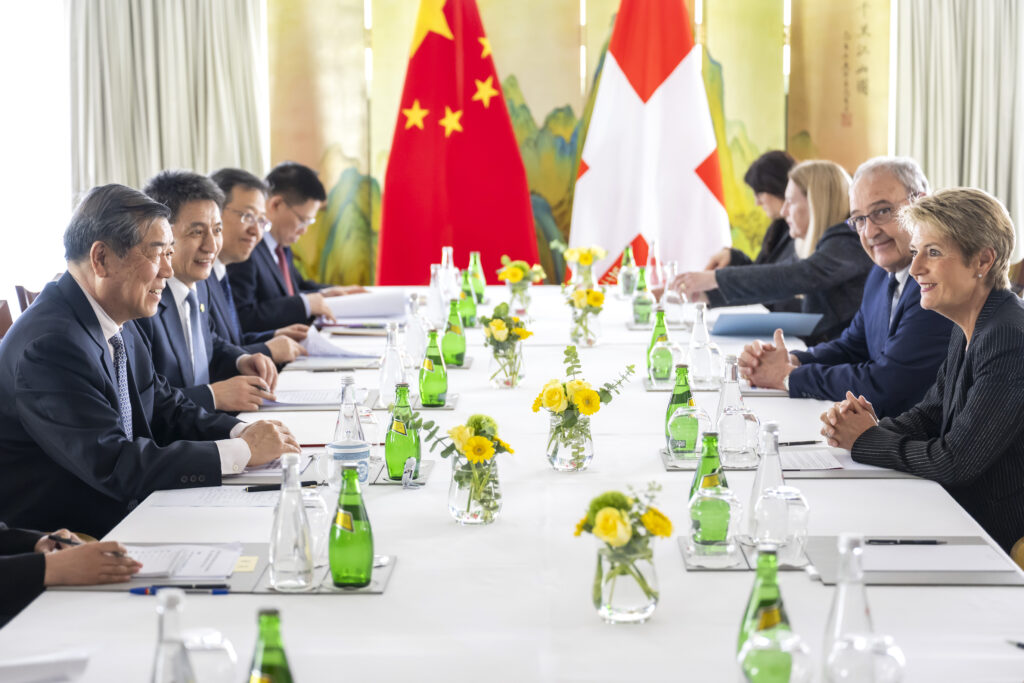
Senior US and Chinese officials were meeting in Geneva Saturday in what Chinese state media described as an “important step” towards resolving the trade war sparked by President Donald Trump’s sweeping tariffs. US Treasury Secretary Scott Bessent and US Trade Representative Jamieson Greer were holding talks with Chinese Vice Premier He Lifeng, in the first such negotiations between the world’s two largest economies since Trump slapped steep new levies on China last month and Beijing’s robust retaliation. “The contact in Switzerland is an important step in promoting the resolution of the issue,” a commentary published by China’s state news agency Xinhua said.It provided no further details on the progress of closed-door discussions, which began mid-morning Saturday and were due to continue on Sunday.The talks were being held at the residence of the Swiss ambassador to the United Nations in Geneva, a discrete villa with sky blue shutters near a large parc on the left bank of Lake Geneva.Tariffs imposed by Trump on the Asian manufacturing giant since the start of the year currently total 145 percent, with cumulative US duties on some Chinese goods reaching a staggering 245 percent.In retaliation, China slapped 125 percent levies on US goods, cementing what appears to be a near trade embargo between the world’s two largest economies.Trump signalled on Friday that he might lower the sky-high tariffs on Chinese imports, taking to social media to suggest that an “80% Tariff on China seems right!”.”The president would like to work it out with China…. He would like to de-escalate the situation,” US Commerce Secretary Howard Lutnick told Fox News on Friday.Trump’s press secretary, Karoline Leavitt, clarified that the US would not lower tariffs unilaterally, adding that China would need to make concessions as well.In any case, a move to that level would be a symbolic gesture, since the tariffs would remain prohibitively steep.- ‘Not good’ relationship -“The relationship is not good” between Washington and Beijing, said Bill Reinsch, a senior advisor at the Center for Strategic and International Studies. “We have trade-prohibitive tariffs going in both directions. Relations are deteriorating,” said Reinsch, a longtime former member of the American government’s US-China Economic and Security Review Commission. “But the meeting is a good sign.””I think this is basically to show that both sides are talking — and that itself is very important,” said Xu Bin, professor of economics and finance at the China Europe International Business School. “Because China is the only country that has tit-for-tat tariffs against Trump’s tariffs,” he told AFP. Beijing has insisted the United States must lift tariffs first and vowed to defend its interests.Bessent has said the meetings in Switzerland would focus on “de-escalation” and not a “big trade deal”.The head of the Geneva-based World Trade Organization said on Friday she welcomed the talks, calling them a “positive and constructive step toward de-escalation”.”Sustained dialogue between the world’s two largest economies is critical to easing trade tensions, preventing fragmentation along geopolitical lines and safeguarding global growth,” WTO Director-General Ngozi Okonjo-Iweala said, according to a spokesperson.- 10-percent ‘baseline’ – China’s vice president went into the discussions buoyed by news on Friday that China’s exports rose last month despite the trade war.The unexpected development was attributed by experts to a re-routing of trade to Southeast Asia to mitigate US tariffs.Bessent and He were meeting two days after Trump unveiled a trade agreement with Britain, the first deal with any country since he unleashed his blitz of sweeping global tariffs.The five-page, non-legally binding document with London confirmed to nervous investors that the United States is willing to negotiate sector-specific relief from recent duties — in this case on British cars, steel and aluminium. In return, Britain agreed to open up its markets to US beef and other farm products.But a 10-percent baseline levy on most British goods remained intact and Trump remains “committed” to keeping it in place for other countries in talks with the United States, Leavitt told reporters on Friday. A few hours later, Trump appeared to contradict her, suggesting there could be some flexibility to the baseline — but only if the right deals could be reached. “There could be an exception at some point. We’ll see,” he said. “If somebody did something exceptional for us, that’s always possible.”burs-da-nl/vog/yad
En Isère, une commémoration de la guerre au parfum d’huile de moteur
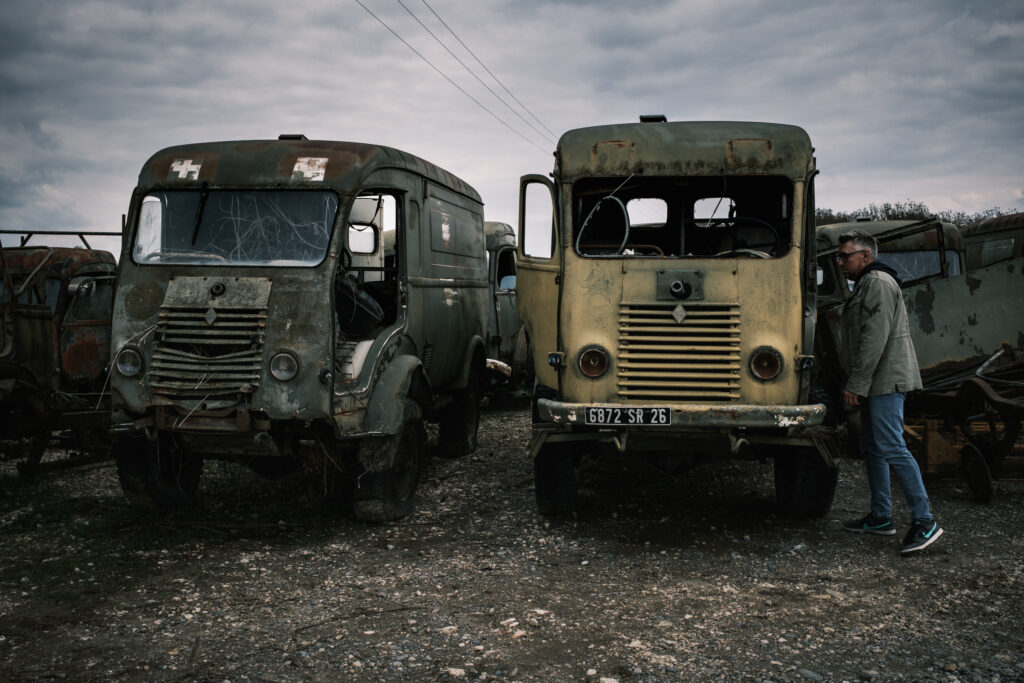
A chacun sa façon de commémorer la fin de la Seconde Guerre mondiale: pour Jacques Lascoumes, c’est au milieu des véhicules américains rongés de rouille qu’il vend aux férus d’Histoire et de vieille mécanique.Sur son vaste terrain en bord de route dans la campagne iséroise entre Grenoble et Valence, trônent des centaines de carcasses de Jeeps, ambulances, camions, utilitaires et même quelques chars, à demi-désossés, cabossés ou envahis par la mousse et les ronces. Dans un hangar, où flotte un fumet persistant d’huile de moteur, des milliers de tonnes de pièces détachées issues des mêmes engins, tous made in USA, attendent elles aussi le chaland.La petite affaire de ce spécialiste de pièces détachées et véhicules américains de la Seconde Guerre mondiale, qu’il dirige depuis maintenant 40 ans, est née en 1945 des mains de son père Jean Lascoumes, un mécanicien enthousiasmé par la qualité “exceptionnelle” des véhicules américains déployés pendant la guerre. Trois anniversaires sont célébrés pendant le pont du 8 mai par ce grand costaud vêtu de kaki: “le 100e anniversaire de la naissance de mon père, le 80e anniversaire de la Victoire, et puis mon 60e anniversaire le 12″ mai, explique-t-il. Au programme: vente aux enchères, chansons d’époque, défilé de mode des années 40.”On est typiquement des enfants du plan Marshall”, sourit le propriétaire en référence au plan de reconstruction de l’Europe mis sur pied après la guerre par le général américain George Marshall. Le grand nombre de véhicules laissés derrière eux par les États-Unis après le conflit dans le cadre de ce plan, réemployés au civil, par exemple dans le bâtiment, les réseaux EDF, les barrages ou par les pompiers, “ont permis de reconstruire très vite” le continent, rappelle-t-il. Ce n’est qu’à partir des années 80 que les usages professionnels des véhicules ont progressivement disparu et qu’est apparue à leur place une clientèle de collectionneurs amoureux de la bidouille et prêts à investir des sommes conséquentes dans leur passion. “Il faut imaginer que la rénovation d’un véhicule militaire, c’est d’abord un plaisir. Les samedis après-midi, les weekends, les vacances, que les gens passent à rénover leur véhicule, c’est des instants de plaisir, ce n’est pas des instants de travail”, s’amuse M. Lascoumes. “Ce qui attire les gens ici, c’est qu’effectivement, je ne connais pas de stock plus important de ce matériel. Je suis quasiment sûr qu’en Europe, il n’y en a pas”, se rengorge-t-il.Pour lui, les festivités du weekend pourraient prendre une tournure plus personnelle puisqu’il songe à “se séparer de ses jouets” et va se mettre en quête d’un repreneur.- “J’adore ça” -Parmi les visiteurs du weekend, des membres de l’AVM 74 (Amicale des véhicules militaires de Haute-Savoie), venus, en costumes d’époque, exposer avec fierté leur matériel.Rémi Nater, 62 ans, a passé un an à retaper un Dodge WC 52, véhicule multifonction équipé d’une mitraillette et d’un drapeau américain et dont les papiers attestent qu’il date de 1943. “Je suis en train de voir où il aurait débarqué” pendant la guerre, s’enthousiasme-t-il. Lorsqu’il le met en route pour une démonstration, le bruit du moteur est assourdissant, le volant très dur à tourner et le vent décoiffant en l’absence de portières, mais “j’adore ça”, confesse-t-il.Déambulant en quête de coup de cœur parmi les rangées de vieilles autos décaties, Andrea Costa, un touriste italien, se reconnaît volontiers atteint du même virus: “Quand je vois ça, la première chose qui me vient en tête, c’est que j’ai envie de retaper tous ces véhicules”. “J’ai tellement entendu des histoires de guerre quand j’étais petit, de mon père avec son meilleur ami, que c’est presque comme si j’avais vécu ça”, relève-t-il, fasciné par “ce que ces objets ont vécu, toute cette période assez terrible”. “Et de temps en temps, en 2025, on pense, est-ce que c’est possible que ça arrive à nouveau ? On est dans une période assez trouble”, observe-t-il.”Qui ignore son histoire s’expose à la revivre”, abonde Jacques Lascoumes, qui cite volontiers les mémoires de De Gaulle, Churchill et d’autres.