Film claims to name killer of slain journalist Shireen Abu Akleh

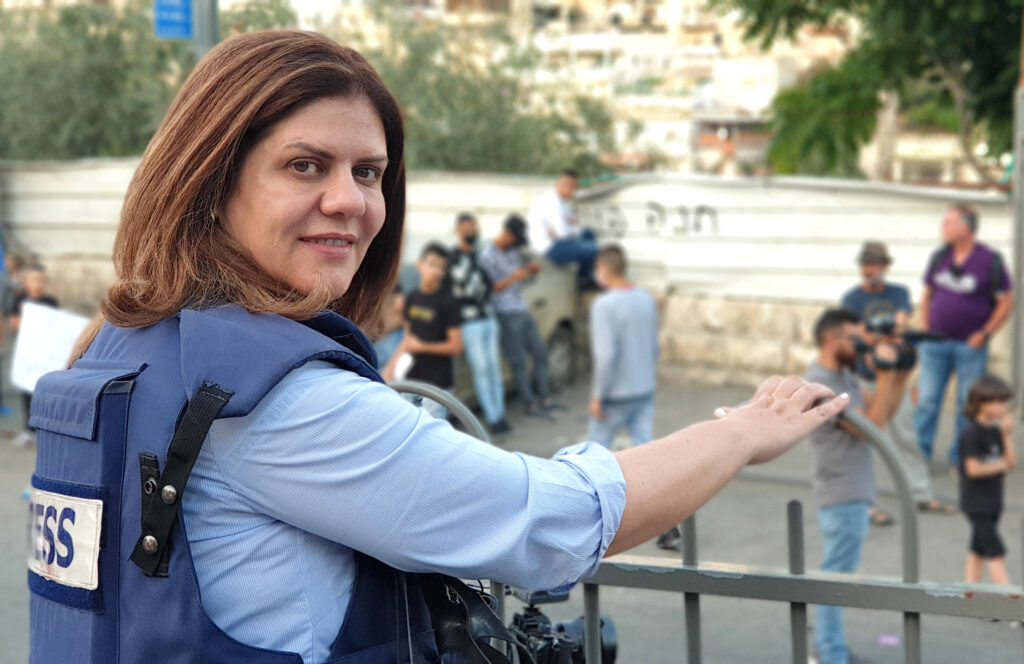
A new documentary purports to name the Israeli soldier who killed Al Jazeera reporter Shireen Abu Akleh, who was gunned down in the West Bank while reporting in 2022.Abu Akleh, a Palestinian-American journalist known for her coverage of the Arab-Israeli conflict, was shot dead in Jenin in the north of the occupied West Bank while she worked, wearing a bulletproof vest marked “press.”Al Jazeera and witnesses immediately blamed the Israeli army. Then Israeli prime minister Naftali Bennett said it was probable the shots had come from Palestinian militants. In the weeks that followed, several journalistic investigations pointed the blame at Israeli gunfire. Months later, Israel released an internal investigation that found a “high probability” that Abu Akleh was accidentally shot by the Israeli army, which claimed it was targeting armed Palestinians.Produced by independent news site Zeteo, the documentary “Who killed Shireen?” names for the first time the suspect as Alon Scaggio, an elite soldier.”Israel did everything it could to conceal the soldier’s identity, they wouldn’t provide the US with any information. They wouldn’t let the US interview him. They wouldn’t give the US his statement. And they wouldn’t give his name,” said Dion Nissenbaum, a journalist who worked on the film.Assisted by producer Conor Powell and reporter Fatima AbdulKarim — who worked for The New York Times in the West Bank — Nissenbaum, a former Wall Street Journal correspondent, consulted testimony from two Israeli soldiers present in Jenin on May 11, 2022 as well as top US officials.- ‘Intentional killing’ claim -The documentary alleges that Scaggio, then 20, had completed training for the elite Duvdevan unit just three months prior.”He shot her intentionally. There’s no question about that. The question is did he know she was a journalist and did he know she was Shireen Abu Akleh? Was it an order from above?” Nissenbaum told AFP.”Personally, I don’t think it was an order. I don’t think he knew it was Shireen. Nobody ever has indicated that he could tell that it was Shireen. But she was wearing the blue flak-jacket with the word ‘press’ on it.””The evidence (suggests)… it was an intentional killing of Shireen Abu Akleh. Whether or not they knew it was her or not can very well be debated, but they would have absolutely known that it was a media person or a non-combatant at a minimum,” said a senior official from the administration of then US president Joe Biden, speaking in the film anonymously.Washington did not exert significant pressure on the issue, the documentary claims, for fear of antagonizing its ally.Democratic Senator Chris Van Hollen said he called on Biden to declassify documents about the killing — but went unanswered.The Committee to Protect Journalists (CPJ) said “it is the first time that a potential suspect has been named in connection with an Israeli killing of a journalist” according to its records dating back to 1992.Impunity in the case “has effectively given Israel permission to silence hundreds more” journalists, the CPJ said.Reporters Without Borders estimates around 200 journalists were killed in the past 18 months of Israeli strikes on Gaza.An Israeli army spokesman condemned the unauthorized disclosure of the suspect’s name despite no “definitive determination” of who shot Abu Akleh.The soldier in question “fell during an operational activity,” the army added.Nissenbaum had initially thought Scaggio died in Gaza, but ultimately concluded he was killed in Jenin on June 27, 2024 almost two years after Abu Akleh.  
Film claims to name killer of slain journalist Shireen Abu Akleh

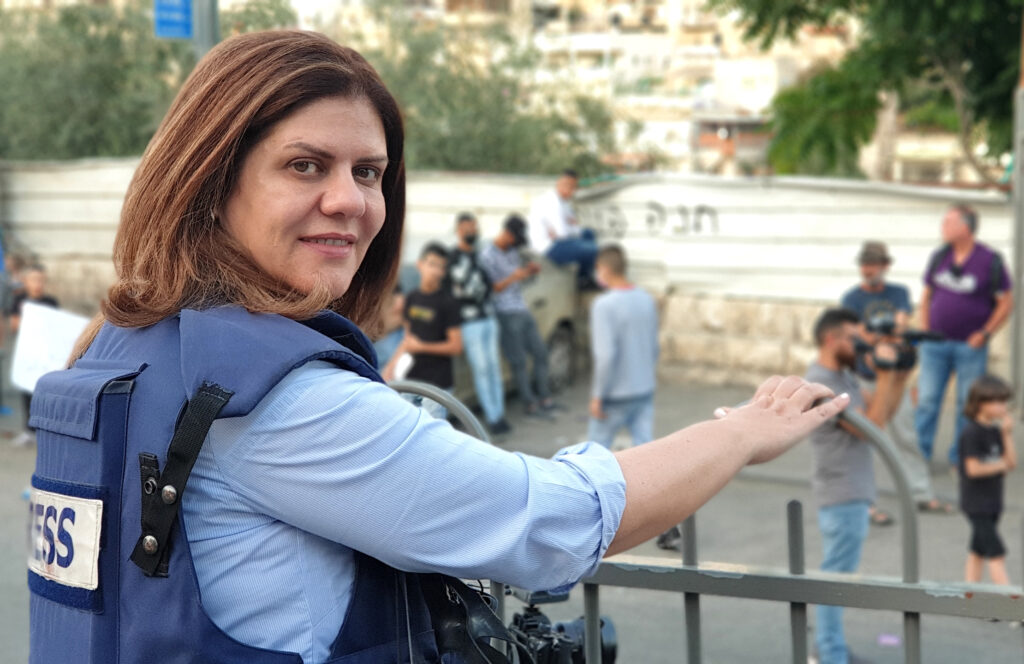
A new documentary purports to name the Israeli soldier who killed Al Jazeera reporter Shireen Abu Akleh, who was gunned down in the West Bank while reporting in 2022.Abu Akleh, a Palestinian-American journalist known for her coverage of the Arab-Israeli conflict, was shot dead in Jenin in the north of the occupied West Bank while she worked, wearing a bulletproof vest marked “press.”Al Jazeera and witnesses immediately blamed the Israeli army. Then Israeli prime minister Naftali Bennett said it was probable the shots had come from Palestinian militants. In the weeks that followed, several journalistic investigations pointed the blame at Israeli gunfire. Months later, Israel released an internal investigation that found a “high probability” that Abu Akleh was accidentally shot by the Israeli army, which claimed it was targeting armed Palestinians.Produced by independent news site Zeteo, the documentary “Who killed Shireen?” names for the first time the suspect as Alon Scaggio, an elite soldier.”Israel did everything it could to conceal the soldier’s identity, they wouldn’t provide the US with any information. They wouldn’t let the US interview him. They wouldn’t give the US his statement. And they wouldn’t give his name,” said Dion Nissenbaum, a journalist who worked on the film.Assisted by producer Conor Powell and reporter Fatima AbdulKarim — who worked for The New York Times in the West Bank — Nissenbaum, a former Wall Street Journal correspondent, consulted testimony from two Israeli soldiers present in Jenin on May 11, 2022 as well as top US officials.- ‘Intentional killing’ claim -The documentary alleges that Scaggio, then 20, had completed training for the elite Duvdevan unit just three months prior.”He shot her intentionally. There’s no question about that. The question is did he know she was a journalist and did he know she was Shireen Abu Akleh? Was it an order from above?” Nissenbaum told AFP.”Personally, I don’t think it was an order. I don’t think he knew it was Shireen. Nobody ever has indicated that he could tell that it was Shireen. But she was wearing the blue flak-jacket with the word ‘press’ on it.””The evidence (suggests)… it was an intentional killing of Shireen Abu Akleh. Whether or not they knew it was her or not can very well be debated, but they would have absolutely known that it was a media person or a non-combatant at a minimum,” said a senior official from the administration of then US president Joe Biden, speaking in the film anonymously.Washington did not exert significant pressure on the issue, the documentary claims, for fear of antagonizing its ally.Democratic Senator Chris Van Hollen said he called on Biden to declassify documents about the killing — but went unanswered.The Committee to Protect Journalists (CPJ) said “it is the first time that a potential suspect has been named in connection with an Israeli killing of a journalist” according to its records dating back to 1992.Impunity in the case “has effectively given Israel permission to silence hundreds more” journalists, the CPJ said.Reporters Without Borders estimates around 200 journalists were killed in the past 18 months of Israeli strikes on Gaza.An Israeli army spokesman condemned the unauthorized disclosure of the suspect’s name despite no “definitive determination” of who shot Abu Akleh.The soldier in question “fell during an operational activity,” the army added.Nissenbaum had initially thought Scaggio died in Gaza, but ultimately concluded he was killed in Jenin on June 27, 2024 almost two years after Abu Akleh.  
Under Trump pressure, Columbia University ends semester in turmoil

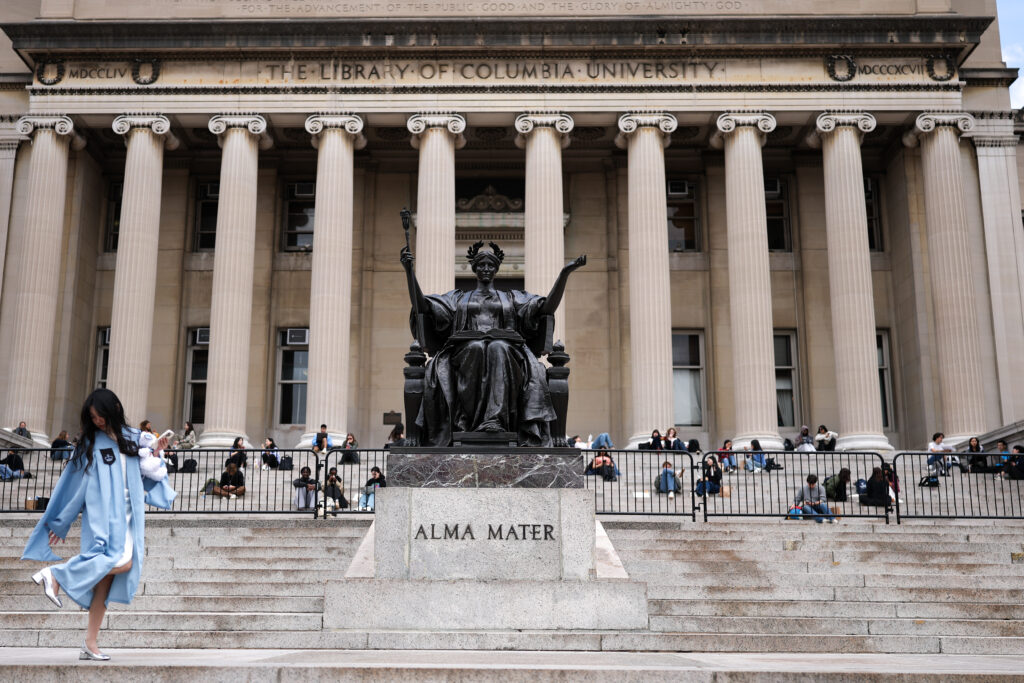
Biliana, an international student at New York’s Columbia University, is studying for exams but fears being arrested by immigration police.Columbia professors meanwhile are scrambling to save research funding in the crosshairs of President Donald Trump’s administration.An atmosphere of crisis hovers over campus as the semester winds down, as the White House accuses the prestigious university and other Ivy League schools of anti-Semitism and “woke” liberal ideology.Several hundred foreign students nationwide have been threatened with the cancellation of their visas, while others have been targeted — and a few arrested, including at Columbia — over everything from participation in pro-Palestinian protests to traffic violations.”The situation is just terrifying,” said Biliana, a 29-year-old law student, who feels such dread that she asked not to be identified by her real name or even the Latin American country she comes from. “You feel like you cannot say anything, you cannot share anything.”She went on: “Me and my friends, we have not been posting anything on Twitter,” and many are deleting old posts for fear of crossing an invisible red line.”Basically, what we’re trying to do is just to go to normal classes,” she said.- ‘No longer welcome’ -Last week, with final exams looming, 80 pro-Palestinian protesters were arrested after attempting to overtake the main library.The university’s interim president quickly condemned the protest action.Biliana said she made sure to stay far away from these kinds of demonstrations, fearful she might show up in a photo and be falsely linked to the group.Secretary of State Marco Rubio said officials were reviewing the visa status of the “vandals” involved, adding: “Pro-Hamas thugs are no longer welcome in our great nation.” For newly elected student body president Oscar Wolfe, “There is definitely a heightened level of anxiety among international students, regardless of their involvement in the protests.”Wolfe arrived on campus in September 2023, just before Hamas militants launched their October 7 attack on Israel, sparking the Gaza war and giving rise to protests that continue. He said he has known little more than a month of “normal” campus life. Reflecting the turmoil, Columbia — which normally draws thousands of tourists to its Manhattan campus featuring colonnaded buildings, sweeping lawns and famous Alma Mater statue — has largely cut off public access to its grounds.- Research jobs cut -The Trump administration has accused the university of allowing anti-Semitism to flourish on campus — something the school strongly denies — and has slashed some $400 million of Columbia’s federal funding. Harvard, another Ivy League college, has defiantly pushed back — suing the administration to halt a federal freeze of $2 billion in grants.Columbia, for its part, is negotiating with the government. But on Wednesday, interim President Claire Shipman announced that “nearly 180 of our colleagues who have been working, in whole or in part, on impacted federal grants” were going to lose their jobs.Rebecca Muhle, a professor of psychiatry, said her grant for a research project on autism was “not canceled, but it’s not funded — it’s in limbo.””I cannot hire anyone or make large purchases,” she said.”There are many, many grants in this situation,” Muhle added. “It’s chaos, and you can’t conduct good science in chaos.”- ‘No real reason’ -History professor Matthew Connelly, who specializes in state secrets and their declassification, said he had been notified that the National Endowment for the Humanities had canceled two grants, with “no real reason given.”The grants, he said, were intended to train scholars and archivists in analyzing and preserving historical records, particularly those in digital form — “one of the great challenges facing researchers.”But Connelly said he was not about to throw in the towel. “Universities are a target, because everything we do is completely contrary to what the Trump administration is trying to achieve,” he said. “If we stopped teaching… if we stopped doing our research, we would be handing them a victory.” Student leader Wolfe also views this as part of a broader battle.”This is not just an attack on Columbia,” he said, “it is the opening act of an attack against civil society.”

Trump hails US-China trade ‘reset’ after first day of talks

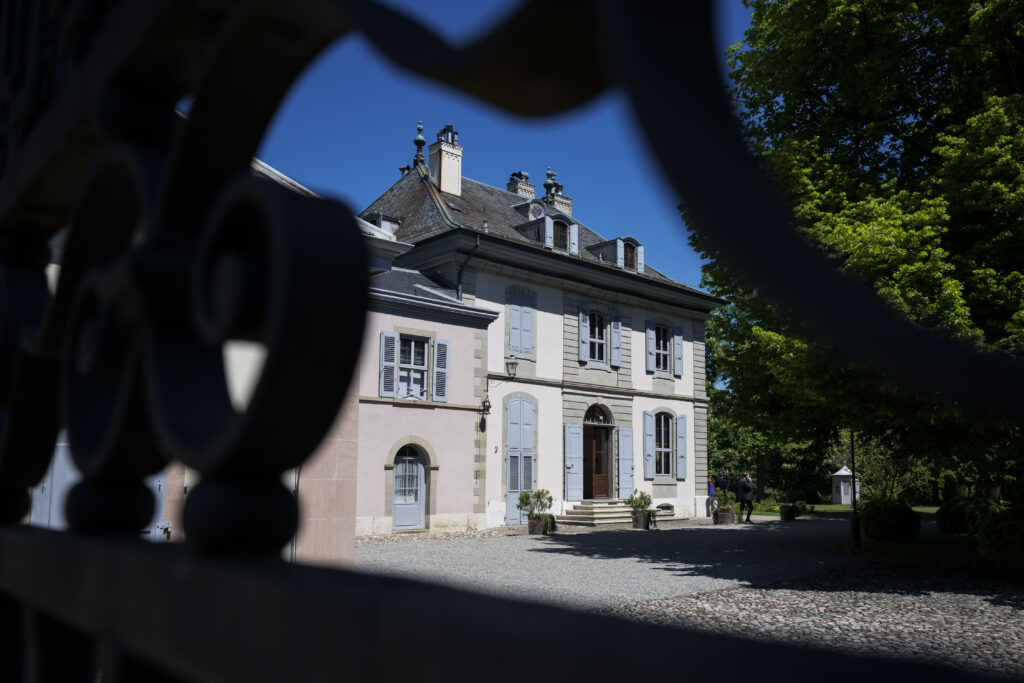
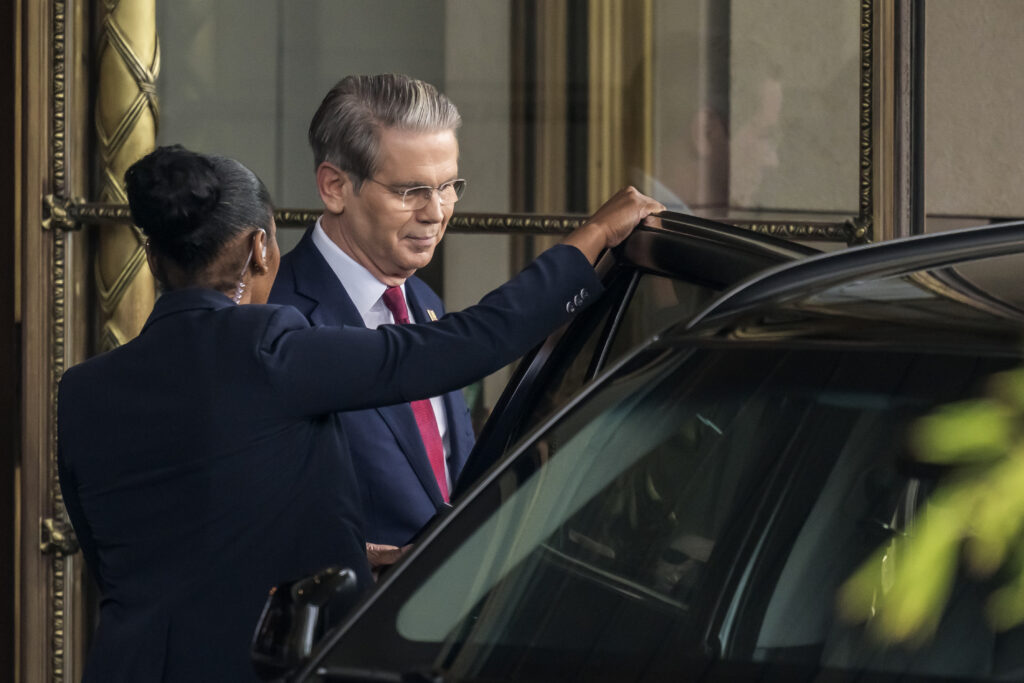
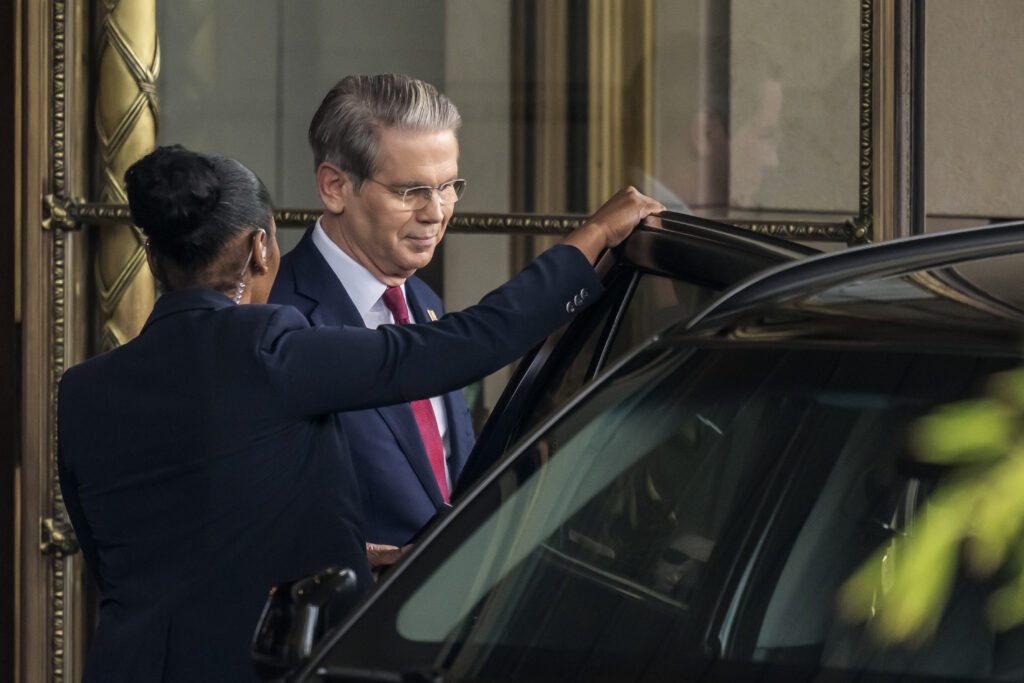
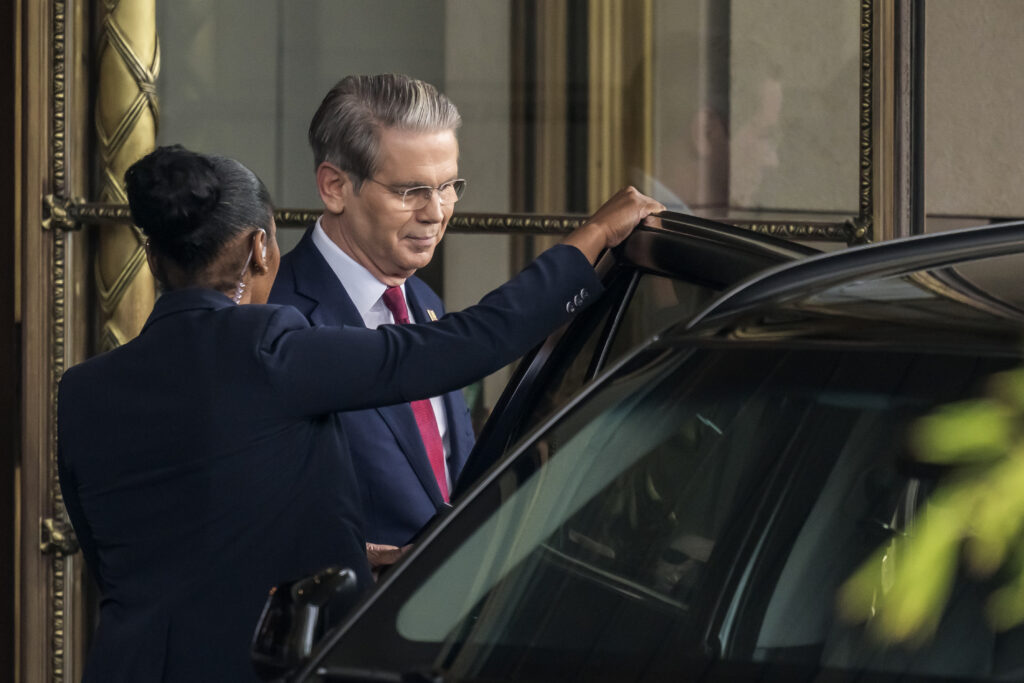
US President Donald Trump  hailed early Sunday a “total reset” in US-China trade relations following the first day of talks between top American and Chinese officials in Geneva aimed at de-escalating tensions sparked by his aggressive tariff rollout. Trump praised the “very good” discussions and deemed them “a total reset negotiated in a friendly, but constructive, manner.””We want to see, for the good of both China and the U.S., an opening up of China to American business,” he said in a Truth Social post Saturday evening in Washington.He added: “GREAT PROGRESS MADE!!!”US Treasury Secretary Scott Bessent and Trade Representative Jamieson Greer met Saturday with Chinese Vice Premier He Lifeng for the first such negotiations between the world’s two largest economies since Trump slapped steep new levies on China last month, sparking robust retaliation from Beijing. The discussions are expected to continue Sunday in Geneva, according to an individual familiar with the talks, who was not authorized to speak publicly. “The contact in Switzerland is an important step in promoting the resolution of the issue,” a commentary published by China’s state news agency Xinhua said.- ‘De-escalate’ -The closed-door negotiations took place at the residence of the Swiss ambassador to the United Nations in Geneva, a discrete villa with sky blue shutters near a large park on the left bank of Lake Geneva.Tariffs imposed by Trump on China since the start of the year currently total 145 percent, with cumulative US duties on some Chinese goods reaching a staggering 245 percent.In retaliation, China slapped 125 percent levies on US goods, cementing what appears to be a near trade embargo between the two countries.Trump signalled Friday that he might lower the sky-high tariffs on Chinese imports, taking to social media to suggest that an “80% Tariff on China seems right!”.”The president would like to work it out with China,” US Commerce Secretary Howard Lutnick told Fox News on Friday. “He would like to de-escalate the situation.”Trump’s press secretary Karoline Leavitt clarified that the United States would not lower tariffs unilaterally, and that China would need to make concessions.In any case, a move to that level would be a symbolic gesture, since the tariffs would remain prohibitively steep.- ‘No winners’ -Bessent has said the meetings in Switzerland would focus on “de-escalation” and not a “big trade deal”.Beijing has insisted the United States must lift tariffs first and vowed to defend its interests.”Trade wars and tariff battles yield no winners,” said a commentary piece run by Xinhua early Sunday.China’s vice premier went into the discussions buoyed by news on Friday that China’s exports rose last month despite the trade war.The unexpected development was attributed by experts to a re-routing of trade to Southeast Asia to mitigate US tariffs.Bessent and He were meeting two days after Trump unveiled a trade agreement with Britain, the first deal with any country since he unleashed his blitz of sweeping global tariffs.The five-page, non-binding deal with London confirmed to nervous investors that the United States is willing to negotiate sector-specific relief from recent duties — in this case, on British cars, steel and aluminium. In return, Britain agreed to open up its markets to US beef and other farm products.But a 10 percent baseline levy on most British goods remained intact and Trump remains “committed” to keeping it in place for other countries, Leavitt told reporters on Friday.A few hours later, Trump appeared to contradict her, suggesting there could be some flexibility to the baseline — but only if the right deals could be reached. “There could be an exception at some point. We’ll see,” he said. “If somebody did something exceptional for us, that’s always possible.”burs-nl-da/acb

Trump évoque “de grands progrès” dans les négociations Chine/Etats-Unis, qui reprendront dimanche

Donald Trump s’est félicité samedi des “grands progrès” accomplis lors de pourparlers entre dirigeants américains et chinois à Genève sur les droits de douane et a affirmé qu’une “remise à zéro a été négociée”.”Très bonne réunion aujourd’hui avec la Chine, en Suisse. Beaucoup de choses ont été discutées, beaucoup ont été approuvées. Une remise à zéro a été négociée de manière amicale mais constructive. Nous souhaitons, pour le bien de la Chine et des États-Unis, que la Chine s’ouvre aux entreprises américaines. De grands progrès ont été accomplis!”, a-t-il écrit sur le réseau Truth Social.Les pourparlers entre la Chine et les États-Unis, entamés samedi matin dans une villa cossue à Genève pour tenter de résoudre la guerre commerciale que se livrent les deux pays, ont été suspendus dans la soirée et doivent reprendre dimanche matin.Signe de l’importance des enjeux, les deux capitales ont envoyé des représentants de haut rang à Genève ce weekend pour ces tractations: le secrétaire américain au Trésor Scott Bessent, le représentant au Commerce Jamieson Greer et le vice-Premier ministre chinois He Lifeng.”Le contact établi en Suisse est une étape importante dans la promotion de la résolution du contentieux”, a indiqué en amont de la réunion l’agence de presse officielle Chine nouvelle, sans fournir plus de détails sur l’avancement des négociations.- “Un pas positif” -Depuis son retour à la Maison-Blanche en janvier, Donald Trump a fait des droits de douane une arme politique. Il a imposé une surtaxe de 145% sur les marchandises venant de Chine, en plus des droits de douane préexistants.Pékin, qui a promis de combattre “jusqu’au bout” les surtaxes de Donald Trump, a riposté avec 125% de droits de douane sur les produits américains.Résultat: les échanges bilatéraux sont pratiquement à l’arrêt et les marchés ont connu de violents soubresauts.Vendredi, Donald Trump avait fait un geste en suggérant d’abaisser à 80% les droits de douane punitifs qu’il a lui-même imposés sur les produits chinois.”Le président aimerait régler le problème avec la Chine. Comme il l’a dit, il aimerait apaiser la situation”, a assuré vendredi soir le secrétaire au Commerce Howard Lutnick sur Fox News.Le geste reste symbolique, car à ce niveau les droits de douane ne seraient toujours pas supportables pour la plupart des exportations chinoises vers les États-Unis.Les discussions organisées à Genève sont donc “un pas positif et constructif vers la désescalade”, a estimé la directrice générale de l’Organisation mondiale du commerce (OMC) Ngozi Okonjo-Iweala à la veille des pourparlers.Mi-avril, elle s’était montrée “très préoccupée”. Elle avait estimé que même si les échanges Chine-USA “ne représentaient qu’environ 3% du commerce mondial de marchandises, un découplage” de ces deux grandes économies “pourrait avoir des conséquences considérables”. L’économie mondiale serait alors organisée “selon des lignes géopolitiques en deux blocs isolés”.- “Concessions” -Le vice-Premier ministre chinois a semblé arriver à Genève avec un atout: Pékin a annoncé vendredi un bond de 8,1% de ses exportations en avril, un chiffre quatre fois supérieur aux prévisions des analystes, mais les exportations vers les États-Unis ont chuté de près de 18%.Donald Trump “ne va pas unilatéralement abaisser les droits de douane sur la Chine. On doit aussi voir des concessions de leur part”, a averti sa porte-parole, Karoline Leavitt.”Un résultat possible des discussions en Suisse serait un accord pour suspendre la plupart, voire la totalité, des droits de douane imposés cette année et cela pendant la durée des négociations” bilatérales, a déclaré à l’AFP Bonnie Glaser, qui dirige le programme Indo-Pacifique du German Marshall Fund, un cercle de réflexion à Washington.Xu Bin, professeur à l’école de commerce international Chine Europe (CEIBS) de Shanghaï ne s’attend pas à ce que les droits de douane reviennent à un “niveau raisonnable”: “Même si cela descend, ce sera probablement de moitié, et, là encore, ce sera trop haut pour avoir des échanges commerciaux normaux.”

Trump évoque “de grands progrès” dans les négociations Chine/Etats-Unis, qui reprendront dimanche

Donald Trump s’est félicité samedi des “grands progrès” accomplis lors de pourparlers entre dirigeants américains et chinois à Genève sur les droits de douane et a affirmé qu’une “remise à zéro a été négociée”.”Très bonne réunion aujourd’hui avec la Chine, en Suisse. Beaucoup de choses ont été discutées, beaucoup ont été approuvées. Une remise à zéro a été négociée de manière amicale mais constructive. Nous souhaitons, pour le bien de la Chine et des États-Unis, que la Chine s’ouvre aux entreprises américaines. De grands progrès ont été accomplis!”, a-t-il écrit sur le réseau Truth Social.Les pourparlers entre la Chine et les États-Unis, entamés samedi matin dans une villa cossue à Genève pour tenter de résoudre la guerre commerciale que se livrent les deux pays, ont été suspendus dans la soirée et doivent reprendre dimanche matin.Signe de l’importance des enjeux, les deux capitales ont envoyé des représentants de haut rang à Genève ce weekend pour ces tractations: le secrétaire américain au Trésor Scott Bessent, le représentant au Commerce Jamieson Greer et le vice-Premier ministre chinois He Lifeng.”Le contact établi en Suisse est une étape importante dans la promotion de la résolution du contentieux”, a indiqué en amont de la réunion l’agence de presse officielle Chine nouvelle, sans fournir plus de détails sur l’avancement des négociations.- “Un pas positif” -Depuis son retour à la Maison-Blanche en janvier, Donald Trump a fait des droits de douane une arme politique. Il a imposé une surtaxe de 145% sur les marchandises venant de Chine, en plus des droits de douane préexistants.Pékin, qui a promis de combattre “jusqu’au bout” les surtaxes de Donald Trump, a riposté avec 125% de droits de douane sur les produits américains.Résultat: les échanges bilatéraux sont pratiquement à l’arrêt et les marchés ont connu de violents soubresauts.Vendredi, Donald Trump avait fait un geste en suggérant d’abaisser à 80% les droits de douane punitifs qu’il a lui-même imposés sur les produits chinois.”Le président aimerait régler le problème avec la Chine. Comme il l’a dit, il aimerait apaiser la situation”, a assuré vendredi soir le secrétaire au Commerce Howard Lutnick sur Fox News.Le geste reste symbolique, car à ce niveau les droits de douane ne seraient toujours pas supportables pour la plupart des exportations chinoises vers les États-Unis.Les discussions organisées à Genève sont donc “un pas positif et constructif vers la désescalade”, a estimé la directrice générale de l’Organisation mondiale du commerce (OMC) Ngozi Okonjo-Iweala à la veille des pourparlers.Mi-avril, elle s’était montrée “très préoccupée”. Elle avait estimé que même si les échanges Chine-USA “ne représentaient qu’environ 3% du commerce mondial de marchandises, un découplage” de ces deux grandes économies “pourrait avoir des conséquences considérables”. L’économie mondiale serait alors organisée “selon des lignes géopolitiques en deux blocs isolés”.- “Concessions” -Le vice-Premier ministre chinois a semblé arriver à Genève avec un atout: Pékin a annoncé vendredi un bond de 8,1% de ses exportations en avril, un chiffre quatre fois supérieur aux prévisions des analystes, mais les exportations vers les États-Unis ont chuté de près de 18%.Donald Trump “ne va pas unilatéralement abaisser les droits de douane sur la Chine. On doit aussi voir des concessions de leur part”, a averti sa porte-parole, Karoline Leavitt.”Un résultat possible des discussions en Suisse serait un accord pour suspendre la plupart, voire la totalité, des droits de douane imposés cette année et cela pendant la durée des négociations” bilatérales, a déclaré à l’AFP Bonnie Glaser, qui dirige le programme Indo-Pacifique du German Marshall Fund, un cercle de réflexion à Washington.Xu Bin, professeur à l’école de commerce international Chine Europe (CEIBS) de Shanghaï ne s’attend pas à ce que les droits de douane reviennent à un “niveau raisonnable”: “Même si cela descend, ce sera probablement de moitié, et, là encore, ce sera trop haut pour avoir des échanges commerciaux normaux.”

Trump évoque “de grands progrès” dans les négociations Chine/Etats-Unis, qui reprendront dimanche

Donald Trump s’est félicité samedi des “grands progrès” accomplis lors de pourparlers entre dirigeants américains et chinois à Genève sur les droits de douane et a affirmé qu’une “remise à zéro a été négociée”.”Très bonne réunion aujourd’hui avec la Chine, en Suisse. Beaucoup de choses ont été discutées, beaucoup ont été approuvées. Une remise à zéro a été négociée de manière amicale mais constructive. Nous souhaitons, pour le bien de la Chine et des États-Unis, que la Chine s’ouvre aux entreprises américaines. De grands progrès ont été accomplis!”, a-t-il écrit sur le réseau Truth Social.Les pourparlers entre la Chine et les États-Unis, entamés samedi matin dans une villa cossue à Genève pour tenter de résoudre la guerre commerciale que se livrent les deux pays, ont été suspendus dans la soirée et doivent reprendre dimanche matin.Signe de l’importance des enjeux, les deux capitales ont envoyé des représentants de haut rang à Genève ce weekend pour ces tractations: le secrétaire américain au Trésor Scott Bessent, le représentant au Commerce Jamieson Greer et le vice-Premier ministre chinois He Lifeng.”Le contact établi en Suisse est une étape importante dans la promotion de la résolution du contentieux”, a indiqué en amont de la réunion l’agence de presse officielle Chine nouvelle, sans fournir plus de détails sur l’avancement des négociations.- “Un pas positif” -Depuis son retour à la Maison-Blanche en janvier, Donald Trump a fait des droits de douane une arme politique. Il a imposé une surtaxe de 145% sur les marchandises venant de Chine, en plus des droits de douane préexistants.Pékin, qui a promis de combattre “jusqu’au bout” les surtaxes de Donald Trump, a riposté avec 125% de droits de douane sur les produits américains.Résultat: les échanges bilatéraux sont pratiquement à l’arrêt et les marchés ont connu de violents soubresauts.Vendredi, Donald Trump avait fait un geste en suggérant d’abaisser à 80% les droits de douane punitifs qu’il a lui-même imposés sur les produits chinois.”Le président aimerait régler le problème avec la Chine. Comme il l’a dit, il aimerait apaiser la situation”, a assuré vendredi soir le secrétaire au Commerce Howard Lutnick sur Fox News.Le geste reste symbolique, car à ce niveau les droits de douane ne seraient toujours pas supportables pour la plupart des exportations chinoises vers les États-Unis.Les discussions organisées à Genève sont donc “un pas positif et constructif vers la désescalade”, a estimé la directrice générale de l’Organisation mondiale du commerce (OMC) Ngozi Okonjo-Iweala à la veille des pourparlers.Mi-avril, elle s’était montrée “très préoccupée”. Elle avait estimé que même si les échanges Chine-USA “ne représentaient qu’environ 3% du commerce mondial de marchandises, un découplage” de ces deux grandes économies “pourrait avoir des conséquences considérables”. L’économie mondiale serait alors organisée “selon des lignes géopolitiques en deux blocs isolés”.- “Concessions” -Le vice-Premier ministre chinois a semblé arriver à Genève avec un atout: Pékin a annoncé vendredi un bond de 8,1% de ses exportations en avril, un chiffre quatre fois supérieur aux prévisions des analystes, mais les exportations vers les États-Unis ont chuté de près de 18%.Donald Trump “ne va pas unilatéralement abaisser les droits de douane sur la Chine. On doit aussi voir des concessions de leur part”, a averti sa porte-parole, Karoline Leavitt.”Un résultat possible des discussions en Suisse serait un accord pour suspendre la plupart, voire la totalité, des droits de douane imposés cette année et cela pendant la durée des négociations” bilatérales, a déclaré à l’AFP Bonnie Glaser, qui dirige le programme Indo-Pacifique du German Marshall Fund, un cercle de réflexion à Washington.Xu Bin, professeur à l’école de commerce international Chine Europe (CEIBS) de Shanghaï ne s’attend pas à ce que les droits de douane reviennent à un “niveau raisonnable”: “Même si cela descend, ce sera probablement de moitié, et, là encore, ce sera trop haut pour avoir des échanges commerciaux normaux.”