Sony logs 18% annual net profit jump, forecast cautious

Japanese entertainment and electronics giant Sony on Wednesday reported an 18 percent jump in annual net profit but issued a cautious forecast for the current financial year.The firm logged a net profit of 1.14 trillion yen ($7.7 billion) for the 2024-25 financial year, but said it expects that to fall 13 percent to 930 billion yen in 2025-26.It comes as US President Donald Trump’s sweeping, on-and-off tariffs threaten the bottom line of companies worldwide.”We are responding quickly to the additional US tariffs that have already been implemented and are considering responses to multiple possible future scenarios,” the company said in a note alongside its profit forecasts.”We currently expect to be able to manage the impact on the profitability to approximately 100 billion yen, or less than 10 percent of the operating income forecast.”Sony had in February hiked its annual forecasts, following robust sales of games, music and other products in the October-December holiday shopping season.Its “video game, music and film businesses are showing steady performance”, Rakuten Securities chief analyst Yasuo Imanaka said in a note last month.For the key gaming sector, “the next fiscal year to March 2026 is also expected to see steady growth”, he added.”Regarding the rise in US tariffs, (Sony) will likely be able to deal with it for the time being as it has stockpiled inventory in the United States,” Imanaka said.”But if high tariffs continue, the longer term impact is unclear,” he warned.Sony in April said it had hiked the price of some PlayStation 5 consoles in select markets, but not the United States, because of “challenging” global economic conditions.But it has not touched the cost of the higher-priced, higher-spec PS5 Pro console, which hit shelves in November.Masahiro Wakasugi of Bloomberg Intelligence also said ahead of Wednesday’s earnings that “tariffs are likely to be a headwind next year”.But “the music and picture division’s earnings can also expand strongly thanks to the high popularity of its streaming music and movies”.Music streaming is a money-spinner for Sony, which has an impressive back catalogue and a current roster that includes artists such as Beyonce and Lil Nas X.

China, US to lift sweeping tariffs in trade war climbdown

The United States and China will lift sweeping tariffs on each others’ goods for 90 days on Wednesday, after a temporary ceasefire in a brutal trade war that roiled global markets and international supply chains.Washington and Beijing had agreed to drastically lower skyhigh tariffs in a deal that emerged from pivotal talks at the weekend in Geneva.US President Donald Trump said Washington now had the blueprint for a “very, very strong” trade deal with China that would see Beijing’s economy “open up” to US businesses, in an interview broadcast Tuesday on Fox News.”We have the confines of a very, very strong deal with China. But the most exciting part of the deal…that’s the opening up of China to US business,” he told the US broadcaster while aboard Air Force One on the way to the start of his Gulf tour.”One of the things I think that could be most exciting for us and also for China, is that we’re trying to open up China,” he added, without elaborating on details.Trump had upended international commerce with his sweeping tariffs across economies, with China hit hardest. Unwilling to budge, Beijing had responded with retaliatory levies that brought tariffs on both sides well over 100 percent.After billions were wiped off equities and with businesses ailing, negotiations finally got underway at the weekend in Geneva between the world’s trade superpowers to find a way out of the impasse. Under the deal, the United States agreed to lower its tariffs on Chinese goods to 30 percent while China will reduce its own to 10 percent — down by over 100 percentage points.The reductions will come into effect just after midnight Washington time (0401 GMT) on Wednesday, a major de-escalation in trade tensions that saw US tariffs on Chinese imports soar to up to 145 percent and even as high as 245 percent on some products.Markets rallied in the glow of the China-US tariff suspension.Chinese officials have kept their cards closer to their chests, pitching themselves at a summit in Beijing with Latin American leaders this week as a stable partner and defender of globalisation.”There are no winners in tariff wars or trade wars,” Xi told leaders including Brazil’s Luiz Inacio Lula da Silva, while his top diplomat Wang Yi swiped at a “major power” that believed “might makes right”.- ‘Risk of renewed escalation’ -Deep sources of tension remain, too — the US additional tariff rate remains higher than China’s because it includes a 20 percent levy over Trump’s complaints about Chinese exports of chemicals used to make fentanyl.Washington has long accused Beijing of turning a blind eye to the fentanyl trade, something China denies.And while the US said it sees room for progress on the issue, Beijing on Tuesday warned Washington to “stop smearing and shifting blame” onto it.Analysts also warn that the possibility of tariffs coming back into force after 90 days simply piles on more uncertainty.”Further tariff reductions will be difficult and the risk of renewed escalation persists,” Yue Su, Principal Economist at The Economist Intelligence Unit, told AFP.Trump’s rollercoaster tariff row with Beijing has wreaked havoc on US companies that rely on Chinese manufacturing, with a temporary de-escalation only expected to partially calm the storm.And Beijing officials have admitted that China’s economy — already ailing from a protracted property crisis and sluggish consumer spending — is likewise being affected by the trade uncertainty.”Both sides have endured a good deal of economic pain and they can still endure a little bit more,” Dylan Loh, an assistant professor at Singapore’s Nanyang Technological University, told AFP.

Asian markets swing as China-US trade euphoria fades

Asian stocks fluctuated Wednesday, with investors struggling to track a strong day on Wall Street as euphoria over the China-US trade detente petered out.But while the days of breathtaking volatility seen through April appear to be over for now, analysts warned that more work was needed for Washington to reach tariff deals with countries and instill a sense of stability.Data showing US inflation unexpectedly slowed last month provided some cheer, though observers pointed out that the real impact of Donald Trump’s “Liberation Day” tolls will not likely be felt until May’s readings.The US president on Tuesday played up a deal with Beijing.”We have the confines of a very, very strong deal with China. But the most exciting part of the deal… that’s the opening up of China to US business,” he told Fox News.His remarks were made aboard Air Force One as he headed off on his Gulf tour, with Saudi Arabia on Tuesday pledging $600 billion worth of US investments in a range of sectors from defence to artificial intelligence.The agreements — including a huge chip deal for Nvidia and Advanced Micro Devices — would boost US jobs, and the stock market is “gonna go a lot higher”, Trump said, citing an “explosion of investment and jobs”.The tech-rich Nasdaq rallied with the S&P 500, which broke back into positive territory for the year, helped slightly by the inflation data.But Asia struggled to extend the rally.Hong Kong, Seoul, Jakarta and Taipei rose more than one percent but Wellington and Manila were flat, while Tokyo, Shanghai, Sydney and Singapore fell.Oil, which had enjoyed a four-day rally on demand optimism and Trump’s warnings to Iran over a nuclear deal, also edged down.Analysts said that while the China deal was welcome, investors were now bracing for the next developments in the US president’s trade standoff with the world as countries look to strike deals with the White House to avert stiff tariffs.”Remember it’s an armistice not a peace treaty — and the tariffs are still at these levels worse than we had before,” Neil Wilson at Saxo Markets said.”Let’s be honest, the market knows this script by heart: Trump escalates. Markets tumble. Back-channels open. China blinks. A deal gets made. Risk rallies,” added Stephen Innes at SPI Asset Management.”The fog has lifted — for now. Whether this cycle brings more sustainable upside or just sets up the next tantrum remains to be seen,” he said.Still, the dialling down of tensions with China saw JPMorgan Chase predict the US economy would grow this year, reversing its earlier forecast for a contraction caused by the tariffs.Investors are also awaiting the release of earnings from Chinese tech titans Alibaba and Tencent, which could provide an idea about how the market heavyweights are coping with the trade upheaval and uncertainty in the world’s number two economy.- Key figures at around 0230 GMT -Tokyo – Nikkei 225: DOWN 0.8 percent at 37,874.59 (break)Hong Kong – Hang Seng Index: UP 1.2 percent at 23,390.30Shanghai – Composite: DOWN 0.1 percent at 3,372.40Euro/dollar: DOWN at $1.1186 from $1.1189 on TuesdayPound/dollar: UP at $1.3308 from $1.3304Dollar/yen: DOWN at 147.21 yen from 147.47 yenEuro/pound: UP at 84.08 pence from 84.07 penceWest Texas Intermediate: DOWN 0.4 percent at $63.44 per barrelBrent North Sea Crude: DOWN 0.4 percent at $66.39 per barrelNew York – Dow: DOWN 0.6 percent at 42,140.43 (close)London – FTSE 100: FLAT at 8,602.92 (close)

Ubisoft s’apprête à conclure une année mouvementée, sauvée par “Assassin’s Creed”

Un assassin qui a fait du bien: l’éditeur de jeux vidéo Ubisoft devrait dévoiler mercredi des résultats annuels “à l’équilibre”, sauvés in extremis par le dernier volet de sa série phare “Assassin’s Creed”, après de nombreuses déconvenues ces derniers mois.Le géant français du secteur, qui a affiché des bilans en dents de scie ces dernières années, a ainsi connu un lancement en demi-teinte pour “Star Wars Outlaws” l’été dernier, l’arrêt prématuré de son jeu de tir en ligne “XDefiant” et une dégringolade boursière. Il a toutefois su redresser la barre à la fin de son exercice décalé 2024-2025 grâce au succès d'”Assassin’s Creed Shadows”.Sorti le 20 mars, cet opus situé dans le Japon féodal a comptabilisé plus de trois millions de joueurs en une semaine, d’après l’éditeur, devenant même le deuxième jeu le plus vendu de l’année aux États-Unis, selon le cabinet Circana.De quoi rattraper une année annoncée “à l’équilibre” par le PDG Yves Guillemot, lors d’une audition au Sénat le 5 mai dans le cadre d’une commission d’enquête sur l’utilisation des aides publiques aux grandes entreprises, dont Ubisoft a bénéficié à hauteur de 38 millions d’euros en 2023-2024.- Nouvelle filiale -Surtout, le groupe a lancé fin mars la création d’une nouvelle filiale – qui n’a pas encore de nom – regroupant ses trois sagas phares: “Assassin’s Creed”, “Far Cry” et “Rainbow Six”.Selon Yves Guillemot, cette filiale réunira environ 3.000 des quelque 17.000 salariés du groupe dans le monde. Elle ne détiendra pas directement ces marques mais paiera des royalties à sa maison mère Ubisoft pour leur exploitation.Valorisée à plus de 4 milliards d’euros (plus de deux fois la valorisation boursière actuelle d’Ubisoft), cette nouvelle entité sera détenue à environ 25% par le géant chinois de la tech Tencent, qui apportera 1,16 milliard d’euros d’argent frais.Pour Martin Szumski, analyste financier chez Morningstar, “c’était la solution la moins engageante possible, sans pour autant retourner les mains vides devant les actionnaires”, alors qu’un fonds d’investissement minoritaire tente de fédérer une partie d’entre eux pour demander un virage stratégique.Ce qui n’a pas empêché l’action d’Ubisoft de s’effondrer dans la foulée, alors que le marché boursier était plongé dans la tourmente par l’annonce des droits de douane américains.Depuis début janvier, le titre a perdu plus de 12%, tombant en avril à son plus bas niveau depuis plus de 10 ans.- L’ombre de Tencent -“Le marché a été déçu”, affirme Martin Szumski, car “la plupart des investisseurs s’attendaient à une modification plus significative du fonctionnement de l’entreprise”.Cette transaction permettra aussi à Tencent, entré au capital d’Ubisoft en 2018, d’affirmer encore un peu plus sa position au sein de l’entreprise française, même si le PDG du groupe a assuré devant les sénateurs qu’il comptait bien “garder la main” sur cette filiale.Mais, “si Ubisoft n’utilise pas l’argent investi par Tencent de manière significative”, le groupe chinois pourrait “chercher à racheter l’entreprise directement”, avertit l’analyste de Morningstar, malgré l’opposition affichée des frères Guillemot, qui en tiennent les rênes.Ubisoft, dont la dette atteignait 1,4 milliard d’euros fin septembre 2024, a entamé il y a deux ans un plan de réduction des coûts qui a déjà entraîné des fermetures de studios à l’étranger et le départ de plusieurs milliers de salariés.L’entreprise ne remplace désormais qu’un départ sur trois, a précisé Yves Guillemot devant les sénateurs.Ubisoft a également connu plusieurs mouvements de grève en 2024, portant sur les rémunérations et le travail à distance, qui ont mobilisé jusqu’à un quart de ses 4.000 salariés en France, selon les syndicats.

A close-up of a stack of newspapers resting on a desk, symbolizing information and media.

Ubisoft s’apprête à conclure une année mouvementée, sauvée par “Assassin’s Creed”

Un assassin qui a fait du bien: l’éditeur de jeux vidéo Ubisoft devrait dévoiler mercredi des résultats annuels “à l’équilibre”, sauvés in extremis par le dernier volet de sa série phare “Assassin’s Creed”, après de nombreuses déconvenues ces derniers mois.Le géant français du secteur, qui a affiché des bilans en dents de scie ces dernières années, a ainsi connu un lancement en demi-teinte pour “Star Wars Outlaws” l’été dernier, l’arrêt prématuré de son jeu de tir en ligne “XDefiant” et une dégringolade boursière. Il a toutefois su redresser la barre à la fin de son exercice décalé 2024-2025 grâce au succès d'”Assassin’s Creed Shadows”.Sorti le 20 mars, cet opus situé dans le Japon féodal a comptabilisé plus de trois millions de joueurs en une semaine, d’après l’éditeur, devenant même le deuxième jeu le plus vendu de l’année aux États-Unis, selon le cabinet Circana.De quoi rattraper une année annoncée “à l’équilibre” par le PDG Yves Guillemot, lors d’une audition au Sénat le 5 mai dans le cadre d’une commission d’enquête sur l’utilisation des aides publiques aux grandes entreprises, dont Ubisoft a bénéficié à hauteur de 38 millions d’euros en 2023-2024.- Nouvelle filiale -Surtout, le groupe a lancé fin mars la création d’une nouvelle filiale – qui n’a pas encore de nom – regroupant ses trois sagas phares: “Assassin’s Creed”, “Far Cry” et “Rainbow Six”.Selon Yves Guillemot, cette filiale réunira environ 3.000 des quelque 17.000 salariés du groupe dans le monde. Elle ne détiendra pas directement ces marques mais paiera des royalties à sa maison mère Ubisoft pour leur exploitation.Valorisée à plus de 4 milliards d’euros (plus de deux fois la valorisation boursière actuelle d’Ubisoft), cette nouvelle entité sera détenue à environ 25% par le géant chinois de la tech Tencent, qui apportera 1,16 milliard d’euros d’argent frais.Pour Martin Szumski, analyste financier chez Morningstar, “c’était la solution la moins engageante possible, sans pour autant retourner les mains vides devant les actionnaires”, alors qu’un fonds d’investissement minoritaire tente de fédérer une partie d’entre eux pour demander un virage stratégique.Ce qui n’a pas empêché l’action d’Ubisoft de s’effondrer dans la foulée, alors que le marché boursier était plongé dans la tourmente par l’annonce des droits de douane américains.Depuis début janvier, le titre a perdu plus de 12%, tombant en avril à son plus bas niveau depuis plus de 10 ans.- L’ombre de Tencent -“Le marché a été déçu”, affirme Martin Szumski, car “la plupart des investisseurs s’attendaient à une modification plus significative du fonctionnement de l’entreprise”.Cette transaction permettra aussi à Tencent, entré au capital d’Ubisoft en 2018, d’affirmer encore un peu plus sa position au sein de l’entreprise française, même si le PDG du groupe a assuré devant les sénateurs qu’il comptait bien “garder la main” sur cette filiale.Mais, “si Ubisoft n’utilise pas l’argent investi par Tencent de manière significative”, le groupe chinois pourrait “chercher à racheter l’entreprise directement”, avertit l’analyste de Morningstar, malgré l’opposition affichée des frères Guillemot, qui en tiennent les rênes.Ubisoft, dont la dette atteignait 1,4 milliard d’euros fin septembre 2024, a entamé il y a deux ans un plan de réduction des coûts qui a déjà entraîné des fermetures de studios à l’étranger et le départ de plusieurs milliers de salariés.L’entreprise ne remplace désormais qu’un départ sur trois, a précisé Yves Guillemot devant les sénateurs.Ubisoft a également connu plusieurs mouvements de grève en 2024, portant sur les rémunérations et le travail à distance, qui ont mobilisé jusqu’à un quart de ses 4.000 salariés en France, selon les syndicats.

Ubisoft s’apprête à conclure une année mouvementée, sauvée par “Assassin’s Creed”

Un assassin qui a fait du bien: l’éditeur de jeux vidéo Ubisoft devrait dévoiler mercredi des résultats annuels “à l’équilibre”, sauvés in extremis par le dernier volet de sa série phare “Assassin’s Creed”, après de nombreuses déconvenues ces derniers mois.Le géant français du secteur, qui a affiché des bilans en dents de scie ces dernières années, a ainsi connu un lancement en demi-teinte pour “Star Wars Outlaws” l’été dernier, l’arrêt prématuré de son jeu de tir en ligne “XDefiant” et une dégringolade boursière. Il a toutefois su redresser la barre à la fin de son exercice décalé 2024-2025 grâce au succès d'”Assassin’s Creed Shadows”.Sorti le 20 mars, cet opus situé dans le Japon féodal a comptabilisé plus de trois millions de joueurs en une semaine, d’après l’éditeur, devenant même le deuxième jeu le plus vendu de l’année aux États-Unis, selon le cabinet Circana.De quoi rattraper une année annoncée “à l’équilibre” par le PDG Yves Guillemot, lors d’une audition au Sénat le 5 mai dans le cadre d’une commission d’enquête sur l’utilisation des aides publiques aux grandes entreprises, dont Ubisoft a bénéficié à hauteur de 38 millions d’euros en 2023-2024.- Nouvelle filiale -Surtout, le groupe a lancé fin mars la création d’une nouvelle filiale – qui n’a pas encore de nom – regroupant ses trois sagas phares: “Assassin’s Creed”, “Far Cry” et “Rainbow Six”.Selon Yves Guillemot, cette filiale réunira environ 3.000 des quelque 17.000 salariés du groupe dans le monde. Elle ne détiendra pas directement ces marques mais paiera des royalties à sa maison mère Ubisoft pour leur exploitation.Valorisée à plus de 4 milliards d’euros (plus de deux fois la valorisation boursière actuelle d’Ubisoft), cette nouvelle entité sera détenue à environ 25% par le géant chinois de la tech Tencent, qui apportera 1,16 milliard d’euros d’argent frais.Pour Martin Szumski, analyste financier chez Morningstar, “c’était la solution la moins engageante possible, sans pour autant retourner les mains vides devant les actionnaires”, alors qu’un fonds d’investissement minoritaire tente de fédérer une partie d’entre eux pour demander un virage stratégique.Ce qui n’a pas empêché l’action d’Ubisoft de s’effondrer dans la foulée, alors que le marché boursier était plongé dans la tourmente par l’annonce des droits de douane américains.Depuis début janvier, le titre a perdu plus de 12%, tombant en avril à son plus bas niveau depuis plus de 10 ans.- L’ombre de Tencent -“Le marché a été déçu”, affirme Martin Szumski, car “la plupart des investisseurs s’attendaient à une modification plus significative du fonctionnement de l’entreprise”.Cette transaction permettra aussi à Tencent, entré au capital d’Ubisoft en 2018, d’affirmer encore un peu plus sa position au sein de l’entreprise française, même si le PDG du groupe a assuré devant les sénateurs qu’il comptait bien “garder la main” sur cette filiale.Mais, “si Ubisoft n’utilise pas l’argent investi par Tencent de manière significative”, le groupe chinois pourrait “chercher à racheter l’entreprise directement”, avertit l’analyste de Morningstar, malgré l’opposition affichée des frères Guillemot, qui en tiennent les rênes.Ubisoft, dont la dette atteignait 1,4 milliard d’euros fin septembre 2024, a entamé il y a deux ans un plan de réduction des coûts qui a déjà entraîné des fermetures de studios à l’étranger et le départ de plusieurs milliers de salariés.L’entreprise ne remplace désormais qu’un départ sur trois, a précisé Yves Guillemot devant les sénateurs.Ubisoft a également connu plusieurs mouvements de grève en 2024, portant sur les rémunérations et le travail à distance, qui ont mobilisé jusqu’à un quart de ses 4.000 salariés en France, selon les syndicats.

Trump set to meet Syrian leader ahead of Qatar visit

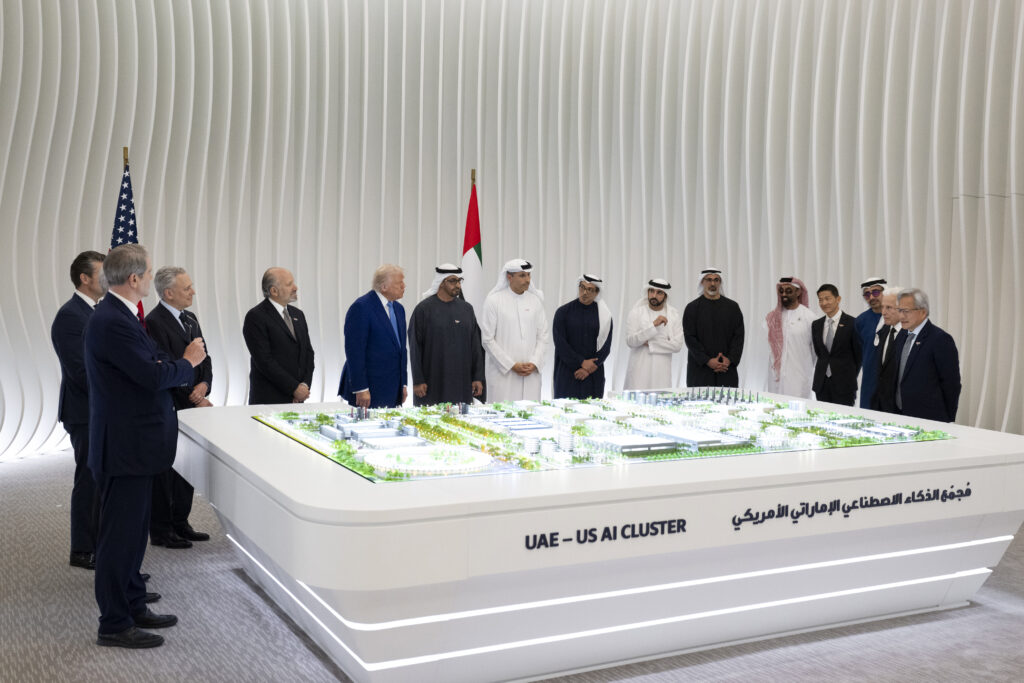
Donald Trump was set to meet the leader of Syria and the heads of the Gulf states Wednesday in Riyadh before travelling to Qatar where controversy is swirling over the gifting of a luxury aircraft.The US president was set to “say hello” to Syria’s new leader Ahmed al-Sharaa during his last day in Riyadh, after vowing to remove sanctions against the war-ravaged country.”I will be ordering the cessation of sanctions against Syria in order to give them a chance at greatness,” Trump said during a speech at an investment forum in the Saudi capital. “What I do for the crown prince,” he added, before being joined on stage by Saudi Arabia’s de facto leader Mohammed bin Salman, who along with Turkey has backed the Sunni Islamists who toppled Bashar al-Assad in December.The move comes despite misgivings about the direction of Syria from US ally Israel, which has unleashed military strikes on its neighbour both before and after the fall of Assad, an Iranian ally.Trump will also meet with leaders and representatives from the six Gulf Cooperation Council states: Saudi Arabia, the United Arab Emirates, Bahrain, Qatar, Kuwait and Oman.The diplomatic sitdowns followed a day dedicated to sealing billions of dollars in commercial agreements, with the United States and Saudi Arabia signing a raft of deals involving energy, AI, weapons and tech. The White House said that Riyadh would purchase nearly $142 billion in arms in what it described as the largest-ever weapons deal.Washington said that Saudi company DataVolt was set to pour $20 billion in artificial intelligence-related projects in the United States. Tech companies including Google will also invest in both countries — likely welcome news for Saudi Arabia which has long faced restrictions securing advanced American technology.- Qatar controversy -Trump was set to head to Doha around midday. The tiny Gulf country that is home to a sprawling US air base has also served as a mediator between Israel and Hamas on ending the devastating war in Gaza. But the stop has largely been muddled by controversy following news that Trump planned on accepting a $400 million luxury plane as a gift from Qatar.The Boeing airplane would serve as a new, more modern presidential jet and then be put to Trump’s personal use once he leaves the White House.The move raises huge constitutional and ethical questions — as well as security concerns about using an aircraft donated by a foreign power as the ultra-sensitive Air Force One.Chuck Schumer, the top Democrat in the Senate, on Tuesday vowed to hold up all Justice Department political appointees in protest over the move. The visit to Qatar comes just days after Washington negotiated directly with Hamas to secure the release of a hostage with US citizenship, Edan Alexander. Qatar, alongside Egypt and the United States, hammered out a ceasefire between Israel and Hamas in Gaza that came into effect on January 19 — a day before Trump’s inauguration — but failed to end the war.The initial phase of the truce ended in early March, with the two sides unable to chart a path forward. Israel resumed air and ground attacks across the Gaza Strip, blocked aid and pledged to conquer the territory.On Tuesday, Israeli Prime Minister Benjamin Netanyahu said the military would enter Gaza “with full force” in the coming days, saying: “There will be no situation where we stop the war.”Trump was set to finish his tour of the Gulf with a final stop in Abu Dhabi later in the week. 

Trump set to meet Syrian leader ahead of Qatar visit

Donald Trump was set to meet the leader of Syria and the heads of the Gulf states Wednesday in Riyadh before travelling to Qatar where controversy is swirling over the gifting of a luxury aircraft.The US president was set to “say hello” to Syria’s new leader Ahmed al-Sharaa during his last day in Riyadh, after vowing to remove sanctions against the war-ravaged country.”I will be ordering the cessation of sanctions against Syria in order to give them a chance at greatness,” Trump said during a speech at an investment forum in the Saudi capital. “What I do for the crown prince,” he added, before being joined on stage by Saudi Arabia’s de facto leader Mohammed bin Salman, who along with Turkey has backed the Sunni Islamists who toppled Bashar al-Assad in December.The move comes despite misgivings about the direction of Syria from US ally Israel, which has unleashed military strikes on its neighbour both before and after the fall of Assad, an Iranian ally.Trump will also meet with leaders and representatives from the six Gulf Cooperation Council states: Saudi Arabia, the United Arab Emirates, Bahrain, Qatar, Kuwait and Oman.The diplomatic sitdowns followed a day dedicated to sealing billions of dollars in commercial agreements, with the United States and Saudi Arabia signing a raft of deals involving energy, AI, weapons and tech. The White House said that Riyadh would purchase nearly $142 billion in arms in what it described as the largest-ever weapons deal.Washington said that Saudi company DataVolt was set to pour $20 billion in artificial intelligence-related projects in the United States. Tech companies including Google will also invest in both countries — likely welcome news for Saudi Arabia which has long faced restrictions securing advanced American technology.- Qatar controversy -Trump was set to head to Doha around midday. The tiny Gulf country that is home to a sprawling US air base has also served as a mediator between Israel and Hamas on ending the devastating war in Gaza. But the stop has largely been muddled by controversy following news that Trump planned on accepting a $400 million luxury plane as a gift from Qatar.The Boeing airplane would serve as a new, more modern presidential jet and then be put to Trump’s personal use once he leaves the White House.The move raises huge constitutional and ethical questions — as well as security concerns about using an aircraft donated by a foreign power as the ultra-sensitive Air Force One.Chuck Schumer, the top Democrat in the Senate, on Tuesday vowed to hold up all Justice Department political appointees in protest over the move. The visit to Qatar comes just days after Washington negotiated directly with Hamas to secure the release of a hostage with US citizenship, Edan Alexander. Qatar, alongside Egypt and the United States, hammered out a ceasefire between Israel and Hamas in Gaza that came into effect on January 19 — a day before Trump’s inauguration — but failed to end the war.The initial phase of the truce ended in early March, with the two sides unable to chart a path forward. Israel resumed air and ground attacks across the Gaza Strip, blocked aid and pledged to conquer the territory.On Tuesday, Israeli Prime Minister Benjamin Netanyahu said the military would enter Gaza “with full force” in the coming days, saying: “There will be no situation where we stop the war.”Trump was set to finish his tour of the Gulf with a final stop in Abu Dhabi later in the week.