

Facturation des bagages à main: sept compagnies aériennes dans le viseur d’associations
Une quinzaine d’associations européennes, dont l’UFC-Que choisir et CLCV pour la France, ont demandé à la Commission européenne de lancer une enquête à l’échelle de l’UE sur la politique de facturation des bagages à main de sept compagnies aériennes à bas coût.EasyJet, Norwegian, Ryanair, Transavia, Volotea, Vueling et Wizzair “facturent des frais indus aux consommateurs”, accuse mercredi dans un communiqué la Confédération de la consommation, du logement et du cadre de vie (CLCV), partie prenante de cette initiative aux côtés de 15 autres ONG membres du Bureau européen des unions de consommateurs (BEUC). En effet, “la Cour de justice de l’UE a (…) jugé en 2014 que +le transport de bagages à main ne peut pas être soumis à un supplément de prix, à condition qu’il réponde à des exigences raisonnables en termes de poids et de dimensions et qu’il soit conforme aux exigences de sécurité applicables+”, souligne l’association.Pourtant, selon le collectif d’associations, ces sept compagnies imposent des frais pour des bagages à main de taille raisonnable mais qu’elles considèrent comme “de grande taille”: 36 euros pour Ryanair, près de 43 euros pour EasyJet, voire jusqu’à 280 euros pour Vueling s’il s’avère que les dimensions définies par la compagnie ne sont pas respectées. Autre point litigieux: les dimensions permettant de définir le format (petit ou grand) d’un bagage admis à bord “sont particulièrement hétérogènes d’une compagnie à l’autre”. Ce collectif d’associations européennes a donc décidé de saisir la Commission européenne et les institutions nationales de protection des consommateurs des Vingt-Sept (dont la Direction générale de la concurrence, de la consommation et de la répression des fraudes (DGCCRF) en France) “pour qu’une enquête soit diligentée à l’échelle de l’UE et que les pratiques commerciales illégales des compagnies aériennes soient sanctionnées”.Parmi les compagnies aériennes pointées du doigt, l’irlandaise Ryanair précise dans un communiqué accueillir favorablement cette initiative, jugeant que l’enquête démontrera que sa “politique de tarification des bagages se conforme totalement à la réglementation européenne, (…) qui garantit à l’ensemble des compagnies aériennes européennes la liberté de déterminer les prix, y compris ceux des services optionnels”. De son côté Norwegian estime dans une déclaration transmise à l’AFP que son modèle de tarification “respecte la réglementation européenne” et précise que ses clients l'”apprécient”. Egalement sollicitées pour un commentaire, EasyJet, Transavia, Volotea, Vueling et Wizzair n’ont pas réagi dans l’immédiat. Cette initiative intervient alors que des débats sont en cours au niveau des institutions européennes sur la réforme du règlement encadrant les droits des passagers aériens.Pour l’UFC-Que choisir, ces discussions offrent à l’UE une “occasion idéale” pour “clarifier les services qui devraient être inclus dans le prix de base du billet” et pour harmoniser les règles relatives aux bagages à main.
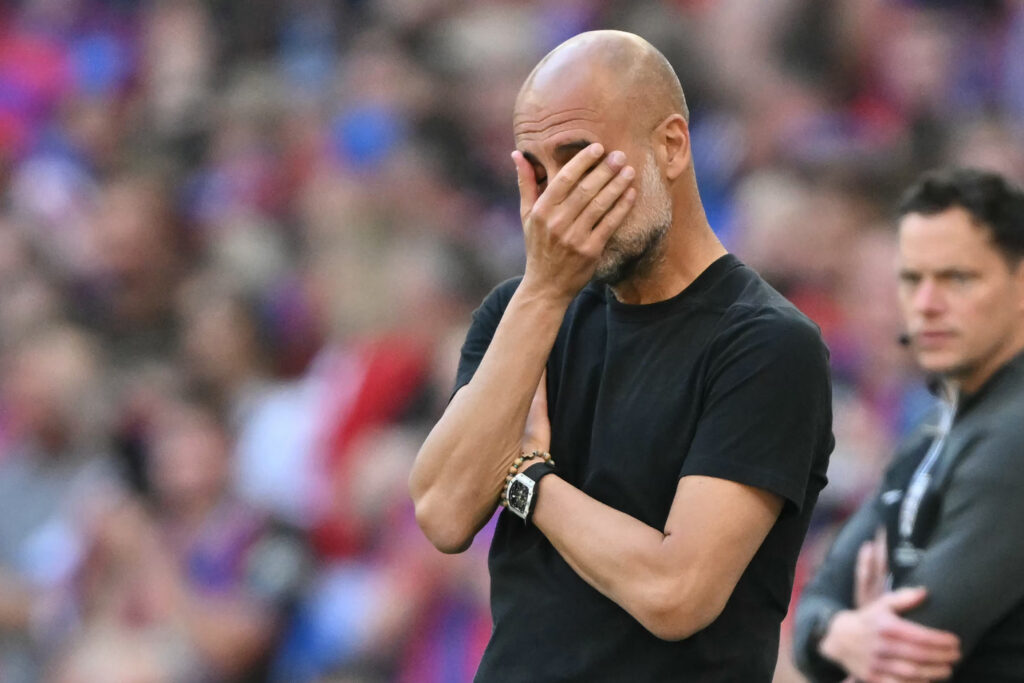
Angleterre: Guardiola menace de quitter City si l’effectif est trop important
Pep Guardiola a menacé de quitter Manchester City s’il se retrouve avec un effectif trop important la saison prochaine, affirmant qu’il ne supporte plus de faire des choix sportifs à chaque match en écartant des joueurs en forme.Les “Sky blues”, qui ont terminé la saison sans trophée après quatre titres de champion d’Angleterre consécutifs, doivent reconstruire une équipe après le départ annoncé de certains cadres, comme le Belge Kevin De Bruyne.”Je l’ai dit au club, je n’en veux pas”, a répondu l’Espagnol, interrogé sur la perspective d’un recrutement important, après la victoire 3-1 lundi soir contre Bournemouth en championnat. “Je ne veux pas laisser cinq ou six joueurs au frigo. Je ne veux pas et je partirai. Faites une équipe plus petite, et je resterai.””En tant qu’entraîneur, je ne peux pas diriger 24 joueurs et devoir choisir chaque semaine quatre, cinq ou six d’entre eux qui doivent rester chez eux à Manchester parce qu’ils ne peuvent pas jouer”, a-t-il dit.”Il est arrivé que des joueurs soient recrutés immédiatement, il y a eu trois ou quatre mois pendant lesquels on ne pouvait pas aligner onze joueurs, on n’avait pas de défenseurs, c’était tellement difficile. Mais les joueurs reviennent pour la saison prochaine et on ne peut pas continuer comme ça”, a expliqué Guardiola.Et en cas de longue blessure, comme celle du Ballon d’or, Rodri, qui a rejoué mardi pour la première fois depuis septembre, le technicien a assuré qu’il ferait appel aux jeunes issus du centre de formation.

Oil prices jump on report of Israel prepping Iran strike
Crude prices rallied Wednesday following a report that US intelligence suggested Israel was planning a strike on Iranian nuclear facilities, which would send geopolitical tensions into overdrive and fuel regional conflict fears.While safe haven gold pushed higher, the news from CNN appeared to be having little detrimental effect on Asian equities, with most extending the previous day’s rally.European stock markets faltered, however, with the Paris CAC 40 down almost one percent in midday deals.London fell and the pound strengthened against the dollar after UK inflation data come in well above forecasts in April.The dollar also lost pace against the euro and yen ahead of an upcoming G7 finance ministers meeting this week, with speculation growing that President Donald Trump is open to a weaker greenback to help US exporters.”Middle Eastern tensions are driving price action in the commodity space,” noted Kathleen Brooks, research director at XTB trading group.”Israel’s threat to strike Iran is causing this uplift,” she added.Investors are keeping tabs also on China-US relations after Beijing hit out at Washington’s “bullying” over chip export controls, just over a week after the two sides dialled down trade tensions by temporarily slashing tit-for-tat tariffs.Both main crude contracts jumped around one percent after CNN reported multiple US officials as saying the government had received intelligence indicating Israel was preparing to target Iranian atomic facilities.There are fears that such a sharp escalation could tip the Middle East into a war, with tensions already high over Israel’s strikes on Gaza.Trump said last week that “I think we’re getting close to maybe doing a deal” on Tehran’s nuclear programme and then a day later called on the Islamic republic to “move quickly or something bad is going to happen”.But Iran’s supreme leader Ayatollah Ali Khamenei warned Tuesday that nuclear talks with Washington were unlikely to yield any results after four rounds of Omani-mediated nuclear talks with the United States since April 12.”This is the clearest sign yet of how high the stakes are in the US Iran nuclear talks and the lengths Israel may go to if Iran insists on maintaining its commercial nuclear capabilities,” Robert Rennie, at Westpac Banking Corp, said.”Crude will maintain a risk premium as long as the current talks appear to be going nowhere.”Crude prices have risen around 15 percent since the start of the month on softening worries about the economic outlook as tariff tensions grow relatively calmer.- Key figures at around 1030 GMT -Brent North Sea Crude: UP 1.0 percent at $66.06 per barrelWest Texas Intermediate: UP 1.1 percent at $62.72 per barrelLondon – FTSE 100: DOWN 0.2 percent at 8,768.06 pointsParis – CAC 40: DOWN 0.8 percent at 7,880.58Frankfurt – DAX: DOWN 0.5 percent at 23,916.99Tokyo – Nikkei 225: DOWN 0.6 percent at 37,298.98 (close)Hong Kong – Hang Seng Index: UP 0.6 percent at 23,827.78 (close)Shanghai – Composite: UP 0.2 percent at 3,387.57 (close)New York – Dow: DOWN 0.3 percent at 42,677.24 (close)Euro/dollar: UP at $1.1359 from $1.1284 on TuesdayPound/dollar: UP at $1.3438 from $1.3391Dollar/yen: DOWN at 143.48 yen from 144.47 yenEuro/pound: UP at 84.53 pence from 84.26 pence
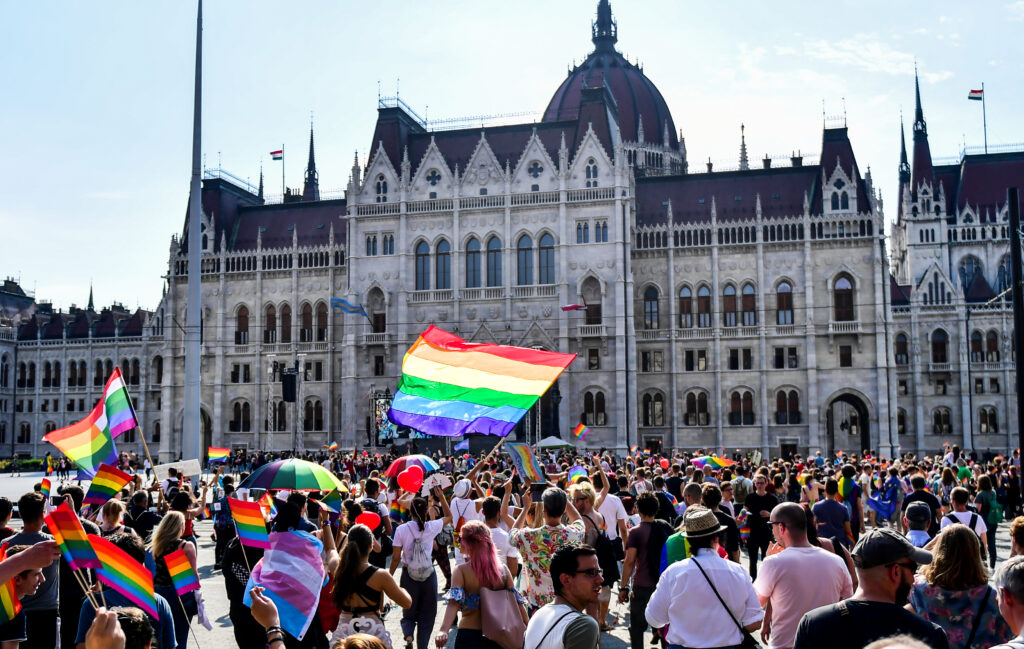
Des eurodéputés appellent à geler tous les fonds destinés à la Hongrie
Interdiction de la marche des fiertés, projet de loi ciblant les ONG… Des eurodéputés ont appelé la Commission à geler tous les fonds destinés à la Hongrie, accusant le gouvernement de Viktor Orban de “violations” répétées des lois européennes.”Nous exhortons la Commission à accroître sa pression vis-à-vis du gouvernement de Viktor Orban”, écrivent cette vingtaine de députés européens issus de la gauche, de la droite, des verts et du centre, dans une lettre rendue publique mercredi.Les élus dénoncent notamment la loi visant à interdire la pride de Budapest, adoptée par le Parlement hongrois en mars. Et un projet de loi déposé par le gouvernement hongrois mi-mai, ciblant les ONG et médias indépendants.”Il serait inacceptable de continuer à financer un régime corrompu qui sape ouvertement les valeurs européennes”, alertent-ils dans cette missive, signée notamment par l’élue française Chloé Ridel et l’Allemand Daniel Freund.L’UE gèle déjà 18 milliards d’euros de fonds destinés à la Hongrie dans le cadre de différentes procédures liées à des inquiétudes concernant les droits des personnes LGBT+, des demandeurs d’asile, ainsi que les conditions de passation des marchés publics et les conflits d’intérêt.”Nous vous demandons donc de suspendre d’urgence tout financement à la Hongrie par le biais de tous les instruments légaux disponibles”, écrivent-ils.
China’s Baidu posts rise in Q1 revenue as seeks to grow AI presence
Chinese internet giant Baidu on Wednesday posted a quarterly revenue increase of three percent, as the firm seeks to grow its presence in artificial intelligence and expand its robotaxi business abroad.The Beijing-based firm operates China’s main search engine and has long been a key player in the domestic tech industry — but faces stiff competition both from traditional rivals like Tencent and Alibaba and a host of newer upstarts.Baidu derives a large part of its revenue from advertising, a sector vulnerable to fluctuations in consumer sentiment, and has sought to diversify with cloud computing, self-driving cars and AI.The firm achieved revenue of 32.45 billion yuan ($4.5 billion) in the first quarter of 2025, up 3 percent year-on-year, according to an earnings report released Wednesday on the Hong Kong Stock Exchange website.Net income during the first quarter reached 7.72 billion yuan, up 42 percent year-on-year.China’s consumer-facing AI sector attracted global attention after startup DeepSeek released a model that performed comparably to competitors such as US-made ChatGPT, apparently at a much lower developing cost.In March, Baidu announced the launch of its latest X1 reasoning model — which the company claims performs similarly to DeepSeek’s but for a lower cost — and a new foundation model, Ernie 4.5.Baidu has also axed subscriptions for its AI chatbot Ernie Bot, making it free for individual users.”We are confident that our AI-first strategy positions us to remain at the forefront and to capture long-term growth opportunities in the AI era,” said Robin Li, co-founder and CEO of Baidu, in the filing.”We also achieved a pivotal milestone in our robotaxi business, as Apollo Go expanded internationally,” Li added. In March Baidu announced it had signed an agreement to launch autonomous driving tests and services in Dubai, Apollo Go’s first international fleet deployment.The company also plans to start testing self-driving taxis in Europe by the end of this year, a source with knowledge of the matter confirmed to AFP earlier this month.The company will also start testing in Turkey, they said.
Victime d’une cyberattaque, Marks & Spencer chiffre l’impact à 300 millions de livres
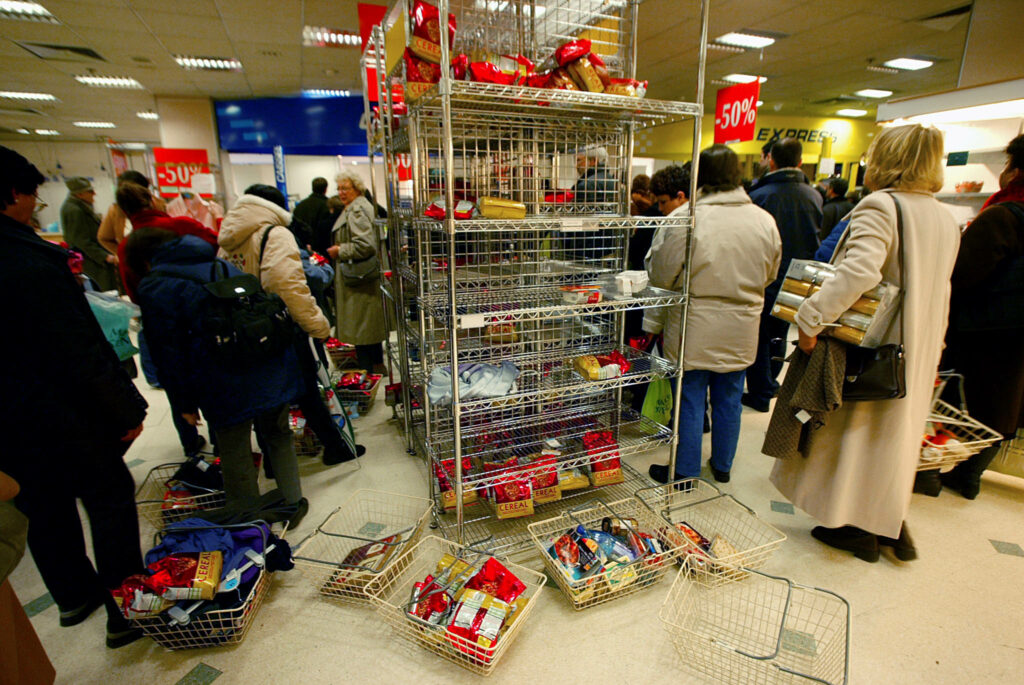
La chaîne de distribution britannique Marks & Spencer estime à 300 millions de livres l’impact de la cyberattaque dont elle est victime depuis plusieurs semaines, qui a profondément affecté son fonctionnement et dont les conséquences pourraient durer jusqu’en juillet.”Notre estimation actuelle (…) prévoit un impact d’environ 300 millions de livres (355 millions d’euros, ndlr) sur le résultat opérationnel du groupe pour l’exercice 2025/26, qui sera réduit grâce à une gestion rigoureuse des coûts, aux assurances et à d’autres actions commerciales”, écrit l’entreprise dans un communiqué.M&S pourrait être victime d’un rançongiciel, qui exploite les failles de sécurité d’une organisation pour chiffrer et bloquer ses systèmes informatiques, exigeant une rançon pour les débloquer. Mais l’entreprise ne l’a pas confirmé.Outre M&S, l’enseigne Co-op a également été victime d’une attaque du même genre, tout comme le prestigieux grand magasin londonien Harrods, contraint de restreindre l’accès à Internet depuis ses locaux au début du mois.”Le groupe connu publiquement sous le nom de Scattered Spider” est suspecté, “mais nous avons toute une série d’hypothèses différentes”, a déclaré à la BBC Paul Foster, chef de l’unité nationale de lutte contre la cybercriminalité de l’agence britannique NCA.”Nous savons que Scattered Spider est largement anglophone, mais cela ne signifie pas nécessairement qu’ils sont au Royaume-Uni. Nous savons qu’ils communiquent en ligne entre eux sur un éventail de plateformes et de canaux différents, ce qui est, je suppose, essentiel pour leur permettre d’opérer en tant que collectif”, a-t-il ajouté.- Vol de données personnelles -Les perturbations liées à l’attaque, qui ont notamment contraint l’entreprise à suspendre ses ventes en ligne ou le paiement sans contact, se poursuivront jusqu’en juillet, anticipe M&S.”Les ventes alimentaires ont été affectées par une disponibilité réduite des produits”, avec parfois des rayons vides, “bien que la situation s’améliore” et dans les secteurs de l’habillement, de la maison et de la beauté “les ventes en ligne et le résultat opérationnel ont été fortement touchés” par la suspension temporaire des achats sur internet, ajoute l’entreprise.”Nous nous concentrons désormais sur la reprise, visant à restaurer nos systèmes, nos opérations et notre offre client au cours du premier semestre”, ajoute-t-elle.L’enseigne avait révélé mi-mai que certaines données personnelles de ses clients avaient été dérobées dans le cadre de cette cyberattaque, qui a débuté mi-avril, mais pas les détails de paiement ou les mots de passe des comptes.Les 300 millions évoqués par M&S “montrent la gravité de la situation” et suggèrent “que les pirates informatiques ont causé des dommages considérables”, selon Dan Coatsworth, analyste d’investissement chez AJ Bell.- Possible amende -Il souligne que l’entreprise pourrait être touchée par une amende du régulateur britannique de la protection des données (ICO) “pour ne pas avoir pris les mesures appropriées pour prévenir les violations de données” comme l’ont montré plusieurs exemples dans le passé; tels que British Airways ou Tesco Bank.”M&S aurait souscrit une assurance qui couvrirait jusqu’à 100 millions de livres sterling de ces coûts”, relaye pour sa part Aarin Chiekrie, analyste d’Hargreaves Lansdown. “La cyberattaque est probablement un événement ponctuel, et les activités sous-jacentes se portent bien.”Il remarque que “Marks & Spencer a pulvérisé ses prévisions de bénéfices annuels, grâce à la forte croissance de sa division alimentaire”.L’entreprise a présenté sur l’année un résultat net en baisse de près d’un tiers, à 295,7 millions de livres, contre 431,2 millions l’an passé. Celui-ci ne tient pas compte de l’impact du piratage.Le chiffre d’affaires a lui augmenté de 6%, à 13,82 milliards de livres et le bénéfice opérationnel a atteint 624,3 millions de livres.”Cet incident n’est qu’un accident de parcours, dont nous sortirons en meilleure forme”, veut croire Stuart Machin, directeur général de M&S, qui compte maintenir sa stratégie et ses plans à long terme.L’action du groupe était en hausse d’environ 0,85% mercredi vers 10H30 GMT à la Bouse de Londres.
Canal+ buyout of S.Africa’s MultiChoice one step closerWed, 21 May 2025 10:37:58 GMT
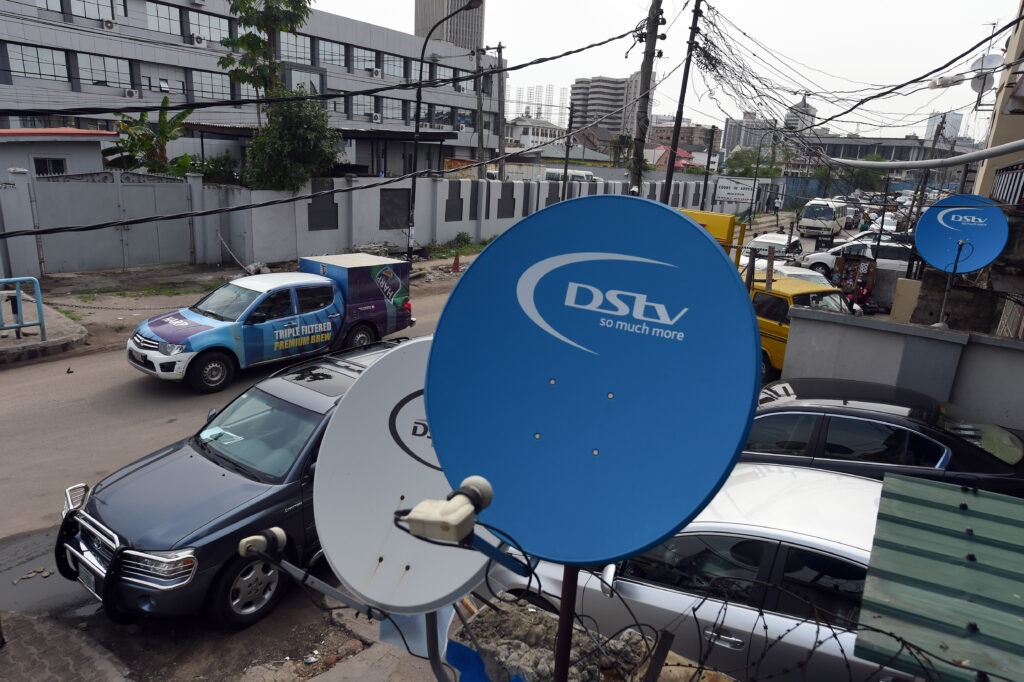
South Africa’s competition authority announced Wednesday it had approved the buyout of Africa’s largest pay TV enterprise MultiChoice by France’s Canal+, which wants to expand its footprint on the continent.The merger, which has been in the works for nearly a year, needs the final go-ahead from the commission’s Competition Tribunal, it said in a statement. Canal+ …
Canal+ buyout of S.Africa’s MultiChoice one step closerWed, 21 May 2025 10:37:58 GMT Read More »
Gestion du Covid-19: non-lieu requis pour trois ex-membres du gouvernement, dont Edouard Philippe
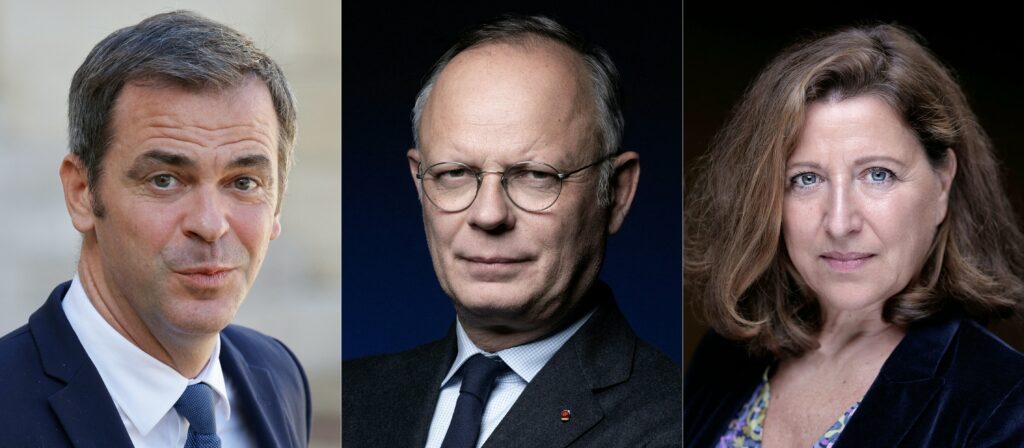
La menace d’un procès s’éloigne considérablement pour trois ex-membres du gouvernement, dont Edouard Philippe, visés par une enquête sur leur gestion du Covid-19: le ministère public près la Cour de justice de la République (CJR) vient de réquérir un non-lieu à leur égard.Dans cette information judiciaire pour mise en danger de la vie d’autrui et abstention volontaire de combattre un sinistre, l’ex-Premier ministre Edouard Philippe, l’ancienne ministre de la Santé Agnès Buzyn, ainsi que son successeur Olivier Véran, sont placés sous le statut de témoin assisté.Cette absence de mise en examen laissait déjà entrevoir un non-lieu. “Les investigations établissent que de nombreuses initiatives ont été prises par le gouvernement pour combattre la pandémie de Covid-19, faisant obstacle à ce que l’infraction d’abstention volontaire de combattre un sinistre soit constituée à l’encontre d’Edouard Philippe et d’Olivier Véran”, a expliqué mercredi dans un communiqué Rémy Heitz, procureur général près la Cour de cassation, qui exerce les fonctions du ministère public près la CJR.De son côté, Agnès Buzyn avait été vertement critiquée pour avoir quitté ses fonctions au début de la crise sanitaire pour devenir candidate à la mairie de Paris.C’est finalement cette chronologie qui semble la dédouaner.Le parquet général a relevé qu’elle avait quitté son poste de ministre de la Santé le 16 février 2020, “date à laquelle aucun sinistre au sens du code pénal n’était encore caractérisé sur le territoire national dès lors que le premier décès d’un malade contaminé en France par la Covid-19 est intervenu le 25 février 2020”.Agnès Buzyn avait par ailleurs été, un temps, mise en examen pour mise en danger de la vie d’autrui. Mais elle avait obtenu son annulation en janvier 2023, devant la Cour de cassation. A l’instar de cette dernière, le parquet général a estimé qu’il ne peut lui être reproché “aucune violation d’une obligation particulière de prudence ou de sécurité imposée par la loi ou le règlement”.Son avocat, Eric Dezeuze, n’a pas souhaité commenter.- Tirer des leçons ? -Après ce réquisitoire, rendu mardi, il revient désormais à la commission d’instruction de trancher.”L’absence de mise en examen laisse présager une décision de non-lieu, mais rien ne dit que la commission d’instruction aura les mêmes motivations pour ce non-lieu et la même analyse des infractions pénales”, au vu de la multitude d’actes d’enquête réalisés par ses magistrats en quatre ans, a souligné une source judiciaire.Auditions et perquisitions, jusqu’aux domiciles et bureaux d’Edouard Philippe, Agnès Buzyn et Olivier Véran, mais aussi chez l’ex-directeur général de la Santé, Jérôme Salomon, et l’ex-directrice générale de Santé Publique France, Geneviève Chêne.Si par exemple le manque de masques au début de la pandémie, qui avait été au coeur des polémiques, “ne relève pas de l’infraction pénale, il faudra se poser la question plus large de ce qui engage la responsabilité de nos hommes politiques”, a relevé la source judiciaire.Quelle que soit la décision finale, un dossier de dizaines de milliers de pages nourrira une autre information judiciaire: celle dirigée en parallèle, contre X, au Pôle santé publique du tribunal judiciaire de Paris, pour mise en danger de la vie d’autrui, homicides et blessures involontaires.Selon les chiffres de Santé publique France, 168.000 personnes sont décédées de la Covid-19 entre 2020 et septembre 2023, date à laquelle l’Organisation mondiale de la santé a mis fin à l’urgence sanitaire mondiale. Cinq ans après cette pandémie qui a fait des millions de morts dans le monde, les gouvernements cherchent encore à en tirer des leçons. Un accord international a été adopté mardi lors de la réunion annuelle des pays membres de l’OMS pour instaurer une coordination mondiale plus précoce et plus efficace afin de prévenir, détecter et répondre au risque pandémique.En France, “l’incompétence et/ou impréparation” de l’Etat a été longuement épinglée par les journalistes d’investigation Gérard Davet et Fabrice Lhomme dans leur livre “Les juges et l’assassin”.A leurs yeux, l’Etat a failli “en ne prenant pas assez rapidement au sérieux le virus”, en “laissant sciemment les outils de riposte sanitaire” tels que Santé publique France “dans un inconfort financier”, “en négligeant le stock de masques” ou encore en “induisant les Français en erreur sur le port du masque”.