Pays-Bas: rappel de bonbons Haribo après une contamination au cannabis

Haribo a procédé jeudi au rappel des bonbons de sa marque “Happy Cola Fizz” aux Pays-Bas à la suite de la découverte de cannabis dans certains paquets et après que plusieurs personnes, dont des enfants, sont tombées malades. L’Autorité néerlandaise de sécurité alimentaire et des produits de consommation (NVWA) a précisé que seuls trois sachets de bonbons Haribo “Happy Cola Fizz” étaient concernés par la détection d’une telle contamination, mais qu’un rappel généralisé de la gamme avait été lancé par précaution.”Il y a des sachets en circulation qui pourraient contenir des bonbons susceptibles d’entraîner des problèmes de santé tels que des étourdissements, lorsqu’ils sont consommés”, a déclaré la NVWA dans un communiqué. “Du cannabis a été retrouvé dans les [bonbons en forme de] bouteilles de cola en question” a précisé la porte-parole du NVWA Saida Ahyad. La NVWA a été alertée par la police, après que plusieurs personnes – enfants et adultes – ayant mangé ce type de bonbons sont tombées malades.Mme Ahyad a indiqué que la police enquêtait désormais sur la manière dont le cannabis avait pu se retrouver dans les sachets de bonbons.”Après consultation avec la NVWA et comme il est d’usage dans ce type de situations, Haribo a émis un avertissement de sécurité “, a ajouté Mme Ayhad, exhortant à ne pas consommer ces bonbons.De son côté, Patrick Tax, vice-président marketing de la société allemande, a assuré que le rappel de produit concernait “un nombre limité de cas” et un seul type de produit dans l’est du pays. “La sécurité de nos consommateurs est notre priorité absolue et Haribo prend cet incident très au sérieux”, a-t-il affirmé dans un communiqué à l’AFP. “C’est une question en cours d’investigation et nous travaillons en étroite collaboration avec les autorités néerlandaises pour soutenir leur enquête et établir les faits ayant conduit à la contamination” , a-t-il ajouté.

Accord entre Amazon et le New York Times, dont les contenus vont être utilisés pour l’IA

Le New York Times a annoncé jeudi un accord avec Amazon qui autorise notamment le groupe technologique à utiliser les contenus du quotidien américain pour développer ses modèles d’intelligence artificielle (IA) générative.Ce partenariat intervient alors que le groupe de presse est engagé dans une procédure judiciaire civile contre OpenAI, créateur de ChatGPT, qu’il accuse d’avoir entraîné ses modèles d’IA générative avec ses articles sans permission préalable.Plusieurs groupes de médias se sont déjà entendus avec des grands acteurs de l’IA pour leur permettre d’alimenter leurs logiciels avec la production de leurs journalistes.News Corp (Wall Street Journal et Daily Telegraph entre autres), Le Monde, le Washington Post ou Axel Springer (Politico, Bild et Die Welt) l’ont fait avec OpenAI, Google avec Associated Press, tandis que Mistral s’est lié avec l’Agence France Presse.Il s’agit d’une rupture pour le New York Times, qui s’était jusqu’ici toujours refusé à laisser ses contenus nourrir l’IA générative.Dans la procédure contre OpenAI et Microsoft, le groupe conteste l’interprétation de la partie adverse, qui s’appuie sur la notion juridique d’utilisation équitable (fair use), susceptible de limiter l’application du droit de propriété intellectuelle.L’issue de ce dossier et de plusieurs autres relatifs au même sujet pourrait faire évoluer les relations entre éditeurs de presse et géants technologiques.Par ailleurs, l’accord dévoilé jeudi ouvre au New York Times la voie de l’univers Amazon et des appareils connectés, en particulier son assistant vocal d’IA Alexa+, un accès de plus en plus crucial aux consommateurs à mesure que l’intelligence artificielle générative se démocratise.La nouvelle a fait bondir le titre du New York Times, qui gagnait 1,85% vers 13H45 GMT à la Bourse de New York et se rapprochait de son plus haut historique, atteint début décembre.

Les moments-clés de Musk à la Maison Blanche

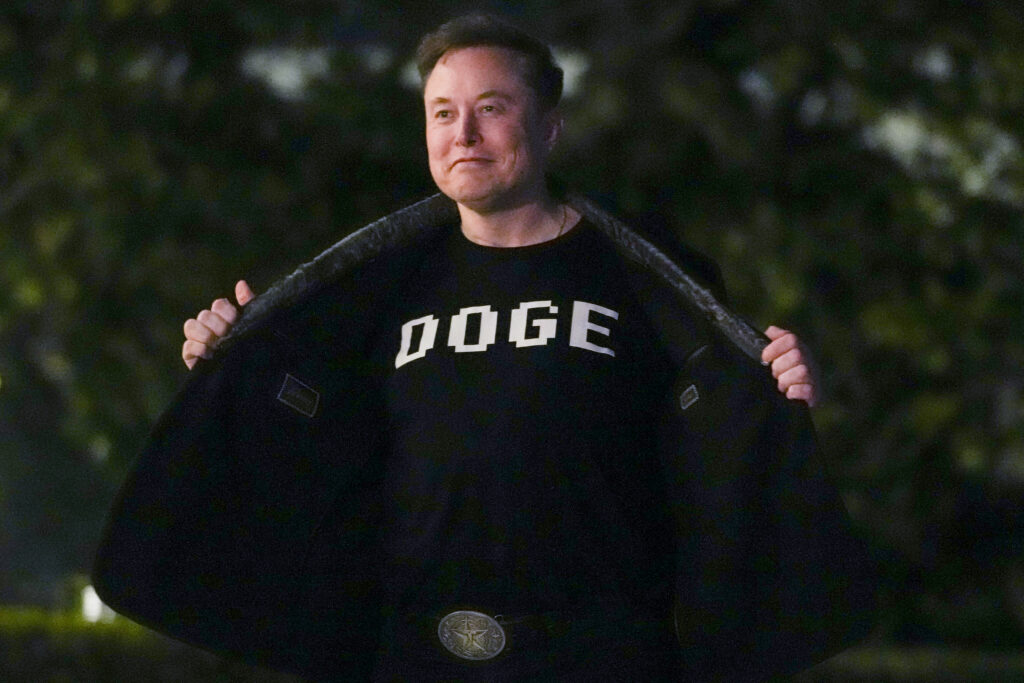
Elon Musk vient d’annoncer la fin de la mission de réduction de la dépense publique confiée par Donald Trump il y a quatre mois, au cours desquels l’homme le plus riche du monde s’est imposé comme la personnalité la plus iconoclaste de l’entourage du président américain. Rappel de quelques moments-clés, témoins de son influence et des controverses qu’il a suscitées.Salut nazi?Dès l’investiture de Donald Trump le 20 janvier, le patron de Tesla et SpaceX, également propriétaire du réseau social X, fait polémique lors d’un meeting de soutien au nouveau président en levant le bras droit sur scène à deux reprises, dans un geste décrit par des élus démocrates et des historiens comme un salut nazi. L’homme le plus riche du monde s’en défend sans lever l’ambiguïté: “l’attaque selon laquelle +tout le monde est Hitler+ est tellement éculée”, lâche-t-il.   “Fiers d’être Allemands”En pleine polémique autour de ce geste, Elon Musk intervient le 25 janvier par visioconférence devant des milliers de sympathisants du parti d’extrême droite allemand AfD, à l’approche des élections législatives. “C’est OK d’être fier d’être Allemands. Battez-vous pour un avenir radieux pour l’Allemagne”, lance-t-il. Un enfant dans le bureau ovaleAlors que certains commencent à le surnommer “président Musk”, l’homme d’affaires défend le 12 février dans le Bureau ovale ses coupes brutales dans les services fédéraux. Son fils de quatre ans est perché sur ses épaules, sous le regard protecteur de Donald Trump. Tout en parlant, l’homme d’affaires essaie de distraire “X”, le fils qu’il a eu avec l’artiste Grimes. Jusqu’à ce qu’il le confie à une femme présente dans la salle, qui l’emmène dehors.L’homme à la tronçonneuseChargé de sabrer dans le budget fédéral à la tête d’une Commission pour l’efficacité gouvernementale (Doge), Elon Musk brandit le 20 février une tronçonneuse sur la scène d’une grande convention conservatrice. L’outil lui a été offert par le président argentin, Javier Milei, qui en a fait un symbole de son programme de réduction des services de l’Etat.La vedette du gouvernementLors de la première réunion du gouvernement Trump le 26 février, Musk semble voler la vedette. Mais 10 jours plus tard, une nouvelle réunion donne lieu à des accrochages entre le patron de SpaceX et le secrétaire d’Etat Marco Rubio et le ministre des Transports Sean Duffy, autour des coupes annoncées dans les services fédéraux, selon des médias américains. “Il n’y a pas eu d’affrontement, j’étais là”, assure Donald Trump.Tesla en vitrine à la Maison BlancheElon Musk à son côté, Donald Trump se pose le 11 mars en promoteur des véhicules Tesla à la Maison Blanche, alors que la marque voit ses ventes baisser et des voitures vandalisées du fait des prises de positions politiques de son patron.Des millions pour le WisconsinA la veille d’une élection pour remplacer un juge à la Cour suprême de l’Etat-clé du Wisconsin, Elon Musk s’implique à fond pour le candidat conservateur, allant jusqu’à offrir le 27 mars deux chèques d’un million de dollars à deux électeurs. C’est pourtant la candidate démocrate qui l’emporte.    “Crétin”Après l’imposition par Trump de lourds droits de douane sur les importations des Etats-Unis, Musk prend le contre-pied en plaidant pour une “zone de libre-échange” entre l’Europe et l’Amérique du Nord. Le 8 avril, il traite publiquement de “crétin” Peter Navarro, conseiller au commerce de Trump et architecte de ces barrières douanières. Ce dernier avait reproché à Tesla de n’être qu’un “assembleur” de voitures faites de pièces fabriquées hors des Etats-Unis.”Déçu”Il aura fallu attendre le 27 mai, plus de quatre mois après l’investiture de Donald Trump, pour entendre une première critique d’Elon Musk à l’égard de son grand allié républicain: dans une interview, le multimilliardaire se dit “déçu” par la “grande et belle loi” budgétaire poussée par le président, lui reprochant de creuser le déficit budgétaire, à rebours de la mission d’austérité qui lui a été confiée. Le lendemain, il confirme son départ du gouvernement, comme “prévu”.

Chinese exporters “on hold” despite US tariff relief

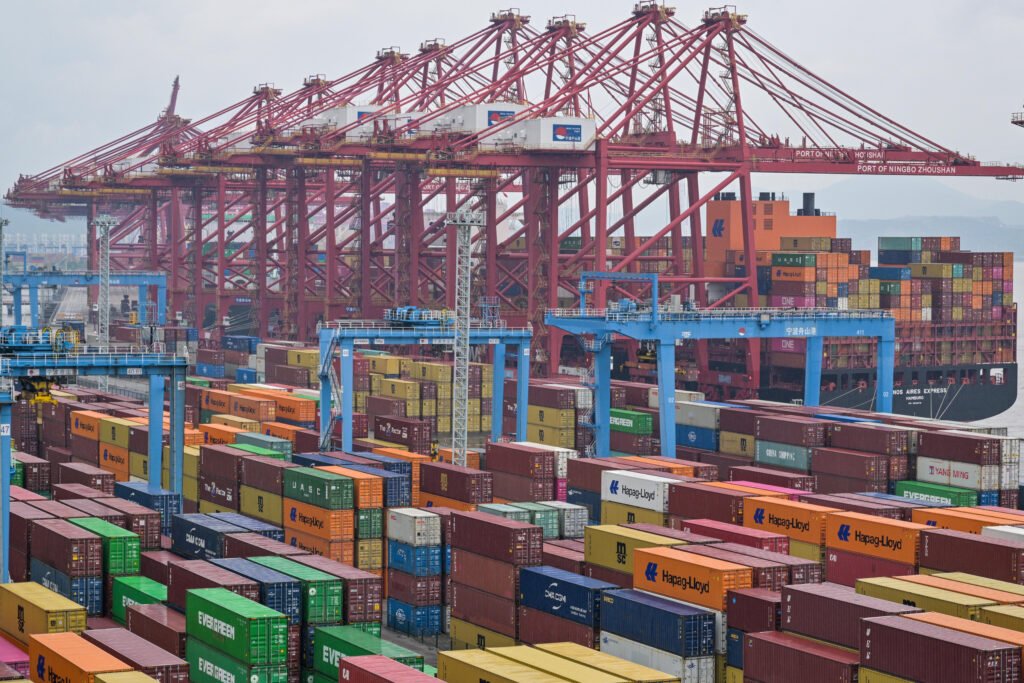
Chinese exporters in one of the world’s busiest port cities spoke Thursday of murky horizons as they try to navigate the trade maelstrom unleashed by the ever-changing saga of US tariff policy.Suppliers in the eastern city of Ningbo — home to the world’s third biggest container port — have had a wild ride since US President Donald Trump announced sweeping duties on nearly all trading partners in April. On Wednesday a federal court blocked most of the US tariffs, including ones imposed on China separately using emergency powers, but that news failed to give much solace.”Due to the Trump administration’s appeal, there is uncertainty in tariff policy, so we remain cautious,” said Han Zhongkai, an employee at a technology company that makes products like smartwatches. Exporters at a bustling cross-border trade fair in Ningbo who spoke to AFP said they were stuck in port — both metaphorically as they surveyed an uncertain future, and in some cases quite literally.Following Trump’s levies announcement in April, Beijing and Washington became enmeshed in a tit-for-tat escalation that saw tariffs soar into triple figures on each side. “(US clients) stopped ordering. Before this, many foreign customers had already sent their goods to our domestic warehouse and were ready to ship them out,” said 28-year-old Li Jie, who works for shipping company Freight Service Limited.After the tariff increase, “they informed us that — for the time being — we should keep the goods in our warehouse”.Hundreds of exporters selling everything from furniture to small electronic devices and baby toys jostled for attention in the expo hall, trying to capture potential clients’ attention. The reciprocal tariffs have already been slashed for 90 days after a meeting between Chinese and US officials in Geneva in May, but uncertainty remains. “Orders from the United States have essentially been put on hold,” said company owner Xiao Chuan, sitting at his booth displaying multicoloured LED neon signs in different languages. “One order was nearly ready to be placed, but may be delayed due to tariff concerns. Since the recent tariff policy adjustment, (clients) are adopting a wait-and-see approach -– unsure if further changes might occur.”- ‘Slapdash operation’ -Faced with the unpredictability of the US market, many have looked to offload their wares elsewhere. Chinese exports to Thailand, Indonesia and Vietnam surged by double digits in April, attributed to a re-routing of US-bound goods.”Southeast Asian countries have actually gained quite significantly. Many factories are gradually shifting their sourcing away from China, placing manufacturing orders in Southeast Asian nations instead,” said Li. At a container depot near Ningbo’s vast port, an employee who gave his surname as Huang said he thought manufacturers were on a mission to diversify. “The world doesn’t revolve around America alone. We’ll ultimately find alternative outlets to redirect these products,” he told AFP. Hundreds of containers, including pink ones from Japanese company ONE, baby blue from Denmark’s Maersk and maroon from South Korea’s HMM, were neatly stacked on top of each other around him.However, daily order volumes had decreased recently, said Huang. “Although tariffs have now been lowered, uncertainty remains about potential future increases,” he said. A spike in US-bound shipments when tariffs were slashed in May was just a blip, likely just backlogged orders and earlier negotiated deals. After a couple of days, “things levelled off”.Xiao, the LED neon light vendor, said he thought new orders would come only when tariff policy stabilised. And so all eyes are on Washington’s next move. Huang said he thought US-bound shipping would probably continue, but with “tighter profit margins and reduced volumes”. “I don’t find American credibility particularly trustworthy these days,” he said. “Honestly, the US government often feels like some slapdash operation –- all over the place.”

Chinese exporters “on hold” despite US tariff relief

Chinese exporters in one of the world’s busiest port cities spoke Thursday of murky horizons as they try to navigate the trade maelstrom unleashed by the ever-changing saga of US tariff policy.Suppliers in the eastern city of Ningbo — home to the world’s third biggest container port — have had a wild ride since US President Donald Trump announced sweeping duties on nearly all trading partners in April. On Wednesday a federal court blocked most of the US tariffs, including ones imposed on China separately using emergency powers, but that news failed to give much solace.”Due to the Trump administration’s appeal, there is uncertainty in tariff policy, so we remain cautious,” said Han Zhongkai, an employee at a technology company that makes products like smartwatches. Exporters at a bustling cross-border trade fair in Ningbo who spoke to AFP said they were stuck in port — both metaphorically as they surveyed an uncertain future, and in some cases quite literally.Following Trump’s levies announcement in April, Beijing and Washington became enmeshed in a tit-for-tat escalation that saw tariffs soar into triple figures on each side. “(US clients) stopped ordering. Before this, many foreign customers had already sent their goods to our domestic warehouse and were ready to ship them out,” said 28-year-old Li Jie, who works for shipping company Freight Service Limited.After the tariff increase, “they informed us that — for the time being — we should keep the goods in our warehouse”.Hundreds of exporters selling everything from furniture to small electronic devices and baby toys jostled for attention in the expo hall, trying to capture potential clients’ attention. The reciprocal tariffs have already been slashed for 90 days after a meeting between Chinese and US officials in Geneva in May, but uncertainty remains. “Orders from the United States have essentially been put on hold,” said company owner Xiao Chuan, sitting at his booth displaying multicoloured LED neon signs in different languages. “One order was nearly ready to be placed, but may be delayed due to tariff concerns. Since the recent tariff policy adjustment, (clients) are adopting a wait-and-see approach -– unsure if further changes might occur.”- ‘Slapdash operation’ -Faced with the unpredictability of the US market, many have looked to offload their wares elsewhere. Chinese exports to Thailand, Indonesia and Vietnam surged by double digits in April, attributed to a re-routing of US-bound goods.”Southeast Asian countries have actually gained quite significantly. Many factories are gradually shifting their sourcing away from China, placing manufacturing orders in Southeast Asian nations instead,” said Li. At a container depot near Ningbo’s vast port, an employee who gave his surname as Huang said he thought manufacturers were on a mission to diversify. “The world doesn’t revolve around America alone. We’ll ultimately find alternative outlets to redirect these products,” he told AFP. Hundreds of containers, including pink ones from Japanese company ONE, baby blue from Denmark’s Maersk and maroon from South Korea’s HMM, were neatly stacked on top of each other around him.However, daily order volumes had decreased recently, said Huang. “Although tariffs have now been lowered, uncertainty remains about potential future increases,” he said. A spike in US-bound shipments when tariffs were slashed in May was just a blip, likely just backlogged orders and earlier negotiated deals. After a couple of days, “things levelled off”.Xiao, the LED neon light vendor, said he thought new orders would come only when tariff policy stabilised. And so all eyes are on Washington’s next move. Huang said he thought US-bound shipping would probably continue, but with “tighter profit margins and reduced volumes”. “I don’t find American credibility particularly trustworthy these days,” he said. “Honestly, the US government often feels like some slapdash operation –- all over the place.”

Israel announces creation of 22 settlements in West Bank

Israel announced on Thursday the creation of 22 new settlements in the occupied West Bank, putting further strain on relations with the international community already taxed by the war in Gaza.Both Britain and neighbouring Jordan slammed the move, with London calling it a “deliberate obstacle” to Palestinian statehood.Israeli settlements in the West Bank are regularly condemned by the United Nations as illegal under international law, and are seen as one of the main obstacles to a lasting peace between Israelis and Palestinians.The decision to establish more, taken by the country’s security cabinet, was announced by far-right Finance Minister Bezalel Smotrich, himself a settler, and Defence Minister Israel Katz, who is in charge of managing the communities.”We have made a historic decision for the development of settlements: 22 new communities in Judea and Samaria, renewing settlement in the north of Samaria, and reinforcing the eastern axis of the State of Israel,” Smotrich said on X, using the Israeli terms for the southern and northern West Bank, which it has occupied since 1967.”Next step: sovereignty!” he added.Katz said the initiative “changes the face of the region and shapes the future of settlement for years to come”.Not all the 22 settlements are new, however. Some are existing outposts, while others are neighbourhoods of settlements that will become independent communities, according to the left-wing Israeli NGO Peace Now.In a statement, Hamas accused Israel of “accelerating steps to Judaize Palestinian land within a clear annexation project”.”This is a blatant defiance of the international will and a grave violation of international law and United Nations resolutions,” said the Palestinian militant group, which rules Gaza.Western ally Jordan also condemned the move as illegal, and said it “undermines prospects for peace by entrenching the occupation”. The Jordanian foreign ministry warned that “such unilateral actions further erode the viability of a two-state solution by impeding the establishment of a sovereign Palestinian state”.On Telegram, the right-wing Likud party of Prime Minister Benjamin Netanyahu called the move a “once-in-a-generation decision”, and said it “includes the establishment of four communities along the eastern border with Jordan, as part of strengthening Israel’s eastern backbone”. The party also published a map showing the 22 sites spread across the territory.- ‘Heritage of our ancestors’ -Two of the settlements, Homesh and Sa-Nur, are particularly symbolic.Located in the north of the West Bank, they are actually resettlements, having been evacuated in 2005 as part of Israel’s disengagement from Gaza, promoted by then-prime minister Ariel Sharon.Netanyahu’s government, formed in December 2022 with the support of far-right and ultra-Orthodox parties, is the most right-wing in Israel’s history.Human rights groups and anti-settlement NGOs say a slide towards at least de facto annexation of the occupied West Bank has gathered pace, particularly since the start of the Gaza war triggered by Hamas’s October 2023 attack on Israel.”The Israeli government no longer pretends otherwise: the annexation of the occupied territories and expansion of settlements is its central goal,” Peace Now said in a statement.In his announcement, Smotrich offered a preemptive defence of the move, saying: “We have not taken a foreign land, but the heritage of our ancestors.”Some European governments have moved to sanction individual settlers, as did the United States under former president Joe Biden, though those measures were lifted by Donald Trump.Britain’s minister for the Middle East, Hamish Falconer, slammed the decision as a “deliberate obstacle to Palestinian statehood”, saying settlements “imperil the two state solution, and do not protect Israel”.Thursday’s announcement comes ahead of an international conference to be led by France and Saudi Arabia at UN headquarters in New York next month that is meant to resurrect the idea of a two-state solution to the Israeli-Palestinian conflict.

Stocks get mild bump from US court’s tariff ruling

Global shares gave a muted positive welcome Thursday to a US court’s decision blocking most of President Donald Trump’s sweeping tariffs — with analysts noting the issue was far from being settled.The White House has already appealed the decision issued Wednesday by the US Court of International Trade, and Trump has several other avenues to pursue his tariffs objective, as his economic adviser Peter Navarro pointed out.The court invalidated Trump’s invocation of emergency powers to apply swingeing tariffs, though it left untouched his sectoral levies on steel, aluminium and cars.US and Asian indices rose on the news. Europe’s main indices were mostly flat in fairly thin Ascension day trading.The dollar weakened against major currencies.”The gains are less euphoric and more muted than some expected,” said XTB research director Kathleen Brooks.”The latest legal challenge to Trump’s tariffs could be the start of a long wrangle between the courts and the White House, and tariffs may still be implemented,” she said.China — the main target of Trump’s tariffs but recently granted a temporary reprieve — urged Washington to “fully cancel the wrongful unilateral” measures.New York’s biggest surge was on the Nasdaq, which basked in a better-than-expected earnings report from US chipmaking giant Nvidia, pointing to strength in the tech sector, particularly those tilted to AI.In Europe, though, realisation sank in that the US ruling was of limited cheer. If anything, the ruling threw uncertainty into trade negotiations the United States is currently holding with the European Union — and a deal it has already struck with Britain.It “does not remove the threat of US tariffs for Europe or end the need for negotiations,” said Andrew Kenningham, chief Europe economist for Capital Economics.Trump’s threat of 50-percent tariffs on EU goods from July 9 “now looks less credible” and “the EU side may feel less pressure to try to reach an agreement in very rapid time,” he said. “It is still reasonable to assume that the average US tariff on EU goods exports may settle at around 10 percent,” he said.Oil prices, which had surged on Wednesday on the back of a New York Times report saying Israel was looking at striking Iranian nuclear sites to derail US-Iran negotiations, fell back on Thursday.Trump said on Wednesday he had told Israeli leader Benjamin Netanyahu such action would be “inappropriate to do right now because we’re very close to a solution” on curbing Tehran’s nuclear programme.In corporate news, the star was Nvidia, whose shares soared more than five percent on Thursday after it reported a mammoth $18.8 billion in quarterly profits, despite US export controls on its chips. Furthering AI sector news, the New York Times announced a deal with Amazon licencing its content across the tech company’s AI platforms. Amazon shares were up more than one percent.- Key figures at around 1335 GMT -New York – Dow: UP 0.1 percent at 42,159.11 pointsNew York – S&P 500: UP 0.7 percent at 5,931.39New York – Nasdaq Composite: UP 1.3 percent at 19,345.10London – FTSE 100: DOWN 0.1 percent at 8,720.56Paris – CAC 40: UP 0.2 percent at 7,801.22Frankfurt – DAX: DOWN 0.2 percent at 23,988.93Tokyo – Nikkei 225: UP 1.9 percent at 38,432.98 (close)Hong Kong – Hang Seng Index: UP 1.4 percent at 23,573.38 (close)Shanghai – Composite: UP 0.7 percent at 3,363.45 (close)Euro/dollar: UP at $1.1347 from $1.1291 on WednesdayPound/dollar: UP at $1.3490 from $1.3468Dollar/yen: DOWN at 144.39 yen from 144.82 yenEuro/pound: UP at 84.12 pence from 83.84 penceBrent North Sea Crude: DOWN 1.0 percent at $63.65 per barrelWest Texas Intermediate: DOWN 1.0 percent at $61.20 per barrel 

Harvard holds graduation in shadow of Trump ‘retribution’

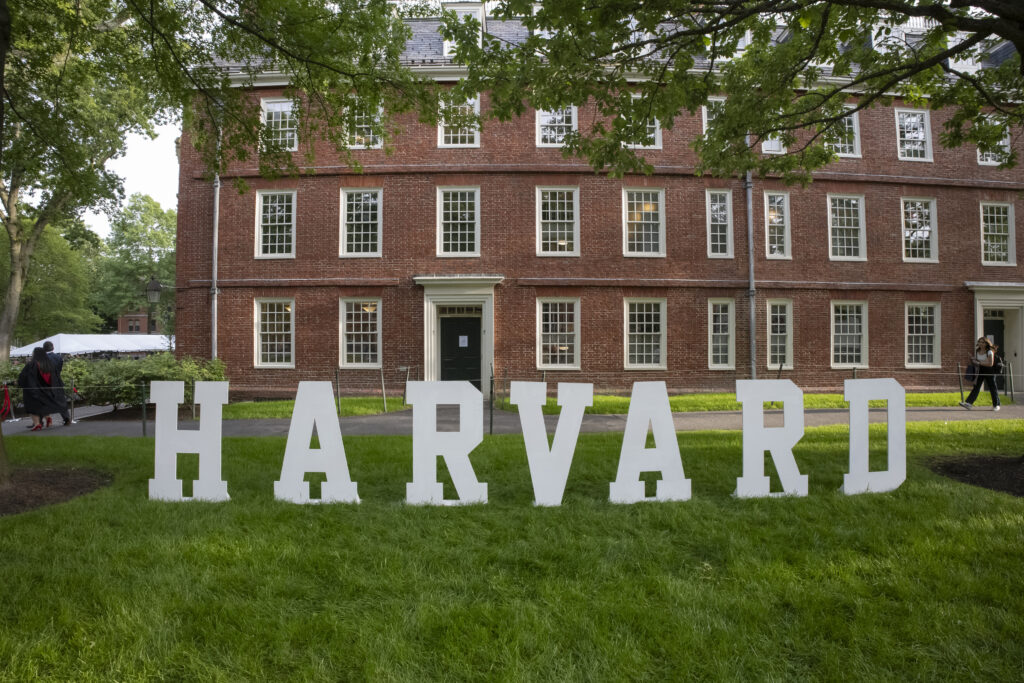
Harvard began its annual graduation ceremony Thursday as a federal judge considers the legality of punitive measures taken against the university by US President Donald Trump that threaten to overshadow festivities.Hundreds of robed students and academics squeezed onto the steps of the campus’s main library early Thursday as Trump piles unprecedented pressure onto the university, one of the most prestigious in the world.He is seeking to ban it from having foreign students, shredding its federal contracts, slashing its multibillion-dollar grants and challenging its tax-free status.Harvard is fighting all of the measures in court.The Ivy League institution has continually drawn Trump’s ire while publicly rejecting his administration’s repeated demands to give up control of recruitment, curricula and research choices. The government claims Harvard tolerates anti-Semitism and liberal bias.”Harvard is treating our country with great disrespect, and all they’re doing is getting in deeper and deeper,” Trump said Wednesday.Harvard president Alan Garber, who told National Public Radio on Tuesday that “sometimes they don’t like what we represent,” may address the ceremony, which will be attended by as many as 30,000 people.Garber has acknowledged that Harvard does have issues with anti-Semitism, and has struggled to ensure that a variety of views can be safely heard on campus.”The Covenant of Water” author Abraham Verghese will be the commencement speaker and will receive an honorary degree in front of crowds wearing academic garb.Ahead of the ceremony, members of the Harvard band sporting distinctive crimson blazers and brandishing their instruments filed through the narrow streets of Cambridge, Massachusetts — home to the elite school, America’s oldest university.A huge stage had been erected and hundreds of chairs laid out in a grassy precinct that was closed off to the public as the event got under way.Students wearing black academic gowns also toured through Cambridge with photo-taking family members, AFP correspondents saw.Madeleine Riskin-Kutz, a Franco-American classics and linguistics student at Harvard, said some students were planning individual acts of protest against the Trump policies.”The atmosphere (is) that just continuing on joyfully with the processions and the fanfare is in itself an act of resistance,” the 22-year-old said.- Legal fightback -Garber has led the fightback in US academia after Trump targeted several prestigious universities — including Columbia, which made sweeping concessions to the administration in an effort to restore $400 million of withdrawn federal grants.A federal judge in Boston will on Thursday hear arguments over Trump’s effort to exclude Harvard from the main system for sponsoring and hosting foreign students.Judge Allison Burroughs quickly paused the policy which would have ended Harvard’s ability to bring students from abroad who currently make up 27 percent of its student body. Harvard has since been flooded with inquiries from foreign students seeking to transfer to other institutions, Maureen Martin, director of immigration services, said Wednesday. “Many international students and scholars are reporting significant emotional distress that is affecting their mental health and making it difficult to focus on their studies,” Martin wrote in a court filing.Retired immigration judge Patricia Sheppard protested outside Harvard Yard on Wednesday, sporting a black judicial robe and brandishing a sign reading “for the rule of law.”Basketball star and human rights campaigner Kareem Abdul-Jabbar addressed the class of 2025 for Class Day on Wednesday.”When a tyrannical administration tried to bully and threaten Harvard to give up their academic freedom and destroy free speech, Dr. Alan Garber rejected the illegal and immoral pressures,” he said, comparing Garber to civil rights icon Rosa Parks.

Wall Street ouvre en hausse après une décision judiciaire sur les droits de douane

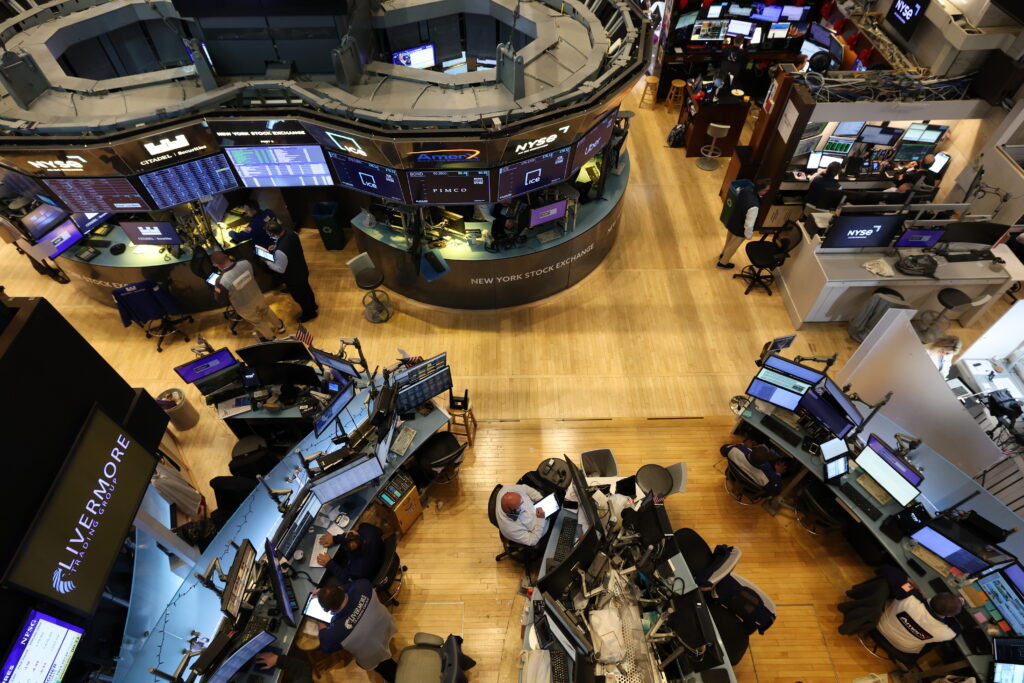
La Bourse de New York a ouvert en hausse jeudi, optimiste après qu’un tribunal américain a décidé de bloquer une partie des droits de douane imposés par l’administration Trump, les investisseurs étant aussi satisfaits des résultats du géant Nvidia.Dans les premiers échanges, le Dow Jones prenait 0,16%, l’indice Nasdaq progressait de 1,51% et l’indice élargi S&P 500 gagnait 0,87%.