Pineapple is the new potato: imported fruits back in Syria

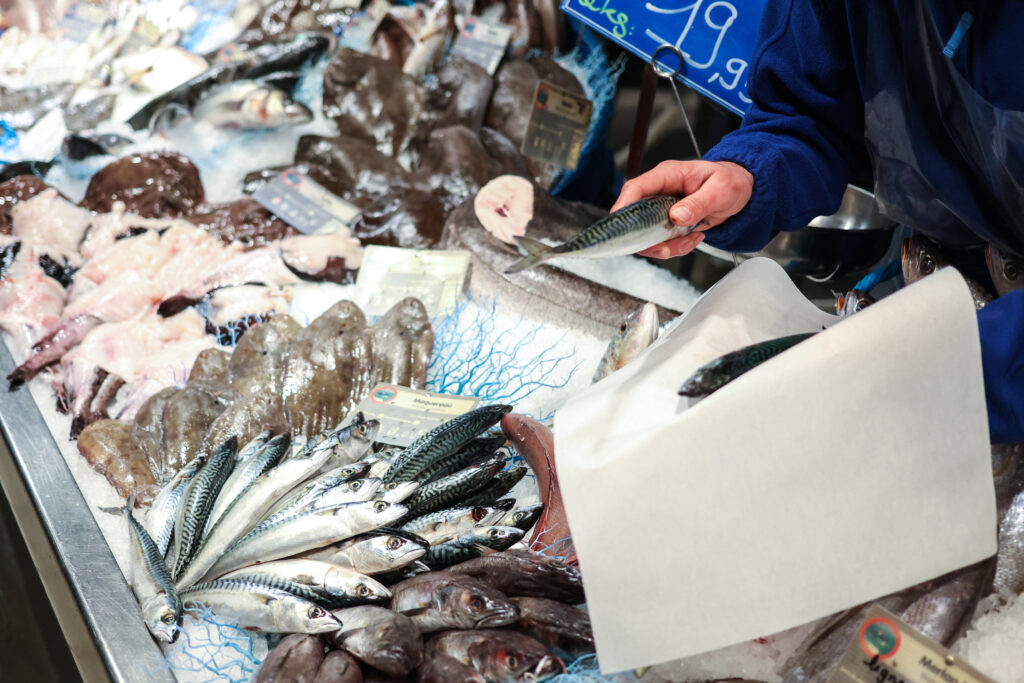
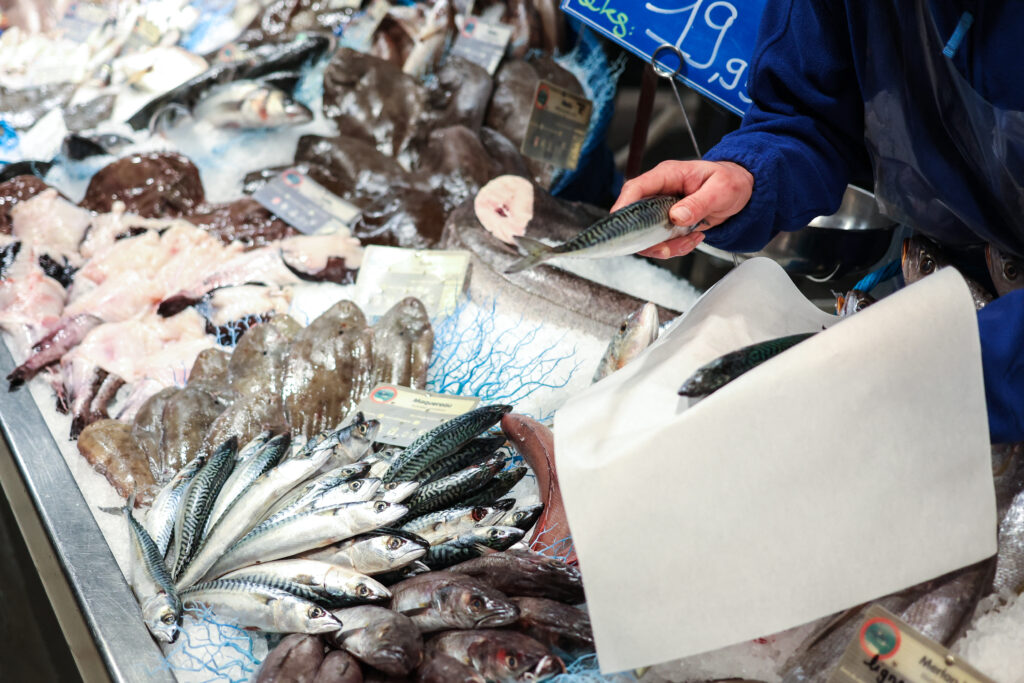
After decades of poverty and isolation under the Assad dynasty, imported fruits like pineapples, kiwis and mangoes are available again in Syria’s bustling markets, making mouths water and eyes twinkle.Fruits that were once designated luxury items, meaning they were accessible only to Syria’s wealthiest, are now as common as potatoes or onions, cooking staples for many of the country’s population.”We used to smuggle them in,” said 46-year-old fruit vendor Marwan Abu Hayla with a big smile as he displayed his produce at Damascus’s Shaalan market.Grocers used to face fines and even imprisonment for importing exotic fruits.But now “we do not hide pineapples any more — we can put them on display”, Abu Hayla told AFP, adding: “The era of pineapple-phobia is over.”One kilogram of pineapple used to cost around 300,000 Syrian pounds (around $23) before an Islamist-led offensive ousted leader Bashar al-Assad in December after nearly 14 years of civil war.That has now plummeted to a much sweeter price of around 40,000 pounds, about $4.”We used to smuggle (the fruit) with the help of taxi drivers — just like petrol and diesel,” Abu Hayla said of other commodities which Syrians used to bring in illicitly from neighbouring Lebanon when supplies were scarce under Assad.Now “pineapples are like potatoes and onions”, he added, as potential customers eyed the ripe fruit.- Bananas -Buyers and sellers linked the fruits’ newfound presence to developments including the free availability of the US dollar since Assad’s ousting. Trading in the currency was previously punishable by law.Other signs of change include new cars on the streets and more abundant fuel supplies.The late Syrian president Hafez al-Assad imposed heavy state control over the economic system, which isolated the country from global trade.His son and successor Bashar kept up the system to maintain the clan’s iron-fisted rule until he was overthrown in December.Fruit seller Ahmed al-Hareth, 45, said tropical fruit — even bananas — used to cost the equivalent of a public employee’s monthly salary.Customs authorities and security forces would raid stores, further fuelling a limited black-market fruit trade.Medical student Nour Abed al-Jabbar, 24, said she “used to see tropical fruit on screens more often than in markets”.One problem with that: some Syrians who have never had a pineapple before just don’t know how to cut it. “Pineapple is for everyone — even if some people don’t know how to peel it,” Jabbar said.However, many people still struggle to buy the fruit in a country whose economy has been ravaged by years of conflict and sanctions, and where 90 percent of the people live in poverty.Housewife Ilham Amin, 50, said she had noticed grocery stores becoming more colourful, which “tempts customers to buy”.But she steers her children away from the tantalising new fruit as she cannot afford it.”Living conditions are tough, and pineapple is a luxury for a family like ours,” she said.

Iraq’s Jewish community saves a long-forgotten shrine

In a vibrant Baghdad district, labourers are working tirelessly to repair the centuries-old shrine of a revered rabbi in an effort to revive the long-faded heritage of Iraq’s Jewish community.A few months ago, the tomb of Rabbi Isaac Gaon was filled with rubbish. Its door was rusted, the windows shattered and the walls stained black from decades of neglect.Today, marble tiling covers the once-small grave, and at its centre stands a large tombstone inscribed with a verse, the rabbi’s name and the year he died: 688. A silver menorah hangs on the wall behind it.”It was a garbage dump and we were not allowed to restore it,” said the head of Iraq’s Jewish community, Khalida Elyahu, 62.The Jewish community in Iraq was once one of the largest in the Middle East, but now it has dwindled to just dozens.Baghdad today has one synagogue left, but it has no rabbis. And many houses that once belonged to Jews are abandoned and dilapidated.The Jewish community itself is funding the shrine’s restoration, at an estimated cost of $150,000. The project will bring “a revival for our community, both within and outside Iraq”, Elyahu said.With the backing of Iraqi officials, she said she hopes to restore more neglected sites.- Who was he? -Little information is available about Rabbi Isaac. But when Iraq’s National Security Adviser Qassem al-Araji visited the tomb earlier this year, he said the rabbi had been a finance official.Rabbi Isaac Gaon was prominent during the Gaonic period, also known as the era of Babylonian academies for rabbis.The term “Gaon” is likely to refer to his position as the head of one such academy.His name was mentioned in the 10th century by another rabbi, who told a tale that never appeared elsewhere, according to Professor Simcha Gross from the University of Pennsylvania.”There is only one single story,” said Gross.It goes that Rabbi Isaac led 90,000 Jews to meet Ali Ibn Abi Talib, the fourth Islamic caliph and a relation of the Prophet Mohammed, who is also revered by Shiites as the first Imam, during one of his conquests in central Iraq.”We have no other evidence for this event, and there are reasons to be sceptical,” Gross said.Nothing else is known about Rabbi Isaac, not even his religious opinions.But the tale has origins that are not without context, said Gross.In the 10th century, minorities — Christians, Jews, and Zoroastrians — began to tell stories of how they greeted “Muslim conquerors” because “their privileges including taxes were dependent on whether or not they were believed to have welcomed the Muslims”, he said.At that same time, Jewish shrines started to appear, even though Jewish roots in Iraq date back some 2,600 years.According to biblical tradition, Jews arrived in Iraq in 586 BC as prisoners of Babylonian king Nebuchadnezzar II after he destroyed Solomon’s Temple in Jerusalem.In Iraq, they wrote the Babylonian Talmud.Thousands of years later, in Ottoman-ruled Baghdad, Jews made up 40 percent of the population. A turning point was the 1941 pogrom in Baghdad when more than 100 Jews were killed. Like other Jewish communities in the Arab region, their history has changed since the Palestinian Nakba — “catastrophe” in Arabic — and Israel’s creation in 1948. Soon afterwards, almost all of Iraq’s 135,000 Jews went into exile. – Blessings -Decades of conflict and instability — Saddam Hussein’s dictatorship, the 2003 US-led invasion and the ensuing violence — completed the community’s erosion.Some who stayed on converted to other religions, or do not reveal their faith.Today, 50 synagogues and Jewish sites remain, Elyahu said. Most are crumbling, and some have become warehouses.Rabbi Isaac’s shrine once included a synagogue and a school, but has been reduced to the small room housing the grave, the restoration’s supervisor said.”It took us two months to clean it of garbage,” said the supervisor, who asked to remain anonymous.Now “we are receiving requests from outside Iraq to visit it”.Decades ago people would come to pray and light candles, believing in the rabbi’s “healing powers”.Mussa Hayawi, 64, lives nearby. He recounted stories from his childhood in a quarter which was, until the 1940s, one of several Jewish districts in Baghdad.He said women used to soak themselves in water from the shrine’s well, hoping to conceive.Rabbi Isaac “was a revered man”. People came “to pray for their sick, to ask for a baby, or the release of a prisoner”, Hayawi said.

Trump’s drive for ocean bed mining threatens law of the sea

US President Donald Trump’s move to sidestep global regulations and begin pushing for seabed mining in international waters could pose a wider threat of competing countries claiming sovereignty over the ocean, experts say.Trump last month signed an executive order to accelerate the permit-granting process for deep-sea mining in domestic and international waters, citing an obscure 1980 US law.And the Canadian deep-sea mining frontrunner The Metals Company has already filed an application in the United States to conduct commercial mining on the high seas — bypassing the International Seabed Authority (ISA). This is the body entrusted by a United Nations convention with managing the ocean floor outside of national jurisdictions.Ocean law is largely guided by that accord — the United Nations Convention on the Law of the Sea (UNCLOS), first signed in 1982 to prevent “a competitive scramble for sovereign rights over the land underlying the world’s seas and oceans,” according to Maltese diplomat Arvid Pardo, the convention’s forebearer.The United States never ratified the convention, which took effect in 1994, though it has applied many of its clauses.Coalter Lathrop, an attorney at the US law firm Sovereign Geographic, told AFP that the United States is “a huge beneficiary of the parallel set of customary international law rules” despite not being a party to UNCLOS.For instance, the United States has one of the largest Exclusive Economic Zones (EEZ) which gives states sovereignty over maritime areas up to 200 nautical miles (370 kilometers) from their coastline — protecting them from foreign fishing boats, among other extractive industries.If the US enjoys the benefits of ocean law, Lathrop argues, “but then you disregard the other part of the package deal — that the seabed and its minerals in areas beyond national jurisdiction are the common heritage of humankind — that is going to be destabilizing, to say the least, for the general legal order of the oceans.””US unilateral permitting could lead to the disintegration of a system that has been carefully curated and created by the United States, largely for its own benefit,” he added.- ‘Unraveled’ -The US and Canadian moves sparked an international outcry from ISA member states, including China, whose foreign ministry spokesman warned it violates international law.ISA secretary general Leticia Carvalho expressed similar concern, saying that “any unilateral action… sets a dangerous precedent that could destabilize the entire system of global ocean governance.”The Metals Company does maintain contracts with ISA members like Japan — where it has a partnership with smelting company Pamco. And experts note such ISA member states could invoke their obligation to UNCLOS to enforce maritime law on The Metals Company via these proxies, even if it ultimately receives a permit from the Trump administration.Guy Standing, an economist at the University of London, told AFP: “It’s the most dangerous thing he’s done so far,” referring to Trump.If marine laws “were to come sort of unraveled,” Standing said, “you could have a carve up in different parts of the world, with Russia, China and America carving up the Arctic.”However, not all scholars in the field are in agreement.James Kraska, a professor of international maritime law at US Naval War College, said “it’s naive to think the United States has that kind of influence.””I just disagree with the people that are saying that it’s somehow a legal obligation to comply with a treaty that you never joined,” he told AFP.”I just can’t see any way that it’s unlawful. I understand that there’s sort of political opposition to it, but I would just distinguish between politics and the law.”

Biden book exposes age-old problem for Democratic ‘gerontocracy’

As a damning expose on Joe Biden’s cognitive decline scandalizes Washington, Democrats in Congress are facing their own reckoning over a seniority system that critics say is holding back younger talent.Six Democratic lawmakers have died in a little over a year — dispiriting bereaved colleagues but also leaving the rank-and-file critically under-resourced when it comes to opposing President Donald Trump.House Republicans passed Trump’s sprawling tax relief and spending cuts by a solitary vote last week, approving a package that Democrats say will deprive more than eight million Americans of health care.Democrats did not have the numbers to cause problems for the bill because of three empty seats on their side — all recently vacated by lawmakers in their 70s who had died after battling cancer.”Imagine if one of the older and sicker Dems would’ve retired instead of died in office and what that would’ve meant for millions of people,” political consultant Rebecca Katz posted on X.The complicated math means that even a full Democratic contingent would likely only have been able to delay rather than torpedo the bill.But it is being seen as a lost opportunity that has laid bare the party’s problems with aging members clinging to office despite ailing health — in a party desperate for new blood.One of the vacancies was the Virginia seat formerly held by Gerry Connolly, 75, who had been diagnosed with esophageal cancer and died just a day earlier.- Oldest president -Democrats had just picked Connolly to be their leader on the powerful oversight committee, choosing his experience over the energy and social media savvy of Alexandria Ocasio Cortez, 40 years his junior.”By elevating someone who was more of a standard politician, they sort of lost out on getting into the culture,” left-leaning political commentator Molly Jong-Fast told MSNBC.”And ultimately that was, I think, a miss for Democrats.”Age is a touchy subject among Democrats, with 82-year-old Biden’s inner circle denying accusations in a new book by journalists Jake Tapper and Alex Thompson of covering up his glaring infirmity. In the Senate the party is led by 74-year-old Chuck Schumer and in the House former speaker Nancy Pelosi, 85, still holds enormous sway two years after giving up the gavel.  Democrats do not have a monopoly on aging issues.Mitch McConnell, 83, was clearly ailing when he stepped down after 18 years as Republican leader in the Senate in January and Trump, 78, is set to become the oldest US president in history.But the so-called “gerontocracy” has been more harmful to Washington’s minority party, frustrating the agenda of Democratic White Houses and allowing Republicans in Congress to absorb more defections.At the heart of the problem is the Democrats’ long-honored seniority system, which prioritizes lawmakers based on experience when allocating plum committee assignments, leadership posts and office space. – ‘Contemptible little twerp’ -As a result, top Democrats on more than half of the House committees are aged 70 or over. The mean age of these 20 party grandees is 69, compared with a more youthful 62 for Republicans.And the problem is not confined to Congress.Mourning gave way to frustration over liberal Supreme Court justice Ruth Bader Ginsburg, who clung on until her death in 2020 at age 87 instead of retiring with Barack Obama in office, allowing Trump to fill the vacancy. There have been baby steps to address the gerontocracy but progress has been halting.Gun safety campaigner David Hogg, 25, was elected as vice chairman of the Democratic National Committee in February and promptly called for primary challenges to “out-of-touch, ineffective Democrats.”This did not go down well among the party’s old guard, with 80-year-old strategist James Carville calling Hogg a “contemptible little twerp.”But the revelations about Biden’s deteriorating health, including a newly announced prostate cancer diagnosis, are an illustration for activists and analysts that the party needs to change course.”If you are saying that democracy is on the ballot, if you are saying this the most important election of our lifetime, which they did say to the base, then the base expects you to act like it,” Jong-Fast added.”They expect you to elevate the people who can speak better than the people who are your friends… And I think this is a sea change for the Democratic Party.”

Harvard students march after Trump seeks to cut remaining contracts

Harvard students protested Tuesday after the US government said it intends to cancel all remaining financial contracts with the university, President Donald Trump’s latest attempt to force the prestigious institution to submit to unprecedented oversight.Hundreds of students gathered to oppose Trump’s widening offensive, including Tuesday’s measures estimated to be worth $100 million, against the university that has drawn his ire for refusing to give up control of curriculum, admissions and research.”Trump = traitor” read one student placard, while the crowd chanted “who belongs in class today, let them stay” in reference to Harvard’s international students whose status Trump has upended by summarily revoking the university’s accreditation to the country’s Student and Exchange Visitor program.A judge issued a restraining order pending a hearing on the matter scheduled for Thursday, the same day as the university’s commencement graduation ceremony for which thousands of graduating students and their families had gathered in Cambridge, Massachusetts near Boston.Tuesday’s protest unfolded as news helicopters hovered overhead and graduating students in academic attire and their guests ate finger food at a reception on the lawns of Harvard Square nearby.”I’m graduating this week and not only is my last week as a Harvard student but it’s a very important week as all my international friends and peers and professors and researchers are at risk and be threatened with being deported — or their option is to transfer” to another university, said Alice Goyer, who attended the protest wearing a black academic gown.”As a US student, it’s my responsibility to speak out for them.”One history of medicine student from Britain graduating this week who gave his name only as Jack said that the policies pursued by Trump would make US universities less attractive to international students.”The cloud may pass but the damage will be done,” said the graduating student whose parents had travelled from Britain for the graduation ceremony, suggesting that the courts would likely overturn the most damaging measures.”(Foreign students) who are here don’t know where they stand, those overseas don’t know if they’ll be able to get back in… I don’t know if I’d pursue a PhD here, six years is a long time.”Harvard itself has filed extensive legal challenges against the Trump measures, which legal experts say are likely to be overturned by the courts.Separately, alumni plan to file a lawsuit against Trump on June 9, filmmaker Anurima Bhargava told a virtual meeting staged by Crimson Courage, a grassroots alumni group that held a mass webinar to raise awareness and a fighting fund from former students.- ‘American values’ -The cutting of contracts announced Tuesday — estimated by US media to be worth $100 million — would mark the slashing of business ties between the government and a university that is the country’s oldest and a research powerhouse.Amid a broad campaign against seats of learning that Trump accuses of being hotbeds of liberal bias and anti-Semitism, the president has singled out Harvard for particular punishment.In the last few weeks, the elite educational powerhouse has seen billions of dollars in federal grants frozen and millions of dollars of federal contracts torn up.The university has sued both to block the revocation of its right to recruit and sponsor foreign students, 27 percent of its total roll, as well as to overturn the withdrawal of federal funding.A legal expert suggested Harvard could file a lawsuit to overturn the latest contract cuts as part of existing legal action.”The case is so strong that the court system is not going to step to the side and allow this… to go forward,” said Albany Law School professor Ray Brescia.He said the Trump administration’s assault on Harvard was so flawed that a higher court would likely strike down the campaign against the university if the Trump was to challenge it on appeal. On Monday, Trump nonetheless vowed he would prevail in the increasingly public struggle, claiming that foreign students at Harvard included “radicalized lunatics, troublemakers.”Professor of government Ryan Enos said that Trump’s campaign against Harvard had already made the United States less attractive as a destination for top scholars.”I’ve already heard this from professors in other countries who say ‘we encourage our best students to go to the United States’,” he told AFP at the rally, adding  “we wonder if we can tell them that anymore.”

Congrès: Olivier Faure et Nicolas Mayer-Rossignol opposés au second tour, Vallaud en arbitre

Le premier secrétaire sortant du PS Olivier Faure sera opposé au maire de Rouen  Nicolas Mayer-Rossignol au second tour du vote des adhérents socialistes pour se choisir un nouveau chef, et Boris Vallaud, éliminé, se retrouve en position de faiseur de roi.Les deux candidats, qui s’étaient déjà affrontés lors du précédents congrès en 2023, seront départagés lors d’un deuxième tour le 5 juin avant un Congrès prévu du 13 au 15 juin à Nancy.Selon les résultats provisoires communiqués dans la nuit de mardi à mercredi par les entourages des trois candidats, Olivier Faure est arrivé en tête du premier tour. Son entourage annonce un score d’environ 42% contre 40% pour Nicolas Mayer-Rossignol (et un écart d’environ 500 voix), et 18% pour Boris Vallaud. L’équipe du maire de Rouen évoque un score plus serré de 41%-41%, avec seulement quelques voix de plus pour le premier secrétaire sortant. Les proches de Boris Vallaud donnent eux un score d’environ 20% au député des Landes.   Les résultats définitifs seront communiqués mercredi à l’issue d’une commission de récollement, qui pourrait être tendue.      Les adhérents, – quelque 40.000 comptabilisés, et environ 23.000 votants au final – étaient invités à voter dans les sections de 17h à 22H, pour ce premier tour destiné à choisir le prochain texte d’orientation du parti, avec pour principal enjeu la stratégie pour la présidentielle de 2027.Olivier Faure, à la tête du PS depuis 2018, défend l’union de la gauche non mélenchoniste pour la présidentielle de 2027, avec une plateforme programmatique allant du leader de Place publique Raphaël Glucksmann à l’ex-député LFI François Ruffin, en vue d’une candidature commune.Dans une vidéo sur X mardi, il a appelé les militants à “prolonger le travail accompli ces dernières années”, affirmant que “nous sommes redevenus centraux dans le débat politique”.Mais Nicolas Mayer-Rossignol, qui n’a jamais accepté sa défaite sur le fil en 2023, taxe celui qui a été l’un des artisans des accords de gauche Nupes (en 2022) et Nouveau Front populaire (en 2024) d'”ambiguïté” vis-à-vis de Jean-Luc Mélenchon, avec qui il a pourtant pris ses distances depuis plusieurs mois.Le maire de Rouen défend “l’affirmation socialiste” et prône la création d’un grand parti socialiste (un “GPS”) agrégeant “ceux qui sont au PS et ceux qui sont à l’extérieur”, comme Raphaël Glucksmann, Benoît Hamon ou Bernard Cazeneuve. De cette confédération émergera un candidat social-démocrate en vue de 2027, estime-t-il, jugeant prématuré de parler primaire avant les municipales. – Faiseur de roi -Dans une vidéo mardi, l’édile rouennais dit vouloir faire revenir au PS “toutes celles et ceux qui n’attendent que ça”, et ont quitté le parti ces dernières années, pour atteindre “100.000 militants”.  Surtout, il accuse Olivier Faure d'”une gestion clanique” et d’un manque de travail dans le parti.Les partisans du premier secrétaire sortant répondent que Nicolas Mayer-Rossignol a rassemblé autour de lui une coalition disparate de tous les “anti-Faure”, de la maire de Vaulx-en-Velin Hélène Geoffroy à la présidente d’Occitanie Carole Delga, en passant par le député de l’Eure Philippe Brun et le maire de Saint-Ouen Karim Bouamrane.  Et ils prédisent une candidature de l’ex-président François Hollande en 2027, si le maire de Rouen gagne le congrès. Le troisième homme du congrès, Boris Vallaud se veut le candidat de “la réconciliation” et de “la doctrine”. Il a notamment développé le concept de “démarchandisation” de la société, et a lancé un institut de formation et un média interne.Sur France 2, il a expliqué mardi être “le seul à faire une vraie proposition de rassemblement”, et appelé les militants à choisir “la perspective du meilleur” contre l’extrême droite. Le reste de la gauche scrute ce congrès. La cheffe des Écologistes Marine Tondelier, favorable à l’union de la gauche en 2027, souhaite la victoire d’Olivier Faure. A l’inverse, Raphaël Glucksmann, qui refuse toute idée de primaire, penche plus pour une victoire de M. Mayer-Rossignol. Comme Jean-Luc Mélenchon, qui trace son chemin vers la présidentielle et entend bien se présenter comme “la vraie gauche”.   

Congrès: Olivier Faure et Nicolas Mayer-Rossignol opposés au second tour, Vallaud en arbitre

Le premier secrétaire sortant du PS Olivier Faure sera opposé au maire de Rouen  Nicolas Mayer-Rossignol au second tour du vote des adhérents socialistes pour se choisir un nouveau chef, et Boris Vallaud, éliminé, se retrouve en position de faiseur de roi.Les deux candidats, qui s’étaient déjà affrontés lors du précédents congrès en 2023, seront départagés lors d’un deuxième tour le 5 juin avant un Congrès prévu du 13 au 15 juin à Nancy.Selon les résultats provisoires communiqués dans la nuit de mardi à mercredi par les entourages des trois candidats, Olivier Faure est arrivé en tête du premier tour. Son entourage annonce un score d’environ 42% contre 40% pour Nicolas Mayer-Rossignol (et un écart d’environ 500 voix), et 18% pour Boris Vallaud. L’équipe du maire de Rouen évoque un score plus serré de 41%-41%, avec seulement quelques voix de plus pour le premier secrétaire sortant. Les proches de Boris Vallaud donnent eux un score d’environ 20% au député des Landes.   Les résultats définitifs seront communiqués mercredi à l’issue d’une commission de récollement, qui pourrait être tendue.      Les adhérents, – quelque 40.000 comptabilisés, et environ 23.000 votants au final – étaient invités à voter dans les sections de 17h à 22H, pour ce premier tour destiné à choisir le prochain texte d’orientation du parti, avec pour principal enjeu la stratégie pour la présidentielle de 2027.Olivier Faure, à la tête du PS depuis 2018, défend l’union de la gauche non mélenchoniste pour la présidentielle de 2027, avec une plateforme programmatique allant du leader de Place publique Raphaël Glucksmann à l’ex-député LFI François Ruffin, en vue d’une candidature commune.Dans une vidéo sur X mardi, il a appelé les militants à “prolonger le travail accompli ces dernières années”, affirmant que “nous sommes redevenus centraux dans le débat politique”.Mais Nicolas Mayer-Rossignol, qui n’a jamais accepté sa défaite sur le fil en 2023, taxe celui qui a été l’un des artisans des accords de gauche Nupes (en 2022) et Nouveau Front populaire (en 2024) d'”ambiguïté” vis-à-vis de Jean-Luc Mélenchon, avec qui il a pourtant pris ses distances depuis plusieurs mois.Le maire de Rouen défend “l’affirmation socialiste” et prône la création d’un grand parti socialiste (un “GPS”) agrégeant “ceux qui sont au PS et ceux qui sont à l’extérieur”, comme Raphaël Glucksmann, Benoît Hamon ou Bernard Cazeneuve. De cette confédération émergera un candidat social-démocrate en vue de 2027, estime-t-il, jugeant prématuré de parler primaire avant les municipales. – Faiseur de roi -Dans une vidéo mardi, l’édile rouennais dit vouloir faire revenir au PS “toutes celles et ceux qui n’attendent que ça”, et ont quitté le parti ces dernières années, pour atteindre “100.000 militants”.  Surtout, il accuse Olivier Faure d'”une gestion clanique” et d’un manque de travail dans le parti.Les partisans du premier secrétaire sortant répondent que Nicolas Mayer-Rossignol a rassemblé autour de lui une coalition disparate de tous les “anti-Faure”, de la maire de Vaulx-en-Velin Hélène Geoffroy à la présidente d’Occitanie Carole Delga, en passant par le député de l’Eure Philippe Brun et le maire de Saint-Ouen Karim Bouamrane.  Et ils prédisent une candidature de l’ex-président François Hollande en 2027, si le maire de Rouen gagne le congrès. Le troisième homme du congrès, Boris Vallaud se veut le candidat de “la réconciliation” et de “la doctrine”. Il a notamment développé le concept de “démarchandisation” de la société, et a lancé un institut de formation et un média interne.Sur France 2, il a expliqué mardi être “le seul à faire une vraie proposition de rassemblement”, et appelé les militants à choisir “la perspective du meilleur” contre l’extrême droite. Le reste de la gauche scrute ce congrès. La cheffe des Écologistes Marine Tondelier, favorable à l’union de la gauche en 2027, souhaite la victoire d’Olivier Faure. A l’inverse, Raphaël Glucksmann, qui refuse toute idée de primaire, penche plus pour une victoire de M. Mayer-Rossignol. Comme Jean-Luc Mélenchon, qui trace son chemin vers la présidentielle et entend bien se présenter comme “la vraie gauche”.   

Congrès: Olivier Faure et Nicolas Mayer-Rossignol opposés au second tour, Vallaud en arbitre

Le premier secrétaire sortant du PS Olivier Faure sera opposé au maire de Rouen  Nicolas Mayer-Rossignol au second tour du vote des adhérents socialistes pour se choisir un nouveau chef, et Boris Vallaud, éliminé, se retrouve en position de faiseur de roi.Les deux candidats, qui s’étaient déjà affrontés lors du précédents congrès en 2023, seront départagés lors d’un deuxième tour le 5 juin avant un Congrès prévu du 13 au 15 juin à Nancy.Selon les résultats provisoires communiqués dans la nuit de mardi à mercredi par les entourages des trois candidats, Olivier Faure est arrivé en tête du premier tour. Son entourage annonce un score d’environ 42% contre 40% pour Nicolas Mayer-Rossignol (et un écart d’environ 500 voix), et 18% pour Boris Vallaud. L’équipe du maire de Rouen évoque un score plus serré de 41%-41%, avec seulement quelques voix de plus pour le premier secrétaire sortant. Les proches de Boris Vallaud donnent eux un score d’environ 20% au député des Landes.   Les résultats définitifs seront communiqués mercredi à l’issue d’une commission de récollement, qui pourrait être tendue.      Les adhérents, – quelque 40.000 comptabilisés, et environ 23.000 votants au final – étaient invités à voter dans les sections de 17h à 22H, pour ce premier tour destiné à choisir le prochain texte d’orientation du parti, avec pour principal enjeu la stratégie pour la présidentielle de 2027.Olivier Faure, à la tête du PS depuis 2018, défend l’union de la gauche non mélenchoniste pour la présidentielle de 2027, avec une plateforme programmatique allant du leader de Place publique Raphaël Glucksmann à l’ex-député LFI François Ruffin, en vue d’une candidature commune.Dans une vidéo sur X mardi, il a appelé les militants à “prolonger le travail accompli ces dernières années”, affirmant que “nous sommes redevenus centraux dans le débat politique”.Mais Nicolas Mayer-Rossignol, qui n’a jamais accepté sa défaite sur le fil en 2023, taxe celui qui a été l’un des artisans des accords de gauche Nupes (en 2022) et Nouveau Front populaire (en 2024) d'”ambiguïté” vis-à-vis de Jean-Luc Mélenchon, avec qui il a pourtant pris ses distances depuis plusieurs mois.Le maire de Rouen défend “l’affirmation socialiste” et prône la création d’un grand parti socialiste (un “GPS”) agrégeant “ceux qui sont au PS et ceux qui sont à l’extérieur”, comme Raphaël Glucksmann, Benoît Hamon ou Bernard Cazeneuve. De cette confédération émergera un candidat social-démocrate en vue de 2027, estime-t-il, jugeant prématuré de parler primaire avant les municipales. – Faiseur de roi -Dans une vidéo mardi, l’édile rouennais dit vouloir faire revenir au PS “toutes celles et ceux qui n’attendent que ça”, et ont quitté le parti ces dernières années, pour atteindre “100.000 militants”.  Surtout, il accuse Olivier Faure d'”une gestion clanique” et d’un manque de travail dans le parti.Les partisans du premier secrétaire sortant répondent que Nicolas Mayer-Rossignol a rassemblé autour de lui une coalition disparate de tous les “anti-Faure”, de la maire de Vaulx-en-Velin Hélène Geoffroy à la présidente d’Occitanie Carole Delga, en passant par le député de l’Eure Philippe Brun et le maire de Saint-Ouen Karim Bouamrane.  Et ils prédisent une candidature de l’ex-président François Hollande en 2027, si le maire de Rouen gagne le congrès. Le troisième homme du congrès, Boris Vallaud se veut le candidat de “la réconciliation” et de “la doctrine”. Il a notamment développé le concept de “démarchandisation” de la société, et a lancé un institut de formation et un média interne.Sur France 2, il a expliqué mardi être “le seul à faire une vraie proposition de rassemblement”, et appelé les militants à choisir “la perspective du meilleur” contre l’extrême droite. Le reste de la gauche scrute ce congrès. La cheffe des Écologistes Marine Tondelier, favorable à l’union de la gauche en 2027, souhaite la victoire d’Olivier Faure. A l’inverse, Raphaël Glucksmann, qui refuse toute idée de primaire, penche plus pour une victoire de M. Mayer-Rossignol. Comme Jean-Luc Mélenchon, qui trace son chemin vers la présidentielle et entend bien se présenter comme “la vraie gauche”.