

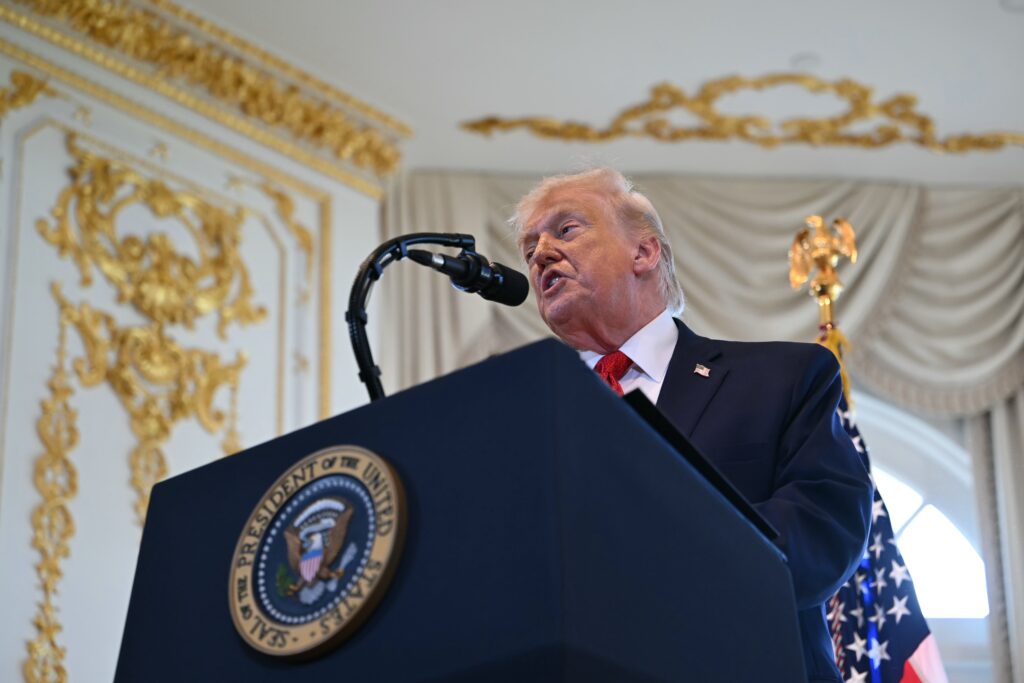
Trump fixe à 1 milliard de dollars le prix des sièges permanents de son “Conseil de paix” aux missions élargies
Les Etats candidats à un siège permanent au “Conseil de paix” proposé et présidé par Donald Trump, qui s’octroie la mission de “promouvoir la stabilité” dans le monde, devront s’acquitter de “plus d’un milliard de dollars”, selon la “charte” obtenue lundi par l’AFP.L’instance avait été initialement conçue pour superviser la reconstruction de Gaza mais sa “charte” ne mentionne pas explicitement le territoire palestinien et lui assigne l’objectif plus large de contribuer à la résolution de conflits armés dans le monde.”Le Conseil de paix est une organisation internationale qui vise à promouvoir la stabilité, à rétablir une gouvernance fiable et légitime, et à garantir une paix durable dans les régions touchées ou menacées par des conflits”, peut-on lire dans le préambule du document envoyé aux pays invités à y siéger. Le texte de huit pages critique d’emblée les “approches et institutions qui ont trop souvent échoué”, dans une allusion claire aux Nations unies, et appelle à avoir “le courage” de s’en “écarter”.Il souligne d’ailleurs “la nécessité d’une organisation de paix internationale plus agile et efficace”.Donald Trump est de longue date un critique virulent des Nations unies. Il avait lancé une attaque en règle contre l’organisation, “très loin de réaliser son potentiel” lors de sa dernière Assemblée générale à New York en septembre.Le 7 janvier, il a signé un décret ordonnant le retrait des Etats-Unis de 66 organisations internationales qui “ne servent plus les intérêts américains”, selon la Maison Blanche. Une trentaine des cibles de Washington sont liées à l’ONU.Comme lors de son premier mandat, il a décidé de retirer les Etats-Unis de l’accord de Paris sur le climat et de l’Unesco (organisation des Nations unies pour l’éducation, la science et la culture), que les Etats-Unis avaient réintégrés sous la présidence de Joe Biden.Il a en outre claqué la porte de l’Organisation mondiale de la santé et son administration a largement coupé l’aide américaine à l’étranger, amputant les budgets de nombreuses organisations comme le Haut commissariat aux réfugiés ou le Programme alimentaire mondial.- Poutine, Milei, Orban invités -Donald Trump sera le “premier président du Conseil de paix”, dont les pouvoirs prévus sont très vastes, stipule la “charte” obtenue par l’AFP.Le président américain est seul habilité à “inviter” d’autres chefs d’Etat et de gouvernement à l’intégrer, il peut révoquer leur participation sauf en cas de “veto par une majorité des deux tiers des Etats membres”, et a un droit de regard sur tous les votes.”Chaque État membre exerce un mandat d’une durée maximale de trois ans à compter de l’entrée en vigueur de la présente charte, renouvelable par le président. Ce mandat de trois ans ne s’applique pas aux États membres qui versent plus d’un milliard de dollars au comptant au Conseil de paix au cours de la première année suivant l’entrée en vigueur de la Charte”, ajoute le projet, sans plus de précisions.Plusieurs pays ou dirigeants ont annoncé avoir été invités à rejoindre le “Conseil” du président américain, sans nécessairement dévoiler leur intention d’y répondre positivement ou pas. Parmi eux, la France a rappelé lundi son “attachement à la Charte des Nations unies”, “clé de voûte d’un multilatéralisme efficace”, selon Paris.Le Kremlin a indiqué que le président russe Vladimir Poutine avait “reçu une invitation” par “des voies diplomatiques”.D’autres dirigeants étrangers, dont le président argentin Javier Milei ou le Premier ministre hongrois Viktor Orban, proches de Trump, ont eux aussi annoncé avoir été invités.
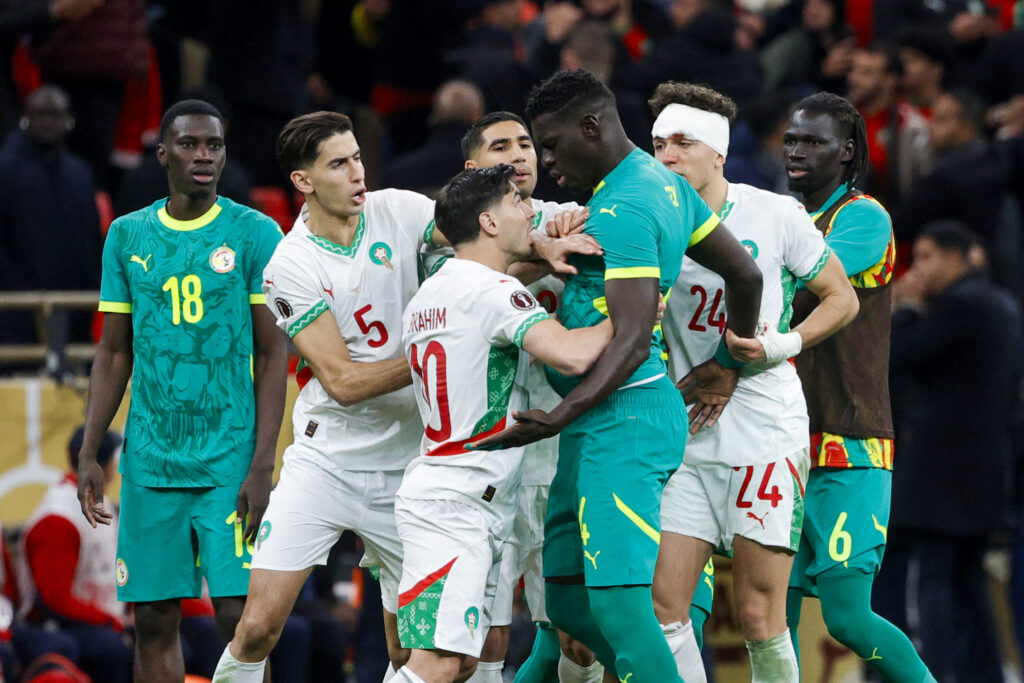
Senegal ‘unsporting’ but better in AFCON final, say Morocco mediaMon, 19 Jan 2026 15:14:46 GMT
Moroccan media on Monday joined the condemnation of Senegal who briefly walked off the field before returning to beat the hosts in the Africa Cup of Nations final.After a 50-year wait, Morocco had the title in their grasp when they were awarded a controversial penalty in the final seconds of normal time. The kick was …
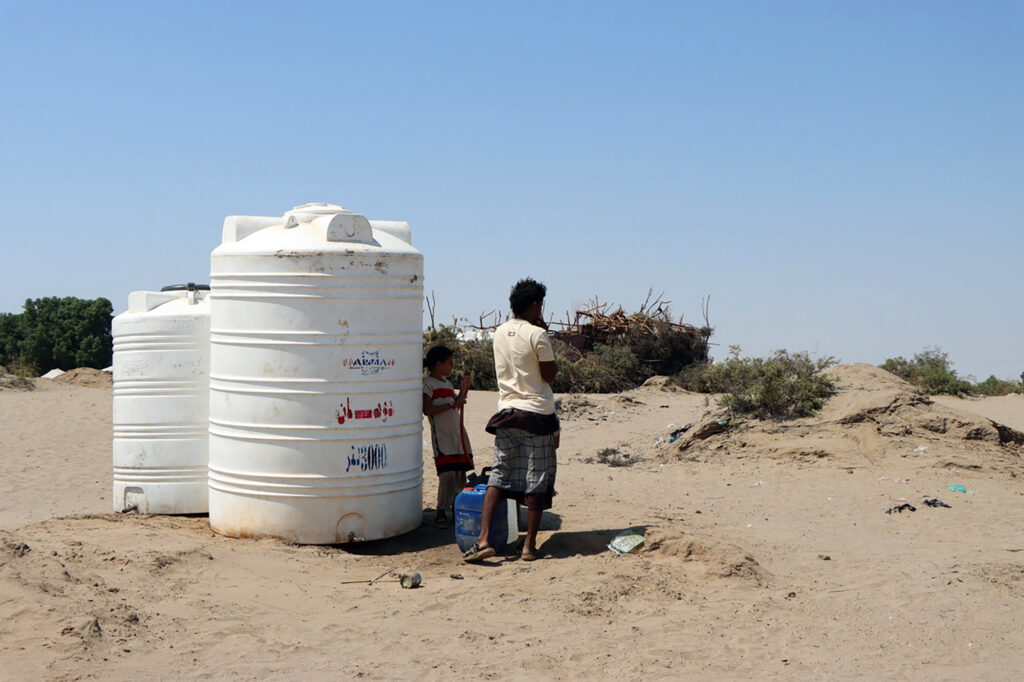
Yemen humanitarian crisis set to worsen in 2026: UN
The humanitarian crisis in Yemen is set to get much worse in 2026 as food insecurity increases and international aid evaporates, the United Nations warned on Monday.Julien Harneis, the UN resident and humanitarian coordinator for Yemen, said he feared the calamitous situation would go under the radar until the death toll mounts.The picture in Yemen is “very, very concerning”, he told reporters in Geneva.Last year, 19.5 million people in the country needed humanitarian aid — and the UN’s response plan for the country was only 28-percent financed, at $688 million.”We are expecting things to be much worse in 2026,” said Harneis, pointing out that 21 million Yemenis were now in need, and aid was drying up.He said food insecurity was increasing, particularly on the Red Sea coast, while the health system, assisted by the United Nations and the World Bank for the last 10 years, was “not going to be supported in the way it has been in the past”.He said Yemenis would be “very vulnerable to epidemics” this year.”My fear is that we won’t hear about it until the mortality and the morbidity significantly increases this next year,” he added.Under President Donald Trump, the United States has heavily slashed foreign aid and other key donor countries have been tightening their belts.Harneis said that for many years, the United States was the biggest donor to Yemen, but “that’s no longer the case”.”I am hoping that at least in parts of Yemen, the US government will come back to fund,” he said, and also that Gulf countries would step up support.”A humanitarian crisis in Yemen is a risk to the Arabian peninsula. Cholera, measles and polio cross borders,” he warned.Harneis said the UN was trying to work with NGOs to see if they could plug any of the gaps.”Children are dying — and it’s going to get worse,” he said.”For 10 years, the UN and humanitarian organisations were able to improve mortality and morbidity,” he pointed out.”With the conjunction we’re seeing this year, that’s not going to be the case. That is the simple story that everybody needs to understand.”- UN response ‘hobbled’ -Yemen’s internationally recognised government is a patchwork of groups held together by their opposition to the Iran-backed Houthis, who ousted them from the capital Sanaa in 2014 and now rule much of the country’s north.The Houthis have been at war with the government, backed by a Saudi-led coalition since 2015, in a conflict that has killed hundreds of thousands of Yemenis and triggered a major humanitarian crisis.Harneis said the lack of a solution to the conflict was driving needs.”It’s not active fighting, it’s not massive displacement, it’s not bombing,” he said.”It is the collapse of the economy,” the damage to the ports and airports and the disruption of essential services.”We can take the edge off it, we can save lives but we cannot stop the underlying dynamic which is creating all these needs,” he said.Meanwhile 73 UN staff members are being held in detention in Yemen, some since 2021.”With these detentions and the seizure of our offices, the UN does not have the conditions to be able to work,” Harneis lamented.”To see our humanitarian response so hobbled is terrifying.”
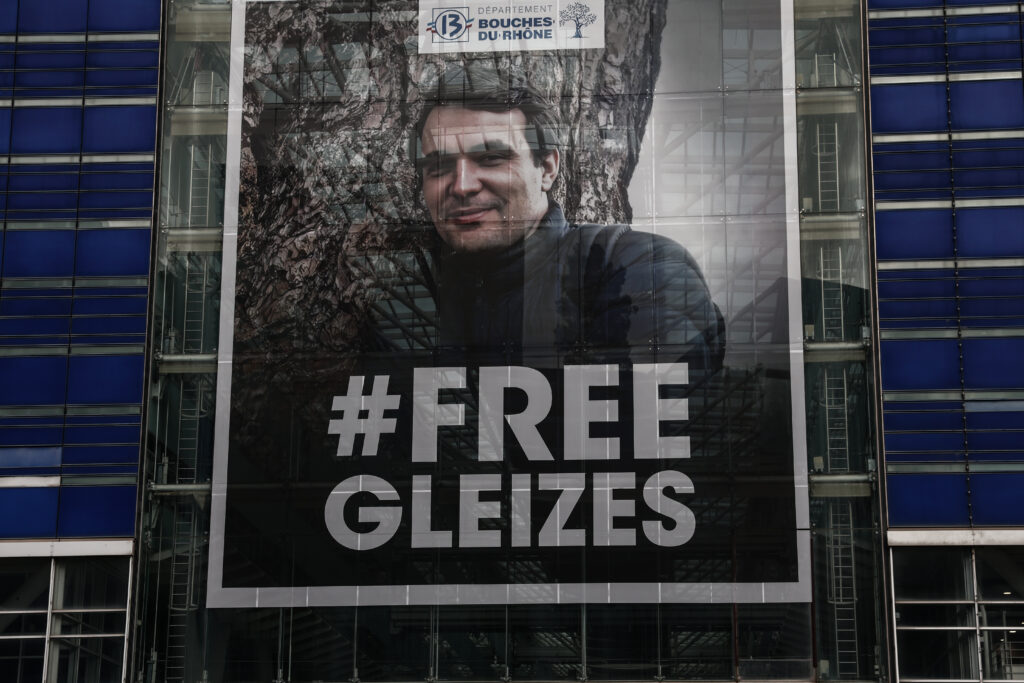
Soirée de soutien à Christophe Gleizes le 29 janvier au Bataclan
Une soirée de concerts en soutien au journaliste Christophe Gleizes, emprisonné en Algérie, aura lieu le 29 janvier au Bataclan à Paris, avec les musiciens Alex Beaupain ou Malik Djoudi, a indiqué lundi RSF (Reporters sans frontières), qui l’organise.Les autres artistes à l’affiche sont Jeanne Cherhal, Elephanz et Mathilda. Le billet d’entrée coûte 9,50 euros …
Soirée de soutien à Christophe Gleizes le 29 janvier au Bataclan Read More »

Grok : “Il faut industrialiser le retrait des contenus intimes”, estime une association
Le scandale Grok montre à quel point “il est crucial de renforcer l’arsenal” français de lutte contre la diffusion non consentie de contenus intimes, estime l’association Point de Contact, appelant à “industrialiser” leur retrait. En 2025, cette association historique spécialisée dans la lutte contre les contenus illicites et désignée “signaleur de confiance” par l’Arcom (le régulateur …
Grok : “Il faut industrialiser le retrait des contenus intimes”, estime une association Read More »

Jeunes et réseaux sociaux : l’interdiction fait débat chez les chercheurs
Faut-il interdire les réseaux sociaux aux enfants et aux adolescents? Appliquée en Australie, envisagée en France et au Royaume-Uni, la mesure divise les chercheurs: certains la jugent nécessaire face à une menace majeure pour la santé mentale, d’autres défendent une approche plus nuancée.”Restreindre l’accès des jeunes adolescents aux réseaux sociaux, c’est un pari qui vaut …
Jeunes et réseaux sociaux : l’interdiction fait débat chez les chercheurs Read More »
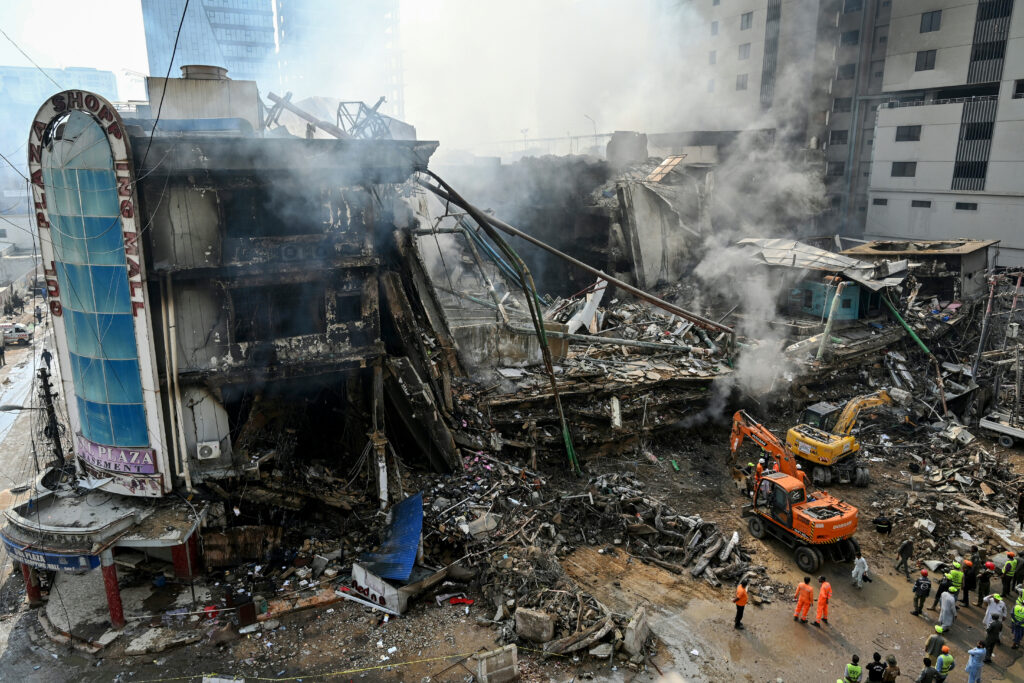
Pakistan : l’incendie d’un centre commercial à Karachi ce weekend fait 21 morts
Le bilan d’un incendie meurtrier survenu samedi dans un centre commercial de Karachi, au sud du Pakistan, est monté à 21 morts, ont déclaré lundi les secours, qui tentent de retrouver une soixantaine de disparus.Le feu s’est déclaré samedi soir, dans le Gul Plaza, l’un des centres commerciaux les plus fréquentés de Karachi avec ses …
Pakistan : l’incendie d’un centre commercial à Karachi ce weekend fait 21 morts Read More »
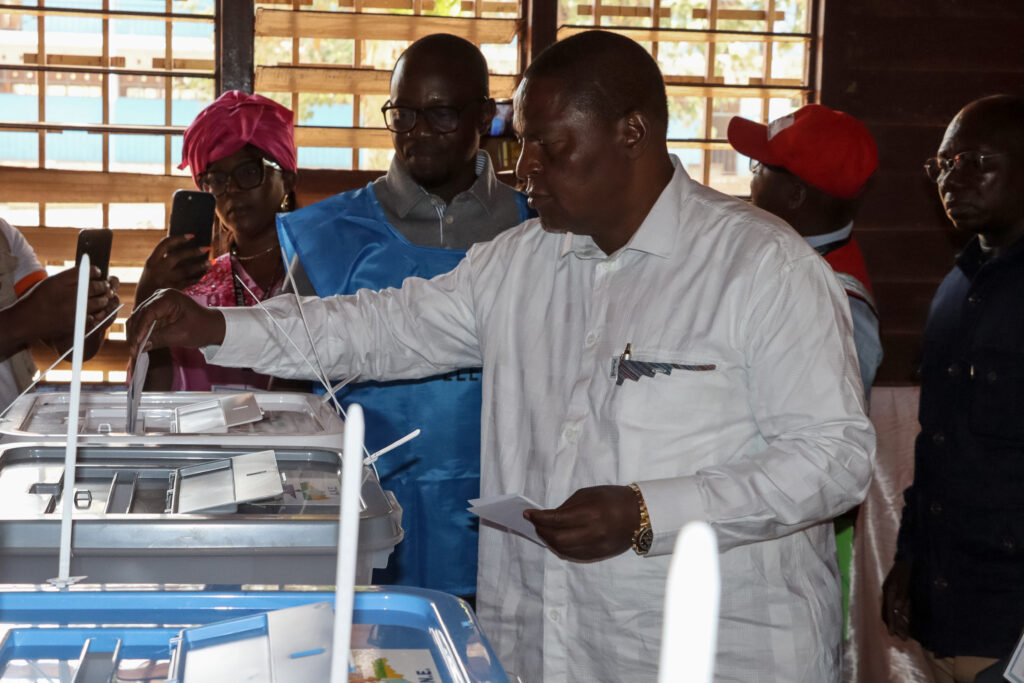
Présidentielle en Centrafrique: Touadéra réélu avec 77,90% des voix
Faustin Archange Touadéra, président depuis 2016 en Centrafrique, a été réélu pour un troisième mandat avec 77,90% des voix, selon les résultats définitifs du scrutin du 28 décembre proclamés lundi par la Cour constitutionnelle. Son principal opposant, Anicet George Dologuélé, qui avait dénoncé une “fraude massive” lors du scrutin et déposé un recours en annulation des …
Présidentielle en Centrafrique: Touadéra réélu avec 77,90% des voix Read More »
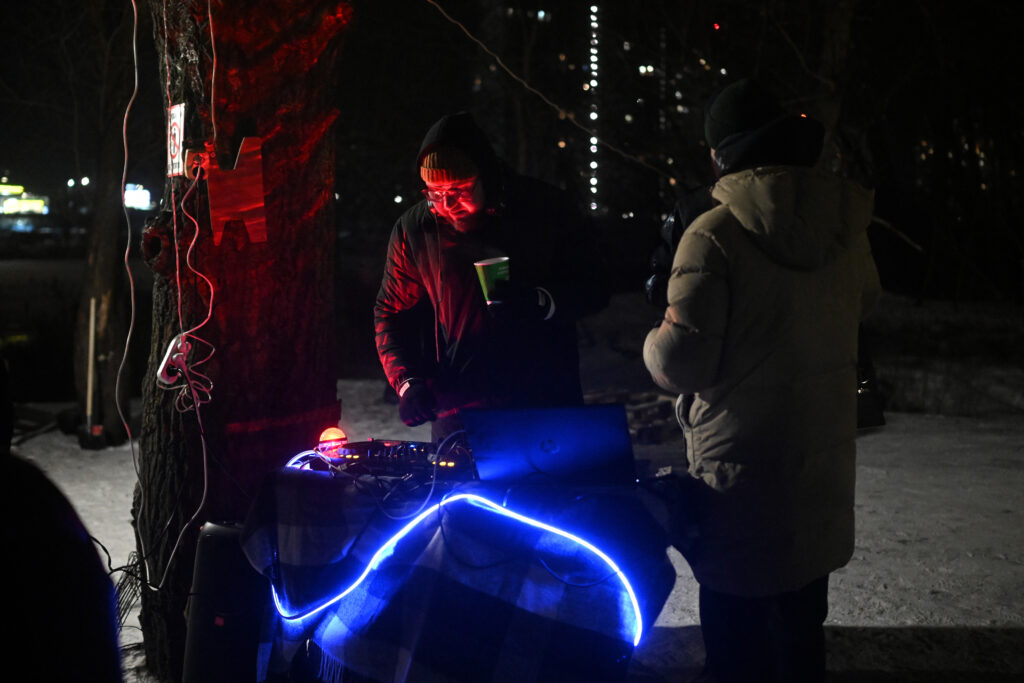
Malgré les frappes russes et le froid, Kiev danse le ska
Dans un quartier de Kiev englouti par la nuit, une source de lumière éclaire les immeubles de style soviétique, alors que le ska ukrainien retentit dans le froid polaire: “On relâche la pression!” hurle Olena pour couvrir les basses.C’est une “flashmob”, explique-t-elle, une fête improvisée entre les habitants des immeubles environnants pour “ne pas penser …
Malgré les frappes russes et le froid, Kiev danse le ska Read More »