Oil prices fall, stocks rise as Iran-Israel war fears ease

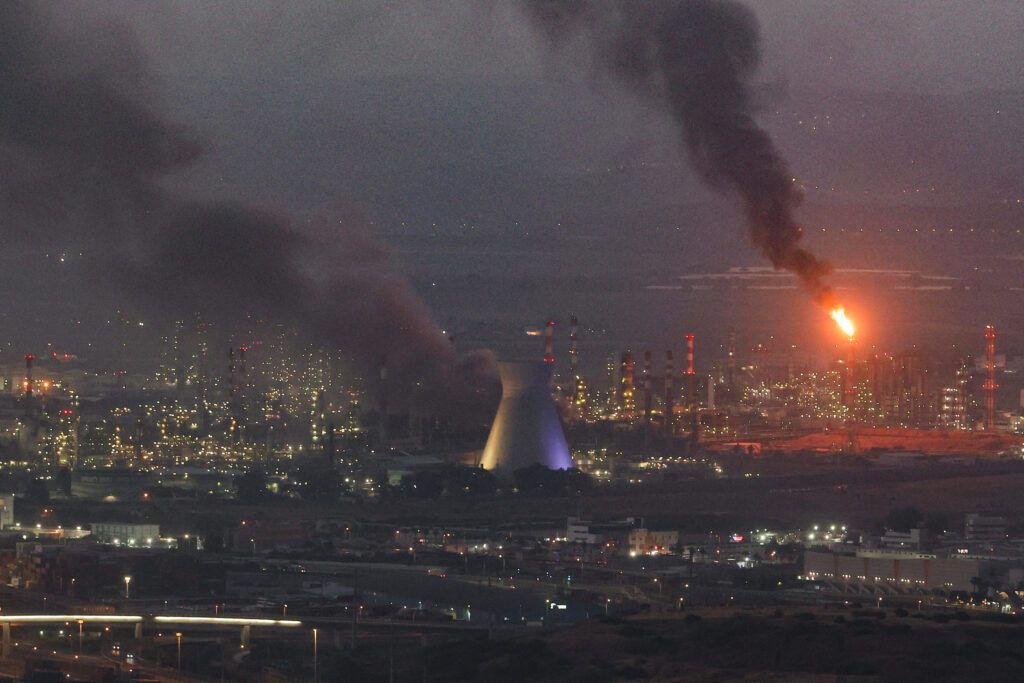
Stocks rose and oil prices retreated Monday as fears of a wider Middle East conflict eased even as Israel and Iran pounded each other with missiles for a fourth day.The dollar and safe-haven gold declined slightly.”As things stand, investors seem less fearful than they were going into the weekend of the possibility that the war between Israel and Iran spreads across the Middle East, and beyond,” said David Morrison, senior market analyst at financial services provider Trade Nation.”It appears that most of the Israeli airstrikes and missile launches avoided the most significant parts of Iran’s energy infrastructure. And so far Iran’s retaliation has done relatively little damage,” he added.Wall Street opened in the green, with the tech-heavy Nasdaq up around one percent in early deals, while London, Paris and Frankfurt were all higher in afternoon trading.That tracked gains in Asia, where Tokyo closed up 1.3 percent, boosted by a weaker yen, while Hong Kong and Shanghai also advanced.Israel’s surprise strike against Iranian military and nuclear sites on Friday — killing top commanders and scientists — sent crude prices soaring as much as 13 percent at one point on fears about supplies from the region.However, concerns over the conflict spreading appeared to have eased, with both main oil contracts retreating by more than one percent on Monday.Analysts said the recent decision by the OPEC+ group of crude producing nations, led by Saudi Arabia and Russia, to raise output again in July also played a role.”Financial markets are very good at absorbing geopolitical risk, and OPEC+’s supply boost is also helping to cushion the blow,” said Kathleen Brooks, research director at trading group XTB.”There may need to be a major escalation in the conflict before we get another sharp upswing in oil and gold prices,” she added.Analysts had warned that the spike could send inflation surging globally again, dealing a blow to long-running efforts by governments and central banks to get it under control.Investors were gearing up for monetary policy decisions this week from the US Federal Reserve, Bank of England and Bank of Japan.All are expected to stand pat but traders will be keeping a close watch on their statements for clues on interest-rate outlooks, with US officials under pressure from President Donald Trump to cut borrowing costs.There was little major reaction to data showing China’s factory output grew slower than expected last month as trade war pressures bit, while retail sales topped forecasts.Also in focus is the G7 summit in the Canadian Rockies, which kicked off Sunday, where the Middle East crisis will be discussed along with trade after Trump’s tariff blitz.In corporate news, shares in Nippon Steel rose more than three percent in Tokyo after Trump on Friday signed an executive order approving its $14.9 billion merger with US Steel, bringing an end to the long-running saga. Shares in Gucci owner Kering climbed over 11 percent in Paris on reports that the outgoing boss of French automaker Renault would take over as chief executive of the struggling luxury group.Renault shares shed almost eight percent percent, following its announcement on Sunday that Luca de Meo would step down in July. – Key figures at around 1340 GMT -West Texas Intermediate: DOWN 1.4 percent at $71.96 per barrelBrent North Sea Crude: DOWN 1.3 percent at $73.29 per barrelNew York – Dow: UP 0.6 percent at 42,458.20 pointsNew York – S&P 500: UP 0.8 percent at 6,022.67New York – Nasdaq: UP 1.0 percent at 19,593.77London – FTSE 100: UP 0.3 percent at 8,876.07 Paris – CAC 40: UP 0.6 percent at 7,728.56Frankfurt – DAX: UP 0.2 percent at 23,565.34Tokyo – Nikkei 225: UP 1.3 percent at 38,311.33 (close)Hong Kong – Hang Seng Index: UP 0.7 percent at 24,060.99 (close)Shanghai – Composite: UP 0.4 percent at 3,388.73 (close)Euro/dollar: UP at $1.1595 from $1.1540 on FridayPound/dollar: UP at $1.3601 from $1.3560Dollar/yen: DOWN at 143.88 yen from 144.04 yenEuro/pound: UP at 85.22 pence from 85.11 pence
France shuts Israeli weapons booths at Paris Air Show

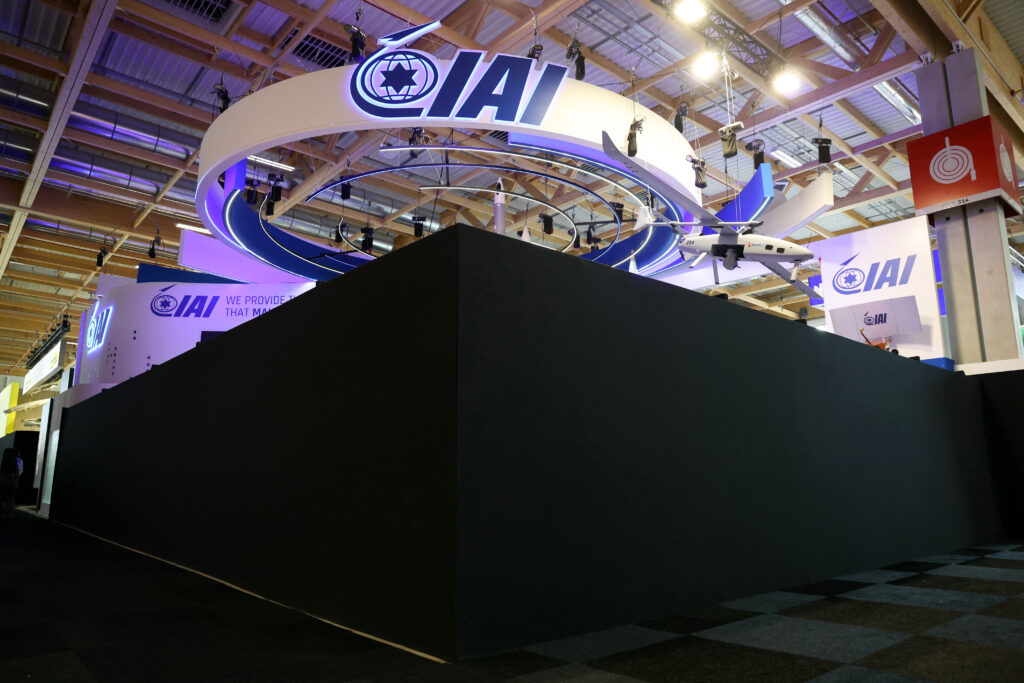
Geopolitical tensions roiled the opening of the Paris Air Show on Monday as French authorities sealed off Israeli weapons industry booths amid the conflicts in Iran and Gaza, a move that Israel condemned as “outrageous”.The decision added drama to the major aerospace industry event, which was already under the shadow of last week’s deadly crash of Air India’s Boeing 787 Dreamliner.Black walls were installed around the stands of five Israeli defence firms at the trade fair in Le Bourget, an airfield on the outskirts of Paris.The booths displayed “offensive weapons” that could be used in Gaza — in violation of agreements with Israeli authorities, a French government source told AFP.The companies — Israel Aerospace Industries (IAI), Rafael, Uvision, Elbit and Aeronautics — make drones and guided bombs and missiles.An Israeli exhibitor wrote a message in yellow chalk on one of the walls, saying the hidden defence systems “are protecting the state of Israel these days. The French government, in the name of discrimination is trying to hide them from you!”French Prime Minister Francois Bayrou defended the decision during a Monday press conference at the air show. “The French government’s position was very simple: no offensive weapons at the arms exposition,” he said.”Defensive weapons were perfectly acceptable,” he added.- Conflicts loom large -Bayrou cited the ongoing conflict in Gaza as the rationale behind the ban.”Given the situation in Gaza… which is extremely serious from a humanitarian and security point of view, France was keen to make it clear that offensive weapons should not be present at this exposition,” Bayrou said.Israeli President Isaac Herzog said he was shocked by the “outrageous” closure of the pavilions and said the situation should be “immediately corrected”.”Israeli companies have signed contracts with the organisers… it’s like creating an Israeli ghetto,” he said on French television channel LCI.The Israeli defence ministry said in a statement that the “outrageous and unprecedented decision reeks of policy-driven and commercial considerations”.”The French are hiding behind supposedly political considerations to exclude Israeli offensive weapons from an international exhibition — weapons that compete with French industries,” it said.”This is particularly striking given Israeli technologies’ impressive and precise performance in Iran.”Israel launched surprise strikes on Iranian military and nuclear sites on Friday, killing top commanders and scientists, prompting Tehran to hit back with a barrage of missiles.The presence of Israeli firms at Le Bourget, though smaller than in the past, was already a source of tension before the start of the Paris Air Show, because of the conflict in Gaza.A French court last week rejected a bid by NGOs to ban Israeli companies from Le Bourget over concerns about “international crimes”.Local lawmakers from the Seine-Saint-Denis department hosting the event were absent during Bayrou’s visit to the opening of the air show in protest over the Israeli presence.”Never has the world been so disrupted and destabilised,” Bayrou said earlier at a roundtable event, urging nations to tackle challenges “together, not against each other”.- Boeing ‘focus on supporting customers’ -The row over Israel cast a shadow over a trade fair that is usually dominated by displays of the aerospace industry’s latest flying wonders, and big orders for plane makers Airbus and Boeing.Airbus announced an order of 30 single-aisle A320neo jets and 10 A350F freighters by Saudi aircraft leasing firm AviLease.The European manufacturer also said Riyadh Air was buying 25 long-range, wide-body A350-1000 jets.But Boeing chief executive Kelly Ortberg last week cancelled plans to attend the biennial event, to focus on the investigation of the Air India crash.”Our focus is on supporting our customers, rather than announcing orders at this air show,” a Boeing spokeswoman told AFP on Monday.The London-bound Dreamliner crashed shortly after take-off in the western Indian city of Ahmedabad, killing 241 passengers and crew and another 38 on the ground. One passenger survived.

Anne-Sophie Lapix quitte France Télé et rejoint RTL et M6 à la rentrée

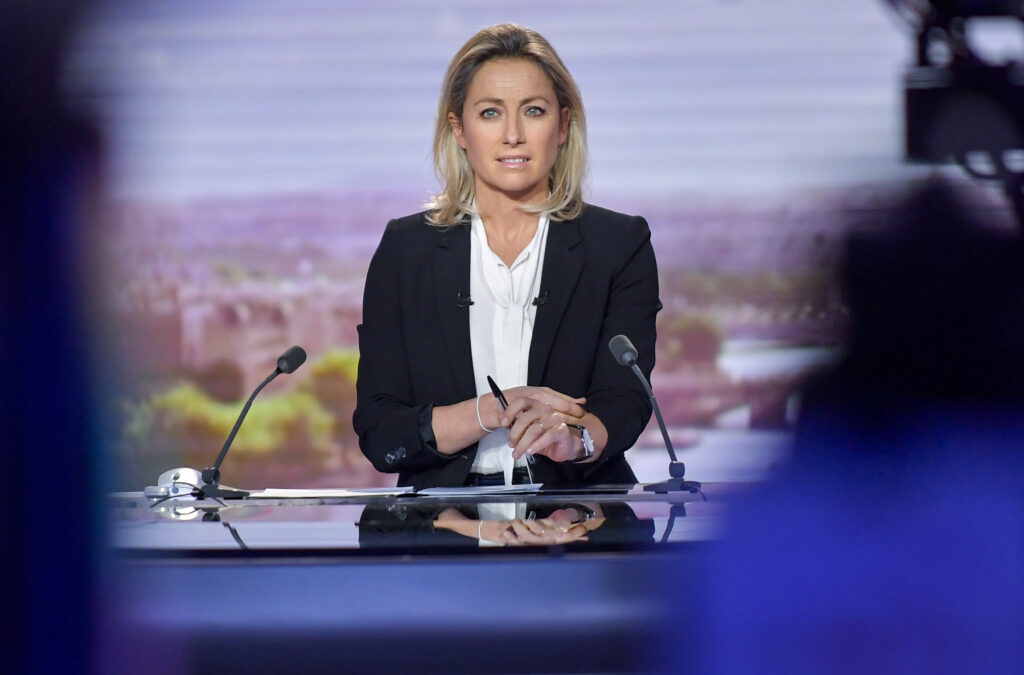
Écartée de la présentation du 20H00 de France 2, Anne-Sophie Lapix rejoindra à la rentrée la radio RTL pour y animer la tranche 18H00-20H00, ainsi que la chaîne M6 pour une interview le dimanche, a annoncé le groupe M6 dans un communiqué.À partir du 25 août “sur RTL, Anne-Sophie Lapix prendra les commandes du 18/20″, succédant à Yves Calvi, a indiqué le groupe propriétaire de la station.”Elle animera la tranche d’information de 18H00 à 19H15 du lundi au jeudi, suivi de 19H15 à 20H00 par +On refait le monde+, la grande émission de débats et de décryptage”, selon le communiqué.Sur la chaîne télé M6, la journaliste “proposera chaque semaine un grand entretien dominical avec une personnalité qui fait l’actualité”, issue “du monde politique, économique, culturel ou sociétal”, a ajouté le groupe.En outre, Anne-Sophie Lapix “prendra les commandes de primes événementiels (soirées spéciales, NDLR) sur M6 consacrés aux grands sujets politiques, sociétaux ou d’actualité”, notamment “dans le cadre des échéances électorales à venir”.Dans un message interne consulté par l’AFP, le directeur général de RTL et des radios du groupe M6 Jonathan Curiel a déclaré remercier “vivement Yves (Calvi) et son équipe pour cette saison sur le 18/20” et échanger “avec eux concernant la saison prochaine”.Depuis un an, Yves Calvi, 65 ans, animait la case 18H00-20H00 avec la journaliste Agnès Bonfillon, après avoir piloté la matinale de RTL pendant dix ans.Pilier du 20H00 de France 2 depuis huit ans, Anne-Sophie Lapix, 53 ans, va quitter les commandes du journal télévisé, sur décision de la direction de France Télévisions qui n’a pas encore annoncé qui la remplacera. Les spéculations vont bon train, les noms de Caroline Roux et Léa Salamé circulant notamment.Anne-Sophie Lapix présentera son dernier JT sur la chaîne publique le 26 juin, un départ finalement avancé.RTL, deuxième radio de France avec 5 millions d’auditeurs quotidiens, a annoncé mi-mai un autre recrutement de taille, celui de Marc-Olivier Fogiel, qui a dirigé la chaîne BFMTV pendant cinq ans et va faire son retour derrière un micro, pour une interview quotidienne dans la matinale la saison prochaine.Le groupe M6 prépare une grosse rentrée: parmi ses nouvelles recrues figure Cyril Hanouna. L’animateur controversé pilotera à partir du 1er septembre deux nouvelles émissions quotidiennes axées sur le divertissement, “Tout beau tout 9” sur la chaîne W9 et “Tout beau tout Fun” sur Fun Radio.Autre grand nom engagé par le groupe M6: Olivier Minne, qui animait “Fort Boyard” sur France 2 depuis plus de vingt ans et pilotera désormais “de grands divertissements” sur la chaîne M6.

Fighter jets, refuelling aircraft, frigate: UK assets in Mideast

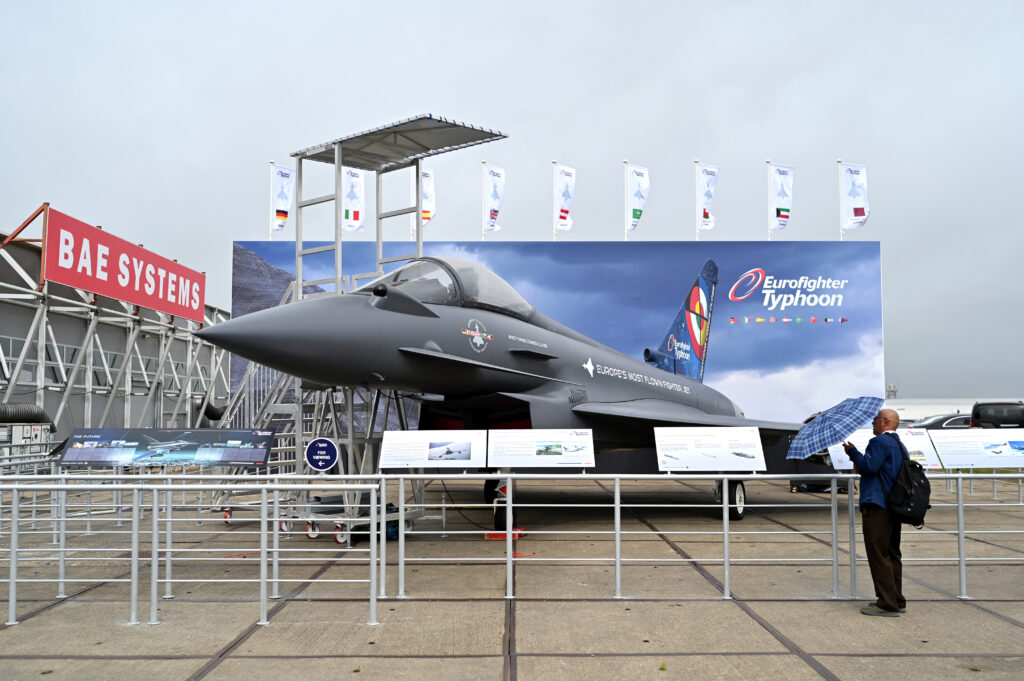
Britain is deploying extra fighter jets and other assets to the Middle East amid the escalating conflict between Israel and Iran, UK Prime Minister Keir Starmer has said.Below, AFP takes a look at the UK’s military presence in the region.- ‘Contingency support’ -Starmer told reporters travelling with him on his plane to Canada for G7 talks on Saturday that Britain was “moving assets to the region, including jets… for contingency support”.The jets are Eurofighter Typhoon planes, according to Britain’s defence ministry.Additional refuelling aircraft have also been deployed from UK bases, according to Downing Street.Royal Air Force fighter planes are already in the region as part of Operation Shader, the codename given to Britain’s contribution to the international campaign against the Islamic State group.RAF Typhoon jets aided Israel in April 2024 when they shot down an unspecified number of drones fired by Iran, as confirmed by the UK’s then-prime minister, Rishi Sunak. Starmer, Sunak’s successor, refused to speculate whether the UK would become directly involved this time in the conflict between the arch foes, which entered their fourth day on Monday.Iran threatened to target American, British and French bases if Western countries intervened to stop Iranian strikes on Israel.Tehran also urged London, Paris and Berlin to pressure Israel to stop its deadly attacks on Iran. – Air bases – The UK Ministry of Defence did not confirm where the fighter jets were heading to but the BBC reported they would be operating from RAF Akrotiri in Cyprus, Britain’s largest air force base in the region.The permanent joint operating base is where RAF jets fly from for Operation Shader.Transport, air-to-air refuelling and reconnaissance aircraft operate from there and Britain’s other base on Cyprus at Dhekelia.The RAF’s operational headquarters in the Middle East is housed at Al Udeid air base in Qatar, a site that is also used by the US Air Force.Britain’s air force also operates from Al Minhad air base in the United Arab Emirates and Al Musannah air base in Oman, according to information provided by the UK parliament.- Navy and army -The British Royal Navy’s main operations site in the Middle East is the UK Naval Support Facility in Bahrain in the Gulf.A type-23 frigate is permanently based there, as are four mine-counter vessels and a Royal Fleet Auxiliary vessel, according to research complied by the House of Commons library.The navy has also operated a logistics base at Duqm port in Oman, by the Arabian Sea, since 2018.The British Army permanently deploys two infantry battalions to the bases on Cyprus.Some 2,220 British soldiers were stationed there as of April last year, according to Ministry of Defence (MoD) statistics.UK troops are also involved in training Iraqi and Kurdish security forces in combatting IS. Two hundred personnel were deployed on operations in Iraq as of January 2024, according to the MoD.

Relatives wait for remains after Air India crash

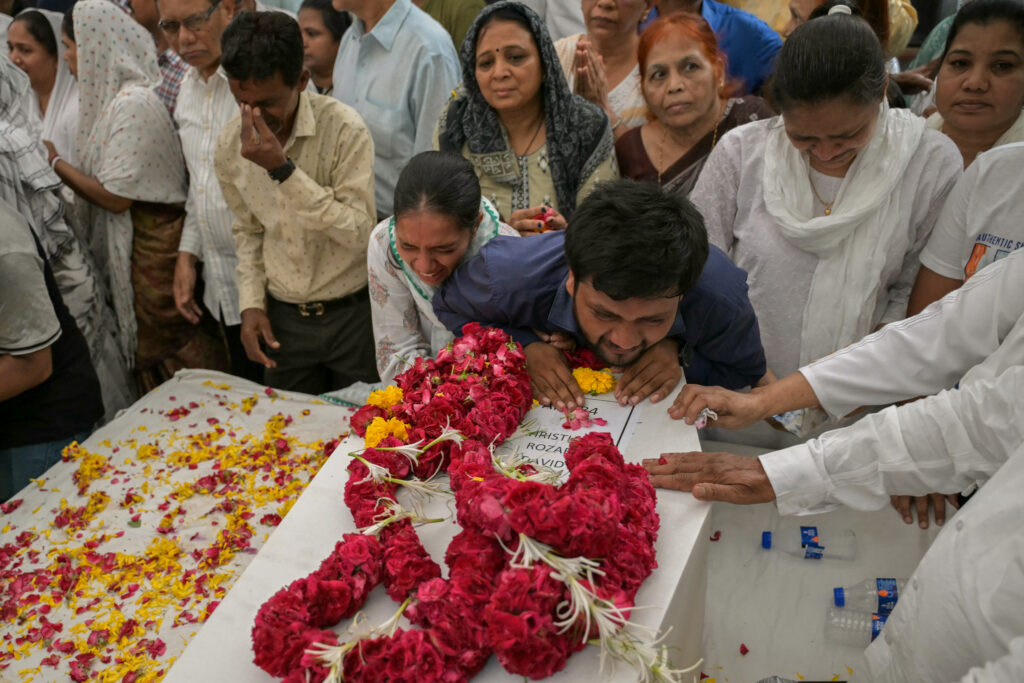
Indian health officials have begun handing relatives the bodies of their loved ones after one of the world’s worst plane crashes in decades, but most families were still waiting on Monday for the results of DNA testing.Mourners have held funerals for some of the 279 people killed when the Air India jet crashed in the western city of Ahmedabad on Thursday, but others are facing an anguished wait.”They said it would take 48 hours. But it’s been four days and we haven’t received any response,” said Rinal Christian, 23, whose elder brother was a passenger on the jetliner. There was one survivor out of 242 passengers and crew on board the London-bound plane when it slammed into a residential area of Ahmedabad, killing at least 38 people on the ground as well.”My brother was the sole breadwinner of the family,” Christian said on Sunday. “So what happens next?”Among the latest victims identified was Vijay Rupani, a senior member of India’s ruling party and former chief minister of Gujarat state.His flag-draped coffin was carried in Ahmedabad by soldiers, along with a portrait of the politician draped in a garland of flowers.Crowds gathered in a funeral procession for passenger Kinal Mistry in Anand district, a two-hour journey from Ahmedabad.The 24-year-old had postponed her flight, leaving her father Suresh Mistry agonising that “she would have been alive” if she had stuck to her original plan.Air India said there were 169 Indian passengers, 53 British, seven Portuguese and a Canadian on board the flight, as well as 12 crew members.As of Monday afternoon, 114 crash victims have been identified, Gujarat’s Home Minister Harsh Sanghavi wrote on social media platform X.Rajnish Patel, a doctor at Ahmedabad’s civil hospital, said: “This is a meticulous and slow process, so it has to be done meticulously only.”One victim’s relative who did not want to be identified told AFP they had been instructed not to open the coffin when they receive it.Witnesses reported seeing badly burnt bodies and scattered remains.- ‘We need to know’ -Nilesh Vaghela, a casket maker, was asleep when the crash happened in the early afternoon.”Then around 5:00 pm, I got a call from Air India saying they need coffins,” he told AFP after delivering dozens of caskets.”My work is very sad. All these innocent people died, small children,” he said. “Someone has to do it.”The Boeing 787-8 Dreamliner erupted into a fireball when it went down moments after takeoff, smashing into buildings used by medical staff.The task of clearing debris from the scorched crash site went on in Ahmedabad, where an AFP photographer saw dozens of workers in yellow hard hats.Indian authorities have yet to identify the cause of the disaster and have ordered inspections of Air India’s Dreamliners.The airline said one of its Dreamliners returned to Hong Kong airport on Monday “shortly after take off due to a technical issue” and was undergoing checks.Indian authorities announced on Sunday that the second black box of the Ahmedabad plane, the cockpit voice recorder, had been recovered. This could offer investigators more clues about what went wrong.Aviation Minister Ram Mohan Naidu Kinjarapu said on Saturday he hoped decoding the first black box, the flight data recorder, would “give an in-depth insight” into the circumstances of the crash.Imtiyaz Ali, who was still waiting for a DNA match to find his brother, is also seeking answers.”Next step is to find out the reason for this accident. We need to know,” he told AFP.

Iranian Nobel laureates, Cannes winner urge halt to Iran-Israel conflict

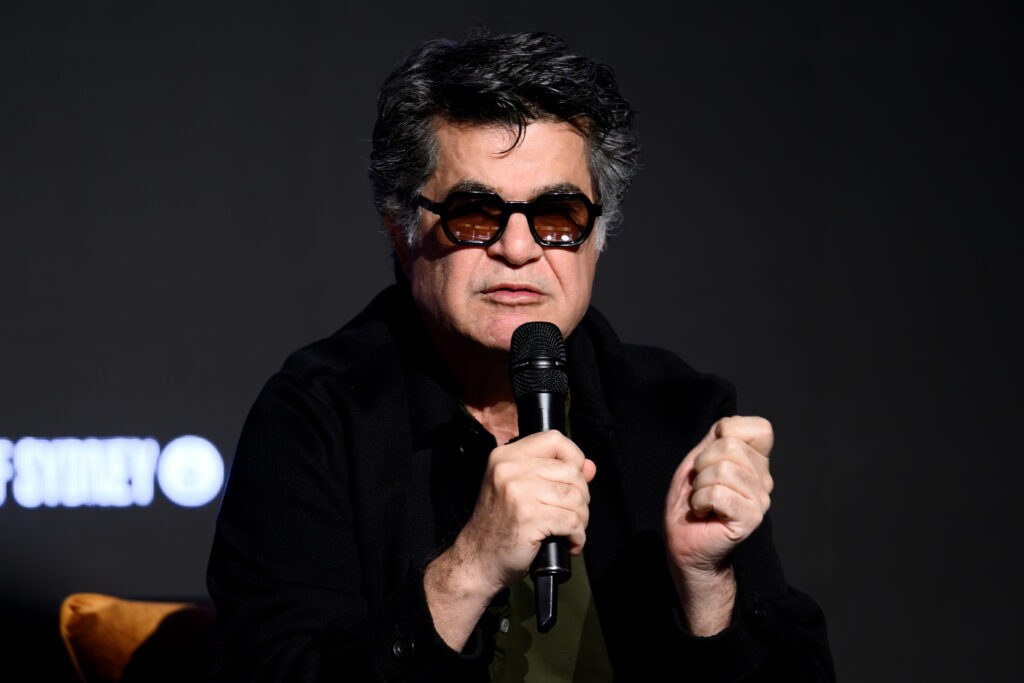
Leading Iranian activists and filmmakers on Monday called for an end to hostilities between Iran and Israel, urging Tehran to stop the conflict by halting its enrichment of uranium.”We demand the immediate halt of uranium enrichment by the Islamic Republic, the cessation of military hostilities, an end to attacks on vital infrastructure in both Iran and Israel, and the stopping of massacres of civilians in both countries,” said the activists in an op-ed in French newspaper Le Monde.The signatories included Nobel peace prize winners Shirin Ebadi and Narges Mohammadi, as well as the winner of the top prize at the 2025 Cannes Film Festival, Jafar Panahi, and his fellow director Mohammad Rassoulof.Iran’s enrichment of uranium has for decades been a cause of tension with the West and Israel, which fear the drive is aimed at making an atomic bomb, a charge denied by Tehran.”We believe that continuing uranium enrichment and the devastating war between the Islamic Republic and the Israeli regime neither serves the Iranian people nor humanity at large,” said the signatories who also included the rights activists Sedigheh Vasmaghi, Shahnaz Akmali and Abdolfattah Soltani.”Uranium enrichment is in no way in the interest of the Iranian people. They must not be sacrificed for the nuclear or geopolitical ambitions of an authoritarian regime,” they said.Calling on the Iranian leadership under Ayatollah Ali Khamenei to step down, they said: “The current leaders of the Islamic Republic lack the capacity to resolve Iran’s domestic crises or its external tensions.” “The only credible path to preserve this country and its people is for current authorities to step down.”Panahi returned to Iran last month after winning the Palme d’Or for his latest movie, “It Was Just an Accident”, but has been presenting his work this month at a film festival in Australia. Rassoulof, whose latest film was shown at the 2024 festival, now lives in exile after escaping clandestinely that year.Ebadi, who won the 2023 Nobel peace prize, also now lives abroad. Mohammadi, the 2023 laureate, remains in Iran and his currently on leave for health reasons from a prison term.

Israël visé par des frappes iraniennes meurtrières, quatrième jour d’offensive sur l’Iran

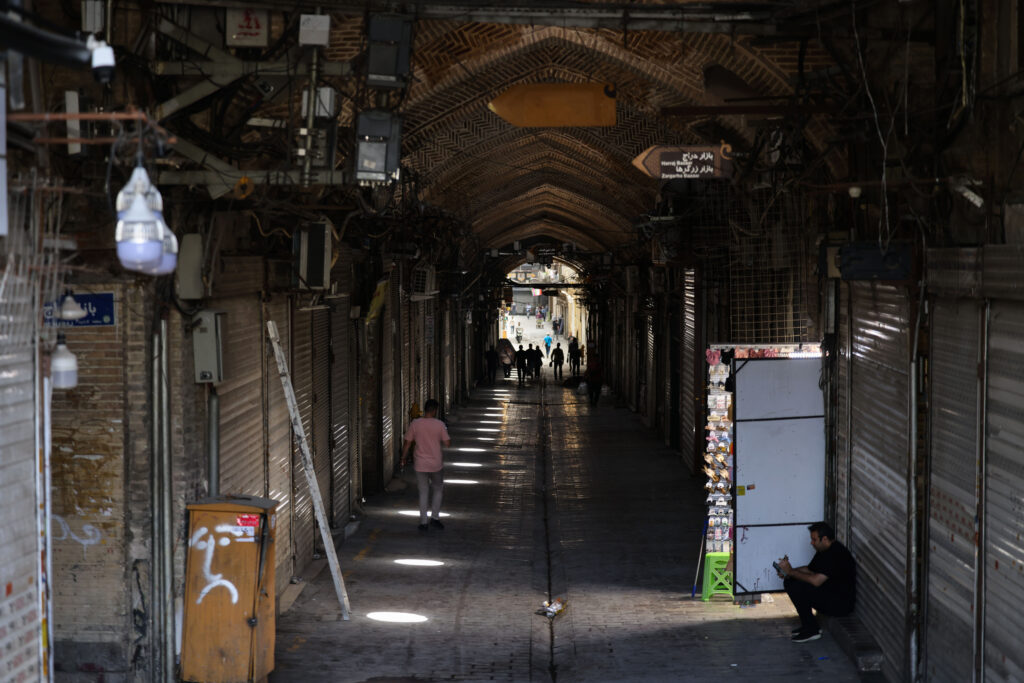
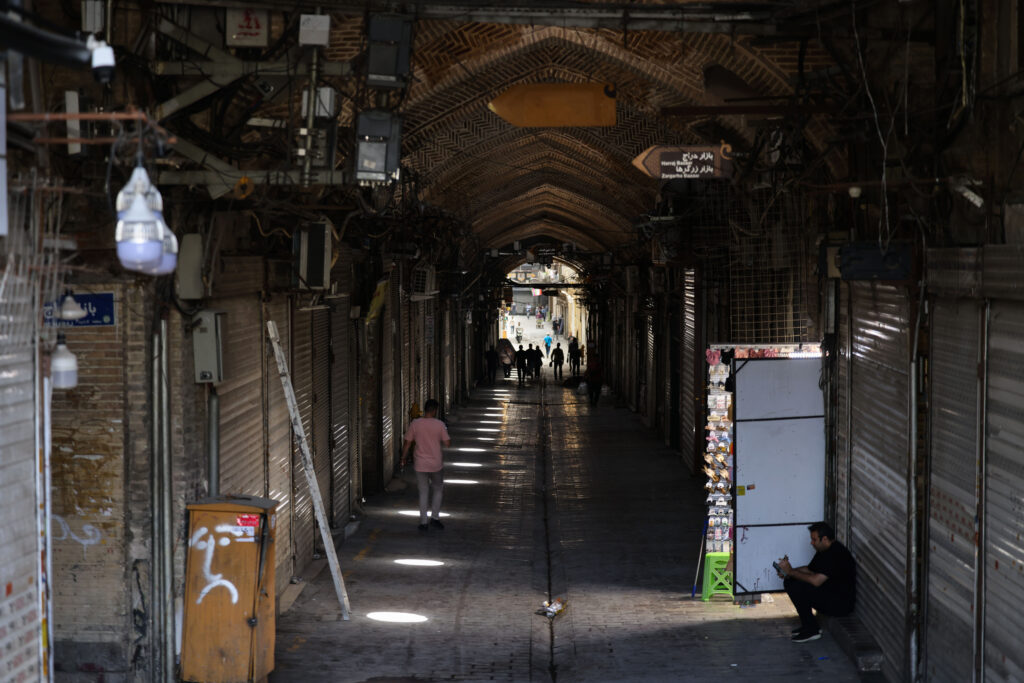
L’Iran a tiré lundi des missiles sur plusieurs grandes villes d’Israël, où le bilan s’est alourdi de onze morts au quatrième jour de l’escalade militaire entre les deux pays, en réponse à des frappes aériennes israéliennes sur le territoire iranien.A Tel-Aviv, les secouristes recherchaient lundi des survivants dans les immeubles éventrés, comme dans les villes proches de Petah-Tikva et Bnei-Brak. Une épaisse fumée noire s’élevait au-dessus de Haïfa, dans le nord d’Israël, également touchée. Israël a lancé le 13 juin sur l’Iran une attaque d’une ampleur sans précédent, visant des centaines de cibles militaires et nucléaires, avec l’objectif affiché d’empêcher ce pays de se doter de la bombe atomique. Comme en Israël, des zones habitées ont été touchées.Les frappes israéliennes, qui ont notamment visé Téhéran, ont fait au moins 224 morts et plus d’un millier de blessés en Iran, selon un bilan officiel établi dimanche.Les salves de missiles iraniens tirées en riposte sur Israël ont fait 24 morts, selon le bureau du Premier ministre israélien. Ce bilan s’est alourdi lundi de onze morts, dont huit tués pendant la nuit à Petah-Tikva, Bnei-Brak et Haïfa.Au petit matin, les habitants de Petah-Tikva, fatigués et apeurés, ont découvert les destructions. Sur plusieurs étages, le coin d’un grand immeuble blanc a été léché par les flammes et de larges pans de murs étaient calcinés.”Quand nous avons entendu les sirènes, nous sommes allés dans l’abri. Quelques minutes plus tard, nous avons entendu une explosion et quand nous sommes sortis, nous avons vu les dégâts, toutes les maisons détruites”, a raconté Henn, un homme dont l’appartement a été détruit.Les sirènes d’alerte ont aussi retenti dans la nuit à Jérusalem, suivies d’explosions.Les Gardiens de la Révolution iranienne ont affirmé que ces frappes avaient permis “à des missiles d’atteindre avec succès les cibles” en Israël et promis des opérations “plus dévastatrices”.Le président iranien Massoud Pezeshkian a appelé lundi les Iraniens à “l’unité” et à “faire front” contre cette “agression criminelle”.L’armée israélienne a quant à elle affirmé avoir détruit “un tiers” des lanceurs de missiles sol-sol iraniens.Le ministre de la Défense, Israël Katz, a averti que les habitants de Téhéran “paieront le prix” pour les civils israéliens tués.- Le Grand Bazar de Téhéran fermé -Après des décennies de guerre par procuration et d’opérations ponctuelles, c’est la première fois que les deux pays ennemis s’affrontent militairement avec une telle intensité.Soupçonné par les Occidentaux et par Israël de vouloir fabriquer l’arme nucléaire, l’Iran dément et défend son droit à enrichir de l’uranium afin de développer un programme nucléaire civil.Lundi, Téhéran a exhorté l’Agence internationale de l’énergie atomique (AIEA) à condamner Israël, affirmant que les installations nucléaires visées avaient un caractère “pacifique”. Durant la nuit, des explosions ont été entendues à Téhéran, déjà visée la veille par des dizaines de frappes. Lundi, le Grand Bazar, le principal marché de la ville, est resté fermé. Les rues de la capitale étaient pour la plupart désertes, les magasins fermés à l’exception de quelques épiceries et de nombreux automobilistes faisaient la queue aux abords des stations-service. Un vendeur a signalé une augmentation des achats compulsifs, disant que son magasin “était en rupture de stocks d’eau”.Pour protéger la population, le gouvernement a annoncé dimanche que les mosquées, les stations de métro et les écoles allaient servir d’abris anti-aériens.- Appels à négocier -Lundi, Israël a dit avoir frappé à Téhéran des centres de commandement de la Force Qods, l’unité d’élite des Gardiens de la Révolution chargée des opérations extérieures. Depuis vendredi, les frappes israéliennes ont tué les trois plus hauts gradés du pays et neuf scientifiques du programme nucléaire iranien.Selon un média iranien, de nouvelles frappes ont aussi visé lundi l’ouest de l’Iran, dont l’une a touché une caserne de pompiers dans la province d’Ilam tandis qu’un hôpital a subi d’importants dégâts à Kermanshah. L’Iran a accusé Israël d’avoir pris pour cible cet hôpital et dénoncé un “crime de guerre”.La veille, Israël avait annoncé avoir frappé des “dizaines” de sites de missiles sol-sol dans cette partie du pays. Dimanche, l’armée israélienne a également frappé l’aéroport de Machhad, la troisième ville d’Iran, située dans le nord-est à environ 2.300 kilomètres d’Israël.Selon le Premier ministre Benjamin Netanyahu, Israël a “détruit la principale installation” du site d’enrichissement d’uranium de Natanz, dans le centre de l’Iran.L’AIEA a cependant affirmé lundi qu’il n’y avait “pas d’indication d’attaque” contre la partie souterraine du site, qui abrite la principale usine d’enrichissement. La présidente de la Commission européenne, Ursula von der Leyen, a déclaré lundi avoir dit à M. Netanyahu que la diplomatie était la meilleure solution “à long terme” avec l’Iran.Le président russe Vladimir Poutine et son homologue turc Recep Tayyip Erdogan ont appelé à “la cessation immédiate des hostilités” et au “règlement des différends, y compris ceux liés au programme nucléaire iranien”.Dimanche, le président américain Donald Trump, allié d’Israël, avait appelé les deux pays à “trouver un accord” et estimé “possible” que les Etats-Unis s’impliquent dans le conflit.Plusieurs personnalités iraniennes, dont les Prix Nobel de la paix Narges Mohammadi et Shirin Ebadi, ont appelé lundi à la “fin des hostilités militaires” et à l’arrêt de l’enrichissement d’uranium par l’Iran.

Israël visé par des frappes iraniennes meurtrières, quatrième jour d’offensive sur l’Iran

L’Iran a tiré lundi des missiles sur plusieurs grandes villes d’Israël, où le bilan s’est alourdi de onze morts au quatrième jour de l’escalade militaire entre les deux pays, en réponse à des frappes aériennes israéliennes sur le territoire iranien.A Tel-Aviv, les secouristes recherchaient lundi des survivants dans les immeubles éventrés, comme dans les villes proches de Petah-Tikva et Bnei-Brak. Une épaisse fumée noire s’élevait au-dessus de Haïfa, dans le nord d’Israël, également touchée. Israël a lancé le 13 juin sur l’Iran une attaque d’une ampleur sans précédent, visant des centaines de cibles militaires et nucléaires, avec l’objectif affiché d’empêcher ce pays de se doter de la bombe atomique. Comme en Israël, des zones habitées ont été touchées.Les frappes israéliennes, qui ont notamment visé Téhéran, ont fait au moins 224 morts et plus d’un millier de blessés en Iran, selon un bilan officiel établi dimanche.Les salves de missiles iraniens tirées en riposte sur Israël ont fait 24 morts, selon le bureau du Premier ministre israélien. Ce bilan s’est alourdi lundi de onze morts, dont huit tués pendant la nuit à Petah-Tikva, Bnei-Brak et Haïfa.Au petit matin, les habitants de Petah-Tikva, fatigués et apeurés, ont découvert les destructions. Sur plusieurs étages, le coin d’un grand immeuble blanc a été léché par les flammes et de larges pans de murs étaient calcinés.”Quand nous avons entendu les sirènes, nous sommes allés dans l’abri. Quelques minutes plus tard, nous avons entendu une explosion et quand nous sommes sortis, nous avons vu les dégâts, toutes les maisons détruites”, a raconté Henn, un homme dont l’appartement a été détruit.Les sirènes d’alerte ont aussi retenti dans la nuit à Jérusalem, suivies d’explosions.Les Gardiens de la Révolution iranienne ont affirmé que ces frappes avaient permis “à des missiles d’atteindre avec succès les cibles” en Israël et promis des opérations “plus dévastatrices”.Le président iranien Massoud Pezeshkian a appelé lundi les Iraniens à “l’unité” et à “faire front” contre cette “agression criminelle”.L’armée israélienne a quant à elle affirmé avoir détruit “un tiers” des lanceurs de missiles sol-sol iraniens.Le ministre de la Défense, Israël Katz, a averti que les habitants de Téhéran “paieront le prix” pour les civils israéliens tués.- Le Grand Bazar de Téhéran fermé -Après des décennies de guerre par procuration et d’opérations ponctuelles, c’est la première fois que les deux pays ennemis s’affrontent militairement avec une telle intensité.Soupçonné par les Occidentaux et par Israël de vouloir fabriquer l’arme nucléaire, l’Iran dément et défend son droit à enrichir de l’uranium afin de développer un programme nucléaire civil.Lundi, Téhéran a exhorté l’Agence internationale de l’énergie atomique (AIEA) à condamner Israël, affirmant que les installations nucléaires visées avaient un caractère “pacifique”. Durant la nuit, des explosions ont été entendues à Téhéran, déjà visée la veille par des dizaines de frappes. Lundi, le Grand Bazar, le principal marché de la ville, est resté fermé. Les rues de la capitale étaient pour la plupart désertes, les magasins fermés à l’exception de quelques épiceries et de nombreux automobilistes faisaient la queue aux abords des stations-service. Un vendeur a signalé une augmentation des achats compulsifs, disant que son magasin “était en rupture de stocks d’eau”.Pour protéger la population, le gouvernement a annoncé dimanche que les mosquées, les stations de métro et les écoles allaient servir d’abris anti-aériens.- Appels à négocier -Lundi, Israël a dit avoir frappé à Téhéran des centres de commandement de la Force Qods, l’unité d’élite des Gardiens de la Révolution chargée des opérations extérieures. Depuis vendredi, les frappes israéliennes ont tué les trois plus hauts gradés du pays et neuf scientifiques du programme nucléaire iranien.Selon un média iranien, de nouvelles frappes ont aussi visé lundi l’ouest de l’Iran, dont l’une a touché une caserne de pompiers dans la province d’Ilam tandis qu’un hôpital a subi d’importants dégâts à Kermanshah. L’Iran a accusé Israël d’avoir pris pour cible cet hôpital et dénoncé un “crime de guerre”.La veille, Israël avait annoncé avoir frappé des “dizaines” de sites de missiles sol-sol dans cette partie du pays. Dimanche, l’armée israélienne a également frappé l’aéroport de Machhad, la troisième ville d’Iran, située dans le nord-est à environ 2.300 kilomètres d’Israël.Selon le Premier ministre Benjamin Netanyahu, Israël a “détruit la principale installation” du site d’enrichissement d’uranium de Natanz, dans le centre de l’Iran.L’AIEA a cependant affirmé lundi qu’il n’y avait “pas d’indication d’attaque” contre la partie souterraine du site, qui abrite la principale usine d’enrichissement. La présidente de la Commission européenne, Ursula von der Leyen, a déclaré lundi avoir dit à M. Netanyahu que la diplomatie était la meilleure solution “à long terme” avec l’Iran.Le président russe Vladimir Poutine et son homologue turc Recep Tayyip Erdogan ont appelé à “la cessation immédiate des hostilités” et au “règlement des différends, y compris ceux liés au programme nucléaire iranien”.Dimanche, le président américain Donald Trump, allié d’Israël, avait appelé les deux pays à “trouver un accord” et estimé “possible” que les Etats-Unis s’impliquent dans le conflit.Plusieurs personnalités iraniennes, dont les Prix Nobel de la paix Narges Mohammadi et Shirin Ebadi, ont appelé lundi à la “fin des hostilités militaires” et à l’arrêt de l’enrichissement d’uranium par l’Iran.

Après des années d’expérimentations, Meta introduit la publicité sur WhatsApp

WhatsApp a annoncé lundi l’introduction prochaine de nouveaux espaces publicitaires, un tournant important pour la messagerie qui avait jusqu’ici largement échappé à la publicité.Contrairement à Facebook, Instagram ou d’autres plateformes du groupe Meta, WhatsApp a conservé un modèle économique quasiment sans annonces depuis son rachat par le géant des réseaux sociaux en 2014.L’application est notamment plébiscitée pour sa facilité d’utilisation et ses fonctionnalités (appels audio et vidéo, messages vocaux, etc), ses messages chiffrés et son apparente neutralité commerciale. Jusqu’à présent, les seuls formats publicitaires consistaient en des messages promotionnels envoyés via l’outil WhatsApp Business à des utilisateurs ayant donné leur accord, ainsi que quelques expérimentations sur certains marchés.L’entreprise précise que les nouveaux espaces publicitaires apparaîtront exclusivement dans l’onglet “Actus”, qui regroupe les “Statuts” et les “Chaînes”, et est utilisé quotidiennement par environ 1,5 milliard de personnes dans le monde.Les nouvelles fonctionnalités incluent des abonnements payants à certaines Chaînes, la promotion de Chaînes dans l’annuaire de découverte et des publicités intégrées dans les Statuts, équivalents des Stories d’Instagram.”Nous parlons depuis des années de notre intention de créer une activité qui n’interrompt pas vos conversations personnelles et nous pensons que l’onglet Actus est le bon endroit pour ces nouveaux outils”, a déclaré la filiale de Meta.Les utilisateurs qui se servent de WhatsApp uniquement pour discuter avec leurs proches ne verront aucun changement, cet onglet pouvant par ailleurs être désactivé dans les paramètres.”Je veux être très claire: vos messages personnels, vos appels et vos statuts resteront chiffrés de bout en bout. Cela signifie que personne, pas même nous, ne peut les voir ou les écouter. Ils ne seront jamais utilisés pour de la publicité”, a souligné Nikila Srinivasan, une vice-présidente de Meta, lors d’un appel à la presse.L’entreprise s’est engagé à ne jamais vendre ou partager les numéros de téléphone avec des annonceurs, et a assuré que les informations issues des discussions personnelles, des appels ou des groupes ne serviront pas au ciblage publicitaire. Les publicités diffusées dans l’onglet Actus reposeront uniquement sur des données basiques comme la localisation approximative, la langue du téléphone ou l’activité dans cet espace de la messagerie.Meta cherche à tirer des revenus de l’énorme base d’utilisateurs de WhatsApp, qui compte plus de deux milliards d’utilisateurs actifs mensuels. Les analystes du secteur spéculent depuis longtemps sur le fait que le groupe californien finira par ajouter de la publicité sur la messagerie, compte tenu de sa taille et de ses taux d’engagement. Le calendrier de déploiement des nouvelles fonctionnalités n’a pas été précisé.