Nobel: des doutes s’installent sur la venue à Oslo de l’opposante vénézuélienne Machado

Les doutes augmentent sur la possibilité pour l’opposante vénézuélienne Maria Corina Machado de recevoir en personne son Nobel de la paix mercredi à Oslo, après l’annulation d’une conférence de presse qui était prévue mardi à l’Institut Nobel norvégien.Initialement prévue à la mi-journée, cette conférence de presse de l’opposante de 58 ans, qui vit cachée dans …

Nobel: des doutes s’installent sur la venue à Oslo de l’opposante vénézuélienne Machado Read More »

Nepal faces economic fallout of September protest

When Nepal’s government was toppled in September after deadly youth-led protests against economic stagnation and corruption, many in the impoverished country hoped for a period of meaningful political change.But experts warn that the upheaval — which killed 76 people and left thousands of buildings including parliament damaged — has pushed the nation backwards economically.Three months on from the September 8–9 protests, and with three months to go before elections on March 5, Nepal faces daunting challenges including rising unemployment and collapsing foreign investment.”My family depended entirely on my salary,” said Kamal Gautam, who lost his job as a kitchen worker at the Hyatt Regency when it was closed after rioters looted the hotel.”It’s been three months since my salary stopped, and I have no idea how to support my family,” 40-year-old Gautan, the sole breadwinner for his family of four, told AFP in their cramped one-room home in Kathmandu.Protests, initially triggered by anger over a brief government ban on social media, were spearheaded by protesters under the loose “Gen Z” umbrella.But anger at economic woes and a political elite accused of creaming off cash had primed the Himalayan nation of 30 million people for upheaval.After police cracked down on the protesters, the riots spread and on the second day more than 2,700 structures were torched, looted or damaged.- ‘Economic uncertainty’ -A preliminary report from the Federation of Nepalese Chambers of Commerce and Industry (FNCCI) estimates losses exceeding $278 million, with nearly 15,000 people losing their jobs.Foreign direct investment commitments plunged 91 percent to just $14 million in the three months since mid-August, according to government data.Even before the unrest, the World Bank estimated that 82 percent of Nepal’s workforce was in informal employment, while one in five Nepalis aged 15–24 was jobless.In November, the bank revised its projections, warning that “reflecting the recent unrest and heightened political and economic uncertainty, real GDP growth is projected to slow to 2.1 percent” in 2025, from an earlier forecast of 5.1 percent.  It also raised its poverty estimate to 6.6 percent of the population this financial year, up from 6.2 percent. Some of Nepal’s largest companies — major contributors to state revenue — suffered heavy losses, including Bhat-Bhateni supermarkets, the Chaudhary Group conglomerate and the telecom provider Ncell.”Multinational companies are psychologically disturbed, even national entrepreneurs are in the position of wait and see,” economist Chandra Mani Adhikari told AFP.”We assume that, even now, only half of the country’s economy is running.”- ‘Loss is immense’ -Remittance inflows surged between mid-September and mid-October, crossing 200 billion Nepali rupees ($1.4 billion) in a single month for the first time. Remittances make up the equivalent of around a third of Nepal’s gross domestic product.Tourism — which contributes about 6.6 percent to GDP — was also hit hard. Visitor numbers plunged 18 percent year-on-year in September.In Pokhara, one of Nepal’s key tourist hubs, Hotel Sarowar was set ablaze.”The loss is immense,” chairman Bharat Raj Pahari told AFP. “It has directly affected 750 family members.”Mani Raj Lamichhane, the head of the Nepal Tourism Board in Pokhara for Gandaki province, estimated the industry lost more than $20 million. “Many tourists cancelled their travel to Pokhara, and hotel occupancy dropped by over 90 percent throughout September,” he said.While visitor numbers rebounded in November, the effects of the unrest continue to ripple, and workers like Kamal Gautam are still adrift.”I can neither go back to the village, nor can I live in this expensive city,” he said.

Nepal faces economic fallout of September protest

When Nepal’s government was toppled in September after deadly youth-led protests against economic stagnation and corruption, many in the impoverished country hoped for a period of meaningful political change.But experts warn that the upheaval — which killed 76 people and left thousands of buildings including parliament damaged — has pushed the nation backwards economically.Three months on from the September 8–9 protests, and with three months to go before elections on March 5, Nepal faces daunting challenges including rising unemployment and collapsing foreign investment.”My family depended entirely on my salary,” said Kamal Gautam, who lost his job as a kitchen worker at the Hyatt Regency when it was closed after rioters looted the hotel.”It’s been three months since my salary stopped, and I have no idea how to support my family,” 40-year-old Gautan, the sole breadwinner for his family of four, told AFP in their cramped one-room home in Kathmandu.Protests, initially triggered by anger over a brief government ban on social media, were spearheaded by protesters under the loose “Gen Z” umbrella.But anger at economic woes and a political elite accused of creaming off cash had primed the Himalayan nation of 30 million people for upheaval.After police cracked down on the protesters, the riots spread and on the second day more than 2,700 structures were torched, looted or damaged.- ‘Economic uncertainty’ -A preliminary report from the Federation of Nepalese Chambers of Commerce and Industry (FNCCI) estimates losses exceeding $278 million, with nearly 15,000 people losing their jobs.Foreign direct investment commitments plunged 91 percent to just $14 million in the three months since mid-August, according to government data.Even before the unrest, the World Bank estimated that 82 percent of Nepal’s workforce was in informal employment, while one in five Nepalis aged 15–24 was jobless.In November, the bank revised its projections, warning that “reflecting the recent unrest and heightened political and economic uncertainty, real GDP growth is projected to slow to 2.1 percent” in 2025, from an earlier forecast of 5.1 percent.  It also raised its poverty estimate to 6.6 percent of the population this financial year, up from 6.2 percent. Some of Nepal’s largest companies — major contributors to state revenue — suffered heavy losses, including Bhat-Bhateni supermarkets, the Chaudhary Group conglomerate and the telecom provider Ncell.”Multinational companies are psychologically disturbed, even national entrepreneurs are in the position of wait and see,” economist Chandra Mani Adhikari told AFP.”We assume that, even now, only half of the country’s economy is running.”- ‘Loss is immense’ -Remittance inflows surged between mid-September and mid-October, crossing 200 billion Nepali rupees ($1.4 billion) in a single month for the first time. Remittances make up the equivalent of around a third of Nepal’s gross domestic product.Tourism — which contributes about 6.6 percent to GDP — was also hit hard. Visitor numbers plunged 18 percent year-on-year in September.In Pokhara, one of Nepal’s key tourist hubs, Hotel Sarowar was set ablaze.”The loss is immense,” chairman Bharat Raj Pahari told AFP. “It has directly affected 750 family members.”Mani Raj Lamichhane, the head of the Nepal Tourism Board in Pokhara for Gandaki province, estimated the industry lost more than $20 million. “Many tourists cancelled their travel to Pokhara, and hotel occupancy dropped by over 90 percent throughout September,” he said.While visitor numbers rebounded in November, the effects of the unrest continue to ripple, and workers like Kamal Gautam are still adrift.”I can neither go back to the village, nor can I live in this expensive city,” he said.

Trump touts economy at raucous rally as voter worries mount

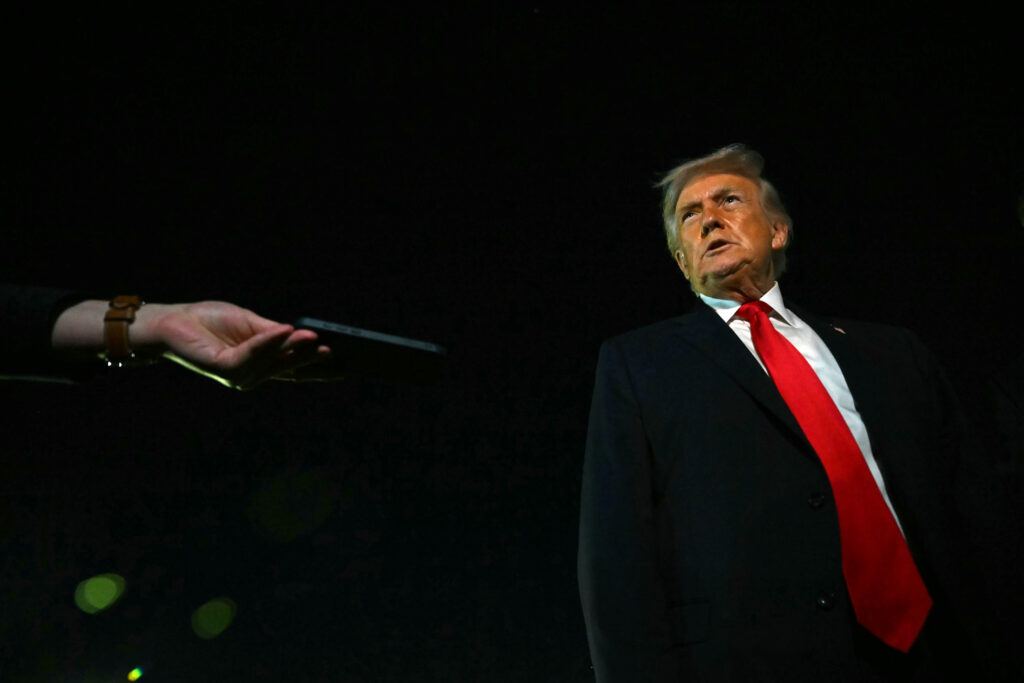
US President Donald Trump insisted Tuesday that prices were falling “tremendously” for Americans in a rambling campaign-style rally that was meant to address mounting anger over the cost of living.Speaking at a casino in the blue-collar state of Pennsylvania, Trump was taking his economic message on the road for the first time in months as his approval ratings slump ahead of the 2026 midterm elections.But the 79-year-old also weaved through a host of topics familiar from last year’s presidential run, including inflammatory rhetoric on migration and swipes at what he called “shithole” countries.The second-term president has angrily rejected what he calls a “hoax” by rival Democrats on affordability, but he has shown signs that he realizes the issue is hurting Republicans ahead of the midterms.Instead, the billionaire former reality TV star is trying to convince voters that inflation is the fault of his Democratic predecessor Joe Biden — and that he alone can fix it.”I can’t say affordability ‘hoax’, because I agree the prices were too high,” Trump told the audience at a rural casino in Mount Pocono, Pennyslvania.”But they use the word affordability, and that’s their only word. They say affordability and everyone says, ‘oh, that must mean Trump has high prices.’ No, our prices are coming down tremendously from the highest prices in the history of our country.”Trump insists prices are falling for gas and for key consumer goods like beef, eggs and coffee, even though US inflation accelerated in September to 2.8 percent on an annual basis.- Migration rhetoric -Supporters who lined up in the biting cold to see him said they were worried about prices but backed Trump to tackle the problem.”You know he can’t fix all that in under a year,” Brianna Shay, 26, told AFP.Much of Trump’s focus on Tuesday however seemed to be heated remarks about immigration, the issue that drove his election wins in 2016 and 2024 and has seen him launch a major crackdown since his return to power.Trump repeatedly lashed out once again at Somali immigrants, including Democratic Congresswoman Ilhan Omar, and the country of Somalia itself, which he described as “filthy, dirty, disgusting.”He has ramped up his rhetoric on the subject as a scandal unfolds in the state of Minnesota where prosecutors say more than $1 billion went to non-existent social services, largely through false billing by Somali Americans.Trump also boasted about halting all migration from a number of countries including Afghanistan, Haiti and Somalia.”I didn’t say shithole, you did,” Trump said to an audience member, referring to an incident in his first term where he used the term during a White House event when he said he wanted to limit migration from certain countries. The focus on migration was a return to Trump’s comfort zone amid the growing discontent about the economy, which Americans have blamed at least partly on his sweeping tariffs.- ‘America first’ -In a Politico interview published earlier Tuesday, Trump said he would give the economy an “A-plus-plus-plus-plus-plus” rating.But Trump’s approval ratings have fallen to their lowest point since his return to office in January. Democrats campaigning on affordability swept elections last month for New York City mayor, and for the governors of New Jersey and Virginia.Republicans are now looking increasingly nervously at next year’s midterm elections, when control of Congress will be up for grabs. The parties of incumbent US presidents often take a beating in the midterms, but Trump’s chief of staff Susie Wiles said Monday she intended to “put him on the ballot” to get out loyal voters who might otherwise stay away.Yet Trump also faces growing dissent from within his “Make America Great Again” movement, with calls for him to focus on the economy instead of foreign peace deals.Former close ally Marjorie Taylor Greene, who broke with Trump in November, said the president had failed to focus on affordability.”For an ‘America First’ president, the number one focus should have been domestic policy, and it wasn’t,” Greene told the CBS News show “60 Minutes” in an interview that aired Sunday.

Asian stocks in retreat as traders eye Fed decision, tech earnings

Asian markets retreated Wednesday following a tepid day on Wall Street as investors bided their time ahead of a highly anticipated Federal Reserve policy announcement later in the day.Earnings from tech giants Oracle and Broadcom this week are also in view amid lingering worries about an AI-fuelled bubble that caused some panic on trading floors last month.With US central bankers expected to cut interest rates for the third straight session later Wednesday, the main focus is on their post-meeting statement, boss Jerome Powell’s news conference and the “dot plot” forecast for 2026 policy.After November’s tech-led swoon, markets have enjoyed a healthy run in recent weeks as weak jobs figures reinforced expectations for another step lower in borrowing costs.But that has cooled heading into the Fed gathering amid speculation it will announce a “hawkish cut” that plays down the chances of a fourth successive reduction.Data on Tuesday showing an uptick in job openings — against estimates for a drop — further tempered expectations for a string of cuts next year, with markets now pricing in two more over the next 12 months, compared with three previously seen.Pepperstone’s Chris Weston said the figures “catalysed a repricing of US forward Fed rate expectations”.After a weak day in New York, where the S&P 500 and Dow dropped, Asia fared no better.Tokyo, Hong Kong, Shanghai, Sydney, Singapore, Wellington, Jakarta and Manila all fell, though Taipei edged up and Seoul was flat.Still, there is some hope that the Fed will turn more dovish next year with President Donald Trump’s top economic aide Kevin Hassett — the frontrunner to succeed Powell in May — saying he sees plenty of room to substantially lower rates”While he has indicated that he would respond to the data and that he would not bow to political pressure to decide whether to cut interest rates, if he becomes the next chair, it is clear that on the current backdrop he is comfortable with more easing” than many board members, wrote National Australia Bank’s Taylor Nugent.Aside from the Fed saga, investors are also keenly awaiting earnings from software giant Oracle and chipmaker Broadcom, which will be used to judge the outlook for the tech sector in the wake of huge investments in artificial intelligence.Markets have been pumped higher for the past two years by the surge into all things AI, though there has been some concern of late that the hundreds of billions splashed out might not see returns as early as hoped.”Oracle may not have a substantial weight in the S&P 500 or NAS100 to move the index on its own,” said Pepperstone’s Weston. “But what they detail on its capex intentions and future funding plans could resonate across the AI space.”- Key figures at around 0230 GMT -Tokyo – Nikkei 225: DOWN 0.4 percent at 50,448.28 (break) Hong Kong – Hang Seng Index: DOWN 0.2 percent at 25,393.52Shanghai – Composite: DOWN 0.5 percent at 3,888.30Dollar/yen: DOWN at 156.65 yen from 156.90 yen on TuesdayEuro/dollar: DOWN at $1.1625 from $1.1630 Pound/dollar: DOWN at $1.3298 from $1.3300Euro/pound: DOWN at 87.41 pence from 87.43 penceWest Texas Intermediate: UP 0.3 percent at $58.43 per barrelBrent North Sea Crude: UP 0.3 percent at $62.12 per barrelNew York – Dow: DOWN 0.4 percent at 47,560.29 (close)London – FTSE 100: FLAT at 9,642.01 (close) 

Australia bans under-16s from social media in world-first crackdown

Australia banned under-16s from social media in a world-first crackdown on Wednesday, declaring it was time to “take back control” from formidable tech giants.A raft of popular apps and websites — Facebook, YouTube, Instagram and X among them — face US$33 million fines if they fail to purge Australia-based users younger than 16.Australia becomes one of the first nations to push back so forcefully against tech companies with immense political power, in a move other countries are looking at closely. “Enough is enough,” Prime Minister Anthony Albanese said.  “It is one of the biggest social and cultural changes that our nation has faced.”We will take back control.”The government says unprecedented measures are needed to protect children from “predatory algorithms” filling phone screens with bullying, sex and violence. The laws came into effect after midnight local time across Australia. Hundreds of thousands of adolescents woke up to find themselves locked out of apps they once scrolled through for hours each day.Bianca Navarro, 10, was already counting the years until she could log in again to YouTube. “It will be pretty sad because I have six years until I can watch it,” she told AFP. – Blacklisted -Facebook, Instagram, YouTube, TikTok, Snapchat and Reddit are forbidden from creating or keeping accounts belonging to users in Australia under 16. Streaming platforms Kick and Twitch are also on the government’s blacklist, as are Threads and X. The ban has been hailed as a godsend for parents sick of seeing children stuck to their phones. Mia Bannister blamed social media for the suicide of her teenage son Ollie, who killed himself last year after he was bullied online. He was also being served endless dieting videos that fuelled an eating disorder, she said. “I’m sick of the social media giants shirking responsibility,” she told AFP in the lead-up to the ban. “The problem is we hand them a phone and we hand them the greatest weapon we could hand them.”A growing body of research suggests too much time online is taking a toll on teen wellbeing. But it is hard to draw firm conclusions that separate phone use from other lifestyle factors, experts say.Father-of-five Dany Elachi said the restrictions were a long-overdue “line in the sand”. “We need to err on the side of caution before putting anything addictive in the hands of children,” he told AFP.- ‘Really distracted’ -Tech-savvy teenagers the world over have taken an interest in Australia’s measures. “Students nowadays, they are really distracted,” said Nigerian high-schooler Mitchelle Okinedo, 15.”Social media today is very important for expressing yourself, no matter how old you are,” said Santiago Ramirez Rojas, 16, from Mexico City. YouTube, Meta and other social media giants have lined up to condemn the ban.Meta, the parent company of Facebook and Instagram, said children were already flocking to darker online spaces.”We’ve consistently raised concerns that this poorly developed law could push teens to less regulated platforms or apps,” the US-based firm told AFP in a statement. “We’re now seeing those concerns become reality.”Elon Musk’s X told young users the ban was “not our choice”.”It’s what the Australian law requires.” Lesser-known chat and image-sharing apps Lemon8 and yope, which are not currently listed in the social media ban, have shot up the download charts in Australia.While most platforms have begrudgingly agreed to comply, for now, legal challenges are in the wind. Online discussion site Reddit said Tuesday it could not confirm local media reports that said it would seek to overturn the ban in Australia’s High Court. An Australian internet rights group has launched its own bid to have teenagers re-instated to social media. – Rushed or reasonable? -Australia’s efforts will be closely watched by all those worried about the dangers of social media. New Zealand and Malaysia are mulling similar restrictions. The Australian government concedes the ban will be far from perfect at the outset and canny teenagers will find ways to slip through the cracks. But platforms face the threat of Aus$49.5 million (US$33 million) fines if they fail to take “reasonable steps” to stop this happening.  It remains to be seen how Australia’s internet safety regulator will interpret what counts as reasonable. Social media companies bear the sole responsibility for checking users are 16 or older.Some platforms say they will use AI tools to estimate ages based on photos, while young users may also choose to prove their age by uploading government ID. Which platforms fall under the ban continues to be debated. Popular apps and websites such as Roblox, Pinterest and WhatsApp are currently exempt — but the government has stressed that the list remains under review.Most social media platforms already require users be at least 13, a legacy of US laws setting the minimum age for data collection without parental consent.