

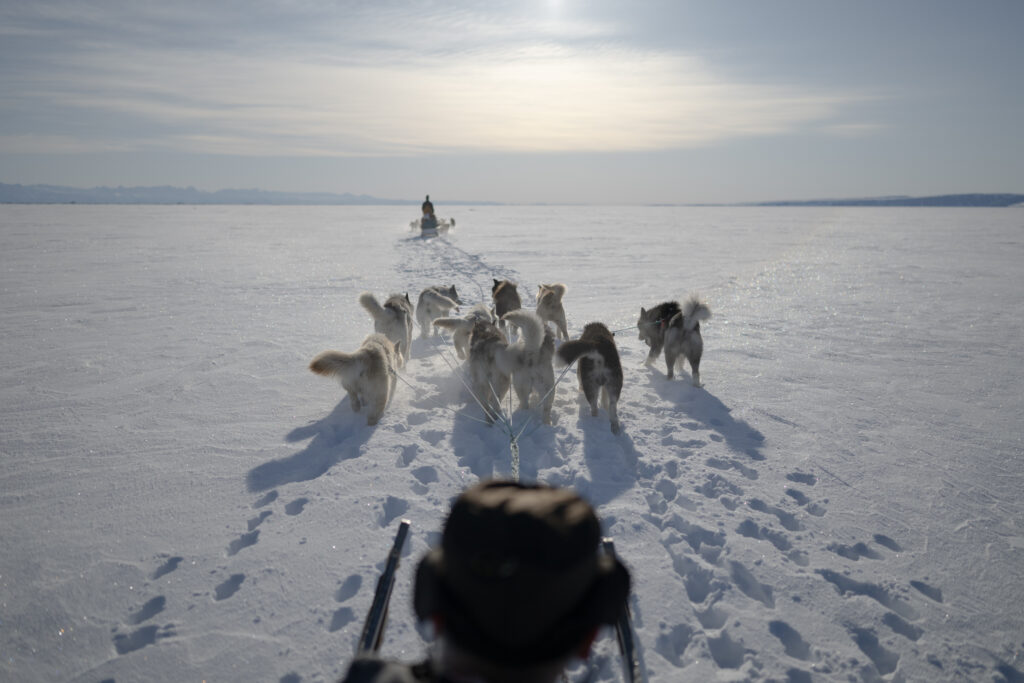
Dogsled diplomacy in Greenland proves elusive for US
Greenland’s biggest dogsled race is a cultural mainstay on the Arctic island but US envoys keep finding themselves disinvited, frustrating attempts by President Donald Trump’s team to wield soft power in the Danish autonomous territory.The annual Avannaata Qimussersua race is dear to Greenlanders as the most prestigious event of its kind, pitting around 30 teams against each other to decide the territory’s top dog sledders.That has piqued the interest of team Trump as the American president pushes to take over Greenland.In the space of a few days, Trump’s special envoy for Greenland, Louisiana Governor Jeff Landry, was first invited and then uninvited to this year’s race, to be held on March 28 in Qasigiannguit, a small community on the west coast.Last year, after Trump revived his ambition to acquire Greenland, Usha Vance, wife of US Vice President JD Vance, had also planned to attend the race, before her appearance was cancelled.”We’re looking at manoeuvres that, if not outright interference, are at least a form of soft diplomacy that involves meeting local populations with the intent of influencing them,” Mikaa Blugeon-Mered, a researcher on Arctic geopolitics, told AFP.The would-be visits are part of a broader push by Washington to get a feel for the Greenlandic population — which at this point is overwhelmingly opposed to joining the United States — and encourage pro-American sentiment in order to win hearts and minds, according to the researcher.In August, Danish public broadcaster DR reported that at least three Americans linked to Trump were conducting influence operations in Greenland.Their mission was to identify those favouring closer ties to the United States, as well as those in fierce opposition, according to DR.In May, the Wall Street Journal reported that US intelligence agencies had been ordered to gather information on Greenland’s independence movement and views on potential US exploitation of the island’s natural resources.- Identity marker -For many of Greenland’s 57,000 inhabitants, of whom nearly 90 percent are Inuit, the Avannaata Qimussersua is strongly tied to identity.The race, generally held at the end of the winter season, is part of the island’s “living culture”, said Manumina Lund Jensen, an associate professor in the Department of Cultural and Social History at the University of Greenland.”It’s very important for the Greenlanders, and it is a very emotional journey if you go there,” she told AFP.Amid renewed tension between Washington and Europe, the Greenland Dog Sledding Association (KNQK) recently announced that the invitation to Landry — which had been extended without its knowledge by a private tour operator — had been cancelled.”KNQK has been informed that the tourism company that invited Governor Jeff Landry from the United States has unilaterally withdrawn its invitation,” the organisation said in a statement.”This is reassuring,” it added.- ‘Political pressure’ -Greenlandic broadcaster KNR reported last week that Landry had been invited by tour operator Kristian Jeremiassen.Speaking to KNR, Jeremiassen said he had invited “many different people” to the race, without specifying whom, “to promote tourism in northern Greenland”.However, the Greenland Dog Sledding Association said it found it “unacceptable that political pressure is being exerted from outside” and called the invitation “wholly inappropriate”.According to Blugeon-Mered, alongside his work as a tour operator, Jeremiassen is a politician “on the wane… whose primary goal is to make himself a kind of go-between (with the United States) to boost his business”.A year ago, Usha Vance had planned to attend the race without an official invitation.”The US consulate had offered to fund most of the race,” Blugeon-Mered said.”They thought that by being the race’s main sponsor, they could buy the organisers and do whatever they wanted. It didn’t work.”JD Vance’s planned visit had sparked strong objections in Denmark, which saw it as “unacceptable pressure” and said it risked provoking demonstrations during the event.The US delegation ultimately changed its programme, and JD and Usha Vance instead visited an American air base at Pituffik, in the territory’s northwest.
European stocks sink, gold hits high on escalating tariff fears
European stock markets slid further Tuesday, while precious metals hit fresh peaks on fears of a US-EU trade war fuelled by Donald Trump’s tariff threat over opposition to his grab for Greenland.Asia’s main equity indices closed mixed, while US equity futures were sharply down, indicating sizeable losses on Wall Street when it reopens after Monday’s close because of the Martin Luther King holiday.Gold, seen as a safe-haven investment, notched yet another record high, at $4,726.70 an ounce.Silver also peaked, touching $95.51 an ounce.The dollar retreated and key bond yields in the United States and elsewhere climbed.”The US dollar is not serving as a safe haven because it seems to be entirely US-driven and raises fears about US policy and European exposure to US assets,” noted Neil Wilson, investor strategist at Saxo UK.When Wall Street reopens, the “Nasdaq looks set to chalk up the biggest declines amid concern about possible retaliatory action from Europe against America’s big tech contingent”, predicted AJ Bell investment director Russ Mould. Frankfurt led losses in Europe, shedding 1.5 percent in midday deals. There were sizeable falls also in London and Paris.After a bright start to the year fuelled by fresh hopes for the artificial intelligence sector, investors have taken fright since the US president ramped up his demands for the Danish autonomous territory, citing national security.With Copenhagen and other European capitals pushing back, Trump on Saturday said he would impose 10 percent levies on eight countries — including Denmark, France, Germany and Britain — from February 1, lifting them to 25 percent on June 1.- ‘Mistake’ -The move has raised questions about the outlook for last year’s US-EU trade deal.EU chief Ursula von der Leyen on Tuesday warned the United States that hitting allied European nations with punitive tariffs over Greenland would be a “mistake”. “The proposed additional tariffs are a mistake especially between long-standing allies,” von der Leyen told the Davos gathering in Switzerland. “The European Union and the United States have agreed to a trade deal last July. And in politics as in business — a deal is a deal. And when friends shake hands, it must mean something,” she added.US Treasury chief Scott Bessent on Monday said that any retaliatory EU tariffs would be “unwise”.Trump meanwhile ramped up his rhetoric against France on Tuesday, warning he would impose 200 percent tariffs on French wine and champagne over its intentions to decline his invitation to join his “Board of Peace” set up to oversee the rebuilding of Gaza.- Key figures at around 1100 GMT -London – FTSE 100: DOWN 1.2 percent at 10,075.62 points Frankfurt – DAX: DOWN 1.5 percent at 24,578.77Paris – CAC 40: DOWN 1.3 percent at 8,009.37Tokyo – Nikkei 225: DOWN 1.1 percent at 52,991.10 (close)Hong Kong – Hang Seng Index: DOWN 0.3 percent at 26,487.51 (close)Shanghai – Composite: FLAT at 4,113.65 (close)New York – Dow: Closed Monday for holidayEuro/dollar: UP at $1.1732 from $1.1641 on MondayPound/dollar: UP at $1.3478 from $1.3428Dollar/yen: DOWN at 157.85 yen from 158.09 yenEuro/pound: DOWN at 86.04 pence from 86.71 penceBrent North Sea Crude: UP 0.4 percent at $64.18 per barrelWest Texas Intermediate: UP 0.4 percent at $59.56 per barrelburs-bcp/ajb/jh
European stocks sink, gold hits high on escalating tariff fears
European stock markets slid further Tuesday, while precious metals hit fresh peaks on fears of a US-EU trade war fuelled by Donald Trump’s tariff threat over opposition to his grab for Greenland.Asia’s main equity indices closed mixed, while US equity futures were sharply down, indicating sizeable losses on Wall Street when it reopens after Monday’s close because of the Martin Luther King holiday.Gold, seen as a safe-haven investment, notched yet another record high, at $4,726.70 an ounce.Silver also peaked, touching $95.51 an ounce.The dollar retreated and key bond yields in the United States and elsewhere climbed.”The US dollar is not serving as a safe haven because it seems to be entirely US-driven and raises fears about US policy and European exposure to US assets,” noted Neil Wilson, investor strategist at Saxo UK.When Wall Street reopens, the “Nasdaq looks set to chalk up the biggest declines amid concern about possible retaliatory action from Europe against America’s big tech contingent”, predicted AJ Bell investment director Russ Mould. Frankfurt led losses in Europe, shedding 1.5 percent in midday deals. There were sizeable falls also in London and Paris.After a bright start to the year fuelled by fresh hopes for the artificial intelligence sector, investors have taken fright since the US president ramped up his demands for the Danish autonomous territory, citing national security.With Copenhagen and other European capitals pushing back, Trump on Saturday said he would impose 10 percent levies on eight countries — including Denmark, France, Germany and Britain — from February 1, lifting them to 25 percent on June 1.- ‘Mistake’ -The move has raised questions about the outlook for last year’s US-EU trade deal.EU chief Ursula von der Leyen on Tuesday warned the United States that hitting allied European nations with punitive tariffs over Greenland would be a “mistake”. “The proposed additional tariffs are a mistake especially between long-standing allies,” von der Leyen told the Davos gathering in Switzerland. “The European Union and the United States have agreed to a trade deal last July. And in politics as in business — a deal is a deal. And when friends shake hands, it must mean something,” she added.US Treasury chief Scott Bessent on Monday said that any retaliatory EU tariffs would be “unwise”.Trump meanwhile ramped up his rhetoric against France on Tuesday, warning he would impose 200 percent tariffs on French wine and champagne over its intentions to decline his invitation to join his “Board of Peace” set up to oversee the rebuilding of Gaza.- Key figures at around 1100 GMT -London – FTSE 100: DOWN 1.2 percent at 10,075.62 points Frankfurt – DAX: DOWN 1.5 percent at 24,578.77Paris – CAC 40: DOWN 1.3 percent at 8,009.37Tokyo – Nikkei 225: DOWN 1.1 percent at 52,991.10 (close)Hong Kong – Hang Seng Index: DOWN 0.3 percent at 26,487.51 (close)Shanghai – Composite: FLAT at 4,113.65 (close)New York – Dow: Closed Monday for holidayEuro/dollar: UP at $1.1732 from $1.1641 on MondayPound/dollar: UP at $1.3478 from $1.3428Dollar/yen: DOWN at 157.85 yen from 158.09 yenEuro/pound: DOWN at 86.04 pence from 86.71 penceBrent North Sea Crude: UP 0.4 percent at $64.18 per barrelWest Texas Intermediate: UP 0.4 percent at $59.56 per barrelburs-bcp/ajb/jh
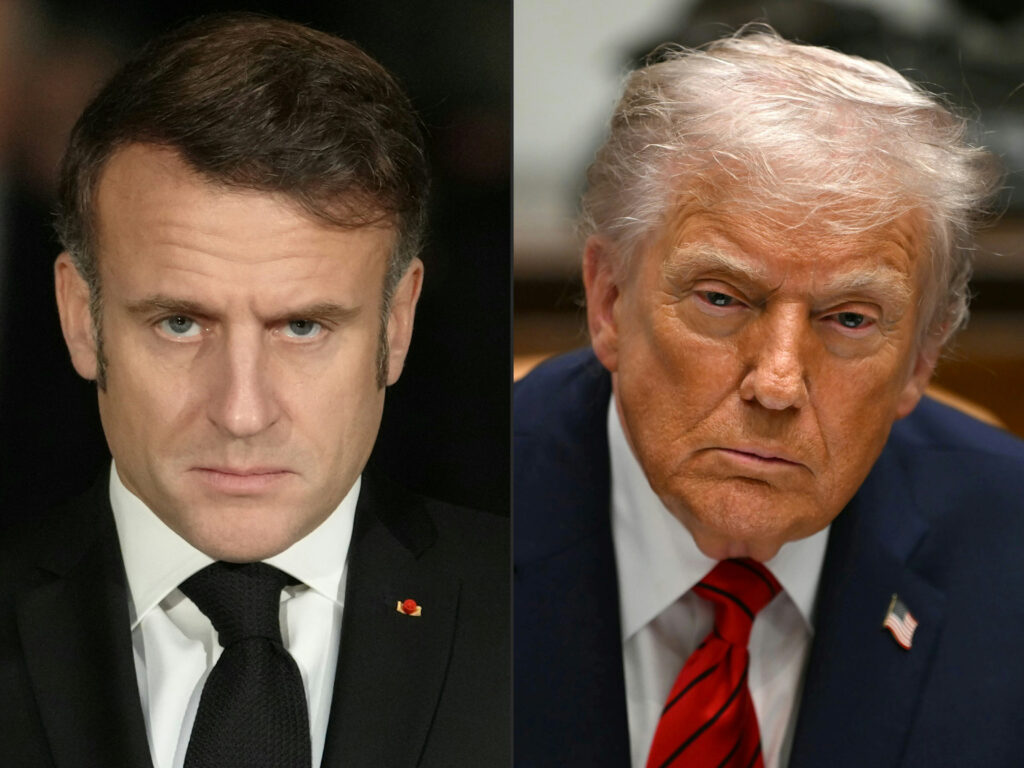
L’entourage de Macron confirme un message à Trump proposant un G7 jeudi à Paris avec des invités russes
Emmanuel Macron a proposé dans un “message privé” à Donald Trump d’organiser un sommet du G7 jeudi à Paris auquel il pourrait convier, “en marge” de la réunion, “les Russes”, ce qui serait une première en près de quatre ans de guerre en Ukraine.Le président américain a mis en ligne sur son réseau Truth social ce message, authentifié mardi matin par l’entourage du président français qui a dit qu’il était “bien réel”. Emmanuel Macron y propose aussi d’inviter les Ukrainiens à cette réunion, ainsi que les Danois, pour parler des divergences sur le Groenland, et les Syriens.”Mon ami, nous sommes totalement alignés sur la Syrie. Nous pouvons faire de grandes choses en Iran. Je ne comprends pas ce que tu fais au Groenland”, dit le chef de l’Etat français dans son message.”Je peux organiser une réunion du G7 à Paris jeudi après-midi après Davos”, en Suisse, où Donald Trump sera à partir de mercredi, propose Emmanuel Macron. “Je peux inviter les Ukrainiens, les Danois, les Syriens et les Russes en marge” de la réunion, ajoute-t-il.Le Kremlin a indiqué mardi n’avoir pas reçu d’invitation à une telle rencontre. Moscou “n’a pas” reçu d’invitation, a répondu le porte-parole de la présidence russe Dmitri Peskov, interrogé par l’AFP lors de son briefing quotidien à la presse. “Dînons ensemble à Paris jeudi avant que tu ne repartes aux Etats-Unis”, tente encore le président français, qui signe “Emmanuel”.Selon son entourage, ce message “démontre que le président français en public comme en privé défend la même ligne”. “Au Groenland, le respect de la souveraineté et de l’intégrité territoriale des États n’est pas négociable et notre engagement en tant qu’allié de l’OTAN pour la sécurité dans la région arctique reste intact”, a-t-on expliqué de même source.”Nous sommes par ailleurs déterminés à faire de notre présidence du G7 cette année un moment utile pour contribuer au dialogue et à la coopération”, a-t-on ajouté.”En Syrie, nous travaillons ensemble avec les Américains au service de l’unité et de l’intégrité territoriale de la Syrie et au respect du cessez-le-feu, tout en restant fidèles à nos alliés dans la lutte contre Daesh”, selon l’entourage.”En Iran, nous exigeons des autorités iraniennes le respect des libertés fondamentales et nous sommes aux côtés de celles et ceux qui les défendent”, a-t-on poursuivi.
Catastrophe ferroviaire en Espagne: début du deuil national, la famille royale attendue sur place
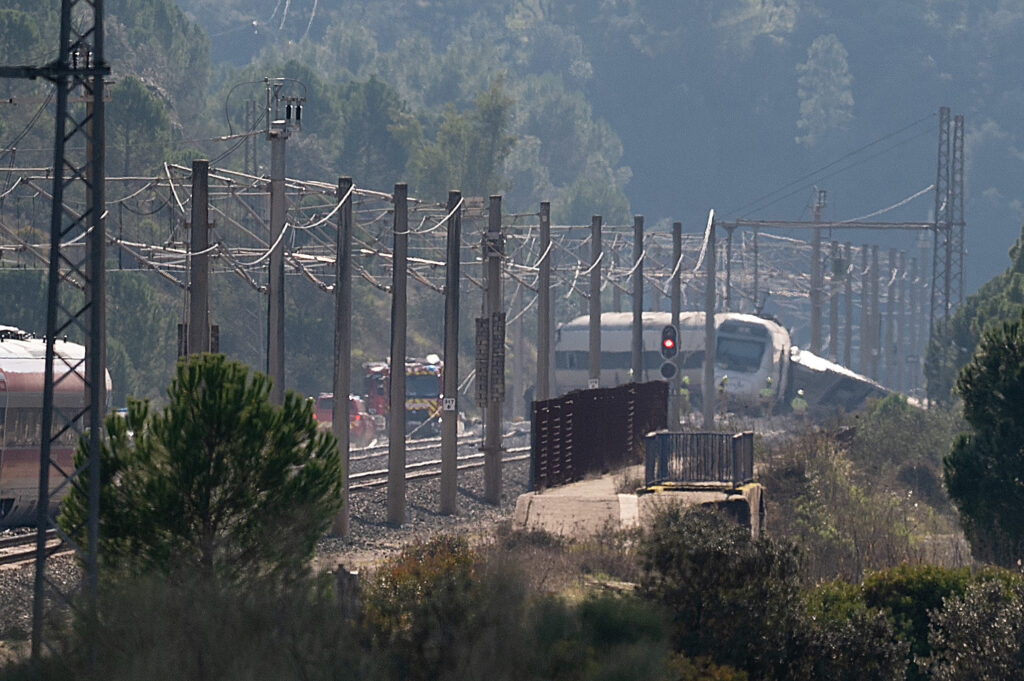
L’Espagne a entamé mardi un deuil national de trois jours après la collision tragique de deux trains ayant fait au moins 41 morts dimanche soir en Andalousie (sud), où est attendue à la mi-journée la famille royale pour témoigner son soutien aux familles des victimes et aux rescapés.Sur le site du drame, les recherches se poursuivent dans les carcasses des deux trains, réduits en partie en tas de ferraille, faisant craindre un bilan plus élevé.Le nombre de personnes décédées “est passé à 41”, a annoncé dans la matinée le gouvernement régional andalou, précisant que 39 personnes, dont quatre enfants, restaient hospitalisées.Treize personnes, des adultes, sont toujours en soins intensifs, selon cette source.- Bilan total toujours inconnu -Le roi d’Espagne Felipe VI et son épouse Letizia sont attendus à partir de 12h20 (11h20 GMT) à Adamuz, petite bourgade paisible d’Andalousie désormais au coeur de l’actualité, a annoncé la maison royale. Le couple royal doit ensuite se rendre à Cordoue, à 35 kilomètres de là, notamment à l’hôpital Reina Sofía, qui soigne certains des blessés de l’accident.Les autorités ont déjà prévenu que le bilan de la tragédie pourrait encore augmenter, car les équipes de secours sont encore à la recherche d’éventuels corps restés coincés dans les trains.L’entité publique chargée du suivi de la catastrophe (CID) avait indiqué lundi soir que les autorités avaient reçu 43 signalements pour disparition de la part de proches de victimes. Cinq personnes mortes ont déjà été identifiées au cours d’autopsies, a ajouté cette source.Le nombre total de victimes pourra être connu “avec certitude” dans “les prochaines 24 à 48 heures”, avait estimé lundi soir le président régional andalou, Juan Manuel Moreno, dont le gouvernement est en première ligne dans la gestion de la catastrophe. Cela signifie que le bilan définitif serait connu au plus tard mercredi.Dimanche à 19H45 (18H45 GMT), les trois dernières voitures d’un train de l’opérateur privé Iryo allant vers Madrid (nord) avaient déraillé et s’étaient déportées sur la voie d’à coté, avant d’être percutées violemment par un train de la Renfe, la compagnie nationale espagnole, qui circulait dans l’autre sens en direction de Huelva (sud).Les deux trains à grande vitesse, qui allaient à plus de 200 km/heure au moment de la collision, transportaient au total plus de 500 passagers.- Quelle cause ? -Les débats se concentrent désormais sur les causes de cet accident “extrêmement étrange”, selon les termes employés par le ministre des Transports, Oscar Puente.La collision est survenue dans une ligne droite, sur une portion de voie rénovée, alors même que trois trains étaient passés au même endroit “20 minutes avant” sans que “personne ne signale la moindre anomalie sur la voie”, a affirmé le ministre mardi matin.L’enquête, avait-il dit lundi, doit déterminer si la rupture d’un tronçon de la voie, visible sur certaines photos, est “la cause ou la conséquence” du déraillement du train Iryo qui a entraîné la collision. Ce qui était certain à ce stade, c’est que la vitesse des trains n’était pas en question et que “l’erreur humaine (était) pratiquement écartée”, avait assuré lundi le président de la Renfe, Álvaro Fernández Heredia. Il en avait déduit que la faute était peut-être due “au matériel roulant d’Iryo ou à un problème d’infrastructure”.Face à l’émotion, le Premier ministre Pedro Sánchez a promis une “transparence absolue” et “la vérité” sur cette catastrophe, qui bouleverse le pays plus de dix ans après un autre déraillement meurtrier, qui avait fait 80 morts en 2013 près de Saint-Jacques-de-Compostelle (nord-ouest).Un premier rapport préliminaire sur l’accident pourrait être publié dans “deux ou trois mois”, avant une version définitive dans un délai maximal d’un an, a précisé mardi César Franco, président du Conseil des ingénieurs industriels.