


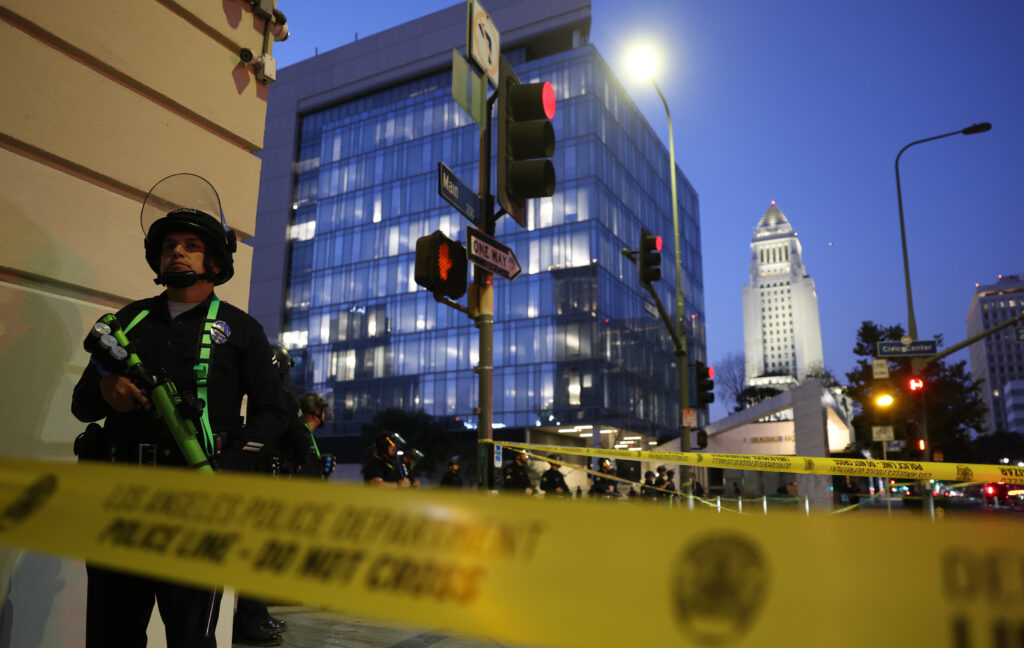
Police make arrests in downtown LA during nighttime curfew
Downtown Los Angeles was largely calm overnight into Wednesday, with police arresting at least 25 people for violating a curfew after a fifth day of protests against President Donald Trump’s immigration crackdown.Heavily armed security officers, including several riding horses, patrolled near government buildings, while men boarded up storefronts after dark on Tuesday to protect against vandalism.Looting and vandalism in the second-biggest US city have marred the largely peaceful protests over ramped-up arrests by immigration authorities.The demonstrations, which began Friday, and isolated acts of violence prompted Trump to take the extraordinary step of sending in troops, over the objection of the state governor.One protester told AFP the arrest of migrants in a city with large immigrant and Latino populations was the root of the unrest.”I don’t think that part of the problem is the peaceful protests. It’s whatever else is happening on the other side that is inciting violence,” she said Tuesday.Los Angeles Mayor Karen Bass said the curfew — meant to stop vandalism and looting — was in effect within one square mile (2.5 square kilometers) of the city’s more-than-500 square mile area from 8:00 pm and 6:00 am (0300 to 1300 GMT).That zone was off-limits for everyone apart from residents, journalists and emergency services, she added.Protests against immigration arrests by federal law enforcement have also sprung up in cities around the country, including New York, Atlanta, Chicago, San Francisco and Austin.On Tuesday, in the Atlanta suburb of Brookhaven, dozens of demonstrators waved American and Mexican flags and held signs against US Immigration and Customs Enforcement (ICE), the federal agency that has ramped up arrests and deportations of migrants under Trump.”You got people that are being arrested on the street by (immigration) agents that don’t wear badges, wear masks… it makes me really angry,” 26-year-old protester Brendon Terra told AFP.- Breaking curfew -The Los Angeles protests again turned ugly Tuesday night, but an hour into the curfew only a handful of protesters were left downtown, with police making several arrests as they warned stragglers to leave.”Multiple groups continue to congregate” within the designated downtown curfew area, the Los Angeles Police Department (LAPD) wrote on X late Tuesday. “Those groups are being addressed and mass arrests are being initiated.”Police arrested at least 25 people on suspicion of violating the curfew as of Tuesday evening, the Los Angeles Times reported, citing an LAPD spokesperson.At their largest, the protests have included a few thousand people taking to the streets, but smaller groups have used the cover of darkness to set fires, daub graffiti and smash windows.Overnight Monday 23 businesses were looted, police said, adding that more than 500 people had been arrested over recent days.- ‘Provide protection’ -Trump has activated 4,000 National Guard troops in Los Angeles, along with 700 active-duty Marines, in what he has claimed is a necessary escalation to take back control, even though local law enforcement authorities insisted they could handle the unrest.A military spokeswoman said the Marines were expected to be on the streets by Wednesday. Their mission will be to guard federal facilities and provide protection to federal officers during immigration enforcement operations.The Pentagon said the deployment would cost US taxpayers $134 million.Photographs issued by the Marine Corps showed men in combat fatigues using riot shields to practice crowd control techniques at the Naval Weapons Station Seal Beach.Late Tuesday, Texas Governor Greg Abbott said his state would deploy its National Guard “to locations across the state to ensure peace & order” after solidarity protests.- Behaving like ‘a tyrant’ -In sprawling Los Angeles on Tuesday, it was largely a typical day, with tourists thronging Hollywood Boulevard, children attending school and commuter traffic choking streets.But at a military base in North Carolina, Trump painted a darker picture.”What you’re witnessing in California is a full-blown assault on peace, on public order and national sovereignty,” the Republican told troops at Fort Bragg.”We will not allow an American city to be invaded and conquered by a foreign enemy.”California Governor Gavin Newsom, a Democrat who has clashed with the president before, said Trump’s shock militarization of the city was the behavior of “a tyrant, not a president.”In a filing to the US District Court in Northern California, Newsom asked for an injunction preventing the use of troops for policing.US law largely prevents the use of the military as a police force — absent the declaration of an insurrection, which Trump has mused.The president “is trying to use emergency declarations to justify bringing in first the National Guard and then mobilizing Marines,” said law professor Frank Bowman.
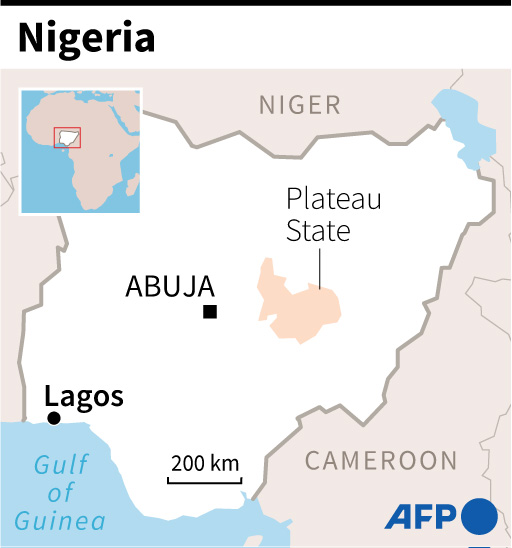
Attacks in central Nigeria kill at least 20Wed, 11 Jun 2025 11:16:57 GMT
Attacks in north-central Nigeria’s Plateau state have killed at least 20 people this week, local government and humanitarian sources said Wednesday, in the region’s latest flare-up of violence.The three separate assaults across the Mangu local government area followed a series of attacks and reprisals that appear to have started while people were mining in the …
Attacks in central Nigeria kill at least 20Wed, 11 Jun 2025 11:16:57 GMT Read More »
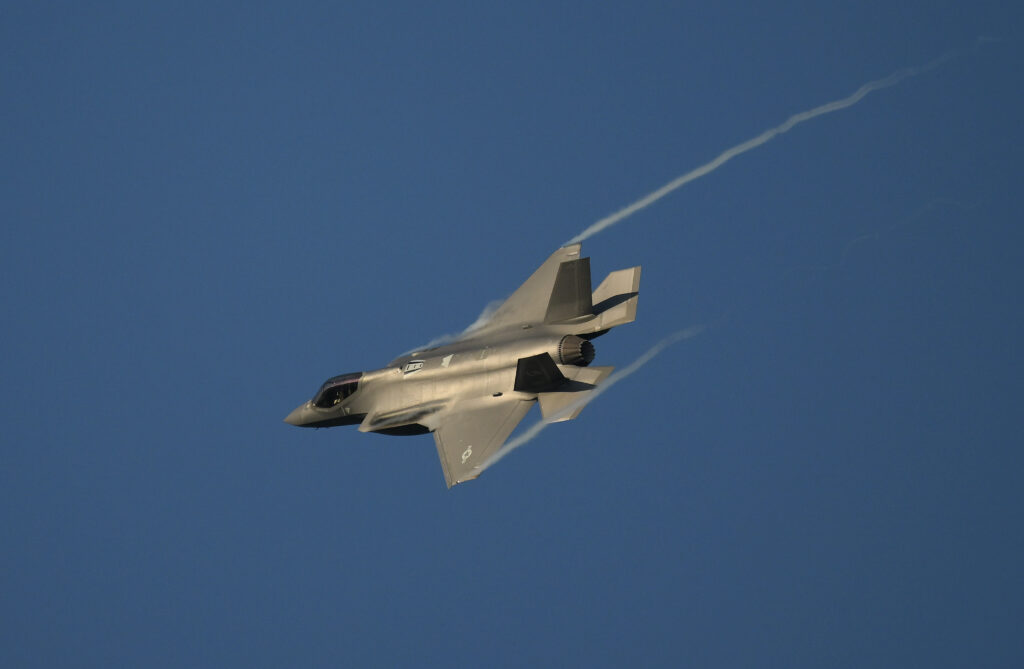
Rare earths: China’s trump card in trade war with US
China is counting on one crucial advantage as it seeks to grind out a deal to ease its high-stakes trade war with the United States — dominance in rare earths.Used in electric vehicles, hard drives, wind turbines and missiles, rare earth elements are essential to the modern economy and national defence.AFP takes a look at how rare earths have become a key sticking point in talks between the US and China.- Mining boom -“The Middle East has oil. China has rare earths,” Deng Xiaoping, the late Chinese leader whose pro-market reforms set the country on its path to becoming an economic powerhouse, said in 1992.Since then, Beijing’s heavy investment in state-owned mining firms and lax environmental regulations compared to other industry players have turned China into the world’s top supplier.The country now accounts for 92 percent of global refined output, according to the International Energy Agency.But the flow of rare earths from China to manufacturers around the world has slowed after Beijing in early April began requiring domestic exporters to apply for a licence — widely seen as a response to US tariffs.Under the new requirements — which industry groups have said are complex and slow-moving — seven key elements and related magnets require Beijing’s approval to be shipped to foreign buyers.- Deep impact -Ensuring access to the vital elements has become a top priority for US officials in talks with Chinese counterparts, with the two sides meeting this week in London.”The rare earth issue has clearly… overpowered the other parts of the trade negotiations because of stoppages at plants in the United States,” said Paul Triolo, a technology expert at the Asia Society Policy Institute’s Center for China Analysis, in an online seminar on Monday.That disruption, which forced US car giant Ford to temporarily halt production of its Explorer SUV, “really got the attention of the White House”, said Triolo.Officials from the two countries said Tuesday that they had agreed on a “framework” for moving forward on trade — with US Commerce Secretary Howard Lutnick expressing optimism that concerns over access to rare earths “will be resolved” eventually.- Rare earth advantage -The slowing of licence issuance has raised fears that more automakers will be forced to halt production while they await shipments.China’s commerce ministry said over the weekend that as a “responsible major country” it had approved a certain number of export applications, adding that it was willing to strengthen related dialogue with “relevant countries”.But that bottleneck has highlighted Washington’s reliance on Chinese rare earths for producing its defence equipment even as trade and geopolitical tensions deepen.An F-35 fighter jet contains over 900 pounds (more than 400 kilograms) of rare earth elements, noted a recent analysis by Gracelin Baskaran and Meredith Schwartz of the Critical Minerals Security Program at the Center for Strategic and International Studies.”Developing mining and processing capabilities requires a long-term effort, meaning the United States will be on the back foot for the foreseeable future,” they wrote.- Playing catch up -The recent export control measures are not the first time China has leveraged its dominance of rare earths supply chains.After a 2010 maritime collision between a Chinese trawler and Japanese coast guard boats in disputed waters, Beijing briefly halted shipments of its rare earths to Tokyo.The episode spurred Japan to invest in alternative sources and improve stockpiling of the vital elements — with limited success.That is “a good illustration of the difficulty of actually reducing dependence on China”, said Triolo, noting that in the 15 years since the incident, Japan has achieved only “marginal gains”.The Pentagon is trying to catch up, with its “mine-to-magnet” strategy aiming to ensure an all-domestic supply chain for the key components by 2027.The challenge facing Washington to compete with Beijing in rare earths is compounded by sheer luck: China sits on the world’s largest reserves.”Mineable concentrations are less common than for most other mineral commodities, making extraction more costly,” wrote Rico Luman and Ewa Manthey of ING in an analysis published Tuesday.”It is this complex and costly extraction and processing that make rare earths strategically significant,” they wrote.”This gives China a strong negotiating position.”
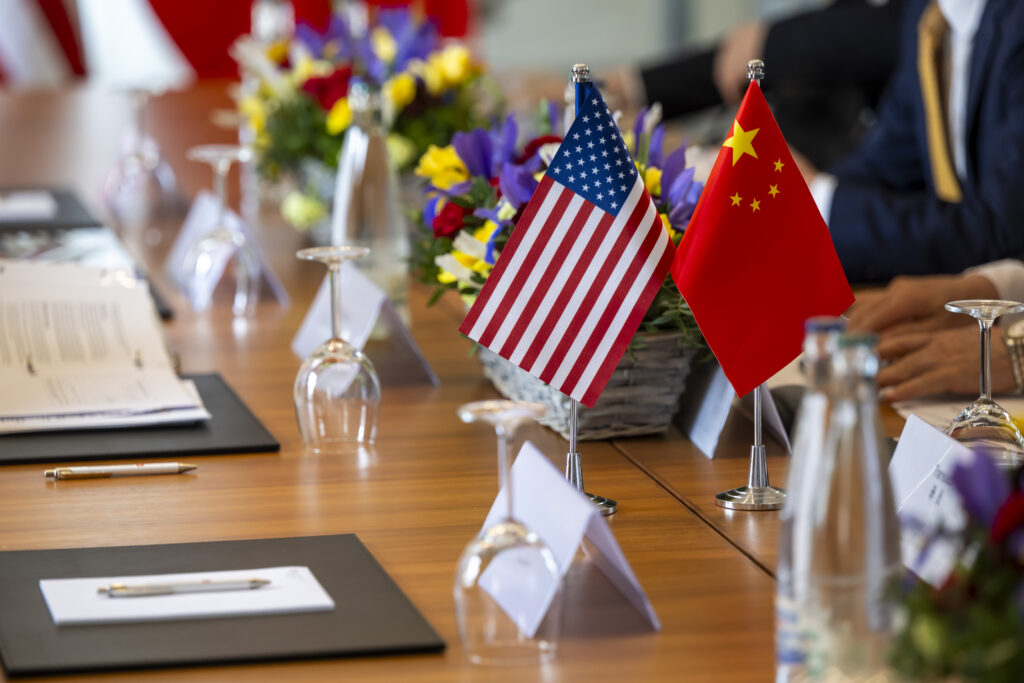
Stocks rise after China-US framework on trade
Stock markets rose Wednesday as investors welcomed a China-US agreement to lower trade tensions that stoked hopes the economic superpowers will eventually reach a broader tariff deal.After two days of closely watched talks in London, the two sides said they had set up a framework to move towards a pact, following negotiations in Geneva last month that saw them slash tit-for-tat levies.The news provided some relief to markets after US President Donald Trump accused Beijing of violating that deal.”Constructive talks between the US and China have put markets on a firmer footing, as investors hope that the worst of the tariff turbulence may have passed,” said Richard Hunter, head of markets at Interactive Investor. Paris and Frankfurt enjoyed modest gains in midday deals.London edged higher also as investors awaited finer details of the UK government’s latest spending and investment decisions due Wednesday.Asian stock markets won a lift on the China-US progress, with Hong Kong among the best performers. Analysts said investors would be keen to get a closer look of the agreement’s details.”There’s perhaps a little disappointment… that we haven’t yet got a bigger announcement, even though there’s time to hear the full conclusions of the meeting,” said Deutsche Bank economist Jim Reid. As well as tariffs, a key issue in the discussions was China’s export of rare earths used in smartphones and electric vehicles, while Beijing was keen to see an easing of restrictions on its access to tech goods.China said the trade talks made new progress, and vice premier He Lifeng stressed the need for Beijing and Washington to strengthen cooperation.US Commerce Secretary Howard Lutnick said he was upbeat that concerns over rare earths “will be resolved” eventually, as the agreement is implemented.Chinese President Xi Jinping and Trump must approve the framework first.The talks came as World Bank downgraded its 2025 forecast for global economic growth to 2.3 percent — from the 2.7 percent predicted in January — citing trade tensions and policy uncertainty.It also said the US economy would expand 1.4 percent this year, half of its 2024 growth.In a speech in Beijing, European Central Bank chief Christine Lagarde called for a de-escalation in the tariffs standoffs, warning that “coercive trade policies” risked harming supply chains and the global economy.”Once the US reaches an agreement with China, we expect the EU to be next in line,” said Kathleen Brooks, research director at trading group XTB, referring to US-EU negotiations to avert steeper tariffs next month.Investors also awaited US inflation data due Wednesday, which analysts expect to reinforce the Federal Reserve’s slower pace of interest rate cuts. The dollar was mixed against main rivals ahead of the release, while oil prices firmed.In company news Wednesday, shares in Zara owner Inditex fell more than three percent in Madrid, after the world’s biggest fashion retailer posted disappointing first quarter sales. – Key figures at around 1040 GMT -London – FTSE 100: UP 0.1 percent at 8,859.25 pointsParis – CAC 40: UP 0.3 percent at 7,823.94 Frankfurt – DAX: UP 0.2 percent at 24,046.23Tokyo – Nikkei 225: UP 0.6 percent at 38,421.19 (close)Hong Kong – Hang Seng Index: UP 0.8 percent at 24,366.94 (close)Shanghai – Composite: UP 0.5 percent at 3,402.32 (close)New York – Dow: UP 0.3 percent at 42,866.87 (close)Euro/dollar: UP at $1.1438 from $1.1426 on TuesdayPound/dollar: DOWN at $1.3495 from $1.3501Dollar/yen: UP at 145.13 yen from 144.88 yenEuro/pound: UP at 84.76 pence from 84.61 penceBrent North Sea Crude: UP 1.2 percent at $67.68 per barrelWest Texas Intermediate: UP 1.5 percent at $65.94 per barrel
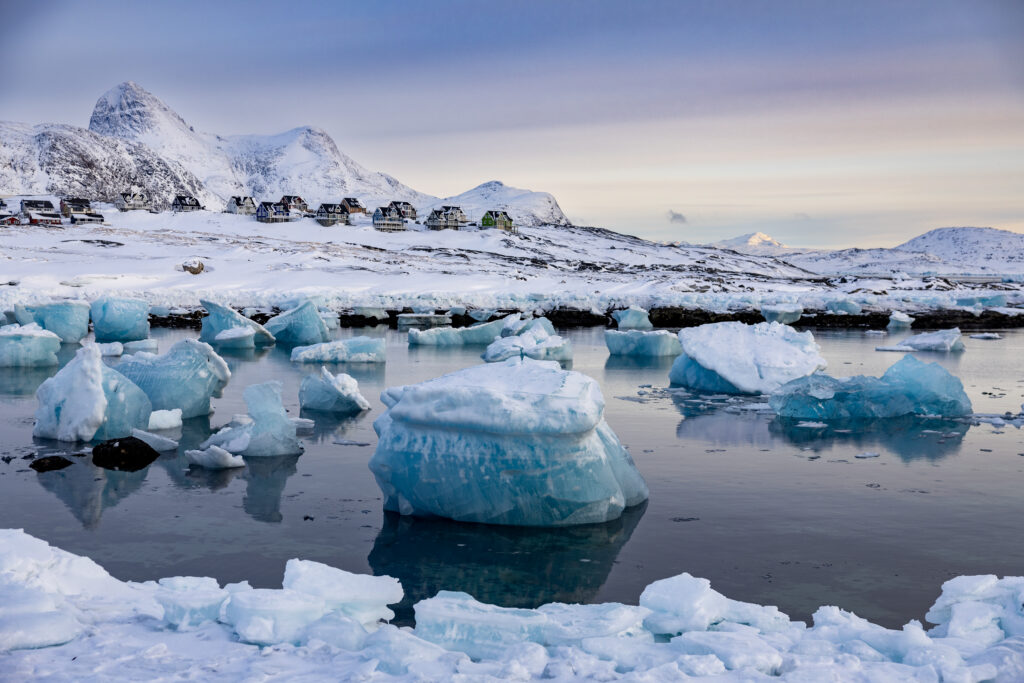
Au Groenland, la glace a fondu 17 fois plus vite que la moyenne en mai (réseau WWA)
La glace a fondu 17 fois plus vite que la moyenne entre le 15 et le 21 mai au Groenland, résultat d’une vague de chaleur record qui a aussi touché l’Islande, a alerté mercredi le réseau scientifique World Weather Attribution (WWA).Les données de 2025 ont été comparées à la moyenne de fonte sur la période allant de 1980 et 2010, a-t-il précisé.”La contribution de la fonte de l’inlandsis du Groenland à l’élévation du niveau de la mer est plus importante qu’elle ne l’aurait été sans cette vague de chaleur”, a souligné lors d’une présentation à la presse l’une des autrices du rapport, Friederike Otto, maîtresse de conférence en sciences du climat à l’Imperial College à Londres.En Islande, la température a dépassé les 26°C le 15 mai, du jamais-vu dans l’île aux confins de l’Arctique. “Les températures observées en Islande en mai battent tous les records, dépassant de plus de 13°C la moyenne des températures maximales journalières de mai pour la période 1991-2020″, a relevé le WWA dans un communiqué. En mai, 94% des stations ont enregistré de nouveaux records de température, selon l’institut météorologique local.”Sans changement climatique, cela aurait été impossible”, a dit Mme Otto.Dans l’est du Groenland, la journée la plus chaude a affiché une température plus élevée d’environ 3,9°C par rapport au climat préindustriel, a souligné le WWA.”Une vague de chaleur autour de 20°C ne semble pas être un événement extrême pour la plupart des gens à travers le monde, mais c’est un problème vraiment important pour cette région (…) et cela affecte massivement le monde entier”, a insisté la chercheuse.L’Arctique se réchauffe quatre fois plus vite que le reste du monde, d’après la revue scientifique “Nature”. Pour les communautés autochtones du Groenland, la hausse des températures et la fonte des glaces impliquent un changement des conditions de chasse traditionnelles.Elles ont aussi des répercussions sur les infrastructures.”Au Groenland et en Islande, les infrastructures sont conçues pour résister au froid, ce qui signifie qu’en période de chaleur, la fonte des glaces peut provoquer des inondations et endommager les routes et les infrastructures”, a souligné le réseau.Au Groenland, la chaleur couplée à des précipitations importantes peut affecter la nature environnante. En 2022, elle avait ainsi entraîné le dégel du permafrost (pergélisol) qui avait laissé échapper du fer et d’autres métaux dans de nombreux lacs arctiques, a-t-il indiqué.Les préoccupations ne se limitent pas à l’environnement mais touchent aussi la santé et l’hygiène, les foyers ruraux groenlandais ne disposant souvent pas de système de canalisation.