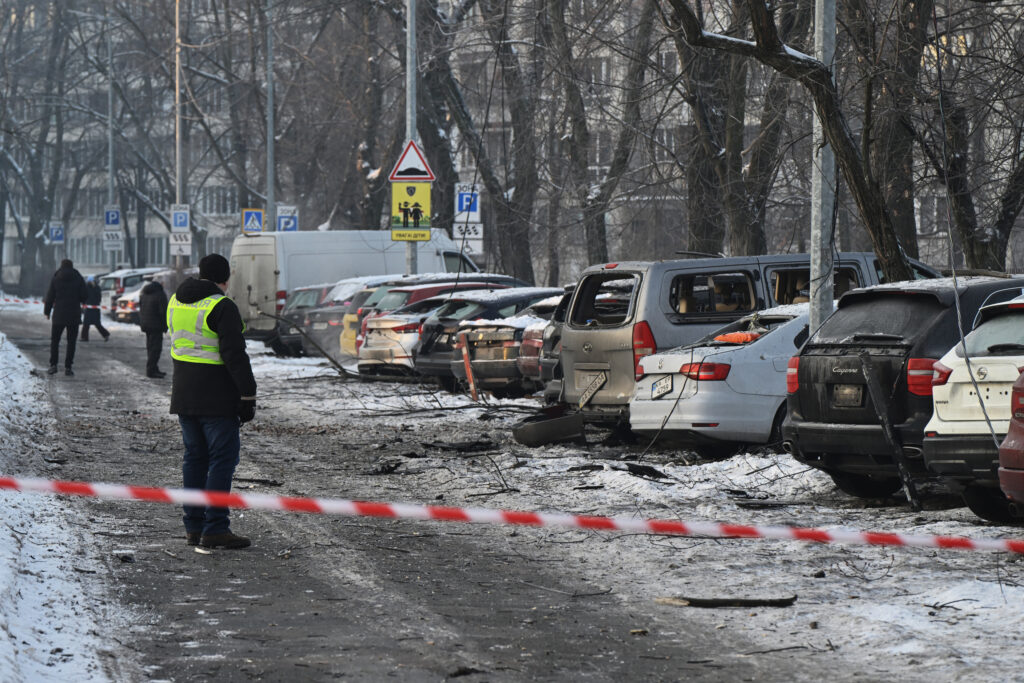
Une nouvelle attaque russe prive de chauffage près de la moitié de Kiev
Une attaque nocturne aérienne de Moscou a de nouveau privé de chauffage plus de 5.600 immeubles résidentiels à Kiev, soit près de la moitié de la capitale où la température affiche -14°C, ont annoncé mardi matin les autorités.Ces nouveaux bombardements devraient être un “signal d’alarme” pour les dirigeants réunis au Forum économique de Davos, a estimé le ministre ukrainien des Affaires étrangères, Andriï Sybiga.”Il est urgent de soutenir le peuple ukrainien; il n’y aura pas de paix en Europe sans une paix durable pour l’Ukraine”, a dit M. Sybiga, dénonçant une attaque “barbare”.”Après cette attaque, 5.635 immeubles d’habitation sont sans chauffage”, a indiqué le maire de la capitale Vitali Klitschko sur Telegram. “La Russie n’a pas changé de cap: détruire l’Ukraine”, a déploré de son côté la vice-ministre des Affaires étrangères, Mariana Betsa.La vaste partie de la ville située sur la rive orientale du fleuve Dniepr et composée essentiellement de quartiers résidentiels est par ailleurs privée d’eau du robinet, selon le maire. Plusieurs journalistes de l’AFP habitant dans ces quartiers ont constaté l’absence d’eau courante et d’électricité. – “On est très fatigué” -Pendant l’attaque, Mariana Kravtchenko, 42 ans, s’est réfugiée dans le métro avec son fils et son chat. “On a eu peur parce qu’il y a eu plusieurs explosions”, dit-elle. Ils n’ont pas dormi de la nuit. “Maintenant, il faut aller travailler”, affirme à l’AFP cette employée d’un entrepôt. “On est très fatigué, mais ça ira, on garde le sourire et on croit en la victoire”, ajoute-t-elle.Marina Sergienko, une experte-comptable de 51 ans descendue dans le métro avec sa fille, constate que ces attaques répétées épuisent à la longue “le système nerveux”.Le 9 janvier, Kiev avait déjà subi une attaque russe qui avait privé de chauffage 6.000 immeubles, la pire attaque de Moscou sur le réseau énergétique de la capitale ukrainienne depuis le début de l’invasion il y a quatre ans.De très nombreux résidents avaient été privés d’électricité pendant des jours après cette attaque, en pleine vague de froid glacial.Selon l’armée de l’air ukrainienne, 34 missiles et 339 drones ont été lancés pendant la nuit contre le pays, avec la région de Kiev comme “cible principale”. Des impacts de projectiles ou de débris de cibles abattues par la défense antiaérienne ont été recensés dans 23 endroits différents, d’après cette source.Les autorités ukrainiennes mettaient en garde depuis plusieurs jours contre une nouvelle attaque massive russe contre le réseau énergétique. D’autres régions ukrainiennes, notamment celles d’Odessa (sud), Rivné (ouest) et Vinnytsia (centre-ouest), ont également subi des bombardements sur leurs infrastructures énergétiques pendant la nuit, selon les autorités locales.La compagnie énergétique d’Etat Ukrenergo a annoncé dans la matinée des coupures d’électricité d’urgence afin de stabiliser le système. Dans la région de Rivné, plus de 10.000 foyers ont été privés de courant, a annoncé l’administration régionale. Une femme a été blessée lors de l’attaque à Kiev, a précisé le maire Vitali Klitschko, précisant que plusieurs bâtiments avaient été endommagés, notamment une école primaire.- six heures d’alerte aérienne -Dans la région de Kiev, près de la ville de Boutcha, un homme de 50 ans a été mortellement blessé, a indiqué le gouverneur régional sur Telegram. Deux stations-service ont été endommagées. Dans la nuit, la Russie a d’abord tiré sur Kiev des drones longue portée avant de lancer des missiles balistiques en direction de la ville et sa région, selon les autorités.Plusieurs explosions ont été entendues dans le centre-ville pendant l’alerte aérienne qui a duré plus de six heures, ont constaté des journalistes de l’AFP, qui ont également assisté aux opérations de la défense aérienne.Dans son compte-rendu quotidien, le ministère russe de la Défense a déclaré avoir bombardé des industries militaires, des dépôts de munitions, et “des infrastructures énergétiques et de transport” utilisées par l’armée ukrainienne.Selon le maire de Kiev, presque 80% des immeubles privés de chauffage mardi étaient déjà touchés par le même problème à la suite de l’attaque du 9 janvier. La Russie pilonne le système énergétique ukrainien depuis le début de son invasion à grande échelle en 2022, une tentative visant selon Kiev à saper le moral et briser la résistance des Ukrainiens.