Orages: un homme meurt dans les Yvelines, une blessée grave à Paris

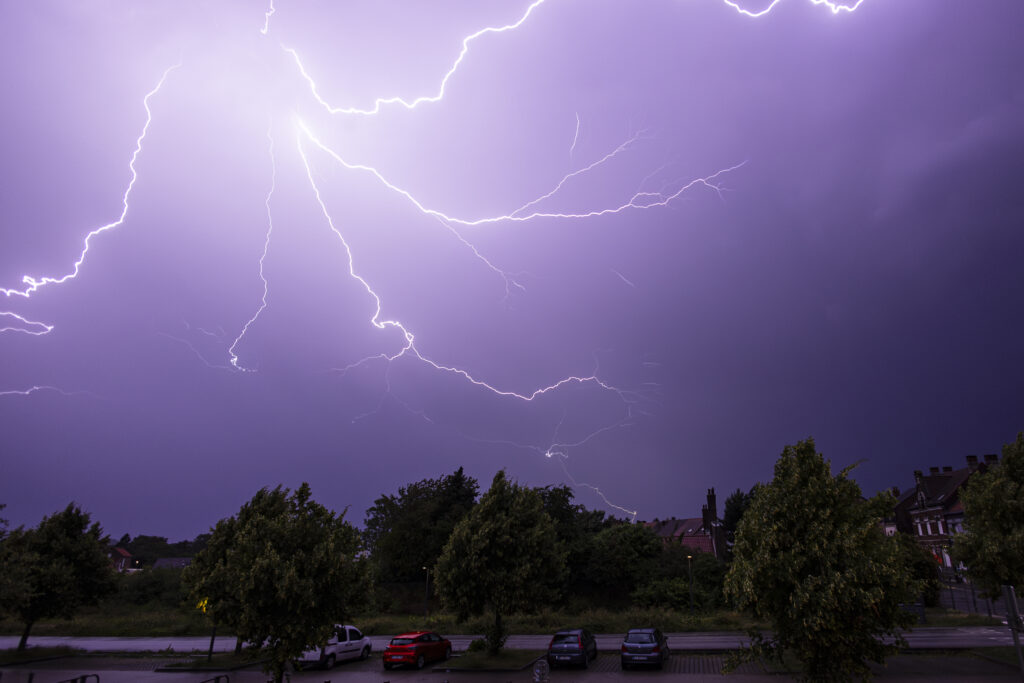
Un homme est décédé à Grandchamp (Yvelines) et une femme a été grièvement blessée à Paris dans la nuit de vendredi à samedi, en raison des violents orages qui se sont abattus sur une grande partie de la France, dont la région parisienne.Cet épisode orageux, qui laisse encore 22.500 foyers sans électricité, se poursuit samedi sur l’est du pays, avec 18 départements placés en vigilance orange pour orages à partir de samedi après-midi, selon le dernier bulletin de Météo-France.L’homme décédé, âgé de 68 ans, s’était réfugié dans un pavillon de chasse avec six personnes, lorsqu’un arbre, frappé par la foudre, s’est effondré sur la bâtisse, selon les pompiers, intervenus sur les lieux de l’accident peu avant 22H00 vendredi. Les six autres personnes ont pu s’extraire sans blessure, tandis que l’homme, en arrêt cardio-respiratoire, est resté coincé sous les décombres, selon cette même source. La brigade de gendarmerie de Houdan est chargée de l’enquête. Vers 23H00 à Paris, une femme a elle aussi été victime de la chute d’une branche d’arbre, selon une source policière. L’accident est survenu dans le Ve arrondissement et la victime a été hospitalisée, précise la brigade des sapeurs-pompiers de Paris.Selon cette même source, la victime passait la soirée avec des amis quand l’arbre sous lequel elle se trouvait a été frappé par la foudre, provoquant la chute d’une branche qui l’a blessée à la tête. Plongée dans le coma par les secours, elle a été transportée en urgence absolue à l’hôpital Henri-Mondor de Créteil (Val-de-Marne).Les 18 départements en vigilance orange pour risque d’orages violents sont la Moselle, la Meurthe-et-Moselle, la Meuse, les Ardennes, la Marne, les Vosges, la Haute-Marne, l’Aube, l’Yonne, la Côte-d’Or, la Nièvre, la Saône-et-Loire, l’Allier, la Loire, le Rhône, le Puy-de-Dôme, la Haute-Loire et le Cantal.”En fin d’après-midi de samedi et durant la nuit de samedi à dimanche, des orages vont circuler du massif central au Grand Est”, indique Météo France qui prévient que ces orages “peuvent être violents”, avec des phénomènes comme de la grêle de taille moyenne à grosse (2-3 cm, très localement 5 cm), de fortes rafales de vent allant jusqu’à 80-100 km/h, très ponctuellement plus) et une forte activité électrique.Selon Enedis, environ 22.500 foyers étaient privés d’électricité samedi midi en raison de ces orages, essentiellement en Nouvelle Aquitaine. Le gestionnaire du réseau de distribution d’électricité a relevé 12.000 clients sans courant en Dordogne, 2.500 en Gironde et 1.500 dans le Lot-et-Garonne.En Normandie, 6.500 clients étaient privés d’électricité à midi, dont 2.500 dans l’Eure et 2.000 en Seine-Maritime. Enedis prévoit le rétablissement du courant dans la soirée en Normandie mais ne pouvait fournir de prévision pour le Sud-Ouest.La Direction générale de l’aviation civile (DGAC) avait demandé aux compagnies aériennes de réduire de 20% leur programme de vols vendredi soir à l’aéroport d’Orly (Val-de-Marne), pour limiter d’éventuelles perturbations.adr-sc-al-dlm/abb/jco

A close-up of a stack of newspapers resting on a desk, symbolizing information and media.

Orages: un homme meurt dans les Yvelines, une blessée grave à Paris

Un homme est décédé à Grandchamp (Yvelines) et une femme a été grièvement blessée à Paris dans la nuit de vendredi à samedi, en raison des violents orages qui se sont abattus sur une grande partie de la France, dont la région parisienne.Cet épisode orageux, qui laisse encore 22.500 foyers sans électricité, se poursuit samedi sur l’est du pays, avec 18 départements placés en vigilance orange pour orages à partir de samedi après-midi, selon le dernier bulletin de Météo-France.L’homme décédé, âgé de 68 ans, s’était réfugié dans un pavillon de chasse avec six personnes, lorsqu’un arbre, frappé par la foudre, s’est effondré sur la bâtisse, selon les pompiers, intervenus sur les lieux de l’accident peu avant 22H00 vendredi. Les six autres personnes ont pu s’extraire sans blessure, tandis que l’homme, en arrêt cardio-respiratoire, est resté coincé sous les décombres, selon cette même source. La brigade de gendarmerie de Houdan est chargée de l’enquête. Vers 23H00 à Paris, une femme a elle aussi été victime de la chute d’une branche d’arbre, selon une source policière. L’accident est survenu dans le Ve arrondissement et la victime a été hospitalisée, précise la brigade des sapeurs-pompiers de Paris.Selon cette même source, la victime passait la soirée avec des amis quand l’arbre sous lequel elle se trouvait a été frappé par la foudre, provoquant la chute d’une branche qui l’a blessée à la tête. Plongée dans le coma par les secours, elle a été transportée en urgence absolue à l’hôpital Henri-Mondor de Créteil (Val-de-Marne).Les 18 départements en vigilance orange pour risque d’orages violents sont la Moselle, la Meurthe-et-Moselle, la Meuse, les Ardennes, la Marne, les Vosges, la Haute-Marne, l’Aube, l’Yonne, la Côte-d’Or, la Nièvre, la Saône-et-Loire, l’Allier, la Loire, le Rhône, le Puy-de-Dôme, la Haute-Loire et le Cantal.”En fin d’après-midi de samedi et durant la nuit de samedi à dimanche, des orages vont circuler du massif central au Grand Est”, indique Météo France qui prévient que ces orages “peuvent être violents”, avec des phénomènes comme de la grêle de taille moyenne à grosse (2-3 cm, très localement 5 cm), de fortes rafales de vent allant jusqu’à 80-100 km/h, très ponctuellement plus) et une forte activité électrique.Selon Enedis, environ 22.500 foyers étaient privés d’électricité samedi midi en raison de ces orages, essentiellement en Nouvelle Aquitaine. Le gestionnaire du réseau de distribution d’électricité a relevé 12.000 clients sans courant en Dordogne, 2.500 en Gironde et 1.500 dans le Lot-et-Garonne.En Normandie, 6.500 clients étaient privés d’électricité à midi, dont 2.500 dans l’Eure et 2.000 en Seine-Maritime. Enedis prévoit le rétablissement du courant dans la soirée en Normandie mais ne pouvait fournir de prévision pour le Sud-Ouest.La Direction générale de l’aviation civile (DGAC) avait demandé aux compagnies aériennes de réduire de 20% leur programme de vols vendredi soir à l’aéroport d’Orly (Val-de-Marne), pour limiter d’éventuelles perturbations.adr-sc-al-dlm/abb/jco

How much damage has Israel inflicted on Iran’s nuclear programme?


Israel’s strikes on Iran have taken aim at its nuclear facilities, amid fears that the Islamic republic is seeking to develop nuclear weapons — an accusation Tehran denies.Experts told AFP that while the attacks might have caused some damage to Iran’s nuclear programme, they are unlikely to have delivered a fatal blow.- What is the extent of the damage? -Israel’s operation included strikes on Iran’s underground uranium enrichment sites at Natanz and Fordow, and a uranium conversion facility at Isfahan, according to the UN’s International Atomic Energy Agency (IAEA), citing information from Iranian officials.IAEA said on Friday that a key, above-ground component of Iran’s Natanz nuclear site had been destroyed, also citing Iranian officials.There was “extensive” damage to the site’s power supply, according to a report from the Institute for Science and International Security (ISIS), a US-based organisation specialising in nuclear proliferation, which analysed satellite images.A loss of electricity to underground facilities can significantly damage the site’s centrifuges, the machines used to enrich uranium, the ISIS institute said.If backup power is lost, “at the least, the enrichment plant is rendered inoperable for the time being”, it said.Iran has said the damage to Fordow, south of Tehran, was minor.But experts said it is impossible at this stage to determine the impact the strikes might have had on uranium stockpiles believed to be stored around the Isfahan site.Ali Vaez, International Crisis Group’s Iran project director, told AFP that if Iran managed to transfer significant quantities to “secret facilities,” then “the game is lost for Israel”.- Can the programme be destroyed? -While “Israel can damage Iran’s nuclear programme… it is unlikely to be able to destroy it”, Vaez said, arguing that Israel does not have the massively powerful bombs needed “to destroy the fortified, bunkered facilities in Natanz and Fordow”.Destroying those would require US military assistance, added Kelsey Davenport, an expert with the Arms Control Association.She also stressed that Israel’s unprecedented attack cannot erase the expertise Iran had built up on nuclear weapons, despite killing nine Iranian nuclear scientists.- What are the risks to the Iranian population? -The IAEA has not detected any increase in radiation levels at the affected sites.”There is very little risk that attacks on Iran’s uranium enrichment facilities would result in a harmful radiation release,” said Davenport.But an attack on Bushehr, Iran’s only nuclear power plant, could “have a serious impact on health and the environment”, she added. After Israel launched its strikes, IAEA chief Rafael Grossi said that nuclear facilities “must never be attacked” and that targeting Iranian sites could have “grave consequences for the people of Iran, the region, and beyond”.- Is Iran close to developing a nuclear bomb? -After the United States unilaterally withdrew in 2018 from a landmark deal that sought to curb Tehran’s nuclear activities, Iran has gradually retreated from some of its obligations, particularly on uranium enrichment.As of mid-May, the country had an estimated 408.6 kilogrammes enriched to up to 60 percent — just a short step from the 90 percent needed for a nuclear warhead.Iran theoretically has enough near-weapons-grade material, if further refined, for about 10 nuclear bombs, according to the definition by the Vienna-based IAEA.Iran is the only non nuclear-armed state producing uranium to this level of enrichment, according to the UN nuclear watchdog.While the IAEA has been critical of Iran’s lack of cooperation with the UN body, it says that there is “no credible indications of an ongoing, undeclared structured nuclear programme”.Tehran has consistently denied ambitions to develop nuclear warheads.But Davenport warned the strikes could strengthen factions in Iran advocating for an atomic arsenal.”Israel’s strikes set Iran back technically, but politically the strikes are pushing Iran closer to nuclear weapons,” she said.

Trump set for huge US military parade amid ‘No Kings’ protests

US President Donald Trump will preside over a huge military parade in Washington on his 79th birthday Saturday, as nationwide protests rejecting his brand of politics underscore deep divisions over his second term.But the threat of thunderstorms in the US capital, and the barrage of missiles raining down in Tel Aviv and Tehran — a conflict in which the American military is assisting — could cast a long shadow over the president’s celebration.”This is a big day for America!!!” Trump said on his Truth Social platform.Nearly 7,000 troops plus dozens of tanks and helicopters will rumble through Washington in an event officially marking the 250th anniversary of the US army — at a cost of up to $45 million.At the same time, protests by the so-called “No Kings” movement are expected across the United States against what organizers say is a Trump personality cult.Organizers said the rallies would be the largest since Trump returned to office in January, adding that they were “rejecting authoritarianism, billionaire-first politics, and the militarization of our democracy.”Thousands more demonstrators are expected to turn out in Los Angeles to protest against Trump’s deployment of troops in America’s second-largest city following clashes sparked by immigration raids.Protests are set for other major cities including New York, Houston, Philadelphia, Seattle, Atlanta and Trump’s second home in Palm Beach, Florida. A small group of demonstrators even gathered in Paris. – Rain on Trump’s parade? – Trump says the Washington parade will be “like no other” — but has promised to use “very big force” if protesters attempt to disrupt the spectacle.Organizers said they specifically left Washington off the list of cities holding rallies so as to draw attention away from the capital city — but also possibly to avoid any conflict.The parade may face disruption from another source — the weather. Thunderstorms could hit Washington on Saturday when the parade is taking place. The US Army said Friday it was monitoring the situation but “at this point nothing has changed.”Trump put a brave face on the forecast early Saturday, saying on Truth Social: “Our great military parade is on, rain or shine. Remember, a rainy day parade brings good luck. I’ll see you all in DC.” The rare military parade is the largest in the United States since the end of the Gulf War in 1991. Soldiers will wear uniforms dating back through US history to its independence from Britain.More than 50 helicopters will be involved including Apache gunships and Black Hawk transport choppers.Around 150 military vehicles — including 28 Abrams battle tanks and 56 armored vehicles — will rumble past.The parade is meant to end with a parachute display as members of the army’s Golden Knights team jump in and present Trump with a US flag — on Flag Day, which marks the adoption of the Stars and Stripes.The route will pass historic landmarks including the Lincoln Memorial and the Washington Monument, ending up near the White House.The highly unusual show of US martial might comes a day after Trump boasted about how Israel had used American military equipment in its strikes on Iran’s nuclear program.- ‘Vulgar display’ -Trump has been obsessed with having a parade since his first term as president when he attended France’s annual Bastille Day parade in Paris at the invitation of President Emmanuel Macron in 2017.But Trump’s opponents accuse him of using the event to feed his ego.”No Kings” organizers said they expected millions of people in more than 1,500 cities to take part in the protests.They said it was a “direct response to Donald Trump’s self-aggrandizing” parade, “funded by taxpayers while millions are told there’s no money.”An NBC News poll published Saturday revealed that nearly two in three Americans surveyed — 64 percent — oppose using government funds for the military parade.California’s Governor Gavin Newsom, who slammed Trump for sending National Guard troops into Los Angeles without his consent, said it was a “vulgar display of weakness.””To fete the Dear Leader on his birthday? What an embarrassment,” Newsom, a Democrat, said Thursday, likening the display to a military parade in Kim Jong Un’s North Korea.In Los Angeles, where organizers said they expected 25,000 people to protest against Trump’s immigration policies, there would be one huge balloon of Trump wearing a diaper and another of him wearing a Russian military uniform.

Ukraine warns against drop in aid due to Israel-Iran escalation

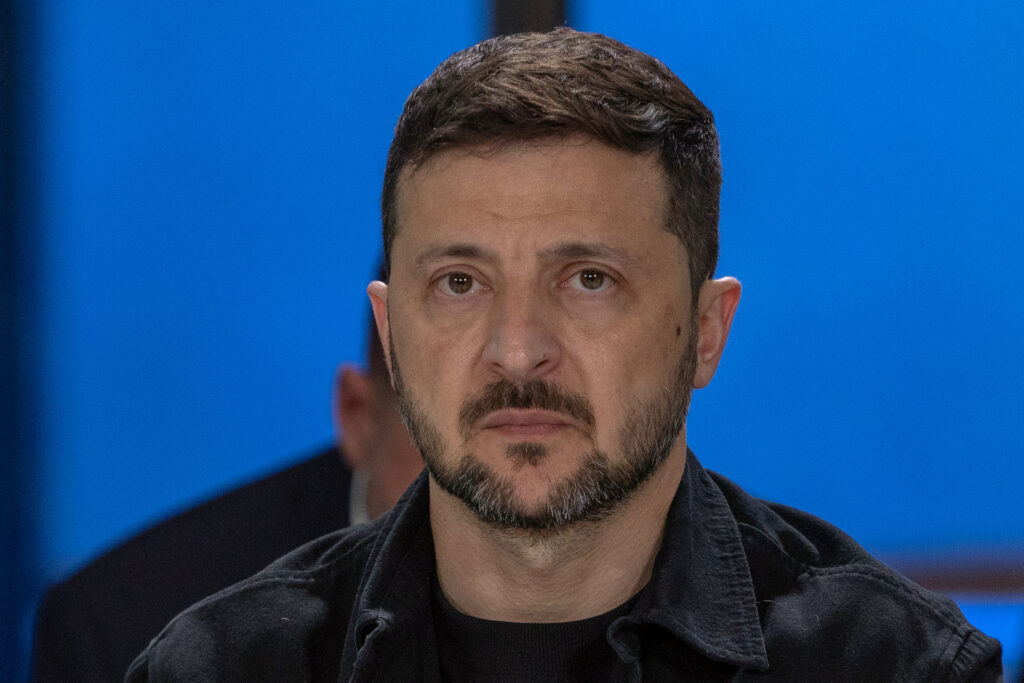
Ukraine said on Saturday it hoped the military escalation between Israel and Iran would not lead to a drop in aid to Kyiv, at a time when European support is stalling without US engagement. Israel unleashed large-scale attacks on Iran on Friday, targeting nuclear and military facilities, high-ranking generals and atomic scientists.Iran in return launched barrages of drones and missile at Israel.The escalation sparked international calls for restraint as fears of broader conflict grow.In Kyiv it also sparked anxiety about future supplies of military aid, fearing Washington might relocate more resources to beef up the defence of its close ally Israel.  “We would like to see aid to Ukraine not decrease because of this,” President Volodymyr Zelensky said. “Last time, this was a factor that slowed down aid to Ukraine.”The Ukrainian leader warned that Europe’s support was already stalling without Washington’s engagement.”Europe has not yet decided for itself what it will do with Ukraine if America is not there,” he said.The return to the White House of US President Donald Trump has upended the West’s provision of aid to Kyiv. It has left Europe scrambling to work out how it can fill any gap in supplies if Trump decides to pull US military, financial and intelligence support.Zelensky urged the United States to “shift tone” in its dialogue with Russia, saying it was “too warm” and would not help to end the war.  Trump has sought rapprochement with Moscow and held three phone calls with Russian counterpart Vladimir Putin so far this year.He has stunned NATO allies with the stark change in policy from that of the previous US administration, which aborted almost all contacts with Moscow after Russia invaded Ukraine. The Israeli attacks on Iran also drove oil prices up, which Zelensky said would benefit Russia. “The attacks led to a sharp rise in oil prices. This is bad for us,” he added, reiterating a call for the West to introduce price caps on Russian oil exports.The Ukrainian leader said he hoped to raise the issue of price caps at a possible meeting with Trump in the near future.He added, however, that the Israeli strikes might prove favourable for Kyiv if they lead to a drop in Iranian supplies of military equipment to Russia, which has relied heavily on Iranian-made attack drones.  – More soldiers return home -Ukraine and Russia exchanged prisoners on Saturday, the fourth such swap this week, under agreements clinched in Istanbul earlier this month.Kyiv also said it had stopped Russian advances in the northeastern Sumy region.  The deals to hand over killed soldiers and exchange captured ones are the only agreements to have come out of two rounds of peace talks in Istanbul.Russia has rejected calls to halt its three-year invasion. It has demanded Ukraine cede even more territory and renounce Western military support if it wants peace.Since Russia invaded in February 2022, the war has forced millions of people to flee their homes as towns and cities across eastern Ukraine have been flattened by heavy bombardments.As part of the Istanbul agreements, Kyiv also said it had received another 1,200 unidentified bodies from Russia. It said Moscow had said they were those of “Ukrainian citizens, including military personnel”Ukraine did not say whether it returned any bodies to Russia. Meanwhile, Russia intensified its offensive along the front line, especially in the northeastern Sumy region, where it seeks to establish a “buffer zone”.This zone is designed, ostensibly, to protect the Russian border region of Kursk, previously partly occupied by Ukraine. Zelensky said Russia’s advance on Sumy was stopped and that Kyiv’s forces had managed to retake one village. He said 53,000 men Russian soldiers were involved in the Sumy operation.  

Israel warns ‘Tehran will burn’ after wave of missile fire

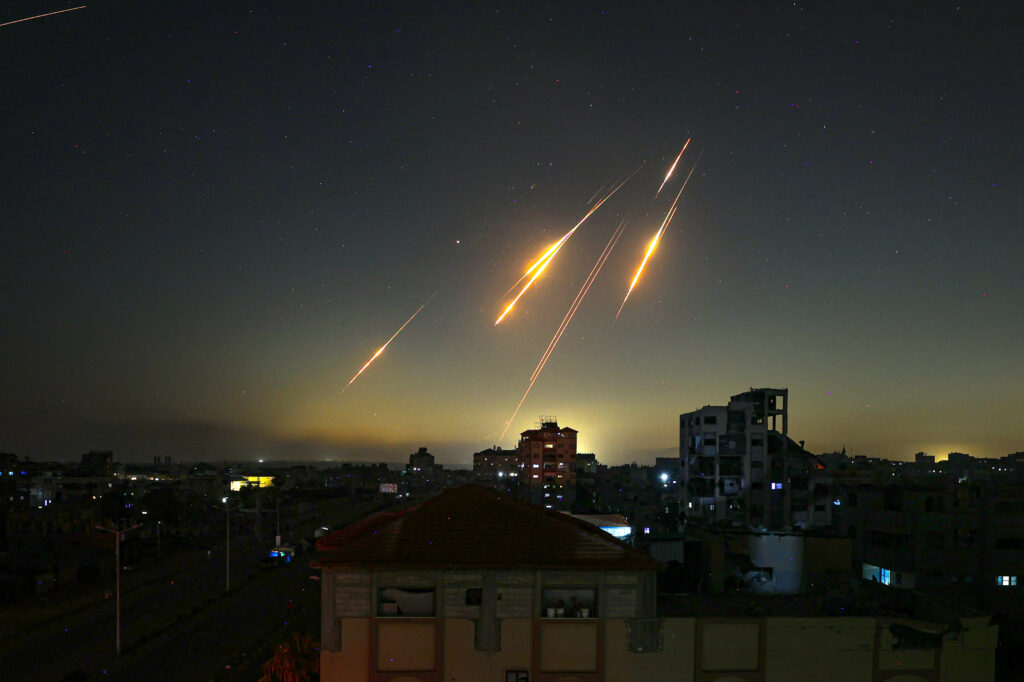
Israel warned Saturday that “Tehran will burn” if Iran keeps targeting its civilians and boasted it now had control of the airspace from western Iran all the way to the capital.”The Iranian dictator is turning the citizens of Iran into hostages and bringing about a reality in which they –- especially the residents of Tehran -– will pay a heavy price because of the criminal harm to Israeli civilians,” said Defence Minister Israel Katz.”If (Iran’s supreme leader Ayatollah Ali) Khamenei continues to fire missiles toward the Israeli home front –- Tehran will burn.”The Israeli military said its raids had cleared its path to the capital. “We have created aerial freedom of action from west Iran all the way to Tehran… Tehran is no longer immune,” said spokesman Brigadier General Effie Defrin.The threat came as Israel and Iran exchanged fire a day after Israel unleashed an unprecedented aerial bombing campaign that Iran said hit its nuclear facilities, “martyred” top commanders and killed dozens of civilians.Iran has hit back with waves of drone and missile strikes, with a barrage of dozens lighting up the skies over Jerusalem and Tel Aviv overnight, killing three people and wounding dozens.Following decades of enmity and conflict by proxy, it is the first time that Israel and Iran have traded fire with such intensity, with fears of a prolonged conflict engulfing the region.Israel launched the aerial assault early Friday, only days before Iran and the United States had been due to hold a sixth round of talks on the Islamic republic’s nuclear programme.The operation — dubbed “Rising Lion” — struck Iran’s Natanz uranium enrichment plant and assassinated Iran’s highest-ranking military officer, Mohammad Bagheri, as well as the head of the powerful Revolutionary Guards, Hossein Salami, among other senior generals.On Saturday, the Israeli military said it had Tehran in its sights after strikes on dozens of missile launchers and air defences.”The way to Iran has been paved,” the military’s chief of staff and air force chief were quoted as saying in a statement. The military “is proceeding according to its operational plans, and (Israeli air force) fighter jets are set to resume striking targets in Tehran,” it added.- ‘Smoke, dust’ -Iran’s UN ambassador said 78 people had been killed and 320 wounded in Friday’s first wave of Israeli strikes.Iranian media reported two Revolutionary Guards killed Saturday in an Israeli strike on a base in the country’s centre.Iran called on its citizens to unite in the country’s defence as Israeli Prime Minister Benjamin Netanyahu urged them to rise up.A report in Iran’s Mehr news agency said the Islamic republic had warned Britain, France and the United States it could retaliate if they came to Israel’s defence.”Any country that participates in repelling Iranian attacks on Israel will be subject to Iranian forces targeting all regional bases of the complicit government,” it said without citing any officials.Overnight, air raid sirens and explosions rang out across Israel, with many residents holed up in bomb shelters.The Israeli military said three people were killed and 76 injured in Israel since Iran began its attacks.Israel said dozens of missiles — some intercepted — had been fired from Iran. AFP images of the city of Ramat Gan near Tel Aviv showed blown-out buildings, destroyed vehicles and streets strewn with debris.Iran’s Revolutionary Guards said they had attacked dozens of targets in Israel. One Iranian missile wounded seven Israeli soldiers, the military said.Firefighters had worked for hours to free people trapped in a Tel Aviv high-rise building on Friday.Chen Gabizon, a resident, said he ran to an underground shelter after receiving an alert.”After a few minutes, we just heard a very big explosion, everything was shaking, smoke, dust, everything was all over the place,” he said.Rescuers said 34 people were wounded in the Gush Dan area, including a woman who later died of her injuries, according to Israeli media reports.Speaking to CNN, Israel’s ambassador to the United States, Yechiel Leiter, said Iran had fired three salvos of ballistic missiles on Friday, some 150 in total.”We expect that the Iranians, who have a considerable volume of ballistic missiles, somewhere in the neighbourhood of 2,000, will continue to fire them,” Leiter said.In Tehran, fire and heavy smoke billowed over Mehrabad airport on Saturday, an AFP journalist said, as Iranian media reported an explosion.Blasts were heard across the capital as Iran activated its air defences against the incoming fire.Dozens of Iranians took to the streets to cheer their country’s military response, with some waving national flags and chanting anti-Israel slogans.- ‘Time to stop’ -The attacks prompted several countries in the region to temporarily ground air traffic, though on Saturday morning, Jordan, Lebanon and Syria reopened their airspace.Iran’s airspace was closed until further notice, state media reported.As fears mounted of wider conflict, UN chief Antonio Guterres called on both sides to cease fire.”Enough escalation. Time to stop. Peace and diplomacy must prevail,” he said on X late Friday.Pope Leo XIV appealed for Israel and Iran to show “responsibility and reason”.Asked how long the war would last, Israel’s ambassador to Paris, Joshua Zarka, said: “A small number of weeks.” Prime Minister Netanyahu had said on Friday the strikes would “continue as many days as it takes”.The conflict has thrown into doubt Sunday’s planned Iran-US nuclear talks in the Gulf sultanate of Oman.After Friday’s first strikes, US President Donald Trump urged Iran to “make a deal”, adding the United States was “hoping to get back to the negotiating table”.Western governments have repeatedly accused Iran of seeking a nuclear weapon, an allegation it denies.Iran said on Saturday it would be “meaningless” to attend the talks while it was under attack by Israel.