



Les marchés mondiaux chahutés par le regain de tensions géopolitiques au Moyen Orient
Les cours du pétrole s’envolent, l’or est en forte hausse et les actions reculent nettement vendredi face au regain de tensions géopolitiques au Moyen Orient après plusieurs frappes aériennes contre l’Iran, visant son programme nucléaire et ses installations militaires.L’Iran figurant parmi les dix plus grands producteurs de pétrole au monde, les cours de l’or noir réagissaient fortement, l’anticipation d’une offre de pétrole en baisse faisant grimper les prix.Après s’être envolé de plus de 12% dans la nuit, vers 07H15 GMT, le cours du baril de WTI nord-américain bondissait de 5,60% à 71,85 dollars. Le baril de Brent de la mer du Nord grimpait quant à lui de 5,41% à 73,11 dollars.”Ce ne sont pas seulement les perspectives des exportations iraniennes qui sont préoccupantes, mais aussi le risque de perturbation du transport maritime dans le détroit d’Ormuz, dans le golfe Persique, une voie essentielle pour environ 20% des flux mondiaux de pétrole et une proportion encore plus importante du transport de gaz naturel liquéfié” (GNL), souligne Derren Nathan, responsable de la recherche sur les actions de Hargreaves Lansdown.”Environ un cinquième du GNL mondial transite par ce détroit”, précise Ipek Ozkardeskaya, analyste de Swissquote Bank.Face aux vives tensions géopolitiques entre l’Iran et Israël, les valeurs dites “refuge” sont préférées par rapport aux actions, considérées comme des actifs risqués.L’or grimpait ainsi de 0,69% à 3.409 dollars l’once (31,1 grammes) tandis que les Bourses asiatiques et européennes s’enfonçaient en terrain négatif. Sur le Vieux continent, Paris lâchait 1,13%, Francfort 1,32%, Milan 1,50% et Londres 0,57%. Dans les derniers échanges en Asie, Hong Kong abandonnait 0,97%, Shenzhen 1,10% et Shanghai 0,75%. Tokyo a terminé en repli de 0,89%, Séoul de 0,87% et Taipei de 0,96%.Sur le marché des changes, vers 07H15 GMT, le billet vert avançait de 0,27% face à la monnaie unique, à 1,1553 euro pour un dollar. La devise israélienne chutait de 1,99% face au dollar, à 3,6284 shekels pour un dollar.”L’attention se porte désormais sur la forme que pourraient prendre les représailles de l’Iran”, commente Jim Reid, économiste de Deutsche Bank.”Si l’Iran se retient” de riposter, “on pourrait avoir un soupir de soulagement des marchés”, mais une forte réplique de Téhéran contre Israël “pourrait redéfinir les scénarios macroéconomiques pour le reste de l’année” et un emballement de la confrontation aurait “des implications mondiales”, a réagi Stephen Innes, de SPI Asset Management.La diplomatie iranienne a affirmé avoir le “droit légitime” de répondre à l’attaque, tandis que le guide suprême, l’ayatollah Ali Khamenei, a promis à Israël un sort “amer et douloureux”. Quant aux Etats-Unis, ils seront “responsables des conséquences”, a assuré Téhéran, bien que la première puissance économique et militaire mondiale, alliée indéfectibles de l’Etat hébreu, affirme ne pas être impliquée.Israël a expliqué aux Etats-Unis que frapper l’Iran était “nécessaire pour sa défense”, a déclaré le chef de la diplomatie américaine Marco Rubio, prévenant Téhéran de ne pas riposter contre “les intérêts américains”.Le Premier ministre israélien Benjamin Netanyahu a dit que l’opération militaire israélienne durerait “autant de jours que nécessaire”.L’Iran a fermé son espace aérien mais la défense anti-aérienne fonctionne “à 100% de sa capacité”, a souligné la télévision iranienne. “Quoi qu’il en soit, beaucoup d’investisseurs préféreront probablement réduire leur exposition au risque avant un week-end qui s’annonce potentiellement très volatile sur le plan géopolitique”, estime Ipek Ozkardeskaya.La défense sur le devant de la scèneDans un contexte de tensions géopolitiques accrues, les valeurs de la défense étaient recherchées. A Paris, Thales prenait 0,88% et Dassault Aviation de 1,25%. A Londres, BAE Systems gagnait 2,57%. A Francfort, Rheinmetall avançait de 1,29% et Hensoldt de 2,55%, Saab de 2,07% à Stockholm et Leonardo de 1,88% à Milan.Les valeurs pétrolières en hausseA la cote européenne, les valeurs pétrolières sont portées par la forte hausse des prix de l’or noir. A Paris, TotalEnergies s’octroyait 1,90%, à Londres, BP gagnait 1,69% et Shell 1,99% et à Madrid, Repsol gagnait 1,18%.

Volunteer rescuers describe horror at India plane crash site
Volunteers who rushed to help after a passenger jet crashed into a residential neighbourhood of India’s Ahmedabad city described Friday the intense fireball they faced — and the challenge ahead to identify the bodies of at least 265 victims.Bharat Solanki, 51, was working at a fuel station when the Air India Boeing 787-8 Dreamliner — carrying 242 passengers and crew — took off from nearby Ahmedabad airport around lunchtime on Thursday.Less than a minute later it ploughed into a residential area, bursting into searing flames with what residents described as an ear-splitting blast.All but one aboard the plane was killed, and at least 24 others died on the ground.Solanki and a couple of friends rushed to the site.”We saw bodies everywhere — they were in pieces, fully burnt,” he said, recalling the horror of the scene.”We took out dead bodies”, he said, adding that he also helped bring out those injured from the medical hostel and nearby buildings that the plane smashed into.”Everywhere just bodies, parts, body parts. The bodies were totally burnt. It was like coal.”- ‘Didn’t get a chance’ -Prime Minister Narendra Modi, who visited the crash site on Friday morning, called it a “scene of devastation”.He was seen peering up at a fire-blackened multi-storey building with the plane’s wheels and tail embedded in a wall.Authorities have set up DNA testing for relatives of passengers and those killed on the ground to identify the scorched bodies and body parts.It may be weeks before a final death toll is confirmed. Home Minister Amit Shah, speaking after visiting the crash site on Thursday, said the plane was carrying 125,000 litres (27,500 gallons) of fuel.The “temperature was so high that one didn’t get a chance”, he said.Air India said there were 169 Indian passengers, 53 British, seven Portuguese, and a Canadian on board the flight bound for London’s Gatwick airport, as well as 12 crew members.Sona Prakash, who was close to the residential blocks of the medical accommodation, described how the “hostel was destroyed”, adding that “so many doctors were injured, so many died”.Another witness, 35-year-old labourer Patani, who uses only one name, said those around him thought a bomb had gone off before they realised it was a plane crash.”There was black smoke everywhere, plumes of smoke”, added Vinod Bhai, another labourer.”The sky was only black, that’s how much smoke was there.”Forensic teams are searching for the black box flight recorders that will detail the last moments of the flight for crash investigators.
Iran Guards chief killed in strike outspoken opponent of Israel
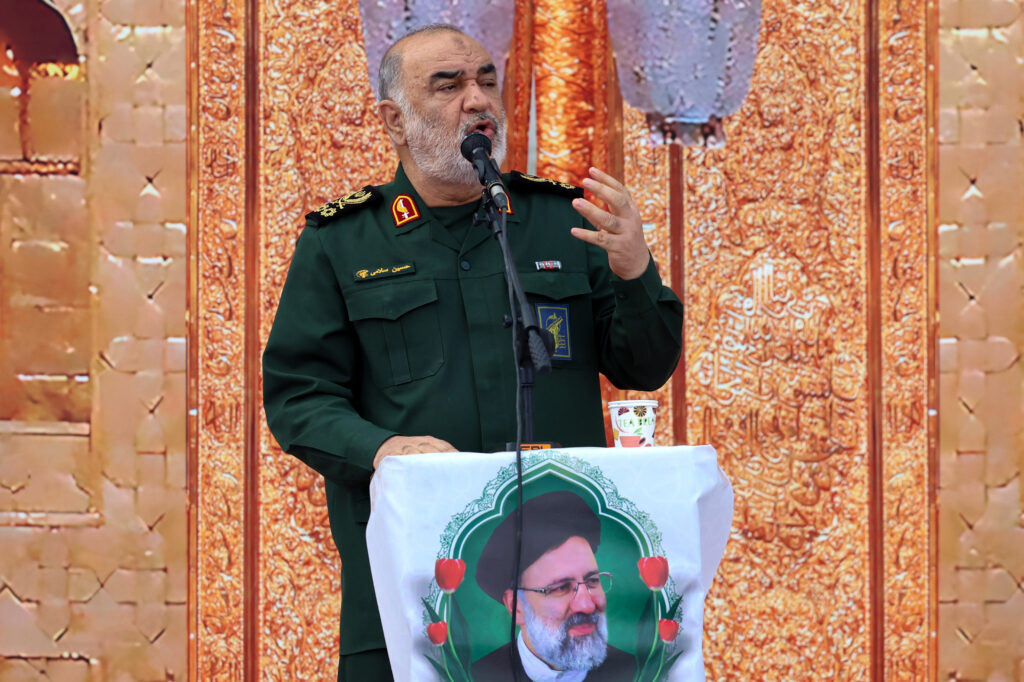
Iran’s Revolutionary Guards chief Hossein Salami, who was killed in an Israeli air strike on Tehran Friday, was a veteran officer close to supreme leader Ayatollah Ali Khamenei known for his tirades against Israel and its US ally.”If you make the slightest mistake, we will open the gates of hell for you,” the white-beared general warned Tehran’s arch foes during a tour of an underground missile base in January.Born in 1960 in central Iran, Salami joined the Islamic Revolutionary Guard Corps in 1980 at the start of the devastating eight-year war launched by then Iraqi leader Saddam Hussein.He spent most of his career in the Guards, a parallel military set up after the 1979 overthrow of the Western-backed shah to defend the goals of the Islamic revolution.The force is now 125,000-strong strong, according to the International Institute for Strategic Studies, although Iran has never released any official figure.Salami rose through the ranks to become head of the Guards’ aerospace division, and was placed on Washington’s sanctions blacklist.He served as the corps’ deputy commander for nine years before being promoted to the top job in 2019 as part of a major reshuffle.Iran’s revolutionary leader Ayatollah Ruhollah Khomeini had made support for the Palestinian cause a centrepiece of Tehran’s foreign policy and Salami repeatedly alluded to calls for Israel to be wiped from the map.Israeli Prime Minister Benjamin Netanyahu should “learn to swim in the Mediterranean Sea” in readiness to flee, he said in a 2018 speech.The Revolutionary Guards played a central role in Iran’s forward foreign policy in the Arab world, which saw Tehran-backed militant groups Hamas and Hezbollah lead Gaza and Lebanon into war with Israel.The twin conflicts were accompanied by the first-ever direct exchanges of fire between Iran and Israel last year and were to lead to the much bigger wave of Israeli strikes on Iran on Friday, one of which killed Salami.
Israel launches major strikes on Iran, Tehran vows ‘bitter’ revenge
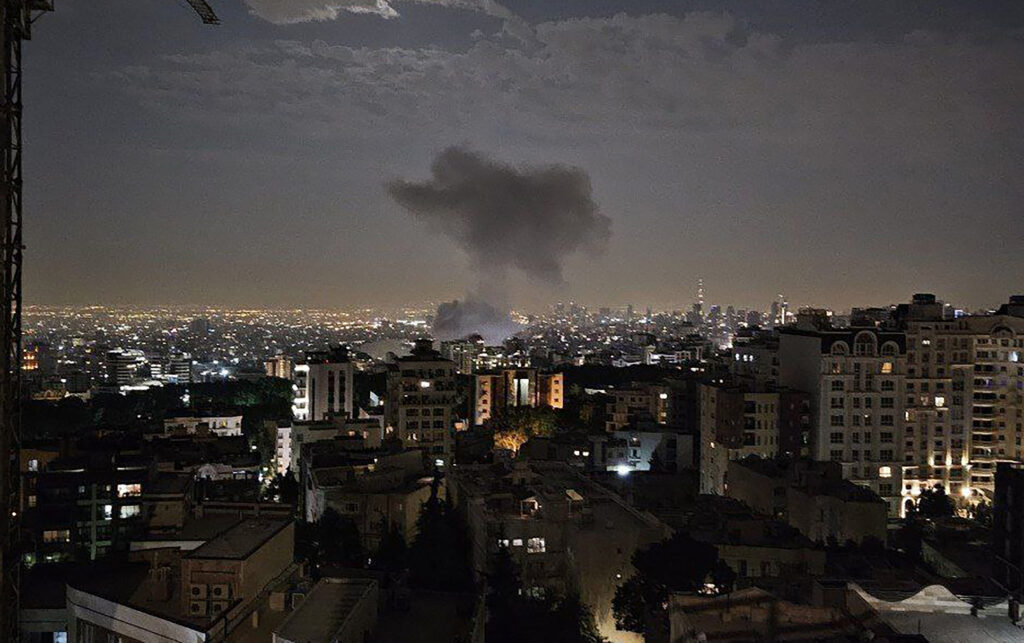
Israel pounded Iran in a series of air raids on Friday, striking 100 targets including Tehran’s nuclear and military sites, and killing the armed forces’ chief of staff, the head of Iran’s Revolutionary Guards and top nuclear scientists.Iran’s supreme leader Ayatollah Ali Khamenei warned Israel it faced a “bitter and painful” fate over the attacks.The Israeli military said later that Iran launched 100 drones towards Israel in response and that its air defences were intercepting them outside Israeli territory.US President Donald Trump told Fox News he had advance notice of the Israeli strikes which Israel’s military said involved 200 fighter jets. Trump also stressed that Tehran “cannot have a nuclear bomb”.The United States underlined that it was not involved in the Israeli action and warned Tehran not to attack its personnel or interests.But Tehran said the United States would be “responsible for consequences” as Israel’s operation “cannot have been carried out without the coordination and permission of the United States”.Prime Minister Benjamin Netanyahu said Israel struck at the “heart of Iran’s nuclear enrichment programme”, taking aim at the atomic facility in Natanz and nuclear scientists.The strikes would “continue as many days as it takes”, the Israeli leader said, adding later that the initial wave of strikes were “very successful”.The Israeli military said its intelligence gathering showed Iran was approaching the “point of no return” on its nuclear programme.The strikes killed Iran’s highest-ranking military officer, armed forces chief of staff Mohammad Bagheri, and the head of the powerful Islamic Revolutionary Guard Corps, Hossein Salami, Iranian media reported.State media said residential buildings in Tehran were hit as well, killing a number of civilians including women and children.Tasnim news agency said six nuclear scientists killed in the attacks.- Flights suspended -Air traffic was halted at Tehran’s main gateway, Imam Khomeini International Airport, while Iraq and Jordan also closed their airspace and suspended flights.Israel declared a state of emergency and closed its airspace, with Defence Minister Israel Katz saying Israel was braced for Iran’s expected retaliation.”Following the State of Israel’s preemptive strike against Iran, a missile and drone attack against the State of Israel and its civilian population is expected in the immediate future,” Katz said.An Israeli military official said the army believed Iran had the ability to strike Israel “any minute”.Oil prices surged 12 percent while stocks sank on the Israeli strikes, which came after Trump’s warning of a “massive conflict” in the region.Trump had also said the United States was drawing down staff in the Middle East, after Iran threatened to target US military bases in the region if conflict breaks out.Trump said he believed a “pretty good” deal on Iran’s nuclear programme was “fairly close”, but said that an Israeli attack on its arch foe could wreck the chances of an agreement.The US leader did not disclose the details of a conversation on Monday with Netanyahu, but said: “I don’t want them going in, because I think it would blow it.”Trump quickly added: “Might help it actually, but it also could blow it.”- ‘Within reach’ -US Secretary of State Marco Rubio warned Iran not respond to Israeli strikes by hitting US bases, saying Washington was not involved.”Let me be clear: Iran should not target US interests or personnel,” Rubio said in a statement.Prior to Friday’s attack, Iran had threatened to hit US bases in the Middle East if conflict were to erupt.With the violence raising questions on whether a sixth round of talks planned between the US and Iran will still take place on Sunday in Oman, Trump said however that Washington is still “hoping to get back to the negotiating table”.Confirming Natanz among targets, the UN’s nuclear watchdog said it was “closely monitoring” the situation.”The agency is in contact with Iranian authorities regarding radiation levels. We are also in contact with our inspectors in the country,” International Atomic Energy Agency head Rafael Grossi said.- ‘Extremist’ -Israel, which counts on US military and diplomatic support, sees Iran as an existential threat.Netanyahu has vowed less restraint since the unprecedented October 7, 2023 attack on Israel by Tehran-backed Hamas, which triggered the massive Israeli offensive in Gaza.Since the Hamas attack, Iran and Israel have traded direct attacks for the first time.Aside from Hamas, Israel is also battling Iranian proxies Hezbollah in Lebanon and the Huthis in Yemen.The United States and other Western countries, along with Israel, have repeatedly accused Iran of seeking a nuclear weapon, which it has repeatedly denied.Israel again called for global action after the IAEA accused Iran on Wednesday of non-compliance with its obligations.Iran’s nuclear chief, Mohammad Eslami, slammed the resolution as “extremist”.In response, Iran said it would launch a new enrichment centre in a secure location.”The world now better understands Iran’s insistence on the right to enrichment, nuclear technology, and missile power,” the Iranian government said following the strikes.Iran currently enriches uranium to 60 percent, far above the 3.67-percent limit set in the 2015 deal and close, though still short, of the 90 percent needed for a nuclear warhead.