


Mongolie: un nouveau Premier ministre après les manifestations anticorruption
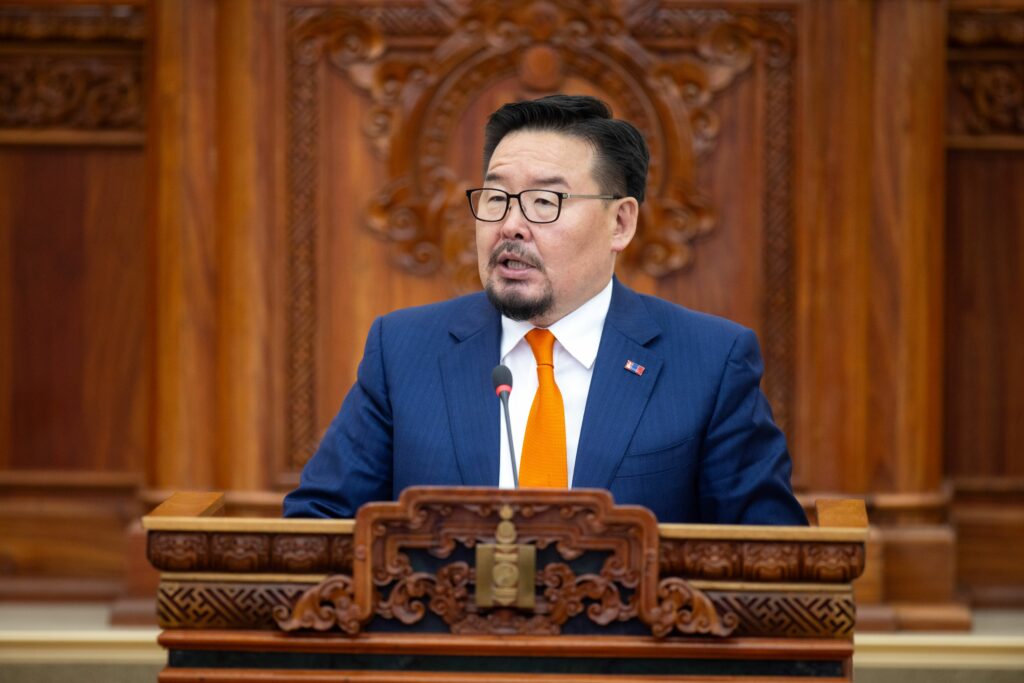
Les députés mongols ont investi vendredi l’ancien président du Parlement, Gombojav Zandanshatar, âgé de 52 ans, nouveau Premier ministre, après la démission début juin de son prédécesseur suite à des manifestations anticorruption.Des milliers de jeunes avaient manifesté à Oulan-Bator ces dernières semaines, exprimant leur défiance envers les élites et la corruption présumée d’une partie de la classe politique, dans un contexte d’inquiétudes quant à la hausse du coût de la vie.Ils avaient notamment exigé le départ de celui qui était alors Premier ministre, Luvsannamsrain Oyun-Erdene. Ce dernier, après avoir perdu un vote de confiance dans son gouvernement, avait finalement annoncé sa démission le 3 juin.Comme son prédécesseur, le nouveau Premier ministre Gombojav Zandanshatar est membre du Parti du peuple mongol (PPM).Il a été élu aux premières heures de vendredi par le Grand Khoural d’Etat – le Parlement monocaméral du pays – par 108 voix pour, sur 117 députés présents.Dans un discours aux députés après son élection, il a souligné “l’urgence de stabiliser l’économie et d’améliorer les revenus et les conditions de vie des citoyens”, selon un communiqué publié par le Parlement.Gombojav Zandanshatar est un personnage incontournable de la scène politique mongole depuis deux décennies. Il avait déjà occupé plusieurs fonctions importantes.Il était notamment ministre des Affaires étrangères, chef de cabinet de l’actuel président Ukhnaa Khurelsukh, ou encore président du Parlement lorsque celui-ci a adopté des réformes constitutionnelles clés en 2019.- Conflit politique -Vaste pays de seulement 3,4 millions d’habitants situé entre la Chine et la Russie, la Mongolie dispose de ressources naturelles abondantes mais est confrontée depuis des décennies à des problèmes de corruption.Avant la crise politique actuelle, la Mongolie était dirigée par un gouvernement de coalition à trois partis.Il avait été mis en place après la perte par le Parti du peuple mongol (PPM) d’une part importante de sa majorité, suite aux élections de l’an passé.Mais le mois dernier, le PPM avait exclu de la coalition la deuxième force politique, le Parti démocrate (PD), après que certains jeunes députés du PD eurent soutenu les appels à la démission du désormais ex-Premier ministre.Cela avait poussé Luvsannamsrain Oyun-Erdene à organiser un vote de confiance en son gouvernement, qu’il a perdu après le boycott des députés du Parti démocrate (PD) lors du scrutin.En mai, le bureau de l’ex-Premier ministre avait affirmé à l’AFP qu’il niait “avec véhémence” les allégations de corruption visant Luvsannamsrain Oyun-Erdene, les qualifiant de “diffamation”.Sous son mandat, débuté en 2021, la Mongolie avait toutefois dégringolé dans l’indice de perception de la corruption de l’organisation Transparency International.- “Changement de cap” -Une partie de la population estime que les richesses issues de l’exploitation minière, notamment du charbon, sont accaparées par l’élite politique et économique. Le mandat du nouveau Premier ministre Gombojav Zandanshatar devrait marquer un “changement de cap”, déclare à l’AFP l’analyste politique Munkhnaran Bayarlkhagva.Il “devra revoir à la baisse les mégaprojets pharaoniques, alléger la fiscalité, notamment pour les plus pauvres, résorber la crise en matière de coût de la vie et enrayer le recul démocratique”, affirme-t-il.Dans les rues d’Oulan-Bator, avant le vote de vendredi, Tumentsetseg Purevdorj, une sociologue de 38 ans, a estimé auprès de l’AFP que l’expérience politique du nouveau Premier ministre était “un atout”.”Mais nous avons besoin d’un gouvernement solide et efficace”, a-t-elle souligné. “En tant que femme, je veux qu’il inclue des femmes compétentes dans son nouveau gouvernement.”Pour d’autres jeunes Mongols cependant, l’arrivée du nouveau Premier ministre ne présageait aucun changement notable.Zoljargal Ganzereg, un économiste de 25 ans, se dit également sceptique: le nouveau Premier ministre “était déjà en politique quand je suis né, et il est toujours là”, souligne-t-il.”On vit au jour le jour, avec à peine de quoi couvrir nos besoins essentiels”, déclare-t-il à l’AFP. “S’il est incapable de changer ça, alors je n’aurai d’autre choix que de partir à l’étranger.”
Attacking Iran, Israel brazenly defies ‘man of peace’ Trump
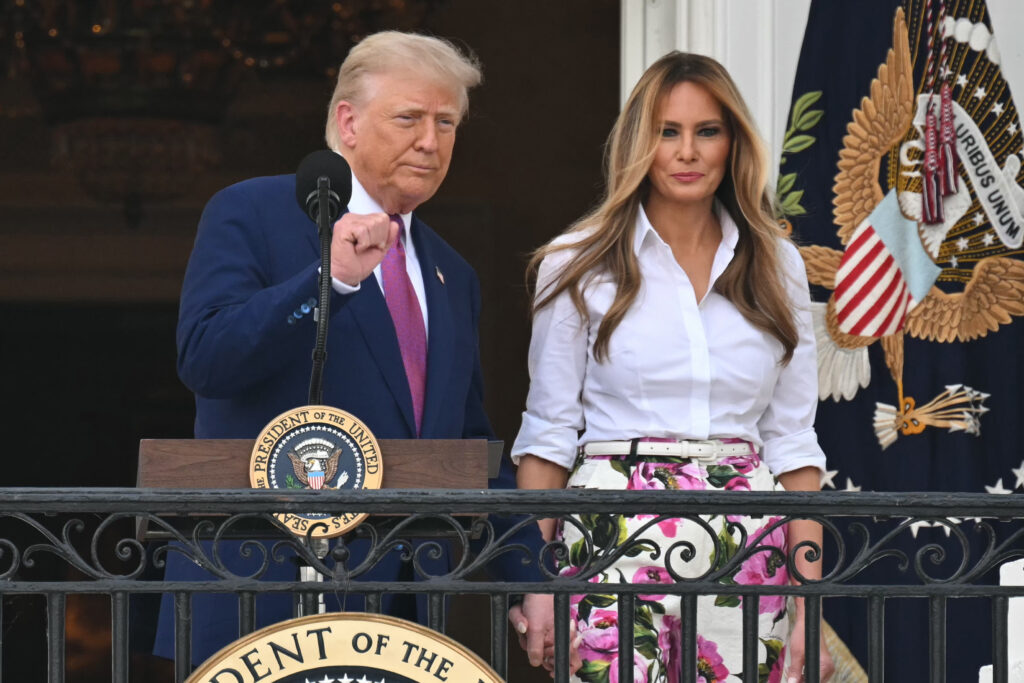
US President Donald Trump implored Israel on Thursday not to attack Iran and declared, once again, his goal was to be a peacemaker.Hours later, Israeli Prime Minister Benjamin Netanyahu — one of Trump’s closest international allies — brazenly defied his advice by unleashing a major military campaign described as a “preemptive” strike against Iran’s nuclear program.The attack marks the latest setback for Trump’s lofty goal set out at the start of his second term of being a “man of peace.”Russian President Vladimir Putin, with whom Trump has also boasted a warm relationship, has rebuffed his overtures for a ceasefire with Ukraine.And Israel resumed another massive offensive in Gaza after talks bogged down on extending a ceasefire with Hamas reached with Trump’s support at the end of his predecessor Joe Biden’s term.Trump’s friend and roving envoy Steve Witkoff — who has negotiated in all three crises — had been set to meet Iranian officials again Sunday in Oman.Secretary of State Marco Rubio made clear in a statement the United States was not involved in attacking Iran and warned Tehran not to retaliate against US troops in the region.Hours later, Fox News reported that Trump had said he was aware Israel was going to conduct strikes on Iran before it happened, and that he hoped negotiations could still happen. “Iran cannot have a nuclear bomb and we are hoping to get back to the negotiating table. We will see,” Trump said, according to Fox News, which added that Trump also said “the US is ready to defend itself and Israel if Iran retaliates.”The president will hold a meeting with the National Security Council on Friday morning. – ‘It would blow it’ -Before Israel launched its operation, Trump said: “I don’t want them going in, because I think it would blow it.”He doubled down with a social media post saying he remained “committed to a diplomatic resolution” on Iran.Netanyahu has described Iran’s cleric-run government, which backs Hamas, as an existential threat and already last year ordered strikes that knocked out its air defenses.”We’ve clearly seen a fork in the road in the American and Israeli approaches to this problem set,” said Dana Stroul, a former senior Pentagon official who is a senior fellow at the Washington Institute for Near East Policy.”These strikes are going to disrupt and delay and degrade Iran’s nuclear program. The question, I think, is whether or not the United States and Israel in the future are going to work together on what to do to maximize the time that’s put back on the clock,” she said.Stroul noted that rifts had been building between Israel and Trump, who last month agreed to remove sanctions on Syria after former Islamist guerrilla Ahmed al-Sharaa swept into power.Trump embraced the new Syrian leader after appeals on a tour of Gulf Arab monarchies — which have also backed diplomacy on Iran.In Qatar last month, Trump said after meeting the emir that he believed a deal was in sight with Iran and that there would be no “nuclear dust” over the region.- ‘Reckless escalation’ – Despite growing disagreements, Israel enjoys robust support in Trump’s right-wing base.The Trump administration in recent days has again taken lonely positions to back Israel, with the United States casting one of the only votes at the UN General Assembly against a Gaza ceasefire resolution and criticizing top allies, including Britain, for imposing sanctions on far-right Israeli ministers.Justin Logan, director of defense and foreign policy at the libertarian Cato Institute, said the Israeli attack will “destroy US diplomatic efforts” on Iran and called for Trump to reject any US military role in protecting Israel from retaliation.”Israel has the right to choose its own foreign policy. At the same time, it has the responsibility to bear the costs of that policy,” he said.But lawmakers in Trump’s Republican Party quickly rallied behind Israel. Senator Tom Cotton said that the United States should “back Israel to the hilt, all the way,” and topple Iran’s Islamic Republic if it targets US troops.Trump’s Democratic rivals, who mostly backed his diplomacy on Iran, were aghast at Israel’s action ahead of new US-Iran talks.”Israel’s alarming decision to launch airstrikes on Iran is a reckless escalation that risks igniting regional violence,” said Jack Reed, the top Democrat on the Senate Armed Forces Committee.
Attacking Iran, Israel brazenly defies ‘man of peace’ Trump
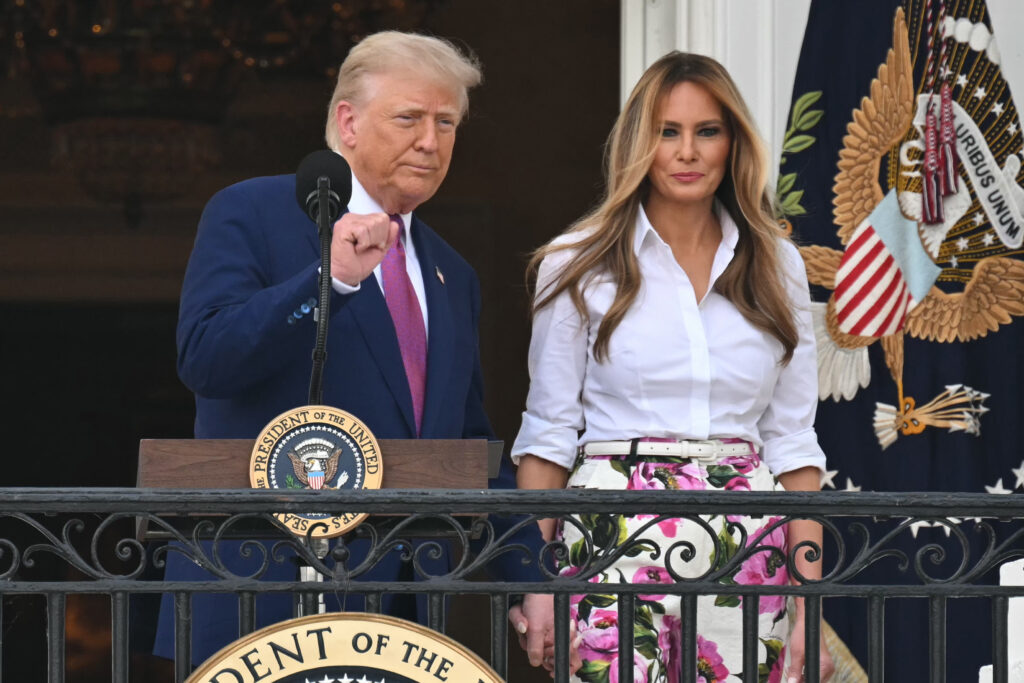
US President Donald Trump implored Israel on Thursday not to attack Iran and declared, once again, his goal was to be a peacemaker.Hours later, Israeli Prime Minister Benjamin Netanyahu — one of Trump’s closest international allies — brazenly defied his advice by unleashing a major military campaign described as a “preemptive” strike against Iran’s nuclear program.The attack marks the latest setback for Trump’s lofty goal set out at the start of his second term of being a “man of peace.”Russian President Vladimir Putin, with whom Trump has also boasted a warm relationship, has rebuffed his overtures for a ceasefire with Ukraine.And Israel resumed another massive offensive in Gaza after talks bogged down on extending a ceasefire with Hamas reached with Trump’s support at the end of his predecessor Joe Biden’s term.Trump’s friend and roving envoy Steve Witkoff — who has negotiated in all three crises — had been set to meet Iranian officials again Sunday in Oman.Secretary of State Marco Rubio made clear in a statement the United States was not involved in attacking Iran and warned Tehran not to retaliate against US troops in the region.Hours later, Fox News reported that Trump had said he was aware Israel was going to conduct strikes on Iran before it happened, and that he hoped negotiations could still happen. “Iran cannot have a nuclear bomb and we are hoping to get back to the negotiating table. We will see,” Trump said, according to Fox News, which added that Trump also said “the US is ready to defend itself and Israel if Iran retaliates.”The president will hold a meeting with the National Security Council on Friday morning. – ‘It would blow it’ -Before Israel launched its operation, Trump said: “I don’t want them going in, because I think it would blow it.”He doubled down with a social media post saying he remained “committed to a diplomatic resolution” on Iran.Netanyahu has described Iran’s cleric-run government, which backs Hamas, as an existential threat and already last year ordered strikes that knocked out its air defenses.”We’ve clearly seen a fork in the road in the American and Israeli approaches to this problem set,” said Dana Stroul, a former senior Pentagon official who is a senior fellow at the Washington Institute for Near East Policy.”These strikes are going to disrupt and delay and degrade Iran’s nuclear program. The question, I think, is whether or not the United States and Israel in the future are going to work together on what to do to maximize the time that’s put back on the clock,” she said.Stroul noted that rifts had been building between Israel and Trump, who last month agreed to remove sanctions on Syria after former Islamist guerrilla Ahmed al-Sharaa swept into power.Trump embraced the new Syrian leader after appeals on a tour of Gulf Arab monarchies — which have also backed diplomacy on Iran.In Qatar last month, Trump said after meeting the emir that he believed a deal was in sight with Iran and that there would be no “nuclear dust” over the region.- ‘Reckless escalation’ – Despite growing disagreements, Israel enjoys robust support in Trump’s right-wing base.The Trump administration in recent days has again taken lonely positions to back Israel, with the United States casting one of the only votes at the UN General Assembly against a Gaza ceasefire resolution and criticizing top allies, including Britain, for imposing sanctions on far-right Israeli ministers.Justin Logan, director of defense and foreign policy at the libertarian Cato Institute, said the Israeli attack will “destroy US diplomatic efforts” on Iran and called for Trump to reject any US military role in protecting Israel from retaliation.”Israel has the right to choose its own foreign policy. At the same time, it has the responsibility to bear the costs of that policy,” he said.But lawmakers in Trump’s Republican Party quickly rallied behind Israel. Senator Tom Cotton said that the United States should “back Israel to the hilt, all the way,” and topple Iran’s Islamic Republic if it targets US troops.Trump’s Democratic rivals, who mostly backed his diplomacy on Iran, were aghast at Israel’s action ahead of new US-Iran talks.”Israel’s alarming decision to launch airstrikes on Iran is a reckless escalation that risks igniting regional violence,” said Jack Reed, the top Democrat on the Senate Armed Forces Committee.

Les marchés mondiaux chahutés par le regain de tensions géopolitiques au Moyen Orient
Les cours du pétrole s’envolent, l’or est en forte hausse et les actions reculent nettement vendredi face au regain de tensions géopolitiques au Moyen Orient après plusieurs frappes aériennes contre l’Iran, visant son programme nucléaire et ses installations militaires.L’Iran figurant parmi les dix plus grands producteurs de pétrole au monde, les cours de l’or noir réagissaient fortement, l’anticipation d’une offre de pétrole en baisse faisant grimper les prix.Après s’être envolé de plus de 12% dans la nuit, vers 07H15 GMT, le cours du baril de WTI nord-américain bondissait de 5,60% à 71,85 dollars. Le baril de Brent de la mer du Nord grimpait quant à lui de 5,41% à 73,11 dollars.”Ce ne sont pas seulement les perspectives des exportations iraniennes qui sont préoccupantes, mais aussi le risque de perturbation du transport maritime dans le détroit d’Ormuz, dans le golfe Persique, une voie essentielle pour environ 20% des flux mondiaux de pétrole et une proportion encore plus importante du transport de gaz naturel liquéfié” (GNL), souligne Derren Nathan, responsable de la recherche sur les actions de Hargreaves Lansdown.”Environ un cinquième du GNL mondial transite par ce détroit”, précise Ipek Ozkardeskaya, analyste de Swissquote Bank.Face aux vives tensions géopolitiques entre l’Iran et Israël, les valeurs dites “refuge” sont préférées par rapport aux actions, considérées comme des actifs risqués.L’or grimpait ainsi de 0,69% à 3.409 dollars l’once (31,1 grammes) tandis que les Bourses asiatiques et européennes s’enfonçaient en terrain négatif. Sur le Vieux continent, Paris lâchait 1,13%, Francfort 1,32%, Milan 1,50% et Londres 0,57%. Dans les derniers échanges en Asie, Hong Kong abandonnait 0,97%, Shenzhen 1,10% et Shanghai 0,75%. Tokyo a terminé en repli de 0,89%, Séoul de 0,87% et Taipei de 0,96%.Sur le marché des changes, vers 07H15 GMT, le billet vert avançait de 0,27% face à la monnaie unique, à 1,1553 euro pour un dollar. La devise israélienne chutait de 1,99% face au dollar, à 3,6284 shekels pour un dollar.”L’attention se porte désormais sur la forme que pourraient prendre les représailles de l’Iran”, commente Jim Reid, économiste de Deutsche Bank.”Si l’Iran se retient” de riposter, “on pourrait avoir un soupir de soulagement des marchés”, mais une forte réplique de Téhéran contre Israël “pourrait redéfinir les scénarios macroéconomiques pour le reste de l’année” et un emballement de la confrontation aurait “des implications mondiales”, a réagi Stephen Innes, de SPI Asset Management.La diplomatie iranienne a affirmé avoir le “droit légitime” de répondre à l’attaque, tandis que le guide suprême, l’ayatollah Ali Khamenei, a promis à Israël un sort “amer et douloureux”. Quant aux Etats-Unis, ils seront “responsables des conséquences”, a assuré Téhéran, bien que la première puissance économique et militaire mondiale, alliée indéfectibles de l’Etat hébreu, affirme ne pas être impliquée.Israël a expliqué aux Etats-Unis que frapper l’Iran était “nécessaire pour sa défense”, a déclaré le chef de la diplomatie américaine Marco Rubio, prévenant Téhéran de ne pas riposter contre “les intérêts américains”.Le Premier ministre israélien Benjamin Netanyahu a dit que l’opération militaire israélienne durerait “autant de jours que nécessaire”.L’Iran a fermé son espace aérien mais la défense anti-aérienne fonctionne “à 100% de sa capacité”, a souligné la télévision iranienne. “Quoi qu’il en soit, beaucoup d’investisseurs préféreront probablement réduire leur exposition au risque avant un week-end qui s’annonce potentiellement très volatile sur le plan géopolitique”, estime Ipek Ozkardeskaya.La défense sur le devant de la scèneDans un contexte de tensions géopolitiques accrues, les valeurs de la défense étaient recherchées. A Paris, Thales prenait 0,88% et Dassault Aviation de 1,25%. A Londres, BAE Systems gagnait 2,57%. A Francfort, Rheinmetall avançait de 1,29% et Hensoldt de 2,55%, Saab de 2,07% à Stockholm et Leonardo de 1,88% à Milan.Les valeurs pétrolières en hausseA la cote européenne, les valeurs pétrolières sont portées par la forte hausse des prix de l’or noir. A Paris, TotalEnergies s’octroyait 1,90%, à Londres, BP gagnait 1,69% et Shell 1,99% et à Madrid, Repsol gagnait 1,18%.