

With missiles overhead, Tel Aviv residents huddle underground
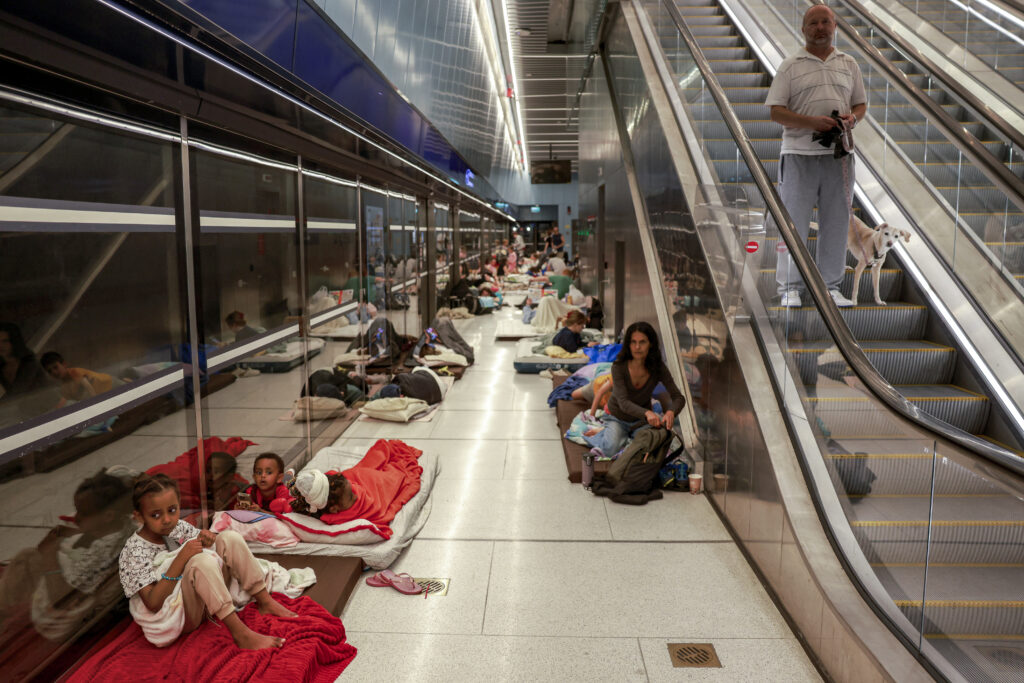
As night falls in Israel’s coastal city of Tel Aviv, hundreds make the familiar descent into the depths of the metro to escape the latest salvo of Iranian missiles.For those with no safe shelters near their homes, the city’s underground stations and car parks have become vital refuges since the war began on June 13. Despite nightly missile barrages, Israel’s casualty toll has remained relatively low, with authorities repeatedly stressing the importance of taking cover in life-saving protected spaces. “The day after the Israeli intervention in Iran began, there was an explosion, a bomb not far from my home, and the entire shelter I was in shock,” Muriel Azria, 58, who works in tourism, told AFP in a Tel Aviv metro station.She arrives prepared every evening with her suitcase and her dog, ready for a night on her council-provided mattress set up on the platform.”From the moment I enter the subway, which is magnificent, I calm down,” she said. “It’s not very comfortable, but at least I’m not afraid, we hear much less booming.””There are people, everyone is generally very nice,” she told AFP.Israeli residents receive blaring phone alerts via SMS to warn them of incoming Iranian missiles, often in the early hours of the morning. These are often followed by the wail of overhead air raid sirens.Among the haphazardly placed mattresses on the platforms of the metro stations, some people clutch phones while others play cards, do crosswords or chat to pass the time underground. For 86-year-old retiree Yudit Kamara, who does not have a shelter at home, the daily journey to the underground station has become an ordeal. “It’s too much, I don’t have the strength anymore to go through this. It’s really difficult,” she told AFP.”All these children here, all this mess, and it’s really cold and not so comfortable. But what other choice do we have? Where will we go?” she asked, stifling a sob.More than 60 percent of Israelis do not have a safe shelter at home, according to the NGO Latet, which distributes emergency kits, food parcels and children’s games to the most vulnerable families.- ‘Need to be strong’ -“I’m very nervous but I need to be strong for my child,” said 48-year-old Erlenn Solomon, who has slept every night in an underground station since the start of the conflict.”As a mom, you need to be strong.”Israel’s economic hub Tel Aviv has been particularly targeted by Iran’s missiles since the start of the conflict on June 13.The full extent of the damage from Iran’s attacks on Israel is not known due to military censorship rules, but at least 50 impacts have been acknowledged nationwide and 24 people have died, according to official figures.Once a rare sight in a country with highly sophisticated air defences, Israelis have now become somewhat used to waking up to images of blown-out buildings and rubble-strewn streets.As well as the metro, some have sought shelter from the bombing in the depths of underground car parks.”It’s terrible. I’ve had some moments where I’ve told my parents I don’t want to do this anymore, I want to go home, back to the apartment where we live close,” said Maya Papirany, 27, speaking four storeys below ground.”Then they remind me of the dangers of not being down here,” she added.Some sit in plastic chairs while others lie in sleeping bags with their eyes glued to their phones to follow the situation above ground. Papirany now sleeps alongside her mother and children on a mattress on the floor of a car park lined with tents. Beside her, a young girl sleeps soundly. “They’re not scared of the bombs. I think they’re too young to really understand what’s going on, and they don’t really understand the seriousness of it, so they think it’s, like, a fun game,” she said.
Virgin Australia surges in market comeback
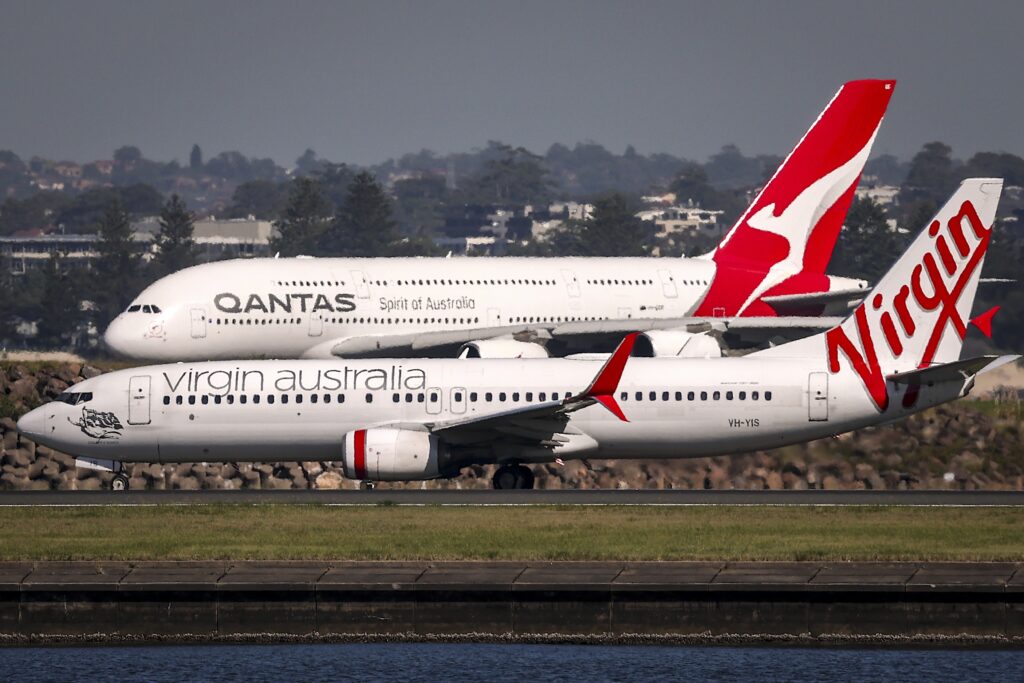
Virgin Australia climbed sharply as it re-entered the local share market Tuesday, a dramatic comeback from near bankruptcy more than four years ago.A 30-percent chunk of Virgin Australia, one of the few domestic rivals to Qantas, was sold in an initial public offering this month at Aus$2.90 a share to raise Aus$685 million (US$444 million).The price values the entire airline at Aus$2.3 billion.The stock, which listed on the Australian Securities Exchange at noon, climbed 8.6 percent from the offer price in the first five minutes of trade.US private equity giant Bain Capital came to the airline’s rescue in late 2020 after the Australian government refused to bail it out as the Covid-19 pandemic brought international travel to a standstill. “Today marks the start of an exciting new chapter for Virgin Australia as a publicly listed company,” said airline chairman Peter Warne.”Our listing reflects the remarkable work undertaken over the past five years to transform the airline and position it for long-term success,” he said in a statement.After selling a 30-percent stake in Virgin Australia in the initial public offering, Bain now holds about 40 percent of the airline.Qatar Airways bought a 25 percent share in the carrier this year.Qatar’s entry injected a dose of foreign competition against Australia’s dominant carrier Qantas and its budget offshoot Jetstar, which together carry more than 60 percent of domestic passengers.”We are proud of how far we have come and energised by the opportunities ahead as we continue to realise our ambition of being Australia’s most loved airline,” Virgin Australia chief executive Dave Emerson said.
Asian stocks up as Trump announces Iran-Israel ceasefire
Asian shares gained and oil prices were down Tuesday, as fears of an energy market shock eased following US President Donald Trump’s announcement of a ceasefire between Iran and Israel.Investors were relieved that Iran did not retaliate to a US attack on its nuclear facilities by throttling oil transport through the strategic Strait of Hormuz.On Monday, Iran said it had launched missiles at a major US base in Qatar, which described the situation as stable, while analysts said oilfield assets were unaffected.”Tehran played it cool. Their ‘retaliation’ hit a US base in Qatar — loud enough for headlines, quiet enough not to shake the oil market’s foundations,” said Stephen Innes at SPI Asset Management.”And once that became clear, the war premium came crashing out of crude,” with Brent and the main US crude contract WTI sliding more than seven percent overnight.Both oil contracts were down over two percent on Tuesday.In Asia, the mood was largely upbeat, with Tokyo and Hong Kong up 1.4 percent, Shanghai gaining 0.8 percent and Seoul jumping 2.7 percent.Singapore gained 0.7 percent, Sydney was up 1.1 percent and Taipei put on 1.8 percent, but Jakarta was down 1.7 percent.Trump said Iran and Israel had agreed to a staggered ceasefire that would bring about an “official end” to their conflict, as strikes continued to hammer Tehran.Iran’s foreign minister said Tuesday that Tehran did not intend to continue its strikes if Israel stopped its attacks.”Details of the ceasefire agreement are still sparse at the time of writing and as such the detente and de-escalation is not a done deal,” wrote Michael Wan at MUFG.”Nonetheless, latest news reports suggest Iran has agreed to the ceasefire and if this is right, the left tail risk of more extreme scenarios resulting in significant oil supply disruptions have meaningfully diminished.”In forex markets, the dollar gave up gains after Federal Reserve Governor Michelle Bowman said she would support cutting interest rates at July’s meeting if inflation holds steady.The market currently expects the Fed to resume cutting interest rates in September.Bowman indicated that “ongoing progress in tariff negotiations providing a less risky economic environment to adjust policy”,” prompting the dollar to weaken, Wan said.- Key figures at around 0200 GMT -Tokyo – Nikkei 225: UP 1.4 percent at 38,873.07Hong Kong – Hang Seng Index: UP 1.4 percent at 24,025.13Shanghai – Composite: UP 0.8 percent at 3,886.66Euro/dollar: UP at $1.1590 from $1.1581 on MondayPound/dollar: UP at $1.3539 from $1.3526Dollar/yen: DOWN at 145.66 yen from 146.12 yenEuro/pound: FLAT at 85.60 penceWest Texas Intermediate: DOWN 2.3 percent at $66.19 per barrelBrent North Sea Crude: DOWN 2.2 percent at $69.24 per barrelNew York – Dow: UP 0.9 percent at 42,581.78 (close)London – FTSE 100: DOWN 0.2 percent at 8,758.04 (close)
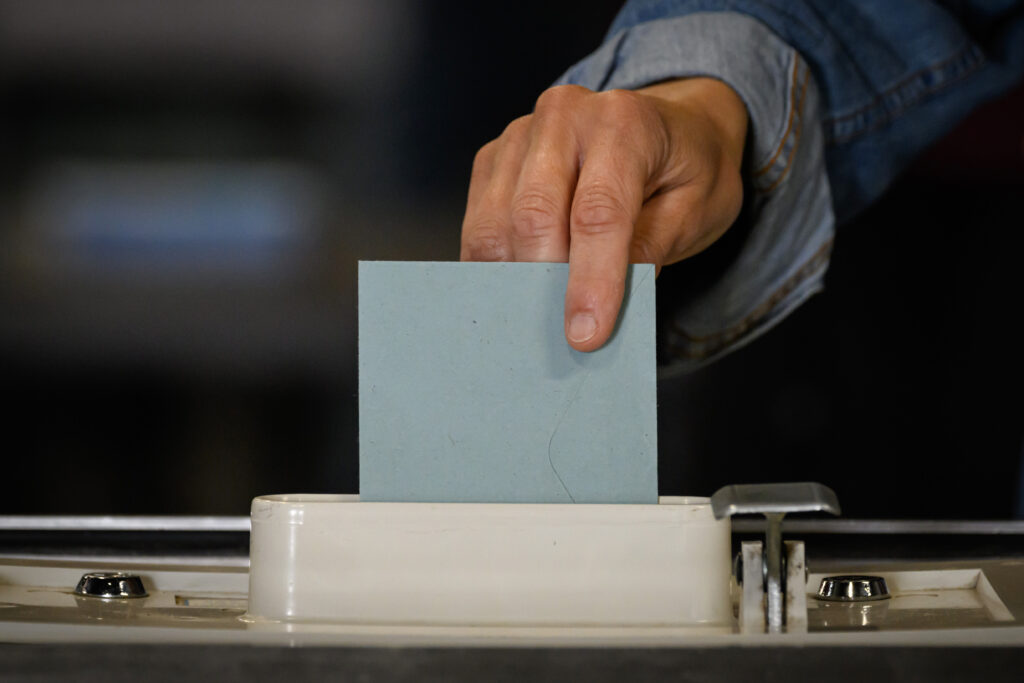
Municipales Paris-Lyon-Marseille: le camp gouvernemental face à ses divisions internes
Risque de fracture ? Divisé sur la réforme du scrutin municipal à Paris, Lyon et Marseille, le camp gouvernemental va afficher mardi ses dissensions lors d’une commission mixte paritaire, réunion de parlementaires chargés d’aboutir à un compromis. Son issue est très incertaine.L’Assemblée nationale a voté pour, le Sénat a voté contre, mais François Bayrou y tient: à neuf mois des élections municipales, le Premier ministre espère toujours l’émergence in extremis d’un accord au Parlement sur cette réforme critiquée. C’est tout l’objet de la commission mixte paritaire (CMP) convoquée à 9h30 au Sénat. A huis clos, sept députés et sept sénateurs vont tenter d’aligner leurs positions sur cette proposition de loi d’origine macroniste.Le texte entend mettre fin au mode de scrutin mis en place en 1982 dans la loi PLM, en vertu duquel les électeurs à Paris, Lyon et Marseille votent dans chaque arrondissement pour une liste de conseillers, les élus du haut de la liste siégeant au conseil d’arrondissement et au conseil municipal.Dans sa version approuvée par les députés, elle prévoit à la place d’instaurer deux scrutins, l’un pour élire les conseillers d’arrondissement ou de secteur, l’autre pour élire ceux du conseil municipal, sur une circonscription unique. – “Concertation” -Avec une ambition: rendre le scrutin “plus lisible”, rapprocher les électeurs du choix de leur maire et faire en sorte “qu’un électeur égale une voix”.Mais derrière cette formule simple se cachent d’importants enjeux électoraux et de grandes divergences de vues.Y sont favorables: le parti présidentiel Renaissance, le MoDem du Premier ministre, le Rassemblement national, la France insoumise et le groupe Les Républicains (LR) de l’Assemblée nationale.A l’inverse, les socialistes et les sénateurs LR y sont quasi unanimement opposés, jugent la réforme bâclée et téléguidée par Rachida Dati, qui espère via ce texte être en meilleure posture pour ravir Paris à la gauche.Ce scénario est rarissime dans la configuration politique actuelle, où l’exécutif se repose énormément sur le Sénat pour faire cheminer les textes législatifs, là où il ne dispose d’aucune majorité à l’Assemblée nationale.L’influent président du Sénat, Gérard Larcher (LR), ne goûte guère cette obstination du locataire de Matignon. Il lui avait fait savoir par courrier, appelant à plus de “concertation” et obtenant du même coup un report d’une semaine de cette CMP.Ce délai a permis aux rapporteurs des deux chambres d’entrer en contact pour évoquer les contours d’un accord. Mais lundi après-midi, il n’y avait “pas d’accord”, selon une source parlementaire. Le même pessimisme régnait auprès de la plupart des parlementaires sollicités.- Rapport de force serré -Il faudra sortir la calculette: sur les 14 parlementaires disposant d’un droit de vote, sept sont favorables à la réforme quand six y sont défavorables… La position du 14e représentant, le sénateur Horizons Marc Laménie, sera très scrutée.Comme en séance publique, il devrait s’abstenir, a-t-on appris auprès de son groupe parlementaire Les Indépendants dans la soirée. Mais son choix “dépendra des propositions de rédaction nouvelles” soumises en CMP, a-t-on ajouté.Une abstention du parti d’Edouard Philippe offrirait logiquement une majorité aux “pro-réforme”, à sept voix contre six. Mais l’incertitude demeure.Qu’il y ait accord ou non, le texte devra de toute façon repasser par les deux chambres du Parlement avant d’aboutir, avec la possibilité pour le gouvernement de donner le dernier mot à l’Assemblée nationale, au risque de se mettre les sénateurs à dos.”Je n’imagine pas qu’un texte puisse être adopté sur ce sujet sans qu’il y ait accord de l’Assemblée nationale et du Sénat”, avait pourtant prévenu François Bayrou dès février. Les sénateurs n’ont pas oublié: “Le Premier ministre doit respecter sa parole. En cas de désaccord, la réforme ne peut pas aller plus loin”, martèle auprès de l’AFP la sénatrice LR Catherine Di Folco, membre de la CMP.Les répercussions de ce débat risquent aussi d’agiter le gouvernement, car le ministre de l’Intérieur Bruno Retailleau ne la voit pas d’un bon oeil.”Si François Bayrou fait voter cette loi sans le Sénat, c’est un petit accroc dans l’entente”, reconnaît une ministre. “En tout cas Gérard Larcher sera assez mécontent”. François Bayrou prendra-t-il ce risque ?
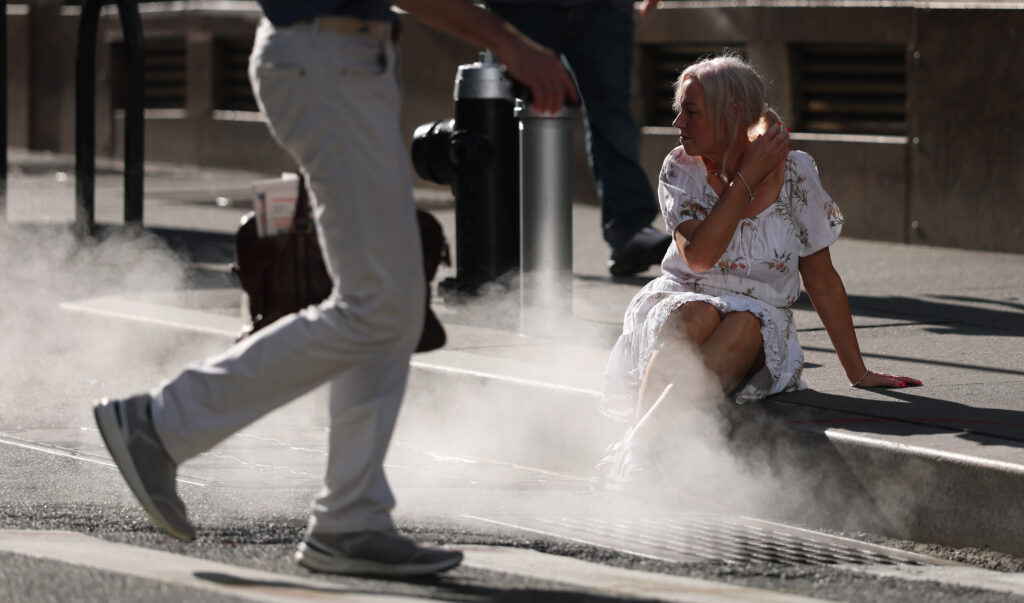
Millions in US sweat out first extreme heat wave of year
A potentially life-threatening heat wave enveloped the eastern third of the United States on Monday impacting nearly 160 million people, with temperatures this week expected to reach 102 degrees Fahrenheit (39 degrees Celsius) in the New York metropolitan area.The country’s first significant scorching heat of the year triggered health warnings as it arrived over the weekend. Dangerously high temperatures are forecast through Wednesday in Washington, Baltimore, Philadelphia, New York City and Boston.”This extreme heat will not just be uncomfortable and oppressive for New Yorkers,” warned Mayor Eric Adams, adding that each year heat claims the lives of 500 people in this city of eight million.”It’s going to be brutal and dangerous if you do not treat it with the understanding that we want you to,” he added.As sweltering heat baked the city, authorities urged seniors, people with health problems and those without air conditioning to stay hydrated and seek help at designated cooling centers such as libraries and recreation facilities. Heat records tumbled across parts of the US Northeast. In Central Park, known as the lungs of Manhattan, Monday’s temperature of 96F (36C) tied a record that has stood since 1888, according to the National Weather Service.”Extreme Heat Warnings and Heat Advisories across much of the eastern third of the country (are) affecting nearly 160 million people” across at least 29 states, the NWS reported. “This level of HeatRisk is known for being rare and/or long duration with little to no overnight relief, and affects anyone without effective cooling and/or adequate hydration,” the agency warned.Meteorologists are describing the intensifying weather pattern as a heat dome, a high-pressure system that traps air and leads to steadily rising thermal readings.Extreme heat is the deadliest weather-related hazard in the United States, leading to more fatalities than natural disasters like hurricanes or tornadoes.For many in the Big Apple, avoiding work in the searing heat was not an option.”We have to endure it, because otherwise what are we going to survive on?” Manuel, a manual worker repairing a building facade in New York’s Harlem neighborhood, told AFP.”Sometimes we stop because it’s a danger. We don’t all have the same energy, but you have to endure,” he added.In the Washington Heights neighborhood, authorities opened several fire hydrants so residents could seek relief with the gushing water.One of the local heroes was Ronald Marcelin, a 44-year-old air conditioning technician sweating profusely as he repaired a pizzeria’s AC unit.”I’m taking the heat so that everyone else can cool down,” Marcelin said with a grin.- Triple digits -The soaring temperatures come just as New Yorkers head to the polls Tuesday — with a forecast high of 102F (39C) — for the Democratic primary that will decide the party’s mayoral candidate.It promises to be a tight race between Andrew Cuomo, who is seeking political resurrection after resigning in disgrace as state governor in 2021, and rising left-wing star Zohran Mamdani.Over the weekend, Cuomo urged residents to cast their votes even if the temperatures hit triple digits.In Washington, the heat index — what the temperature feels like with humidity factored in — was forecast to soar as high as 110F (43C) on Monday, and the mayor’s office urged residents to take advantage of cooling centers and public swimming pools.Scientists say extreme heat waves are a clear sign of global warming, and they are expected to become more frequent, longer, and more intense.Fueled by human-caused climate change, 2024 was the warmest year on record globally — and 2025 is projected to rank among the top three.