LVMH Italian fashion house Loro Piana put under court administration

Italian fashion house Loro Piana, owned by French giant LVMH, has been placed under court administration for allegedly facilitating the exploitation of workers by subcontractors.In a statement, the carabinieri police said the company had been deemed “incapable of preventing or curbing labour exploitation within the production cycle by failing to implement adequate measures to verify the actual working conditions or the technical capacities of its contractors”.An investigation found the fashion house entrusted the production of its clothing, including cashmere jackets, to a company without production facilities.That firm outsourced the work to another company, which in turn used workshops in Italy employing Chinese workers to save costs, the statement said.In these workshops, irregular workers were exploited without respecting health and safety rules, particularly regarding wages, working hours, breaks and holidays, investigators found.The judges of the Milan court found that Loro Piana “negligently facilitated” the exploitation, according to the police statement.The court however stressed that the one-year administration was intended as “preventative”, not a punishment, according to the court document seen by AFP.It was aimed at “combating the unlawful contamination of healthy businesses by subjecting them to judicial oversight” where they can be removed from “criminal infiltration”.In a statement, Loro Piana said it had terminated ties with its supplier within 24 hours of discovering the existence of its subcontractors on May 20, and was fully cooperating with authorities.”Loro Piana strongly condemns any illegal practices and reaffirms its ongoing commitment to protecting human rights and complying with all applicable regulations throughout its entire supply chain,” it said.The investigation began in May following a complaint from a Chinese worker who claimed he was beaten by his boss after demanding payment of back wages, police said.The police carried out inspections in factories run by Chinese citizens in the area surrounding Milan, finding violations of workplace rules as well as illegally built dormitories and unsanitary conditions.Proceedings were brought against two Chinese nationals who owned workshops, two Italians for violations of workplace health and safety standards, and seven workers without residence permits. The court also imposed fines totalling over 181,000 euros ($211,000) and administrative penalties of around 60,000 euros.The operations of two Chinese workshops were also suspended “for serious safety violations and the use of undeclared labour”, the police statement said.Loro Piana was acquired by LVMH in 2013, and is currently led by Frederic Arnault, son of LVMH chairman Bernard Arnault.The company did not comment on the proceedings in Milan.The Italian justice system has already carried out similar proceedings against other fashion houses including Armani.In May, the Italian competition authority cleared luxury brand Dior — also owned by LVMH — of violations in working conditions but required it to pay a two-million-euro fine towards “victims of exploitation”.
Markets rise as China’s economy meets forecasts

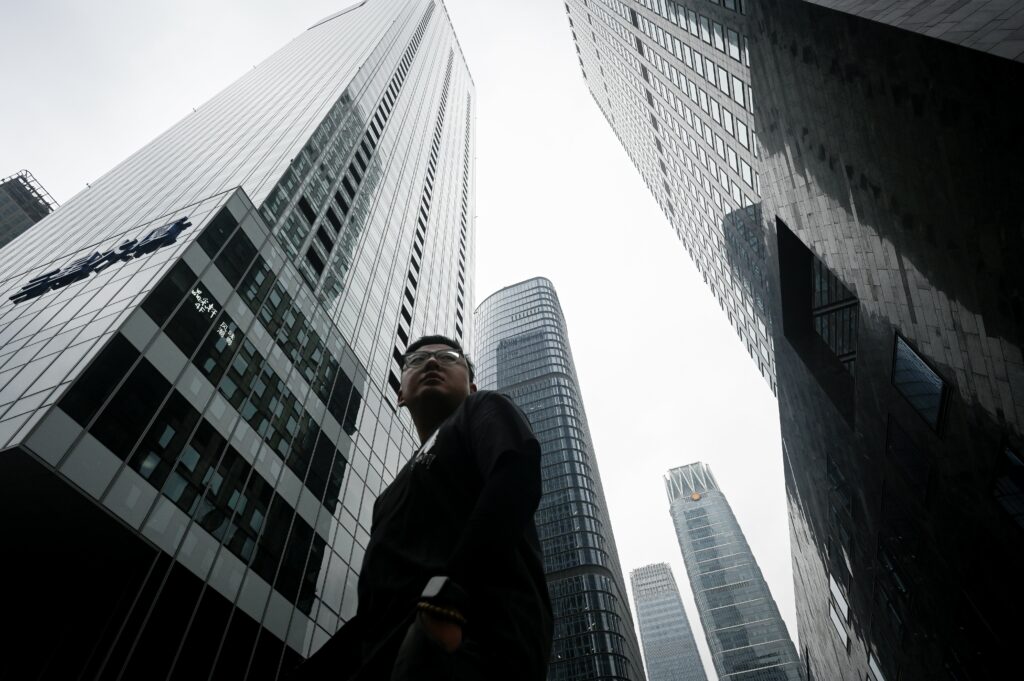
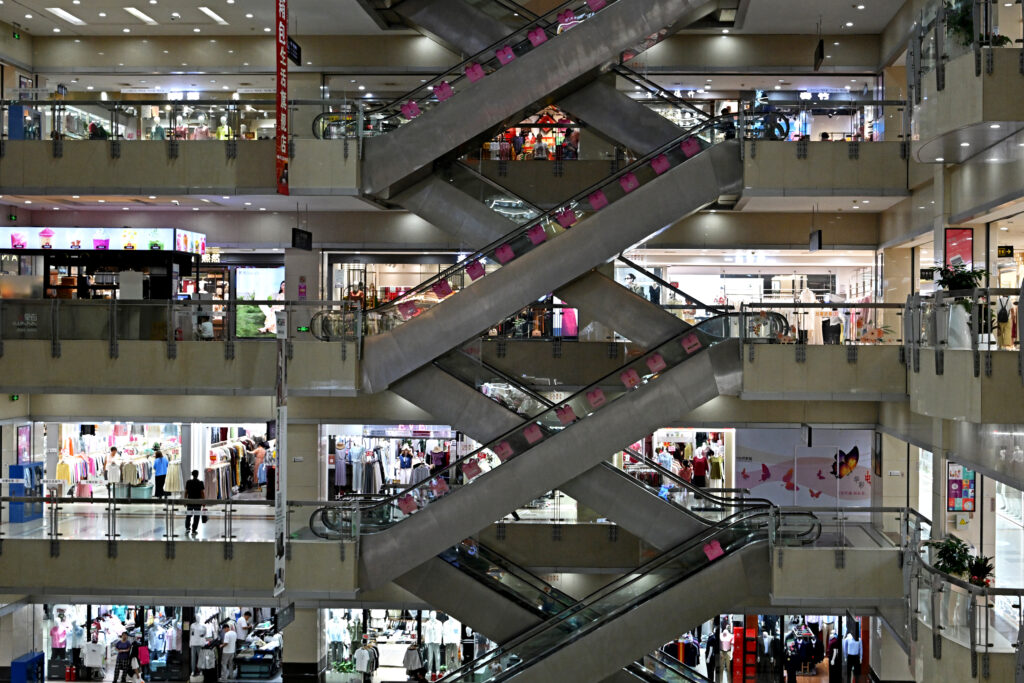
Markets rose Tuesday as data showed China’s economic growth met expectations, while optimism that governments will hammer out deals to avoid the worst of Donald Trump’s tariff threats provided support.Beijing said gross domestic product expanded 5.2 percent in April-June thanks to a surge in exports as businesses front-loaded shipments ahead of the US president’s stiff levies, and after the superpowers agreed to work on a long-term pact.While the reading was slightly slower than the first quarter, it was in line with forecasts in an AFP survey and comes after figures on Monday showed exports soared more than expected in June, including a strong recovery in goods sent to the United States.Industrial output came in above expectations.However, Tuesday’s reports showed efforts to boost consumer activity continue to fall flat, with retail sales expanding 4.8 percent last month, well below estimates in a Bloomberg study and highlighting the work leaders face in kickstarting the economy.”Recent efforts to boost spending, such as the broadening of the consumer goods trade-in scheme earlier this year, did temporarily lift retail sales,” said Sarah Tan, an economist at Moody’s Analytics.”However, this support proved unsustainable, with funding reportedly drying up in several provinces. The scheme’s limitations highlight the need for policymakers to address the deeper structural challenges behind consumer caution.”China’s recovery has been hamstrung by a bruising trade war with the United States, driven by Trump’s sweeping tariffs, though the two de-escalated their spat with a framework for a deal at talks in London last month.But observers warn of lingering uncertainty.And the US president upped the ante Monday, warning Russia’s trading partners — which include China — that he will impose tariffs reaching 100 percent if Moscow fails to end its war on Ukraine within 50 days.Lynn Song, chief economist for Greater China at ING, said: “China remains on track to hit this year’s growth target, though a slowdown could be on the way.”Still, after a wobble in the morning Hong Kong rose more than one percent while Tokyo, Sydney, Seoul, Singapore, Taipei, Wellington, Mumbai and Jakarta were also in positive territory along with London, Frankfurt and Paris.Shanghai and Manila sank.US futures rallied following news that tech titan Nvidia will resume sales of its H20 artificial intelligence chips to China, after Washington pledged to remove licensing curbs that had put a stop to exports.Trump also said Monday he will impose antidumping duties on most imports of fresh tomatoes from Mexico, with the US Commerce Department accusing its neighbour of engaging in unfair trade.That came after he said he would hit the country and the European Union with 30 percent levies, having announced a slew of measures against key partners last week if deals are not struck by August 1.However, analysts said investors viewed the warnings as negotiating ploys rather than a genuine move, citing previous threats that were later rowed back.The mixed performance in Asian markets followed a healthy day on Wall Street, where the Nasdaq hit another record high.Bitcoin retreated after hitting a record high above $123,200 on Monday thanks to optimism over possible regulatory changes for crypto assets in the United States.- Key figures at around 0810 GMT -Tokyo – Nikkei 225: UP 0.6 percent at 39,678.02 (close)Hong Kong – Hang Seng Index: UP 1.6 percent at 24,590.12 (close)Shanghai – Composite: DOWN 0.4 percent at 3,505.00 (close)London – FTSE 100: UP 0.1 percent at 9,004.23 Euro/dollar: UP at $1.1690 from $1.1670Pound/dollar: UP at $1.3447 from $1.3428Dollar/yen: DOWN at 147.65 yen from 147.77 yenEuro/pound: UP at 86.94 pence from 86.88 penceWest Texas Intermediate: DOWN 0.9 percent at $66.37 per barrelBrent North Sea Crude: DOWN 0.8 percent at $68.66 per barrelNew York – Dow: UP 0.2 percent at 44,459.65 (close)

‘Dialogue’ must be at heart of China, Australia ties, PM tells Xi

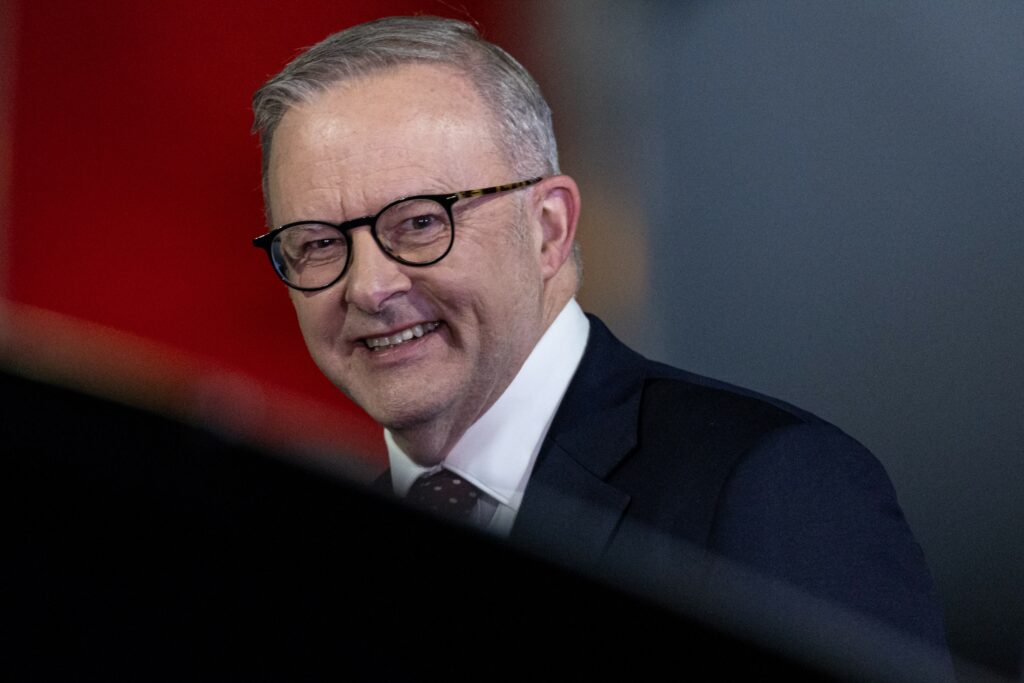
“Dialogue” must be at the heart of ties between Canberra and Beijing, Australian Prime Minister Anthony Albanese said on Tuesday as he met President Xi Jinping in the Chinese capital.Albanese is on his second visit to China as prime minister, seeking to bolster recently stabilised trade ties even as geopolitical tensions remain high.Relations between Beijing and Canberra have charted a bumpy course over the past decade, a period marked by repeated disagreements over national security and competing interests across the vast Pacific region.Ties improved in December when China called off a ban on imported Australian rock lobster, removing the final obstacle to ending a damaging trade war waged between the countries from 2017.Albanese met Xi in the Great Hall of the People and said he welcomed “the opportunity to set out Australia’s views and interests”.”Australia values our relationship with China and will continue to approach it in a calm and consistent manner, guided by our national interest,” Albanese, the leader of Australia’s centre-left Labor government, said.”It’s important we have these direct discussions on issues that matter to us and to the stability and prosperity of our region. As you and I have agreed previously, dialogue needs to be at the centre of our relationship,” he said.Xi, in turn, hailed the “benefits” of improved ties between China and Australia, saying the relationship had “risen from the setbacks and turned around”.”No matter how the international landscape may evolve we should uphold this overall direction unswervingly,” he said.Albanese told reporters after meeting Xi that the two countries had “strategic competition” in the region but continued to engage in order to “support peace and security”.- Key trading partner -China is one of Australia’s most important economic partners, accounting for nearly one-third of its total trade.Albanese is accompanied on his visit by a delegation of key business leaders who will attend a roundtable of CEOs in Beijing.His trip will last until Friday and will also take him to the southwestern city of Chengdu.Albanese is also accompanied by a travelling media pack, members of which said they were briefly surrounded by security guards and told to hand footage to police. A small group of reporters were filming outside Beijing’s Bell and Drum Towers when they were stopped by security guards.National broadcaster ABC’s reporter Stephen Dziedzic said he was “quickly surrounded by a number of security guards, who said they were going to call the police and we didn’t have permission to leave”. “We had the necessary permissions, we had the right visas, but nonetheless perhaps that hadn’t been passed all the way down the chain,” he told ABC. Australian broadcaster SBS, which also has a correspondent on the trip, reported that journalists were briefly surrounded and told to hand footage to police. The group was allowed to leave after Australian diplomats intervened, the ABC and SBS reported.Albanese’s trip also comes as China’s sweeping territorial claims ruffle feathers in the region, particularly pertaining to the South China Sea.Another key point of contention is the fate of northern Australia’s Darwin Port, whose Chinese-owned controller could be forced to sell it to a local buyer by Albanese’s government.Albanese said he raised with Xi the case of Australian writer Yang Hengjun, who has been detained in China since 2019 on spying charges and was given a suspended death sentence.He warned against expecting an immediate outcome, telling reporters “that’s not the way these things work” but instead required “patient, calibrated advocacy”.

Syrie: les forces gouvernementales entrent dans une ville druze après des combats meurtriers

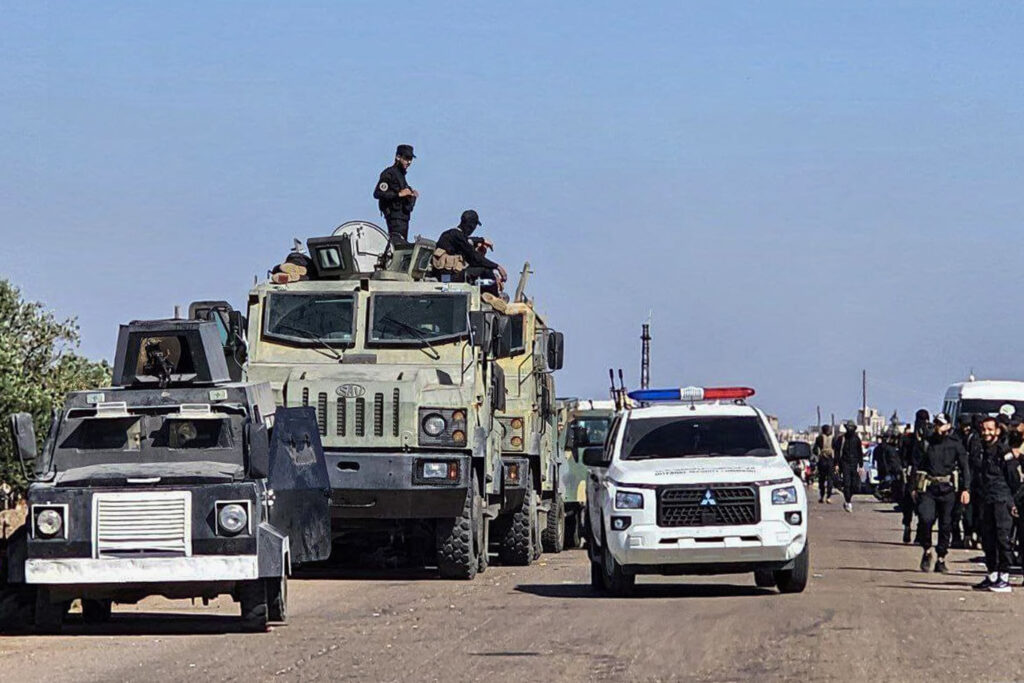
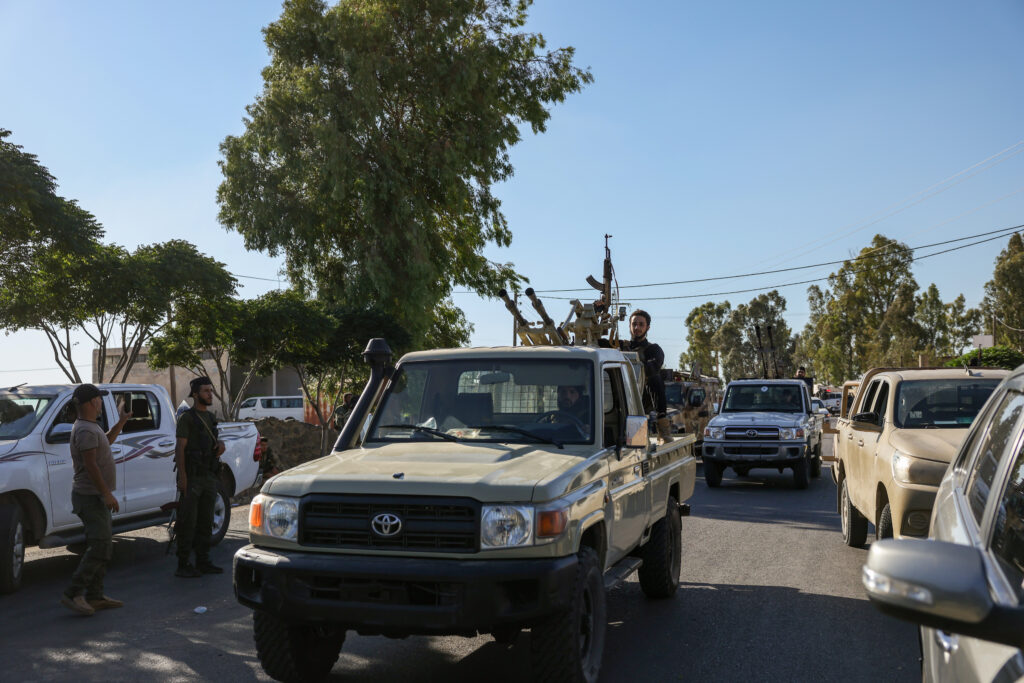
Les forces gouvernementales syriennes ont commencé à entrer à Soueïda, ville à majorité druze du sud de la Syrie, ont annoncé mardi les autorités après deux jours de combats meurtriers entre combattants druzes et bédouins ayant fait une centaine de morts.Un correspondant de l’AFP a entendu des explosions et des tirs après l’annonce de l’entrée des forces gouvernementales dans la ville.Ces nouvelles violences intercommunautaires illustrent les défis auxquels fait face le pouvoir intérimaire d’Ahmad al-Chareh depuis qu’il a renversé le président Bachar al-Assad en décembre, dans un pays meurtri par près de 14 ans de guerre civile.- Couvre-feu -Les chefs spirituels druzes ont indiqué dans un communiqué approuver l’entrée des forces gouvernementales à Soueïda et appelé les factions druzes à leur remettre leurs armes, après l’annonce du ministère de l’Intérieur qui a proclamé un couvre-feu dans la cité.Le ministère de la Défense a ensuite indiqué que les forces gouvernementales avaient commencé à entrer dans la ville et a appelé ses habitants “à rester chez eux et l’informer de tous les mouvements des groupes hors la loi”, en référence aux groupes druzes armés.”Les obus continuent de tomber autour de ma maison”, a déclaré à l’AFP un habitant de Soueïda, terré chez lui, qui a requis l’anonymat: “Nous entendons des explosions mais il n’y a plus de tirs d’armes automatiques”.Les affrontements avaient éclaté dimanche entre des combattants druzes et des tribus bédouines, aux relations tendues depuis des décennies. Les forces gouvernementales étaient intervenues, affirmant vouloir pacifier la région, mais ont pris part aux combats contre les factions druzes aux côtés des bédouins, selon l’Observatoire syrien des droits de l’homme (OSDH), des témoins et des groupes druzes.Des négociations avaient été lancées lundi entre les autorités syriennes et des représentants des druzes pour parvenir à un arrêt des combats dans cette région à majorité druze.Lundi, Israël avait annoncé avoir frappé dans cette région plusieurs chars des forces gouvernementales et ajouté qu’il ne permettrait pas de présence militaire dans le sud de la Syrie. Israël était déjà intervenu ces derniers mois en Syrie sous prétexte de protéger les druzes. – “Avertissement clair” -Ces frappes constituent “un avertissement clair au régime syrien. Nous ne permettrons pas que du mal soit fait aux druzes en Syrie”, a déclaré le ministre de la Défense, Israël Katz. Les forces gouvernementales avaient dépêché lundi d’importants renforts dans la région et avaient pris le contrôle de plusieurs localités druzes aux abords de Soueïda, selon un correspondant de l’AFP.La province de Soueïda abrite la plus importante communauté druze du pays, une minorité ésotérique issue de l’islam qui comptait quelque 700.000 membres en Syrie avant la guerre civile, et est aussi implantée au Liban et en Israël.Selon l’OSDH, les affrontements ont fait 99 morts, parmi lesquels 60 druzes, pour la plupart des combattants mais également deux femmes et deux enfants, 18 bédouins, 14 membres de forces de sécurité et sept hommes armés non identifiés.Le ministère de la Défense a fait état de 18 morts dans les rangs des forces armées.Les tensions couvaient depuis des heurts interconfessionnels en avril entre combattants druzes et forces de sécurité dans les zones druzes proches de Damas et à Soueïda, qui avaient fait plus de 100 morts.Des membres de tribus bédouines sunnites de Soueïda avaient participé aux affrontements au côté des forces de sécurité, selon l’OSDH.A l’époque, des chefs locaux et religieux avaient conclu des accords, en vertu desquels des combattants druzes assurent depuis mai la sécurité dans la province.Après la chute de Bachar al-Assad, renversé par une coalition de rebelles islamistes sunnites, les violences contre la communauté alaouite, qui ont fait plus de 1.700 morts, puis contre les druzes, ainsi qu’un attentat contre une église à Damas en juin, ont ébranlé la confiance dans la capacité du nouveau pouvoir à protéger les minorités.

Syrian forces enter Druze city after deadly clashes

Syrian government forces entered the majority Druze city of Sweida on Tuesday, the interior ministry said, aiming to end clashes with Bedouin tribes that have killed nearly 100 people.The southern city had been under the control of armed factions from the Druze minority, whose religious leaders said they had approved the deployment of Damascus’s troops and called on fighters to hand over their weapons.A curfew was to be imposed on the southern city in a bid to halt the violence, which erupted at the weekend and has since spread across Sweida governorate.Government forces said they intervened to separate the two sides but ended up taking control of several Druze areas around Sweida, an AFP correspondent reported.Military columns were seen advancing toward Sweida on Tuesday morning, with heavy artillery deployed nearby.The defence ministry said later that they had entered the city, and urged people to “stay home and report any movements of outlaw groups”.An AFP correspondent heard explosions and gunshots as soldiers moved into Sweida.Troops had begun heading towards the city on Monday, taking control of at least one Druze village, with one Druze faction saying talks were underway with the Damascus government.The Syrian Observatory for Human Rights war monitor reported 99 people killed since the fighting erupted on Sunday — 60 Druze, including four civilians, 18 Bedouin fighters, 14 security personnel and seven unidentified people in military uniforms.The defence ministry reported 18 deaths among the ranks of the armed forces.While Druze religious authorities had called on Monday evening for a ceasefire and said they didn’t oppose the central government, Sheikh Hikmat al-Hijri, one of the three Druze spiritual leaders in Sweida, opposed the arrival of the security forces and called for “international protection”.Israel, which has attempted to portray itself as a protector of the Druze in Syria and sees them as potential allies, bombed several Syrian tanks on Monday.The strikes were “a clear warning to the Syrian regime — we will not allow harm to be done to the Druze in Syria”, said Defence Minister Israel Katz, whose country has its own Druze population.- ‘Extreme terror’ -The fighting underscores the challenges facing interim leader Ahmad al-Sharaa, whose Islamist forces ousted president Bashar al-Assad in December after nearly 14 years of civil war.Syria’s pre-war Druze population was estimated at around 700,000, many of them concentrated in Sweida province.The Druze, followers of an esoteric religion that split from Shiite Islam, are mainly found in Syria, Lebanon and Israel.Following deadly clashes with government forces in April and May, local and religious leaders reached an agreement with Damascus under which Druze fighters had been providing security in the province.”We lived in a state of extreme terror — the shells were falling randomly,” said Abu Taym, a 51-year-old father.Amal, a 46-year-old woman, said: “We fear a repeat of the coastal scenario”, referring to massacres in March of more than 1,700 mostly Alawite civilians in northwest Syria, where groups affiliated with the government were blamed for most of the killings.”We are not against the state, but we are against surrendering our weapons without a state that treats everyone the same,” she added.In a post on X, Syrian Defence Minister Murhaf Abu Qasra urged his troops to “protect your fellow citizens” from “outlaw gangs”, and to “restore stability to Sweida”.The violence began on Sunday when Bedouin gunmen abducted a Druze vegetable vendor on the highway to Damascus, prompting retaliatory kidnappings.The Observatory said members of Bedouin tribes, who are Sunni Muslims, had sided with security forces during earlier confrontations with the Druze.Bedouin and Druze factions have a longstanding feud in Sweida, and violence occasionally erupts between the two sides.

‘World’s oldest marathon runner’ dies aged 114 in road accident

India’s Fauja Singh, believed to be the world’s oldest distance runner, has died in a road accident aged 114, his biographer said Tuesday.Singh, an Indian-born British national, nicknamed the “Turbaned Tornado”, died after being hit by a vehicle in Punjab state’s Jalandhar district on Monday.”My Turbaned Tornado is no more,” Fauja’s biographer Khushwant Singh wrote on X.”He was struck by an unidentified vehicle… in his village, Bias, while crossing the road. Rest in peace, my dear Fauja.”Singh did not have a birth certificate but his family said he was born on April 1, 1911.He ran full marathons (42 kilometre) till the age of 100. His last race was a 10-kilometre (six-mile) event at the 2013 Hong Kong Marathon when 101, where he finished in one hour, 32 minutes and 28 seconds.He became an international sensation after taking up distance running at the ripe old age of 89, after the death of his wife and one of his sons, inspired by seeing marathons on television. Although widely regarded as the world’s oldest marathon runner, he was not certified by Guinness World Records as he could not prove his age, saying that birth certificates did not exist when he was born under British colonial rule in 2011.Singh was a torchbearer for the Olympics at Athens 2004 and London 2012, and appeared in advertisements with sports stars such as David Beckham and Muhammad Ali.His strength and vitality were credited to a routine of farm walks and a diet including Indian sweet “laddu” packed with dry fruits and home-churned curd.Indian Prime Minister Narendra Modi paid tribute on social media.”Fauja Singh was extraordinary because of his unique persona and the manner in which he inspired the youth of India on a very important topic of fitness,” said Modi on X”He was an exceptional athlete with incredible determination. Pained by his passing away. My thoughts are with his family and countless admirers around the world.”

Les Bourses européennes ouvrent en légère hausse

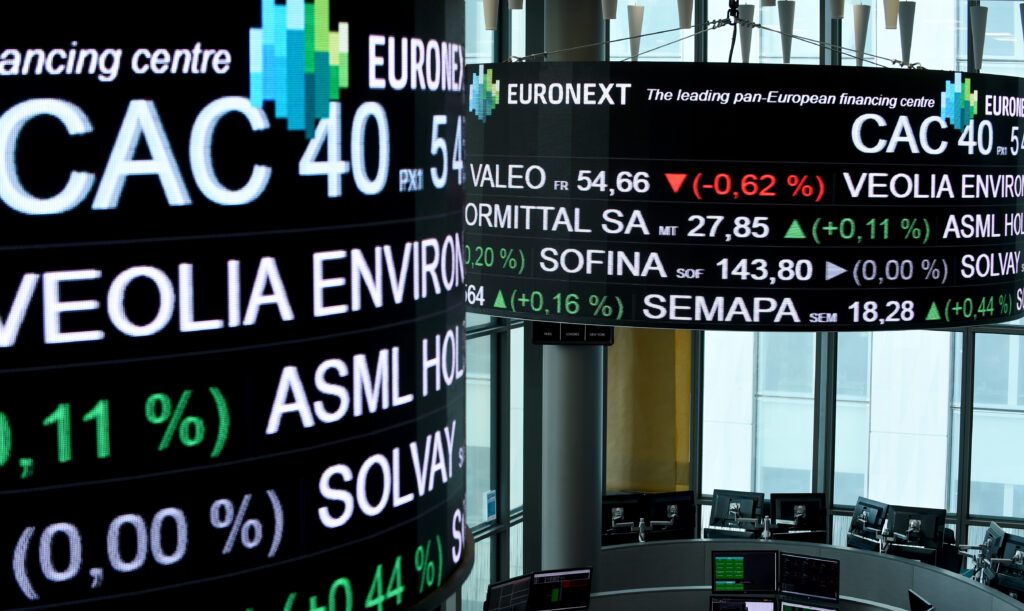
Les marchés boursiers européens ont ouvert en légère hausse mardi, dans l’attente des chiffres d’inflation en juin aux Etats-Unis et sur fond de négociations commerciales entre Washington et ses partenaires.Vers 7H05 GMT, dans les premiers échanges, Paris prenait 0,18%, Londres 0,10% et Francfort 0,26%. Milan gagnait 0,29%.

Chine: la croissance dépasse les 5% en juin, portée par les exportations

La croissance de l’économie chinoise a dépassé 5% au deuxième trimestre, selon des données officielles publiées mardi, notamment grâce à des exportations vigoureuses malgré une consommation intérieure toujours mitigée.La Chine est confrontée à plusieurs défis pour atteindre l’objectif officiel de croissance “d’environ 5%” pour 2025, compliqué par le bras de fer commercial engagé par le président américain Donald Trump.La deuxième économie mondiale fait aussi face à un moral des consommateurs en berne, sur fond de longue crise de l’immobilier et de prix stagnants.Malgré ces difficultés, le PIB chinois a officiellement grimpé de 5,2% au deuxième trimestre de l’année, soit un ralentissement de 0,2 point par rapport au trimestre précédent (+5,4%).Ce rythme est conforme aux prévisions d’économistes interrogés par l’AFP la semaine dernière – bien que certains appellent à prendre ces statistiques officielles avec des pincettes.Les marchés ont réagi de façon contrastée à ces annonces: après un bon départ, Hong Kong a réduit ses gains et Shanghai est passée dans le rouge.Ailleurs en Asie, Tokyo, Sydney, Singapour et Taipei ont terminé en hausse, tandis que Séoul, Wellington et Manille ont reculé.”L’économie nationale a résisté à la pression et a progressé de manière régulière malgré les défis”, s’est félicité mardi Sheng Laiyun, directeur adjoint du Bureau national des statistiques, vantant “des politiques macroéconomiques plus proactives et efficaces”.L’Etat-parti chinois a multiplié depuis l’an dernier les mesures de stimulation à la consommation, à l’image d’un vaste programme de subventions pour le remplacement de biens de consommation.Indicateur clé du moral des consommateurs, les ventes au détail en Chine ont grimpé de 4,8% en juin, un rythme toutefois inférieur aux prévisions d’économistes sondés par l’agence Bloomberg (+5,3%).La production industrielle a de son côté bondi de 6,8% en juin, dépassant les anticipations (+5,6%).Mais les économistes anticipent un ralentissement dans les mois à venir, que les exportations pourraient ne plus être en mesure de compenser. “La croissance est plus faible que ne le suggèrent les chiffres officiels”, affirme Zichun Huang de Capital Economics.”Avec des droits de douane appelés à rester élevés, une marge de manoeuvre budgétaire de plus en plus limitée et des vents contraires structurels persistants, la croissance devrait encore ralentir au second semestre”, ajoute l’économiste.- “Problèmes structurels” -Les exportations chinoises ont atteint des records l’an dernier et en début d’année, en partie stimulées par la crainte d’une aggravation du conflit commercial avec Washington.En juin, les exportations ont grimpé de 5,8% sur un an, selon les données des douanes chinoises.Mais cet effet d’anticipation pourrait s’atténuer dans les mois suivants, alertent les analystes. “Le prix à payer pour des exportations solides, c’est davantage de déflation”, souligne dans une note Louise Loo, économiste chez Oxford Economics.Or, la déflation est redoutée par les économistes car elle tend à freiner la consommation.Après quatre mois de déflation, les prix à la consommation ont légèrement augmenté en juin, selon des chiffres officiels publiés la semaine dernière, mais les prix à la sortie des usines ont chuté à leur rythme le plus rapide depuis près de deux ans.”Les efforts récents pour stimuler les dépenses (…) ont temporairement soutenu les ventes au détail”, note Sarah Tan, économiste chez Moody’s Analytics. Mais “ce soutien s’est révélé difficile à maintenir, (…) les autorités doivent s’attaquer aux problèmes structurels plus profonds qui freinent la consommation”.Sur le front international, des différends profonds persistent aussi entre Pékin et Washington, malgré un accord-cadre conclu lors de négociations à Londres le mois dernier.Les alliés de Kiev exhortent notamment la Chine — allié commercial clé de la Russie — à user de son influence pour stopper le président russe Vladimir Poutine dans son invasion de l’Ukraine.Le président américain a encore durci le ton lundi, avertissant les partenaires commerciaux de la Russie qu’il imposerait des droits de douane “très sévères” pouvant atteindre 100% si Moscou ne mettait pas fin à la guerre d’ici 50 jours.