Indonesia ferry fire kills three, more than 500 rescued

Three people died and more than 500 others were rescued after a ferry caught fire off the Indonesian island of Sulawesi, emergency officials said Monday.Passengers jumped overboard with lifejackets after the fire broke out on Sunday at the stern of the KM Barcelona 5, as it sailed to Manado, according to the Indonesian coast guard.A video released by the Manado rescue agency showed a coast guard vessel spraying water on the ferry, which was emitting black smoke. Indonesian authorities previously reported five people died in the accident, but later revised the death toll to three.”Until now, the joint rescue team is still conducting the search and rescue operation because the data is still developing,” Manado rescue agency head George Leo Mercy Randang told AFP on Monday.”Our post is still open 24 hours a day, in case families want to report about their missing relative.”At least 568 people were rescued from the ferry and water while three others were found dead, the national search and rescue agency said in a statement Monday.The ferry’s log had only registered 280 passengers and 15 crew on board.Local media reported that the ship had a capacity for 600 people.Marine accidents are a regular occurrence in the Southeast Asian archipelago of around 17,000 islands, in part due to lax safety standards or bad weather.Sunday’s fire came just weeks after another ferry sank off the popular resort island of Bali due to bad weather, killing at least 19 people.In March, a boat carrying 16 people capsized in rough waters off Bali, killing an Australian woman and injuring at least one other person.And in 2018, more than 150 people drowned when a ferry sank in one of the world’s deepest lakes on Sumatra Island.

Libya commander Haftar seeks to force international engagement

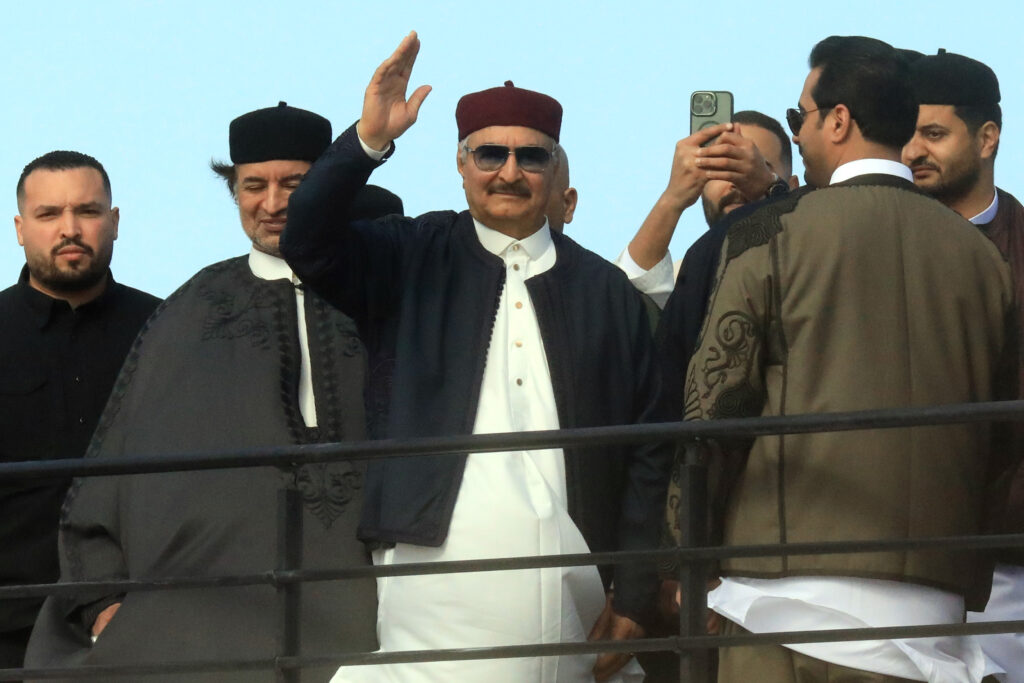
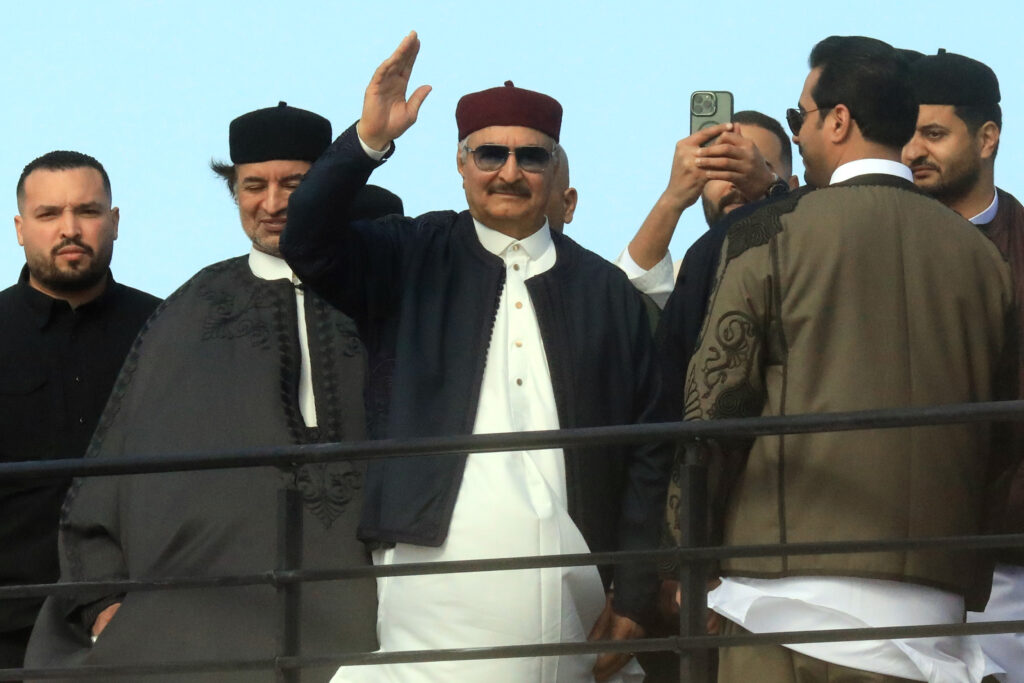
Libya’s eastern authorities recently expelled a senior European delegation in a move analysts say was meant to send a message: the unrecognised administration backed by military leader Khalifa Haftar cannot be ignored.On July 8, an EU commissioner and ministers from Greece, Italy and Malta were in Libya to discuss irregular migration from the North African country.Their visit was divided in two, as is Libya, which is still grappling with the aftermath of the armed conflict and political chaos that followed the 2011 NATO-backed uprising that toppled longtime dictator Moamer Kadhafi.The delegation first visited the capital Tripoli, seat of the internationally recognised Libyan government of Prime Minister Abdelhamid Dbeibah.They then travelled to Benghazi, in the east, where a rival administration backed by Haftar and his clan is based, and with whom the EU has generally avoided direct contact.Almost immediately, a reported disagreement prompted the eastern authorities to accuse the European delegation of a “flagrant breach of diplomatic norms”, ordering the visiting dignitaries to leave.In Brussels, the European Commission admitted a “protocol issue”.Tarek Megerisi, a senior policy fellow at the European Council on Foreign Relations think tank, said the scene at the airport “was a calculated move”.Haftar was playing to EU fears of irregular migration in order “to generate de facto European recognition”, and thus “broaden relations with Europe away from just engagement with him as a local military leader”. Turning the delegation away showed that declining to engage with the eastern civilian administration was no longer an option.- ‘Punish Athens’ -The complex situation in Libya has required unusual diplomacy.European governments recognise and work with the Tripoli-based government and not the eastern administration, but still hold contact with Haftar’s military forces.In their visit earlier this month, the European commissioner and ministers were meant to meet with eastern military officials.But once at the Benghazi airport, they saw “there were people there that we had not agreed to meet”, a European official in Brussels told journalists on condition of anonymity.”We had to fly back,” the official said, adding that “of course” it was linked to recognition of the eastern government.Claudia Gazzini, a Libya expert at the International Crisis Group, said she did not believe “it was a premeditated incident”.But “the question does present itself as to why” ministers from the eastern government were at the airport in the first place, and why Haftar would let it play out the way it did, she said.”We can’t completely rule out that there was some particular issue or bilateral disagreement with one of the countries represented in the delegation,” Gazzini added.Libya expert Jalel Harchaoui suggested Greece may have been the target.On July 6, two days before the axed visit, “the Greek foreign minister had come to demand concessions on migration and maritime (issues) without offering any tangible incentives”, Harchaoui said.Despite Haftar’s personal involvement, the July 6 visit “had yielded nothing”, added the expert.Then, on July 8, “a Greek representative — this time as part of an EU delegation — wanted to negotiate on the same day with the rival Tripoli government, placing the two governments on an equal footing”, he said.This was “an affront in Benghazi’s view”, Harchaoui said, and the administration wanted to “punish Athens”.- Legitimacy -To Harchaoui, the diplomatic flap was a sign not to “underestimate” the Haftars’ foreign policy.”The Haftar family is an absolutely essential actor” in tackling the influx of migrants or, for example, advancing energy projects, due to its key role in securing Libya’s eastern coast, said Harchaoui.The message delivered at the Benghazi airport “is clear: take the eastern faction seriously”, he added.Harchaoui said that the Haftars, already “rich in cash and strong” in terms of strategic assets, have recently increased efforts to “consolidate their legitimacy”.Haftar himself was hosted in February by French President Emmanuel Macron, and in May by Russia’s Vladimir Putin.And Haftar’s son, Saddam, recently visited the United States, Turkey, Italy and Niger.Even Ankara, which has provided support for the Tripoli-based government in repelling attacks from the east, “is now seeking to further profit off the Haftars through things like construction projects”, said Megerisi.He added that Turkey also has wider geopolitical ambitions, hoping to see the Haftars endorse a maritime border agreement in the eastern Mediterranean, which Tripoli had already signed but Athens regards as illegal.

Libya commander Haftar seeks to force international engagementMon, 21 Jul 2025 03:52:55 GMT

Libya’s eastern authorities recently expelled a senior European delegation in a move analysts say was meant to send a message: the unrecognised administration backed by military leader Khalifa Haftar cannot be ignored.On July 8, an EU commissioner and ministers from Greece, Italy and Malta were in Libya to discuss irregular migration from the North African …

Libya commander Haftar seeks to force international engagementMon, 21 Jul 2025 03:52:55 GMT Read More »

Iran confirms fresh nuclear talks with European powers: state media

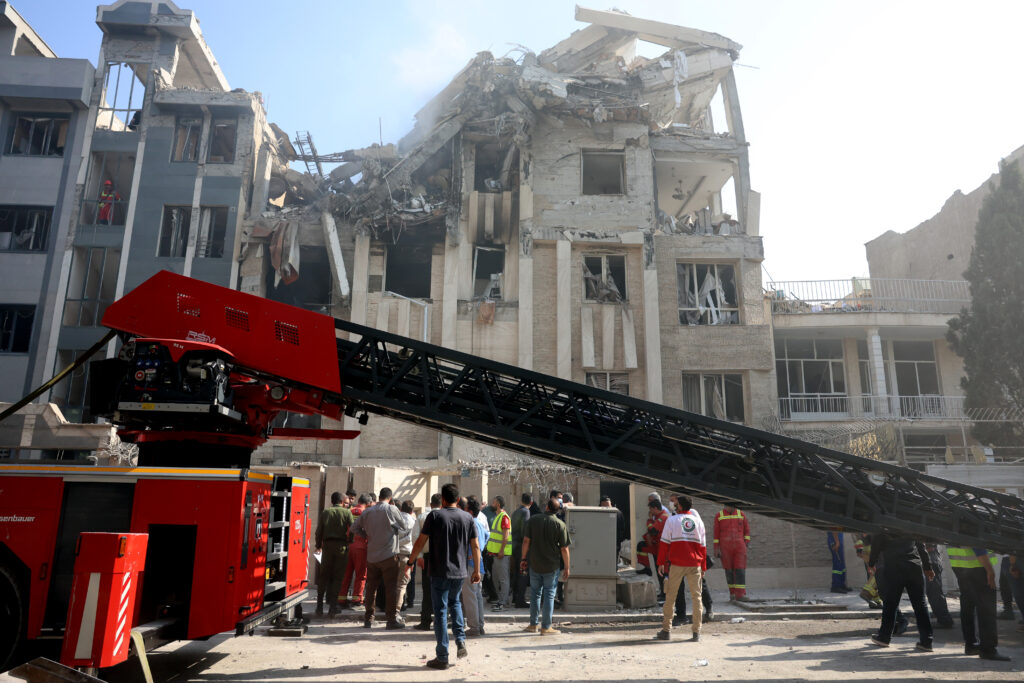
Iran confirmed fresh talks with European powers to be held on Friday in Istanbul, the country’s state media reported, the first since the United States attacked Iranian nuclear facilities a month ago.Iranian diplomats will meet counterparts from Britain, France and Germany, known as the E3, after the trio warned that sanctions could be reimposed on Tehran if it does return to the negotiating table over its nuclear programme. Western nations and Israel have long accused Iran of seeking to develop nuclear weapons, a charge Tehran has consistently denied.”In response to the request of European countries, Iran has agreed to hold a new round of talks,” said foreign ministry spokesperson Esmail Baghai, as quoted by state TV on Monday.The subject of the talks will be Iran’s nuclear programme, it added.A German diplomatic source had told AFP on Sunday the E3 were in contact with Tehran and said “Iran must never be allowed to acquire a nuclear weapon”. “That is why Germany, France and the United Kingdom are continuing to work intensively in the E3 format to find a sustainable and verifiable diplomatic solution to the Iranian nuclear programme,” the source said.Israel launched on June 13 a wave of surprise strikes on its regional nemesis, targeting key military and nuclear facilities.The United States launched its own set of strikes against Iran’s nuclear programme on June 22, hitting the uranium enrichment facility at Fordo, in Qom province south of Tehran, as well as nuclear sites in Isfahan and Natanz.- Kremlin meeting -Iran and the United States had held several rounds of nuclear negotiations through Omani mediators before Israel launched its 12-day war against Iran.However, US President Donald Trump’s decision to join Israel in striking Iranian nuclear facilities effectively ended the talks.The E3 countries last met with Iranian representatives in Geneva on June 21 — just one day before the US strikes.Also Sunday, Russian President Vladimir Putin held a surprise meeting in the Kremlin with Ali Larijani, top adviser to Iran’s supreme leader on nuclear issues.Larijani “conveyed assessments of the escalating situation in the Middle East and around the Iranian nuclear programme”, Kremlin spokesman Dmitry Peskov said of the unannounced meeting.Putin had expressed Russia’s “well-known positions on how to stabilise the situation in the region and on the political settlement of the Iranian nuclear programme”, he added.Moscow has a cordial relationship with Iran’s clerical leadership and provides crucial backing for Tehran but did not swing forcefully behind its partner even after the United States joined Israel’s bombing campaign.- Snapback mechanism -Iran and world powers struck a deal in 2015 called the Joint Comprehensive Plan of Action (JCPOA), which placed significant restrictions on Tehran’s nuclear programme in exchange for sanctions relief.But the hard-won deal began to unravel in 2018, during Trump’s first presidency, when the United States walked away from it and reimposed sanctions on Iran.European countries have in recent days threatened to trigger the deal’s “snapback” mechanism, which allows the reimposition of sanctions in the event of non-compliance by Iran.After a call with his European counterparts on Friday, Iranian Foreign Minister Abbas Araghchi said the Western allies had “absolutely no moral (or) legal grounds” for reactivating the snapback sanctions.He elaborated in a post to social media Sunday. “Through their actions and statements, including providing political and material support to the recent unprovoked and illegal military aggression of the Israeli regime and the US… the E3 have relinquished their role as ‘Participants’ in the JCPOA,” said Araghchi.That made any attempt to reinstate the terminated UN Security Council resolutions “null and void”, he added. “Iran has shown that it is capable of defeating any delusional ‘dirty work’ but has always been prepared to reciprocate meaningful diplomacy in good faith,” Araghchi wrote.However, the German source said Sunday that “if no solution is reached over the summer, snapback remains an option for the E3”.Ali Velayati, an adviser to supreme leader Ayatollah Ali Khamenei, said last week there would be no new nuclear talks with the United States if they were conditioned on Tehran abandoning its uranium enrichment activities.burs-sbk/jj/tc/mtp

Hong Kong leads stocks higher, yen gains as Ishiba vows to stay

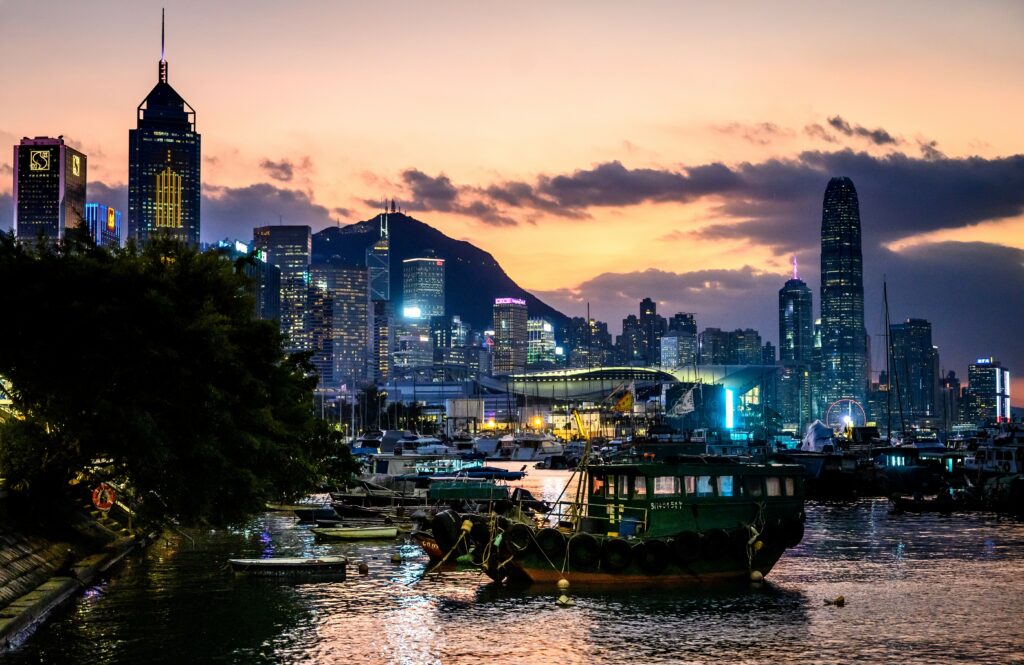
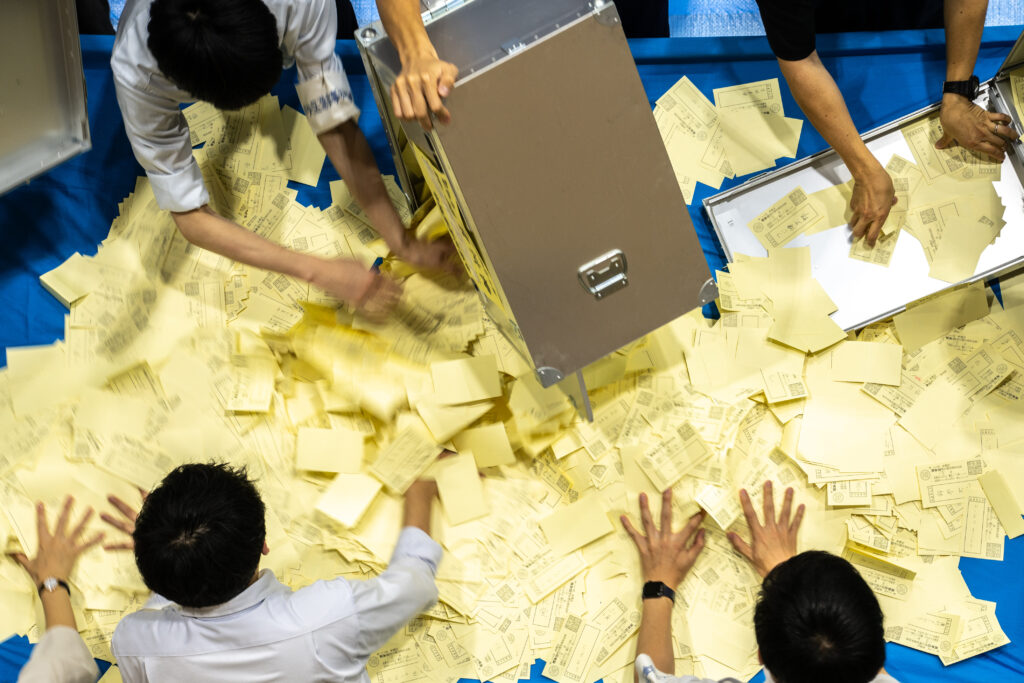
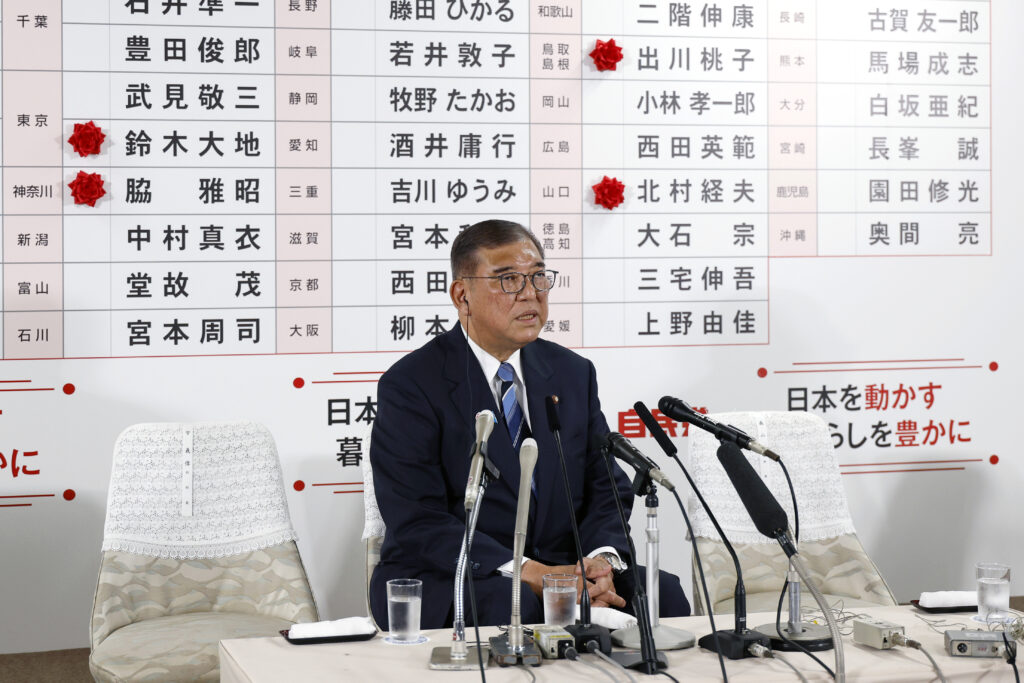
Equities mostly rose Monday on optimism countries will reach US trade deals before an August 1 deadline, while the yen gained after Japanese Prime Minister Shigeru Ishiba said he would stay in office despite another election defeat.Hong Kong topped 25,000 points for the first time in three years as tech giants advanced following strong earnings from Taiwanese chip giant TSMC and news US titan Nvidia would be allowed to export key semiconductors to China.While only three countries have signed agreements to avoid the worst of Donald Trump’s tariffs, analysts said investors were hopeful that others — including Japan and South Korea — will follow suit.The upbeat mood has been helped by a series of largely positive US economic data releases that suggested the world’s top economy remained in rude health, helping to push Wall Street to multiple record highs.In early trade, Hong Kong climbed to as high as 25,010.90 — its highest level since February 2022 — thanks to a strong performance in ecommerce leaders Alibaba and JD.com and food delivery provider Meituan.Tech has been boosted after Nvidia said last week that it will resume sales of its H20 artificial intelligence chips to China after Washington pledged to remove licensing restrictions that had halted exports.A surge in Chinese money supply sparked by Beijing’s stimulus measures has added to the jump in Hong Kong’s market, which has spiked around 25 percent since the turn of the year.There were also gains in Shanghai, Singapore, Seoul, Wellington, Manila and Jakarta. Sydney and Taipei slipped, while Tokyo was closed for a holiday.The yen strengthened against the dollar after Ishiba vowed to stay on even after his ruling coalition lost its overall majority in Sunday’s lower house elections, months after it suffered a similar fate in an upper house vote.The losses came amid growing anger at the surging cost of living, including a doubling in the cost of rice.Analysts said that while the result was bad for the Liberal Democratic Party (LDP) and its partner Komeito, the fact that the prime minister would remain in office provided some stability for now.The yen hit 147.79 per dollar in early trade but pared the gains to sit at 148.45 — still stronger than Friday’s finish.The currency had been weighed in recent weeks by expectations a bad defeat would lead to more spending and tax cuts.Despite Ishiba’s decision to stay, pressure will grow on the coalition to cut or abolish consumption tax, something Ishiba has opposed in view of Japan’s colossal national debts of more than 200 percent of gross domestic product.It also comes as he struggles to reach a trade deal with Trump, who has threatened tariffs of 25 percent on goods from Japan.He said “the deadline of (US) tariffs is coming on August 1. Until then we have to do our best with our body and soul”.US Treasury Secretary Scott Bessent said Friday a “mutually beneficial trade agreement… remains within the realm of possibility”.Jiji Press reported that Ishiba would inform a meeting of senior LDP figures on Monday that he will stay in office.If he did go, it is unclear who might step up to replace him now that the government needs opposition support in both chambers to pass legislation.The election result “now raises a host of questions, including whether… Ishiba remains in power or decides to resign, how potentially expansionary could fiscal policy become, and will domestic politics be a hurdle in reaching a potential trade agreement with the US?”, wrote Paul Mackel, global head of forex research at HSBC.Others suggested the yen could still come under pressure, and possibly top 150 for the first time since March, owing to lingering uncertainty about the leadership.- Key figures at around 0230 GMT -Hong Kong – Hang Seng Index: UP 0.5 percent at 24,944.31Shanghai – Composite: UP 0.5 percent at 3,550.33Tokyo – Nikkei 225: Closed for a holidayDollar/yen: DOWN at 148.43 yen from 148.73 yen on FridayEuro/dollar: DOWN at $1.1624 from $1.1627Pound/dollar: UP at $1.3415 from $1.3414Euro/pound: DOWN at 86.65 pence from 86.67 penceWest Texas Intermediate: UP 0.3 percent at $67.52 per barrelBrent North Sea Crude: UP 0.3 percent at $69.46 per barrelNew York – Dow: DOWN 0.3 percent at 44,342.19 (close)London – FTSE 100: UP 0.2 percent at 8,992.12 (close)

Ecuador’s biggest drug lord ‘Fito’ extradited to US

The Ecuadoran government on Sunday extradited notorious drug trafficker Adolfo Macias, alias “Fito,” to the United States, a month after he was recaptured following a 2024 escape from a maximum security penitentiary, the country’s prison authority said.The flight transporting Macias landed in New York state on Sunday night, according to the Flightradar tracking site.The US Attorney’s Office filed charges in April against Macias, the head of the “Los Choneros” gang, on suspicion of cocaine distribution, conspiracy and firearms violations, including weapons smuggling. A letter filed by the US Department of Justice on Sunday said Macias was due to appear in a federal court on Monday “for an arraignment on the Superseding Indictment in this case.”The drug lord on Sunday was removed from custody at a maximum security prison in Ecuador’s southwest “for the purposes that correspond to the extradition process,” Ecuador’s prison authority SNAI said in a statement to reporters.Macias, a former taxi driver turned crime boss, agreed in a Quito court last week to be extradited to the United States to face the charges.He is the first Ecuadoran extradited by his country since a new measure was written into law last year, after a referendum in which President Daniel Noboa sought the approval of moves to boost his war on criminal gangs.- ‘Sooner the better’ -Ecuador, once a peaceful haven between the world’s two top cocaine exporters Colombia and Peru, has seen violence erupt in recent years as enemy gangs with ties to Mexican and Colombian cartels vie for control.Soon after Macias escaped from prison in January 2024, Noboa declared Ecuador to be in a state of “internal armed conflict” and ordered the military and tanks into the streets to “neutralize” the gangs.  The move has been criticized by human rights organizations.Macias’s Los Choneros has ties to Mexico’s Sinaloa cartel, Colombia’s Gulf Clan — the world’s largest cocaine exporter — and Balkan mafias, according to the Ecuadorian Organized Crime Observatory. The crime boss’ escape from prison prompted widespread violence and a massive military and police recapture operation, including government “wanted” posters offering $1 million for information leading to his arrest.On June 25, Macias was found hiding in a bunker concealed under floor tiles in a luxury home in the fishing port of Manta, the center of operations for Los Choneros. Noboa declared he would be extradited, “the sooner the better.””We will gladly send him and let him answer to the North American law,” Noboa told CNN at the time.More than 70 percent of all cocaine produced in the world now passes through Ecuador’s ports, according to government data. In 2024, the country seized a record 294 tons of drugs, mainly cocaine. 

Trump and Epstein: What was their relationship?

Donald Trump’s past ties with Jeffrey Epstein are under scrutiny after the US president slammed a Wall Street Journal report that he sent a lewd letter to the infamous sex offender as “fake news.”AFP looks at the pair’s relationship as the Trump administration also faces demands to release all government files on Epstein’s alleged crimes and his death.- Parties and private jets -Trump, then a property mogul and self-styled playboy, appears to have known Epstein, a wealthy money manager, since the 1990s.They partied together in 1992 with NFL cheerleaders at Trump’s Mar-a-Lago resort in Florida, according to footage from NBC News, which shows the pair talking and laughing.The same year, Epstein was Trump’s only guest at a “calendar girl” competition he hosted involving more than two dozen young women, The New York Times reported. In a display of their close ties, Trump flew on Epstein’s private jet at least seven times during the 1990s, according to flight logs presented in court and cited by US media. He has denied this, and in 2024 said he was “never on Epstein’s plane.”In 1993, according to The New York Times, Trump allegedly groped swimsuit model Stacey Williams after Epstein introduced them at Trump Tower — a claim the president has refuted.Separate from his links to Epstein, Trump has been accused of sexual misconduct by around 20 women. In 2023, he was found liable of sexually abusing and defaming American journalist E. Jean Carroll in a civil trial. – ‘Terrific guy’ -Virginia Giuffre, one of Epstein’s main accusers who died by suicide this year, said she was recruited into his alleged sex-trafficking network aged 17 while working at Trump’s Mar-a-Lago club in 2000. Giuffre claimed she was approached there by Ghislaine Maxwell, who was jailed in 2022 for helping Epstein sexually abuse girls.Trump seemed to be on good terms with Epstein during this time, praising him as a “terrific guy” in a 2002 New York Magazine profile.”He’s a lot of fun to be with. It is even said that he likes beautiful women as much as I do, and many of them are on the younger side,” Trump said.In 2003, according to a Wall Street Journal report, Trump penned a letter for Epstein’s 50th birthday featuring a drawing of a naked woman, with his signature “Donald” mimicking pubic hair.His apparent message — Trump dismissed the letter as a “fake thing” — read: “Happy Birthday — and may every day be another wonderful secret.”- ‘I wasn’t a fan’ -The pair reportedly had a rupture in 2004 as they competed to buy a waterfront property in Florida, which Trump eventually snagged.The two men were hardly seen together in public from that point. Trump would later say in 2019 that they had a “falling out” and hadn’t spoken in 15 years.Shortly after the property auction, police launched a probe that saw Epstein jailed in 2008 for 13 months for soliciting an underage prostitute.He was arrested again in 2019 after he was accused of trafficking girls as young as 14 and engaging in sexual acts with them.Trump, then serving his first term as president, sought to distance himself from his old friend. “I wasn’t a fan,” he told reporters when the charges were revealed.In 2019, Epstein was found hanging dead in his prison cell awaiting trial. Authorities said he died by suicide.Since then, Trump has latched onto and fueled conspiracy theories that global elites including former president Bill Clinton were involved in Epstein’s crimes or death.Those same theories now threaten to destabilize Trump’s administration, despite his attempts to dismiss the saga as a “hoax” created by political adversaries.

Japon: l’avenir du Premier ministre Ishiba en suspens après une déâcle électorale

L’avenir de l’impopulaire Premier ministre japonais Shigeru Ishiba paraît compromis après une cuisante défaite électorale qui lui a fait perdre la majorité au Sénat, sur fond d’inflation et de poussée du parti d’extrême droite Sanseito.Lors des élections de dimanche, au cours desquelles étaient renouvelés 125 des 248 sièges de la chambre haute, le Parti libéral-démocrate (PLD, droite conservatrice) de M. Ishiba et son allié Komeito (centre-droit) n’ont gagné que 47 sièges à eux deux, selon les résultats officiels rapportés lundi par la télévision publique NHK et d’autres médias.Quoique supérieur aux projections initiales des médias locaux, ce résultat reste en-deçà des 50 sièges nécessaires aux deux partis pour conserver leur majorité. Ils ne compteront plus que 122 sénateurs, même si l’opposition, très fragmentée, n’apparaît pas en mesure de former une majorité alternative.De quoi exacerber les spéculations sur une démission de , 68 ans, en fonction depuis dix mois seulement.”La situation est difficile, nous devons l’examiner très humblement et sérieusement (…) Je veux me montrer conscient de notre responsabilité”, a-t-il commenté dimanche soir.Des déclarations qui, selon la presse locale, suggèrent qu’il entend se maintenir en poste.- Vide politique -Le secrétaire général et numéro deux du PLD, Hiroshi Moriyama, a de son côté estimé qu’il fallait éviter tout vide politique.”D’un côté, certains considèrent que les négociations commerciales toujours en cours avec l’admnistration Trump pourraient lui offrir un sursis. De l’autre, le Premier ministre lui-même avait déclaré viser 50 sièges: il serait probablement logique qu’il démissionne”, a indiqué à la NHK Koji Nakakita, professeur à l’Université Chuo.”Il pourrait être remplacé par quelqu’un d’autre, mais ce n’est pas évident de savoir par qui”, confirme à l’AFP Hidehiro Yamamoto, professeur de politique à l’Université de Tsukuba.La coalition gouvernementale est déjà en minorité à la chambre basse du Parlement, depuis une débâcle aux élections législatives anticipées de l’automne –que M. Ishiba avait lui-même convoquées après avoir pris en septembre la tête du PLD.Le PLD gouverne le Japon de manière quasi ininterrompue depuis 1955, malgré de fréquents changements de dirigeants.Le Japon entre désormais “en terrain inconnu, avec un gouvernement en minorité dans les deux chambres du Parlement, situation inédite depuis la Seconde Guerre mondiale”, rappelle Toru Yoshida, professeur de sciences politiques à l’Université Doshisha.Le Parti démocrate constitutionnel (centre-gauche), principale force d’opposition, a lui gagné 22 sièges, et le Parti démocrate du peuple (centriste) 17 sièges.Surtout, le parti populiste anti-immigration Sanseito, au slogan “Le Japon d’abord”, fait une forte percée avec 14 sièges remportés, alors qu’il n’en tient que deux dans l’assemblée actuelle.- Riz cher -En raison de leur absence de majorité à la Diète, le PLD et Komeito devaient déjà transiger avec l’opposition pour faire voter leurs textes, alors même que la conjoncture s’assombrit.L’inflation reste forte (+3,3% en juin hors produits frais), tirée par une vertigineuse flambée des prix du riz qui ont doublé en l’espace d’un an.”Les prix de base augmentent, mais je suis surtout inquiet que les salaires n’augmentent pas”, soupirait dimanche Atsushi Matsuura, 54 ans, dans un bureau de vote de Tokyo.Pour atténuer l’impact inflationniste, M. Ishiba a étendu les aides au logement, prolongé des subventions à l’énergie, et s’est engagé à verser des chèques d’aides aux citoyens. Les autorités ont également débloqué une partie des réserves stratégiques de riz pour faire baisser les prix, sans succès pour l’heure.Par ailleurs, l’offensive douanière de Donald Trump a fait plonger d’un quart les ventes automobiles vers les Etats-Unis, un secteur qui représente 8% des emplois dans l’archipel. La menace de surtaxes généralisées de 25% au 1er août fragilise le tissu économique nippon, très dépendant des exportations.Alors que le négociateur japonais s’est rendu à sept reprises aux Etats-Unis, les pourparlers avec Washington s’enlisent. Avant l’élection, Shigeru Ishiba avait affiché une stratégie maximaliste consistant à réclamer l’élimination totale des droits de douane.Les marchés financiers s’inquiètent, eux, des dérives budgétaires, les massifs plans de relance et d’aides du gouvernement Ishiba aggravant un endettement déjà lourd. Plusieurs émissions obligataires de Tokyo ont été boudées ces derniers mois, faisant s’envoler les taux nippons.La poussée du Sanseito, qui empiète sur le vote PLD, était également surveillée de près.Cette formation prône des “règles et restrictions durcies” en matière d’immigration, fustige le “mondialisme”, dénonce les politiques de genre “radicales”, et appelle à refondre les stratégies de vaccination et de décarbonation. Sous pression en raison de positions jugées prorusses, le Sanseito a farouchement nié avoir tout lien avec Moscou.

Japon: Ishiba, Premier ministre “outsider” miné par l’impopularité

Shigeru Ishiba, stratège féru des questions de défense, passionné de trains, faisait figure d'”outsider” dans la politique nippone: devenu très impopulaire, il voit son poste de Premier ministre menacé après seulement dix mois en fonction, suite à ce qui s’annonçait dimanche comme une nouvelle débâcle électorale.Lors de ce scrutin pour la chambre haute du Parlement, le Parti libéral-démocrate (PLD, droite conservatrice) de M. Ishiba et son allié Komeito (centre droit) ont gagné 41 sièges sur les 125 en jeu, selon les projections des médias, loin des 50 nécessaires pour y conserver leur majorité.Grand fumeur, M. Ishiba, 68 ans, avait pris en septembre –à sa cinquième tentative– la tête du PLD, une formation au pouvoir quasiment sans interruption dans l’archipel depuis les années 1950.Ex-ministre de la Défense et de l’Agriculture, il séduisait alors le public: connu pour sa maîtrise des questions militaires, il se revendique amateur de cigarettes et de trains, d’idoles de la pop des années 1970, et de fabrication de maquettes.A peine élu, Shigeru Ishiba avait convoqué dès octobre des élections législatives anticipées, espérant asseoir son pouvoir. Mais il a finalement récolté le pire résultat de son parti en 15 ans: la coalition PLD-Komeito a perdu sa majorité absolue à la chambre basse du Parlement, se voyant contrainte de négocier avec l’opposition.Au risque d’entraver son programme législatif: les politiques du gouvernement pour contrer l’inflation et stimuler la croissance “ont connu des va-et-vient”, constate Stefan Angrick, analyste de Moody’s Analytics.Et sa popularité a chuté, sur fond de flambée inflationniste et de doublement des prix du riz. Un sondage publié début juin par la télévision NHK indiquait que seuls 39% des Japonais approuvaient l’action du gouvernement.Finalement, “Ishiba s’est vu acculé dans ses retranchements, ne promettant qu’un soutien financier tardif et timide qui ne contribuera guère à améliorer les perspectives de la demande”, explique M. Angrick.Le cuisant revers électoral de dimanche exacerbe les spéculations sur une possible démission. “Nous ne pouvons rien faire avant d’avoir vu les résultats finaux, mais je me montrerai conscient de ma responsabilité”, a simplement commenté M. Ishiba.-Boulette de riz-Fils d’un gouverneur régional et issu de la petite minorité chrétienne de l’archipel, M. Ishiba s’était engagé à “créer un nouveau Japon”, à revitaliser les régions rurales et à répondre à “l’urgence silencieuse” du déclin démographique.Père de deux filles, il n’a nommé que deux femmes à son cabinet, contre cinq sous son prédécesseur Fumio Kishida.Son image politique s’est rapidement ternie et il a été fustigé pour ses faux-pas: costume mal ajusté lors d’une cérémonie, sieste en pleine séance au Parlement, le fait de ne pas s’être levé pour saluer d’autres dirigeants lors d’un sommet au Pérou…Pire encore: une vidéo a fait surface où l’on voit M. Ishiba manger une volumineuse boulette de riz onigiri (en-cas populaire au Japon) d’une seule bouchée avant de la mâcher sans fermer la bouche. “Il mange comme un enfant de trois ans”, avait alors raillé un internaute sur X. “Comment a-t-il pu atteindre le sommet avec de telles manières?”, s’était désolé un autre.- Enlisé avec Trump -Autre dossier à son passif: l’enlisement des négociations commerciales face à l’offensive douanière de Donald Trump.Le Japon, pourtant proche allié de Washington, est soumis aux mêmes droits de douane américains de base de 10% que la plupart des nations, ainsi qu’à des surtaxes de 25% sur les voitures et de 50% l’acier. Et l’archipel est menacé d’un relèvement à 25% au 1er août des surtaxes généralisées dites “réciproques”.Certes, Shigeru Ishiba a été invité à la Maison blanche et a envoyé son négociateur, Ryosei Akazawa, à Washington à sept reprises depuis avril pour tenter d’arracher un compromis.Mais sa stratégie maximaliste affichée avant l’élection, qui consiste à réclamer l’élimination totale de tous les droits de douane, peine à porter ses fruits et aucun accord n’apparaît à l’horizon.Par un contraste cruel, Shinzo Abe, Premier ministre japonais à l’époque du premier mandat de Donald Trump, était pour sa part devenu proche du président américain, dont il était réputé avoir l’oreille.M. Abe, qui avait offert à M. Trump un club de golf doré, avait obtenu de rapides résultats dans la guerre commerciale menée alors par les Etats-Unis, parvenant à protéger le Japon de toute surtaxe douanière américaine. “Il n’y en aura jamais un autre comme lui”, avait déclaré Donald Trump après la mort de Shinzo Abe, assassiné en 2022.