


Stocks mixed with trade and earnings in focus; Tokyo reopens with gains
Asian markets were mixed Thursday as traders kept an eye on earnings from Wall Street titans this week while tracking US trade talks just over a week before the deadline for a deal. Japanese stocks edged up and the yen held gains after Prime Minister Shigeru Ishiba said he will stay in power despite the weekend election debacle.Investors took a more cautious path after a largely positive day on Wall Street, where the S&P ended above 6,300 points for the first time and the Nasdaq chalked up yet another record.Equities continue to rally on expectations key trading partners will strike agreements with Washington before August 1 to avoid Donald Trump’s sky-high tariffs, with the US president saying several deals were close. Just three have been struck so far.His press secretary Karoline Leavitt said more could be reached before next Friday but also warned the president could unveil fresh unilateral tolls in that time.While Trump’s initial tariff bombshell on April 2 rattled global markets before he delayed introducing the measures twice, they have seen more muted reactions to successive threats as traders expect him to eventually row back again.That optimism has been helped by data indicating the US economy remained healthy despite the imposition of other levies that are beginning to be felt on Main Street.And SPI Asset Management’s Stephen Innes warned traders could be in for a shock next week.”The new tariff regime isn’t being priced — full stop,” he wrote.”Markets have seen this movie before: tough talk, last-minute extensions, and deal-making in overtime. But this time, Trump isn’t bluffing. He’s already posted ‘No extensions will be granted’.”The new rates — 30 percent on the EU, 35 percent on Canada, 50 percent on Brazil — are politically loaded and economically radioactive. If they go live, there’s no soft landing.”Hong Kong has been the standout in Asia this year, piling on around a quarter thanks to a rally in Chinese tech firms and a fresh flow of cash from mainland investors.And the Hang Seng Index continued its advance Tuesday, with Shanghai, Sydney and Taipei also up.There were losses in Singapore, Seoul, Wellington and Manila.Tokyo rose as investors returned from a long weekend to news that Ishiba would remain in power even after his ruling coalition lost its majority in Japan’s lower house elections Sunday, months after it suffered a similar fate in the upper house.His refusal to leave helped the yen push higher against the dollar and other peers, though observers warned the government’s tenure remained fragile and investors remained nervous.The yen strengthened to 147.08 Tuesday before paring some of the gains. That compares with 148.80 Friday.But Franklin Templeton Institute’s Christy Tan said that “Ishiba now faces heightened political headwinds, including pressure over inflation, taxes, and US trade talks”.Focus also turns this week to earnings from some of the world’s biggest names, including Tesla, Google-parent Alphabet, General Motors, Intel and Coca-Cola.While there will be plenty of attention given to the results, the firms’ guidance will be key as investors try to gauge companies’ pulses in light of Trump’s trade war.- Key figures at around 0230 GMT -Tokyo – Nikkei 225: UP 0.2 percent at 39,892.81 (break)Hong Kong – Hang Seng Index: UP 0.3 percent at 25,074.15Shanghai – Composite: UP 0.1 percent at 3,563.59Dollar/yen: UP at 147.50 yen from 147.42 yen on MondayEuro/dollar: UP at $1.1690 from $1.1688Pound/dollar: DOWN at $1.3484 from $1.3485Euro/pound: UP at 86.69 pence from 86.68 penceWest Texas Intermediate: DOWN 0.7 percent at $66.70 per barrelBrent North Sea Crude: DOWN 0.9 percent at $68.62 per barrelNew York – Dow: FLAT at 44,323.07 (close)London – FTSE 100: UP 0.2 percent at 9,012.99 (close)
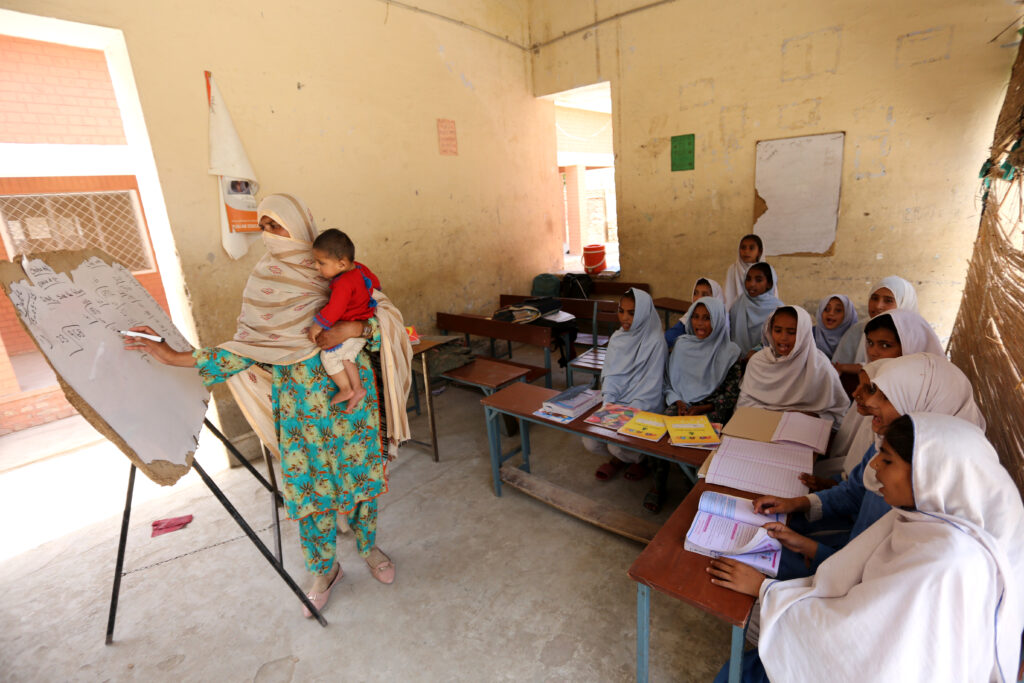
Without papers: Ghost lives of millions of Pakistanis
Ahmed Raza is invisible in the eyes of his government, unable to study or work because, like millions of other Pakistanis, he lacks identification papers.In the South Asian nation of more than 240 million people, parents generally wait until a child begins school at the age of five to obtain a birth certificate, which is required for enrolment in most parts of Pakistan.Raza slipped through the cracks until the end of elementary school, but when his middle school requested documentation, his mother had no choice but to withdraw him. “If I go looking for work, they ask for my ID card. Without it, they refuse to hire me,” said the 19-year-old in the megacity of Karachi, the southern economic capital. He has already been arrested twice for failing to present identification cards when stopped by police at checkpoints.Raza’s mother Maryam Suleman, who is also unregistered, said she “didn’t understand the importance of having identity documents”.”I had no idea I would face such difficulties later in life for not being registered,” the 55-year-old widow told AFP from the single room she and Raza share.Pakistan launched biometric identification cards in 2000 and registration is increasingly required in all aspects of formal life, especially in cities.In 2021, the National Database and Registration Authority estimated that around 45 million people were not registered. They have declined to release updated figures or reply to AFP despites repeated requests.To register, Raza needs his mother’s or uncle’s documents — an expensive and complex process at their age, often requiring a doctor, lawyer or a newspaper notice.The paperwork, he says, costs up to $165 — a month and a half’s income for the two of them, who earn a living doing housework and odd jobs in a grocery shop. Locals whisper that registration often requires bribes, and some suggest the black market offers a last resort.”Our lives could have been different if we had our identity cards,” Raza said.- ‘No time or money’ -In remote Punjab villages like Rajanpur, UNICEF is trying to prevent people from falling into the same fate as Raza.They conduct door-to-door registration campaigns, warning parents that undocumented children face higher risks of child labour and forced marriage.Currently, 58 percent of children under five have no birth certificate, according to government figures.Registration fees depend on the province, ranging from free, $0.70 to $7 — still a burden for many Pakistanis, about 45 percent of whom live in poverty.”Our men have no time or money to go to the council and miss a day’s work,” said Nazia Hussain, mother of two unregistered children.The “slow process” often requires multiple trips and there is “no means of transport for a single woman,” she said.Saba, from the same village, is determined to register her three children, starting with convincing her in-laws of its value. “We don’t want our children’s future to be like our past. If children go to school, the future will be brighter,” said Saba, who goes by just one name.Campaigns in the village have resulted in an increase of birth registration rates from 6.1 percent in 2018 to 17.7 percent in 2024, according to UNICEF.This will improve the futures of an entire generation, believes Zahida Manzoor, child protection officer at UNICEF, dispatched to the village.”If the state doesn’t know that a child exists, it can’t provide basic services,” she said.”If a child does not have an identity, it means the state has not recognised their existence. The state is not planning for the services that the child will need after birth.”Muhammad Haris and his brothers, who have few interactions with the formal state in their border village in the mountainous province of Khyber Pakhtunkhwa, have not registered any of their eight children.”The government asks for documents for the pilgrimage visa to Mecca,” a journey typically made after saving for a lifetime, he told AFP.For him, this is the only reason worthy of registration.sam-jma-la-vid/sbh/ecl/lb/dhw
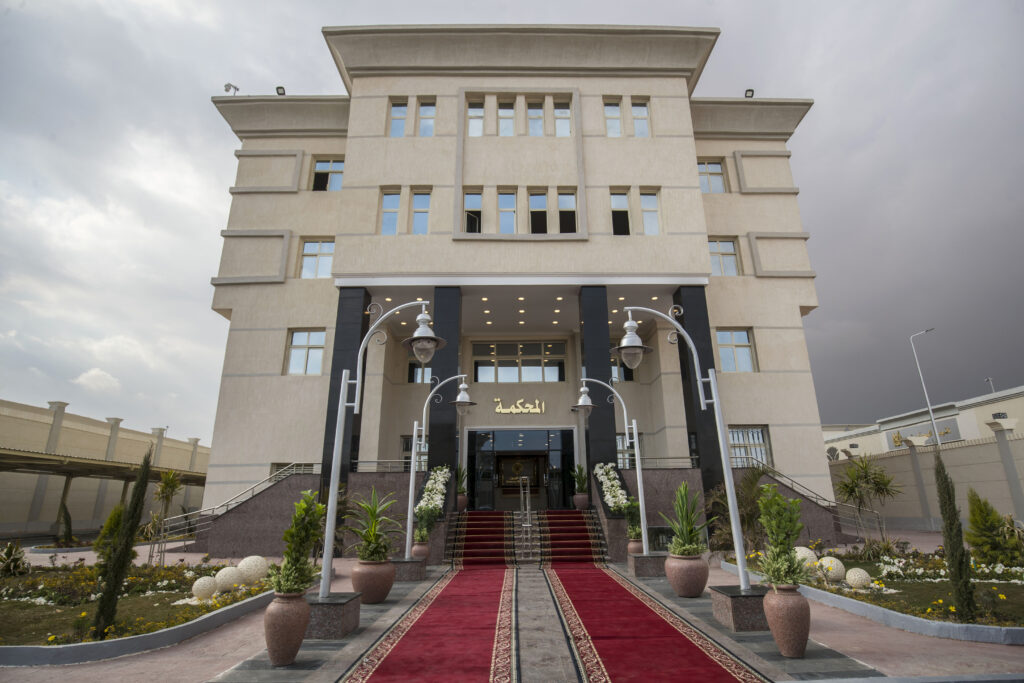
Egypt legal reform raises fears over right to fair trial
Egypt is poised to adopt a new law aimed at overhauling the judicial process, but human rights groups warn it could entrench long-standing abuses including arbitrary detention, travel bans and expedited trials.The legislation, currently awaiting approval by President Abdel Fattah al-Sisi, is being promoted by the government as a step toward streamlining legal procedures, from arrest to trial.Foreign Minister Badr Abdelatty has told the UN Human Rights Council it would bring a “legislative revolution to criminal justice” in Egypt.Ihab al-Tamawy, the head of the parliamentary subcommittee charged with drafting the new code, told AFP it “introduces a set of new guarantees” on Egypt’s notorious pretrial detention system, as well as the role of the public prosecution.But critics say the bill risks codifying repressive practices that have long eroded due process in the country.According to rights defenders, the law expands the powers of police and prosecutors and limits the role of defence lawyers, undermining judicial oversight and the right to a fair trial.In one of the new provisions that have come under scrutiny, public prosecutors will be able to order travel bans without a warrant “in cases of emergency”.The law will also allow police to enter homes without an arrest warrant in cases of “distress” or “danger”, which are not clearly defined.In April, UN rights chief Volker Turk “raised concerns” over the law and called on Sisi to “consider carefully” before signing it into force, “to ensure that it fully complies with Egypt’s international human rights obligations”.- Right to fair trial -Egypt currently ranks 135th out of 142 countries on the World Justice Project’s Rule of Law Index.In the latest UN review of its rights record in January, Egypt faced accusations of “systemic and widespread” rights violations, including torture, enforced disappearances and unfair trials.In recent years, Egypt has been accused of formalising into normal law exceptional measures previously allowed in states of emergency.According to prominent human rights lawyer Khaled Ali, the law “does not truly combat corruption, expands the powers granted to the police and prosecution and undermines the role of defence lawyers,” which he said is “essential to a fair trial”.Along with 15 other independent lawyers, Ali submitted 176 proposed amendments to the law, none of which were adopted.Mahmoud Shalaby, Egypt researcher at Amnesty International, told AFP the bill “codifies practices that were already taking place outside the boundaries of the law, and grants them legitimacy in an attempt to improve Egypt’s image”.According to Karim Ennarah, research director at the Egyptian Initiative for Personal Rights (EIPR), the new changes will come at the expense of investigations, defendants and their lawyers.Under the new law, defence lawyers can be denied access to case files and witnesses — “practices already common, but that will now become legal,” Ennarah said.- ‘Recycling’ -The law will also expand remote trials, which Ennarah describes as “rushed” virtual hearings, where dozens of jailed defendants are corralled behind a screen on a video call with a judge.Remote trials “undermine two fundamental principles of a fair trial”, according to Ennarah, namely “the defendant’s right to meet privately with their lawyer, and their right to appear before a judge” to assess any harm or abuse inflicted upon them.Egypt is routinely criticised for the widespread use of pretrial detention, a phenomenon that proponents say is addressed under the new law.While the maximum period for remand detention will be reduced from 24 to 18 months, Amnesty International has warned the law “provides no safeguards against abusive prolonged pretrial detention”.According to Shalaby, many of Egypt’s estimated tens of thousands of political prisoners are victims of a practice known as “recycling” detainees.Under the much-maligned “revolving door policy”, prisoners are often handed new charges instead of being released, restarting the clock on their remand period.Another issue, he says, is that when the law goes into effect, citizens will no longer be able to sue “in case of violations during their arrest or detention”.In 2024, EIPR documented 10 cases of torture-related deaths in detention facilities.Rights groups regularly report cases of medical neglect, abuse and overcrowding in Egyptian prisons.
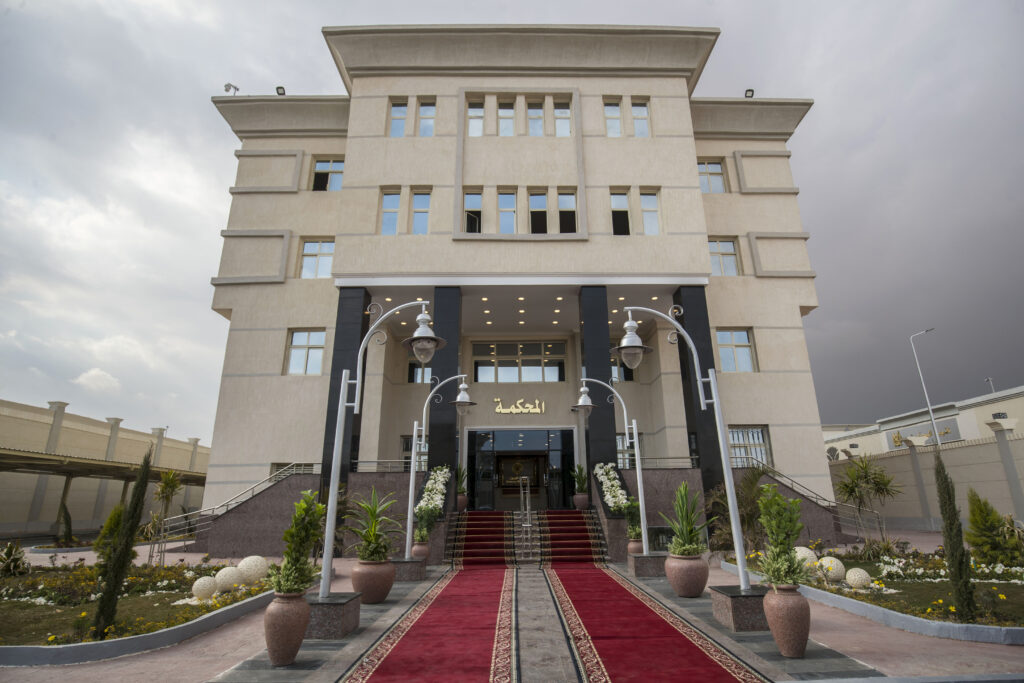
Egypt legal reform raises fears over right to fair trialTue, 22 Jul 2025 02:21:50 GMT
Egypt is poised to adopt a new law aimed at overhauling the judicial process, but human rights groups warn it could entrench long-standing abuses including arbitrary detention, travel bans and expedited trials.The legislation, currently awaiting approval by President Abdel Fattah al-Sisi, is being promoted by the government as a step toward streamlining legal procedures, from …
Egypt legal reform raises fears over right to fair trialTue, 22 Jul 2025 02:21:50 GMT Read More »
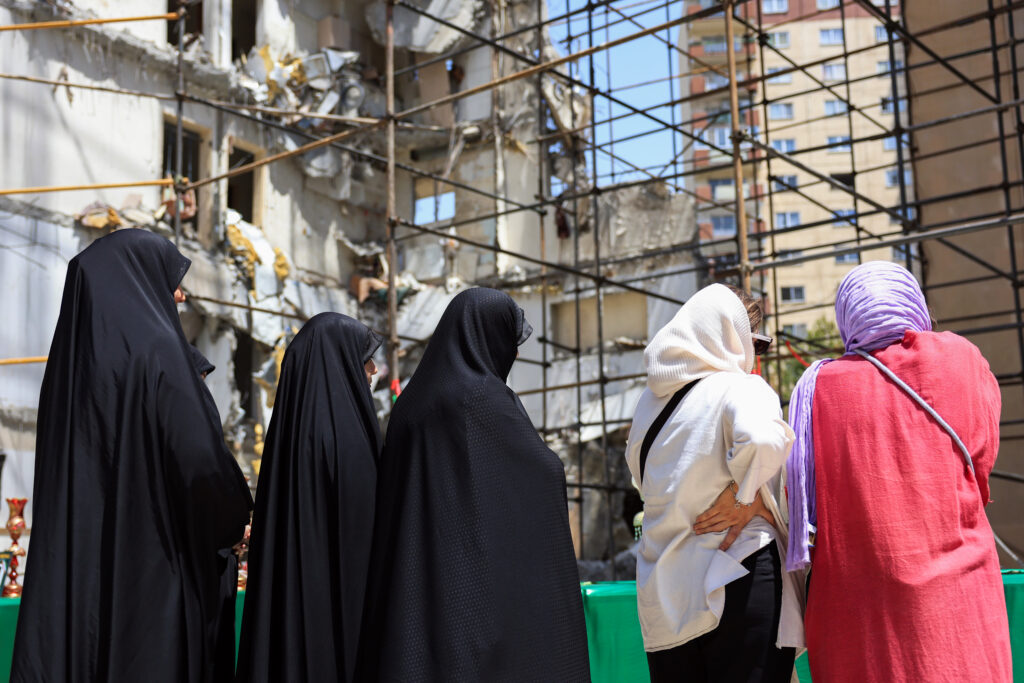
A month after ceasefire with Israel, Iranians fear another war
The ceasefire that ended Iran’s 12-day war with Israel has held for nearly a month without incident, but many Iranians remain uneasy, struggling with uncertainty as fears of another confrontation linger.”I don’t think this ceasefire will last,” said Peyman, a 57-year-old resident of Shiraz in Iran’s south, one of numerous cities hit last month as Israel unleashed an unprecedented bombing campaign against its staunch rival.The Israeli offensive targeted key nuclear facilities and military sites, killing top commanders and nuclear scientists and hundreds of other people, while also wreaking havoc in some residential areas.The attacks triggered the fiercest fighting in history between the longtime foes, ending with a ceasefire announced on June 24.But Israel has signalled it could return to fighting if Iran attempts to rebuild nuclear facilities or carry out any actions deemed a threat, such as moving to develop an atomic bomb — an ambition Tehran has consistently denied it was pursuing.Iran, in turn, has vowed to deliver a harsh response if attacked again.Nuclear diplomacy with the United States — which briefly joined the war with strikes on key Iranian nuclear sites — has stalled, deepening a sense of uncertainty about what lies ahead.”I am scared the war would start again,” said Hamid, a 54-year-old government employee who gave only his first name.”It will lead to the death of more innocent people and the destruction of the country’s infrastructure.”During the war, Israel struck major Iranian cities including the capital Tehran, hitting military sites, government buildings and the state television headquarters.More than 1,000 people were killed in Iran, according to authorities. Retaliatory missile and drone attacks killed 29 people in Israel.- ‘Don’t want to flee again’ -Many residents fled Tehran, seeking refuge in other parts of the country, even though few regions were untouched by the blasts and smoke-covered skies.Nearly a month later, a series of fires that broke out across Iran in recent days — including one at a major oil facility — have triggered speculations which officials were quick to dismiss, denying any acts of sabotage.”This war really frightened me,” said 78-year-old housewife Golandam Babaei, from the western Kermanshah province.She lived through the Iran-Iraq war of the 1980s, a painful memory for many of her generation.”I kept telling myself, please God, do not let the past repeat itself,” Babaei told AFP.The war with Israel, although much shorter and fought mostly with air strikes and missiles rather than by ground forces, revived grim memories of the conflict with Iraq.That war, triggered by an Iraqi invasion in 1980, killed an estimated 500,000 people on both sides.It featured chemical warfare and prolonged front-line bombardments, scarring Iranians in the then-nascent Islamic republic born out of the 1979 revolution.Since then, for decades, Iran had managed to keep conflicts away from its territory. But now after the 12-day war with Israel, some Iranians feel a profound sense of vulnerability.”I kept thinking I don’t want to flee again, we have nowhere to go. I cannot run to the mountains like the past,” said Babaei.- Uncertain future -For Ali Khanzadi, a 62-year-old war veteran, the conflict with Israel highlighted a change compared to the 1980s when “we didn’t have any advanced military equipment” to fight the Iraqis.Khanzadi, who was wounded in battle in 1983, said that the war with Israel, while much shorter, had a more sinister dimension.Unlike in the past, modern military technology means “they can kill a child in his sleep remotely using a drone,” he said.In the face of the Israeli threats and attacks, Iranian authorities have repeatedly invoked national unity.Supreme leader Ayatollah Ali Khamenei has said the offensive was aimed at toppling the Islamic republic’s clerical system, and urged Iranian diplomats and military officials to proceed with “care and precision” as the country cautiously moves on.Tehran has said it remained open to nuclear diplomacy with the United States which the war had derailed, but officials have expressed concerns over renewed attacks and demanded unspecified US guarantees to resume negotiations.Ordinary Iranians appear to share fears that the conflict could erupt again.”I hope that this will not happen,” said Hamid.Babaei said she was praying “for peace, for us to remain safe in our homes”.
A month after ceasefire with Israel, Iranians fear another war
The ceasefire that ended Iran’s 12-day war with Israel has held for nearly a month without incident, but many Iranians remain uneasy, struggling with uncertainty as fears of another confrontation linger.”I don’t think this ceasefire will last,” said Peyman, a 57-year-old resident of Shiraz in Iran’s south, one of numerous cities hit last month as Israel unleashed an unprecedented bombing campaign against its staunch rival.The Israeli offensive targeted key nuclear facilities and military sites, killing top commanders and nuclear scientists and hundreds of other people, while also wreaking havoc in some residential areas.The attacks triggered the fiercest fighting in history between the longtime foes, ending with a ceasefire announced on June 24.But Israel has signalled it could return to fighting if Iran attempts to rebuild nuclear facilities or carry out any actions deemed a threat, such as moving to develop an atomic bomb — an ambition Tehran has consistently denied it was pursuing.Iran, in turn, has vowed to deliver a harsh response if attacked again.Nuclear diplomacy with the United States — which briefly joined the war with strikes on key Iranian nuclear sites — has stalled, deepening a sense of uncertainty about what lies ahead.”I am scared the war would start again,” said Hamid, a 54-year-old government employee who gave only his first name.”It will lead to the death of more innocent people and the destruction of the country’s infrastructure.”During the war, Israel struck major Iranian cities including the capital Tehran, hitting military sites, government buildings and the state television headquarters.More than 1,000 people were killed in Iran, according to authorities. Retaliatory missile and drone attacks killed 29 people in Israel.- ‘Don’t want to flee again’ -Many residents fled Tehran, seeking refuge in other parts of the country, even though few regions were untouched by the blasts and smoke-covered skies.Nearly a month later, a series of fires that broke out across Iran in recent days — including one at a major oil facility — have triggered speculations which officials were quick to dismiss, denying any acts of sabotage.”This war really frightened me,” said 78-year-old housewife Golandam Babaei, from the western Kermanshah province.She lived through the Iran-Iraq war of the 1980s, a painful memory for many of her generation.”I kept telling myself, please God, do not let the past repeat itself,” Babaei told AFP.The war with Israel, although much shorter and fought mostly with air strikes and missiles rather than by ground forces, revived grim memories of the conflict with Iraq.That war, triggered by an Iraqi invasion in 1980, killed an estimated 500,000 people on both sides.It featured chemical warfare and prolonged front-line bombardments, scarring Iranians in the then-nascent Islamic republic born out of the 1979 revolution.Since then, for decades, Iran had managed to keep conflicts away from its territory. But now after the 12-day war with Israel, some Iranians feel a profound sense of vulnerability.”I kept thinking I don’t want to flee again, we have nowhere to go. I cannot run to the mountains like the past,” said Babaei.- Uncertain future -For Ali Khanzadi, a 62-year-old war veteran, the conflict with Israel highlighted a change compared to the 1980s when “we didn’t have any advanced military equipment” to fight the Iraqis.Khanzadi, who was wounded in battle in 1983, said that the war with Israel, while much shorter, had a more sinister dimension.Unlike in the past, modern military technology means “they can kill a child in his sleep remotely using a drone,” he said.In the face of the Israeli threats and attacks, Iranian authorities have repeatedly invoked national unity.Supreme leader Ayatollah Ali Khamenei has said the offensive was aimed at toppling the Islamic republic’s clerical system, and urged Iranian diplomats and military officials to proceed with “care and precision” as the country cautiously moves on.Tehran has said it remained open to nuclear diplomacy with the United States which the war had derailed, but officials have expressed concerns over renewed attacks and demanded unspecified US guarantees to resume negotiations.Ordinary Iranians appear to share fears that the conflict could erupt again.”I hope that this will not happen,” said Hamid.Babaei said she was praying “for peace, for us to remain safe in our homes”.
Anxious parents face tough choices on AI
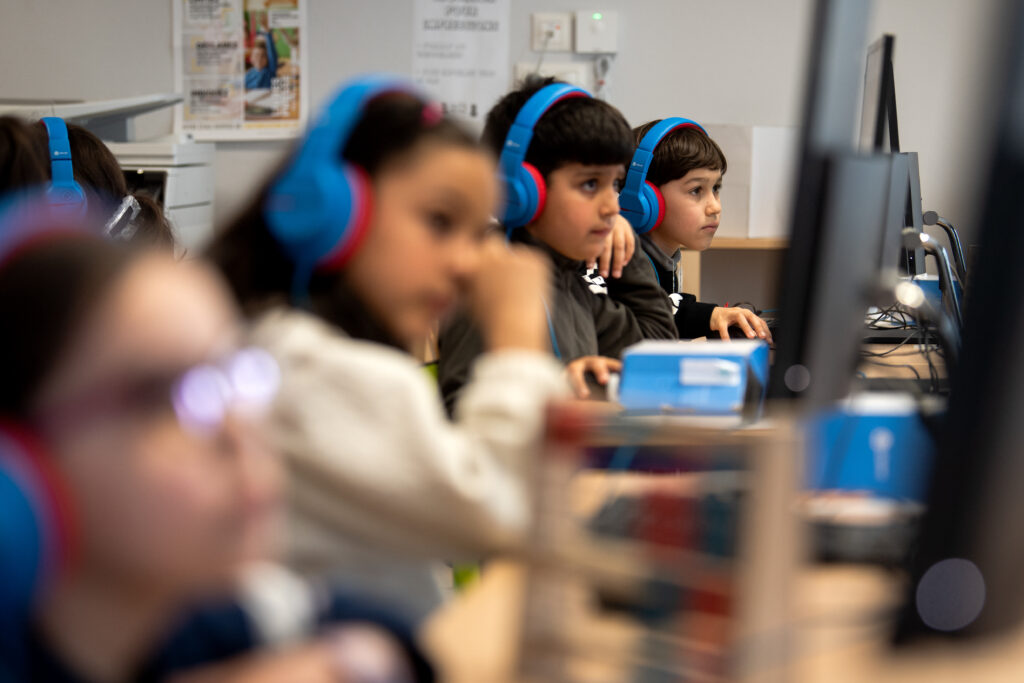
When it comes to AI, many parents navigate between fear of the unknown and fear of their children missing out.”It’s really hard to predict anything over five years,” said Adam Tal, an Israeli marketing executive and father of two boys aged seven and nine, when describing the post-generative AI world.Tal is “very worried” about the future this technology holds for his children — whether it’s deepfakes, “the inability to distinguish between reality and AI,” or “the thousands of possible new threats that I wasn’t trained to detect.”Mike Brooks, a psychologist from Austin, Texas, who specializes in parenting and technology, worries that parents are keeping their heads in the sand, refusing to grapple with AI.”They’re already overwhelmed with parenting demands,” he observed — from online pornography and TikTok to video games and “just trying to get them out of their rooms and into the real world.”For Marc Watkins, a professor at the University of Mississippi who focuses on AI in teaching, “we’ve already gone too far” to shield children from AI past a certain age.Yet some parents are still trying to remain gatekeepers to the technology.”In my circle of friends and family, I’m the only one exploring AI with my child,” remarked Melissa Franklin, mother of a 7-year-old boy and law student in Kentucky.”I don’t understand the technology behind AI,” she said, “but I know it’s inevitable, and I’d rather give my son a head start than leave him overwhelmed.”- ‘Benefits and risks’ -The path is all the more difficult for parents given the lack of scientific research on AI’s effects on users.Several parents cite a study published in June by MIT, showing that brain activity and memory were more stimulated in individuals not using generative AI than in those who had access to it.”I’m afraid it will become a shortcut,” explained a father of three who preferred to remain anonymous. “After this MIT study, I want them to use it only to deepen their knowledge.”This caution shapes many parents’ approaches. Tal prefers to wait before letting his sons use AI tools. Melissa Franklin only allows her son to use AI with her supervision to find information “we can’t find in a book, through Google, or on YouTube.”For her, children must be encouraged to “think for themselves,” with or without AI.But one father — a computer engineer with a 15-year-old — doesn’t believe kids will learn AI skills from their parents anyway.”That would be like claiming that kids learn how to use TikTok from their parents,” he said. It’s usually “the other way around.”Watkins, himself a father, says he is “very concerned” about the new forms that generative AI is taking, but considers it necessary to read about the subject and “have in-depth conversations about it with our children.””They’re going to use artificial intelligence,” he said, “so I want them to know the potential benefits and risks.”The CEO of AI chip giant Nvidia, Jensen Huang, often speaks of AI as “the greatest equalization force that we have ever known,” democratizing learning and knowledge.But Watkins fears a different reality: “Parents will view this as a technology that will be used if you can afford it, to get your kid ahead of everyone else.”The computer scientist father readily acknowledged this disparity, saying “My son has an advantage because he has two parents with PhDs in computer science, but that’s 90 percent due to the fact that we are more affluent than average” — not their AI knowledge.”That does have some pretty big implications,” Watkins said.
Ex-US policeman in Breonna Taylor killing sentenced to 33 months
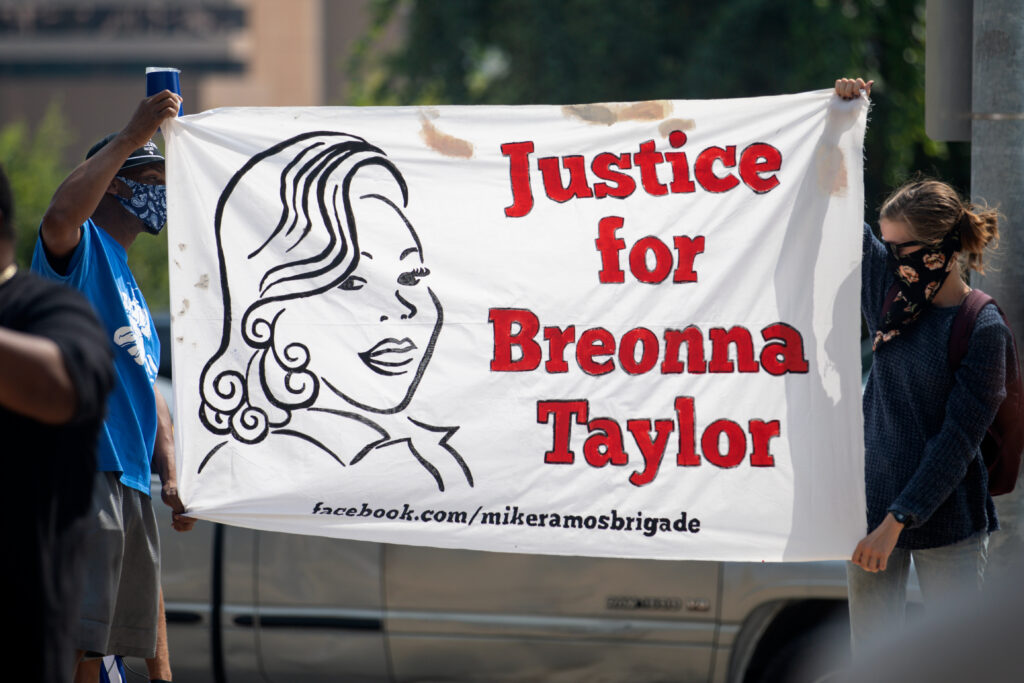
A US federal judge on Monday rejected an appeal for leniency by the Justice Department and sentenced an ex-police officer to 33 months in prison for violating the civil rights of a Black woman whose 2020 killing fueled widespread protests.Brett Hankison, a former Louisville police department detective, was convicted by a jury in Kentucky in November of one count of abusing Breonna Taylor’s civil rights for shots fired during a botched police raid on her home.In an unusual intervention, Harmeet Dhillon, the head of the Justice Department’s civil rights division, had asked Judge Rebecca Jennings last week to sentence Hankison to time served — the single day he spent in jail at the time of his arrest.But Jennings, who was appointed to the bench by US President Donald Trump during his first term as president, rejected the recommendation and said she was troubled by the prosecutor’s sentencing memorandum and arguments for leniency, the Louisville Courier Journal said.She sentenced him to 33 months in prison and three years of supervised release. Hankison faced a maximum penalty of life in prison.The deaths of Taylor, 26, and George Floyd, a 46-year-old Black man who was murdered by a white police officer in Minneapolis in May 2020, became the focus of a wave of mass protests in the United States and beyond against racial injustice and police brutality.Taylor and her boyfriend, Kenneth Walker, were sleeping in her Louisville apartment around midnight on March 13, 2020, when they heard a noise at the door.Walker, believing it was a break-in, fired his gun, wounding a police officer.Police, who had obtained a controversial no-knock search warrant to make a drug arrest, fired more than 30 shots back, mortally wounding Taylor.Hankison fired 10 shots during the raid, some into a neighboring apartment, but did not hit anyone. He is the only police officer convicted in connection with the raid.Dhillon, in her sentencing memorandum to the judge, had argued that a lengthy prison term for Hankison would be “unjust.””Hankison did not shoot Ms. Taylor and is not otherwise responsible for her death,” she said. “Hankison did not wound her or anyone else at the scene that day, although he did discharge his duty weapon ten times blindly into Ms Taylor’s home.”Responding to Monday’s verdict, the Taylor family’s lawyers noted that while the sentence did not “fully reflect the severity of the harm caused,” it was “more than what the Department of Justice sought.””We respect the court’s decision, but we will continue to call out the DOJ’s failure to stand firmly behind Breonna’s rights and the rights of every Black woman whose life is treated as expendable,” they said in a statement.In May, the Justice Department announced that it was dropping lawsuits filed by the administration of former president Joe Biden against police forces in Louisville and Minneapolis that accused them of using excessive force and racial discrimination.
Iran says will not halt nuclear enrichment ahead of European talks
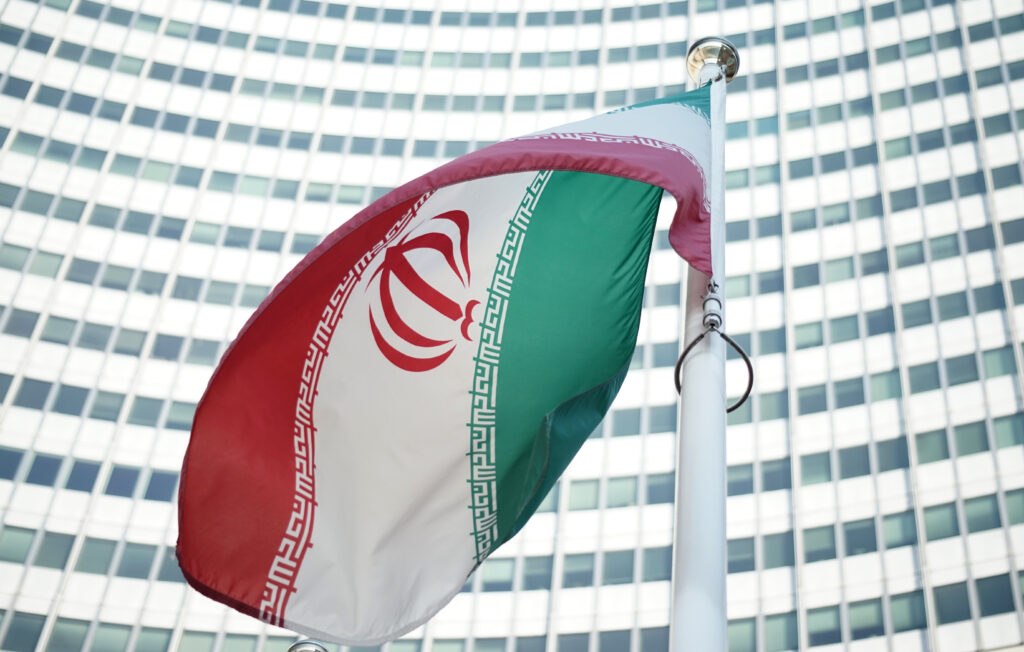
Iran has no plans to abandon its nuclear programme including uranium enrichment despite the “severe” damage caused by US strikes to its facilities, the country’s foreign minister said ahead of renewed talks with European powers.Iran is scheduled to meet Britain, France and Germany in Istanbul on Friday, to discuss its nuclear programme, with Tehran accusing European powers of scuppering a landmark 2015 nuclear deal.The meeting will be the first since Iran’s 12-day war with Israel last month, during which the United States carried out strikes against Tehran’s nuclear facilities.For now, enrichment “is stopped because, yes, damages are serious and severe,” Iranian Foreign Minister Abbas Araghchi told Fox News’ “Special Report with Bret Baier” on Monday.”But obviously we cannot give up enrichment because it is an achievement of our own scientists,” he continued, calling it a source of “national pride”.US President Donald Trump responded to the comments on his platform Truth Social, saying Washington would carry out strikes again “if necessary”.The 2015 agreement, reached between Iran and UN Security Council permanent members Britain, China, France, Russia and the United States, plus Germany, imposed curbs on Iran’s nuclear programme in exchange for sanctions relief.However, it unravelled in 2018 when the United States, during Trump’s first term, unilaterally withdrew and reimposed sweeping sanctions.Though Europe pledged continued support, a mechanism intended to offset US sanctions never effectively materialised, forcing many Western firms to exit Iran and deepening its economic crisis.”Iran holds the European parties responsible for negligence in implementing the agreement,” said foreign ministry spokesman Esmaeil Baqaei ahead of Friday’s talks in Istanbul on the deal’s future.Iran will also host a trilateral meeting Tuesday with Chinese and Russian representatives to discuss the nuclear issue and potential sanctions.The Chinese foreign ministry said Beijing would “continue to play a constructive role in pushing relevant sides to restart dialogue and negotiations, and reach a solution that takes in account the legitimate concerns of all parties”.In recent weeks, the three European powers have threatened to reimpose international sanctions on Tehran, accusing it of breaching its nuclear commitments.Germany said the Istanbul talks would be at the expert level, with the European trio, or E3, working “flat out” to find a sustainable and verifiable diplomatic solution.”If no solution is reached by the end of August… the snapback also remains an option for the E3,” said its foreign ministry spokesman, Martin Giese.A clause in the 2015 agreement allows for UN sanctions on Iran to be reimposed through a “snapback” mechanism in the event of non-compliance.However, the agreement expires in October, leaving a tight deadline.- ‘No intention of speaking with America’ -The International Atomic Energy Agency says Iran is the only non-nuclear-armed country currently enriching uranium to 60 percent — far beyond the 3.67 percent cap set by the 2015 accord.That is a short step from the 90 percent enrichment required for a nuclear weapon.Using the snapback clause was “meaningless, unjustifiable and immoral”, Baqaei told a news conference, arguing that Iran only began distancing itself from the agreement in response to Western non-compliance.”Iran’s reduction of its commitments was carried out in accordance with the provisions outlined in the agreement,” he said.Western powers — led by the United States and backed by Israel — have long accused Tehran of secretly seeking nuclear weapons.Iran has repeatedly denied this, insisting its nuclear programme is solely for civilian purposes such as energy production.Tehran and Washington had held five rounds of nuclear talks starting in April, but a planned meeting on June 15 was cancelled after Israel launched strikes on Iran, triggering a 12-day conflict.”At this stage, we have no intention of speaking with America,” Baqaei said Monday.Israel launched a wave of surprise strikes on its regional nemesis on June 13, targeting key military and nuclear facilities.The United States launched its own strikes against Iran’s nuclear programme on June 22, hitting the uranium enrichment facility at Fordo, in Qom province south of Tehran, as well as nuclear sites in Isfahan and Natanz.