Gaza: les négociations ont commencé à Doha, Trump espère un accord “cette semaine”

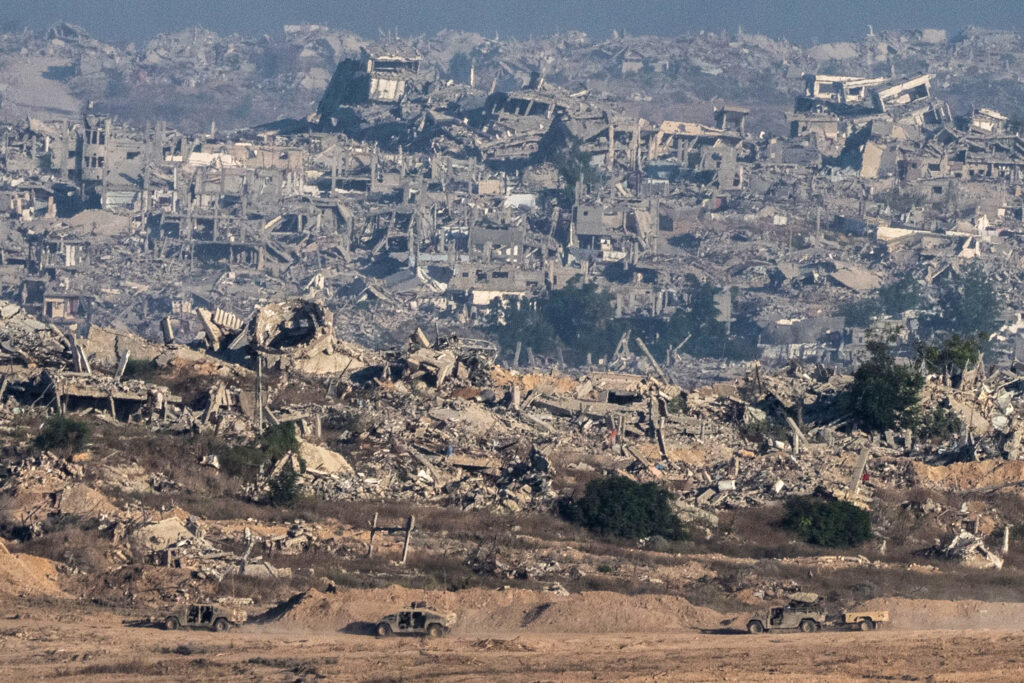
Les négociations indirectes entre Israël et le Hamas palestinien en vue d’un accord de cessez-le-feu et de libération d’otages à Gaza ont commencé dimanche soir à Doha, à la veille d’une rencontre à Washington entre Benjamin Netanyahu et Donald Trump, lequel espère un accord “cette semaine”.”Les discussions portent sur les mécanismes de mise en oeuvre” de l’accord et un “échange” d’otages retenus à Gaza contre des Palestiniens détenus en Israël, a indiqué à l’AFP une source palestinienne proche des négociations, qui se font par l’intermédiaire de médiateurs.Le président américain Donald Trump a estimé dimanche qu’il existait “de bonnes chances” de parvenir à un accord.”Nous avons déjà fait sortir beaucoup d’otages, mais en ce qui concerne les otages restants, un bon nombre vont sortir. Nous pensons y parvenir cette semaine”, a-t-il déclaré à des journalistes.Avant de s’envoler pour les Etats-Unis, le Premier ministre israélien Benjamin Netanyahu a estimé que sa rencontre avec Donald Trump pouvait “contribuer à faire avancer ce résultat que nous espérons tous”.Le président américain pousse pour une trêve dans la bande de Gaza, plongée dans une situation humanitaire critique après 21 mois de guerre.Benjamin Netanyahu a indiqué avoir donné à ses négociateurs des “instructions claires”: parvenir à un accord “aux conditions que nous avons acceptées”.Le dirigeant israélien avait jugé “inacceptables” samedi les “changements que le Hamas cherche à apporter à la proposition” initialement parrainée par les Etats-Unis et transmise par les médiateurs qatari et égyptien.- “Mission importante” -Selon des sources palestiniennes proches des discussions, la proposition comprend une trêve de 60 jours, pendant laquelle le Hamas relâcherait dix otages encore en vie et remettrait des corps de captifs morts, en échange de la libération de Palestiniens détenus par Israël.Les changements réclamés par le mouvement islamiste, d’après ces sources, portent sur les modalités du retrait des troupes israéliennes de Gaza, des garanties qu’il souhaite obtenir sur l’arrêt des hostilités après les 60 jours, et sur une reprise en main de la distribution de l’aide humanitaire par l’ONU et des organisations internationales reconnues.M. Netanyahu a une “mission importante” à Washington, a déclaré le président israélien Isaac Herzog après l’avoir rencontré dimanche matin: “faire avancer un accord pour ramener tous nos otages à la maison”.Sur les 251 personnes enlevées lors de l’attaque du Hamas en Israël le 7 octobre 2023, à l’origine de la guerre, 49 sont toujours retenues à Gaza, dont 27 déclarées mortes par l’armée israélienne.Une première trêve d’une semaine en novembre 2023, puis une deuxième de deux mois début 2025, ont permis le retour de nombreux otages en échange de la libération de Palestiniens détenus par Israël.Le 18 mars, faute d’accord sur la suite du cessez-le-feu, Israël a repris son offensive à Gaza, où le Hamas, considéré comme un mouvement terroriste par les Etats-Unis, l’Union européenne et Israël, a pris le pouvoir en 2007.  – “La faim comme arme de guerre” -Dans la bande de Gaza, dont les plus de deux millions d’habitants, maintes fois déplacés, vivent dans des conditions terribles selon l’ONU et les ONG, 26 Palestiniens ont été tués dimanche par les bombardements israéliens, selon Mahmoud Bassal, porte-parole de la Défense civile.Interrogée par l’AFP sur les faits rapportés par M. Bassal, l’armée israélienne a dit ne pas être en mesure de les commenter dans l’immédiat.Compte tenu des restrictions imposées aux médias et des difficultés d’accès à Gaza, il est extrêmement difficile pour l’AFP de vérifier de manière indépendante les affirmations des différentes parties.Vendredi, le Haut-Commissariat de l’ONU aux droits de l’homme a recensé au moins 613 personnes tuées lors de distributions d’aide à Gaza entre le 26 mai et le 27 juin, dont 509 près des seuls centres de la Fondation humanitaire de Gaza (GHF), organisation soutenue par les Etats-Unis et Israël.Le président brésilien Lula a accusé dimanche Israël de commettre un “génocide” dans le territoire palestinien assiégé, affamé et dévasté par la guerre. “Nous ne pouvons pas rester indifférents face au génocide perpétré par Israël à Gaza, le massacre de civils innocents et l’usage de la faim comme arme de guerre”, a dit Luiz Inacio Lula da Silva lors de son discours d’ouverture du sommet des Brics, à Rio de Janeiro.L’attaque du 7-Octobre a fait 1.219 morts du côté israélien, en majorité des civils, selon un décompte de l’AFP réalisé à partir de données officielles.Au moins 57.418 Palestiniens, majoritairement des civils, ont été tués dans les représailles israéliennes à Gaza, selon des données du ministère de la Santé du Hamas, jugées fiables par l’ONU.

Netanyahu says Trump meeting could ‘advance’ Gaza deal ahead of Doha talks

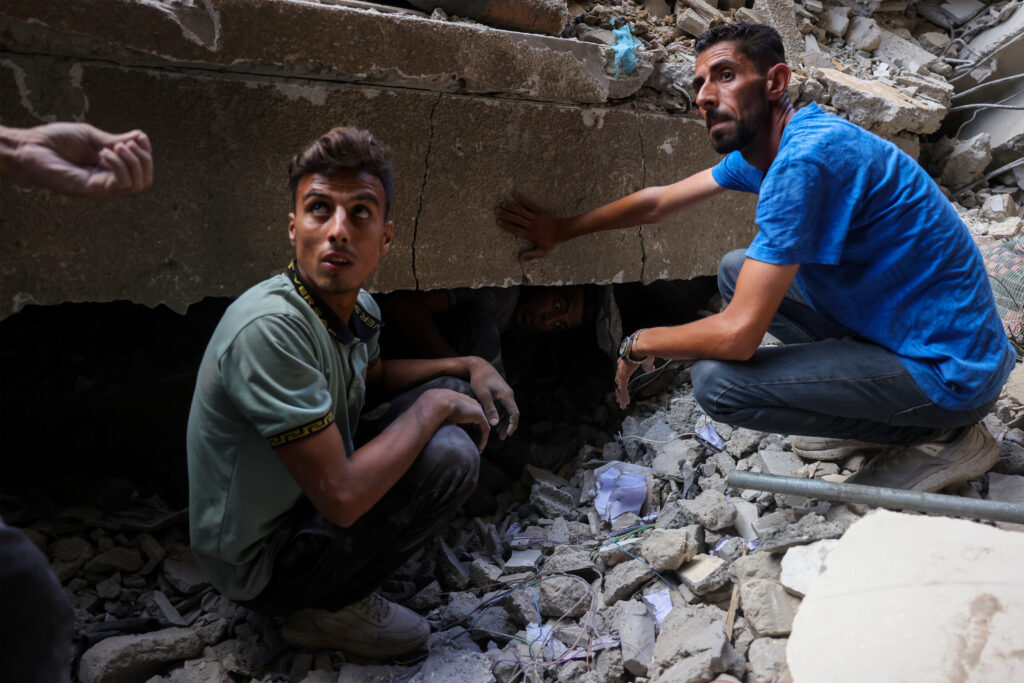
Israeli Prime Minister Benjamin Netanyahu said Sunday that he hoped an upcoming meeting with US President Donald Trump could “help advance” a Gaza ceasefire deal, after sending negotiators to Doha for indirect talks with Hamas. Under mounting pressure to end the war, now approaching its 22nd month, the Israeli premier is scheduled to sit down on Monday with Trump, who has recently made a renewed push to end the fighting.Speaking before boarding Israel’s state jet bound for Washington, Netanyahu said: “We are working to achieve this deal that we have discussed, under the conditions that we have agreed to.”He added he had dispatched the team to Doha “with clear instructions”, and thought the meeting with Trump “can definitely help advance this (deal), which we are all hoping for”.Netanyahu had previously said Hamas’s response to a draft US-backed ceasefire proposal contained “unacceptable” demands.Later Sunday, a Palestinian official familiar with the talks told AFP that indirect negotiations between Israel and Hamas towards a ceasefire deal in the Gaza Strip had started in Qatar.”Negotiations are about implementation mechanisms and hostage exchange, and positions are being exchanged through mediators,” the official said.Speaking to reporters Sunday, Trump said: “I think there’s a good chance we have a deal with Hamas during the week, during the coming week.”- ‘Enough blood’ -Earlier Sunday, a Palestinian official told AFP that Hamas would also seek the reopening of Gaza’s Rafah crossing to evacuate the wounded. Hamas’s top negotiator Khalil al-Hayya was leading the delegation in Doha, the official told AFP.Two Palestinian sources close to the discussions told AFP the proposal included a 60-day truce, during which Hamas would release 10 living hostages and several bodies in exchange for Palestinians detained by Israel.However, they said, the group was also demanding certain conditions for Israel’s withdrawal, guarantees against a resumption of fighting during negotiations, and the return of the UN-led aid distribution system.On the ground, Gaza’s civil defence agency reported 26 people had been killed by Israeli forces on Sunday.It said 10 had been killed in a pre-dawn strike on Gaza City’s Sheikh Radwan neighbourhood, where AFP images showed Palestinians searching through the debris for survivors with their bare hands.”The rest of the family is still under the rubble,” Sheikh Radwan resident Osama al-Hanawi told AFP.”We are losing young people, families and children every day, and this must stop now. Enough blood has been shed.”Media restrictions in Gaza and difficulties in accessing many areas mean AFP is unable to independently verify the tolls and details provided by the civil defence agency.Contacted by AFP, the Israeli military said it could not comment on specific strikes without precise coordinates.Since Hamas’s October 2023 attack sparked the massive Israeli offensive in Gaza, mediators have brokered two temporary halts in the fighting during which hostages were freed in exchange for Palestinian prisoners in Israeli custody.Of the 251 hostages taken by Palestinian militants during the 2023 attack, 49 are still being held in Gaza, including 27 the Israeli military says are dead.Recent efforts to broker a new truce have repeatedly failed, with the primary point of contention being Israel’s rejection of Hamas’s demand for a lasting ceasefire.- ‘Hunger as a weapon’ -The war has created dire humanitarian conditions for the more than two million people in the Gaza Strip.Karima al-Ras, from Khan Yunis in southern Gaza, said “we hope that a truce will be announced” to allow in more aid.”People are dying for flour,” she said.A US- and Israel-backed group, the Gaza Humanitarian Foundation, took the lead in food distribution in the territory in late May, when Israel partially lifted a more than two-month blockade on aid deliveries.UN agencies and major aid groups have refused to cooperate with the GHF over concerns it was designed to cater to Israeli military objectives.The UN human rights office said last week that more than 500 people had been killed waiting to access food from GHF distribution points.The Gaza health ministry on Sunday put the toll at 751 killed.Brazilian President Luiz Inacio Lula da Silva, a frequent critic of Israel, again accused it of committing “genocide” in Gaza at a meeting of the 11 BRICS emerging nations in Rio de Janeiro on Sunday.”We cannot remain indifferent to the genocide carried out by Israel in Gaza, the indiscriminate killing of innocent civilians and the use of hunger as the Brazilian president, popularly known as Lula, told leaders from China, India and other nations. Hamas’s October 2023 attack resulted in the deaths of 1,219 people, mostly civilians, according to an AFP tally based on Israeli official figures.Israel’s retaliatory campaign has killed at least 57,418 people in Gaza, also mostly civilians, according to the Hamas-run territory’s health ministry. The United Nations considers the figures reliable.burs-jj/gv

‘Into a void’: Young US college graduates face employment crisis

Over two years, Rebecca Atkins filed more than 250 job applications, and felt like every one was going into a gaping chasm — one opened by the highest unemployment rate for recent college graduates in the United States in more than a decade.”It was extremely dispiriting,” said the 25-year-old, who graduated in 2022 with a degree in law and justice from a university in the US capital Washington. “I was convinced that I was a terrible person, and terrible at working.”At 5.8 percent, unemployment for young, recent graduates from US universities is higher than it has been since November 2013, excluding 15 months in the Covid pandemic, according to official data. Moreover, it has also remained stubbornly higher than overall unemployment — an extremely unusual situation, analysts say. And while overall US unemployment has stabilized between around 3.5 and 4 percent post-pandemic, unemployment for recent college graduates is only trending higher.The labor market for new grads has weakened consistently since 2022, with new hiring down 16 percent in 2025, year-over-year, according to payroll firm Gusto. Analysts say the trend is likely a result of cyclical post-pandemic hiring slowdowns — particularly in new-grad-heavy sectors like technology, finance, and business information — and overall economic uncertainty in the tumultuous early days of the Trump administration. That is scant consolation to the droves of young people — often saddled with huge amounts of student debt — on the hunt for their first full-time job.”All of the jobs that I wanted, I didn’t have the requirements for — often entry-level jobs would require you to have four or five years of experience,” said Atkins, who bounced between part-time roles and working in restaurants for years.- ‘Extremely high uncertainty’ -“It is definitely an outlier,” said Matthew Martin, senior US economist at Oxford Economics. “You’d expect that the white collar positions would not be as exposed to cyclical downturns (as other jobs).”Job openings for professional and business services have declined by more than 40 percent since 2021, according to research authored by Martin, with tech sector jobs disproportionately impacted.”Part of that is a slower pace of hiring as they right-size after they hired at very high rates in 2022, but at the same time the sheer volume of decline also points to the impact of AI,” he told AFP, signaling the potential of artificial intelligence technology to eliminate some entry-level roles.Gregory Daco, chief economist at EY-Parthenon, said slowing tech sector hiring as companies focus on holding on to their talent “disproportionately” affects recent graduates.The hiring slowdown is also a result of US President Donald Trump’s far-reaching policy swings since taking office in January, said Daco.”The experience of extremely high uncertainty when it comes to the administration’s trade, tax or other policies has caused many firms to potentially slow down or freeze their hiring.”He cautioned, however, against jumping to the conclusion that AI had already begun to eliminate entry-level roles, pointing to a so-far limited uptake of the technology by most sectors.”The reality is that a lot of firms are still in the early stages of adoption of these new technologies, and I think it would be a bit premature to assume that we’ve reached a level of use… that would have a visible macro impact.”- ‘Constantly working’ -The United States is perhaps the most expensive country in the world for a university education, with an average cost of $27,673 per year for an undergraduate degree, according to official data.In 2020, 36.3 percent of US undergraduates took on federal student loans to help meet those spiraling costs, the data shows, with the Education Data Initiative putting average student loan debt for graduating students at $29,550.Even without student loan debt, however, the weakening job market can leave some recent graduates feeling like they are stretched thin.Katie Bremer, 25, graduated from American University with a dual-degree in Environmental Science and Public Health in 2021. It took her more than a year to find a full-time job — one not in her field — and even then, she had to supplement her income by babysitting.”I felt like I was constantly working,” she told AFP.”It seems overwhelming, looking at the costs, to try and make your salary stretch all the way to cover all the milestones you’re supposed to reach in young adulthood.”There is little hope on the immediate horizon, with analysts warning that it will likely take some time for the labor market to resolve itself, with part of that adjustment likely seeing students picking different majors.”It’s likely to get worse before it gets better,” said Martin. Looking at her peers, many of whom are saddled with huge debt and struggled to find work, Bremer says she worries for their collective long-term future.”There have been times where I’ve thought ‘how is my generation going to make this work?'”

Hezbollah chief says won’t surrender under Israeli threats

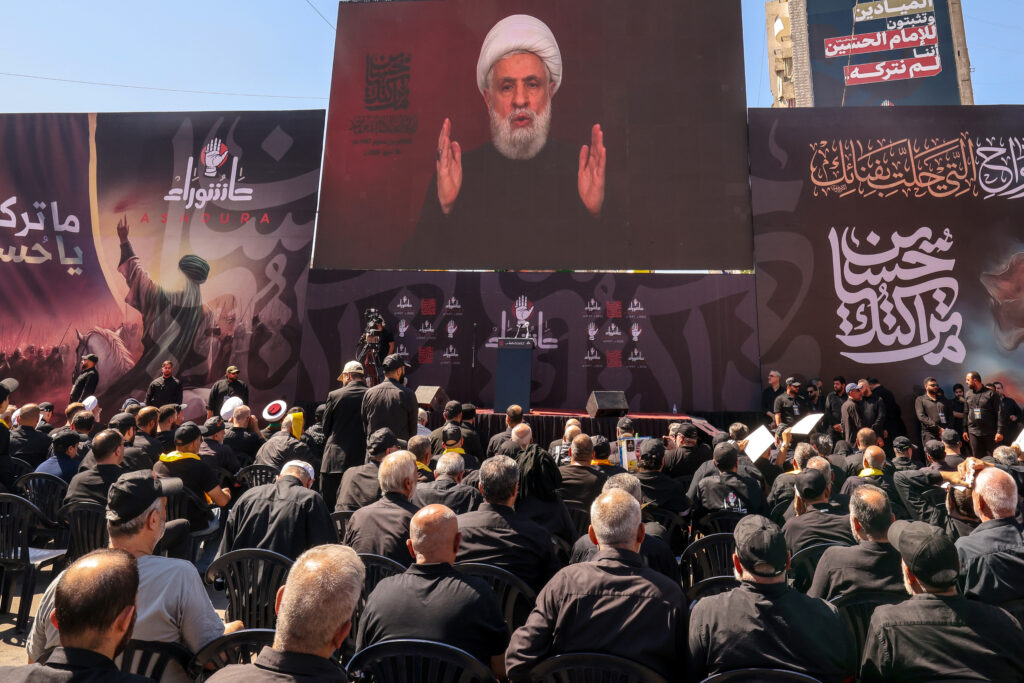
Hezbollah leader Naim Qassem said Sunday his group would not surrender or lay down its weapons in response to Israeli threats, despite pressure on the Lebanese militants to disarm.His speech came ahead of a visit Monday by US envoy Thomas Barrack during which Lebanese authorities are due to respond to a request to disarm Hezbollah by year’s end, according to a Lebanese official who spoke on condition of anonymity.”This (Israeli) threat will not make us accept surrender,” Qassem said in a televised speech to thousands of his supporters in Beirut’s southern suburbs, a Hezbollah stronghold, during the Shiite Muslim religious commemoration of Ashura.Lebanese leaders who took office in the aftermath of a war between Israel and Hezbollah last year that left the Iran-backed group severely weakened have repeatedly vowed a state monopoly on bearing arms, while demanding Israel comply with a November ceasefire that sought to end the hostilities.Qassem, who succeeded longtime leader Hassan Nasrallah after an Israeli strike killed him in September, said the group’s fighters would not abandon their arms and asserted that Israel’s “aggression” must first stop.Israel’s military has continued to occupy positions in Lebanon and to strike the country despite the November ceasefire, saying it is targeting Hezbollah sites and operatives and accusing Beirut of not doing enough to disarm the group.Lebanon’s official National News Agency Sunday reported a series of Israeli strikes in the country’s south and east, a day after authorities said one person was killed and six others wounded in Israeli raids in the south.Later Sunday, the Israeli military confirmed it had carried out strikes in the eastern Bekaa valley and in the south against what it called Hezbollah military sites and weapons systems.- ‘Not now, not later’ -Under the ceasefire, Hezbollah was to pull its fighters back north of the Litani river, some 30 kilometres (20 miles) from the Israeli frontier.Israel was to withdraw its troops from Lebanon, but has kept them deployed in five areas that it deemed strategic.Lebanese authorities say they have been dismantling Hezbollah’s military infrastructure in the south near the Israeli border.Qassem said Israel must abide by the ceasefire agreement, “withdraw from the occupied territories, stop its aggression… release the prisoners” detained during last year’s war, and that reconstruction in Lebanon must begin.Only then “will we be ready for the second stage, which is to discuss the national security and defence strategy” which includes the issue of group’s disarmament, he added.Supporters dressed in black for Ashura marched through Beirut’s southern suburbs before his speech, waving Hezbollah banners as well as the Lebanese, Palestinian and Iranian flags.Some also carried posters of the slain leader Nasrallah.Hussein Jaber, 28, originally from south Lebanon, said the group’s weapons “can’t be handed over, not now, not later. Those who think Hezbollah will turn in its arms are ignorant.”In his speech, Qassem also said his movement “will not accept normalisation with the Israeli enemy”, after Israel’s top diplomat said his government was “interested” in such a move.Lebanon, which is technically still at war with Israel, did not comment.Syria, also mentioned by Israeli Foreign Minister Gideon Saar, said it was “premature” to discuss normalisation.- ‘No pilgrims’ -Shiites in other countries around the region were also marking Ashura, which commemorates the death of the Imam Hussein, grandson of the Prophet Mohammed, in a seventh century battle in modern-day Iraq.Iraq saw the largest commemorations on Sunday, particularly in the holy cities of Najaf and Karbala.In south Lebanon, hundreds of people participated in commemorations in Nabatiyeh, an area regularly targeted by Israeli strikes.In Sunni Muslim majority Syria, several hundred faithful marked Ashura under the protection of security forces at the Sayyida Zeinab shrine south of Damascus, an AFP correspondent said.Syria’s Shiite minority has been worried since Sunni Islamists in December toppled longtime ruler Bashar al-Assad, who was backed by Iran.Unlike in previous years, there were no processions in the Sayyida Zeinab area, where pro-Iran groups used to be heavily entrenched before Assad’s ousting.”The Syrian state has bolstered its protection at this time,” said Jaafar al-Amine, an official at the holy site.”This year, there have been no pilgrims from other countries” like Iran, Iraq or Lebanon, he added.

Après les inondations au Texas, les proches de disparus à la recherche de la moindre trace

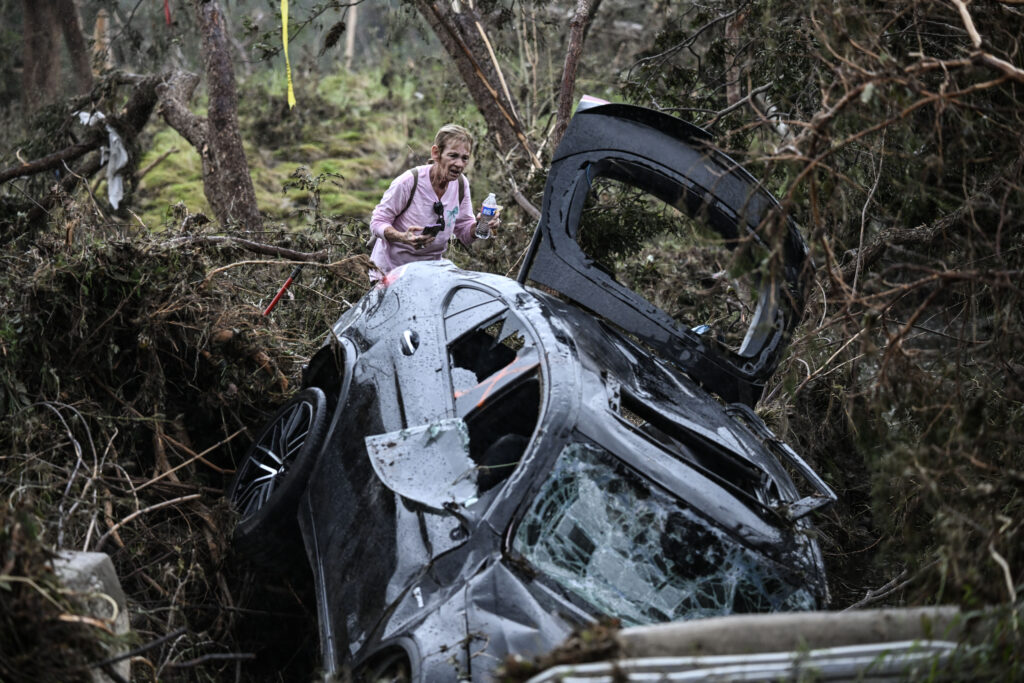
“L’eau nous emporte” a été le dernier message que Joyce Bandon a envoyé à sa famille. Elle logeait dans une maison située sur les rives du Guadalupe, dans le centre du Texas, quand le fleuve a débordé, emportant tout sur son passage. Ses proches et ses amis s’organisent pour tenter de la retrouver. Des pluies diluviennes ont provoqué vendredi des inondations dévastatrices dans plusieurs villes du comté de Kerr, submergeant des quartiers entiers, et détruisant résidences secondaires et centres de colonies de vacances. Au moment de la catastrophe, Joyce Bandon, âgée de 21 ans, et trois de ses amis se trouvaient dans la maison de campagne de l’un d’entre eux, située non loin du fleuve brusquement sorti de son lit pendant la nuit.Les quatre amis étaient venus profiter du 4 juillet, jour férié aux Etats-Unis, et lorsque les pluies se sont abattues sur la zone, ils n’ont vraisemblablement pas eu le temps de sortir pour se mettre à l’abri.”La maison s’est effondrée vers quatre heures du matin. Depuis son téléphone portable, Joyce a envoyé un message à ses parents qui disait +L’eau nous emporte+, puis le signal a été perdu”, explique à l’AFP Louis Deppe, 62 ans, qui a pris la tête d’un groupe d’une vingtaine de volontaires pour participer aux recherches de la jeune femme. “Il faut travailler par équipes de deux ou trois (…) Un corps peut être à trois mètres dans un arbre, entouré de débris, et une personne seule peut ne pas le voir. Plus il y a d’yeux, mieux c’est”, dit-il.Dimanche, le fleuve Guadalupe a commencé à retrouver son lit et son calme, mais les rives offrent toujours un spectacle de désolation. Sur l’une d’entre elles, une vache morte est suspendue à un arbre, la tête coincée dans des branchages.Non loin, une voiture est renversée, tandis qu’au sol, des dizaines de poissons morts, emportés par le courant, entrent en décomposition. Le bruit assourdissant des hélicoptères à la recherche de corps se fait entendre par moments, tandis que des secouristes remontent le fleuve dans de petites embarcations, ratissant la zone. Des forces de sécurité de l’État du Texas patrouillent à pied. Les branchages et les nombreux véhicules endommagés sont progressivement retirés des lieux dévastés.- “Faire leur deuil”  -Tina Hambly, 55 ans, est la mère de la meilleure amie de Joyce. Elle progresse parmi les décombres et les restes de végétation, munie d’une sorte de pagaie avec laquelle elle déplace les branches et les gravats, dans l’espoir de trouver une trace des disparus.”Nous couvrons un tronçon de 11 kilomètres. Nous sommes sept équipes, et chacune parcourt un peu plus de 1,5 kilomètre, en essayant de retrouver les quatre jeunes ou toute autre personne. Il y a les familles et même des inconnus nous aident”, explique-t-elle.Le camp de vacances Camp Mystic se trouve dans la localité de Hunt, une des zones les plus touchées par la catastrophe. Plusieurs fillettes qui y étaient hébergées restaient introuvables dimanche. Des jouets, des vêtements et des serviettes ont été découverts dans les chalets envahis par la boue. Le groupe de bénévoles qui cherchent Joyce Bandon a aussi découvert samedi plusieurs corps dans la zone. “Hier, nous avons commencé dans la matinée. Nous avons retrouvé (les corps de) deux fillettes, puis autour de 10 heures, nous avons découvert (celui d’) une autre petite fille pris dans un arbre”, raconte Justin Morales, 36 ans, un des volontaires.”On m’a dit qu’il s’agissait de l’une des filles de Camp Mystic qui avaient disparu”, ajoute-t-il. Au milieu du drame, il se dit malgré tout “heureux de pouvoir aider les familles à faire leur deuil”.