

‘Marathon at F1 speed’: China bids to lap US in AI leadership
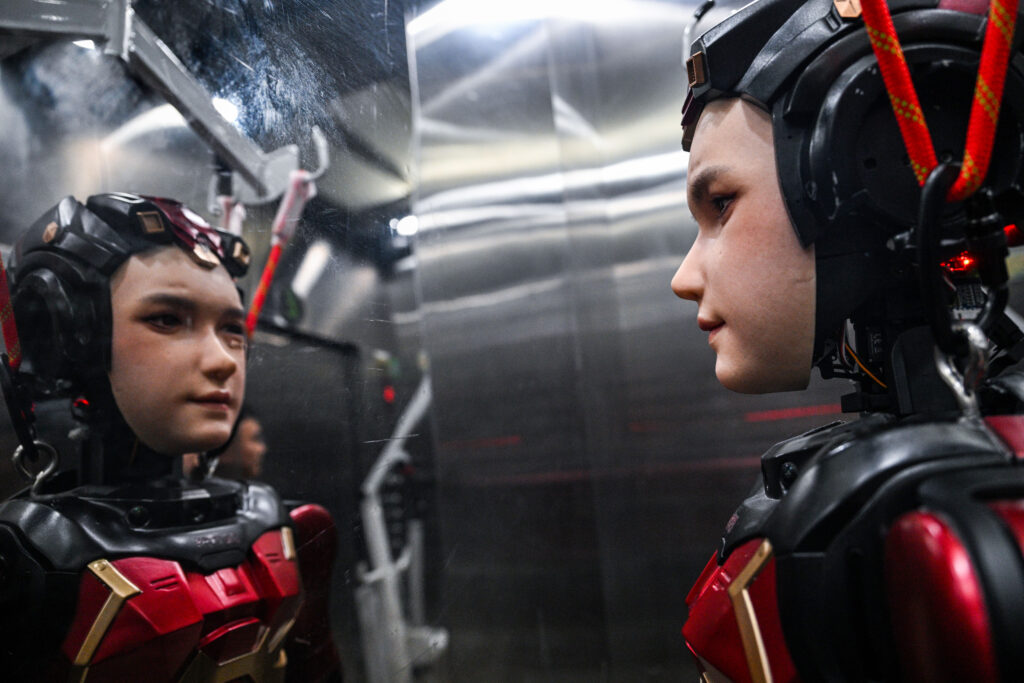
Beyond dancing robots and eager-to-help digital avatars, Shanghai’s World AI Conference saw China stake its claim to global artificial intelligence leadership and frame itself as a clear alternative to the United States.Assumptions that the US was far ahead in the fast-moving field were upended this year when Chinese start-up DeepSeek unveiled a chatbot that matched top American systems for an apparent fraction of the cost.With AI now at the forefront of the superpowers’ tech race, the World AI Conference (WAIC) that ended Tuesday saw China set out its case to take charge on shaping its global governance too.China, the United States and other major economies are “engaged in a marathon at Formula One speed”, said Steven Hai, assistant professor of tech innovation at Xi’an Jiaotong-Liverpool University.”Which country will attain the upper hand can only be assessed dynamically over the course of development.”China and the United States dominate the AI sector — only 10 to 15 percent of models developed in recent years were built without either’s participation, according to Epoch AI, a non-profit research institute.While US companies like Google and OpenAI are still industry-leading, the institute labelled 78 percent of Chinese models “state-of-the-art” compared to 70 percent of models built with American participation.Beijing’s stated aim is to become the world’s leading AI “innovation centre” by 2030.”Now China is neck-and-neck with the United States in terms of core tech, that play (for global leadership) is more relevant than ever,” said Tom Nunlist, associate director for tech and data policy at Trivium China.”With a solid AI offering and the US turning inward, the question is will Beijing’s vision gain greater global traction?”In May, Microsoft’s Brad Smith told the US Senate that “the number-one factor” in the tech race “is whose technology is most broadly adopted in the rest of the world”.- ‘Sovereign AI’ -China’s offer is technical and economical. “One of the biggest differences (with the US sector) is that most of the leading models in China… are open-weight and open-source,” former Google CEO Eric Schmidt told an audience at WAIC. That means they can be adapted by other countries to fit their own needs, said George Chen, partner at Washington-based policy consultancy The Asia Group.”We already see some countries like Mongolia, Kazakhstan, even Pakistan are trying to adopt the DeepSeek model to build their own,” he said.”China has a chance to win in the aspect of sovereign AI to export its model to those countries.”The comparative low cost of Chinese technology — software but also hardware, for example through firms like Huawei — will be a big factor, especially for developing countries, Chen added.On Monday another Chinese start-up, Zhipu, announced its new AI model — also open-source — would cost less than DeepSeek to use.In June, OpenAI accused Zhipu of having close ties with Chinese authorities and noted it was working with governments and state-owned firms across Southeast Asia, the Middle East and Africa.”The goal is to lock Chinese systems and standards into emerging markets before US or European rivals can,” it said.Washington has moved to protect its lead in AI, expanding efforts to curb exports of state-of-the-art chips to China in recent years.”While limiting China’s share of the global AI hardware market, (these measures) have accelerated indigenous innovation and led Chinese firms to exploit regulatory loopholes,” said assistant professor Hai, referring to “rife” smuggling and circumvention. – Issues of trust? -Other challenges to homegrown firms include the closed nature of the Chinese internet, and “general issues of trust when it comes to using Chinese tech”, Trivium’s Nunlist said. At WAIC, China sought to present itself as a responsible power. Premier Li Qiang emphasised the risks of AI and pledged to share technology with other nations, especially developing ones. His remarks contrasted sharply with US President Donald Trump’s aggressive low-regulation “AI Action Plan” launched just days before and explicitly aimed at cementing US dominance in the field. China released its own action plan at WAIC, following a meeting attended by delegates from dozens of countries.Li also announced the establishment of a China-led organisation for international AI cooperation.However, China’s foreign ministry did not respond to a request from AFP for details on the set-up of the organisation — including any international participants — and several foreign delegates said they had not been briefed on the announcement beforehand. Analyst Grace Shao wrote it was clear AI was still in its “infancy stage”.”You can sense that vibrant energy but also the immaturity of the space,” she wrote on Substack.”There just shouldn’t be a definitive conclusion on who is ‘winning’ yet.”
Alertes au tsunami dans le Pacifique après un séisme de magnitude 8,8 près des côtes russes
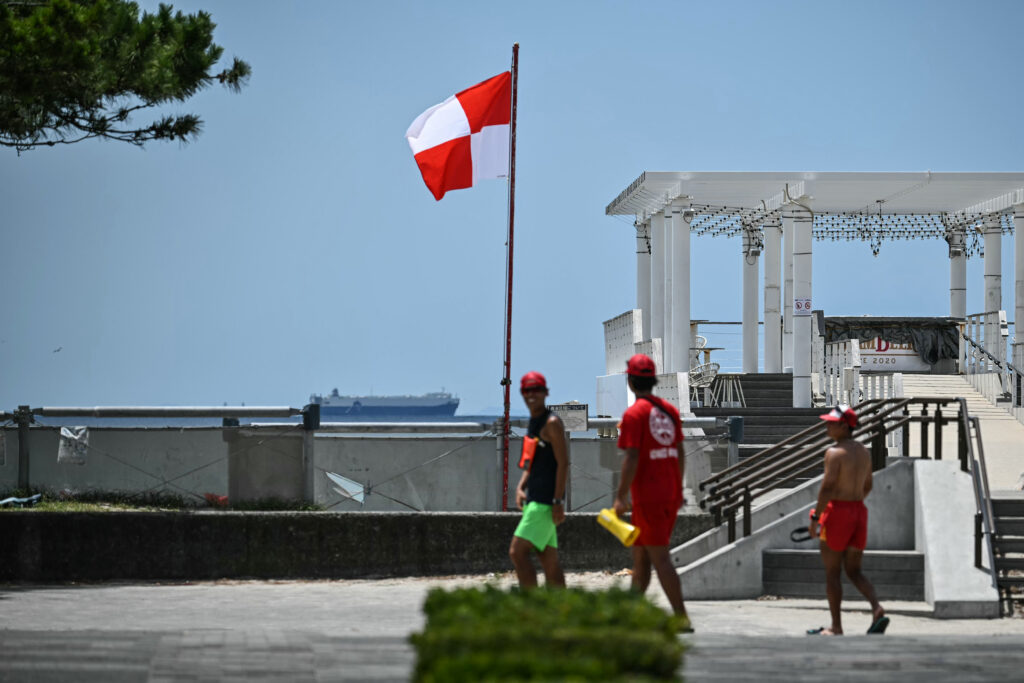
Un séisme de magnitude 8,8, le plus puissant dans la région en près de 73 ans, a frappé mardi au large de la péninsule russe du Kamtchatka, provoquant des tsunamis en Russie et au Japon et déclenchant des alertes dans presque tout le Pacifique.Un tsunami dans l’océan Pacifique a provoqué des inondations à Severo-Kourilsk, dans le nord de l’archipel russe des Kouriles, a annoncé le ministère des Situations d’urgence.Des vidéos publiées sur les réseaux sociaux ont montré des immeubles envahis par l’eau dans cette ville d’environ 2.000 habitants, dont la population a été évacuée.Dans le même temps, des images en direct à la télévision japonaise montraient des personnes évacuant en voiture ou à pied vers des zones plus élevées, notamment dans l’île septentrionale de Hokkaido, où un premier tsunami haut de 30 cm a été observé.L’Institut américain de géophysique (USGS) avait initialement fait état d’un tremblement de terre d’une magnitude de 8,7, avant de relever sa puissance à 8,8. Il est survenu vers 23H25 GMT mardi à 20,7 km de profondeur, à environ 126 km de la capitale de la région du Kamtchatka, dans l’extrême-orient russe.Cette magnitude est la plus forte enregistrée depuis 1952 dans la région du Kamtchatka, selon les services sismologiques locaux.- “Evacuez immédiatement!” -La télévision japonaise NHK diffusait une couverture spéciale avec un présentateur demandant aux habitants des côtes d’évacuer: “Évacuez immédiatement pour sauver vos vies”.Les employés de la centrale nucléaire de Fukushima (nord du Japon), détruite par un puissant séisme et un tsunami en mars 2011, ont été évacués, a indiqué son opérateur.”Des tsunamis frapperont à répétition. Ne vous aventurez pas en mer et ne vous approchez pas des côtes tant que l’alerte n’est pas levée”, a averti l’Agence météorologique japonaise (JMA).Celle-ci avait initialement annoncé un tsunami pouvant atteindre 1 m, mais cette prévision a ensuite été portée à 3 m.Certaines lignes ferroviaires ont été suspendues. “Les habitants des régions où des alertes ont été émises doivent immédiatement évacuer vers des endroits sûrs, zones surélevées ou bâtiments d’évacuation”, a insisté le porte-parole du gouvernement, Yoshimasa Hayashi.L’alerte japonaise porte sur toute la côte nord et est de l’archipel, jusqu’au sud d’Osaka, ainsi que sur les petites îles périphériques. Au-delà, ainsi que dans les baies de Tokyo et d’Osaka, le tsunami pourrait atteindre 1 m.Le centre américain des tsunamis (PTWC), qualifiant l’impact potentiel de “dangereux”, alerte de son côté sur un risque de vagues de plus de 3 m le long de certaines côtes de l’Équateur, du nord-ouest des îles hawaïennes et de la Russie.Des tsunamis hauts de un à trois mètres au-dessus du niveau des marées sont par ailleurs possibles le long de certaines côtes du Chili, du Costa Rica, de la Polynésie française, de Guam, d’Hawaï, du Japon et d’autres îles et archipels du Pacifique, ajoute-t-il.Enfin, des tsunamis jusqu’à 1 m peuvent être attendues ailleurs, notamment en Australie, en Colombie, au Mexique, en Nouvelle-Zélande, aux Tonga et à Taïwan.Au Mexique, les autorités ont ordonné aux habitants de toute la côte Pacifique, de la Basse-Californie jusqu’au Chiapas, de se tenir éloignés de l’océan.Les Philippines ont elles aussi exhorté les habitants de la côte est à se déplacer vers l’intérieur des terres, prévoyant un tsunami jusqu’à 1 m entre 05h20 et 06h40 GMT, et ont conseillé aux pêcheurs déjà en mer de rester au large en eaux profondes.Les États-Unis ont émis une série d’alertes de différents niveaux le long de la côte ouest nord-américaine de l’Alaska jusqu’à toute la côte californienne. Des alertes au tsunami ont été diffusées sur les téléphones portables en Californie, selon des journalistes de l’AFP.- Répliques -Au moins six répliques ont secoué la région, dont une de magnitude 6,9 et une autre de magnitude 6,3, selon l’USGS. Le service sismologique du Kamtchatka a prévenu que des répliques de jusqu’à 7,5 sont attendues dans les prochains jours.Le 20 juillet, un séisme de magnitude 7,4, suivi de nombreuses répliques, s’était également produit au large des côtes du Kamtchatka, sans faire de dégâts majeurs.L’épicentre du séisme de mardi est à peu près le même que celui d’une secousse massive de magnitude 9,0 survenue en novembre 1952, qui avait provoqué un tsunami dévastateur dans tout le Pacifique, a précisé l’USGS.La péninsule du Kamtchatka est le point de rencontre entre les plaques tectoniques du Pacifique et nord-américaine, ce qui fait de la région l’une des zones sismiques les plus actives de la planète.Depuis 1900, sept séismes de grande ampleur, d’une magnitude supérieure ou égale à 8,3, sont survenus le long de cette péninsule.
Alertes au tsunami dans le Pacifique après un séisme de magnitude 8,8 près des côtes russes
Un séisme de magnitude 8,8, le plus puissant dans la région en près de 73 ans, a frappé mardi au large de la péninsule russe du Kamtchatka, provoquant des tsunamis en Russie et au Japon et déclenchant des alertes dans presque tout le Pacifique.Un tsunami dans l’océan Pacifique a provoqué des inondations à Severo-Kourilsk, dans le nord de l’archipel russe des Kouriles, a annoncé le ministère des Situations d’urgence.Des vidéos publiées sur les réseaux sociaux ont montré des immeubles envahis par l’eau dans cette ville d’environ 2.000 habitants, dont la population a été évacuée.Dans le même temps, des images en direct à la télévision japonaise montraient des personnes évacuant en voiture ou à pied vers des zones plus élevées, notamment dans l’île septentrionale de Hokkaido, où un premier tsunami haut de 30 cm a été observé.L’Institut américain de géophysique (USGS) avait initialement fait état d’un tremblement de terre d’une magnitude de 8,7, avant de relever sa puissance à 8,8. Il est survenu vers 23H25 GMT mardi à 20,7 km de profondeur, à environ 126 km de la capitale de la région du Kamtchatka, dans l’extrême-orient russe.Cette magnitude est la plus forte enregistrée depuis 1952 dans la région du Kamtchatka, selon les services sismologiques locaux.- “Evacuez immédiatement!” -La télévision japonaise NHK diffusait une couverture spéciale avec un présentateur demandant aux habitants des côtes d’évacuer: “Évacuez immédiatement pour sauver vos vies”.Les employés de la centrale nucléaire de Fukushima (nord du Japon), détruite par un puissant séisme et un tsunami en mars 2011, ont été évacués, a indiqué son opérateur.”Des tsunamis frapperont à répétition. Ne vous aventurez pas en mer et ne vous approchez pas des côtes tant que l’alerte n’est pas levée”, a averti l’Agence météorologique japonaise (JMA).Celle-ci avait initialement annoncé un tsunami pouvant atteindre 1 m, mais cette prévision a ensuite été portée à 3 m.Certaines lignes ferroviaires ont été suspendues. “Les habitants des régions où des alertes ont été émises doivent immédiatement évacuer vers des endroits sûrs, zones surélevées ou bâtiments d’évacuation”, a insisté le porte-parole du gouvernement, Yoshimasa Hayashi.L’alerte japonaise porte sur toute la côte nord et est de l’archipel, jusqu’au sud d’Osaka, ainsi que sur les petites îles périphériques. Au-delà, ainsi que dans les baies de Tokyo et d’Osaka, le tsunami pourrait atteindre 1 m.Le centre américain des tsunamis (PTWC), qualifiant l’impact potentiel de “dangereux”, alerte de son côté sur un risque de vagues de plus de 3 m le long de certaines côtes de l’Équateur, du nord-ouest des îles hawaïennes et de la Russie.Des tsunamis hauts de un à trois mètres au-dessus du niveau des marées sont par ailleurs possibles le long de certaines côtes du Chili, du Costa Rica, de la Polynésie française, de Guam, d’Hawaï, du Japon et d’autres îles et archipels du Pacifique, ajoute-t-il.Enfin, des tsunamis jusqu’à 1 m peuvent être attendues ailleurs, notamment en Australie, en Colombie, au Mexique, en Nouvelle-Zélande, aux Tonga et à Taïwan.Au Mexique, les autorités ont ordonné aux habitants de toute la côte Pacifique, de la Basse-Californie jusqu’au Chiapas, de se tenir éloignés de l’océan.Les Philippines ont elles aussi exhorté les habitants de la côte est à se déplacer vers l’intérieur des terres, prévoyant un tsunami jusqu’à 1 m entre 05h20 et 06h40 GMT, et ont conseillé aux pêcheurs déjà en mer de rester au large en eaux profondes.Les États-Unis ont émis une série d’alertes de différents niveaux le long de la côte ouest nord-américaine de l’Alaska jusqu’à toute la côte californienne. Des alertes au tsunami ont été diffusées sur les téléphones portables en Californie, selon des journalistes de l’AFP.- Répliques -Au moins six répliques ont secoué la région, dont une de magnitude 6,9 et une autre de magnitude 6,3, selon l’USGS. Le service sismologique du Kamtchatka a prévenu que des répliques de jusqu’à 7,5 sont attendues dans les prochains jours.Le 20 juillet, un séisme de magnitude 7,4, suivi de nombreuses répliques, s’était également produit au large des côtes du Kamtchatka, sans faire de dégâts majeurs.L’épicentre du séisme de mardi est à peu près le même que celui d’une secousse massive de magnitude 9,0 survenue en novembre 1952, qui avait provoqué un tsunami dévastateur dans tout le Pacifique, a précisé l’USGS.La péninsule du Kamtchatka est le point de rencontre entre les plaques tectoniques du Pacifique et nord-américaine, ce qui fait de la région l’une des zones sismiques les plus actives de la planète.Depuis 1900, sept séismes de grande ampleur, d’une magnitude supérieure ou égale à 8,3, sont survenus le long de cette péninsule.
Alertes au tsunami dans le Pacifique après un séisme de magnitude 8,8 près des côtes russes
Un séisme de magnitude 8,8, le plus puissant dans la région en près de 73 ans, a frappé mardi au large de la péninsule russe du Kamtchatka, provoquant des tsunamis en Russie et au Japon et déclenchant des alertes dans presque tout le Pacifique.Un tsunami dans l’océan Pacifique a provoqué des inondations à Severo-Kourilsk, dans le nord de l’archipel russe des Kouriles, a annoncé le ministère des Situations d’urgence.Des vidéos publiées sur les réseaux sociaux ont montré des immeubles envahis par l’eau dans cette ville d’environ 2.000 habitants, dont la population a été évacuée.Dans le même temps, des images en direct à la télévision japonaise montraient des personnes évacuant en voiture ou à pied vers des zones plus élevées, notamment dans l’île septentrionale de Hokkaido, où un premier tsunami haut de 30 cm a été observé.L’Institut américain de géophysique (USGS) avait initialement fait état d’un tremblement de terre d’une magnitude de 8,7, avant de relever sa puissance à 8,8. Il est survenu vers 23H25 GMT mardi à 20,7 km de profondeur, à environ 126 km de la capitale de la région du Kamtchatka, dans l’extrême-orient russe.Cette magnitude est la plus forte enregistrée depuis 1952 dans la région du Kamtchatka, selon les services sismologiques locaux.- “Evacuez immédiatement!” -La télévision japonaise NHK diffusait une couverture spéciale avec un présentateur demandant aux habitants des côtes d’évacuer: “Évacuez immédiatement pour sauver vos vies”.Les employés de la centrale nucléaire de Fukushima (nord du Japon), détruite par un puissant séisme et un tsunami en mars 2011, ont été évacués, a indiqué son opérateur.”Des tsunamis frapperont à répétition. Ne vous aventurez pas en mer et ne vous approchez pas des côtes tant que l’alerte n’est pas levée”, a averti l’Agence météorologique japonaise (JMA).Celle-ci avait initialement annoncé un tsunami pouvant atteindre 1 m, mais cette prévision a ensuite été portée à 3 m.Certaines lignes ferroviaires ont été suspendues. “Les habitants des régions où des alertes ont été émises doivent immédiatement évacuer vers des endroits sûrs, zones surélevées ou bâtiments d’évacuation”, a insisté le porte-parole du gouvernement, Yoshimasa Hayashi.L’alerte japonaise porte sur toute la côte nord et est de l’archipel, jusqu’au sud d’Osaka, ainsi que sur les petites îles périphériques. Au-delà, ainsi que dans les baies de Tokyo et d’Osaka, le tsunami pourrait atteindre 1 m.Le centre américain des tsunamis (PTWC), qualifiant l’impact potentiel de “dangereux”, alerte de son côté sur un risque de vagues de plus de 3 m le long de certaines côtes de l’Équateur, du nord-ouest des îles hawaïennes et de la Russie.Des tsunamis hauts de un à trois mètres au-dessus du niveau des marées sont par ailleurs possibles le long de certaines côtes du Chili, du Costa Rica, de la Polynésie française, de Guam, d’Hawaï, du Japon et d’autres îles et archipels du Pacifique, ajoute-t-il.Enfin, des tsunamis jusqu’à 1 m peuvent être attendues ailleurs, notamment en Australie, en Colombie, au Mexique, en Nouvelle-Zélande, aux Tonga et à Taïwan.Au Mexique, les autorités ont ordonné aux habitants de toute la côte Pacifique, de la Basse-Californie jusqu’au Chiapas, de se tenir éloignés de l’océan.Les Philippines ont elles aussi exhorté les habitants de la côte est à se déplacer vers l’intérieur des terres, prévoyant un tsunami jusqu’à 1 m entre 05h20 et 06h40 GMT, et ont conseillé aux pêcheurs déjà en mer de rester au large en eaux profondes.Les États-Unis ont émis une série d’alertes de différents niveaux le long de la côte ouest nord-américaine de l’Alaska jusqu’à toute la côte californienne. Des alertes au tsunami ont été diffusées sur les téléphones portables en Californie, selon des journalistes de l’AFP.- Répliques -Au moins six répliques ont secoué la région, dont une de magnitude 6,9 et une autre de magnitude 6,3, selon l’USGS. Le service sismologique du Kamtchatka a prévenu que des répliques de jusqu’à 7,5 sont attendues dans les prochains jours.Le 20 juillet, un séisme de magnitude 7,4, suivi de nombreuses répliques, s’était également produit au large des côtes du Kamtchatka, sans faire de dégâts majeurs.L’épicentre du séisme de mardi est à peu près le même que celui d’une secousse massive de magnitude 9,0 survenue en novembre 1952, qui avait provoqué un tsunami dévastateur dans tout le Pacifique, a précisé l’USGS.La péninsule du Kamtchatka est le point de rencontre entre les plaques tectoniques du Pacifique et nord-américaine, ce qui fait de la région l’une des zones sismiques les plus actives de la planète.Depuis 1900, sept séismes de grande ampleur, d’une magnitude supérieure ou égale à 8,3, sont survenus le long de cette péninsule.
Stablecoins inspire hope, and hype, in Hong Kong
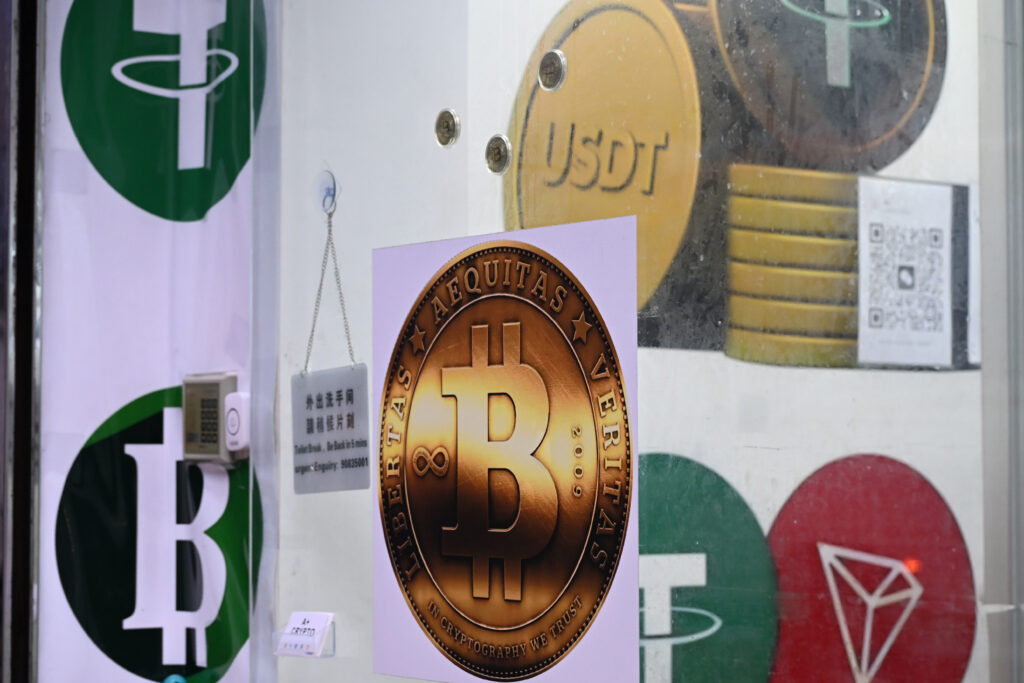
Stablecoin excitement has gripped Hong Kong as the city prepares to launch a licensing system for the less volatile type of cryptocurrency, but authorities warn against overplaying its future role in financial systems.The digital units have been touted as a cheaper, easier way to carry out monetary transactions — and their popularity is soaring, with more than US$270 billion in circulation worldwide.Unlike the heady highs and lows of bitcoin, the value of most stablecoins is kept steady by being linked to an existing national currency — mainly the dollar — or a commodity like gold.Stablecoins are useful internationally because they enable fast, low-cost cross-border payments, handy in markets where hard currency is limited, such as Argentina and Nigeria.The tokens, bought and sold on digital exchanges, are also used as a safe way for crypto investors to station their profits, instead of converting to cash.”The size of the stablecoin market has reached a level where the cash flows have geopolitical implications,” said Paul Brody, global blockchain leader at consulting firm EY.More than 99 percent of stablecoin assets are in US dollars, so for other countries “if you’re not a player, you could find yourself frozen out”, Brody told AFP.The US House of Representatives this month passed an act codifying stablecoin use, which Senator Bill Hagerty said will “ensure the dominance of the US dollar”.Hong Kong’s own stablecoin regulations come in on Friday, part of a push to position itself as an Asian crypto hub as US President Donald Trump’s support for the sector fuels a global resurgence.- ‘Overly idealistic’ -“The opportunities are massive,” said Rita Liu, whose payment company is developing a Hong Kong dollar-denominated stablecoin in a government-run trial.”There’s a wave of legitimising the digital asset industry… Hong Kong is trying to be at the forefront of that wave,” said Liu, chief executive of RD Technologies.Crypto trading has been banned since 2021 in mainland China, which sees it as a “bit too close to gambling”, Brody said.He and others think stablecoins could prove more acceptable to Beijing, which has experimented with its own “e-yuan” central bank digital currency.Officials may first want to see how things go in the semi-autonomous territory of Hong Kong.So far, “a few dozen institutions” have expressed interest in issuing stablecoins or requested more information, Hong Kong Monetary Authority head Eddie Yue said last week.But he called for the public to “rein in the euphoria” over the new bill, as “in the initial stage, we will at most grant a handful of stablecoin issuer licences”.”Some discussion on stablecoins may be overly idealistic,” Yue warned, especially around their “potential to disrupt the mainstream financial system”.The hype can inflate companies’ stock prices, he added, a point echoed by Lily King of crypto company Cobo.”Some applications may be influenced by public relations strategies, as stablecoin-related news often drives market sentiment,” she said.- Bigger problems -RD’s Liu, a former senior manager at Chinese payment platform Alipay, feels that “some of it is fake hype, and some is real”, fuelled by “people’s hope in this industry”.Stablecoins account for about seven percent of the global cryptocurrency market capitalisation, according to CoinGecko.If they eventually become “a mainstay of the plumbing” in finance, Hong Kong could enjoy something of a “first-mover advantage”, said Jonas Goltermann at Capital Economics.Japan and Singapore already regulate stablecoins, while South Korea is exploring the possibility.While stablecoin issuers usually assure buyers their currency is backed up by real-world reserves, they are not risk-free, and sometimes deviate from their pegged value due to market fluctuations, tech issues or problems with the underlying assets.There is also the risk that stablecoins will become “more of a niche product” if banks work out how to make their own programmable money, Goltermann said.”It makes sense for Hong Kong to try anything — it’s kind of on a declining path, for reasons that are not to do with technology. It’s mostly about the politics, and its relationship with China,” he told AFP.”It’s not like stablecoins are a silver bullet that can fix that. But that doesn’t mean it can’t help.”
Trump’s former personal lawyer confirmed as US judge
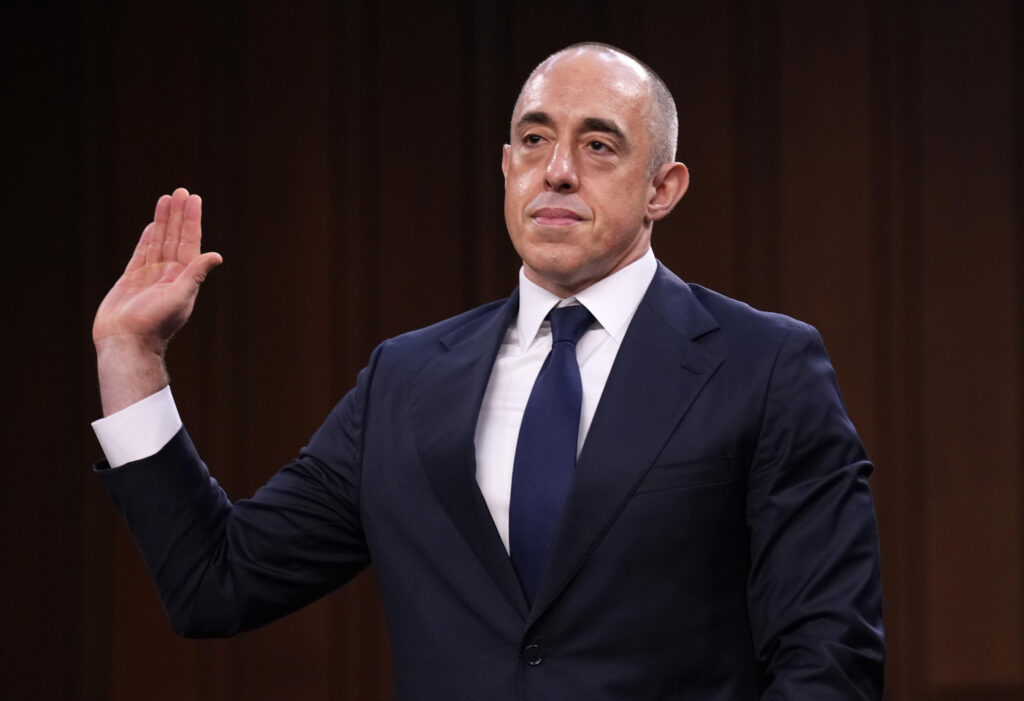
US President Donald Trump’s former personal lawyer was confirmed by the Senate Tuesday to become a federal appellate judge in a 50-49 partisan vote. The Republican-led Senate confirmed Emil Bove as a judge on the 3rd US Circuit Court of Appeals, a lifetime appointment, despite fiery opposition from Democrats, who walked out of a Senate committee meeting in protest earlier this month.Two GOP Senators — Alaska’s Lisa Murkowski and Maine’s Susan Collins — voted against the nomination, but Republicans hold a 53-47 majority in the chamber and were able to carry the vote anyway.A former federal prosecutor, Bove, 44, was nominated by Trump while serving as the third-ranking official in the Justice Department. His nomination drew fierce criticism, and Senator Dick Durbin, the ranking Democrat on the Senate Judiciary Committee, issued a statement Tuesday night lambasting Bove after he got the new job.”Mr. Bove’s primary qualification appears to be his blind loyalty to this President,” Durbin said, adding that Bove sided with January 6, 2021 rioters who stormed the Capitol, and fired career prosecutors who held them to account. The Third Circuit covers the eastern states of Delaware, New Jersey and Pennsylvania. New Jersey Senators Cory Booker and Andy Kim issued a joint statement saying Bove’s “professional record is marred by a pattern of abusive behavior, ethical breaches, and disdain for the norms of judicial integrity.”Opposition to Bove’s appointment was vocal in legal circles ahead of Tuesday’s vote.More than 900 former Justice Department attorneys recently sent a letter to the Senate Judiciary Committee saying “it’s intolerable to us that anyone who disgraces the Justice Department would be promoted to one of the highest courts in the land.”A group of more than 75 retired state and federal judges also wrote the committee, saying it is “deeply inappropriate for a president to nominate their own criminal defense attorney for a federal judgeship.”Bove represented Trump in the New York case that ended in his conviction on 34 counts of falsifying business records to cover up hush money payments to a porn star.He also defended Trump in two federal criminal cases which never reached trial and were shut down after Trump won the 2024 presidential election.Earlier this year, Bove ordered federal prosecutors to drop bribery and fraud charges against New York Mayor Eric Adams, triggering a wave of resignations in the Manhattan US attorney’s office and the Justice Department in Washington.Bove has denied allegations that the decision was a quid pro quo in exchange for the Democratic mayor’s support for Trump’s immigration crackdown.

NFL commissioner says NYC office closed until Aug. 8 after shooting
NFL commissioner Roger Goodell said in a memo to league employees Tuesday night the New York office will remain closed through at least August 8 after a gunman attacked their headquarters building.A man identified by the New York Police Department as Shane Tamura of Las Vegas opened fire in the high-rise building where the NFL offices are located and killed four people on Monday while also wounding a man Goodell identified as a league employee.”Our hearts go out to all the victims and their families, and we are deeply grateful for the first responders and medical staff who acted so quickly and continue to provide care,” Goodell wrote.”Our thoughts and prayers remain especially with our colleague who was impacted. He is currently surrounded by his family and members of the NFL community and we are all continuing to hope for and support his full recovery.”The NFL Manhattan office at 345 Park Ave. will be closed until August 8, Goodell said, asking employees who usually work on-site to work remotely.”We ask that you do not attempt to enter the building until we confirm that it is ready for us to return,” Goodell wrote.The league plans a virtual town hall for Wednesday.”We are strongest when we come together and support one another,” Goodell wrote. “To provide a space for our community, we will be holding a virtual town hall tomorrow where we can connect, share and support each other.”This has been a challenging time for our entire team. Please continue to take care of yourselves and one another. If you need additional support, do not hesitate to reach out to your manager or HR. We are here for you.”Goodell closed by writing: “In the midst of this difficult time, we hold on to hope and optimism for healing and brighter days ahead.”
Trump’s MAGA base defies conservative pro-Israel doctrine
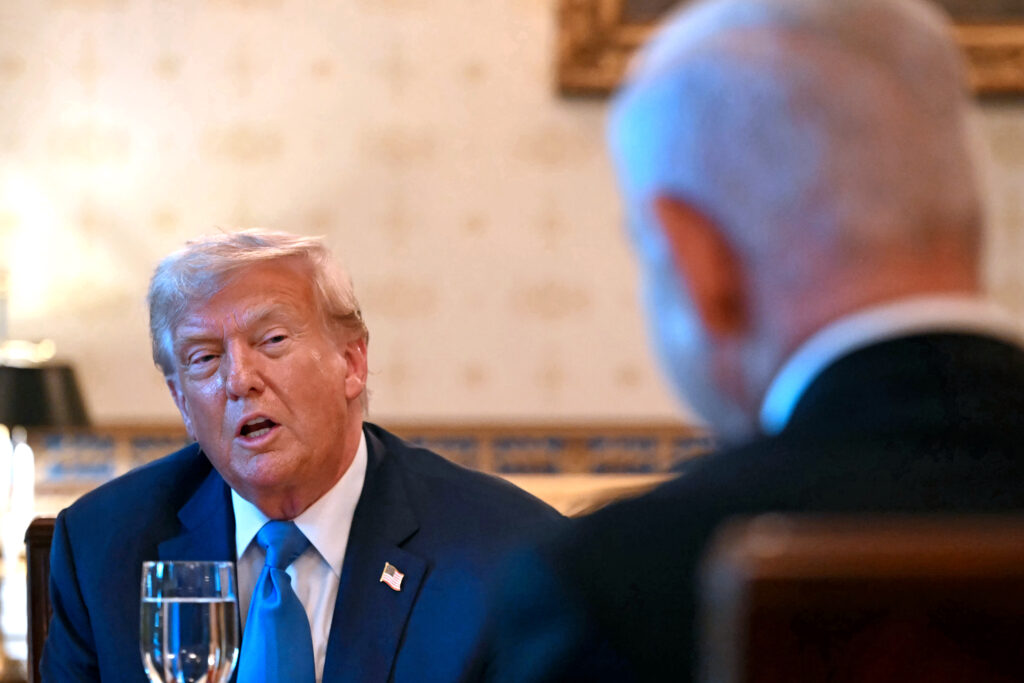
Unconditional support for Israel has long been an entry requirement in US Republican politics, but that orthodoxy is being challenged by Donald Trump’s populist base — where invocations of the “special relationship” are falling on deaf ears.Images of starvation and suffering in Gaza have given new impetus to a debate that has been simmering in Trump’s “MAGA” movement over whether US involvement in the Middle East is consistent with the president’s “America First” platform.Trump’s first significant break with Israel came on Monday, when he acknowledged that “real starvation” is happening in Gaza and vowed to set up food centers in the besieged enclave, which has been devastated by Israel’s war with Hamas. Asked if he agreed with Prime Minister Benjamin Netanyahu’s denials of the Gaza hunger crisis, Trump said: “Based on television, I would say not particularly, because those children look very hungry.”It was a notable retort and prompted commentators to speculate that unwavering US support for Israel might end up as just another conservative sacred cow slayed by MAGA.Vice President JD Vance went further at an event in Ohio, discussing “heartbreaking” images of “little kids who are clearly starving to death” and demanding that Israel let in more aid.Political scientist and former US diplomat Michael Montgomery thinks the tonal shift might in part be emotional — with TV images of starving children resonating more profoundly than the aftermath of air strikes.”Perhaps it is because no civilized people see starvation as a legitimate weapon of war,” the University of Michigan-Dearborn professor told AFP. Israel has always enjoyed broad bipartisan support in Congress but the rise of the isolationist MAGA movement under Trump has challenged the ideological foundations of the “special relationship.”MAGA realpolitik seeks to limit US involvement in foreign wars to those that directly impact its interests, and in particular the “left behind” working class that makes up Trump’s base.- ‘Almost no support’ -Pro-Trump think tank The Heritage Foundation in March called on Washington to “re-orient its relationship with Israel” from a special relationship “to an equal strategic partnership.”Stronger expressions of disapproval have been subdued by a sense that they are a betrayal of Republican thinking, according to some analysts — especially after the October 7 Hamas attacks.But there is a new urgency in the debate in MAGA circles following dire warnings from leading NGOs and the UN World Food Program’s finding that a third of Gaza’s population — of about two million — go for days without eating. One sign of the new thinking came in an X post from far-right firebrand congresswoman Marjorie Taylor Greene, who has pushed to cancel $500 million in funding for Israel’s rocket defense system.Greene this week went further than any Republican lawmaker has previously in using the word “genocide” to describe Israel’s conduct and slamming the “starvation of innocent people and children in Gaza.”While Greene’s credibility has been undermined by an extensive record of conspiratorial social media posts, there is no denying that she knows what makes the MAGA crowd tick.A new CNN poll found the share of Republicans who believe Israel’s actions have been fully justified has dropped from 68 percent in 2023 to 52 percent. Youth seems to be the driver, according to a Pew Research poll from April, when food shortages had yet to become a humanitarian catastrophe.While Republicans over age 50 haven’t changed much in their pro-Israel outlook since 2022, the survey showed that the US ally’s unfavorability among younger adults has climbed from 35 percent to 50 percent. “It seems that for the under-30-year-old MAGA base, Israel has almost no support,” former White House strategist Steve Bannon told Politico, adding that Trump’s rebuke would solidify his supporters’ enmity.Democratic strategist Mike Nellis described the Gaza food emergency as “one of those rare moments where the crisis has broken through the usual partisan gridlock.” “You’re seeing people across the political spectrum who just can’t stomach it anymore,” he told AFP.
Trump’s MAGA base defies conservative pro-Israel doctrine
Unconditional support for Israel has long been an entry requirement in US Republican politics, but that orthodoxy is being challenged by Donald Trump’s populist base — where invocations of the “special relationship” are falling on deaf ears.Images of starvation and suffering in Gaza have given new impetus to a debate that has been simmering in Trump’s “MAGA” movement over whether US involvement in the Middle East is consistent with the president’s “America First” platform.Trump’s first significant break with Israel came on Monday, when he acknowledged that “real starvation” is happening in Gaza and vowed to set up food centers in the besieged enclave, which has been devastated by Israel’s war with Hamas. Asked if he agreed with Prime Minister Benjamin Netanyahu’s denials of the Gaza hunger crisis, Trump said: “Based on television, I would say not particularly, because those children look very hungry.”It was a notable retort and prompted commentators to speculate that unwavering US support for Israel might end up as just another conservative sacred cow slayed by MAGA.Vice President JD Vance went further at an event in Ohio, discussing “heartbreaking” images of “little kids who are clearly starving to death” and demanding that Israel let in more aid.Political scientist and former US diplomat Michael Montgomery thinks the tonal shift might in part be emotional — with TV images of starving children resonating more profoundly than the aftermath of air strikes.”Perhaps it is because no civilized people see starvation as a legitimate weapon of war,” the University of Michigan-Dearborn professor told AFP. Israel has always enjoyed broad bipartisan support in Congress but the rise of the isolationist MAGA movement under Trump has challenged the ideological foundations of the “special relationship.”MAGA realpolitik seeks to limit US involvement in foreign wars to those that directly impact its interests, and in particular the “left behind” working class that makes up Trump’s base.- ‘Almost no support’ -Pro-Trump think tank The Heritage Foundation in March called on Washington to “re-orient its relationship with Israel” from a special relationship “to an equal strategic partnership.”Stronger expressions of disapproval have been subdued by a sense that they are a betrayal of Republican thinking, according to some analysts — especially after the October 7 Hamas attacks.But there is a new urgency in the debate in MAGA circles following dire warnings from leading NGOs and the UN World Food Program’s finding that a third of Gaza’s population — of about two million — go for days without eating. One sign of the new thinking came in an X post from far-right firebrand congresswoman Marjorie Taylor Greene, who has pushed to cancel $500 million in funding for Israel’s rocket defense system.Greene this week went further than any Republican lawmaker has previously in using the word “genocide” to describe Israel’s conduct and slamming the “starvation of innocent people and children in Gaza.”While Greene’s credibility has been undermined by an extensive record of conspiratorial social media posts, there is no denying that she knows what makes the MAGA crowd tick.A new CNN poll found the share of Republicans who believe Israel’s actions have been fully justified has dropped from 68 percent in 2023 to 52 percent. Youth seems to be the driver, according to a Pew Research poll from April, when food shortages had yet to become a humanitarian catastrophe.While Republicans over age 50 haven’t changed much in their pro-Israel outlook since 2022, the survey showed that the US ally’s unfavorability among younger adults has climbed from 35 percent to 50 percent. “It seems that for the under-30-year-old MAGA base, Israel has almost no support,” former White House strategist Steve Bannon told Politico, adding that Trump’s rebuke would solidify his supporters’ enmity.Democratic strategist Mike Nellis described the Gaza food emergency as “one of those rare moments where the crisis has broken through the usual partisan gridlock.” “You’re seeing people across the political spectrum who just can’t stomach it anymore,” he told AFP.