Trump signals tariffs on pharma, chips as trade war widens

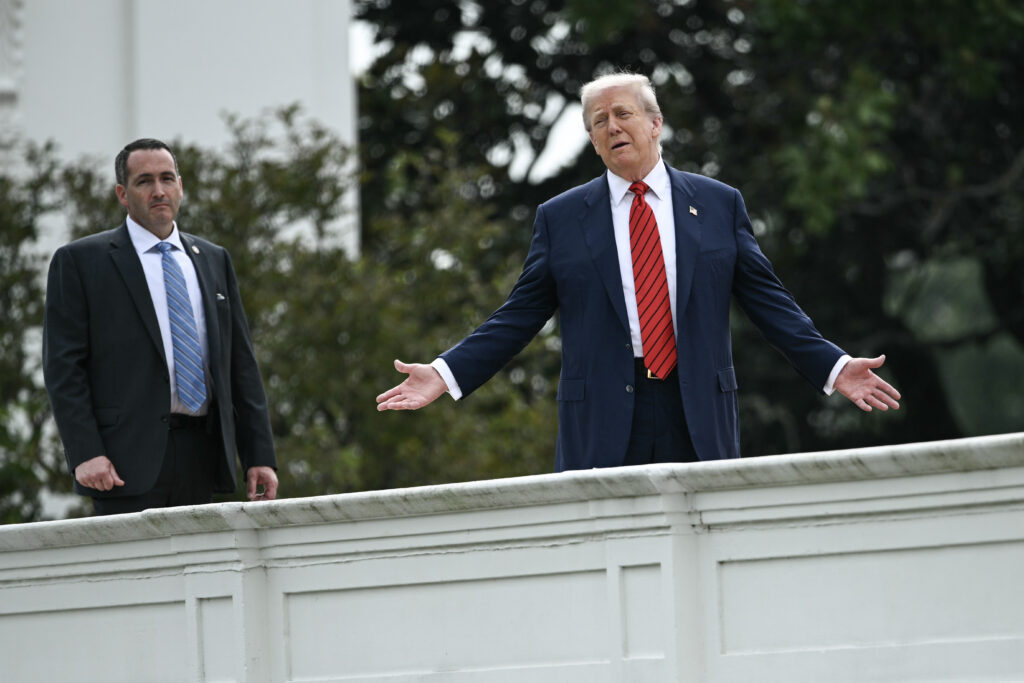
US President Donald Trump signaled Tuesday that fresh tariffs on imported pharmaceuticals and semiconductors could be unveiled as soon as the coming week, as he presses on in efforts to reshape global trade.Trump’s latest comments, in an interview on CNBC, come days before a separate set of tariff hikes takes effect on dozens of economies later this week.The sweeping tariff plans have sparked a flurry of activity as governments seek to avert the worst of his threats — with Switzerland’s leaders heading to Washington on Tuesday in a last-minute push to avoid punitive duties.But he appears set to widen his trade wars further.The US president told CNBC that upcoming tariffs on imported pharmaceuticals could reach 250 percent, while adding that he plans for new duties on foreign semiconductors soon.”We’ll be putting (an) initially small tariff on pharmaceuticals, but in one year, one-and-a-half years, maximum, it’s going to go to 150 percent,” Trump said.”And then it’s going to go to 250 percent because we want pharmaceuticals made in our country.”Trump also said that Washington will be announcing tariffs “within the next week or so.”He added: “We’re going to be announcing on semiconductors and chips.”- Concern for US economy -Trump has taken aim at products from different countries with varying tariff rates after imposing a 10-percent levy on almost all trading partners in April — with excluded products targeted by sector.While Swiss leaders are seeking to stave off a US tariff hike to 39 percent come Thursday — which excludes sectors like pharma — Trump’s plans for a steep pharma levy will likely be a point of contention in any talks.Pharmaceuticals represented 60 percent of Swiss goods exports to the United States last year.Besides probing pharmaceuticals and chips imports, Trump has already imposed steep duties of 50 percent on imports of steel and aluminum, alongside lower levels on autos and parts.In the same CNBC interview, Trump said he expects to raise the US tariff on Indian imports “very substantially over the next 24 hours” due to the country’s purchases of Russian oil.This is a key revenue source for Moscow’s military offensive on Ukraine.His pressure on India comes after signaling fresh sanctions on Moscow if it did not make progress by Friday towards a peace deal with Kyiv, more than three years since Russia’s invasion.Moscow is anticipating talks this week with the US leader’s special envoy Steve Witkoff, and the Kremlin has criticized Trump’s threat of raising tariffs on Indian goods.Weak employment data last week pointed to challenges for the US economy as companies take a cautious approach in hiring and investment while grappling with Trump’s radical — and rapidly changing — tariffs policy.The tariffs are a demonstration of raw economic power that Trump sees as putting US exporters in a stronger position while encouraging domestic manufacturing by keeping out foreign imports.But the approach has raised fears of inflation and other economic fallout in the world’s biggest economy.

Bangladesh’s Yunus calls for reform on revolution anniversary

Bangladesh’s interim leader marked one year since the overthrow of Sheikh Hasina’s autocratic regime by calling on Tuesday for people to seize the “opportunity” for reform.Nobel Peace Prize winner Muhammad Yunus, the 85-year-old leading the caretaker government as its chief adviser until elections, announced the polls would be held in February. He also warned against forces he said sought to roll back the democratic gains made.”Today marks an unforgettable chapter in the history of Bangladesh,” Yunus said, describing it as “liberating our beloved nation from the grip of long-standing fascist rule”.The South Asian nation of around 170 million people has been in political turmoil since a student-led revolt ousted then-prime minister Sheikh Hasina on August 5, 2024, ending her 15-year rule.Yunus later addressed crowds of thousands outside parliament, standing in the rain to issue a “proclamation” alongside leaders of key political parties. The document will be added to the country’s constitution.”The trust of the people… as expressed by the mass uprising for addressing the political and constitutional crisis in Bangladesh is justified, legitimate and internationally recognised,” he read from the document.”The people of Bangladesh express their desire for ensuring good governance and fair elections, rule of law and economic and social justice, and for introducing lawfully democratic reforms for all state and constitutional institutions.”The crowd, some wearing headbands made from the national flag, and including families of those killed in the crackdown on the protests, applauded Yunus’s reading.Fariha Tamanna, 25, who travelled to Dhaka on a government-sponsored train, said it was “deeply satisfying” to hear the government “acknowledge the uprising”.”There’s still a long road ahead, so many wrongs continue,” she added. “But I still hold on to hope.”Kazi Solaiman, 47, a teacher in an Islamic school, said it was a day of celebration.”An oppressor was forced to flee by the people’s uprising,” he told AFP. “I hope Bangladesh never again becomes a land of tyranny.”- ‘Stand united’ -Political parties had been demanding Yunus set a date for elections, and on Tuesday, he said he would write to the election commission asking for polls to he held before the Muslim holy month of Ramadan begins in late February.”I urge you all to pray for us so that we can hold a fair and smooth election, enabling all citizens to move forward successfully in building a ‘New Bangladesh'”, he said.Hasina’s rule saw widespread human rights abuses, including the mass detention and extrajudicial killing of her political opponents, and Yunus has pledged to overhaul democratic institutions.”The sacrifice of thousands has gifted us this rare opportunity for national reform, and we must protect it at any cost,” Yunus said in letter issued to mark the anniversary.”The fallen autocrats and their self-serving allies remain active, conspiring to derail our progress.”But he said that while the interim government had made “extensive reform efforts”, a deal on measures to prevent a return to authoritarian rule remained elusive.Political parties are jostling for power ahead of elections.”Dialogue continues with political parties and stakeholders on necessary reforms, including the political and electoral systems,” he added.He called for people to remember the sacrifices made last year and to work together.”Let us stand united beyond all divisions to confront and defeat these threats,” he added. “Together, we will build a Bangladesh where tyranny will never rise again.”Protests began on July 1, 2024, with university students calling for reforms to a quota system for public sector jobs.They culminated on August 5, 2024, when thousands stormed Hasina’s palace as she escaped by helicopter.Hasina, 77, remains in India, where she has defied court orders to attend her ongoing trial on charges amounting to crimes against humanity.

Droits de douane: la présidente de la Suisse et son ministre partent à Washington pour négocier

La présidente de la Suisse et son ministre de l’Economie se rendent mardi en urgence à Washington pour tenter de négocier avec l’administration de Donald Trump, dans un compte à rebours serré avant l’échéance du 7 août pour les droits de douane, prévus à 39% pour les produits helvétiques arrivant aux Etats-Unis. Dans un communiqué publié mardi, le Conseil fédéral (gouvernement) a annoncé que Karin Keller-Sutter, la présidente de la Confédération, également ministre des Finances, ainsi que Guy Parmelin, le ministre de l’Economie, se rendent à Washington “afin d’obtenir des entrevues avec les autorités américaines” pour discuter des droits de douane. “L’objectif est de présenter aux États-Unis une offre plus attrayante, qui permette de diminuer le montant des droits de douane additionnels appliqués aux exportations suisses, tout en tenant compte des préoccupations des États-Unis”, précise le communiqué.Mme Keller-Sutter et M. Parmelin se rendent à Washington “accompagnés d’une petite délégation” incluant deux secrétaires d’Etat, détaille le communiqué. Selon une source fédérale, ils sont partis “dans la matinée” et arriveront à Washington “en soirée heure de Suisse”. L’avion du  gouvernement suisse est parti à 08H29 de Dubendorf (Zurich).La Suisse a été sonnée par les annonces de la Maison Blanche la semaine passée qui a relevé les droits de douane applicables aux produits helvétiques à 39%, contre 31% initialement prévus début avril.Le pays alpin a été d’autant plus surpris que le gouvernement avait d’emblée choisi la voie de la négociation après ce que Donald Trump avait surnommé le “Liberation Day” (jour de la libération).  Ce niveau, beaucoup plus élevé que les 15% qui vont être appliqués aux produits de l’Union européenne importés aux Etats-Unis, suscite de vives inquiétudes chez les entreprises suisses.- Echanges quadruplés en vingt ans -Dans un communiqué publié lundi après une réunion de crise, le Conseil fédéral a fait valoir que près de 60% des exportations de biens suisses aux États-Unis risquent d’être frappés par ces droits de douane supplémentaires de 39%. Le gouvernement s’est réuni virtuellement lundi à distance pour une séance extraordinaire face à l’urgence de la situation pour trouver une solution d’ici le 7 août. Les Etats-Unis sont un partenaire clé de la Suisse, les échanges commerciaux entre les deux pays ayant “quadruplé au cours des vingt dernières années”, a souligné lundi le Conseil fédéral. La Suisse est le sixième plus gros investisseur étranger aux États-Unis et occupe même “le premier rang” au niveau des investissements dans la recherche et du développement”, n’a pas manqué de rappeler le gouvernement suisse.   Selon les relevés des douanes, les Etats-Unis captaient 18,6% des exportations de marchandises de la Suisse en 2024, qui y exporte surtout des médicaments. S’y ajoutent des machines industrielles, des capsules de café et les produits emblématiques de la Suisse comme des montres, du fromage et du chocolat.L’horlogerie fait partie des secteurs qui risquent d’être durement touchés puisque les montres sont produites dans le pays pour pouvoir y apposer le label Made in Switzerland (Fabriqué en Suisse), considéré comme le gage de leur grande qualité.   Dans un entretien publié lundi soir par le quotidien suisse Le Temps, le patron du groupe Swatch, Nick Hayek, avait appelé la présidente de la Confédération à se rendre en personne à Washington. “Je suis convaincu que Donald Trump veut faire un deal et le montrer à ses électeurs aux Etats-Unis”, a déclaré M. Hayek au quotidien suisse. Mais “il faut que notre présidente Karin Keller-Sutter réagisse et trouve une solution en personne et sur place”, a ajouté le patron du groupe horloger, connu pour ses montres en plastique multicolores qui possède aussi d’autres marques, comme Tissot, Longines et Omega.D’après les calculs du professeur d’économie Hans Gersbach, ces droits de douane à 39% pourraient coûter entre 0,3% et 0,6% de croissance annuelle à la Suisse. L’impact sur son produit intérieur brut (PIB) pourrait même grimper à “au moins 0,7%”, selon le sort réservé aux produits pharmaceutiques, un pilier de l’économie helvétique, a-t-il prévenu.Dans une interview mardi avec la chaîne de télévision CNBC, Donald Trump a évoqué une surtaxe qu’il compte imposer sur les produits pharmaceutiques.  “Nous allons, d’abord, mettre un droit de douane bas sur les produits pharmaceutiques, mais, dans un an, un an et demi maximum, cela sera 150% et ensuite ce sera 250% parce qu’on veut des médicaments fabriqués dans notre pays”, a-t-il affirmé.

Foot: décès à 53 ans de l’ancien international portugais Jorge Costa

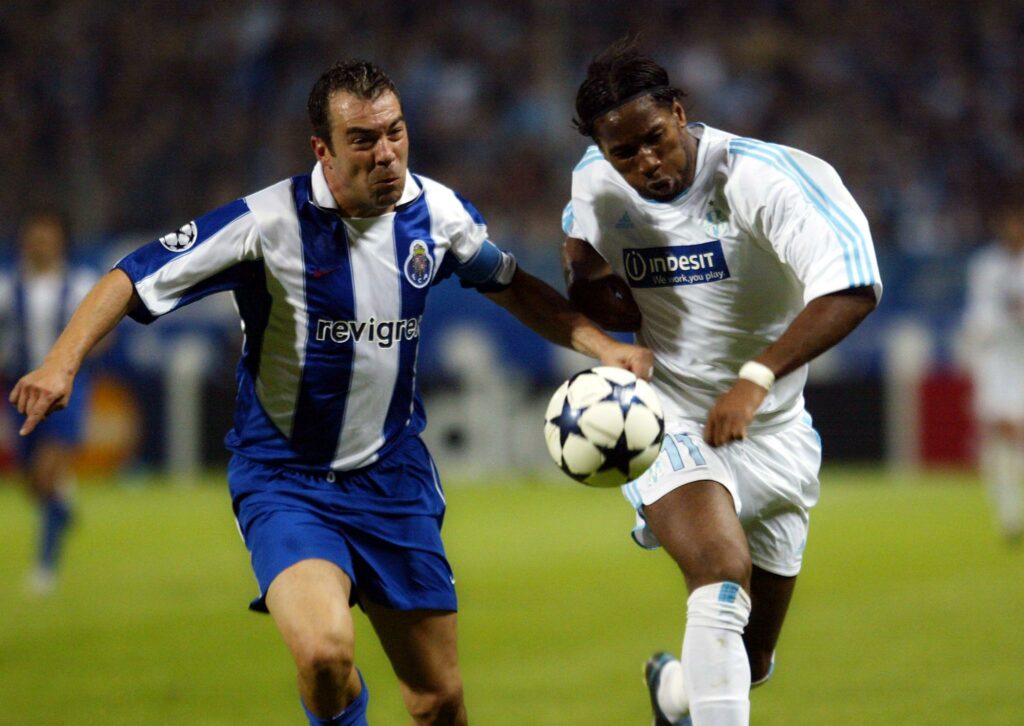
L’ancien international portugais Jorge Costa est décédé mardi à l’âge de 53 ans des suites d’un arrêt cardiaque, a annoncé le FC Porto, rendant hommage “à une figure incontournable de l’histoire du club”.”Le légendaire capitaine du FC Porto et actuel directeur du football professionnel (du club), est décédé ce mardi des suites d’un arrêt cardiorespiratoire”, a annoncé le club dans un communiqué.L’ex-défenseur international a été victime d’un malaise mardi matin au centre d’entraînement du FC Porto. Hospitalisé en urgence, il est décédé peu après son arrivée à l’hopital, rapportent les médias locaux.  Jorge Costa avait effectué l’essentiel de sa carrière au FC Porto, club avec lequel il avait remporté la Ligue des champions en 2004 et avait été sacré huit fois champion du Portugal, et dont il fut le capitaine pendant plusieurs saisons.Celui qui fut 50 fois international appartient à la génération dorée des champions du monde des moins de 20 ans en 1991, avec notamment Luis Figo.”C’est un choc”, a écrit le Premier ministre Luis Montenegro sur le réseau social X, saluant un “exemple de dévouement et d’engagement”.Les deux autres géants du football portugais, le Benfica Lisbonne et le Sporting Portugal, lui ont également rendu hommage.”Le football portugais est plus pauvre”, a ainsi regretté le Benfica dans un communiqué publié sur son site internet, saluant “une figure incontournable du football et du sport national, d’abord comme joueur, ensuite comme entraîneur et plus récemment comme dirigeant”. 

UK-France migrant returns deal takes effectTue, 05 Aug 2025 14:52:46 GMT

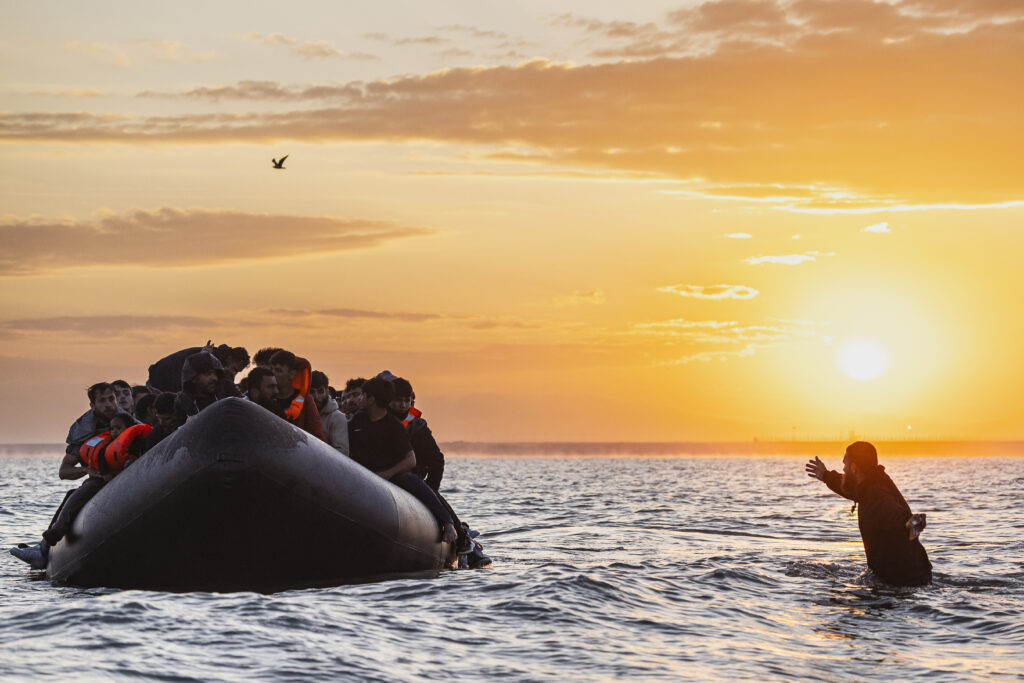
A “one-in, one-out” deal in which Britain can return some migrants who cross the English Channel in small boats back to France came into force on Tuesday, as the UK government battles people smuggling gangs.The interior ministry said British authorities were “operationally ready” and that migrant detentions were expected to begin “within days” following the …

UK-France migrant returns deal takes effectTue, 05 Aug 2025 14:52:46 GMT Read More »

La sieste-flash sur la route des vacances, remède contre la somnolence au volant

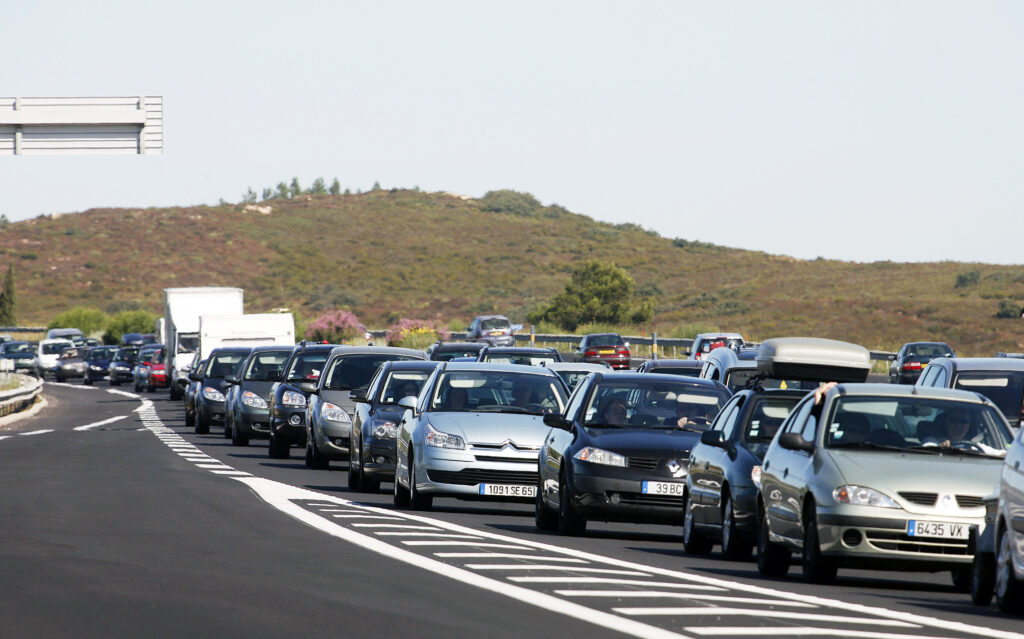
“Parfaitement reposé”, Philippe Luquet, 76 ans, relève la toile de son transat couvert installé vendredi sur l’espace sieste de l’aire de Limours-Janvry (Essonne), sur l’autoroute A10. En plein week-end de chassé-croisé de l’été, le moment est au calme et à la sérénité pour ce vacancier en transit.Il y a quelques secondes, les mocassins bleus du retraité dépassaient encore de son “cocon”, au milieu de poufs mis à disposition par la Fondation Vinci autoroutes. “C’est l’objectif, si vous pouvez faire une petite pause et repartir plus apaisé”, lui adresse Chloé Baffray, 22 ans, animatrice, tablette sous le bras avec le podcast de méditation proposé au conducteur pour ses quinze minutes de repos. Ces espaces destinés à la sieste dite “flash”, de vingt minutes maximum, existent depuis 2011 sur les espaces de Vinci autoroutes, les vendredis et samedis estivaux. “L’été, (…) c’est aussi un temps où les conducteurs font des trajets plus longs”, corrélés à de “mauvaises habitudes”, soulève Maxence Berthon, chargé de projet de la fondation.Se coucher tard pour finir ses préparatifs, mal dormir à cause du stress induit par le voyage, sont “des facteurs qui vont, peut-être, faire survenir la somnolence au volant”, rappelle M. Berthon. Le 15e baromètre de la conduite responsable de la Fondation Vinci autoroutes estime le temps de conduite moyen sans pause des Français à 2H48, bien au-dessus des deux heures préconisées par la Sécurité routière. Pour ce week-end qui voit se cotoyer “juilletistes” et “aoûtiens”, Bison Fûté a annoncé une circulation très dense, avec une journée noire samedi. L’autoroute A10, qui relie l’Ile-de-France à la Nouvelle-Aquitaine en passant par le Centre Val-de-Loire, est particulièrement concernée.Julien Lambert, 45 ans, a 1.100 km à parcourir, de Lens (Pas-de-Calais) au Barcarès (Pyrénées-Orientales). Installé sur un coussin, il fait une pause après le déjeuner avec sa femme et ses enfants. “La somnolence au volant, je connais, parce que comme je commence très tôt le travail, ça m’est déjà arrivé de m’endormir une fois. (…) j’ai failli brûler un feu rouge”, raconte le père de famille. Cette fois, ils sont donc partis un jour plus tôt, pour passer une nuit à Clermont-Ferrand et pouvoir faire plus de pauses sur leur trajet.La somnolence au volant a été à l’origine de 19% des accidents mortels sur autoroute en 2024, derrière la prise d’alcool, drogues ou médicaments (35%), la vitesse excessive (20%) et la présence de piétons (20%), selon l’Association des sociétés françaises d’autoroutes.- “Rester concentré” -Cette année, les utilisateurs des espaces de sieste sont aussi invités à répondre à un questionnaire d’auto-évaluation permettant de prédire le risque d’accidents liés à la somnolence, fruit d’une étude sur la conduite et les comportements de sommeil de plus de 33.000 usagers de péages autoroutiers.”Les gens se mettent en dette de sommeil de manière chronique tout au long de l’année”, explique Pierre Philip, chef du service universitaire de médecine du sommeil au CHU de Bordeaux et responsable de l’étude financée par la fondation Vinci autoroutes. Environ “20% des Français dorment moins de six heures” par nuit, augmentant ainsi grandement leur risque d’accident, précise-t-il.En cas de somnolence, la sieste est prioritaire, mais le professeur préconise “sept heures de sommeil, sept nuits par semaine, avec un horaire de lever régulier. Et si, malgré cela, on reste quand même somnolent, il faut aller consulter”.Sur la route, “le message essentiel, c’est de rester concentré”, appuie Florence Guillaume, déléguée interministérielle à la Sécurité routière. Car si la somnolence n’est plus la cause principale de mortalité sur l’autoroute, c’est parce que d’autres facteurs d’inattention augmentent, comme l’utilisation du téléphone portable au volant, indique-t-elle. A la fin d’une sieste, les usagers sont invités à se dégourdir les jambes avant de reprendre la route. “Très bonne idée, à généraliser dans toute la France”, lance Philippe Luquet en se levant avec difficulté de son transat.

UN experts call for GHF to be dismantled

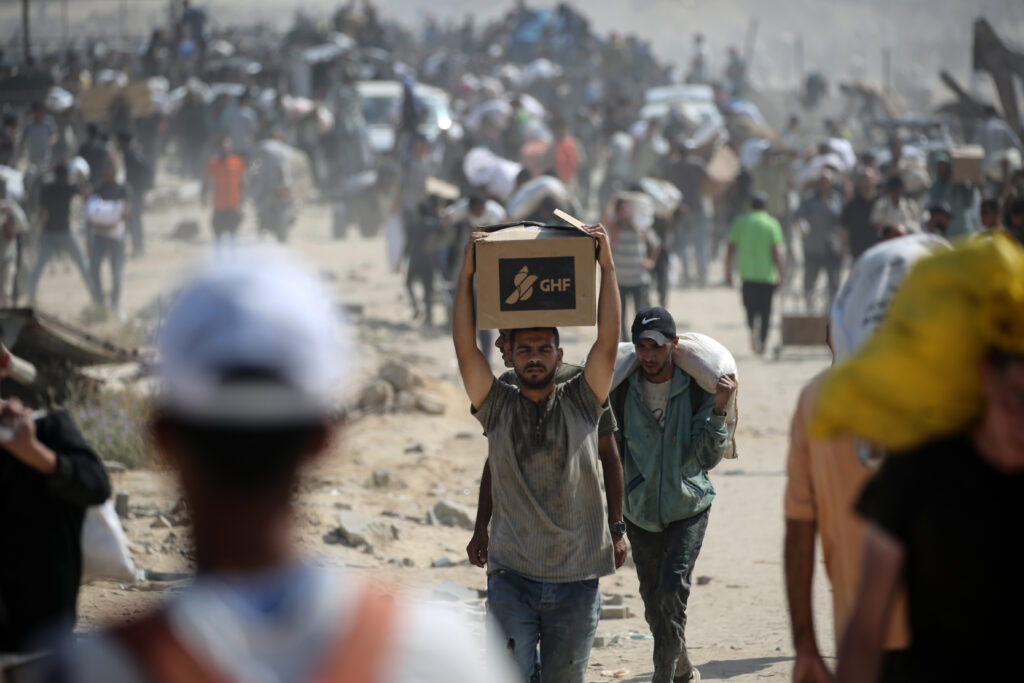
United Nations special rapporteurs called Tuesday for the Israel- and US-backed Gaza Humanitarian Foundation to be immediately dismantled, saying aid was being “exploited for covert military and geopolitical agendas”.An exceptionally-large group of the UN-mandated experts voiced grave concerns over the GHF’s operations.The private organisation began distributing food in Gaza Strip in May as Israel began easing a more than two-month aid blockade on the Palestinian territory that had exacerbated existing shortages.”The GHF … is an utterly disturbing example of how humanitarian relief can be exploited for covert military and geopolitical agendas in serious breach of international law,” the experts said in a joint statement.”The entanglement of Israeli intelligence, US contractors and ambiguous non-governmental entities underlines the urgent need for robust international oversight and action under UN auspices.”Calling it ‘humanitarian’ adds on to Israel’s humanitarian camouflage and is an insult to the humanitarian enterprise and standards.”On July 22, the UN rights office said Israeli forces had killed more than 1,000 Palestinians trying to get food aid in Gaza since the GHF started operations — nearly three-quarters of them in the vicinity of GHF sites.”Without clear accountability, the very idea of humanitarian relief may ultimately become a casualty of modern hybrid warfare,” the special rapporteurs said.”The credibility and effectiveness of humanitarian assistance must be restored by dismantling the GHF, holding it and its executives accountable, and allowing experienced and humanitarian actors from the UN and civil society alike to take back the reins of managing and distributing lifesaving aid.”The joint statement was signed by Francesca Albanese, the UN’s special rapporteur on the rights situation in the Palestinian territories occupied since 1967.Israel accuses her of having an “obsessive, hate-driven agenda to delegitimise the state of Israel”.The statement was also signed by 18 other special rapporteurs, plus other UN experts and members of UN working groups — a notably large number for such statements.Special rapporteurs are independent experts mandated by the UN Human Rights Council to report their findings. They do not, therefore, speak for the United Nations itself.More than two million people live in the Gaza Strip.GHF says it has distributed more than 1.76 million boxes of foodstuffs to date.”We continue to improve our operations,” GHF executive director John Acree said Monday.”We urge the international humanitarian community to join us — we have the scale and capacity to deliver more aid to the people of Gaza.”

Swiss president rushes to US to avert steep tariffs

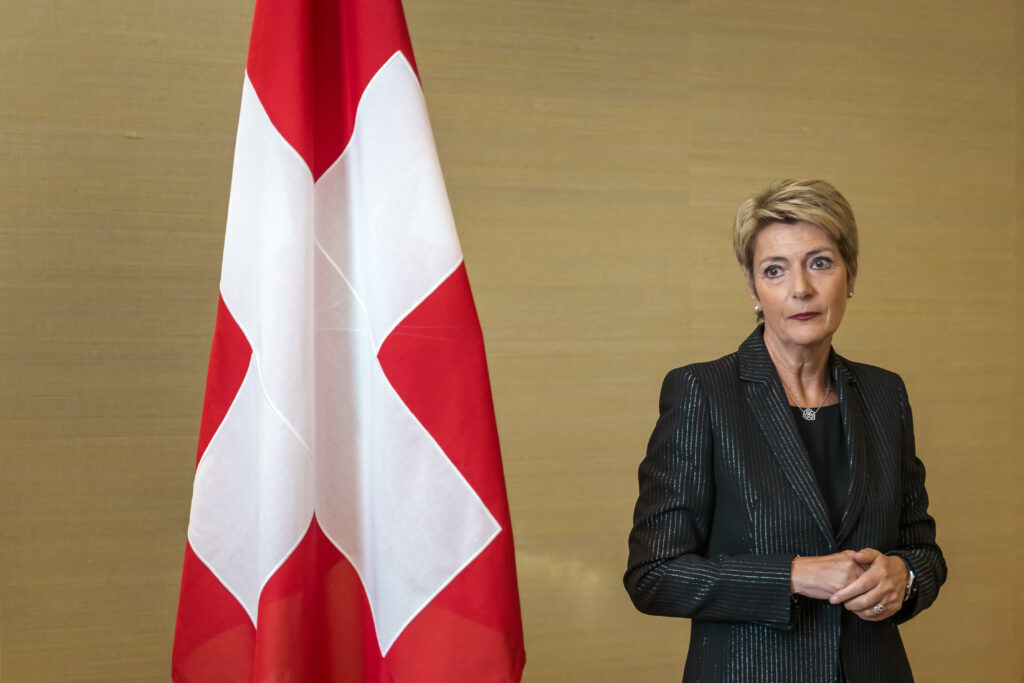
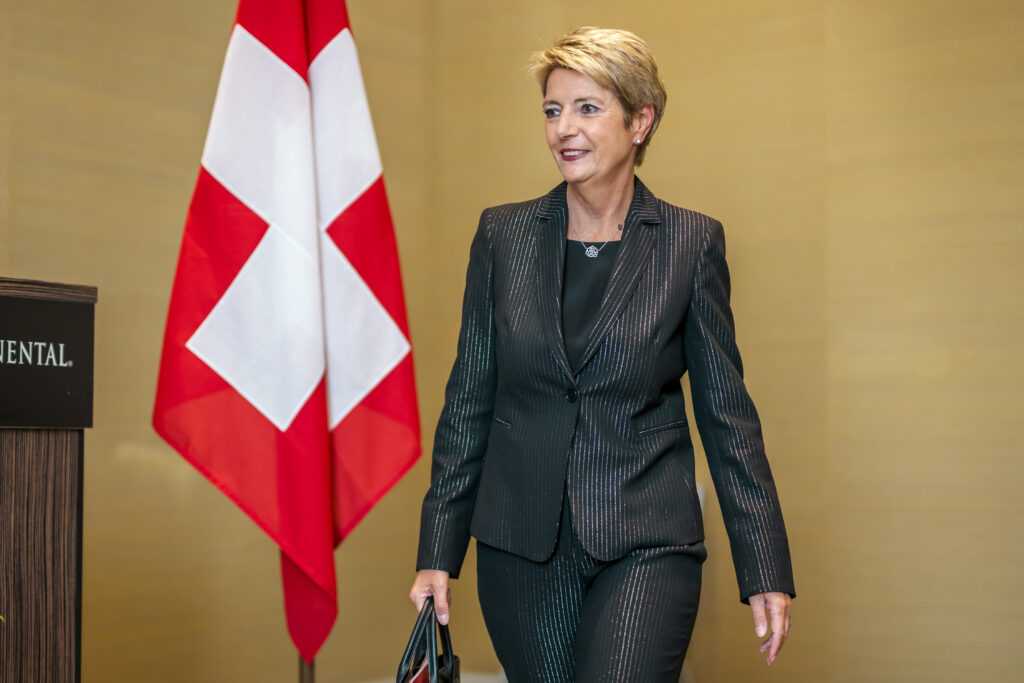
Switzerland’s president and economy minister flew to Washington on Tuesday in a last-minute push to stop steep new tariffs that have blindsided the Alpine country.Switzerland faces a 39-percent duty, one of the highest among the dozens of economies that will be hit by new tariffs expected to come into force from Thursday.President Karin Keller-Sutter and Economy Minister Guy Parmelin were heading to Washington “to facilitate meetings with the US authorities at short notice and hold talks with a view to improving the tariff situation for Switzerland”, the government said in a statement.”The aim is to present a more attractive offer to the United States in a bid to lower the level of reciprocal tariffs for Swiss exports, taking US concerns into account.”US President Donald Trump had originally threatened in April to slap a 31-percent tariff on Switzerland.But he surprised the export-driven country last week when he decided to hike the rate to 39 percent despite numerous discussions between Swiss and US officials aimed at reaching a deal.The Swiss government noted that the country will be hit by much higher tariffs than what other wealthy economies, such as Britain, Japan or the European Union, are facing.During an extraordinary meeting on Monday, the government “reaffirmed that it was keen to pursue talks with the United States on the tariff situation”, Tuesday’s statement said.”For this reason,” the president and the economy minister “are to travel to Washington on Tuesday”.US Trade Representative Jamieson Greer, however, told CBS television on Sunday that the tariffs on global trading partners, which are coming into force this week, “are pretty much set”.And as Keller-Sutter headed to Washington, Trump signalled that a separate “small” tariff on imports of pharmaceuticals from around the world — a key sector for Switzerland — could come “within the next week”.But the sector-specific tariff could rise to 150 percent in a year and eventually be as high as 250 percent, he added.Pharmaceuticals represented 60 percent of Swiss goods exports to the United States last year.- Swiss surplus -Keller-Sutter and Parmelin took off on Tuesday morning, a Swiss government official said.They were accompanied by a small delegation, including the heads of the economy and international finance departments, but the official declined to give details about the potential meetings.The government said it will “issue a statement as soon as there are any relevant developments for the public”.The United States is a key trading partner for Switzerland, taking 18.6 percent of its total exports last year, according to Swiss customs data.Keller-Sutter has said Trump believes that Switzerland “steals” from the United States by enjoying a trade surplus of 40 billion Swiss francs ($50 billion).Swiss companies have urged the government to negotiate a lower tariff.”I am convinced that Donald Trump wants to make a deal and show it to his US voters,” Nik Hayek, the head of watch firm Swatch, told Le Temps newspaper in an interview published late Monday.But, Hayek added, “President Karin Keller-Sutter has to react and find a solution in person there.”