Police arrest scores more Palestine Action supporters

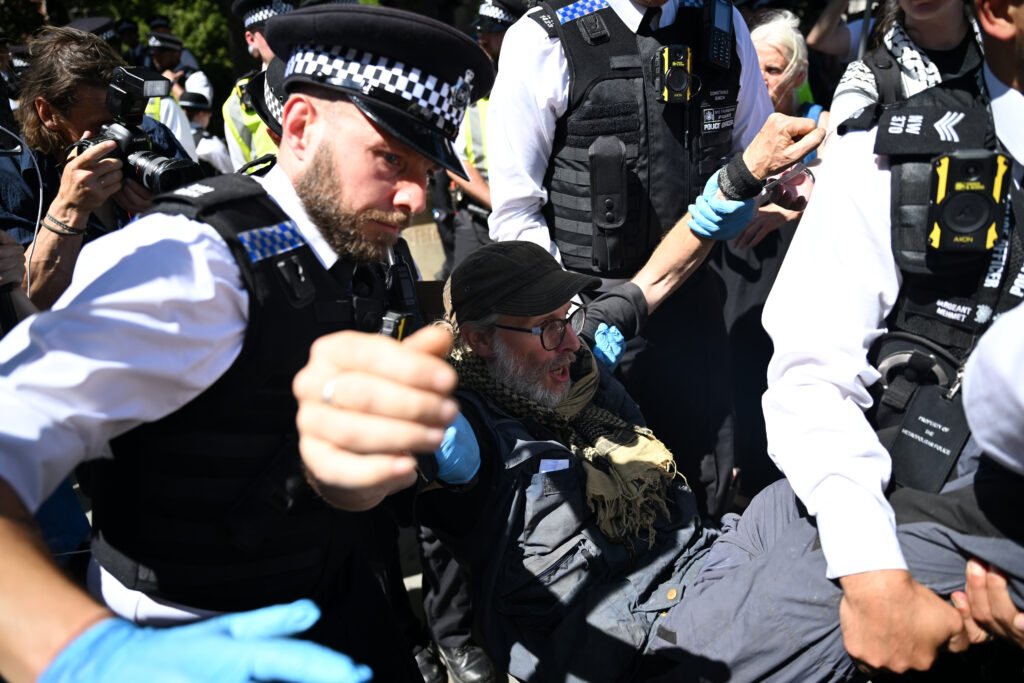
Police in several British cities on Saturday arrested scores of people for supporting Palestine Action, following a second consecutive weekend of protests over the government’s decision to ban the activist group using anti-terror laws.Campaign group Defend Our Juries, which had announced the rallies “to defy” the ban, said 86 people had been arrested across five different cities.They included four vicars, a lawyer, a civil servant, a social worker, a mechanical engineer and the daughter of a Polish resistance fighter, as well as veterans of the 1960s civil rights movement, the group added.”We will not be deterred from opposing genocide, nor from defending those who refuse to be bystanders,” the group said in a statement, referring to accusations levelled against Israel over its war in Gaza.The protesters were also taking a stand “against the corruption of democracy and the rule of law”, it added.In London, the Metropolitan Police said its officers had made 41 arrests for “showing support for a proscribed organisation”. Another person was arrested for common assault, the force added.Footage showed police moving in on a small group of protesters displaying signs supporting Palestine Action. They had gathered at lunchtime at the steps of the Mahatma Gandhi statue in Parliament Square.Greater Manchester Police arrested 16 people, while officers in the Welsh capital Cardiff detained 13, all for the same offence under the 2000 Terrorism Act, both forces confirmed.”South Wales Police supports the right for people to make their voices heard through protest providing it is done lawfully,” said a police statement.- Support now a crime -The other arrests occurred in the Northern Irish city Londonderry — also known as Derry — and Leeds, in northern England, according to Defend Our Juries.They come a week after 29 similar arrests at protests staged last Saturday, mainly in London.Since the Palestine Action ban kicked in on July 5, police have warned that expressing support for the group was now a crime, after a last-ditch High Court challenge failed to stop its proscription becoming law.The government announced plans for the ban under the 2000 Terrorism Act days after the group’s activists claimed to be behind a break-in at an air force base in southern England.Two aircraft there were sprayed with red paint, causing an estimated £7 million ($9.55 million) in damage.Four people charged in relation to the incident remain in custody.Palestine Action has condemned its outlawing — which makes it a criminal offence to belong to or support the group, punishable by up to 14 years in prison — as an attack on free speech.
US ends case against doctor over alleged Covid vaccine scheme

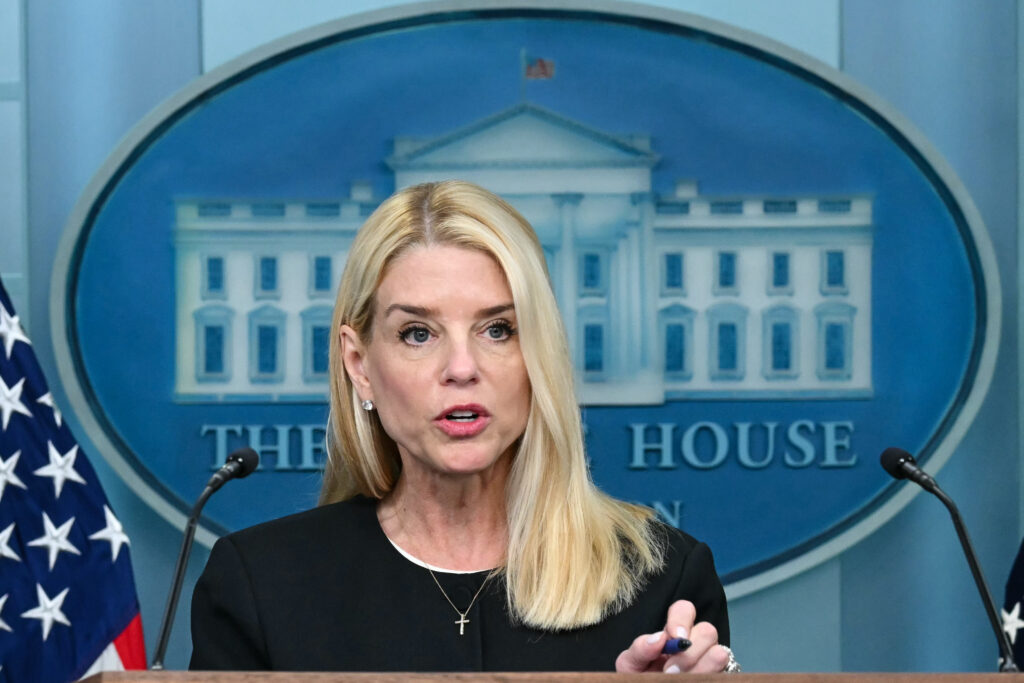
US Attorney General Pam Bondi said Saturday she had ordered charges to be dropped against a doctor accused of destroying Covid-19 jabs and issuing fake vaccination certificates.The abrupt halt to proceedings comes just days after the trial commenced, and is the latest boost to the vaccine-skeptic movement from President Donald Trump’s administration.Michael Kirk Moore, a plastic surgeon in the western state of Utah, was charged by the Department of Justice in 2023 alongside his clinic and three others for “running a scheme” to defraud the government.He was accused of destroying or disposing of over $28,000 worth of government-provided Covid vaccines and handing out at least 1,937 false vaccine record cards in exchange for payment.Moore, who faced decades behind bars, was also accused of administering a saline solution to children — at the behest of their parents — so that they would think they had been vaccinated against Covid.Moore’s trial began this week at a federal court in Salt Lake City.But on Tuesday, Republican lawmaker Marjorie Taylor Greene, one of Trump’s most vocal hard-right supporters, said she had written to Bondi calling for charges against Moore to be dropped.”Dr. Moore gave his patients a choice when the federal government refused to do so. He did not deserve the years in prison he was facing. It ends today,” Bondi wrote on X.Bondi’s decision also notably comes as she faces fire from right-wing activists over her handling of a probe into the late financier Jeffrey Epstein.She thanked Greene and Utah Senator Mike Lee, another hard-right lawmaker, for their advocacy for dropping charges against Moore.The Covid-19 pandemic sparked fierce political division in the US between those who supported lockdowns and vaccination drives, and those who considered the measures as restrictions on freedom.Trump, himself vaccinated against Covid-19, has appointed as his Health Secretary Robert F. Kennedy Jr., who has initiated an overhaul of American vaccine policy.Kennedy said Moore “deserves a medal for his courage and commitment to healing,” in an X post in April.At the end of May, Kennedy announced that federal authorities would no longer recommend Covid-19 jabs for children and pregnant women, prompting accusations from medical groups that he was taking away parents’ ability to opt for vaccinations.Kennedy has been accused of spreading vaccine misinformation, including about the measles vaccine, even as the US grapples with its worst measles epidemic in 30 years.

Trump surenchérit avec 30% de droits de douane pour l’UE et le Mexique

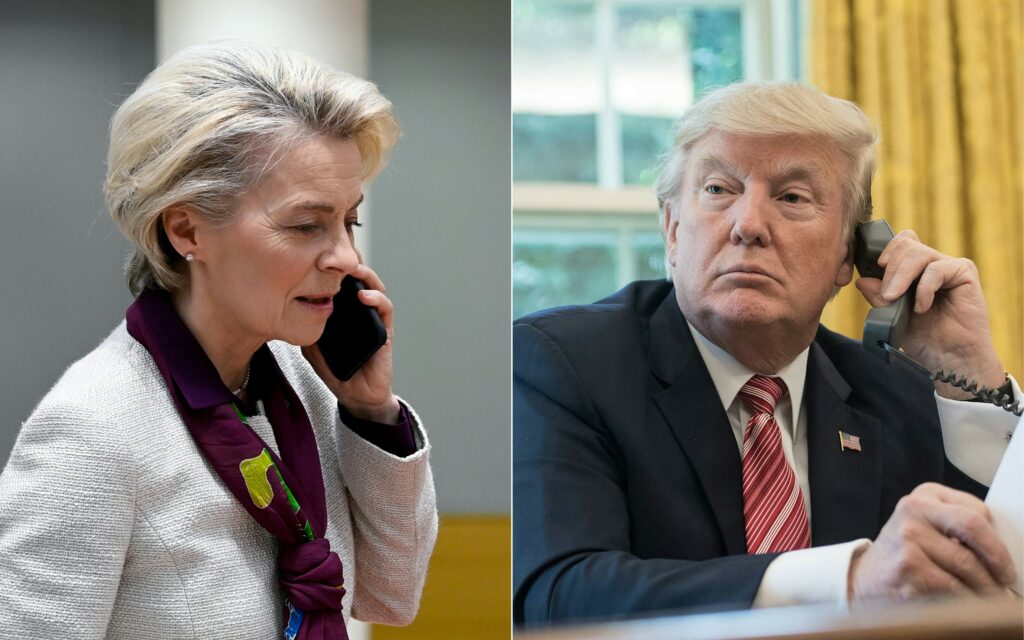
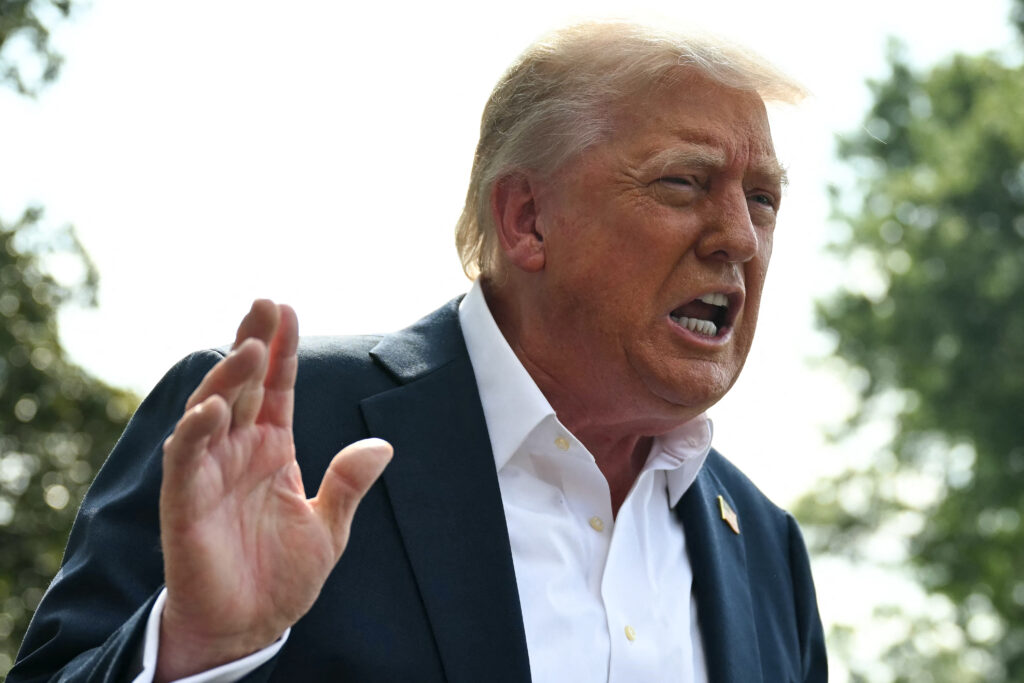
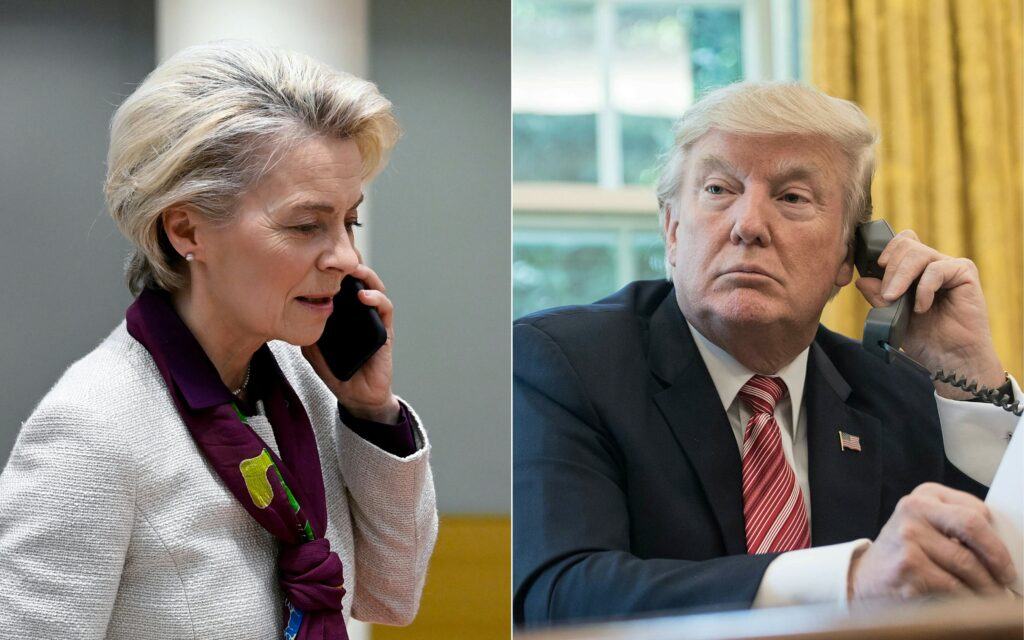
Donald Trump a annoncé samedi l’imposition de droits de douane de 30% pour les produits de l’Union européenne et du Mexique importés aux Etats-Unis, une nouvelle surenchère sur fond de négociations avant l’échéance du 1er août qui sème l’inquiétude en Europe.Le président américain a justifié, dans une nouvelle lettre publiée sur sa plateforme Truth Social, cette décision en se plaignant du déficit commercial américain avec les 27 pays de l’UE.Cette charge a aussitôt suscité de vives réactions en Europe, où, des voitures aux médicaments, des avions aux vins, des secteurs essentiels de l’économie du continent pourraient être frappés.La présidente de la Commission européenne Ursula von der Leyen a averti sur X que de telles mesures “(perturberaient) les chaînes d’approvisionnement transatlantiques essentielles”.Si elle se dit “prête à poursuivre le travail” pour trouver un accord avec Washington d’ici à l’échéance du 1er août, Ursula von der Leyen menace d’adopter des “contre-mesures proportionnées si cela s’avère nécessaire”. Bruxelles avait déjà préparé, sans l’appliquer, un train de surtaxes sur des produits américains.”Dès lundi à Bruxelles avec mes 26 homologues, je serai au travail pour soutenir la Commission dans ses négociations avec les Etats-Unis jusqu’au 1er août”, a annoncé, sur X, le ministre français délégué au Commerce extérieur, Laurent Saint-Martin.Donald Trump a prévenu qu’en cas de mesures de rétorsion, il augmenterait d’autant ses droits de douane sur les produits européens entrant aux Etats-Unis, en plus des 30%.- Déficit commercial -Début avril déjà, le chef de l’Etat américain avait menacé l’UE d’infliger 20% de droits de douane aux produits européens exportés aux Etats-Unis. Fin mai, frustré par le manque d’avancée dans les négociations, il avait relevé ce taux à 50%, avec effet annoncé au 1er juin, finalement repoussé au 1er août, jusqu’à sa lettre de samedi.Selon des sources diplomatiques, les discussions menées jusqu’ici se faisaient sur la base de droits de douane américains de 10%, avec exceptions.Donald Trump laisse la porte ouverte à une renégociation.”Si vous êtes prêts à ouvrir aux Etats-Unis votre marché fermé, à éliminer vos droits de douane, vos mesures protectionnistes et les obstacles aux échanges, nous envisagerons, éventuellement, des ajustements”, a écrit samedi le président américain à Ursula von der Leyen.En 2024, les Etats-Unis ont affiché un déficit commercial de 236 milliards de dollars avec l’UE (+13% sur un an), qui a exporté 606 milliards de biens sur le territoire de la première économie mondiale, selon des chiffres du bureau du représentant américain au commerce.La mesure annoncée par Donald Trump, uniforme sur les 27, toucherait chacun d’entre eux différemment.L’Irlande, avec son industrie pharmaceutique, et l’Allemagne, avec ses automobiles et son industrie lourde, seraient plus exposés que la France, même si la filière viticole hexagonale craint déjà d’une “catastrophe”.Le président français Emmanuel Macron, exprimant sa “très vive désapprobation”, a appelé Bruxelles à “défendre résolument les intérêts européens”, en l’invitant à “accélérer la préparation de contre-mesures crédibles”.De son côté, la ministre allemande de l’Economie Katherina Reiche a appelé l’UE à négocier de “manière pragmatique une solution avec les Etats-Unis qui se concentre sur les principaux points de conflit”.- “Arrêter les cartels” -Au Mexique, l’imposition d’une surtaxe de 30%, contre annoncés 25% jusqu’ici, a été qualifiée d'”injuste” par le gouvernement. Mais la présidente du Mexique Claudia Sheinbaum s’est dite confiante samedi dans le fait de “parvenir” in fine à un accord.Cette surtaxe ne devrait pas s’appliquer aux produits, largement majoritaires, entrant dans le cadre de l’accord Canada/Etats-Unis/Mexique (ACEUM), a précisé un responsable américain à l’AFP, ajoutant cependant que la question n’a pas encore été définitivement tranchée par le président.Le Mexique est particulièrement vulnérable: 80% de ses exportations ont pour destination les États-Unis. Mais Donald Trump a une nouvelle fois accusé samedi Mexico de ne pas lutter suffisamment contre l’immigration illégale et le narcotrafic.Depuis lundi, le gouvernement Trump a précisé à une vingtaine de partenaires commerciaux, principalement asiatiques, les taux qui seront désormais appliqués, de 20% à 50%.Une soixantaine de nations devraient, sauf accord commercial avant la date limite du 1er août, se voir infliger des surtaxes supérieures à 10%, niveau plancher qui sera appliqué aux autres.L’ancienne vedette de téléréalité a fait des droits de douane un axe fort de sa politique économique. Ils sont, pour lui, un moyen de réduire le déficit commercial américain et de réindustrialiser les Etats-Unis.De nombreux économistes y voient un frein pour la croissance mondiale et un facteur inflationniste aux Etats-Unis.bur-md-tu-ube/arb/ube

Trump surenchérit avec 30% de droits de douane pour l’UE et le Mexique

Donald Trump a annoncé samedi l’imposition de droits de douane de 30% pour les produits de l’Union européenne et du Mexique importés aux Etats-Unis, une nouvelle surenchère sur fond de négociations avant l’échéance du 1er août qui sème l’inquiétude en Europe.Le président américain a justifié, dans une nouvelle lettre publiée sur sa plateforme Truth Social, cette décision en se plaignant du déficit commercial américain avec les 27 pays de l’UE.Cette charge a aussitôt suscité de vives réactions en Europe, où, des voitures aux médicaments, des avions aux vins, des secteurs essentiels de l’économie du continent pourraient être frappés.La présidente de la Commission européenne Ursula von der Leyen a averti sur X que de telles mesures “(perturberaient) les chaînes d’approvisionnement transatlantiques essentielles”.Si elle se dit “prête à poursuivre le travail” pour trouver un accord avec Washington d’ici à l’échéance du 1er août, Ursula von der Leyen menace d’adopter des “contre-mesures proportionnées si cela s’avère nécessaire”. Bruxelles avait déjà préparé, sans l’appliquer, un train de surtaxes sur des produits américains.”Dès lundi à Bruxelles avec mes 26 homologues, je serai au travail pour soutenir la Commission dans ses négociations avec les Etats-Unis jusqu’au 1er août”, a annoncé, sur X, le ministre français délégué au Commerce extérieur, Laurent Saint-Martin.Donald Trump a prévenu qu’en cas de mesures de rétorsion, il augmenterait d’autant ses droits de douane sur les produits européens entrant aux Etats-Unis, en plus des 30%.- Déficit commercial -Début avril déjà, le chef de l’Etat américain avait menacé l’UE d’infliger 20% de droits de douane aux produits européens exportés aux Etats-Unis. Fin mai, frustré par le manque d’avancée dans les négociations, il avait relevé ce taux à 50%, avec effet annoncé au 1er juin, finalement repoussé au 1er août, jusqu’à sa lettre de samedi.Selon des sources diplomatiques, les discussions menées jusqu’ici se faisaient sur la base de droits de douane américains de 10%, avec exceptions.Donald Trump laisse la porte ouverte à une renégociation.”Si vous êtes prêts à ouvrir aux Etats-Unis votre marché fermé, à éliminer vos droits de douane, vos mesures protectionnistes et les obstacles aux échanges, nous envisagerons, éventuellement, des ajustements”, a écrit samedi le président américain à Ursula von der Leyen.En 2024, les Etats-Unis ont affiché un déficit commercial de 236 milliards de dollars avec l’UE (+13% sur un an), qui a exporté 606 milliards de biens sur le territoire de la première économie mondiale, selon des chiffres du bureau du représentant américain au commerce.La mesure annoncée par Donald Trump, uniforme sur les 27, toucherait chacun d’entre eux différemment.L’Irlande, avec son industrie pharmaceutique, et l’Allemagne, avec ses automobiles et son industrie lourde, seraient plus exposés que la France, même si la filière viticole hexagonale craint déjà d’une “catastrophe”.Le président français Emmanuel Macron, exprimant sa “très vive désapprobation”, a appelé Bruxelles à “défendre résolument les intérêts européens”, en l’invitant à “accélérer la préparation de contre-mesures crédibles”.De son côté, la ministre allemande de l’Economie Katherina Reiche a appelé l’UE à négocier de “manière pragmatique une solution avec les Etats-Unis qui se concentre sur les principaux points de conflit”.- “Arrêter les cartels” -Au Mexique, l’imposition d’une surtaxe de 30%, contre annoncés 25% jusqu’ici, a été qualifiée d'”injuste” par le gouvernement. Mais la présidente du Mexique Claudia Sheinbaum s’est dite confiante samedi dans le fait de “parvenir” in fine à un accord.Cette surtaxe ne devrait pas s’appliquer aux produits, largement majoritaires, entrant dans le cadre de l’accord Canada/Etats-Unis/Mexique (ACEUM), a précisé un responsable américain à l’AFP, ajoutant cependant que la question n’a pas encore été définitivement tranchée par le président.Le Mexique est particulièrement vulnérable: 80% de ses exportations ont pour destination les États-Unis. Mais Donald Trump a une nouvelle fois accusé samedi Mexico de ne pas lutter suffisamment contre l’immigration illégale et le narcotrafic.Depuis lundi, le gouvernement Trump a précisé à une vingtaine de partenaires commerciaux, principalement asiatiques, les taux qui seront désormais appliqués, de 20% à 50%.Une soixantaine de nations devraient, sauf accord commercial avant la date limite du 1er août, se voir infliger des surtaxes supérieures à 10%, niveau plancher qui sera appliqué aux autres.L’ancienne vedette de téléréalité a fait des droits de douane un axe fort de sa politique économique. Ils sont, pour lui, un moyen de réduire le déficit commercial américain et de réindustrialiser les Etats-Unis.De nombreux économistes y voient un frein pour la croissance mondiale et un facteur inflationniste aux Etats-Unis.bur-md-tu-ube/arb/ube

Red-carded Springbok Wiese to be fully supported – ErasmusSat, 12 Jul 2025 20:21:20 GMT

South Africa coach Rassie Erasmus said on Saturday No 8 Jasper Wiese would be fully supported after being red carded in the 45-0 win over Italy which sealed a 2-0 Test series victory.Wiese was sent off by Irish referee Andrew Brace after 22 minutes for head-butting prop Danilo Fischetti. “I am unable to say it was …

Red-carded Springbok Wiese to be fully supported – ErasmusSat, 12 Jul 2025 20:21:20 GMT Read More »

Turkey’s Kurdish regions not yet ready to believe in peace process

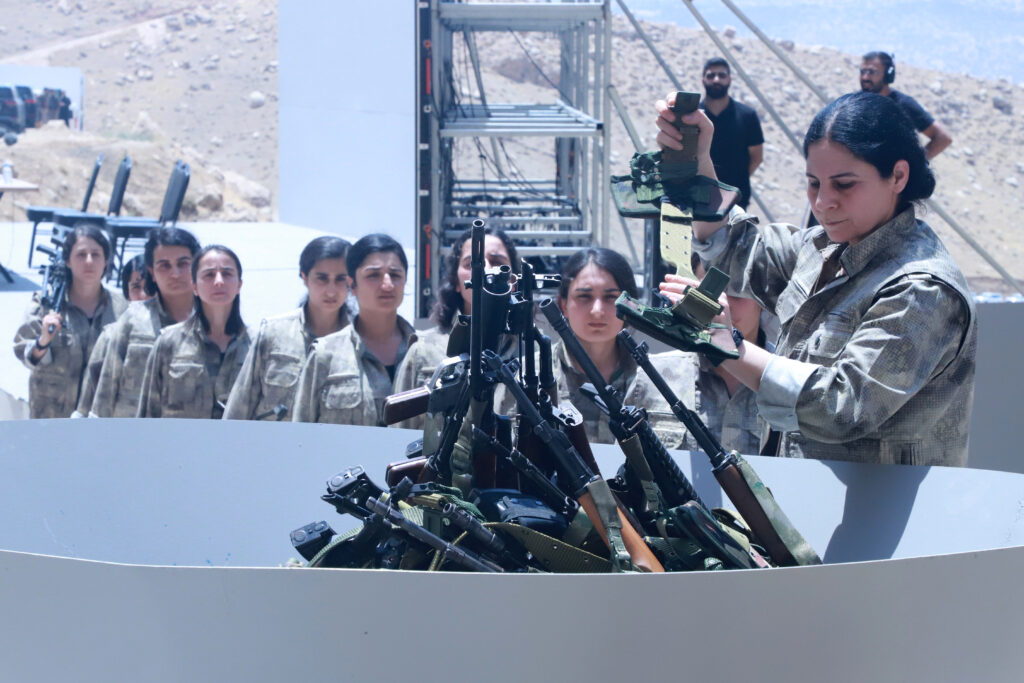
Southeast Turkey, where the army has battled Kurdish militants for decades, is not yet convinced that lasting peace is at hand.In a slickly managed ceremony across the border in Iraq Friday, members of the Kurdish rebel group PKK destroyed their weapons as part of a peace process underway with the Turkish state.But on the streets and in the tea houses of Hakkari, a Kurdish-majority town some 50 kilometres (31 miles) from the Iraqi border, few people express much hope that the deadly conflict is over.Police, including undercover officers, patrol the streets of the small town and make their presence felt, an AFP team observed, which discouraged locals from wanting to talk to visiting reporters.One tea drinker who was willing to speak asked not to be filmed.”We don’t talk about it because we never know what will happen tomorrow,” he explained.”We can say something now and tomorrow be punished for it,” he added, noting that previous peace attempts have failed. The conflict has caused 50,000 deaths among civilians and 2,000 among soldiers, according to Turkey’s president Recep Tayyip Erdogan.- ‘All kinds of persecution’ -On the pavement in front of the restaurant where he works, Mehmet Duman raised his eyebrows. At 26, he’s already seen enough to make him doubt.”They segregated us, beat us, simply because we’re Kurdish,” he said. “We witnessed all kinds of persecution.”So from now on, if the state wants a future for Turkey — if they want Turkey to be a good environment for everyone — they must stop all this,” he said. “The state must also take a step” to match the symbolic operation to destroy PKK weapons in Iraq.”Turkey has won,” Erdogan said Saturday, a day after the PKK’s symbolic destruction of weapons signalling the start of the disarmament process.”Eighty-six million citizens have won,” he added.While he has opened a peace process with the PKK, or Kurdistan Workers’ Party, he has also continued his crackdown on opposition parties.The government has arrested hundreds of members of the CHP, a social-democratic, secular party descended from Mustafa Kemal Ataturk, the founder of the Turkish Republic. The main opposition force to Erdogan, it is rising in the polls.”Since the beginning of the peace process, Turkey has become a much more authoritarian country,” said political analyst Berk Esen.”The disarmament of a terrorist organization should, or could, lead to democratization and social peace, but it probably won’t.”- Crackdown on opposition -Those arrested include the mayor of Istanbul, Ekrem Imamoglu, the party’s likely candidate in the next presidential elections, and the mayors of other major cities who took power when CHP made major gains in March 2024 local elections.Accused of “corruption”, they deny the charges against them.The crackdown has also hit opposition media outlets, such as the Sozcu channel. It was forced into silence after 16 fines and suspensions since January — “one every two weeks”, its director, Ozgur Cakmakci, noted Tuesday evening as lights went out.”There is little doubt that there is an intention to liquidate opposition channels as part of an authoritarian project,” said Erol Onderoglu, the Turkish representative of Reporters Without Borders.On Saturday morning, before the plenary session of his AKP party, Erdogan sought to be reassuring.”We know what we are doing. No one should worry, be afraid, or question anything. Everything we are doing is for Turkey, for our future and our independence,” he insisted.

Gaza truce talks in the balance as Israel and Hamas trade blame

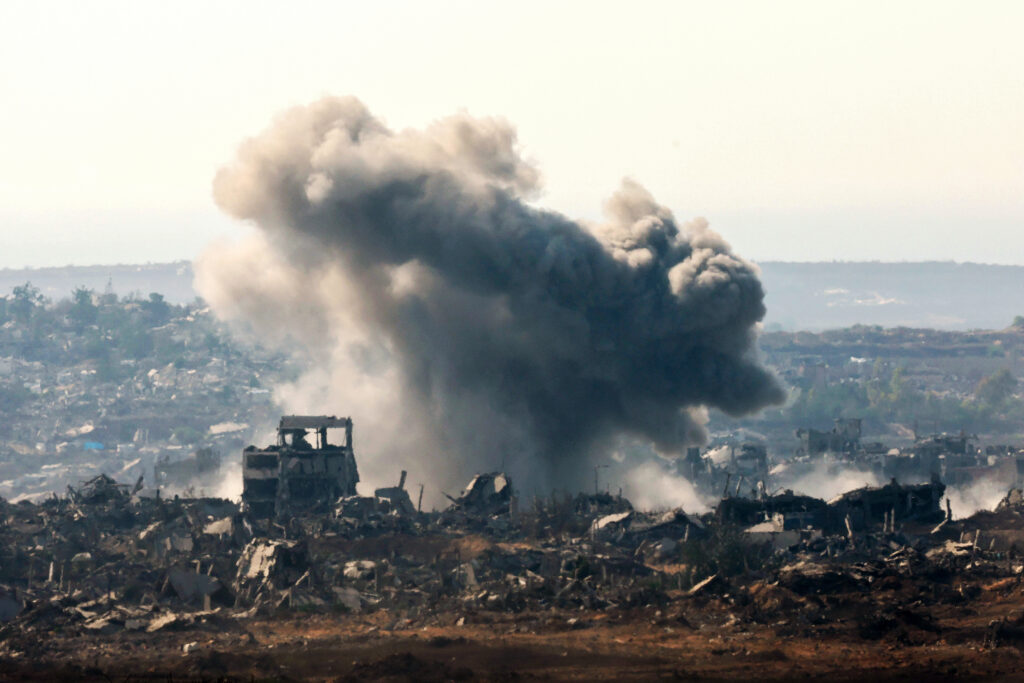
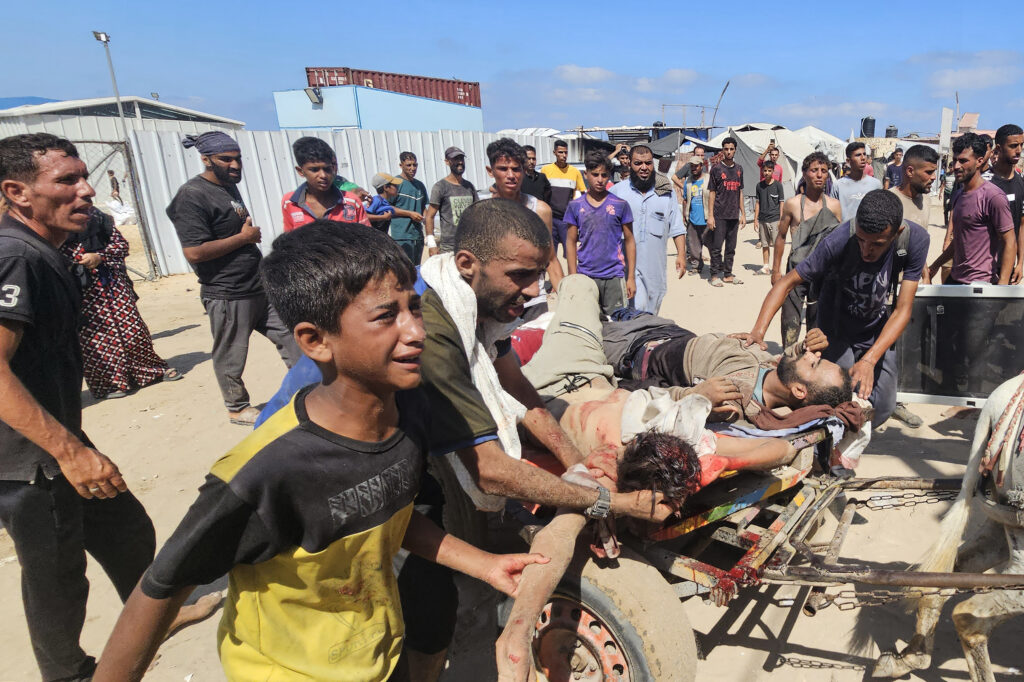
Gaza ceasefire talks hung in the balance as Hamas and Israel on Saturday accused the other of blocking attempts to strike a deal, nearly a week into an attempt to halt 21 months of bitter fighting in the Palestinian territory.A Palestinian source with knowledge of the indirect talks in Qatar told AFP that Israel’s proposals to keep its troops in the war-torn territory were holding up a deal for a 60-day pause.But on the Israeli side, a senior political official, also speaking on condition of anonymity due to the sensitivities of the talks, accused the militants of inflexibility and deliberately trying to scuttle an accord.On the ground, Gaza’s civil defence agency said at least 38 people were killed across the territory on Saturday, including in an overnight air strike on an area sheltering the displaced.”While we were sleeping, there was an explosion… where two boys, a girl and their mother were staying,” Bassam Hamdan told AFP after the attack in an area of Gaza City.”We found them torn to pieces, their remains scattered,” he added.In southern Gaza, bodies covered in white plastic sheets were brought to the Nasser hospital in Khan Yunis while wounded in Rafah were taken for treatment by donkey cart, on stretchers or carried.In Tel Aviv, thousands took to the streets urging the government to seal a hostage release deal. “The window of opportunity… is open now and it won’t be for long,” said Eli Sharabi, who was freed in February.Both Hamas and Israel have said that 10 hostages held since the militants’ October 7, 2023 attack that sparked the war would be released — if an agreement is reached.Israeli Prime Minister Benjamin Netanyahu said he was prepared then to enter talks for a more permanent end to hostilities.- Enclave plans? – But one Palestinian source said Israel’s refusal to accept Hamas’s demand for a complete withdrawal of troops from Gaza was holding back progress in the talks.A second source said mediators had asked both sides to postpone discussions until US President Donald Trump’s special envoy, Steve Witkoff, arrives in the Qatari capital.The first source said Israel was proposing to maintain its military in more than 40 percent of the Palestinian territory, forcing hundreds of thousands of displaced Palestinians into a small area near the city of Rafah, on the border with Egypt.”Hamas’s delegation will not accept the Israeli maps… as they essentially legitimise the reoccupation of approximately half of the Gaza Strip and turn Gaza into isolated zones with no crossings or freedom of movement,” they said.Israeli media reported that new maps would be presented on Sunday, quoting an unnamed foreign official with knowledge of the details.A senior Israeli political official countered later that it was Hamas that rejected what was on the table, accusing the group of “creating obstacles” and “refusing to compromise” with the aim of “sabotaging the negotiations”.”Israel has demonstrated a willingness to show flexibility in the negotiations, while Hamas remains intransigent, clinging to positions that prevent the mediators from advancing an agreement,” the official added in a statement sent to AFP.The Hamas attacks on Israel in 2023 resulted in the deaths of at least 1,219 people, most of them civilians, according to an AFP tally based on Israeli figures.Of the 251 hostages seized, 49 are still being held, including 27 the Israeli military says are dead. At least 57,882 Palestinians, also mostly civilians, have been killed since the start of the war, according to the health ministry in Hamas-run Gaza.- Military operations – The Israeli military said on Saturday it had attacked “approximately 250 terrorist targets throughout the Gaza Strip” in the previous 48 hours. It said fighter jets hit “over 35 Hamas terror targets” around Beit Hanoun in northern Gaza.Two previous ceasefires — a week-long truce beginning in late November 2023 and a two-month one from mid-January this year — saw 105 hostages released in exchange for hundreds of Palestinian prisoners.The second Palestinian source said “some progress” had been made in the latest talks on plans for releasing Palestinian prisoners held by Israel and getting more aid to Gaza.Netanyahu, who is under domestic and international pressure to end the war, said this week that neutralising Hamas as a security threat was a prerequisite for any long-term ceasefire talks.That included disarmament, he said, warning that failure to do so would mean Israel would have to do so by force.bur-az-dsm-phz/ysm

Impact of US tariffs varies across European Union

European countries are not all equally exposed to the US market and so will not suffer the same consequences should President Donald Trump go ahead with his threats to impose 30-percent tariffs on the European Union.Ireland, with a major pharmaceutical industry, is in the front line along with Germany, for whom the United States is a major outlet for its cars, steel and machine tools. France is less exposed, even if it does have aeronautics, food, wine and luxury goods companies that risk losing markets.The EU as a whole has an annual trade surplus with the United States of $235.6 billion, according to the Bureau of Economic Analysis (BEA), which reports to the U.S. Department of Commerce. Only China has a higher amount.- Ireland, Europe’s lab -Ireland has the largest surplus among EU members, at $86.7 billion.That is largely due to the presence of major American pharmaceutical companies such as Pfizer, Eli Lilly, and Johnson & Johnson. They all set up in Ireland to benefit from a 15 percent corporate tax, compared to 21 percent in the United States.These companies can thus host their patents in Ireland and sell on the American market, where drug prices are traditionally higher than in the rest of the world.Ireland also hosts most of the European headquarters of American tech giants, such as Apple, Google and Meta, also attracted by the attractive Irish tax system.Overall, pharmaceuticals account for 22.5 percent of EU exports to the United States, according to Eurostat, with many major players having announced major investments in the United States.- Germany, the industrial powerhouse – Germany, the EU’s largest economy, is under particular pressure due to its dependence on exports: it has a surplus of $84.8 billion with the United States, thanks to its large automobile, chemical, steel and machine industries.The United States accounts for 23 percent of the revenue of Mercedes Benz. While some of that is accounted for by SUVs manufactured in the United States and exported, they risk being hit by any tariff reprisals from the EU. The Federation of German Industries (BDI) reacted promptly to Donald Trump’s announcements on Saturday, calling on the EU and the United States to “quickly find solutions and to avoid an escalation”.   – Italy, France in the second line -Italy and France, with surpluses of $44 billion and $16.4 billion respectively, according to US statistics (French data says the surplus is much smaller), would appear to be less affected. But some sectors are heavily exposed. The food and wine industries would be particularly affected in both countries, as is also the case for Spain. A 30-percent tariff would be a “catastrophe” for the French wine and spirits sector, Jerome Despey, head of the viticulture branch of the FNSEA union, said Saturday.Coldiretti, Italy’s main agricultural organisation, said Saturday that tariffs of 30 percent would cost US consumers and Italian food producers some $2.3 billion.Like Germany, Italy is also concerned about its automotive sector. Franco-Italian manufacturer Stellantis (particularly Fiat and Peugeot) has suspended its forecasts for the year due to these uncertainties.Exposed French sectors also include aeronautics and luxury goods. LVMH, the world’s largest luxury conglomerate, makes a quarter of its sales in the United States.About a fifth of France’s exports to the United States come from the aerospace industry, much of it from Airbus.  Austria and Sweden also have surpluses with the United States, $13.1 billion and $9.8 billion respectively.

Gaza: le Hamas et Israël s’accusent mutuellement d’enrayer les négociations sur une trêve

Le Hamas et Israël se sont mutuellement accusés samedi d’enrayer leurs négociations indirectes pour un cessez-le-feu à Gaza, où 38 Palestiniens ont été tués dans des frappes israéliennes selon la Défense civile locale.Une source palestinienne proche des pourparlers entamés dimanche à Doha par le biais de médiateurs étrangers a d’abord blâmé “l’insistance d’Israël” pour un plan de retrait de ses troupes de Gaza, que le Hamas “rejette fermement”.Un responsable politique israélien a répondu en soirée en accusant le mouvement islamiste palestinien de refuser de “faire des compromis” et de mener “une guerre psychologique visant à saboter les négociations”. La guerre à Gaza a été déclenchée par une sanglante attaque du Hamas en Israël le 7 octobre 2023. En représailles, l’armée israélienne a lancé une offensive destructrice, s’emparant de vastes secteurs de la bande côtière palestinienne.Le Premier ministre israélien Benjamin Netanyahu a réaffirmé ces derniers jours les objectifs de son pays: libérer les otages toujours retenus, désarmer le Hamas et le chasser de Gaza.Les négociations à Doha rencontrent “des obstacles et des difficultés complexes”, a dit à l’AFP la source palestinienne, affirmant qu’Israël s’en tient à une carte qui prévoit “le maintien de (ses) forces sur plus de 40% de la superficie de Gaza”.Selon elle, l’armée israélienne envisagerait de se redéployer tout autour du territoire de plus de deux millions d’habitants, assiégés par Israël depuis 21 mois et vivant dans des conditions terribles selon l’ONU.- Des “progrès” malgré tout -Sept agences onusiennes ont averti dans une déclaration commune que la pénurie de carburant à Gaza avait atteint un “niveau critique” et constituait un “nouveau fardeau insupportable” pour “une population au bord de la famine”.Israël a pour objectif “d’entasser des centaines de milliers de déplacés” dans le sud de Gaza, “en préparation d’un déplacement forcé de la population vers l’Egypte ou d’autres pays”, a avancé la même source palestinienne.Une deuxième source palestinienne a tout de même fait état de “progrès” sur les questions liées à l’entrée de l’aide humanitaire à Gaza et l’échange d’otages contre des prisonniers palestiniens détenus par Israël.Sur les 251 personnes enlevées lors de l’attaque du 7-Octobre, 49 sont toujours retenues à Gaza, dont 27 ont été déclarées mortes par l’armée israélienne.”Israël a démontré sa volonté de faire preuve de flexibilité dans les négociations”, a souligné le responsable israélien alors que les médias locaux rapportent qu’un nouveau plan de retrait de l’armée pourrait être présenté à Doha.A Tel-Aviv, des milliers de personnes se sont rassemblées, comme chaque samedi soir, pour réclamer le retour des otages. “Seriez-vous aussi lents à libérer Auschwitz?”, interrogerait une banderole à l’attention du gouvernement.”La fenêtre d’opportunité pour ramener chez eux tous les otages, vivants et morts, est ouverte pour le moment, mais ça ne sera pas le cas longtemps”, a pressé un ancien otage libéré, Eli Sharabi, appelant à l’aide le président américain Donald Trump.- Panaches de fumée -Dans la bande de Gaza, un bombardement sur le camp de réfugiés d’al-Shati, près de Gaza-ville, a tué 11 personnes, “dont une majorité d’enfants”, selon Mahmoud Bassal, porte-parole de la Défense civile, qui a rapporté 38 morts au total samedi.L’armée israélienne a indiqué avoir frappé en fin de journée “plus de 35 cibles terroristes”, dont un tunnel du Hamas, autour de la ville de Beit Hanoun, dans le nord de Gaza, où d’imposants panaches de fumée s’élevaient vers le ciel.Elle avait annoncé plus tôt avoir déjà visé “environ 250 cibles terroristes” en l’espace de 48 heures à travers le territoire palestinien, parmi lesquelles des dépôts d’armes ou des postes de snipers.Compte tenu des restrictions imposées aux médias à Gaza et des difficultés d’accès sur le terrain, l’AFP n’est pas en mesure de vérifier de manière indépendante les bilans et affirmations des différentes parties.L’attaque du 7-Octobre a fait 1.219 morts du côté israélien, en majorité des civils, selon un décompte de l’AFP réalisé à partir de données officielles.Au moins 57.882 Palestiniens, majoritairement des civils, ont été tués dans la campagne de représailles israéliennes à Gaza, selon des données du ministère de la Santé du gouvernement du Hamas, jugées fiables par l’ONU.