


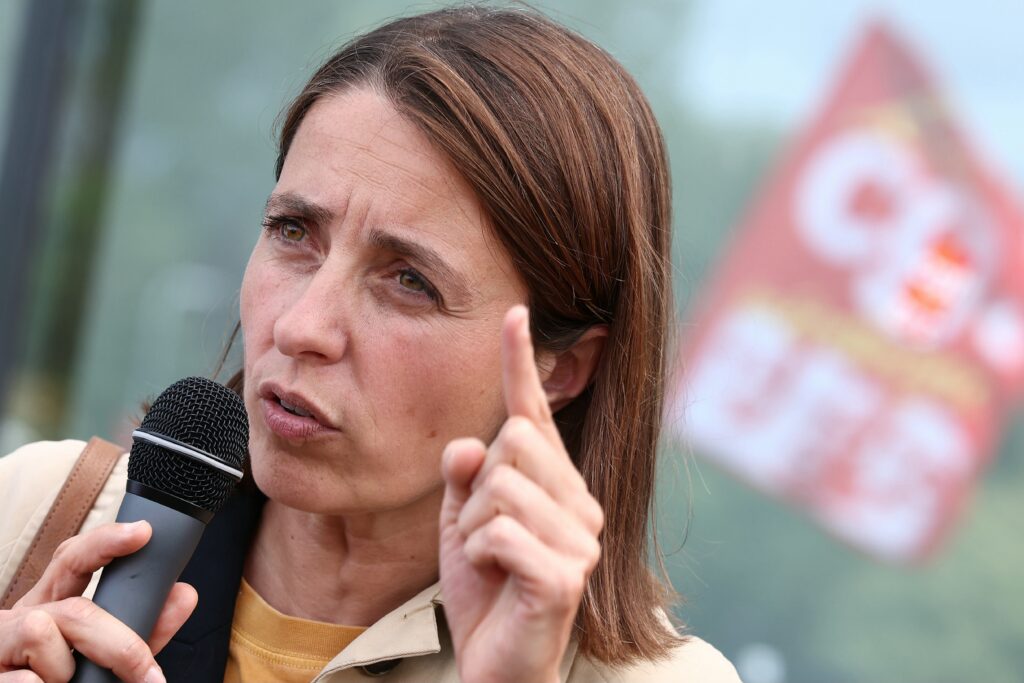
Budget: Binet appelle à la “mobilisation” après les annonces de Bayrou
La secrétaire générale de la CGT Sophie Binet a appelé mercredi à la “mobilisation” après les annonces par le Premier ministre François Bayrou de mesures d’économies pour réduire le déficit public. “Ce qui est à l’ordre du jour, c’est la mobilisation”, a affirmé Sophie Binet sur RTL. “La CGT va tout faire pour empêcher ces régressions sociales, pour empêcher qu’elles rentrent en vigueur”, a-t-elle souligné. “Nous débattrons, dans la CGT, avec les autres organisations syndicales, de la façon d’arriver à mettre en échec le gouvernement”.”Nous appelons l’ensemble des travailleurs et des travailleuses qui sont choqués par ces annonces à se syndiquer, à s’organiser dans leurs entreprises pour qu’ensemble, nous puissions nous mobiliser à la rentrée”, a-t-elle encore dit.La leader de la CGT a demandé aussi aux parlementaires de “tout faire pour que ces mesures ne s’appliquent pas, parce qu’elles sont non seulement injustes, mais dangereuses pour le pays”, jugeant que “c’est encore les mêmes, les travailleuses et les travailleurs qui passent à la caisse, sans que les plus riches et les plus grandes entreprises soient mis à contribution”.Le Premier ministre “nous prépare un appauvrissement généralisé du pays, une année noire pour les travailleuses et les travailleurs. Nous allons concrètement, toutes et tous, perdre des centaines d’euros, voire plus, l’année prochaine, puisque les prix vont augmenter en moyenne de 1,7%, voire plus, parce que les fournitures scolaires, par exemple, s’est annoncées à plus de 10%, et par contre, toutes les prestations ne vont pas suivre”, a-t-elle expliqué.”Il y a des alternatives”, a-t-elle estimé. “Ce que je note aujourd’hui, c’est qu’il y a un acteur qui est content des annonces, c’est le patronat qui se frotte les mains parce qu’encore une fois, ils réussissent à nous faire les poches et à eux ne pas passer à la caisse et avoir de nouveaux cadeaux. Le disque est rayé, ça commence à être vraiment lassant”.Le Premier ministre français François Bayrou a dévoilé mardi ses mesures pour redresser les finances d’un pays soumis au “danger mortel” de “l’écrasement par la dette”, un plan choc immédiatement décrié par les oppositions qui le menacent de censure.
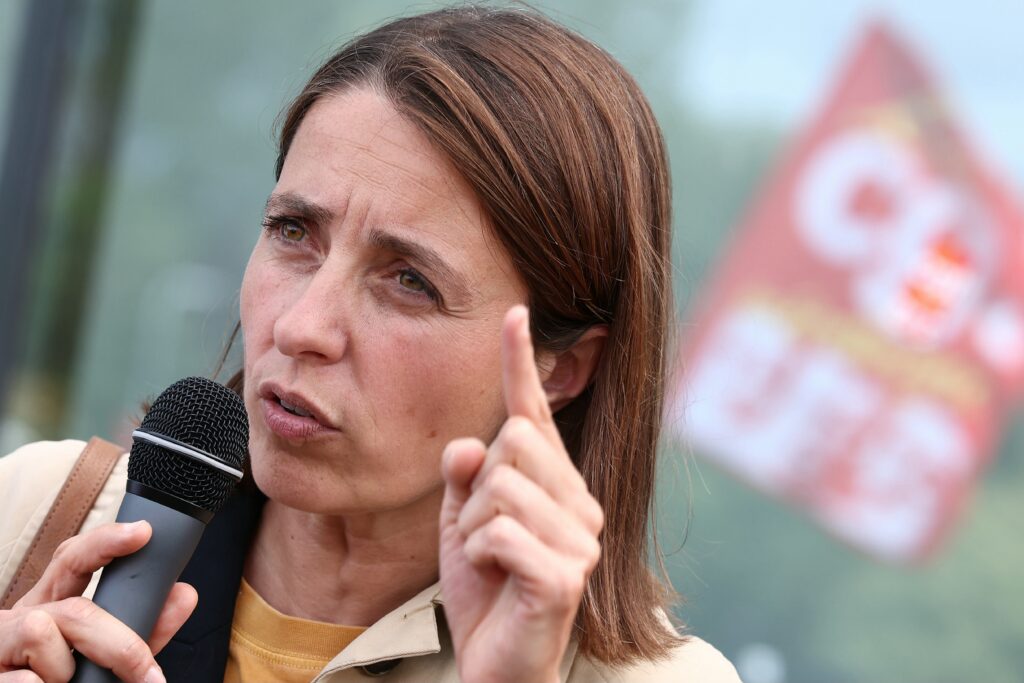
Budget: Binet appelle à la “mobilisation” après les annonces de Bayrou
La secrétaire générale de la CGT Sophie Binet a appelé mercredi à la “mobilisation” après les annonces par le Premier ministre François Bayrou de mesures d’économies pour réduire le déficit public. “Ce qui est à l’ordre du jour, c’est la mobilisation”, a affirmé Sophie Binet sur RTL. “La CGT va tout faire pour empêcher ces régressions sociales, pour empêcher qu’elles rentrent en vigueur”, a-t-elle souligné. “Nous débattrons, dans la CGT, avec les autres organisations syndicales, de la façon d’arriver à mettre en échec le gouvernement”.”Nous appelons l’ensemble des travailleurs et des travailleuses qui sont choqués par ces annonces à se syndiquer, à s’organiser dans leurs entreprises pour qu’ensemble, nous puissions nous mobiliser à la rentrée”, a-t-elle encore dit.La leader de la CGT a demandé aussi aux parlementaires de “tout faire pour que ces mesures ne s’appliquent pas, parce qu’elles sont non seulement injustes, mais dangereuses pour le pays”, jugeant que “c’est encore les mêmes, les travailleuses et les travailleurs qui passent à la caisse, sans que les plus riches et les plus grandes entreprises soient mis à contribution”.Le Premier ministre “nous prépare un appauvrissement généralisé du pays, une année noire pour les travailleuses et les travailleurs. Nous allons concrètement, toutes et tous, perdre des centaines d’euros, voire plus, l’année prochaine, puisque les prix vont augmenter en moyenne de 1,7%, voire plus, parce que les fournitures scolaires, par exemple, s’est annoncées à plus de 10%, et par contre, toutes les prestations ne vont pas suivre”, a-t-elle expliqué.”Il y a des alternatives”, a-t-elle estimé. “Ce que je note aujourd’hui, c’est qu’il y a un acteur qui est content des annonces, c’est le patronat qui se frotte les mains parce qu’encore une fois, ils réussissent à nous faire les poches et à eux ne pas passer à la caisse et avoir de nouveaux cadeaux. Le disque est rayé, ça commence à être vraiment lassant”.Le Premier ministre français François Bayrou a dévoilé mardi ses mesures pour redresser les finances d’un pays soumis au “danger mortel” de “l’écrasement par la dette”, un plan choc immédiatement décrié par les oppositions qui le menacent de censure.
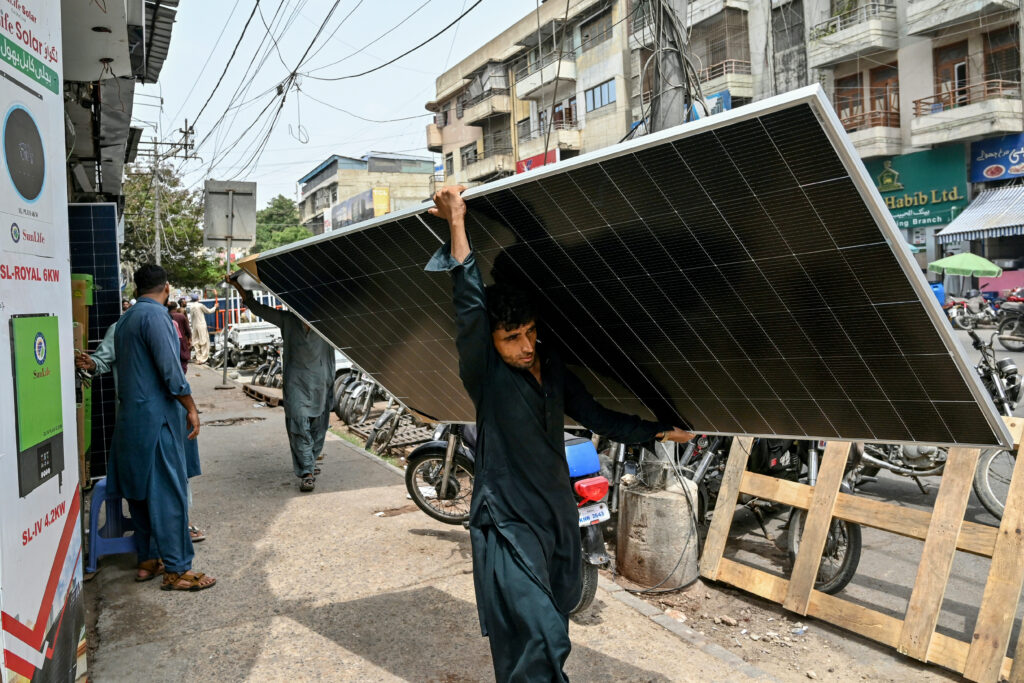
Pakistan’s quiet solar rush puts pressure on national grid
Pakistanis are increasingly ditching the national grid in favour of solar power, prompting a boom in rooftop panels and spooking a government weighed down by billions of dollars of power sector debt.The quiet energy revolution has spread from wealthy neighbourhoods to middle- and lower-income households as customers look to escape soaring electricity bills and prolonged power cuts.Down a cramped alley in Pakistan’s megacity of Karachi, residents fighting the sweltering summer heat gather in Fareeda Saleem’s modest home for something they never experienced before — uninterrupted power.”Solar makes life easier, but it’s a hard choice for people like us,” she says of the installation cost.Saleem was cut from the grid last year for refusing to pay her bills in protest over enduring 18-hour power cuts.A widow and mother of two disabled children, she sold her jewellery — a prized possession for women in Pakistan — and borrowed money from relatives to buy two solar panels, a solar inverter and battery to store energy, for 180,000 rupees ($630).As temperatures pass 40 degrees Celsius (104 degrees Fahrenheit), children duck under Saleem’s door and gather around the breeze of her fan.Mounted on poles above homes, solar panels have become a common sight across the country of 240 million people, with the installation cost typically recovered within two to five years.Making up less than two percent of the energy mix in 2020, solar power reached 10.3 percent in 2024, according to the global energy think tank Ember.But in a remarkable acceleration, it more than doubled to 24 percent in the first five months of 2025, becoming the largest source of energy production for the first time.It has edged past gas, coal and nuclear electricity sources, as well as hydropower which has seen hundreds of millions of dollars of investment over the past decades.As a result, Pakistan has unexpectedly surged towards its target of renewable energy, making up 60 percent of its energy mix by 2030.Dave Jones, chief analyst at Ember, told AFP that Pakistan was “a leader in rooftop solar”.- ‘The great Solar rush’ -Soaring fuel costs globally, coupled with demands from the International Monetary Fund to slash government subsidies, led successive administrations to repeatedly hike electricity costs.Prices have fluctuated since 2022 but peaked at a 155-percent increase and power bills sometimes outweigh the cost of rent.”The great solar rush is not the result of any government’s policy push,” Muhammad Basit Ghauri, an energy transition expert at Renewables First, told AFP.”Residents have taken the decision out of clear frustration over our classical power system, which is essentially based on a lot of inefficiencies.”Pakistan sources most of its solar equipment from neighbouring China, where prices have dropped sharply, largely driven by overproduction and tech advancements.But the fall in national grid consumers has crept up on an unprepared government burdened by $8 billion of power sector debt, analysts say.Pakistan depends heavily on costly gas imports which it sells at a loss to national energy providers.It is also tied into lengthy contracts with independent power producers, including some owned by China, for which it pays a fixed amount regardless of actual demand.A government report in March said the solar power increase has created a “disproportionate financial burden onto grid consumers, contributing to higher electricity tariffs and undermining the sustainability of the energy sector”.Electricity sales dropped 2.8 percent year-on-year in June, marking a second consecutive year of decline.Last month, the government imposed a new 10-percent tax on all imported solar, while the energy ministry has proposed slashing the rate at which it buys excess solar energy from consumers.- ‘Disconnected from the public -“The household solar boom was a response to a crisis, not the cause of it,” said analyst Jones, warning of “substantial problems for the grid” including a surge during evenings when solar users who cannot store energy return to traditional power.The national grid is losing paying customers like businessman Arsalan Arif.A third of his income was spent on electricity bills at his Karachi home until he bought a 10-kilowatt solar panel for around 1.4 million rupees (around $4,900).”Before, I didn’t follow a timetable. I was always disrupted by the power outages,” he told AFP.Now he has “freedom and certainty” to continue his catering business.In the eastern city of Sialkot, safety wear manufacturer Hammad Noor switched to solar power in 2023, calling it his “best business decision”, breaking even in 18 months and now saving 1 million rupees every month.The cost of converting Noor’s second factory has now risen by nearly 1.5 million rupees under the new government tax.”The tax imposed is unfair and gives an advantage to big businesses over smaller ones,” he said.”Policymakers seem completely disconnected from the public and business community.”
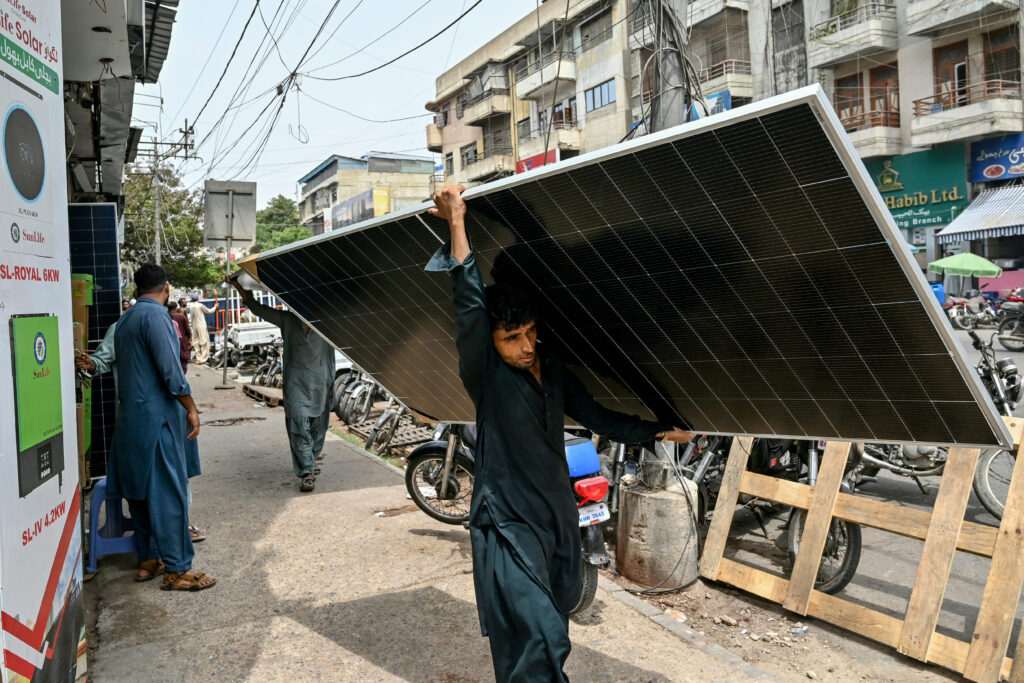
Pakistan’s quiet solar rush puts pressure on national grid
Pakistanis are increasingly ditching the national grid in favour of solar power, prompting a boom in rooftop panels and spooking a government weighed down by billions of dollars of power sector debt.The quiet energy revolution has spread from wealthy neighbourhoods to middle- and lower-income households as customers look to escape soaring electricity bills and prolonged power cuts.Down a cramped alley in Pakistan’s megacity of Karachi, residents fighting the sweltering summer heat gather in Fareeda Saleem’s modest home for something they never experienced before — uninterrupted power.”Solar makes life easier, but it’s a hard choice for people like us,” she says of the installation cost.Saleem was cut from the grid last year for refusing to pay her bills in protest over enduring 18-hour power cuts.A widow and mother of two disabled children, she sold her jewellery — a prized possession for women in Pakistan — and borrowed money from relatives to buy two solar panels, a solar inverter and battery to store energy, for 180,000 rupees ($630).As temperatures pass 40 degrees Celsius (104 degrees Fahrenheit), children duck under Saleem’s door and gather around the breeze of her fan.Mounted on poles above homes, solar panels have become a common sight across the country of 240 million people, with the installation cost typically recovered within two to five years.Making up less than two percent of the energy mix in 2020, solar power reached 10.3 percent in 2024, according to the global energy think tank Ember.But in a remarkable acceleration, it more than doubled to 24 percent in the first five months of 2025, becoming the largest source of energy production for the first time.It has edged past gas, coal and nuclear electricity sources, as well as hydropower which has seen hundreds of millions of dollars of investment over the past decades.As a result, Pakistan has unexpectedly surged towards its target of renewable energy, making up 60 percent of its energy mix by 2030.Dave Jones, chief analyst at Ember, told AFP that Pakistan was “a leader in rooftop solar”.- ‘The great Solar rush’ -Soaring fuel costs globally, coupled with demands from the International Monetary Fund to slash government subsidies, led successive administrations to repeatedly hike electricity costs.Prices have fluctuated since 2022 but peaked at a 155-percent increase and power bills sometimes outweigh the cost of rent.”The great solar rush is not the result of any government’s policy push,” Muhammad Basit Ghauri, an energy transition expert at Renewables First, told AFP.”Residents have taken the decision out of clear frustration over our classical power system, which is essentially based on a lot of inefficiencies.”Pakistan sources most of its solar equipment from neighbouring China, where prices have dropped sharply, largely driven by overproduction and tech advancements.But the fall in national grid consumers has crept up on an unprepared government burdened by $8 billion of power sector debt, analysts say.Pakistan depends heavily on costly gas imports which it sells at a loss to national energy providers.It is also tied into lengthy contracts with independent power producers, including some owned by China, for which it pays a fixed amount regardless of actual demand.A government report in March said the solar power increase has created a “disproportionate financial burden onto grid consumers, contributing to higher electricity tariffs and undermining the sustainability of the energy sector”.Electricity sales dropped 2.8 percent year-on-year in June, marking a second consecutive year of decline.Last month, the government imposed a new 10-percent tax on all imported solar, while the energy ministry has proposed slashing the rate at which it buys excess solar energy from consumers.- ‘Disconnected from the public -“The household solar boom was a response to a crisis, not the cause of it,” said analyst Jones, warning of “substantial problems for the grid” including a surge during evenings when solar users who cannot store energy return to traditional power.The national grid is losing paying customers like businessman Arsalan Arif.A third of his income was spent on electricity bills at his Karachi home until he bought a 10-kilowatt solar panel for around 1.4 million rupees (around $4,900).”Before, I didn’t follow a timetable. I was always disrupted by the power outages,” he told AFP.Now he has “freedom and certainty” to continue his catering business.In the eastern city of Sialkot, safety wear manufacturer Hammad Noor switched to solar power in 2023, calling it his “best business decision”, breaking even in 18 months and now saving 1 million rupees every month.The cost of converting Noor’s second factory has now risen by nearly 1.5 million rupees under the new government tax.”The tax imposed is unfair and gives an advantage to big businesses over smaller ones,” he said.”Policymakers seem completely disconnected from the public and business community.”
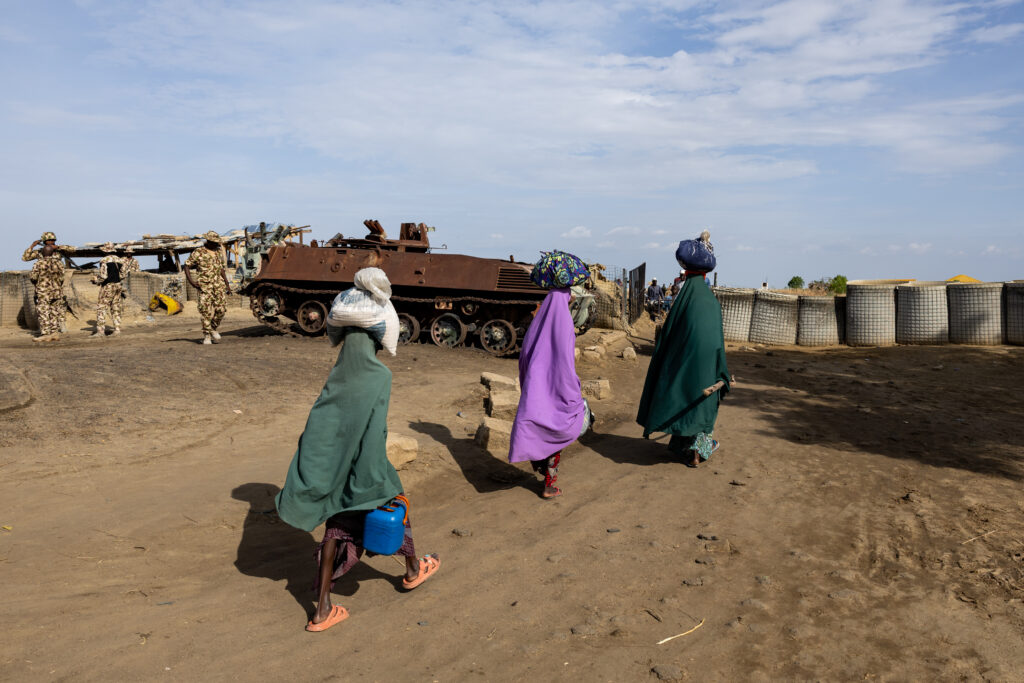
Nigerian garrison town offers haven for people fleeing jihadistsWed, 16 Jul 2025 06:08:18 GMT
From the air, Monguno looks like a fortress, with deep trenches slashing into the sand around this garrison town in northeast Nigeria’s volatile Borno State.These defences have kept the Monguno largely secure despite the region witnessing a recent surge in attacks on military bases by jihadists fighting a grinding 16-year war.Fighting in Borno may have …

L’Institut Montaigne alerte sur le “marasme démographique” et la “stagnation de la productivité”
“Marasme démographique”, “stagnation de la productivité”, et “creusement de la dette publique”: l’Institut Montaigne, cercle de réflexion libéral, dresse mercredi un bilan pessimiste de l’avenir de la France dans les quinze prochaines années, dans son rapport “France 2040: projections pour l’action politique”.La dégradation anticipée de ces trois indicateurs, en prolongeant l’évolution actuelle des courbes, vient à “obérer sérieusement les marges de manœuvre nationales”, selon la synthèse du rapport.Fruit de 18 mois de travail, l’étude vise à “mettre les politiques devant leurs responsabilités” et à “souligner le coût de l’inaction”, selon Bruno Tertrais, coordinateur du rapport.Les “tendances négatives” mises en évidence “se renforcent l’une l’autre”, dit-il. Par exemple, “le vieillissement de la population et la baisse très forte de la natalité ne va pas arranger notre problème de productivité d’ici dix à quinze ans”.Selon le rapport, d’ici à 2040, “les 65 ans ou plus représenteront 26 à 28% de la population en 2040, portant le ratio de dépendance entre actifs et inactifs à environ 50%”.Or, “si on n’a pas un renversement de tendance à la baisse du nombre d’heures travaillées […], nous risquerons d’entrer pour une très longue durée dans une économie qui sera structurellement atone du point de vue de la croissance”, pour Bruno Tertrais.L’Institut Montaigne estime que l’étude “en silo” des différentes problématiques – climat, éducation, santé, sécurité intérieure, aménagement du territoire, etc. – ne “fonctionne plus”, et pointe “une accélération des dynamiques” et “une imbrication croissante” des thématiques.Il faut ajouter à ce contexte de “double contrainte” des évolutions démographique et climatique dans les quinze prochaines années les difficultés habituelles de l’Etat “dans l’aménagement du territoire, la santé et l’école publique”, et “un environnement international de plus en plus conflictuel”, selon Bruno Tertrais.”C’est là que (ces) travers traditionnels de la France posent encore plus problème qu’il y a 30 ans”, insiste le coordinateur du rapport.