

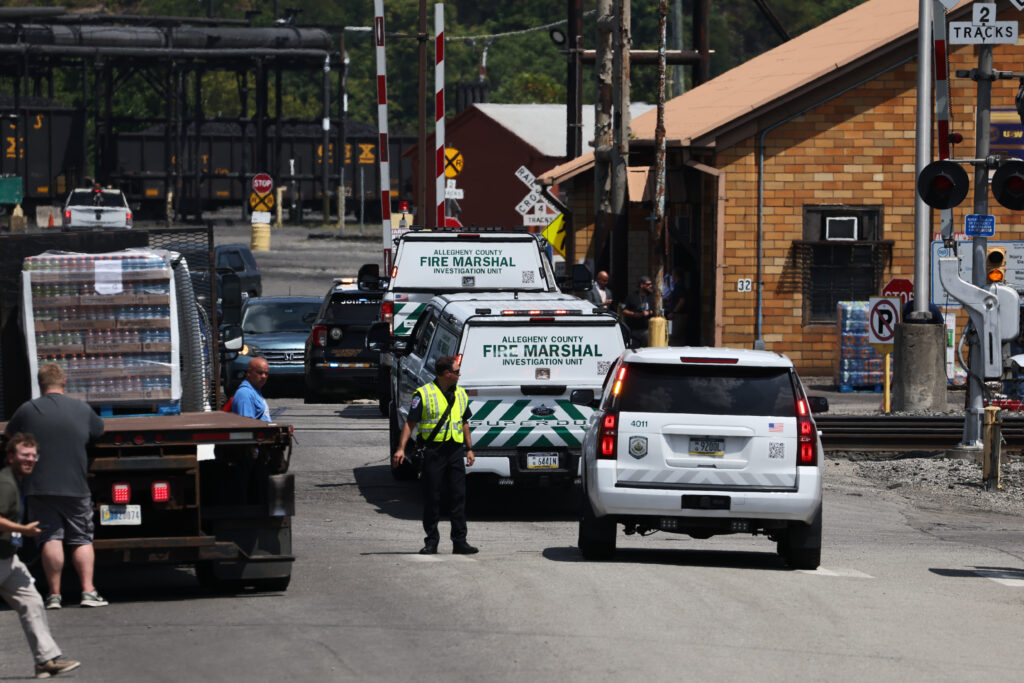
Two dead, 10 hospitalized in Pennsylvania steel plant explosions
Two workers died and 10 were wounded Monday after blasts at a US Steel plant in the state of Pennsylvania, officials said.”Multiple explosions occurred today at U.S. Steel Clairton Coke Works,” the state’s Governor Josh Shapiro said in a post on X, naming a plant some 15 miles (25 kilometers) outside the city of Pittsburgh.”Injured employees have now been transported to local hospitals to receive care, and search-and-rescue efforts remain active at the plant,” he added.US Steel and Allegheny County Police reported two people were found dead, with the second fatality requiring “an extensive search and rescue effort” to locate the body.One injured victim who had previously been reported missing was rescued and taken to a hospital for treatment, authorities said, adding that “nine [other] people were transported to area hospitals to be treated for a variety of injuries.”US Steel said the incident happened at around 11 am (1500 GMT) on Monday and that emergency teams were immediately dispatched to the scene. “During times like this, U.S. Steel employees come together to extend their love, prayers, and support to everyone affected,” David Burritt, CEO of the company, said in a statement. Some US media outlets had reported that people were trapped under the rubble of the explosion. Videos on social media, not verified by AFP, appeared to show firefighters battling the blaze in front of a gutted industrial building, under a thick plume of white smoke. The Clairton Coke Works is the largest coking factory in the United States — a facility where coal is processed to produce coke, a key fuel in steelmaking.
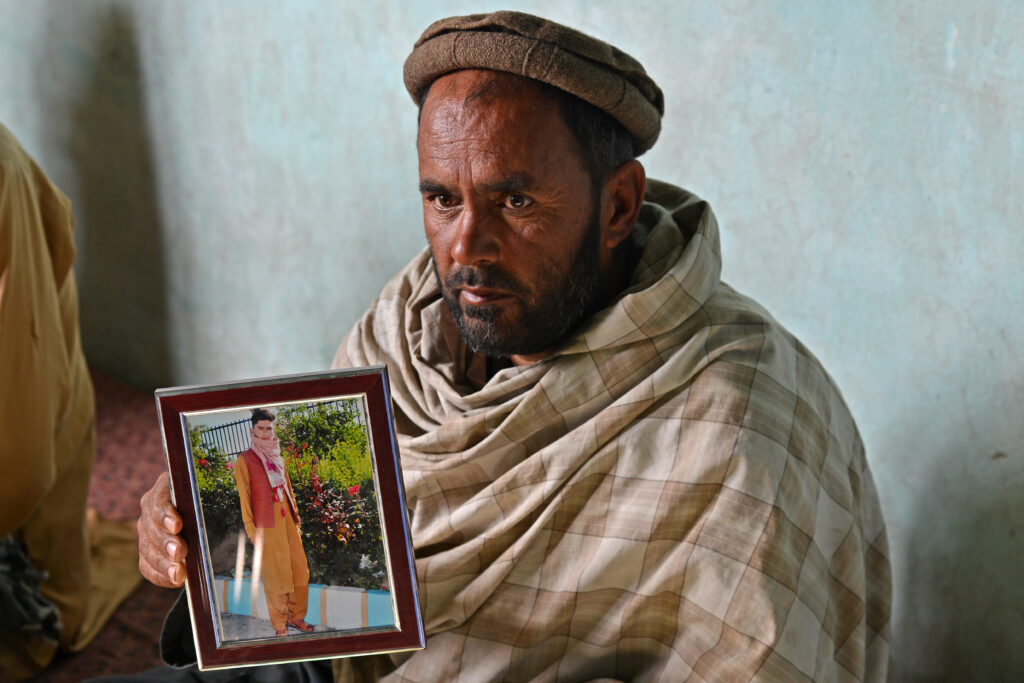
Families forever scarred 4 years on from Kabul plane deaths
The day after the Taliban stormed into the Afghan capital in August 2021, Afghans desperate to evacuate clung to the fuselage of a departing American plane at Kabul airport — only to fall to their deaths.Four years later, their families still relive those desperate acts and endure wounds they say will never heal. The images sped around the world: hundreds of people running alongside a military plane about to take off, with some clinging to it. Other videos show figures falling from the C-17, plummeting through the air.One of them was Shafiullah Hotak. Aged 18, he dreamt of becoming a doctor, but lacking the money for his studies, was forced to work doing odd jobs. On August 16, 2021, the day after the Taliban seized Kabul, Hotak was swept up by rumours that the departing Americans, after 20 years of war, were taking with them Afghans eager to flee. “I’m leaving for the United States!” he told his parents at dawn that day, with only 50 Afghanis (less than a dollar today) in his pocket. The airport was swarmed with families clutching any scrap of paper they thought might help them leave with the swiftly departing foreigners.”Shafiullah had hope. He said that if he made it to the United States, I could stop working, that he would repay us for everything we had done for him,” recalled his mother, Zar Bibi Hotak.”I gave him his ID card and he left. Then we heard he was dead.”- Fell to their deaths -More than 120,000 people were evacuated in August 2021 by NATO countries, including 2,000 who had directly worked with the organisation against the Taliban. Thousands of others left the country in the following months.”We were told stories about the previous Taliban regime, how even flour was hard to find,” said Intizar Hotak, Shafiullah’s 29-year-old brother, referring to the Taliban’s first rule in 1996-2001.”With those stories in mind, we were worried. We thought there would be no more work.”In the eastern Kabul neighbourhood where they live, crisscrossed by foul-smelling drainage channels, the only people who managed to get by were those with family sending money from abroad.”Shafiullah said the situation wouldn’t improve, that it was better to leave,” his mother said, clinging to a portrait of the young man with neatly combed hair and piercing eyes, posing next to a rose bush.His body landed on the roof of a house in northern Kabul, a few kilometres (miles) from the airport.So did that of 24-year-old Fida Mohammad Amir, who according to his father Payanda Mohammad Ibrahimi, hated the Taliban.On August 16, he pretended to have an appointment at his dental clinic and left the family home in Paghman, a quiet village west of Kabul. Later that morning his family tried to reach him.When the phone finally rang early in the afternoon, a stranger claiming to be at the airport asked, “Do you know Fida? He fell from a plane.” The young dentist had slipped his father’s number into his pocket — just in case.- ‘I didn’t understand anything’ -Zar Bibi Hotak was alerted by relatives who saw a photo of Shafiullah shared on Facebook by witnesses at the airport. “I screamed, I ran like a madwoman. Some neighbours were embarrassed, unsure how to react. Another grabbed me and brought me back home,” she said.To this day, the number of those who died during the evacuation remains unknown. In 2022, the US military cleared the plane’s crew of wrongdoing.The crew had “decided to depart the airfield as quickly as possible” due to a deteriorating security situation as “the aircraft was surrounded by hundreds of Afghan civilians who had breached the airport perimeter”, according to a spokesperson. It’s not enough, said all the families interviewed by AFP, who said their grief was only made worse by the lack of accountability.”No one has called us — not the previous government, not the Taliban, not the Americans,” said Zar Bibi Hotak.”The planes have cameras… the pilot knew what he was doing, that it was dangerous, he could have stopped,” said Zakir Anwari, whose brother Zaki was crushed by the plane on the tarmac.A promising football player at 17 years old, Zaki went to the airport out of curiosity with another of his brothers. But in seeing the crowd, he decided to take his chances, Anwari believes. “Everyone wondered how Zaki, so smart, took such a risk. But he wasn’t the only one: I met at the airport a father of six who proudly said he had tried three times to climb onto a plane,” Anwari said. At the airport, where he rushed to try to find his brother, he recalled bodies piled into a pickup, blood on the ground, and being struck by a Taliban fighter. “I had nightmares for a year. Impossible to forget,” he said.
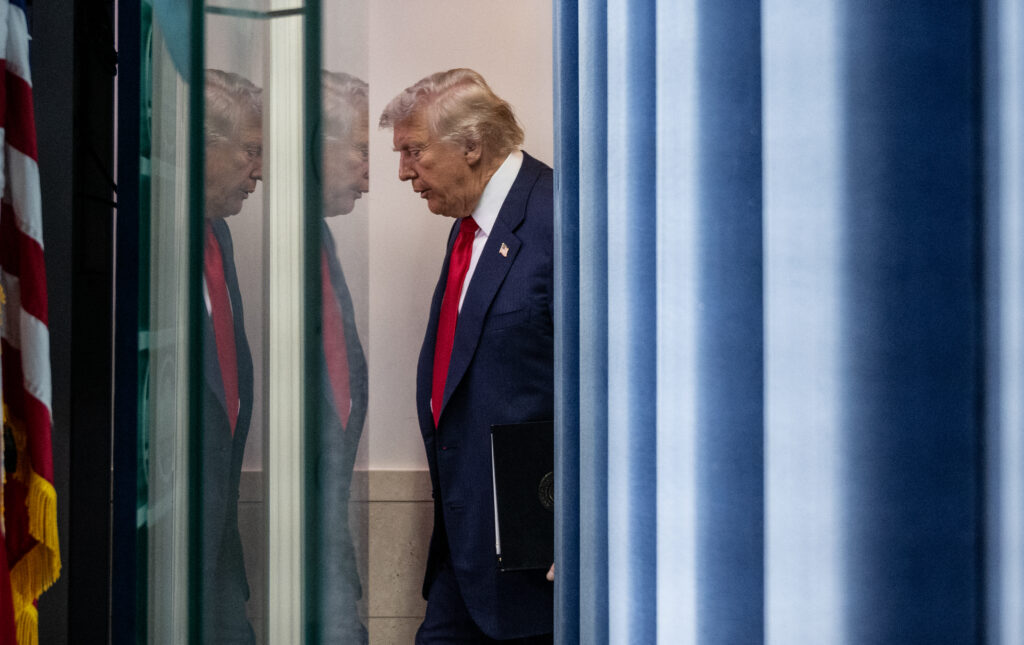
Trump signs order to extend China tariff truce by 90 days
US President Donald Trump on Monday ordered a delay in the reimposition of higher tariffs on Chinese goods, hours before a trade truce between Washington and Beijing was due to expire.The White House’s halt on steeper tariffs will be in place until November 10. “I have just signed an Executive Order that will extend the Tariff Suspension on China for another 90 days,” Trump wrote on his Truth Social platform. The truce on steeper levies had been due to expire Tuesday.While the United States and China slapped escalating tariffs on each other’s products this year, bringing them to prohibitive triple-digit levels and snarling trade, both countries in May agreed to temporarily lower them.As part of their May truce, fresh US tariffs targeting China were reduced to 30 percent and the corresponding level from China was cut to 10 percent. Those rates will now hold until November — or whenever a deal is cut before then.Around the same time that Trump confirmed the new extension, Chinese state media Xinhua news agency published a joint statement from US-China talks in Stockholm saying it would also extend its side of the truce.China will continue suspending its earlier tariff hike for 90 days starting August 12 while retaining a 10-percent duty, the report said.It would also “take or maintain necessary measures to suspend or remove non-tariff countermeasures against the United States, as agreed in the Geneva joint declaration,” Xinhua reported.In the executive order posted Monday to its website, the White House reiterated its position that there are “large and persistent annual US goods trade deficits” and they “constitute an unusual and extraordinary threat to the national security and economy of the United States.” The order acknowledged Washington’s ongoing discussions with Beijing “to address the lack of trade reciprocity in our economic relationship” and noted that China has continued to “take significant steps toward remedying” the US complaints.- Trump-Xi summit? -“Beijing will be happy to keep the US-China negotiation going, but it is unlikely to make concessions,” warned William Yang, an analyst at the International Crisis Group.He believes China sees its leverage over rare earth exports as a strong one, and that Beijing will likely use it to pressure Washington.US-China Business Council president Sean Stein said the current extension is “critical to give the two governments time to negotiate an agreement” providing much-needed certainty for companies to make plans.A trade deal, in turn, would “pave the way for a Trump-Xi summit this fall,” said Asia Society Policy Institute senior vice president Wendy Cutler.But Cutler, herself a former US trade official, said: “This will be far from a walk in the park.”Since Trump took office, China’s tariffs have essentially boomeranged, from the initially modest 10 percent hike in February, followed by repeated surges as Beijing and Washington clashed, until it hit a high of 145 percent in April. Now the tariff has been pulled back to 30 percent, a negotiated truce rate.Even as both countries reached a pact to cool tensions after high level talks in Geneva in May, the de-escalation has been shaky.Key economic officials convened in London in June as disagreements emerged and US officials accused their counterparts of violating the pact. Policymakers met again in Stockholm last month.Trump said in a social media post Sunday that he hoped China will “quickly quadruple its soybean orders,” adding this would be a way to balance trade with the United States.China’s exports reached record highs in 2024, and Beijing reported that their exports exceeded expectations in June, climbing 5.8 percent year-on-year, as the economic superpower works to sustain growth amid Trump’s trade war.Separately, since returning to the presidency in January, Trump has slapped a 10-percent “reciprocal” tariff on almost all trading partners, aimed at addressing trade practices Washington deemed unfair.This surged to varying steeper levels last Thursday for dozens of economies.Major partners like the European Union, Japan and South Korea now see a 15-percent US duty on many products, while the level went as high as 41 percent for Syria.The “reciprocal” tariffs exclude sectors that have been targeted individually, such as steel and aluminum, and those that are being investigated like pharmaceuticals and semiconductors.They are also expected to exclude gold, although a clarification by US customs authorities made public last week caused concern that certain gold bars might still be targeted.Trump said Monday that gold imports will not face additional tariffs, without providing further details.The president has taken separate aim at individual countries such as Brazil over the trial of former president Jair Bolsonaro, who is accused of planning a coup, and India over its purchase of Russian oil.Canada and Mexico come under a different tariff regime.
One dead, 10 hospitalized in Pennsylvania steel plant explosions
At least one person died and 10 were wounded Monday after blasts at a US Steel plant in the state of Pennsylvania, officials said.”Multiple explosions occurred today at U.S. Steel Clairton Coke Works,” the state’s Governor Josh Shapiro said in a post on X, naming a plant some 15 miles (25 kilometers) outside the city of Pittsburgh.”Injured employees have now been transported to local hospitals to receive care, and search-and-rescue efforts remain active at the plant,” he added.One person was still believed to be missing Monday night, according to Allegheny County Police, which confirmed in a statement there had been one fatality.One victim who had previously been reported missing was rescued and taken to a hospital for treatment, authorities said, adding that “nine [other] people were transported to area hospitals to be treated for a variety of injuries.”US Steel said the incident happened at around 11:00 am (1500 GMT) on Monday and that emergency teams were immediately dispatched to the scene. “During times like this, U.S. Steel employees come together to extend their love, prayers, and support to everyone affected,” David Burritt, CEO of the company, said in a statement. Some US media outlets reported that people were still trapped under the rubble of the explosion. Videos on social media, not verified by AFP, appeared to show firefighters battling the blaze in front of a gutted industrial building, under a thick plume of white smoke. The Clairton Coke Works is the largest coking factory in the United States — a facility where coal is processed to produce coke, a key fuel in steelmaking.
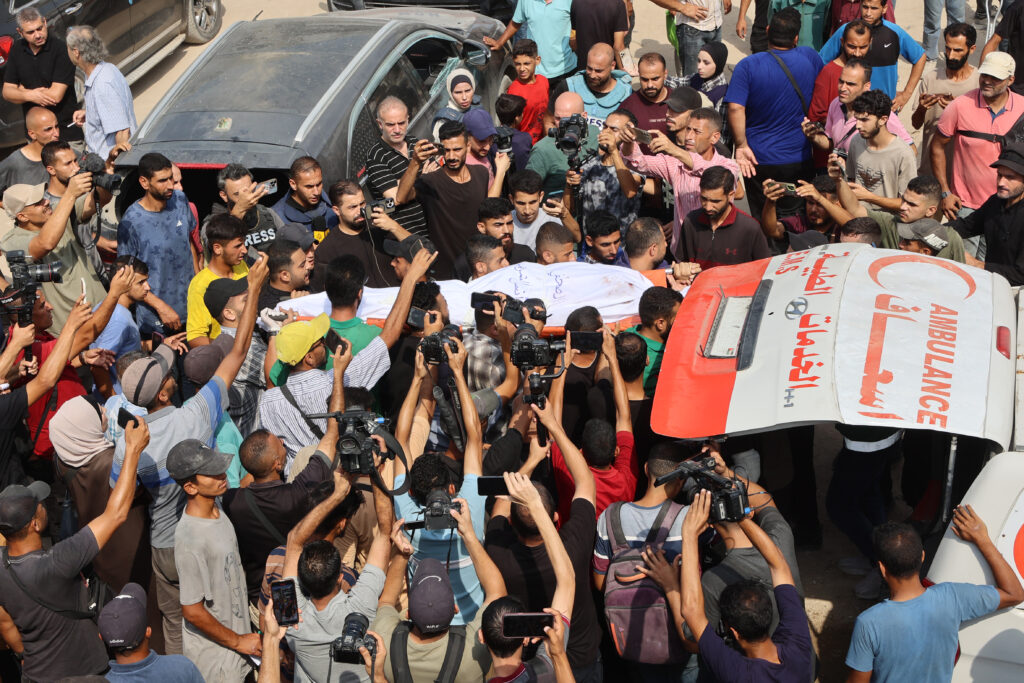
UN, media groups condemn Israel’s deadly strike on Al Jazeera team in Gaza
Condemnations poured in from the United Nations, the EU and media rights groups Monday after an Israeli strike killed an Al Jazeera news team in Gaza, as Palestinians mourned the journalists and Israel accused one of them of being a Hamas militant.Dozens of Gazans stood amid bombed-out buildings in the courtyard of Al-Shifa Hospital in Gaza City to pay their respects to Anas al-Sharif, a prominent Al Jazeera correspondent aged 28, and four of his colleagues killed on Sunday.Hospital director Mohammed Abu Salmiya said a sixth journalist, freelance reporter Mohammed Al-Khaldi, was killed in the strike that targeted the Al Jazeera team.Mourners including men wearing blue journalists’ flak jackets carried their bodies, wrapped in white shrouds with their faces exposed, through narrow alleys to their graves.Israel confirmed it had targeted Sharif, whom it labelled a “terrorist” affiliated with Hamas, alleging he “posed as a journalist”.Al Jazeera said four other employees — correspondent Mohammed Qreiqeh, and cameramen Ibrahim Zaher, Mohammed Noufal and Moamen Aliwa — were killed when the strike hit a tent set up for journalists outside the main gate of Al-Shifa.An Israeli military statement accused Sharif of heading a Hamas “terrorist cell” and being “responsible for advancing rocket attacks” against Israelis.The military released documents alleging to show the date of Sharif’s enlistment with Hamas in 2013, an injury report from 2017 and the name of his military unit and rank.According to local journalists who knew him, Sharif had worked at the start of his career with a Hamas communication office, where his role was to publicise events organised by the group that has ruled the Gaza Strip since 2006.Sharif was one of Al Jazeera’s most recognisable faces working in Gaza, providing daily reports on the now 22-month-old war.Media freedom groups have condemned the Israeli strike on journalists, which the UN human rights agency called a “grave breach of international humanitarian law”.The European Union’s foreign policy chief Kaja Kallas said Monday that “the EU condemns the killing of five Al Jazeera journalists.”- ‘Attempt to silence’ -A posthumous message, written by Sharif in April in case of his death, was published online saying he had been silenced and urging people “not to forget Gaza”.In July, the Committee to Protect Journalists (CPJ) called for his protection following online posts by an Israeli military spokesman.The group had accused Israel of a “pattern” of labelling journalists militants “without providing credible evidence”, and said the military had levelled similar accusations against media workers in Gaza including Al Jazeera staff.”International law is clear that active combatants are the only justified targets in a war setting,” Jodie Ginsberg, CPJ’s chief executive, told AFP.Unless Israel “can demonstrate that Anas al-Sharif was still an active combatant, then there is no justification for his killing.”Al Jazeera called the attack “a desperate attempt to silence voices exposing the Israeli occupation”, and described Sharif as “one of Gaza’s bravest journalists”.The Qatari broadcaster also said the strike followed “repeated incitement” and calls by Israeli officials to target Sharif and his colleagues.Reporters Without Borders says nearly 200 journalists have been killed in the war, which was sparked by Hamas’s deadly October 2023 attack on Israel.Israel prevents international reporters from entering Gaza, except on occasional tightly controlled trips with the military.The strike on the news team in Gaza City came days after the Israeli security cabinet approved plans to send troops into the area, a decision met with mounting domestic and international criticism.- ‘Another calamity’ -Netanyahu on Sunday said the military will conquer the remaining quarter or so of the territory not yet controlled by Israeli troops — including much of Gaza City and Al-Mawasi, an Israeli-designated safe zone where huge numbers of Palestinians have sought refuge.The plan, which Israeli media reported had triggered bitter disagreement between the government and military leadership, drew condemnation from protesters in Israel and numerous countries, including Israeli allies.Notably Germany, a major weapons supplier and staunch ally, announced the suspension of shipments of any arms that could be used in Gaza.Australia said it would join a growing list of Western nations in recognising a Palestinian state.Netanyahu has remained defiant, telling journalists Sunday that “we will win the war, with or without the support of others.”The United Nations and humanitarian agencies have condemned the planned offensive, which UN Assistant Secretary-General Miroslav Jenca said “will likely trigger another calamity in Gaza”.UN agencies warned last month that famine was unfolding in the territory, with Israel severely restricting aid entry.Israel’s offensive has killed at least 61,499 Palestinians, according to the health ministry in Hamas-run Gaza, figures the United Nations says are reliable.Hamas’s 2023 attack on Israel resulted in the deaths of 1,219 people, according to an AFP tally based on official figures.