Asian markets rise as US rate cut bets temper Japan bond unease

Stocks rose Tuesday following the previous day’s stutter as more weak US data helped solidify US interest rate cut optimism and tempered nervousness over rising Japanese bond yields.Expectations the Federal Reserve will lower borrowing costs has provided a boon to markets in the past few weeks and saw them recover early November’s losses that had been stoked by fears of a tech bubble.Bets on the central bank easing monetary policy for a third successive meeting have been rising since a number of decision-makers said protecting jobs was a bigger concern for them that keeping a lid on elevated inflation.Those comments have been compounded by figures showing the economy — particularly the labour market — continues to soften while inflation appears to be stabilised for now.The latest round of data added to that narrative, with a survey of manufacturers by the Institute for Supply Management indicating that activity in the sector contracted for a ninth straight month.After a mixed day to start the week, Asia’s markets resumed their recent rally Tuesday.Hong Kong, Sydney, Seoul, Singapore, Taipei, Wellington, Manila and Jakarta were all up, though Shanghai dipped.Tokyo also advanced, clawing back some of Monday’s losses that came on the back of comments from Bank of Japan boss Kazuo Ueda that hinted at a possible interest rate hike this month.The remarks boosted the yen and provided a jolt to equities as the yield of Japanese two-year government bonds rose past one percent to their highest since 2008 during the global financial crisis. The Japanese unit was steady on Tuesday.They also helped pin back Wall Street after last week’s Thanksgiving run-up and dented overall risk sentiment, pulling bitcoin back down.Ueda’s comments could mark a de-anchoring of the carry trade, in which traders borrow yen at low cost to invest in riskier assets”, wrote City Index senior market analyst Fiona Cincotta.”A higher rate in Japan could suck liquidity out of the markets. Tech stocks and crypto are particularly sensitive to even the smallest shifts in liquidity.”Still, National Australia Bank’s Rodrigo Catril said Ueda also mentioned the need “to confirm the momentum of initial moves toward next year’s annual spring labour-management wage negotiations”.He said that “implies that the December meeting may be too soon to have a good understanding of the wage momentum for next year”.Investors are watching nervously an auction of 10-year bonds due later Tuesday.South Korean tech titan Samsung Electronics surged more than two percent in Seoul as it launched its first triple-folding phone, even admitting that its more than $2,400 price tag would place it far out of reach for the average customer.- Key figures at around 0230 GMT -Tokyo – Nikkei 225: UP 0.4 percent at 49,499.06 (break) Hong Kong – Hang Seng Index: UP 0.8 percent at 26,245.11Shanghai – Composite: DOWN 0.3 percent at 3,904.02Dollar/yen: UP at 155.60 yen from 155.50 yen on MondayEuro/dollar: UP at $1.1610 from $1.1608 Pound/dollar: UP at $1.3212 from $1.3211Euro/pound: DOWN at 87.86 pence from 87.87 penceWest Texas Intermediate: UP 0.2 percent at $59.42 per barrelBrent North Sea Crude: UP 0.1 percent at $63.23 per barrelNew York – Dow: DOWN 0.9 percent at 47,289.33 (close)London – FTSE 100: DOWN 0.2 percent at 9,702.53 (close)

VR headsets take war-scarred children to world away from Gaza

Children scarred by the war in Gaza are undergoing a therapy programme using virtual reality headsets that transport the youngsters to a world far away from the destruction around them.The VR therapy is aimed at improving the children’s psychological wellbeing, with operators saying it can achieve results more quickly than traditional therapy sessions.Inside a white tent pitched on a sandy patch of ground in Al-Zawayda, in central Gaza, excited chatter swelled as five boys roamed around a virtual world.The youngsters, one in a wheelchair and the others on plastic seats, turned their heads, exploring the new surroundings inside their goggles: a land of green gardens, tranquil beaches and safe cities.One boy reached out and clapped his hands together, as if swatting a fly. Another, smiling, with his hand held up in front of his face, reached out to touch the scenery.One said a dog was running towards him, and beckoned to it, calling out: “Come! Come!””I see birds,” the boy in the wheelchair told an operator, looking around.One of the operators delicately put the blue TechMed Gaza headset on 15-year-old Salah Abu Rukab, who sustained a head injury during the war, asking if he could see the VR properly as he adjusted the buckles.”We feel comfortable in it, we enjoy it, and through it we enter a garden, we enter spaces with animals and similar experiences,” the teenager told AFP.Asked by the operator what he saw, he replied: “It’s all trees. Nothing but trees, grass and flowers.”- ‘Positive results’ -Mental health supervisor Abdalla Abu Shamale explained there was more to the VR headsets than simply escape.”Through programmers, we are able to design games with therapeutic, preventive and developmental goals that help prepare the child or enable them to cope and manage their life more effectively,” he told AFP.”This method has proven its effectiveness over a full year of working with many children, including war-amputee children, injured children and those exposed to extremely traumatic events.”A fragile ceasefire in the war between Israel and the Palestinian militant group Hamas has held since October 10.The World Health Organization says conflict-related injuries carry a mental health toll, and survivors struggle with trauma, loss and daily survival, while psychosocial services remain scarce in Gaza.Jonathan Crickx, spokesman for the UN children’s agency UNICEF, told AFP that around one million children, or in other words, “all children in the Gaza Strip, are in need of mental health and psychosocial support after two years of horrendous war”.The VR sessions rely on programmes specifically designed for traumatised children, taking into account their physical and psychological condition, and help them rebuild positive perceptions of the world.Abu Shamale said the children were “treated and accompanied through VR sessions, and when we integrated them into these techniques, they showed a very, very strong response and extremely positive results. “The speed of treatment, recovery and reaching stability using VR techniques was faster than in regular sessions. In regular sessions without VR, we usually need about 10 to 12 sessions, while with VR we can achieve results in just five to seven sessions,” he said.

‘We chose it’: PKK fighters cherish life in Iraq’s mountains

A Kurdish militant picks his way along a switchback road in Iraq’s mountains before pulling over to alert his comrades in a nearby hidden bunker that they are about to have company.After calling from a phone dangling from a tree, he leads a team of AFP journalists into a bunker under the Qandil mountains, where they have been granted rare access to the Kurdistan Workers’ Party (PKK) rear base in northern Iraq.”A peace process doesn’t mean leaving the mountains,” says Serda Mazlum Gabar, a 47-year-old commander with her long, rust-coloured hair and unfailing smile.”Even if we leave, we will live the same way,” she added. “Nature doesn’t scare me, but I wouldn’t feel safe walking around a city, with its cars, smoke and traffic.”Answering a call from the group’s imprisoned founder Abdullah Ocalan, the PKK has taken historic steps in recent months towards ending its decades-old fight against Turkey that has claimed around 50,000 lives.The group formally renounced its armed struggle. Thirty of its fighters even burned their weapons in a symbolic move, although many fighters based in Qandil carried rifles during AFP’s visit.For decades, the PKK has found sanctuary in mountains in northern Iraq and southeastern Turkey.Even if fighting has stopped, the guerrilla lifestyle won’t end. It will rather adapt to new “peaceful” ways, the commander said.”We were not forced into this life. We chose it,” she added.- ‘Not one place’ -At the entrance, a large fan is attached to a duct that runs into a concealed passage, ventilating fresh air to the hidden bunker.The tunnel then opens into a broader corridor where PKK members and commanders dressed in their traditional military dress –- olive green fatigues or a dusty-coloured sirwal and vest –- line up to greet visitors.The corridor branches out to several rooms, each serving a purpose. One, its entrance decorated with fresh plants and strings of lights, is quarters designated for women fighters.Iraq’s mountains have recently welcomed new arrivals — fighters who withdrew from Turkey to show the group’s commitment to the peace process.Among them is Vejin Dersim who joined the PKK at only 23 and had spent most of her time in southeastern Turkey.Now 34, she has withdrawn to Iraq’s mountains. “Leaving was very emotional. It is a very special place there, especially because we were closer to leader Apo,” she said, referring to Ocalan, who has been held in solitary confinement on Turkey’s Imrali island since 1999.Her comrade Devrim Palu, 47, joined the movement in 1999 and has recently returned to Iraq. “In our movement, it doesn’t matter where you are fighting, and one doesn’t stay in one place,” he said in a soft, low voice.Today is the time for change, he said.He added that the PKK is capable of changing the nature of the conflict and transition from war to peaceful engagement.- ‘Eyes closed’ -Over decades, the PKK — still formally designated a “terrorist group” by the United States and the European Union — has gone through several periods  of peace talks with Turkey.They have gone through several seismic shifts from starting as a separatist movement to gradually becoming advocates for Kurdish equality in Turkey.It now says it is entering a new phase by pursuing a democratic path to defend the rights of the Kurdish minority.According to Devrim Palu, it is generally easier to be based in Iraq because the top commanders are closer, and news arrives firsthand.In the bunker that AFP visited, the walls are adorned with pictures of Ocalan and fallen fighters. In a kitchen, PKK members knead dough to make lahmajun, which is bread topped with meat. Others watched TV, drank tea or chatted in the corridors.One is a designated room to maintain communications with others in the surrounding mountains.Qandil has been home to the PKK for years -– a place that offered greater refuge than the mountains of southeast Turkey.At first, fighters hid in caves, then began carving and digging dozens of their own well-maintained bunkers. Qandil became their headquarters.”I could drive these mountains with my eyes closed,” one member said, skillfully navigating the rugged tracks at high speed in the pitch-dark night.

L1: incidents à Nice, deux joueurs et un dirigeant pris à partie par des supporters

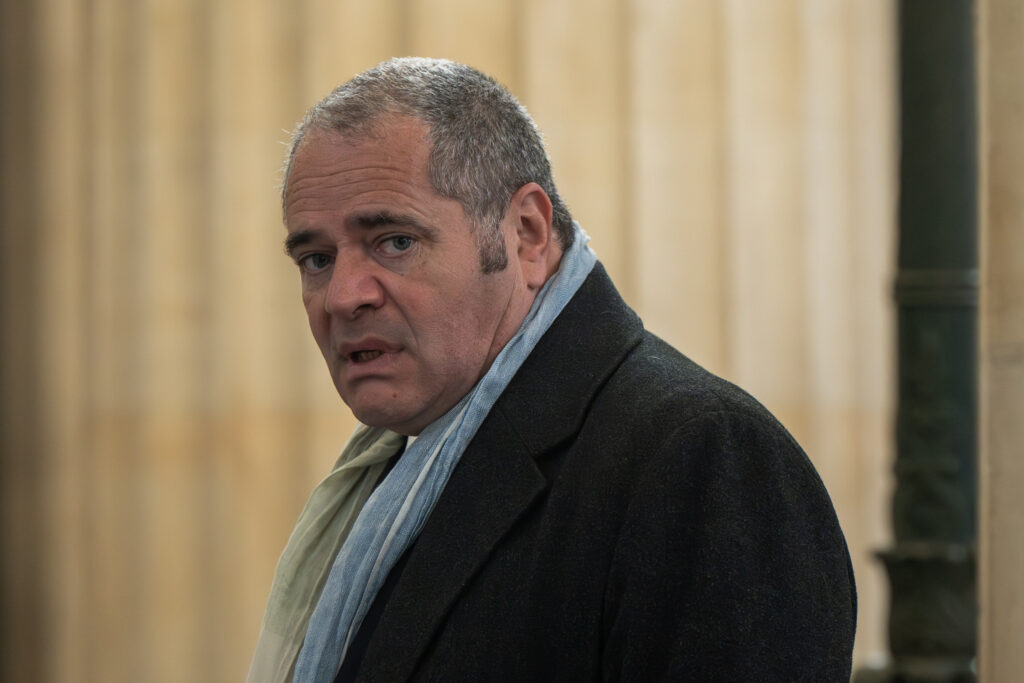
La situation devient délétère à Nice: après une sixième défaite d’affilée dimanche, deux joueurs et le directeur sportif du club ont été pris à partie physiquement par leurs propres supporters devant le centre d’entraînement, dans la nuit de dimanche à lundi.D’après plusieurs témoins de ces incidents, qui ont eu lieu au retour de Lorient, où l’OGCN a été battu 3-1 en Ligue 1, les attaquants Terem Moffi et Jérémie Boga, ainsi que le directeur sportif Florian Maurice, ont notamment été pris pour cible.Selon une source ayant connaissance des incidents, qui a confirmé à l’AFP une information de L’Equipe et de RMC, Boga est depuis ce lundi, et pour cinq jours, en ITT (arrêt de travail). Il a également déposé plainte contre X. Moffi aurait lui aussi reçu des coups et serait également en ITT, selon les deux médias sportifs.”Ces violences physiques sont intolérables”, a réagi lundi soir dans un communiqué l’UNFP, le syndicat des joueurs, indiquant avoir “immédiatement pris contact” avec Boga et Moffi. “Face à ces violences et aux plaintes déposées, notre syndicat se réserve le droit de se constituer partie civile”, a-t-il ajouté.Ces incidents sont intervenus au moment où le club azuréen sort de six défaites consécutives, en championnat et Ligue Europa.- Nice “condamne” -Au retour de Lorient, “400 supporteurs au moins attendaient le car des joueurs devant le portail du centre d’entraînement”, a raconté à l’AFP Maxime Bacquié, journaliste d’Ici (ex France Bleu) en charge du suivi du club et seul reporter présent sur place.A 23h15, selon la même source, ils ont barré le passage du car puis ont allumé des fumigènes et entonné des chants hostiles. Un de leurs représentants a été autorisé à monter à bord du car pour discuter.Parmi les premiers à en sortir, Florian Maurice, jugé responsable du recrutement défaillant de l’été dernier, a été “très chahuté”, d’après le journaliste. Il a dû être “exfiltré, hagard”, par le service de sécurité.Dans un bref communiqué lundi soir, l’OGC Nice a dit comprendre “la frustration générée par la succession de contre-performances”. “En revanche, les débordements constatés durant ce rassemblement sont inacceptables, plusieurs membres du club ayant été pris à partie. L’OGC Nice leur apporte tout son soutien et condamne ces actes avec la plus grande fermeté”, a ajouté le club azuréen.Contacté par l’AFP, Maurice n’a pas donné suite. Il avait dit après la défaite à Lorient: “Notre responsabilité est de faire en sorte que ce groupe puisse (…) jouer ensemble et dans les moments difficiles réagir ensemble. Aujourd’hui, ce n’est pas le cas”.Les débordements ont duré environ 45 minutes, période durant laquelle l’entraîneur Franck Haise s’est efforcé d’échanger avec les supporters. Il a reconnu ne pas parvenir à faire vivre un groupe ensemble pour la “première fois”. Mais il a répété être “prêt au combat”. Le président de l’OGCN Fabrice Bocquet n’était pas sur place.- Plusieurs incidents récents -Plusieurs incidents ont déjà impliqué des supporters niçois ces dernières saisons.En août 2022, le match Nice-Marseille avait dû être arrêté, des ultras de la Tribune Populaire Sud étant descendus sur la pelouse pour en découdre avec les joueurs de l’OM, notamment Dimitri Payet, précédemment touché par une bouteille jetée des gradins. En mai de cette même année, un chant insultant envers l’ancien attaquant argentin de Nantes Emiliano Sala, décédé en 2019, avait également été unanimement condamné.Début 2025, encore contre Marseille, cette même tribune avait exhibé une banderole jugée “raciste et injurieuse” par l’OM et la Ligue. Le club avait dit s’y être opposé sans succès. La tribune avait été fermée trois matches.Mi-octobre, lors du match Nice-Lyon, la classe politique locale avait en revanche globalement apporté son soutien aux Ultras de la même tribune après l’interruption momentanée du match à cause de chants anti-Daech jugés homophobes.Dimanche, Nice, 10e avec 17 points, recevra Angers, 12e. Après deux jours de repos, l’équipe doit reprendre l’entraînement mercredi.

L1: incidents à Nice, deux joueurs et un dirigeant pris à partie par des supporters

La situation devient délétère à Nice: après une sixième défaite d’affilée dimanche, deux joueurs et le directeur sportif du club ont été pris à partie physiquement par leurs propres supporters devant le centre d’entraînement, dans la nuit de dimanche à lundi.D’après plusieurs témoins de ces incidents, qui ont eu lieu au retour de Lorient, où l’OGCN a été battu 3-1 en Ligue 1, les attaquants Terem Moffi et Jérémie Boga, ainsi que le directeur sportif Florian Maurice, ont notamment été pris pour cible.Selon une source ayant connaissance des incidents, qui a confirmé à l’AFP une information de L’Equipe et de RMC, Boga est depuis ce lundi, et pour cinq jours, en ITT (arrêt de travail). Il a également déposé plainte contre X. Moffi aurait lui aussi reçu des coups et serait également en ITT, selon les deux médias sportifs.”Ces violences physiques sont intolérables”, a réagi lundi soir dans un communiqué l’UNFP, le syndicat des joueurs, indiquant avoir “immédiatement pris contact” avec Boga et Moffi. “Face à ces violences et aux plaintes déposées, notre syndicat se réserve le droit de se constituer partie civile”, a-t-il ajouté.Ces incidents sont intervenus au moment où le club azuréen sort de six défaites consécutives, en championnat et Ligue Europa.- Nice “condamne” -Au retour de Lorient, “400 supporteurs au moins attendaient le car des joueurs devant le portail du centre d’entraînement”, a raconté à l’AFP Maxime Bacquié, journaliste d’Ici (ex France Bleu) en charge du suivi du club et seul reporter présent sur place.A 23h15, selon la même source, ils ont barré le passage du car puis ont allumé des fumigènes et entonné des chants hostiles. Un de leurs représentants a été autorisé à monter à bord du car pour discuter.Parmi les premiers à en sortir, Florian Maurice, jugé responsable du recrutement défaillant de l’été dernier, a été “très chahuté”, d’après le journaliste. Il a dû être “exfiltré, hagard”, par le service de sécurité.Dans un bref communiqué lundi soir, l’OGC Nice a dit comprendre “la frustration générée par la succession de contre-performances”. “En revanche, les débordements constatés durant ce rassemblement sont inacceptables, plusieurs membres du club ayant été pris à partie. L’OGC Nice leur apporte tout son soutien et condamne ces actes avec la plus grande fermeté”, a ajouté le club azuréen.Contacté par l’AFP, Maurice n’a pas donné suite. Il avait dit après la défaite à Lorient: “Notre responsabilité est de faire en sorte que ce groupe puisse (…) jouer ensemble et dans les moments difficiles réagir ensemble. Aujourd’hui, ce n’est pas le cas”.Les débordements ont duré environ 45 minutes, période durant laquelle l’entraîneur Franck Haise s’est efforcé d’échanger avec les supporters. Il a reconnu ne pas parvenir à faire vivre un groupe ensemble pour la “première fois”. Mais il a répété être “prêt au combat”. Le président de l’OGCN Fabrice Bocquet n’était pas sur place.- Plusieurs incidents récents -Plusieurs incidents ont déjà impliqué des supporters niçois ces dernières saisons.En août 2022, le match Nice-Marseille avait dû être arrêté, des ultras de la Tribune Populaire Sud étant descendus sur la pelouse pour en découdre avec les joueurs de l’OM, notamment Dimitri Payet, précédemment touché par une bouteille jetée des gradins. En mai de cette même année, un chant insultant envers l’ancien attaquant argentin de Nantes Emiliano Sala, décédé en 2019, avait également été unanimement condamné.Début 2025, encore contre Marseille, cette même tribune avait exhibé une banderole jugée “raciste et injurieuse” par l’OM et la Ligue. Le club avait dit s’y être opposé sans succès. La tribune avait été fermée trois matches.Mi-octobre, lors du match Nice-Lyon, la classe politique locale avait en revanche globalement apporté son soutien aux Ultras de la même tribune après l’interruption momentanée du match à cause de chants anti-Daech jugés homophobes.Dimanche, Nice, 10e avec 17 points, recevra Angers, 12e. Après deux jours de repos, l’équipe doit reprendre l’entraînement mercredi.

US envoy to meet Russia’s Putin for talks on ending Ukraine war

US envoy Steve Witkoff and Russian President Vladimir Putin are expected to hold talks in Moscow on Tuesday to discuss the Trump administration’s controversial proposal to end the war in Ukraine.The meeting comes after Washington said it was feeling confident about the plan, following talks with Ukrainian negotiators in Florida.”I think the administration feels very optimistic,” White House Press Secretary Karoline Leavitt told reporters on Monday.Meanwhile Ukrainian President Volodymyr Zelensky was seeking support from European allies, who fear that the US plan — drafted without input from Kyiv or Europe — reads like a wishlist for Moscow.But Ukraine’s negotiator Rustem Umerov said “significant progress” had been achieved in the Florida talks, even though more work was needed on “challenging” issues.Zelensky arrived in Ireland Monday night for an in-person briefing from Umerov after talks in Paris with President Emmanuel Macron.He was greeted on the tarmac by Prime Minister Micheal Martin, who posted on social media “Our support for the people of Ukraine as they defend their freedom and democracy remains unwavering.”More than three-and-a-half years into Russia’s large-scale offensive in Ukraine, an AFP analysis of data from the US-based Institute for the Study of War (ISW) showed that the Russian army last month made its biggest advance in Ukraine since November 2024.The situation for Kyiv has been further complicated by a corruption scandal that has rocked Zelensky’s inner circle and forced the dismissal last week of his top negotiator and chief of staff, Andriy Yermak.”We are expecting a conversation with the president of the United States on key issues that are quite challenging,” Zelensky said in Paris.He said Russia had stepped up missile and drone strikes on his country to “break” the will of Ukrainians.”This is serious pressure, not only psychological but also physical pressure on our population,” Zelensky said.Macron said the current moment “could be decisive for the future of peace in Ukraine and security in Europe.”Zelensky insisted Russia should not receive any concession that “it could consider as a reward for this war.””The aggressor must pay for the aggression,” he said.Zelensky and Macron spoke by telephone to Witkoff and Umerov in Florida, the Elysee Palace said, while Zelensky’s talks in Paris also included phone conversations with other European leaders, including British Prime Minister Keir Starmer. The flurry of communication continued with a call between Macron and Trump later Monday in which they discussed “next steps in the mediation efforts” and the French president “particularly emphasised the central importance of security guarantees necessary for Ukraine”, according to the Elysee.- ‘Highest’ pressure -Washington’s initial 28-point proposal to halt the war would have seen Kyiv withdraw from territory it still controls in its eastern Donetsk region and the United States de facto recognise the Donetsk, Crimea and Lugansk regions as Russian.After talks in Geneva, the United States updated the original blueprint, but the current contents remain unclear.EU foreign policy chief Kaja Kallas expressed concern over the planned Putin-Witkoff meeting, saying she feared “all the pressure will be put on the weaker side, because that is the easier way to stop this war when Ukraine surrenders.”Macron emphasised that “there is currently no finalised plan on the territorial issues, strictly speaking. It can only be finalised by President Zelensky”.He also hailed new US sanctions on the Russian energy industry as a “game changer”, saying that in the next weeks he expected pressure on the sector to be “the highest since the beginning of the war”.- Biggest advance in a year -The diplomatic push comes as the war — which has killed tens of thousands of civilians and military personnel and displaced millions of Ukrainians — shows no sign of easing.Russia claimed on Monday to have captured Pokrovsk, a key logistics hub that Ukraine had been defending.A Russian missile attack killed four people and wounded nearly two dozen others on Monday in the central Ukrainian city of Dnipro, the regional governor said.By the end of November, the Russian army controlled, fully or partially, 19.3 percent of Ukrainian territory, according to the analysis of data from the ISW, which works with the Critical Threats Project.burs-sjw-sct/tc/mtp

Pope Leo holds Beirut mass and visits site of port blast

More than 120,000 people are expected to attend Pope Leo XIV’s mass in Beirut on Tuesday, the final day of his Lebanon visit and a chance to pay his respects at the site of the huge 2020 port explosion.The pontiff arrived from Turkey on Sunday on his inaugural visit abroad as pope and brought a message of hope, particularly to young people in Lebanon, whose faith in their beleaguered country has dwindled.His visit brought a welcome distraction to a land still reeling from a war with Israel last year, with many fearing a renewal of hostilities.Yasmine Chidiac, who was hoping to catch sight of Pope Leo on Monday, said the trip “has brought a smile back to our faces”.More than 120,000 people have registered to attend the mass near Beirut’s waterfront.From Monday evening, authorities will prohibit access to large parts of central Beirut where the mass is taking place, and will set up checkpoints.Before heading to the port, site of the massive explosion that devastated the capital and killed more than 220 people, the pope will visit a psychiatric hospital run by nuns in the capital.Pope Leo will then hold a silent prayer at the site of the blast.He will pay his respects to relatives of victims and survivors who are still fighting for justice.The August 4, 2020 disaster was one of the world’s largest non-nuclear explosions, and devastated swathes of the Lebanese capital.Authorities have said the blast was triggered by a fire in a warehouse where tonnes of ammonium nitrate fertiliser had been stored haphazardly for years after arriving by ship, despite repeated warnings to senior officials.The investigation has yet to wield results, as political figures have obstructed the work of the independent judge in charge of it.On Monday, the pontiff called on Christian and Muslim religious leaders gathered for an interreligious meeting to combat intolerance and violence.He also got a rock star welcome from thousands of Lebanese youth in Bkerke, the seat of the Maronite church, calling on them to build “a new future”.”You have the enthusiasm to change the course of history,” he told around 15,000 young Lebanese.

Pacific island office enabling sanctions-busting ‘shadow fleets’

Dozens of oil tankers suspected of smuggling contraband crude for Russia and Iran have been using a beachside office in the tropical South Pacific to cover their tracks, an AFP analysis of sanctions data has revealed.Nestled next to a pizza shop in the far-flung Cook Islands is the modest headquarters of one of the fastest-growing shipping registries in the world.Without ever setting foot in the palm-fringed microstate, foreign ship owners can pay Maritime Cook Islands to sail under its star-studded flag.United States sanctions data identifies 20 tankers registered in the Cook Islands suspected of smuggling Russian and Iranian fuel between 2024 and 2025.A further 14 Cook Islands-flagged tankers are blacklisted on a separate database of British sanctions covering the same period.New Zealand, by far the Cook Islands’ closest diplomatic partner, said it was “alarming and infuriating” to see sanctions efforts undermined.”New Zealand continues to hold serious concerns about how the Cook Islands has been managing its shipping registry, which it has repeatedly expressed to the Cook Islands government over many years,” said a spokesman for Foreign Minister Winston Peters. “This is a completely unacceptable and untenable foreign policy divergence.” The self-governing Cook Islands remain in “free association” with former colonial ruler New Zealand, which is still involved in areas such as defence and foreign affairs.Maritime Cook Islands, which runs the shipping registry, denies failing to conduct proper checks or harbouring sanctioned vessels, saying any such ships are deleted from the registry.- Shadow fleet -Western sanctions aim to curb Iran and Russia cashing in on oil sales, limiting funding for Tehran’s nuclear programme or Moscow’s invasion of Ukraine.”There are countries around the world that sign up to sanctions against Russia that wouldn’t allow these ships to fly their flag,” said Anton Moiseienko, an expert in sanctions and financial crime at Australian National University.”But there are countries that are a bit more lax about that,” he told AFP.”This is where the Cook Islands comes in.”A UAE-based shipping company was in April accused of smuggling “millions of dollars” of fuel on behalf of the Iranian military in the Gulf.The company owned tankers flagged in Barbados, Gambia, Panama and the Cook Islands, according to US sanctions.Ships like these are allegedly cogs in a maritime smuggling network known as the “shadow fleet”, skirting sanctions by passing themselves off as cargo vessels on legitimate business.They cover their tracks by registering in places such as the Cook Islands, where they can enjoy much less stringent oversight. Often the registries are unaware of the vessel’s true purpose.- ‘Fastest growing’ -Shipping journal Lloyd’s List last year crowned Maritime Cook Islands the “fastest growing registry” in the world.”There are a number of ships flying the Cook Islands flag that have been identified as part of the shadow fleet,” said Moiseienko.”When it comes to flag states — Cook Islands, Liberia and others — there isn’t really any international mechanism to enforce their obligations.”A few months later the registry was in the headlines again, when a tanker called the Eagle S damaged five underwater cables in the Baltic Sea.Finnish investigators would later suggest the Cook Islands-flagged vessel — allegedly part of Russia’s shadow fleet — had sabotaged the cables by dragging its anchor across the seabed. – Flags of convenience –  Shipping registries are also an easy way for revenue-starved Pacific island nations to bolster government coffers.But these registries, typically operated as private companies, have run into trouble.North Korean smuggling networks have long exploited shipping registries in South Pacific nations such as Palau, Niue and Tuvalu.Many, including the Cook Islands, do not publicly list their fees.But AFP obtained an estimate from Palau that suggested a 30,000 tonne oil tanker could expect to pay around US$10,000 in registration fees.Shipping registries allowing foreign-owned ships to fly under their banner are known as “flags of convenience”.”Many shadow fleet vessels use flags of convenience from countries that are either less inclined or unable to enforce Western sanctions,” notes a European Parliament briefing from 2024. The Cook Islands was one of the “top countries whose flags are used by shadow tankers transporting Russian crude oil”, according to the briefing.The Royal United Services Institute, a leading UK think tank, said Iran and North Korea had been exploiting small shipping registries for years. But shadow fleet activity had “expanded dramatically” after Russia was hit with crippling sanctions following its invasion of Ukraine, the institute said in September.- Diplomatic headaches -Maritime Cook Islands operates the shipping registry as a private company “under a delegation of authority” from the government, and is overseen by the nation’s transport regulator.Government revenue from shipping fees climbed more than 400 percent in the past five years, Cook Islands budget papers show, and were on track to total US$175,000 over the past financial year.Maritime Cook Islands said any vessels accused of dodging sanctions were swiftly deleted from its shipping registry.Sometimes suspicious vessels were deleted before they were named in sanctions, it said. “The Cook Islands register has never harboured sanctioned vessels.”Any sanctioned vessels are deleted.”And the registry denied that it failed to conduct appropriate checks before signing up dubious vessels.”The Cook Islands Registry has platforms that enable effective monitoring and detection of illicit activity.It said it was “not aware” of concerns about sanctions-busting or of any instances of abuse.