Aux Philippines: le marché du combat de coqs en ligne continue de prospérer, malgré son interdiction

Pendant des semaines cet été, des plongeurs ont exploré les profondeurs d’un lac au sud de Manille à la recherche de corps de disparus, victimes d’une véritable industrie nationale: les paris en ligne sur les combats de coqs.Des hommes tués, selon un témoignage, pour leur implication présumée dans des matchs truqués pendant la pandémie de Covid-19, durant laquelle une véritable folie de l'”e-sabong” s’est emparée du pays.A la suite de ces disparitions, l’ex-président Rodrigo Duterte a interdit en 2022 ces paris en ligne. Mais trois ans plus tard, le marché lucratif de l’e-sabong reste florissant.A Bulacan, une banlieue de Manille, dans un local bondé où s’affrontent des coqs équipés d’éperons métalliques tranchants, les billets passent de main en main.Marcelo Parang, 60 ans, y officie en toute sérénité: les paris en présentiel restent autorisés. “Nous n’avons pas peur… Ici, nous sommes tranquilles. Les matches se déroulent en toute légalité”, explique-t-il alors que montent les clameurs d’un combat qui se termine. Une ambiance bien différente de l’enfer du pari en ligne dans lequel Ray Gibraltar, comme de nombreux autres aficionados, est tombé lors de la pandémie.- “Je ne dormais plus” -Issu d’une famille d’amateurs de combats de coqs, il avait lui aussi longtemps fréquenté les “tarians”, ces arènes dédiées.Mais avec le confinement, il a commencé à parier en ligne, à un rythme effréné, gagnant ou – le plus souvent – perdant jusqu’à 15.000 dollars par jour. “Je ne mangeais pas. Je ne faisais que boire du café et fumer… je ne dormais plus”, raconte cet ancien cadre, ajoutant qu’avec l’argent perdu il aurait “pu acheter une maison et une voiture”. Avant d’entrer en cure de désintoxication, il a misé les derniers 300 pesos de son portefeuille électronique. “Dans les tarians, il faut se déplacer pour parier”, contrairement au pari en ligne, note Reagan Praferosa, qui a créé le Centre de rétablissement pour joueurs des Philippines.Celui-ci a accueilli ses premiers joueurs d’e-sabong en 2020. Aujourd’hui, ils représentent environ 30% de l’activité du centre.Jay, 24 ans, un artiste graphiste qui s’exprime sous couvert de l’anonymat, dit qu’il continue à se connecter dès qu’il reçoit son salaire.Il montre comment avec seulement 10 pesos (environ 0,15 euros) il peut miser sur les coqs qui apparaissent sur son écran de téléphone.”Je ne cherche pas à gagner de l’argent, c’est l’excitation”, explique-t-il.Les autorités estiment à des millions de dollars par semaine les revenus générés par cette industrie. Une manne qui alimente le crime organisé.- Sites fermés -Depuis l’interdiction de l’e-sabong, les autorités ont fermé plus de 6.800 sites, a indiqué à l’AFP le brigadier-général de police Bernard Yang.Mais l’utilisation de VPN rend l’identification des utilisateurs le plus souvent impossible.Tout en reconnaissant que les peines – des amendes ne dépassant pas 1.000 pesos (15 euros) – ne sont pas très dissuasives, M. Yang assure que le problème n’est “plus aussi grave” qu’auparavant.La situation reste toutefois assez préoccupante pour que la Banque centrale, interpellée au Congrès, ait ordonné vendredi aux entreprises de portefeuilles électroniques de cesser toute activité avec des sites illégaux dans les 48 heures.Car pour Rolando Valeriano, membre du Congrès, la situation reste “très alarmante”.Partout, “il y a des enfants qui savent (comment parier) sur l’e-sabong”, souligne pour l’AFP ce parlementaire, auteur d’une proposition de loi visant à alourdir les peines.Une entreprise qui n’est pas gagnée d’avance, concède-t-il.Début juillet, une photo vérifiée par l’AFP a commencé à circuler dans les médias. C’était l’image d’un élu fixant l’écran de son téléphone pendant un vote au Congrès. Il suivait un combat de coqs. 

A Londres, la chasse aux pickpockets se fait aussi sur les réseaux sociaux

“Attention, pickpockets !”, lance Diego Galdino à des touristes interloqués. Ce Brésilien de 32 ans connaît le succès sur les réseaux sociaux avec ses vidéos où il se filme en train de pourchasser des voleurs, sur fond d’explosion des vols de téléphones à Londres.Ce livreur de repas à domicile a d’abord commencé par filmer les voleurs en train de commettre leurs méfaits, avant de se mettre à les interpeller. Publiées sur Instagram et TikTok sous le nom “pickpocketlondon”, ces vidéos connaissent un succès fulgurant. L’une d’elles, qui montre un voleur cracher en sa direction, totalise plus de 12 millions de vues.Ces vols à l’arraché – principalement de portefeuilles et de téléphones – ne sont pas l’apanage de la capitale britannique. Mais les vols de smartphones y ont explosé ces derniers mois. Selon la police londonienne, un téléphone y est volé toutes les six minutes. En un an, elle a enregistré quelque 32.000 “vols à la tire” dans le seul quartier de Westminster, qui abrite des musées, la tour horloge de Big Ben et le palais de Buckingham. Face à ce fléau, la ville a fait tracer une ligne violette le long du trottoir de plusieurs rues très fréquentées, avec cet avertissement: “Attention au vol de téléphone!”- Adrénaline -Diego Galdino, lui, est victime de son succès.”Ma vie a beaucoup changé”, confie-t-il à l’AFP, disant être désormais reconnu dans la rue.Avec l’expérience, M. Galdino, qui a grandi au Brésil dans une famille de policiers, s’est rendu compte que ces voleurs sont très organisés: ce sont souvent des femmes qui agissent en binôme et s’habillent comme des touristes pour mieux se fondre dans la masse, détaille-t-il.Une vingtaine d’autres livreurs l’aident, envoyant des signalements sur la messagerie WhatsApp.Son mode opératoire est rodé: armé d’une caméra fixée sur lui, il crie “Attention, pickpockets !” dès qu’il aperçoit un voleur sur le point d’agir.Des interventions qui font parfois de lui la cible de violences. Mais l’adrénaline prend le pas sur la peur, affirme-t-il, ajoutant être porté par “l’injustice” de ces situations.Londoniens et touristes semblent apprécier son action.”Continue ce que tu fais !”, l’encourage Tom, 37 ans, un passant qui l’a reconnu dans la rue, au moment où l’AFP le suit dans une de ses tournées.Mais cette activité suscite aussi un certain scepticisme.- Spectacle -“Je suis sûre que ce jeune homme est bien intentionné, mais ce n’est pas une méthode efficace pour lutter contre la criminalité”, critique auprès de l’AFP la criminologue Jennifer Fleetwood, qui pointe une pratique qui n’est là que pour “générer du clic”.”Il ne va pas faire ça pendant 10 ans, si ?”, questionne-t-elle.Le maire travailliste de Londres, Sadiq Khan, a annoncé avoir renforcé la présence policière dans le centre de la ville afin d’endiguer ce fléau.Sollicitée par l’AFP, la police a indiqué qu’elle continuera à concentrer ses patrouilles “sur les zones sensibles, en s’appuyant sur les progrès déjà réalisés”.Elle n’a pas souhaité commenter l’action de Diego Galdino, mais met en avant une baisse de 15,6% des “vols à la tire” dans les six semaines ayant suivi son opération lancée le 6 avril.Pour Jennifer Fleetwood, les vidéos de M. Galdino déforment la réalité. Elle rappelle, statistiques à l’appui, que ces vols ne sont pas plus fréquents à Londres que dans d’autres villes ou régions d’Angleterre.”J’ai vu énormément de contenus sur les réseaux sociaux qui présentent Londres comme une ville hostile ou dangereuse. Mais est-on plus susceptible d’être victime d’un délit à Londres ? En réalité, non !”, tranche-t-elle.Quoi qu’il en soit, Diego Galdino va continuer son action.”Je suis très heureux de ce que je fais actuellement”, souligne-t-il.

Ligue 1: le Jour J pour le Paris FC

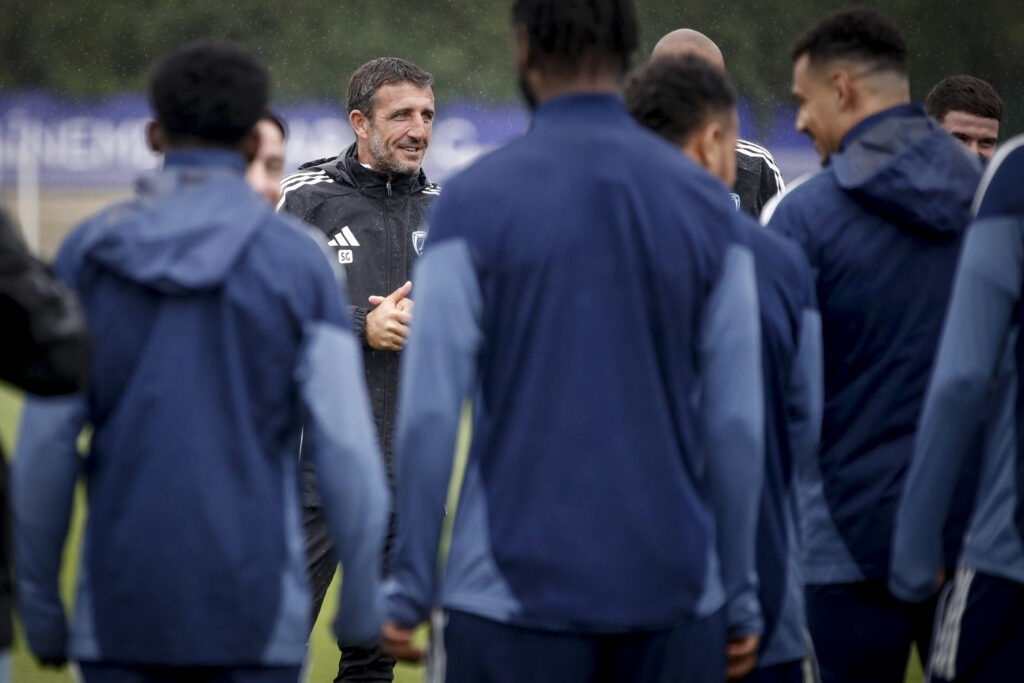
Le grand jour est arrivé pour le Paris FC qui retrouve la Ligue 1 après 46 ans d’absence, dimanche à Angers, escorté par d’immenses attentes après son rachat par la famille Arnault, même si le club veut pour le moment cultiver une image modeste.L’affiche n’est certes pas très prestigieuse mais la remontée parmi l’élite d’une deuxième équipe de la capitale et sa prise de contrôle par la holding du propriétaire du groupe de luxe LVMH, Bernard Arnault, ont suscité une telle effervescence que ce premier déplacement est en soi un petit événement.Avec les moyens mis à disposition par les repreneurs (un budget évalué à plus de 100 millions d’euros) associés à l’expertise sportive de Red Bull, le PFC n’est pas revenu en L1 pour faire de la figuration. L’ambition est claire: “installer progressivement” le club en Europe, comme l’a assuré son président Pierre Ferracci, et tenter de se faire une place à Paris aux côtés du mastodonte PSG. Mais si géographiquement, un trottoir sépare seulement le stade Jean-Bouin, qui accueillera les matches du PFC à domicile, du Parc des Princes dans le 16e arrondissement de la capitale, il y a encore un monde entre les deux formations. Pas question donc de brûler les étapes pour le promu: cette première saison de l’ère Arnault sera d’abord celle de la découverte d’un nouvel environnement et l’objectif sportif reste mesuré à court terme.”On fait preuve d’une grande prudence”, explique ainsi Pierre Ferracci. Le discours est repris par l’entraîneur Stéphane Gili, en poste depuis 2023 et artisan de la remontée en L1.- “Deux tests” -“On est très contents d’écrire une page importante du club. On veut être conquérants, avec beaucoup d’ambition et de détermination. Mais il faut faire preuve d’humilité. La priorité c’est de se maintenir durablement en Ligue 1. Pour l’instant, le maintien, c’est le maître-mot”, a expliqué vendredi le technicien de 51 ans. Pour y parvenir, Gili va pouvoir s’appuyer sur l’essentiel du groupe qui a bouclé le championnat de L2, à la 2e place derrière Lorient, lors de l’exercice précédent. Mais la patte Red Bull se fait déjà sentir au niveau du recrutement avec les signatures de deux jeunes défenseurs, le Brésilien Otavio (23 ans), en provenance de Porto, et Nhoa Sangui (19 ans), transfuge de Reims. L’expérimenté attaquant nigérian Moses Simon (30 ans, ex-Nantes) complète un mercato qui n’est cependant pas terminé.Selon plusieurs médias, le gardien allemand Kevin Trapp, ancien du PSG (2015-2018) âgé de 35 ans, est en discussions avancées pour s’engager avec le Paris FC afin d’épauler l’international Espoirs Obed Nkambadio (22 ans).”On a toujours dit qu’on voulait six, sept joueurs. Aujourd’hui il y en a trois. Le mercato est toujours en cours et on travaille avec intelligence. On essaye d’être cohérents dans ce qu’on veut faire mais en étant discrets”, a affirmé Gili.En l’espace de deux journées, le PFC va avoir un joli aperçu des chausse-trappes qui le guettent en L1 en se frottant à deux profils totalement opposés. Il y aura d’abord Angers, qui a lutté pour sa survie la saison dernière (14e), avant un déplacement au Vélodrome, le 23 août, pour défier l’OM, cador du championnat et dauphin du PSG en 2024-2025. Une sorte de “clasico bis” qui risque d’être particulièrement tendu, surtout après la défaite des Marseillais à Rennes vendredi (1-0). “Notre préparation a été cohérente mais après il y a la compétition, un nouvel environnement, d’autres exigences. Ce seront deux tests. A Angers, il faudra lancer une dynamique positive et prendre les premiers points. On va se jauger. On verra à Angers où on se situe”, a estimé Stéphane Gili.

Protests held across Israel calling for end to Gaza war, hostage deal

Demonstrators took to the streets across Israel Sunday calling for an end to the war in Gaza and a deal to release hostages still held by militants, as the military prepares a new offensive.The protests come more than a week after Israel’s security cabinet approved plans to capture Gaza City, following 22 months of war that have created dire humanitarian conditions in the Palestinian territory.The war was triggered by Palestinian militant group Hamas’s October 2023 attack on Israel, during which 251 were taken hostage.Forty-nine captives remain in Gaza, including 27 the Israeli military says are dead.A huge Israeli flag covered with portraits of the remaining captives was unfurled in Tel Aviv’s so-called Hostage Square — which has long been a focal point for protests throughout the war.Demonstrators also blocked several roads in the city, including the highway connecting Tel Aviv and Jerusalem, where demonstrators set tires on fire and caused traffic jams, according to local media footage.Protest organisers and the main campaign group representing the families of hostages also called for a general strike on Sunday.”I think it’s time to end the war. It’s time to release all of the hostages. And it’s time to help Israel recover and move towards a more stable Middle East,” said Doron Wilfand, a 54-year-old tour guide, at a rally in Jerusalem.However, some government members who oppose any deal with Hamas slammed the demonstrations.Israel’s far-right Finance Minister Bezalel Smotrich decried “a perverse and harmful campaign that plays into the hands of Hamas”.He argued that public pressure to secure a deal effectively “buries the hostages in tunnels and seeks to push the State of Israel to surrender to its enemies and jeopardise its security and future”.APTFV footage showed protesters at a rally in Beeri, a kibbutz near the Gaza border that was one of the hardest-hit communities in the Hamas attack, and Israeli media reported protests in numerous locations across the country.Israeli plans to expand the war into Gaza City and nearby refugee camps have sparked an international outcry as well as domestic opposition.UN-backed experts have warned of widespread famine unfolding in the territory, where Israel has drastically curtailed the amount of humanitarian aid it allows in.According to Gaza’s civil defence agency, Israeli troops shot dead at least 13 Palestinians on Saturday as they were waiting to collect food aid near distribution sites.Hamas’s October 2023 attack on Israel resulted in the deaths of 1,219 people, mostly civilians, according to an AFP tally based on official figures.Israel’s offensive has killed more than 61,897 Palestinians, most of them civilians, according to figures from the health ministry in Hamas-run Gaza which the United Nations considers reliable.

After deadly protests, Kenya’s Ruto seeks football distractionSun, 17 Aug 2025 05:27:48 GMT

Whether in a sports jersey or a suit, Kenyan President William Ruto is casting himself as a model supporter of the national football team as an international tournament provides respite from recent bloody protests against his regime.In June and July, the east African country, usually known as a beacon of calm in the turbulent Horn …

After deadly protests, Kenya’s Ruto seeks football distractionSun, 17 Aug 2025 05:27:48 GMT Read More »

Europe to mull over plan for peace in Ukraine after Trump-Putin summit

Leaders of France, Germany and Britain will host a video call on Sunday for their so-called “coalition of the willing” to discuss steps towards ending the war in Ukraine, after Donald Trump dropped his push for a ceasefire after his Alaska summit with Russian leader Vladimir Putin.Securing a ceasefire in Ukraine, more than three years after Russia’s invasion, had been one of the US president’s core demands before the summit, to which Ukraine and its European allies were not invited.But after a meeting that yielded no clear breakthrough, Trump ruled out an immediate ceasefire in Ukraine — a move that would appear to favor Putin who has long argued for negotiations on a final peace deal. Ukraine and its European allies have criticized it as a way to buy time and press Russia’s battlefield advances.Trump spoke with Zelensky and European leaders on his flight back from Alaska to Washington, saying afterward that “it was determined by all that the best way to end the horrific war between Russia and Ukraine is to go directly to a peace agreement which would end the war.”Ceasefire agreements “often times do not hold up,” Trump added on his Truth Social platform.But Zelensky, who is due to visit Washington on Monday, appeared unconvinced by the change of tack, saying on Saturday that it “complicates the situation”.If Moscow lacks “the will to carry out a simple order to stop the strikes, it may take a lot of effort to get Russia to have the will to implement far greater — peaceful coexistence with its neighbors for decades,” he said on social media.- ‘Harsh reality’ – Trump expressed support during his call with Zelensky and European leaders for a proposal by Putin to take full control of two largely Russian-held Ukrainian regions in exchange for freezing the frontline in two others, an official briefed on the talks told AFP.Putin “de facto demands that Ukraine leave Donbas,” an area consisting of the Donetsk and Lugansk regions in eastern Ukraine, the source said.In exchange, Russian forces would halt their offensive in the Black Sea port region of Kherson and Zaporizhzhia in southern Ukraine, where the main cities are still under Ukrainian control.Several months into its full-scale invasion of Ukraine, Russia in September 2022 claimed to have annexed all four Ukrainian regions even though its troops still do not fully control any of them.”The Ukrainian president refused to leave Donbas,” the source said.Trump notably also said the United States was prepared to provide Ukraine security guarantees, an assurance German Chancellor Friedrich Merz hailed as “significant progress.”But there was a scathing assessment of the summit outcome from the European Union’s top diplomat Kaja Kallas, who accused Putin of seeking to “drag out negotiations” with no commitment to end the bloodshed.”The harsh reality is that Russia has no intention of ending this war any time soon,” Kallas said.- Zelensky back in White House -The main diplomatic focus now switches to Zelensky’s talks at the White House on Monday.An EU source told AFP that a number of European leaders had also been invited to attend.The Ukrainian president’s last Oval Office visit in February ended in an extraordinary shouting match, with Trump and Vice President JD Vance publicly berating Zelensky for not showing enough gratitude for US aid.Zelensky said Saturday after a “substantive” conversation with Trump about the Alaska summit that he looked forward to his Washington visit and discussing “all of the details regarding ending the killing and the war.” In an interview with broadcaster Fox News after his sit-down with Putin, Trump had suggested that the onus was now on Zelensky to secure a peace deal as they work towards an eventual trilateral summit with Putin.”It’s really up to President Zelensky to get it done,” Trump said.- European pressure -In an earlier statement, European leaders welcomed the plan for a Trump-Putin-Zelensky summit but added that they would maintain pressure on Russia in the absence of a ceasefire.Meanwhile, the conflict in Ukraine raged on, with Kyiv announcing Saturday that Russia had launched 85 attack drones and a ballistic missile during the night.Back in Moscow, Putin said his summit talks with Trump had been “timely” and “very useful.”In his post-summit statement in Alaska, Putin had warned Ukraine and European countries not to engage in any “behind-the-scenes intrigues” that could disrupt what he called “this emerging progress.”

From drought to floods, water extremes drive displacement in Afghanistan

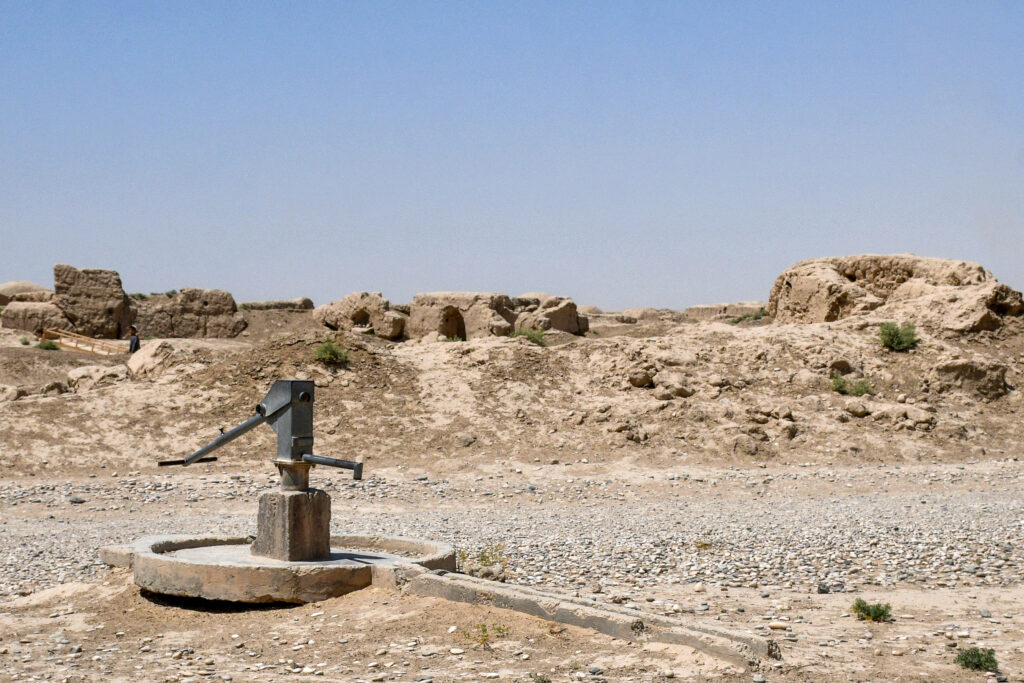
Next to small bundles of belongings, Maruf waited for a car to take him and his family away from their village in northern Afghanistan, where drought-ridden land had yielded nothing for years.”When you have children and are responsible for their needs, then tell me, what are you still doing in this ruin?” said the 50-year-old.Many of the mud homes around him are already empty, he said, his neighbours having abandoned the village, fleeing “thirst, hunger and a life with no future”.Successive wars displaced Afghans over 40 years, but peace has not brought total reprieve, as climate change-fuelled shocks drive people from their homes and strain livelihoods.Since the war ended between the now-ruling Taliban and US-led forces in 2021, floods, droughts and other climate change-driven environmental hazards have become the main cause of displacement in the country, according to the UN’s International Organization for Migration (IOM).In early 2025, nearly five million people across the country were impacted and nearly 400,000 people were displaced, the IOM said in July, citing its Climate Vulnerability Assessment.The majority of Afghans live in mud homes and depend heavily on agriculture and livestock, making them particularly exposed to environmental changes.The water cycle has been sharply impacted, with Afghanistan again in the grip of drought for the fourth time in five years and flash floods devastating land, homes and livelihoods.”Crop failure, dry pastures and vanishing water sources are pushing rural communities to the edge,” the UN Food and Agriculture Organization said in July.”It’s getting harder for families to grow food, earn income or stay where they are.”Experts and Taliban officials have repeatedly warned of escalating climate risks as temperatures rise, extreme weather events intensify and precipitation patterns shift.The country’s limited infrastructure, endemic poverty and international isolation leave Afghans with few resources to adapt and recover — while already facing one of the world’s worst humanitarian crises worsened by severe aid cuts.- Too little -Abdul Jalil Rasooli’s village in the drought-hit north has watched their way of life wither with their crops.Drought already drove many from his village to Pakistan and Iran a decade ago.Now they’ve returned, forced back over the border along with more than four million others from the two neighbouring countries since late 2023 — but to work odd jobs, not the land.”Everything comes down to water,” said the 64-year-old, retreating from the day’s heat in the only home in the village still shaded by leafy trees.”Water scarcity ruins everything, it destroys farming, the trees are drying up, and there’s no planting anymore,” he told AFP.Rasooli holds out hope that the nearby Qosh Tepa canal will bring irrigation from the Amu Darya river. Diggers are carving out the last section of the waterway, but its completion is more than a year away, officials told AFP.It’s one of the water infrastructure projects the Taliban authorities have undertaken since ousting the foreign-backed government four years ago.But the theocratic government, largely isolated on the global stage over its restrictions on women, has limited resources to address a crisis long exacerbated by poor environmental, infrastructure and resource management during 40 years of conflict. “The measures we have taken so far are not enough,” Energy and Water Minister Abdul Latif Mansoor told journalists in July, rattling off a list of dam and canal projects in the pipeline.”There are a lot of droughts… this is Allah’s will, first we must turn to Allah.”Hamayoun Amiri left for Iran when he was a young man and drought struck his father’s small plot of land in western Herat province.Forced to return in a June deportation campaign, he found himself back where he started 14 years ago — with nothing to farm and his father’s well water “getting lower and lower every day”.The Harirud river was a dry bed in July as it neared the border with downstream Iran, following a road lined with empty mud buildings pummelled back to dust by the province’s summer gales. – Too much -Taliban authorities often hold prayers for rain, but while the lack of water has parched the land in some parts of the country, changes in precipitation patterns mean rains can be more of a threat than a blessing.This year, rains have come earlier and heavier amid above-average temperatures, increasing flood risks, the UN said.A warmer atmosphere holds more water, so rain often comes in massive, destructive quantities.”The weather has changed,” said Mohammad Qasim, a community leader of several villages in central Maidan Wardak battered by flash floods in June.”I’m around 54 years old, and we have never experienced problems like this before,” he told AFP in the riverbed full of boulders and cracked mud. Eighteen-year-old Wahidullah’s family was displaced after their home was damaged beyond repair and all their livestock were drowned. The family of 11 slept in or near a rudimentary tent on high ground, with no plans or means to rebuild.”We’re worried that if another flood comes, then there will be nothing left and nowhere to go.”