Trump raises pressure on central bank, calls for Fed governor to resign

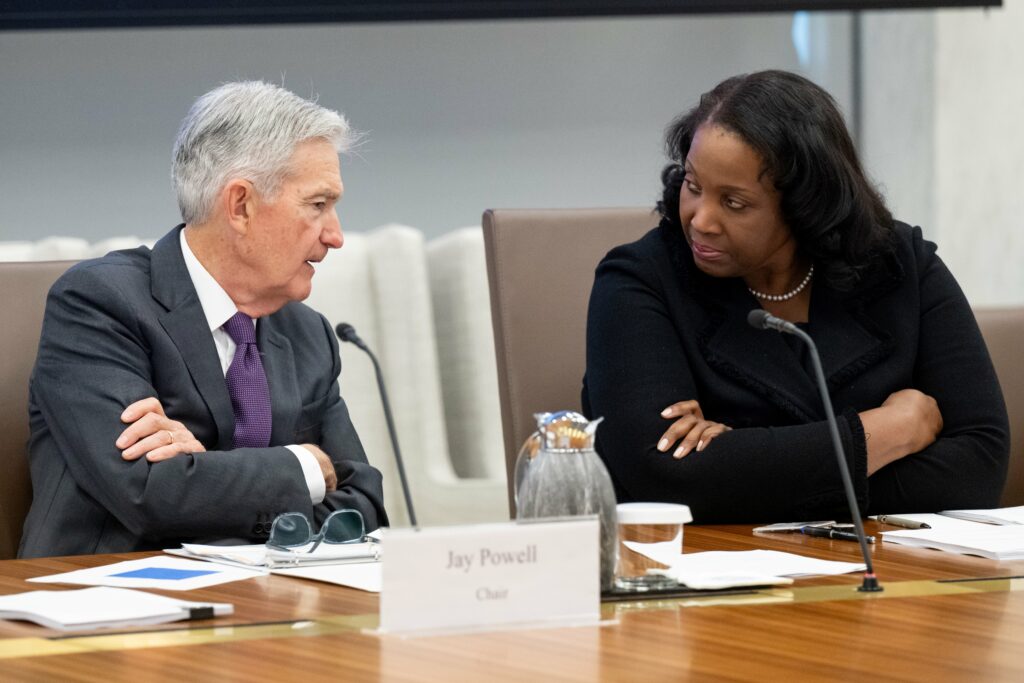
President Donald Trump ramped up pressure on the US central bank Wednesday, calling for Federal Reserve Governor Lisa Cook to step down — after his recent criticism of Fed Chair Jerome Powell for not lowering interest rates sooner.”Cook must resign, now!!!” Trump wrote on his Truth Social platform, while sharing a Bloomberg news report on how the Federal Housing Finance Agency’s director has called for greater scrutiny of Cook over a pair of mortgages.FHFA director Bill Pulte — a staunch ally of Trump — had reportedly written a letter to the US attorney general calling for an investigation of Cook while suggesting that she might have committed a criminal offense.The Trump administration has pursued allegations of mortgage fraud against high-profile Democrats who are seen as political adversaries of the president.It was not immediately clear if such a probe will take place targeting Cook, the first Black woman to serve on the central bank’s board.The president is also limited in his ability to remove officials from the central bank.A Supreme Court order recently suggested that Fed officials cannot be taken out of their jobs over policy disagreements, meaning they have to be removed for “cause,” which could be interpreted to mean wrongdoing.- ‘A disaster’ -The US leader’s targeting of Cook, who sits on the Fed’s rate-setting committee, comes after his repeated broadsides against Powell while the central bank kept the benchmark lending rate unchanged this year.On Tuesday night, Trump again called for a “major rate cut,” saying there was “no inflation” and claiming that the Fed’s policymaking was harming the housing industry due to elevated mortgage rates.He called Powell “a disaster” in a social media post.Although the US consumer price index, a key inflation gauge, was steady at 2.7 percent in July, it remains higher than it was a few months earlier.Fed officials have been trying to ensure inflation is kept in check — despite the effects of Trump’s sweeping tariffs — while balancing risks to the labor market as they mull the right time for further rate cuts.Cook took office as a Fed governor in May 2022 and was reappointed to the board in September 2023. She was sworn in later that same month for a term ending in 2038.She has previously served on the Council of Economic Advisers under former president Barack Obama.Earlier this year, Trump suggested that what he called an overly costly renovation of the Fed’s headquarters could be a reason to oust Powell, before backing off the threat.Powell’s term as Fed chair ends in May 2026.
La Bourse de Paris termine à l’équilibre avant Jacskon Hole

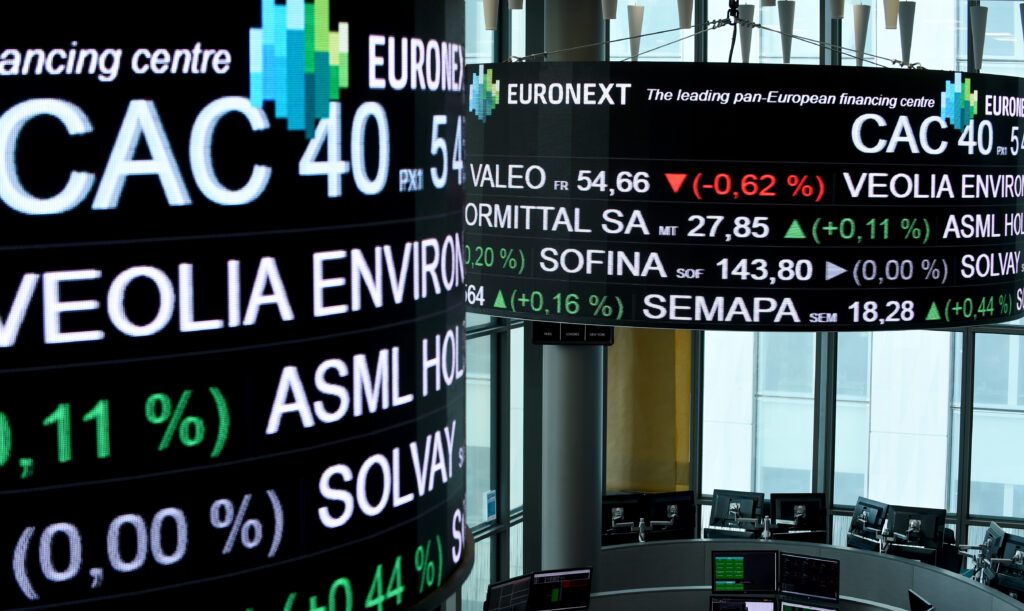
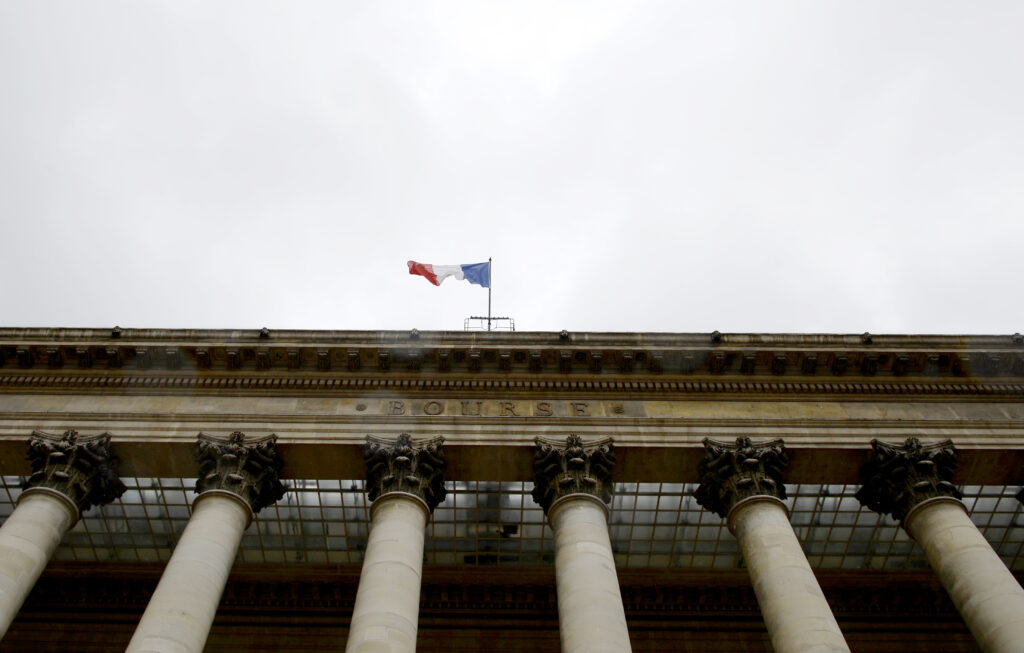
La Bourse de Paris a terminé stable mercredi, dans l’attente de la réunion des banquiers centraux à Jackson Hole, sur fond de chute des valeurs technologiques en raison des doutes croissants sur la rentabilité des investissements dans l’IA.Le CAC 40 a cédé 0,08%, à 7.973,03 points, en recul de 6,05 points. Mardi, le CAC 40 avait terminé en hausse de 1,21%.”La séance est dominée par l’attentisme, on patiente avant la réunion de Jackson Hole”, explique Lionel Melka, gérant chez Swann Capital.Ce colloque dans le Wyoming rassemble plusieurs banquiers centraux des grandes économies mondiales à partir de jeudi. Le discours du président de la Réserve fédérale américaine (Fed) Jerome Powell vendredi sera particulièrement scruté.Ce dernier fait en effet “face à la pression” de l’administration Trump “pour baisser les taux dans un contexte de marché du travail qui s’affaiblit”, signe que l’économie américaine pourrait s’essouffler, souligne Ipek Ozkardeskaya, analyste chez Swissquote Bank.Les marchés espèrent eux aussi “une baisse des taux dès septembre” mais ils “redoutent” que le patron de la Fed adopte un ton très prudent, selon Samy Chaar, chef économiste de la banque Lombard Odier.Jerome Powell a pour le moment déclaré attendre d’en savoir davantage sur les conséquences des droits de douane imposés par Donald Trump sur la première économie mondiale pour prendre une décision.Une hausse des prix trop importante, causée par ces taxes sur les produits importés, empêcherait la Fed de mener une politique d’assouplissement monétaire ambitieuse pour soutenir l’activité, car potentiellement inflationniste.Côté obligataire, le taux d’intérêt de l’emprunt français à dix ans a atteint 3,41%, contre 3,43% la veille en clôture.- Doutes sur l’IA -Les grands noms de la tech chutent sur les marchés depuis mardi, en raison de “doutes croissants sur la pérennité de la vague d’IA”, qui porte depuis plusieurs mois la hausse des indices boursiers, explique Ipek Ozkardeskaya.L’un des éléments déclencheurs a été la publication en début de semaine d’un rapport du Massachusetts Institute of Technology (MIT) ayant relativisé la rentabilité pour les entreprises des investissements dans l’IA.Une interview vendredi de Sam Altman, patron d’OpenAI, dressant un parallèle entre l’engouement autour de l’intelligence artificielle en Bourse et l’explosion de la bulle internet en 2000, a elle aussi assombri l’humeur des investisseurs.A Paris, Soitec (-1,96% à 36,92 euros) et STMicroelectronics (-0,81% à 22,14 euros) ont cédé du terrain. Schneider Electric (-3,45% à 215,55 euros) et Legrand (-2,32% à 130,40 euros), dont les perspectives de croissance reposent en partie sur les centres de données destinés à l’intelligence artificielle, ont eux aussi cédé face à ces doutes.

La vigne, un coupe-feu naturel qui s’estompe dans les Corbières

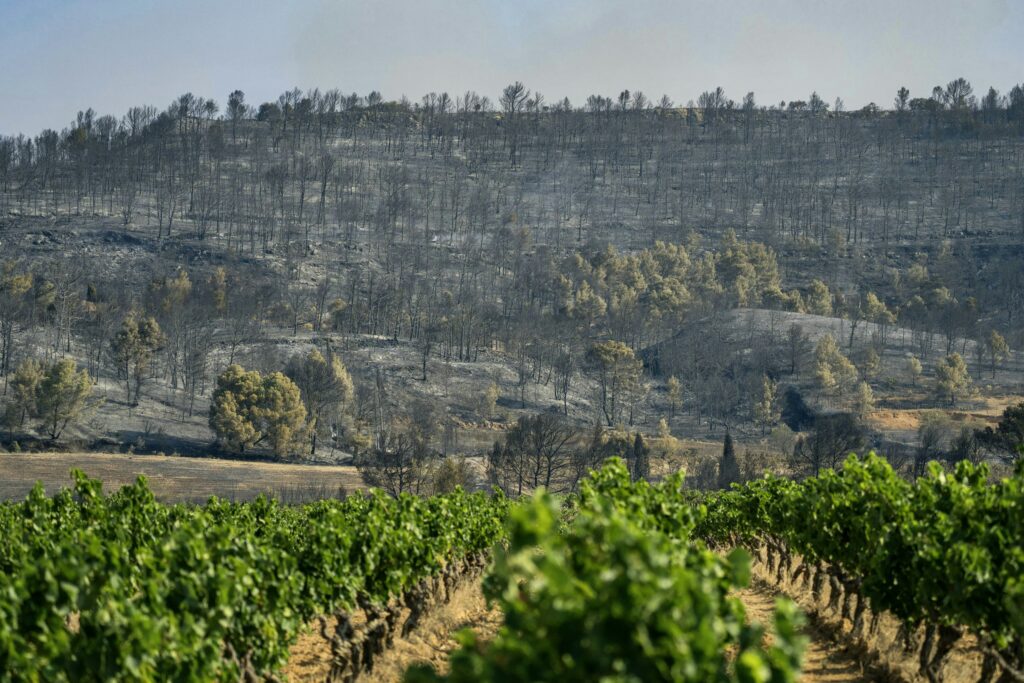
Au fil des décennies, la vigne recule dans l’Aude, au gré des campagnes d’arrachage, privant d’un coupe-feu naturel des territoires comme les Corbières, ravagées par un gigantesque incendie début août. Au lendemain du départ du feu qui a parcouru 16.000 hectares de végétation et détruit 36 maisons aux alentours de Saint-Laurent-de-la-Cabrerisse, Bastien Cabal, président de la cave coopérative Cellier des Demoiselles, a reçu un SMS d’une voisine reconnaissante, et le montre à qui-veut, fièrement.”Salut Baptiste, lui écrit-elle, je ne te remercierai jamais assez d’avoir une vigne derrière chez nous, elle a permis de sauver la maison (et d’autres) du feu qui la menaçait. Encore une fois merci. (…) Sans cette vigne, le lotissement brûlait”.”On a vu des flammes de dix mètres de haut, c’était impressionnant, mais on se sentait protégés par la vigne. La vigne, je la vénère”, confie un habitant de la commune de Tournissan, Pascal Pamart, un retraité de 71 ans.Un incendie de cette magnitude était “inimaginable il n’y a pas si longtemps”, tous les villages et les habitations isolées étaient “défendus” par la vigne qui les entourait, assure Fabien Vergnes, 52 ans, viticulteur à Tournissan.D’environ 100.000 hectares en 1980, la superficie des vignes dans l’Aude est désormais de 60.000 hectares.- “Inévitable” -Lors de sa venue le 6 août, le Premier ministre François Bayrou a remarqué le rempart dressé par la vigne.”Ce qu’on a vu là, et qui est très frappant, c’est que partout où il y avait des vignes, pour l’essentiel, le feu a été arrêté, a-t-il dit. Et là où il n’y avait plus de vignes, là où les taillis, les broussailles, les garrigues avaient pris la place (…) un accroissement de la catastrophe”.Élus locaux et viticulteurs s’alarment des conséquences de l’arrachage.”Le réchauffement climatique augmente considérablement le risque d’incendie. Les vignes bien entretenues peuvent jouer un rôle crucial en tant que coupe-feu naturel”, observe l’œnologue et expert de l’Organisation de la vigne et du vin, Joël Rochart.Comme la consommation chute, pour éviter une surproduction et soutenir le cours du vin, l’État a subventionné une campagne d’arrachage, qui s’est chiffré à 5.000 hectares dans l’Aude, dont 2.500 dans les Corbières.”La politique d’arrachage est inévitable, admet-il, mais il faudrait introduire une gouvernance territoriale, qui prend en compte le risque incendie pour qu’il y ait une réflexion à l’échelle du territoire, et sur les PLU, suivie d’actions opérationnelles”.Gorgé d’eau, le feuillage des vignes freine la propagation, “comme du bois humide”, précise-t-il. Si on arrache les vignes, “il n’y a plus l’effet d’écran et les anciennes vignes sont souvent en friche”, ce qui facilite la propagation du feu.- Double impact -Pour remédier à cette problématique, il cite l’initiative subventionnée par la commune de Banyuls, dans les Pyrénées-Orientales, “où des ceintures de vignes anti-feu ont été créées, elles constituent un écran” face aux flammes, sur des parcelles qui surplombent cette coquette station balnéaire méditerranéenne.”C’est un problème qui va s’aggraver, prévient l’œnologue. Qui dit élévation des températures, dit plus de sécheresse, donc des végétaux plus sensibles aux départs et à la transmission du feu”.Dans le paysage, aux abords des 16 villages parcourus par les flammes, des taches vertes formées par les vignes tranchent avec les terres cendrées, jonchées d’arbres calcinés.Pour Jean-Paul Baylac, chef du service Feux de forêt au Sdis de l’Aude, “l’impact de la disparition des vignes est double. D’une part, les discontinuités viticoles font que les feux peuvent passer d’un massif à l’autre, parcourir des surfaces beaucoup plus importantes”.”Et ensuite, ajoute-t-il, en périphérie de zones urbaines, où les vignes assuraient, jusque dans les années 80, une protection, parce qu’il y avait des ceintures viticoles pratiquement autour de toutes les villes du département.”Président de la chambre d’agriculture de l’Aude, Ludovic Roux tire la sonnette d’alarme. “Aujourd’hui, dit-il, il reste 60.000 hectares, il faut maintenir et sauver la viticulture et pourquoi pas un un jour réimplanter des vignes sur des zones stratégiques. La vigne est vitale”.

La vigne, un coupe-feu naturel qui s’estompe dans les Corbières

Au fil des décennies, la vigne recule dans l’Aude, au gré des campagnes d’arrachage, privant d’un coupe-feu naturel des territoires comme les Corbières, ravagées par un gigantesque incendie début août. Au lendemain du départ du feu qui a parcouru 16.000 hectares de végétation et détruit 36 maisons aux alentours de Saint-Laurent-de-la-Cabrerisse, Bastien Cabal, président de la cave coopérative Cellier des Demoiselles, a reçu un SMS d’une voisine reconnaissante, et le montre à qui-veut, fièrement.”Salut Baptiste, lui écrit-elle, je ne te remercierai jamais assez d’avoir une vigne derrière chez nous, elle a permis de sauver la maison (et d’autres) du feu qui la menaçait. Encore une fois merci. (…) Sans cette vigne, le lotissement brûlait”.”On a vu des flammes de dix mètres de haut, c’était impressionnant, mais on se sentait protégés par la vigne. La vigne, je la vénère”, confie un habitant de la commune de Tournissan, Pascal Pamart, un retraité de 71 ans.Un incendie de cette magnitude était “inimaginable il n’y a pas si longtemps”, tous les villages et les habitations isolées étaient “défendus” par la vigne qui les entourait, assure Fabien Vergnes, 52 ans, viticulteur à Tournissan.D’environ 100.000 hectares en 1980, la superficie des vignes dans l’Aude est désormais de 60.000 hectares.- “Inévitable” -Lors de sa venue le 6 août, le Premier ministre François Bayrou a remarqué le rempart dressé par la vigne.”Ce qu’on a vu là, et qui est très frappant, c’est que partout où il y avait des vignes, pour l’essentiel, le feu a été arrêté, a-t-il dit. Et là où il n’y avait plus de vignes, là où les taillis, les broussailles, les garrigues avaient pris la place (…) un accroissement de la catastrophe”.Élus locaux et viticulteurs s’alarment des conséquences de l’arrachage.”Le réchauffement climatique augmente considérablement le risque d’incendie. Les vignes bien entretenues peuvent jouer un rôle crucial en tant que coupe-feu naturel”, observe l’œnologue et expert de l’Organisation de la vigne et du vin, Joël Rochart.Comme la consommation chute, pour éviter une surproduction et soutenir le cours du vin, l’État a subventionné une campagne d’arrachage, qui s’est chiffré à 5.000 hectares dans l’Aude, dont 2.500 dans les Corbières.”La politique d’arrachage est inévitable, admet-il, mais il faudrait introduire une gouvernance territoriale, qui prend en compte le risque incendie pour qu’il y ait une réflexion à l’échelle du territoire, et sur les PLU, suivie d’actions opérationnelles”.Gorgé d’eau, le feuillage des vignes freine la propagation, “comme du bois humide”, précise-t-il. Si on arrache les vignes, “il n’y a plus l’effet d’écran et les anciennes vignes sont souvent en friche”, ce qui facilite la propagation du feu.- Double impact -Pour remédier à cette problématique, il cite l’initiative subventionnée par la commune de Banyuls, dans les Pyrénées-Orientales, “où des ceintures de vignes anti-feu ont été créées, elles constituent un écran” face aux flammes, sur des parcelles qui surplombent cette coquette station balnéaire méditerranéenne.”C’est un problème qui va s’aggraver, prévient l’œnologue. Qui dit élévation des températures, dit plus de sécheresse, donc des végétaux plus sensibles aux départs et à la transmission du feu”.Dans le paysage, aux abords des 16 villages parcourus par les flammes, des taches vertes formées par les vignes tranchent avec les terres cendrées, jonchées d’arbres calcinés.Pour Jean-Paul Baylac, chef du service Feux de forêt au Sdis de l’Aude, “l’impact de la disparition des vignes est double. D’une part, les discontinuités viticoles font que les feux peuvent passer d’un massif à l’autre, parcourir des surfaces beaucoup plus importantes”.”Et ensuite, ajoute-t-il, en périphérie de zones urbaines, où les vignes assuraient, jusque dans les années 80, une protection, parce qu’il y avait des ceintures viticoles pratiquement autour de toutes les villes du département.”Président de la chambre d’agriculture de l’Aude, Ludovic Roux tire la sonnette d’alarme. “Aujourd’hui, dit-il, il reste 60.000 hectares, il faut maintenir et sauver la viticulture et pourquoi pas un un jour réimplanter des vignes sur des zones stratégiques. La vigne est vitale”.

Judge blocks Texas law requiring Ten Commandments in classrooms

A US federal judge on Wednesday blocked a Texas law that would require public schools to display the Ten Commandments in every classroom.District Judge Fred Biery issued a preliminary injunction barring implementation of the law, which was to take effect on September 1 and was challenged by families of diverse faiths with children in public schools.The Texas state law, known as Senate Bill 10, is unconstitutional and “impermissibly takes sides on theological questions and officially favors Christian denominations over others,” Biery wrote in his 55-page ruling.”The displays are likely to send an exclusionary and spiritually burdensome message to the child-Plaintiffs — who do not subscribe to the approved version of the Ten Commandments –that they ‘are outsiders who do not belong in their own school community,'” he said.Rabbi Mara Nathan, one of the plaintiffs in the case, welcomed the ruling.”Children’s religious beliefs should be instilled by parents and faith communities, not politicians and public schools,” Nathan said in a statement.Rachel Laser, president of Americans United for Separation of Church and State, also welcomed the decision, saying it sends a “strong and resounding message across the country that the government respects the religious freedom of every student in our public schools.”Another federal judge blocked a Louisiana law in November that would require the display of the Ten Commandments in every public school classroom in the conservative southern state.District Judge John deGravelles said the law is unconstitutional and a violation of the First Amendment of the US Constitution.The separation of church and state is a founding US principle and the First Amendment forbids the establishment of a national religion or the preference of one religion over another.In a similar case in 1980, the US Supreme Court ruled that the display of the Ten Commandments in schools in Kentucky was unconstitutional.In Oklahoma, the highest education official in the conservative state recently ordered public schools to teach the Bible, a move that is also facing legal challenges.

Google packs new Pixel phones with AI

Google on Wednesday unveiled new Pixel 10 smartphones, showcasing artificial intelligence (AI) capabilities woven into its Android mobile operating system.The line-up of new products included a foldable phone, improved Pixel smartwatch, and ear buds all synced to work with AI and each other.”Pixel continues to be the best way for people to try out the latest bleeding-edge AI from Google,” product manager Tyler Kugler said during a briefing with journalists.Pixel phones claim a scant portion of a high-end smartphone market ruled by Apple, Samsung and Xiaomi, but custom Google hardware is an opportunity for the internet giant to highlight what is possible with its Android mobile operating system.And while Samsung routinely ranks as the world’s top smartphone seller, it powers handsets with Android software from Google.”Initially, Google Pixel devices were designed as a technological showcase to limit Android fragmentation and accelerate innovation,” said Forrester principal analyst Thomas Husson.”Ten years later, the strategic challenge is still not to become the market leader, but to demonstrate the value of Google’s integrated ecosystem.”The tactic promises to promote use of Google’s platform by handset makers and is a spin on the way Apple ties together its iPhones and other devices with its software.Meanwhile, with Apple seen as lagging in the fierce AI race, Google has touted all-out efforts to integrate advanced AI throughout its offerings as it competes with powerhouses such as Amazon, Meta, and Microsoft.”Its positioning remains premium and its market share is less than 5 percent, but in the age of AI, it is a true laboratory of innovation,” Husson said of the Pixel smartphone line.It is also “a means of countering Apple’s integrated hardware-software-services strategy while remaining a strategic partner for Samsung and the Android ecosystem,” Husson added.AI built into new Pixel phones lets Gemini AI assistant look through the cameras to “see” what users see, answering questions or providing tips about locations, objects or situations, according to Kugler.Google is not the only one putting AI in phones. South Korean consumer electronics giant Samsung has made AI a centerpiece of its Galaxy smartphone line and recently released a new Galaxy Z Fold7.Google’s product team described the new Pixel Watch 4 as a redesigned experience that marks the biggest update to the line.Features include smartwatch fitness tracking fine-tuned to distinguish between activities such as walking, bicycling, or tennis. The Pixel Watch also enables users to command Gemini AI assistant from one’s wrist.Gemini detects the mood of whoever is speaking to it and adjusts its responses accordingly, and can even “look” through the phone camera to offer photo suggestions, according to the Google team.

Israel approves plan to conquer Gaza City, calls up reservists

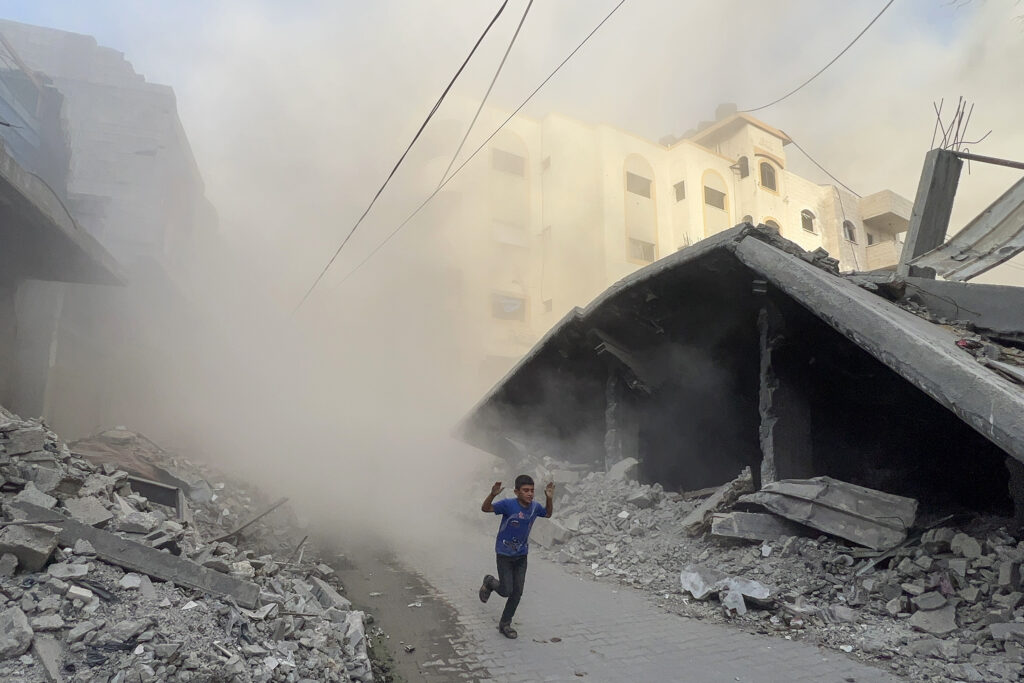
Israel’s defence minister approved a plan on Wednesday for the conquest of Gaza City and authorised the call-up of around 60,000 reservists, piling pressure on Hamas as mediators push for a ceasefire.Defence Minister Israel Katz’s move, confirmed to AFP by a spokesperson, came as mediators awaited an official Israeli response on their latest proposal in ceasefire talks.While mediator Qatar had expressed guarded optimism over the latest proposal, a senior Israeli official said the government stood firm on its call for the release of all hostages in any agreement.The framework that Hamas had approved proposes an initial 60-day truce, a staggered hostage release, the freeing of some Palestinian prisoners and provisions allowing for the entry of aid into Gaza.On the ground in Gaza City on Wednesday, Mustafa Qazzaat, head of the emergency committee in the Gaza municipality, described the situation as “catastrophic”, with “large numbers” fleeing eastern neighbourhoods.One resident, Anis Daloul, 64, said the Israeli military had “destroyed most of the buildings in Zeitoun and displaced thousands of people”.Israel’s security cabinet chaired by Prime Minister Benjamin Netanyahu approved the plan to conquer Gaza City in early August, sparking fears it would worsen the already catastrophic humanitarian crisis in Gaza.According to Israeli media reports, Netanyahu has not yet called a security cabinet meeting to discuss any response to the latest truce proposal.- ‘Permanent war’ -Netanyahu has come under growing pressure at home and abroad to end the war, with the German government saying on Wednesday that it “rejects the escalation” of Israel’s campaign.French President Emmanuel Macron said the offensive “can only lead to a complete disaster for both peoples”, warning it would “drag the region into a permanent war”.Katz’s approval of plans to conquer Gaza City came days after Hamas said it had accepted the latest proposal from mediators for a ceasefire to halt almost two years of devastating war.Sources from Hamas and its ally Islamic Jihad told AFP on Wednesday that the proposal envisages the release of 10 hostages and 18 bodies from Gaza.The remaining captives would be released in a second exchange within the 60-day period, during which negotiations for a permanent ceasefire would take place, the sources said.Israel and Hamas have held on-off indirect negotiations throughout the war, resulting in two short truces during which Israeli hostages were released in exchange for Palestinian prisoners.Of the 251 hostages taken during Hamas’s October 2023 attack that triggered the war, 49 are still in Gaza, including 27 the Israeli military says are dead.Qatar, one of the mediators in the talks, said the latest proposal was “almost identical” to an earlier version agreed by Israel.Netanyahu has yet to publicly comment on the truce plan, but said last week that his country would accept “an agreement in which all the hostages are released at once and according to our conditions for ending the war”.- ‘Gradual operation’ -An Israeli military official told journalists on Wednesday that the new phase of combat would involve “a gradual precise and targeted operation in and around Gaza City”, including some areas where forces had not previously operated.Gaza’s civil defence agency said Israeli strikes and fire killed at least 25 people across the territory on Wednesday.When contacted by AFP, the Israeli military asked for coordinates and specific timeframes to comment on the reports, but said it would look into reports of eight people killed by Israeli fire near an aid site in the centre of Gaza.Media restrictions in Gaza and difficulties accessing swathes of the Palestinian territory mean AFP is unable to independently verify the tolls and details provided by the civil defence agency or the Israeli military.The Israeli military said it killed 10 Hamas militants in southern Gaza on Wednesday while repelling an attack by the armed wing of the Islamist group, which claimed it killed several Israeli soldiers.Hamas’s October 2023 attack on Israel resulted in the deaths of 1,219 people, mostly civilians, according to an AFP tally based on official figures.Israel’s offensive has killed at least 62,122 Palestinians, most of them civilians, according to figures from the health ministry in Hamas-run Gaza, which the United Nations considers reliable.In the West Bank, Israel on Wednesday approved a major settlement project in an area that the international community has warned threatens the viability of a future Palestinian state.The Palestinian Authority swiftly condemned the approval “in the strongest terms”, saying it entrenched division in the territory. 

Le canal de Panama prévoit une baisse de ses recettes en raison de “l’incertitude” économique mondiale

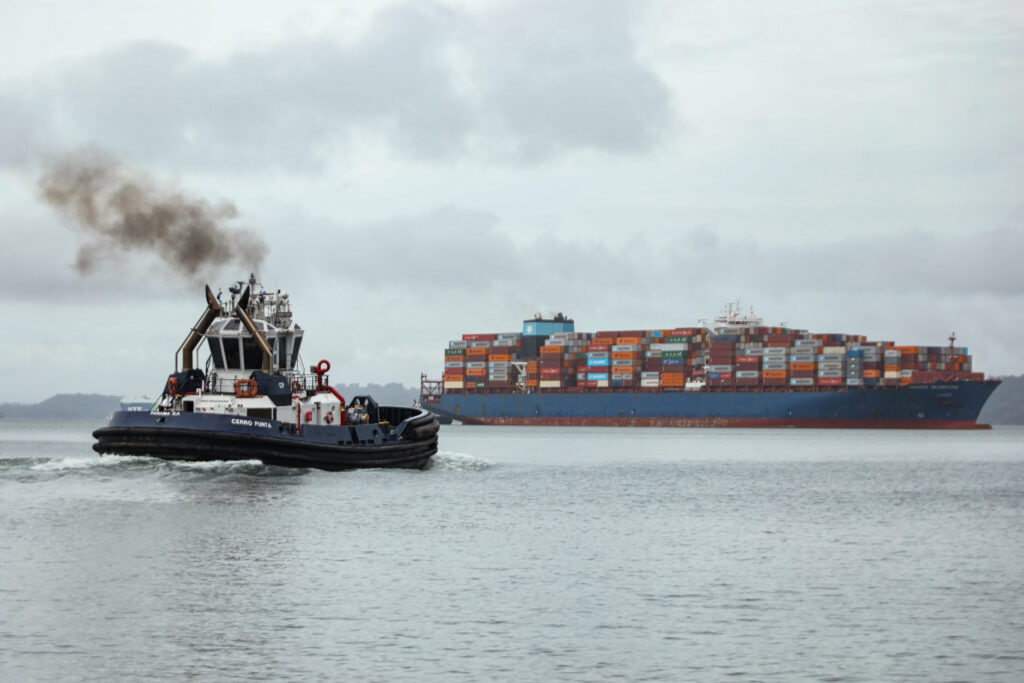
Le canal de Panama prévoit 411 millions de dollars de recettes en moins en raison de “l’incertitude” de l’économie mondiale qui entraînera une baisse du transit des navires, a averti l’autorité du canal mardi.La voie interocéanique table sur 5,207 milliards de dollars de recettes lors du prochain exercice fiscal, qui commencera le 1er octobre, soit une baisse de -7,4% par rapport à celle qui va se clore le 30 septembre.Selon les projections, 13.900 navires transportant environ 520 millions de tonnes de cargaison transiteront entre océan Atlantique et Pacifique, soit 1.100 et 1.200 navires en moins.”Nous traversons une période de grande volatilité, avec des niveaux élevés d’incertitude qui indiquent une possible diminution du volume de trafic à travers le canal de Panama”, a déclaré l’administrateur de la voie maritime, Ricaurte Vasquez, lors de la présentation des ces projections en Conseil des ministres.Il impute cette diminution du trafic maritime aux prévisions de croissance mondiale en baisse, attendue à 2,5% contre 3,3% en début d’année.”Lorsque l’économie ralentit, le volume du commerce diminue”, a-t-il expliqué.M. Vasquez avait pointé jeudi auprès de l’AFP l’impact des surtaxes douanières voulues par le président américain Donald Trump, estimant “très probable” qu’il n’y aurait “pas le même volume” de transit en direction des Etats-Unis.Tant M. Vasquez que le ministre en charge des affaires du Canal, José Ramon Icaza, n’ont pas évoqué les surtaxes punitives américaines lors de leur présentation.Le canal de Panama, long de 80 kilomètres, permet de relier 1.900 ports au travers de 170 pays. Sa principale route relie les ports de Chine, du Japon et de Corée du Sud aux terminaux de la côte est des États-Unis.Quelque 5% du commerce maritime mondial transite par cette voie.Principal pourvoyeur de devises à l’Etat panaméen, le canal, malgré la baisse de ses revenus globaux, prévoit de verser au Trésor public 3,194 milliards de dollars, soit environ 400 millions de plus qu’actuellement.

How Europe tried to speak Trump

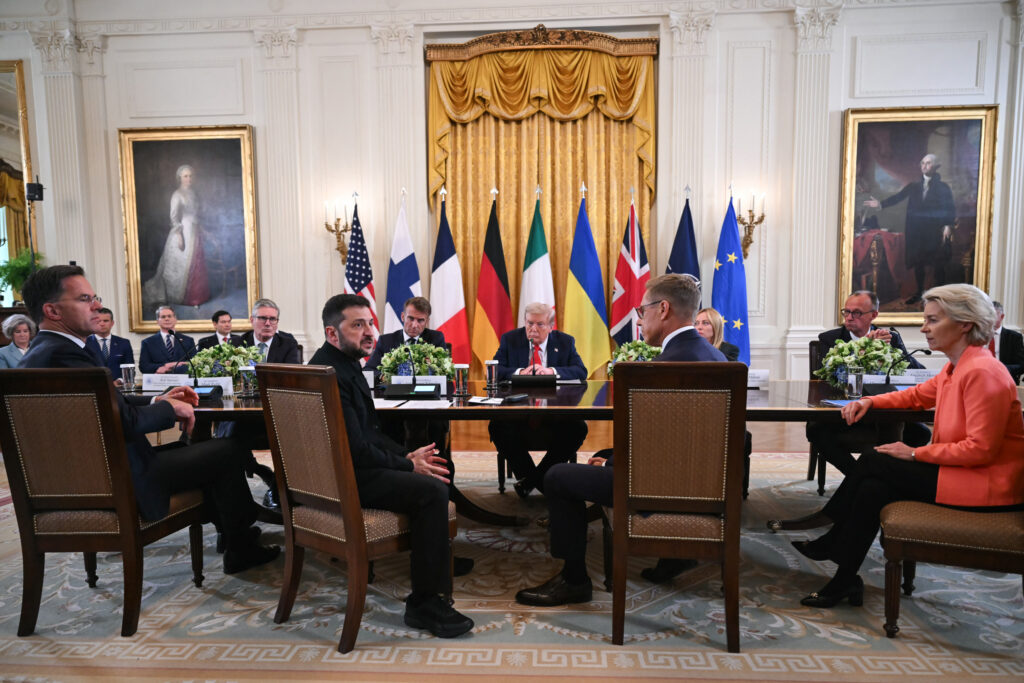
A careful selection of cast and roles and a clear strategy to avoid deadlocks. European leaders’ charm offensive on Donald Trump to foster Ukraine’s cause this week was hastily arranged but followed a scripted plan, say European sources.France’s Emmanuel Macron and Britain’s Keir Starmer were among seven European leaders who accompanied Ukraine’s Volodymyr Zelensky to the White House on Monday for high-stakes talks with the US President.”There’s truly never been anything like it,” Trump enthused in an interview Tuesday. “There’s never been such a group,” he told Fox News.The summit came on the heels of a meeting between Trump and Russia’s Vladimir Putin in Alaska, which raised concerns in Europe that Kyiv would be pressured into making painful political and territorial concessions to Moscow.With nine leaders sitting around a long wooden table at 1600 Pennsylvania Avenue in Washington, the dynamics changed.Trump began the discussions by greeting his guests with a few words before the cameras. “You look great with your tan,” he told German Chancellor Friedrich Merz, while Starmer was introduced as “my friend, doing really well”.EU chief Ursula von der Leyen was told she was “probably more powerful than anyone else around this table”.- ‘Well prepared, well coordinated’ -Often criticised for their difficulties in communicating with Trump, the Europeans were hoping to steer the famously volatile US president closer to their position on the conflict, ahead of possible peace talks with Putin. “We were well prepared and well coordinated,” Merz said after the meeting. “I think that really appealed to the American president, in the sense that he noticed that we Europeans were speaking with one voice here.”Preparations for the meeting began Saturday when Trump debriefed Zelensky on his Alaska talks.The US president invited his Ukrainian counterpart to the White House and opened the door for a few European leaders to tag along, according to a European official. The proposal was discussed in a series of calls between European capitals. Some were wary of exposing themselves to an ambush in the Oval Office, the kind Zelensky suffered in February during his prior, explosive visit to the White House, according to the source.A team bringing together the leaders of major European powers France, Germany, Italy and Britain was nevertheless put together and announced on Sunday morning. Finland’s Alexander Stubb, who has befriended Trump playing golf and leading a country that shares a long border with Russia, was also included.A few hours later, Zelensky made a detour to Brussels and appeared alongside von der Leyen, who completed the line-up with NATO’s head Mark Rutte.- ‘Clumsy attempts’ -Each had a pre-scripted role, according to one participant at the summit.Rutte, who has long cultivated his relationship with Donald Trump, was responsible for starting discussions with Trump, the source said. Each leader then addressed a different aspect of the conflict. Von der Leyen, a mother and grandmother, for example emphasised the plight of Ukrainian children abducted by Russian forces.Whenever Trump seemed to get stuck on an issue, someone would chime in trying to present the matter from a different perspective and refocus the discussion, the source said.In a semantic shift, some avoided using the word “ceasefire” — disliked by Trump who after meeting Putin has pivoted to seeking a full peace deal — calling for Russia to “stop the killing” instead.Talk of security guarantees for Ukraine similarly deliberately saw the use of the vague term “presence”, the source said. Whether such adjustments will help successfully resolve what promises to be an extremely difficult negotiation process on the future of Ukraine remains to be seen.On Wednesday, Russian Foreign Minister Sergei Lavrov criticised Europe’s “clumsy attempts to change the position of the US president” — a possible sign that Moscow is concerned about their impact. 

Les Bourses européennes terminent sans direction commune

Les marchés boursiers européens ont terminé en ordre dispersé mercredi, avant la réunion des banquiers centraux de Jackson Hole, sur fond de chute des valeurs technologiques en raison des doutes croissants sur la rentabilité des investissements dans l’IA.Francfort a perdu 0,60%, Milan 0,36%, Paris est restée stable (-0,08%) et Londres a pris 1,08%.